Wine & Soul

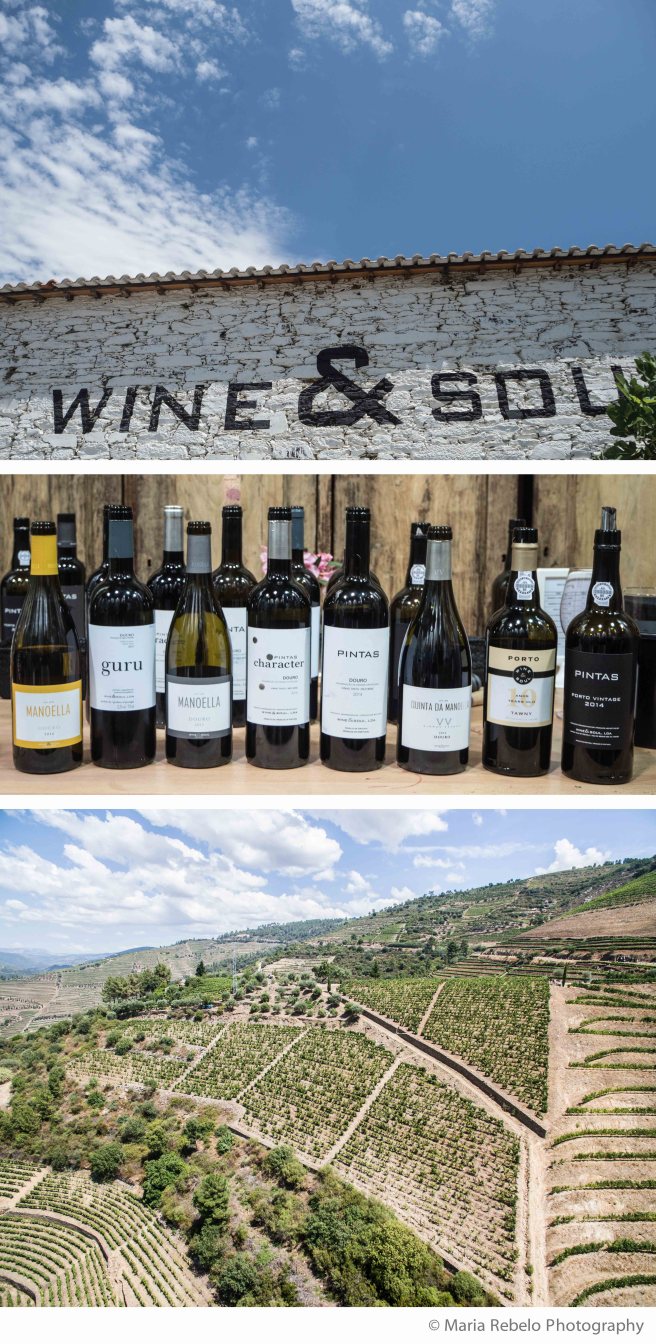
Wine & SoulJorge Serôdio Borges is an enologist who belongs to the 5th generation of a family of Douro wine makers. In 2001, he married Sandra Tavares da Silva, a fellow enologist. The new couple decided to celebrate their wedding by making a wine together. They called their project Wine & Soul.
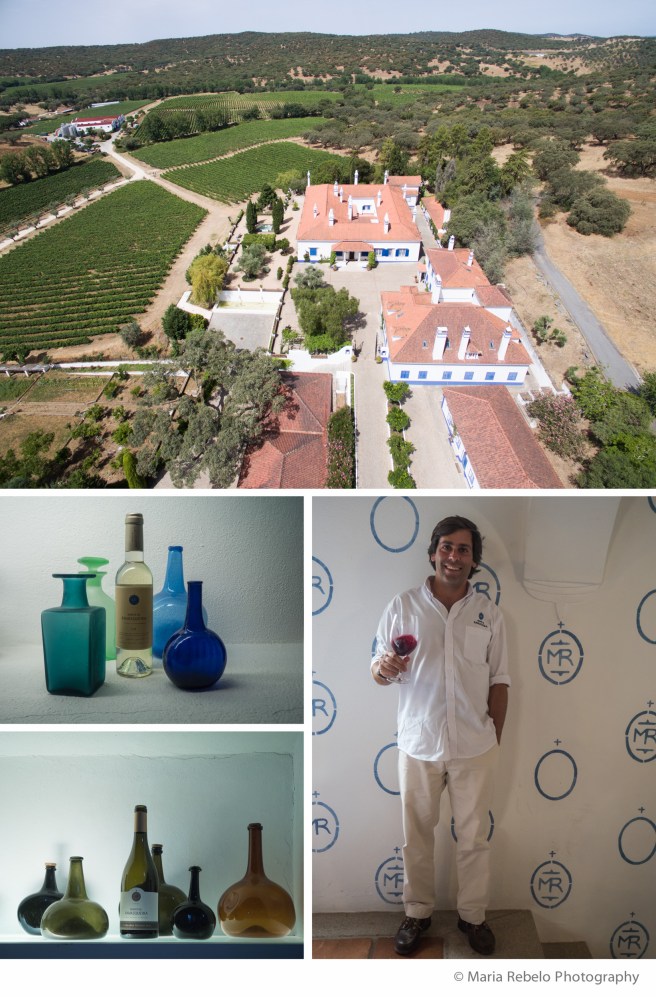
Jorge and Sandra found the perfect vineyard in the Douro valley. Its vines were planted about 85 years ago on a steep incline at high altitude in schist soil that makes the vines struggle to produce small grapes full of flavor. The owner of the vineyard used to sell his grapes to port wine producers, but he was charmed by the young couple and agreed to sell the grapes to them.

The two enologists watched carefully every step of the production process from harvest to bottle. They made the wine with traditional methods, treading the grapes by foot in granite tanks to avoid breaking the pits.

Jorge and Sandra liked their wine so much that they decided to make a purchase offer to the vineyard owner. Perhaps thinking that the offer price was inflated by the couple’s youthful enthusiasm, the owner accepted it.

In a gesture of irreverence, the two enologists named the wine after their dog, Pintas. Soon after it was released in 2003, Pintas became a symbol of a new era for the Douro valley. An era in which young wine makers produce superb table wines from grapes traditionally reserved for port production.

Another dog, Guru, provided the name for a brilliant white wine first released in 2004.  It is inspired by the great whites of Burgundy. But, like Pintas, it is made only with indigenous varietals (Códega do Larinho, Gouveio, Rabigato, and Viosinho) that give the wine a distinct flavor and aroma.

In 2008, Jorge inherited Quinta da Manoella, a wine estate established in 1838. It has been hard work to improve the quality of these old vines. The steep terrain makes mechanization impossible so, like in Roman times, the work is manual and the land is tilled by horse-drawn ploughs. But the results are extraordinary, every time these wines grace our table, our meals turn into a celebration.

In 2014, Wine Spectator awarded Pintas’ 2011 vintage 98 points. It is a score rarely given, the highest ever awarded by the magazine to a Portuguese table wine. This success doesn’t surprise us because Jorge and Sandra make their wines with two unique ingredients: love and the grapes of the Douro valley.

A visit to Wine & Soul is a wonderful way to experience the beauty of the Douro Valley. Click here for more information about how to book a visit.


Sweet secrets

Ovos Moles

“I’ll take you there,” our friend promised. He dialed a number on his cell phone and asked “Can you show us what we want to see?” The answer was positive so we got into his car and he drove us to the outskirts of Aveiro.

We stopped outside an ordinary building, walked to the back door and rang twice.  Rosa Líria Soares opened the door. She greeted us with a welcoming smile, even though it was Sunday and she had been working since 6:00 am. Rosa is a legendary producer of “ovos moles,” an Aveiro delicacy.

It all started thirty years ago when a pastry store closed and the owners offered Rosa their equipment and recipes. She began making “ovos moles” and soon it became her full-time occupation.

We asked whether she would show us the secretive production process. She said yes, she would show us everything except how to combine fresh egg yolks, sugar and water to make the filling. “I won’t share that secret with anyone,” she said. “What if we promise not to tell?” we insisted. “The answer is still no,” she replied.

Rosa buys molded sheets with shells, whelks, sardines, and other designs from one of two producers in Aveiro. The sheets are made with the same wafers used for holy communion. Rosa fills two identical molds with her prized egg filling and moists the edges with water. The wafers are then placed inside a wooden mold and pressed together until the two pieces are glued.

Rosa’s husband, Henrique Carmona, arrived from their shop, Moliceiro dos Sabores, in downtown Aveiro. He told us with pride about all the awards that Rosa has won over the years.

Rosa offered us some freshly made “ovos moles.” “They keep for two weeks but they taste best in the first five days. And if you can try then like this, freshly made, they are even better.”

The crunchy wafer and the soft filling combined in our mouth and we stood there in silence savoring this lavish moment. “You didn’t like them?” Rosa asked. We explained that we couldn’t find words to describe these “ovos moles,” the very best we ever had.

“We dream about coming for a couple of weeks to apprentice with you, because something as sublime as these sweets needs to be passed on to future generations. Will you consider it?” Rosa took time to answer. And then she said “maybe.” We left with our palates full of sweetness and our hearts full of hope.

You can try the divine ovos moles made by Rosa Líria Soares at her store Moliceiro dos Sabores located on Rua dos Mercadores 4, Aveiro, tel. 234 421 776.


Belcanto

Composit Bel Canto

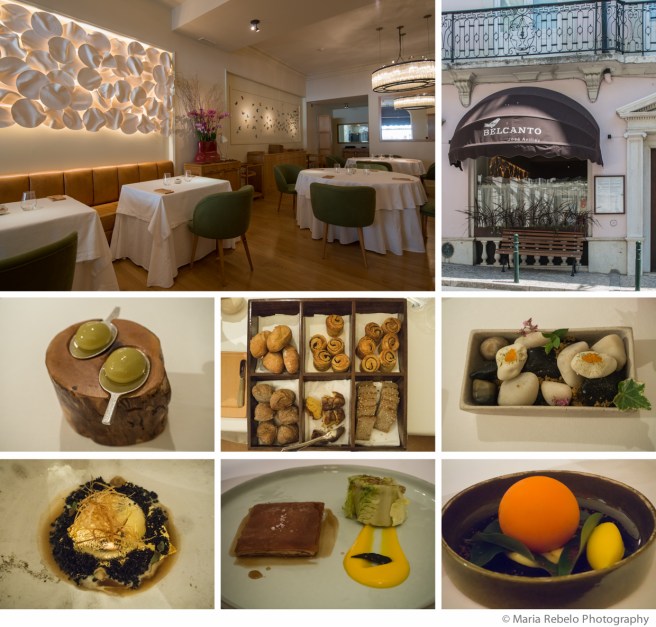
Perhaps it’s not a coincidence that Belcanto, the most celebrated restaurant in Lisbon, is close to the São Carlos opera house. Decorated with whimsical porcelain plates, the restaurant looks like a stage and its meals are as thrilling as a great opera performance.

Our lunch’s overture was composed of small bites often included in the couvert of traditional restaurants:  tremoços (lupini beans), olives, and a carrot and garlic salad. The presentation was unusual–they were served on top of Portuguese cobblestones. But the real surprise was that they all turned liquid once we bit into them, filling our mouth with explosions of flavor. This culinary prelude was accompanied by Vicentino, a wine from Zambujeira do Mar that left our paletes refreshed with hints of green pepper.

There were more surprises. First, a fake edible stone covered with salmon caviar. Then, crispy chicken skin with corn coriander and liver, a combination that tastes like roasted chicken. Next, a delicious algae cornet filled with tuna served inside a flower pot.

A genial waiter introduced a chorus of breads made from corn, buckwheat, quinoa, and puff pastry. Next came a duet for clams and “lingueirão” (razor clams) accompanied by a 1979 Porta dos Cavaleiros, a velvety red wine from the Dão region produced in the birth year of chef Avillez.

Then the arias started. The first was a Golden Egg–an egg cooked at a low temperature, covered with gold leaf and adorned with threads of fried leek. It arrived with a lively Arinto white wine made by António Maçanita in Pico, a volcanic island in the Azores archipelago.

The second aria was called Ocean Dive: a pristine sea bass (robalo) cooked in sea water with seaweed, “salicórnia” (samphire), razor clams, and mussels. We were still savoring the final chords of this crowd pleaser when a new theme was introduced: a flavorful remake of the bucolic “cozido” that the chef’s grandmother used to prepare with boiled meats and cabbage. It came with a vigorous 2012 Bruto from the Douro region.

The performance reached its climax with another traditional recipe reinvented: the roasted piglet from Bairrada. We don’t know what culinary sorcery was used to produce this perfect combination of crispy skin and juicy roasted meat. All we can tell you is that the result is magical.

A new theme was introduced by a duo of pre-desserts: a raspberry sorbet and an “abade de priscos” pudding. They were followed by a tangerine dream made from frozen juice and filed with tangerine sorbet. Vila Oeira, a rare dessert wine from Carcavelos harmonized with these sweet delights. Coffee and mignardises brought our meal to a blissful finale.

You have to be patient to dine at Belcanto. The restaurant is booked for weeks in advance. But it’s worth the wait to experience such an unforgettable culinary performance.

Belcanto is located at Largo do São Carlos in Lisbon, tel. 21-342-0607.


A perfect blend in Alentejo

Composit Monte da Ravasqueira- 2Sometimes you have to look far to find what you have near. The enologist Pedro Pereira Gonçalves left his homeland in search of a new world, first in Australia and then in Chile. But he found his calling back in Portugal at Monte da Ravasqueira, in the heart of Alentejo.

The estate was purchased by José Manuel de Mello, a successful entrepreneur, in 1943. He turned the 3,000 hectares into a family retreat where he bred Lusitano horses and planted vines, cork and olive trees.

What attracted Pedro to the property, still owned by the Mello family, are its unique virtues. Twelve dams help create a micro climate with cooler temperatures.  And even though the Atlantic Ocean is 120 km away, it cools the nights because there are no mountains in its way. While most of Alentejo is flat, Ravasqueira has slopes with different sun exposures that produce diversity in sugar and acid levels.

Pedro uses high-resolution aerial photographs to study each individual vine so that grapes can be combined into ideal blends. The result is wines that are truly made in the vineyard.

We tried some great examples. An enticing 2015 dry premium rosé with delicate fruit flavors and rich minerality. A 2014 premium white, aged in contact with the lees, that combines freshness with complexity. An elegant 2014 red called Vinha das Romãs, made from vines planted where an ancient pomegranate orchard once grew. The pomegranate roots are still there, lending the wine unique flavors and aromas.

Our wine tasting was followed by an appetizing lunch during which the Ravasqueira wines proved their ability to pair perfectly with food. The feast started with a gazpacho and continued with two traditional main courses: codfish with cornbread and roasted goatling.  The finale was a “mille feuilles” layered with artisanal jams made on the property, accompanied by exuberant port-style fortified wines.

Monte da Ravasqueira is a perfect blend of passion and technique, of tradition and modernity. It is a place where the Atlantic breezes join forces with the Alentejo sun to create exquisite wines.

Monte da Ravasqueira is located near Arraiolos, tel. 266-490-200, email ravasqueira@ravasqueira.com. Click here for information about how to schedule a visit.

A room with a view of the Estrela mountain

Pousada da Serra da Estrela (75)

The Serra da Estrela Pousada stands 1,200 meters above sea level, at the door step of Portugal’s highest mountain. It was designed in the 1920s by architect Cottinelli Telmo for those who needed to recover from respiratory ailments. The pure air did wonders. And so did the view of the mountain adorned with a mantle of snow or dressed with the grey hues of the granite and the green colors of the pine trees.

In the second half of the 20th century, the edifice fell into disuse. It was rebuilt in 2014 under the guidance of Eduardo Souto Moura, a Portuguese architect who won the Pritzker prize.

Souto Moura found ways to incorporate modern comforts like air conditioning, saunas and swimming pools into the old building. But, at the same time, he endeavored to preserve Cottinelli Telmo’s unusual design. The building is long and narrow so that most of the rooms have a view.

Almost one century after its inauguration, the pousada is the perfect place to rest our eyes on a magnificent landscape that makes problems look small and life large with possibilities.

Here’s a link to the pousadas’ website. You can find a large collection of photos of the pousadas at www.mariarebelophotography.com.

Serra d’Ossa

Composit Serra D'Ossa.JPG

It was an act of bravery. We drove up the serpentine road to Serra d’Ossa to dine at a restaurant we couldn’t find on trip advisor!  But a trusted local source told us that this was the place to go if we wanted to taste the rustic food of Alentejo. And so we went.

We were welcomed by Paula Patinho who owns the restaurant with her husband Francisco. Her mother cooks and her father makes the house wine. We were surprised by the menu prices: they were half of what we would have paid in Évora or Estremoz.

Francisco suggested that we start with “sopa de cação” (dogfish soup), continued with a tomato and fried meat soup, and ended with “lagartos,” thin strips of black pork grilled to perfection. The flavors are bold but harmonious perhaps because all the ingredients were local, cultivated in the same lands by the same people.

The house wine is staged in stainless steel. It tastes pure and smooth and pairs perfectly with the food.

We asked Francisco what makes the food taste so great. “There is a deceiving complexity to the cuisine of Alentejo,” he explained. “The preparations look simple but pushing the flavors to a higher level takes time and requires many ingredients.”

Our audacity was greatly rewarded. We discovered an inexpensive restaurant that does justice to the rich culinary tradition of Alentejo.

Serra d’Ossa is located on Rua Principal, 77, Aldeia da Serra D’Ossa, Redondo, tel. 266-909-037.

Buxa

OLYMPUS DIGITAL CAMERA

Natália Maia, the manager of the Guimarães pousada, recommended Buxa, a small restaurant right in the center of the Guimarães historic district.

As soon as we arrived, we recognized all the traits of the restaurants we favor.  First, the place was completely full. Second, there were people without reservation trying to charm the waiters into giving them a table (can you believe their nerve?) Third, there was a rhythm to the service: waiters moved with agility and grace to the beat of the kitchen drums. Fourth, the menu is small, focused on a few perfect preparations. And fifth, the price is right.

We loved the codfish with broa, a symphony of traditional flavors of the Portuguese cuisine: codfish, olive oil, corn bread (broa) and potatoes. The black pork was grilled to perfection, salty and satisfying. The tripe cooked with beans had layers of wonderful flavors (if tripe is too adventurous for you it is worthwhile ordering it just to eat the amazing beans). The octopus was tender and delicious. And the “alheira,” a sausage from nearby Mirandela, was spectacular.

We confess that we arrived at Buxa without reservations and charmed the waiter into giving us a table. But we promptly made reservations for the next day. The food at Buxa is too good to leave to chance!

Buxa is located at Largo da Oliveira 23 in Guimarães, tel. 252 058 242. Reservations are a must.

Fairy tales

Composit Fairy Tales

In October 1956, the Duke of Edinburgh embarked on a long tour of the Southern Hemisphere without his wife, Queen Elizabeth II. There were rumors that the couple was going to separate.

When the Duke arrived in Portugal in February 1957, the Queen flew from England to meet him. For four days the royal couple did what so many other tourists do in Portugal. They ate canned sardines, sailed on the Tagus river, toured the Jeronimos monastery,  visited Mafra and the Nazaré beach. Then, they flew back to England and lived happily ever after.

Portugal is a place where fairy tales can come true.

A white palace in Estremoz

Composit Estremoz

Estremoz is a village in Alentejo built on a hill by king Dom Afonso III in 1258.  It was once an important citadel that guarded the Portuguese kingdom from potential aggressors.

In 1360, king Dom Dinis built a royal palace in Estremoz for his wife Isabel of Aragon. It was in this palace that king Dom Manuel appointed Vasco da Gama as the commander of the fleet that sailed to India, beginning a new chapter in world history.

The palace, converted into an historical hotel, is sumptuously decorated with antique paintings and furniture. Corridors and stairs are covered with the famous white marble excavated from local quarries.

The war trophies that hang in the dining room reminded us of the momentous decisions made in this palace. And they made us appreciate even more the tranquil days we spent with only one difficult decision to make: which of the 22 wineries in Estremoz to visit.

Here’s a link to the pousadas’ website. You can find a large collection of photos of the pousadas at www.mariarebelophotography.com.

The most famous fish monger in Lisbon

OLYMPUS DIGITAL CAMERA

Until the middle of the 20th century, street fish sellers called “varinas” were a common sight in Lisbon. They carried a basket of fresh fish on their heads and attracted customers with their catchy slogans and charismatic personalities.

Varinas are a relic of the past, but some of the best fish in Lisbon is still sold by a charismatic woman. Many restaurants in the capital city order their fish from Açucena Veloso.

Visiting Açucena at Mercado 31 de Janeiro is a fascinating experience. It was in a stall in this market that she started selling fish at nine years of age. Today, she owns 23 stalls.

The quality and variety of Açucena’s fish would astonish the patrons of Tokyo’s famous Tsukiji fish market.  But it is not easy to gather these marine treasures. Açucena wakes up every weekday at 2:00 am to make sure she buys the best fish the sea has to offer. Despite her long work hours, she’s always in a good mood. “Look at these ocean jewels” she says with pride pointing to fish that go by quaint names like rascasso, cantaril, and emperador.

When Albert Einstein visited Lisbon in 1925, he wrote in his diary about a fascinating varina with a proud, mischievous look. We think he would have loved meeting Açucena Veloso.

Açucena Veloso’s fish stalls are at Mercado 31 de Janeiro, Rua Engenheiro Vieira da Silva, 31, tel. 91 721 8169

Post scriptum: Açucena Veloso died tragically in a car accident in January, 2018. Her daughter Susana and the rest of the family continue to run the fish stalls with the same dedication to quality and service as before. Açucena would be proud.