The Miramar beach

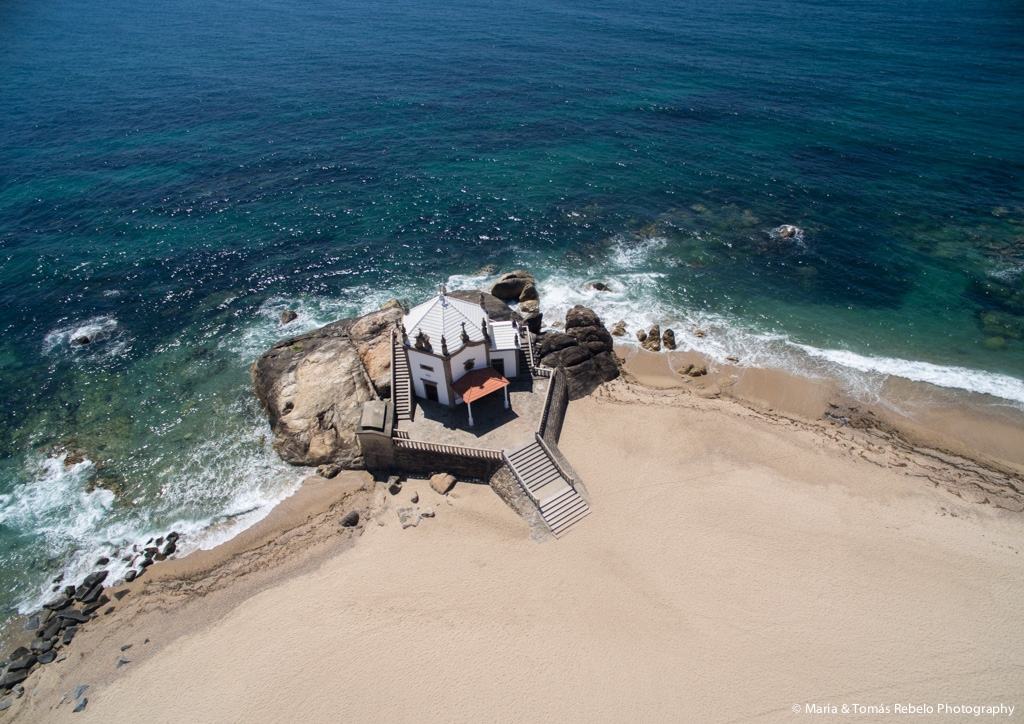
Igreja na praia-2One of the most beautiful beaches in Portugal is Miramar, near Oporto. It has a long stretch of sand bathed by green and blue water. But what makes this beach so special, is an old church built on rocks by the sea on the same place where there was once a pagan temple.

As we entered the church courtyard, we felt surrounded by the sea; dazzled by its sight, soothed by its sound, intoxicated by its scent.

It is easy to understand why this location has been a place of worship for centuries. Faced with such immense beauty, how can we not give thanks to its creator?

A pink palace in the Algarve

358 - Pousada de Estói - @mariarebelophotography.comFIt takes a long time to build a beautiful palace. An Algarve aristocrat started in 1840 to build the Estoi palace in an estate near Faro. When he died, his son took over. But by 1893, the building was still unfinished and seemed destined to become a decorative ruin. It was then that a wealthy landowner bought the palace and spent a fortune on its completion. The sumptuous inauguration took place in May 1909. Decades later, the palace was abandoned.

In 2009, a century after its inauguration, Estoi opened once again, this time as a luxury historical hotel. It is a place out of a fairytale, its opulent salons and elegant gardens restored to their original glory.

Our stay at Estoi was an extraordinary experience. Some days, we relaxed by the pool and spent time admiring the statues, fountains and myriad of architectural details. Other days, we went to the beach and enjoyed the pleasures of the sea even more than usual. For we knew that when the day was done, we would have our pink palace to return to.

The Estoi palace is part of a network of historical hotels called Pousadas. Click here for the Pousadas’ website and here to see a large collection of photos of the palace.

Europe’s most western vineyards

DCIM103GOPRO Baron Bodo Von Bruemmer, born in Tsarist Russia in 11/11/1911, made a fortune working as a banker in Switzerland. Then, at age 51, he was diagnosed with a terminal disease and told he had two years to live. He decided to look for a place where, after his passing, his wife could live without worrying about money.

Von Bruemmer came to Portugal and fell in love with the country. He bought Casal de Santa Maria, a farm in Colares near Sintra. There, he spent his days breeding Arabian horses and planting roses. The airs of Colares nursed the baron back to health and today, at 104 years of age, he continues to thrive.

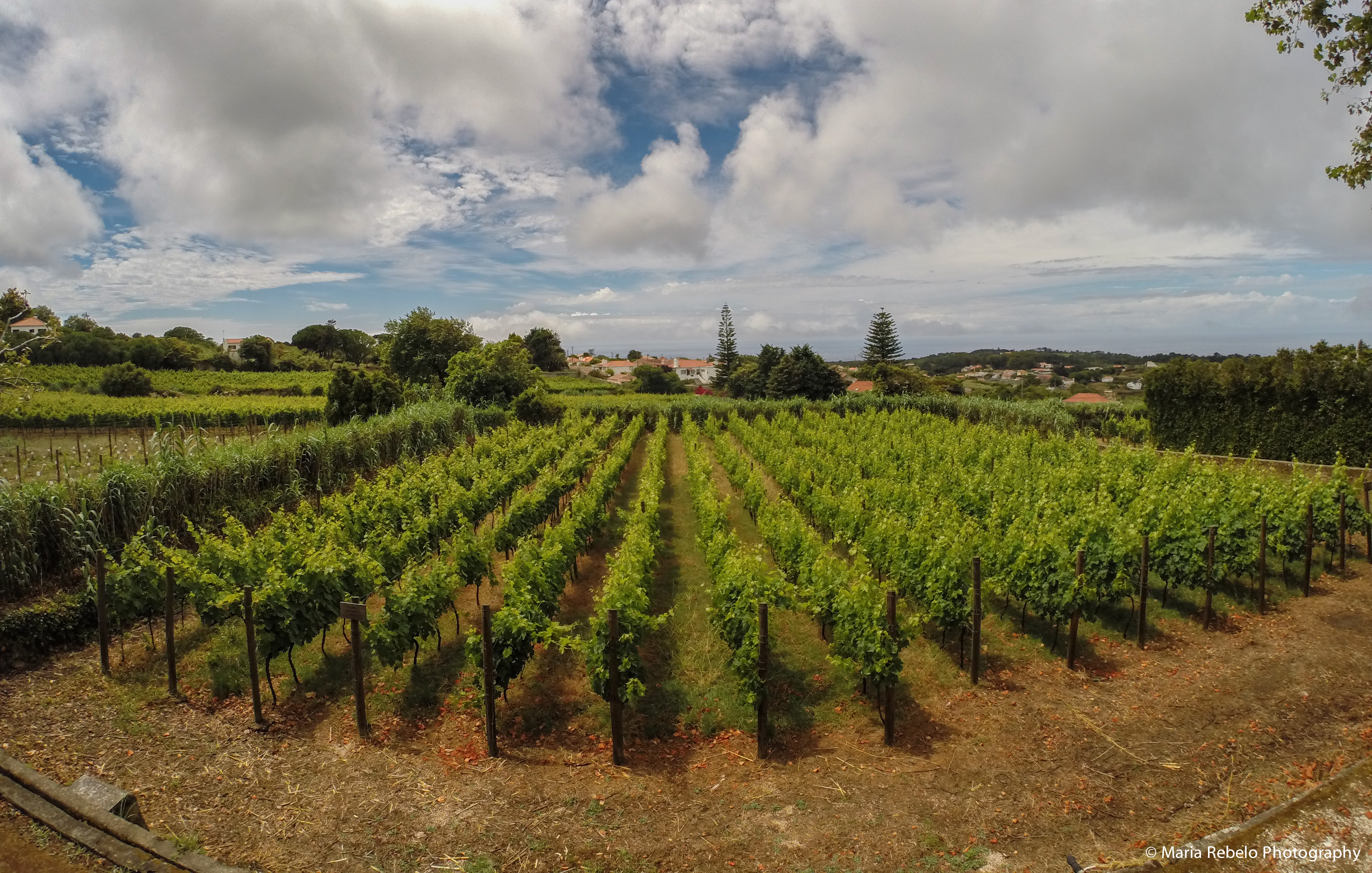
In 2007, shortly after his 96th birthday, Von Bruemmer felt the urge to plant a vineyard. He knew nothing about wine making, but was eager to learn. Since then, he has become a legend. With the help of a talented team of enologists, he planted the most western vineyard in continental Europe. Close to the sea, cooled by the Atlantic winds, its unique terroir produces amazing wines, salty, aromatic, and with great minerality.

The baron continues to plant new vines and supervise new projects. He makes his decisions using a small brass pendulum. If the pendulum rotates clockwise the answer is yes. Otherwise, it is no.

Every day, Von Bruemmer drinks a glass of champagne. But soon, he will drink instead the sparkling wine that, with the help of his pendulum, he decided to produce.

Casal de Santa Maria is a magical place, where vineyards surrounded by roses produce some the world’s most interesting wines.

Postscript: Baron Bodo Von Bruemmer passed away in November 2016 at 105 years of age. He set up a foundation so that Casal de Santa Maria can continue to produce the wines of a Russian Baron who fell in love with Portugal.

Casal de Santa Maria is located on Rua Principal Casas Novas, n. 18/20, Colares, tel 219-292-117, email geral@casalstamaria.pt.

Codfish poetry

Pastéis de BacalhauJune 10 is a holiday dedicated to the great 15th century poet Luis de Camões, whose epic poem Lusíadas helped forge the identity of Portugal as a nation.

One of Portugal’s most revered contemporary writers, António Lobo Antunes, said that “To know how to make codfish cakes is as important as to have read the Lusíadas.”

Lobo Antunes meant his words as a compliment to the genius of Camões. Try codfish cakes accompanied with tomato rice and a great glass of red wine and you’ll see that they are pure poetry!

Tasting Portuguese cheese

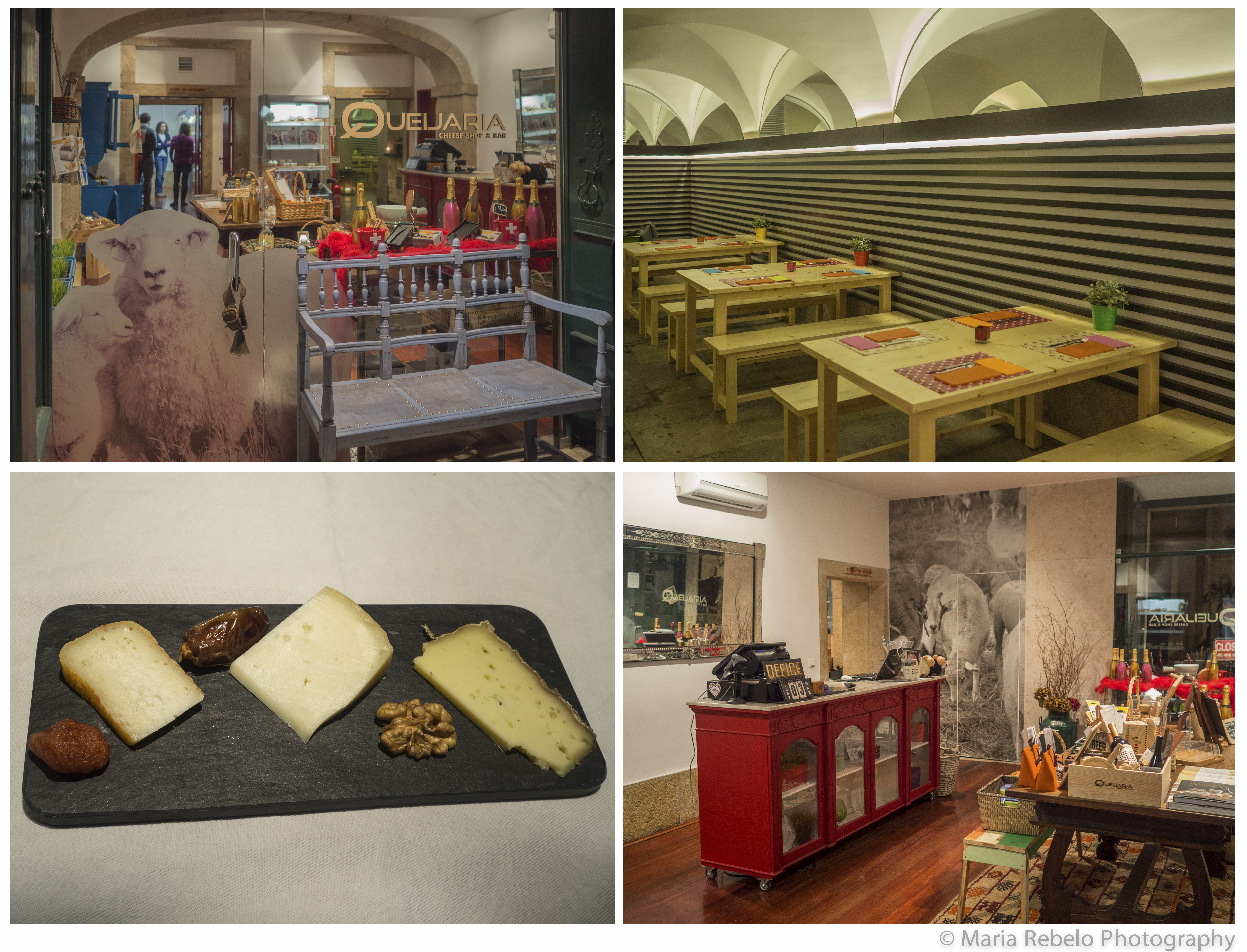
Queijaria Composit- ©mariarebelophotography.comPresident Charles de Gaulle asked how could people expect him to run a country with 246 kinds of cheese. Judged by this metric, Portugal is easier to govern than France. We have fewer cheese varieties. But there are still many regions, types of milk, producers, and styles.

Many interesting Portuguese cheeses are hard to find. They are made in small quantities by artisanal producers and sold in local markets. Queijaria, a new store in Lisbon, makes it easy to sample these local specialties.

The store is run by people who are passionate about cheese and wine, so they are uniquely qualified to serve as your guide. They prepare a degustacion of different cheeses, perfectly sequenced and paired with great wines. In one sitting, your palate can travel from North to South, to the island of Azores and back to continental Portugal. It’s a gastronomical journey you will not forget!

Queijaria is in the Principe Real neighborhood at Rua do Monte Olivete, 40, tel. 21 346 0474. Click here for their web site.

The sweet alchemy of Tecolameco

Tecolomeco

At the end of a wonderful meal at Flor de Rosa, a great historical hotel in Crato, Alentejo, the maître d’ brought us two slices of a dessert called Tecolameco. In our quest to eat fewer sweets, we decided to have only a small bite to be polite. But once we tasted this marvelous dessert, our will power vanished.

Tecolameco is made of sugar, eggs, almond, pork lard, butter, and cinnamon. There are many other Portuguese desserts made with these ingredients, but none tastes like Tecolameco.

It is said that an old chef found in the Crato castle an ancient book that revealed the meaning of life. All the pages were blank, except for the one with the recipe for Tecolameco.

Click here for the Pousadas’ website and here for more photos of Flor da Rosa.

Perfection in Matosinhos

DCIM103GOPROWhen Oporto residents want to eat fresh fish, they drive to the nearby Matosinhos beach. The town’s main street (Rua Herois de França) and its side alleys are lined up with restaurants.

We usually go to S. Valentim and order rodovalho (turbot). We avoid appetizers so that, when the perfectly-grilled fish arrives at the table, we can give it our undivided apetite.

Each restaurant has a large charcoal grill outside maned by a master griller. This is a person with unbreakable concentration who doesn’t take the eyes off the grill until the fish is perfectly cooked.

Grilling fish is easy, unless you want to do it perfectly, in which case it takes years of experience. It is this perfection that keeps fish lovers coming back to Matosinhos.

S. Valentim is located on Rua Herois de França, 335, Matosinhos, tel. 229379204.


The Óbidos Pousada

Obidos Composit The first king of Portugal, Dom Afonso Henriques, laid siege to the Óbidos castle for two months, but the moorish population resisted his attack. One moonless night, a beautiful lady came down from the castle to speak to the king. She told him that, even though she lived in the castle, she was not moorish. And that she had a recurrent dream she had to fulfill. The king was to attack the castle’s main door. At the same time, he would send a small group of soldiers to the back. There, the lady would leave an open door to let them in. Their surprise attach would secure the victory of the Portuguese troops.

The king of Portugal feared falling into a trap. But something about the lady’s demeanor convinced him to adopt her plan. The next day, the castle back door was indeed open and the Portuguese conquered Óbidos. The king looked everywhere for the beautiful lady, but she had vanished.

The castle of Óbidos was converted into a beautiful historical hotel. After entering though the front door, the one the king attacked, you find a romantic place with wonderful views of the countryside. One of the best views is just outside a door painted red. It is the door the lady left open.

In the dining room two beautiful windows, the sun and moon windows, give us a choice between seeing the sunset and the moonrise. This choice between astral spectacles is one of the many enchanting details that makes a stay at the pousada so memorable.

The pousada is the perfect place to stay at Óbidos. After all, who wouldn’t want to be treated like royalty in a medieval town?

Click here for the Pousadas’ website and here for more photos of the Óbidos Pousada.

The extraordinary salt of Castro Marim

Castro Marin Composit

The Romans loved salt. They used it to cook, to preserve food, and as a form of currency (the practice of paying soldiers in salt is the origin of the word salary). So, it is not surprising that the Romans settled in Castro Marim. This small town on the marshes of the Guadiana river produced great salt.

During the 20th century, this production became industrialized. The salt was harvested with heavy machinery that leaves plenty of chemical residues. It was then washed and processed to turn its grey color into white, striping the salt of magnesium, potassium, and other important minerals.

Artisanal producers abandoned their salt ponds and so did the fish and birds that used them as habitats. Centuries of knowledge about producing great salt was on the verge of being lost.

But then, the tide turned. In the late 1990s, a cooperative called Terras de Sal revived the artisanal salt trade. It invited a French certification body to establish the strictest certification norms to ensure the highest standard of quality. It created the conditions to attract a new generation of producers who left their city jobs and came to Castro Marim to produce the best salt in the world.

These producers harvest the salt manually with wooden tools, a slow process that is essential to avoid chemical contamination. They do not wash the salt, to ensure that it retains all its important minerals. Since rain muddies the water, they only harvest when the weather is dry, between May and September.

One of the cooperative’s producers is called Água Mãe. Their salt is amazingly white and flavorful. Their “fleur de sel,” made of fine crystals created by temperature differentials between water and air, is exquisite. Água Mãe also bottles liquid salt, which is low in sodium and high in magnesium. When we spray it on our salads it gives them layers of delicate flavor.

The Romans were prescient in their love of salt. An amazing fact about our bodies is that, because life began in the sea, the composition of our tissue fluid resembles that of natural sea salt.

The ordinary act of seasoning our food becomes extraordinary when we use salt from Castro Marim. It is a privilege to nourish our body with the same pristine salt prized by the Romans 2000 years ago.

You can find the Água Mãe salt store on Travessa dos 3 Marcos, n.º 11, Castro Marim, Algarve, tel. 961380503, email  aguamae@aguamae.pt . Click here for the Terras de Sal web site. To buy the wondrous salt of Castro Marim in the U.S., click here.

A royal inheritance

St. André HorsesThe excitement of driving a Ferrari or a Maserati doesn’t come close to the thrill of riding a Lusitano horse. You can, for modest fees, master the art of riding these elegant animals at the St. André Lusitanos school, on the outskirts of Lisbon.

The school has a long tradition of teaching excellence. When you take one-on-one lessons with the St. André instructors, you become an heir to knowledge that goes back to King Dom Duarte’s famous 1435 equestrian treatise “The art of ridding on every saddle.” If you always yearned for a royal inheritance, this is your chance.

Click here for the St. André Lusitanos website.