Finding perfection at Ervamoira

“When my father came home from work, he would spend hours studying military maps,” recalls Jorge Rosas, the CEO of Ramos Pinto, a port wine house founded in 1880 by his great-grandfather, Adriano Ramos Pinto. “He was searching for the perfect farm in the Douro Superior, a region he believed could produce exceptional wines like the legendary Barca Velha.”

Sitting on the floor with an old magnifying glass that had lost its handle, Jorge’s father, José António, pored over contour lines in search of flat land. He wanted to find terrain that was easier to cultivate than the steep slopes that dominate the Douro Valley. From Friday to Sunday, José António drove through rustic roads, to visit locations he had marked on the maps.

One day, crossing a remote mountain path, he found his dream farm. “Shangri-La!” he exclaimed. The estate, then planted with cereals, was called Ervamoira. It was love at first sight—a love so strong that his wife often felt jealous of the farm. Determined to buy it, José António contacted the owners in Lisbon. Despite having little attachment to the estate, they hesitated to sell a property that had been in their family for generations.

An avid trout fisherman, José António donned his fishing gear to fish in the rivers that cross Ervamoira, the Coa, and the Douro, even though he knew they had no trouts. Fishing was merely an excuse to immerse himself in the landscape, imagining the vineyards he might one day plant.

In the aftermath of the 1974 revolution, many farms were nationalized. Fearing expropriation, the owners of Ervamoira agreed to sell. Despite his family’s concerns about buying an estate amid so much uncertainty, José António seized the opportunity. “My father is a cereal killer,” jokes Jorge, alluding to how the cereal fields were soon replaced with vineyards.

At Ervamoira, José António introduced innovative viticultural practices. He assigned each grape varietal to a separate plot. Instead of using traditional terraces, he planted vines on platforms that facilitate mechanization. High-density planting forced roots to delve deep for nutrients, enhancing quality through higher polyphenol content and increasing drought resistance.

But a shadow loomed over paradise. In the early 1990s, plans resurfaced to construct a hydroelectric dam that would flood the estate. Horrified, José António fought tirelessly against this project. The discovery of a Roman tomb and ancient coins on the property provided fleeting hope, but archaeologists deemed the finds insufficient to halt the dam project.

Desperate, José António entered his wines into international competitions, receiving numerous awards. But not even these accolades could stop the project.  “What now?” he wondered. “Only a miracle can save the farm,” his cousin, João Nicolau de Almeida, remarked.

Then, a miracle happened. Archaeologists discovered prehistoric cave engravings near Ervamoira.  An expert who secretly evaluated the site revealed that the engravings are about 30,000 years old. It was widely assumed that outdoor prehistoric art couldn’t survive millennia of exposure to the elements. Ervamoira proved otherwise.

The discovery attracted the attention of the Portuguese media but failed to sway the government. Deliverance came from an unexpected source. A Portuguese émigré, who had been Jacqueline Kennedy’s butler, read about the engravings in a local newspaper. He shared the news with an acquaintance at The New York Times, and the newspaper published an article titled “Vast Stone Age Art Gallery Is Found but Dam May Flood It.” The story sparked an international outcry that led to the abandonment of the dam project.

Today, Ervamoira thrives. Its grapes contribute to the iconic Duas Quintas wines, made from a blend of grapes from two farms—Ervamoira and Bons Ares. The schist soils of Ervamoira, at 150 meters altitude, lend structure, while Bons Ares, perched at 550 meters with limestone soils, adds refreshing acidity.

Ervamoira’s magic is unmistakable. Nestled in the remote Douro Superior beyond the Cachão da Valeira—a region inaccessible until Queen Maria I spearheaded efforts to make the Douro River navigable—it is a gem of the Douro Valley, a dream that a miracle made come true.

Please click here for information on how to visit Ervamoira.

The pleasures of a Solo lunch

To find the finest place for lunch in Lisbon, you must head toward the majestic Pantheon, a baroque limestone masterpiece that took three centuries to build. The adjacent plaza, Campo de Santa Clara, overlooks the “sea of straw,’’ the stretch of the Tagus River that reflects the golden sunlight, resembling a field of wheat.

A short walk leads you to number 128, where the understated entrance of the elegant Santa Clara 1728 hotel awaits. From Tuesdays to Saturdays, the hotel’s dining room, home to the renowned Ceia restaurant, transforms into a lunch haven called Solo.

The meal begins with the comforting aroma of warm, house-made sourdough bread served with creamy butter.  It continues with a starter and main course paired with a glass of wine and ends with dessert. The menu is updated every two to three weeks to reflect what is seasonal.

The starters are a testament to culinary finesse, featuring options like delicate Hamachi kissed with ponzu and coriander, requeijão–a soft cheese from the Estrela mountain–adorned with grapes and a touch of balsamic vinegar, or duck escabeche infused with the sweetness of ripe tomatoes.

The main courses are equally enticing, including choices like tender roast beef accompanied by grilled lettuce hearts and anchovy vinaigrette, creamy orzo with pumpkin, spinach, and truffles, or line-caught fish paired with pumpkin, hazelnut, and a rich bouillabaisse.

For the sweet ending, will you choose the tropical freshness of Azorean pineapple with yuzu syrup and finger lime? Or the indulgent richness of chocolate ganache with seasonal fruits?

Sharing the experience with a friend doubles the delight. The chef can split two menus, letting you savor two different starters, main courses, and desserts.

Solo’s exceptional cuisine is rooted in its “soil to table” philosophy. Most ingredients are sourced from Herdade no Tempo, a farm in Alentejo that uses regenerative and holistic practices to nurture the soil and support biodiversity. Chef Renato Bonfim and his team transform these pristine ingredients into dishes that celebrate the gifts of nature and the joy of cooking. 

From the artful presentation to the gracious service and intimate ambiance, every detail at Solo turns lunch into an experience that lingers in our memory long after the last bite.

Solo is located at Campo de Santa Clara, 128. Lisbon. Click here for the restaurant’s website.

Wines of the land and sea at Serenada

A woman named after a flower crafts enchanting wines on a farm called Serenada, which her family has owned for over three centuries. It sounds like a fairy tale, but the wines are as real as the spell they cast.

As a young girl, Jacinta Sobral had no idea she was destined to become a winemaker. In 1961, one year after getting married, her father, António Sobral, planted a vineyard at Serenada with twelve grape varietals. He crafted his wines with little more than his hands, heart, and the wisdom gained through experience. The vineyard thrived, and in 1970, he decided to plant more vines.

As for Jacinta, she wandered down a different path. She studied the secrets of chemistry and became a microbiologist. But in 2004, as António’s health began to fade, he expressed a desire to teach Jacinta to make white wine. “Anyone can make red wine, but white wine—that is art,” he said. António showed Jacinta the delicate process of decanting free-run juice while preserving the fine lees, which enhance the wine’s texture and complexity.

When António passed away in 2006, he left various properties to his other children but bequeathed Serenada to Jacinta. She felt like a spell had been cast, binding her to the vines. Determined to honor her father, she enrolled in a Master’s program in Agricultural Engineering. There, she found that her background in microbiology was like a magic key, unlocking the mysteries of winemaking. She immersed herself in enology textbooks and crisscrossed Europe to learn from other producers. 

Serenada is rich in geological diversity. There are schist soils near the ancient Grândola mountain, veins of manganese and iron, and fields of clay and sand. These nutrient-poor soils stress the grapevines, prompting them to grow deeper roots in search of water and minerals. The cooling Atlantic breeze slows grape ripening, fostering complex flavors while preserving acidity. The result is wines that are fresh, balanced, and vibrant.

Unburdened by convention and free to follow her imagination, Jacinta began exploring different vinification and aging techniques, from fermenting the must in Roman clay amphoras to aging bottles in a cave once mined for pyrite, the mineral known as fool’s gold.

The most remarkable discovery came in 2017 when Jacinta submerged wine bottles 15 meters deep into the ocean. There, the bottles slept in silence, rocked by the waves and shielded from the sun’s light. Eight months later, when Jacinta tasted the wine, she was astonished. These ocean-aged wines were unlike any she had experienced—smooth, ethereal, as if blessed by the ocean’s spirit.

Serenada has a handful of rooms where you can stay, each offering a peaceful retreat surrounded by pines and oak trees. Guests can enjoy scenic walking and cycling trails, delicious meals, picnics, and wine tastings.  It’s the perfect place to savor Jacinta’s mesmerizing wines that capture the essence of land and sea.

Serenada is located near Grândola in Alentejo. Click here for their website. 
Covilhetes, small pies full of flavor

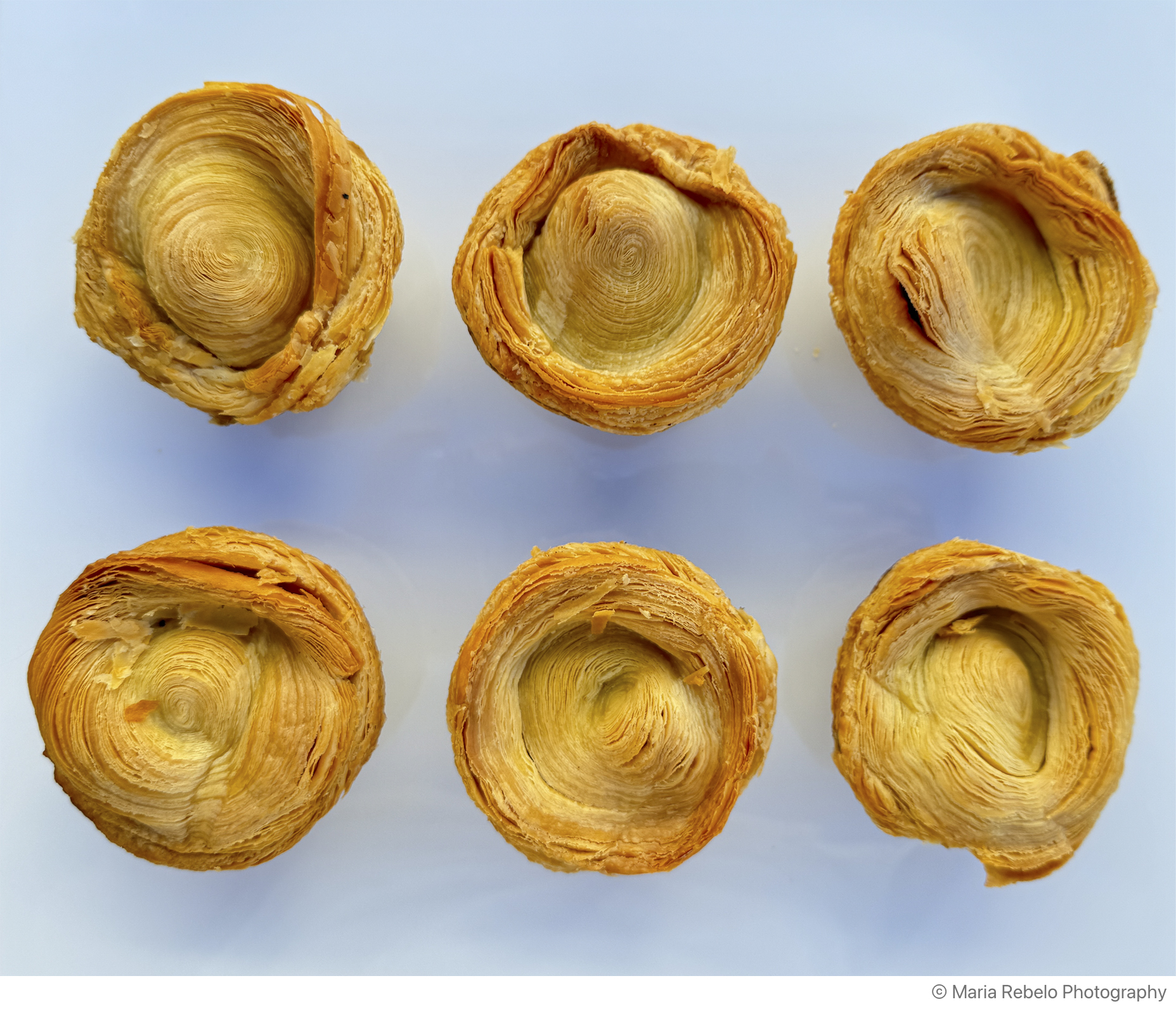
Covilhetes are small meat pies cherished in Vila Real, a town near the Douro Valley. Their origins date back over two centuries when they were sold at religious fairs. By the mid-19th century, covilhetes had become a staple in restaurant and café menus, often served with oven-baked rice. Their popularity has endured ever since.

In 2015, a guild was established to safeguard the authenticity and quality of covilhetes. The unique taste of these pies reflects the premium ingredients used, such as fine flour, Maronesa veal (from a breed native to the Marão mountains), and local sausages.

Though recipes for covilhetes exist, mastering the art of crafting their delicate, flaky pastry and intricate oval crust resembling planetary orbits is challenging. Fortunately, pastry shops in Vila Real’s historic district, such as Pastelaria Gomes, Casa Lapão, and Loja do Covilhete, produce daily batches of these heavenly pies, fresh from the oven, ready to delight our palates.

Vale da Capucha’s artisan wines

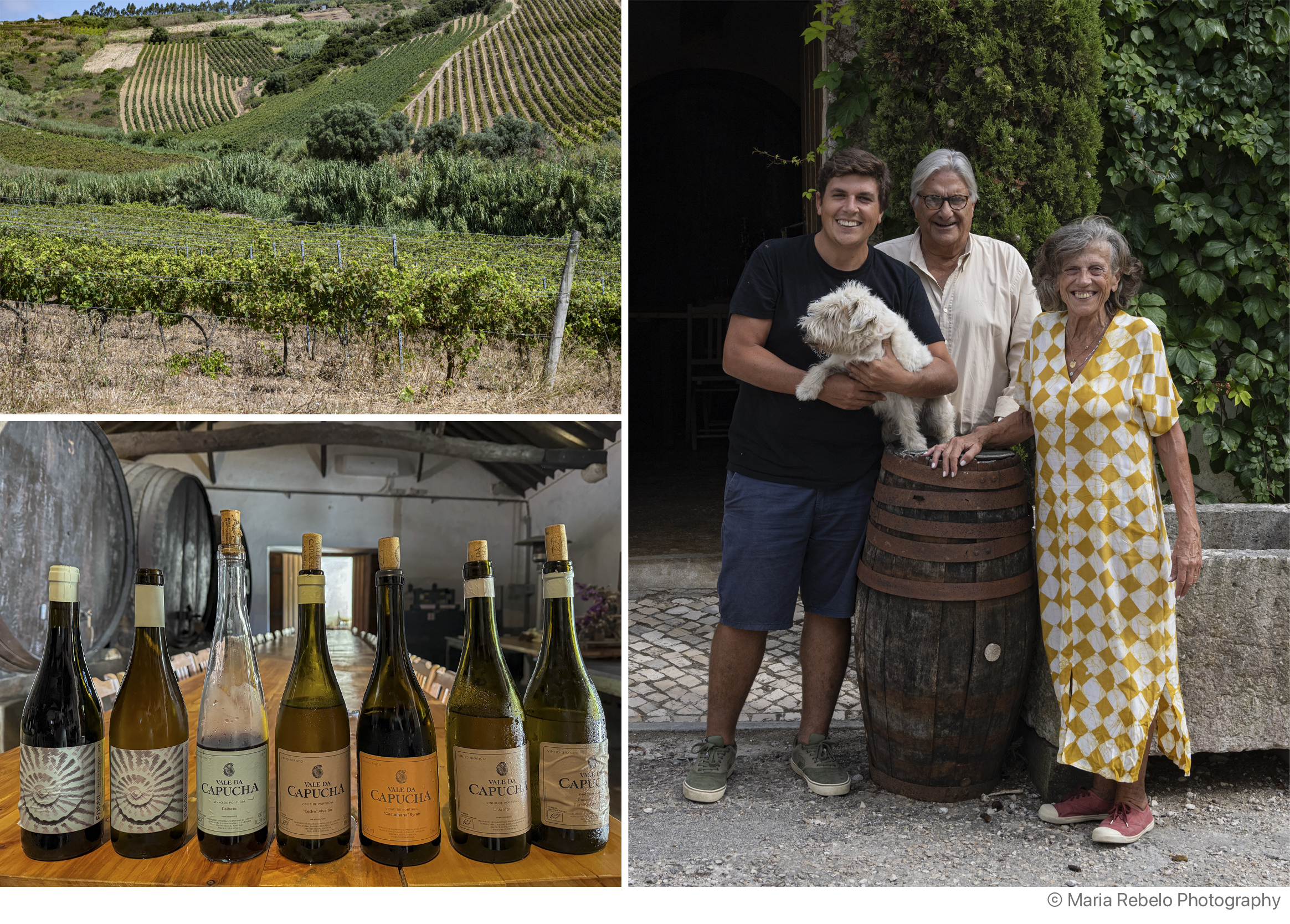
As we arrived at Vale da Capucha, a wine estate in Torres Vedras near Lisbon, a small, cute dog ran up to greet us. “His name is Arinto,” Manuel Marques said as he walked towards us, “all of our dogs are named after grape varieties.”

For the Marques family, producing great wine was never a choice–it was their destiny. Manuel’s great-grandfather was a winemaker, and his grandfather acquired Vale da Capucha to expand the family’s wine production. The estate was famous because it belonged to António Batalha Reis, the first director of the Torres Vedras School of Viticulture. This school taught local farmers how to graft vines onto American rootstock, protecting them from phylloxera, the disease that devastated European vineyards in the late 19th century.

Manuel’s grandfather raised his family on this farm. When he passed away, Teresa, Manuel’s mother, inherited the house and some of the land. She and Afonso, her husband, had busy lives in Lisbon, so they were unsure what to do with the property. But in 2005, the couple came for a weekend and fell in love with country life. They never returned to Lisbon, embracing their new chapter in rural Portugal. 

Pedro, Manuel’s brother, had studied enology and saw immense potential in the farm’s terroir for producing high-quality white wines with significant aging potential. The estate’s proximity to the ocean fosters a cool climate, which preserves the acidity in the grapes. At the same time, the limestone-rich soil, packed with 400-million-year-old fossils, lends minerality and complexity to the wines. Manuel joined the venture as the commercial director, and a new era for Vale da Capucha began.

In 2006, the family replanted the vineyards with carefully selected white grape varieties: Fernão Pires, widely grown in the Lisbon region, and Arinto from nearby Bucelas. They also introduced Antão Vaz from Alentejo, as well as Gouveio and Viosinho from the Douro Valley. At Vale da Capucha, these grape varieties developed a distinctive profile, gaining salinity and freshness.

The family made their first wine in 2009 and released it in 2011. Another significant milestone came in 2012, when they embraced biological agriculture to fully express the land’s natural character. Today, Vale da Capucha produces around 60,000 bottles annually. They rely exclusively on wild yeast for fermentation, handpick all their grapes, and practice minimal enological intervention, allowing the wine to reveal the essence of the terroir and tell the story of each vintage.

As we walked through the farm, we saw many animals. The farm raises Alcobaça-spotted pigs, turkeys, and Bresse chickens—Paul Bocuse’s favorite breed–to supply the kitchen with wonderful organic meats.

Manuel invited us to the wine cellar to taste some wines surrounded by old barrels that testify to the estate’s rich history. We started with a 2018 blend of Arinto and Fernão Pires, which impressed us with its stunning color, freshness, and vibrant character. Then, we sampled the 2019 Arinto made from a blend of three different parcels. It has elegant citrus notes, intense minerality, and salinity. These are wines that will age gracefully, becoming more complex and refined with time.

Next, we tasted an interesting Alvarão, a playful twist on Alvarinho, a grape from the Vinho Verde region. A 2019 Fossil “palhete” followed. This wine, made with 80 percent white grapes (Arinto) and 20 percent red grapes (mostly Castelão), is what people used to drink in this region one century ago. Despite its red hue, the wine drank like a white, bursting with freshness. To finish, we sampled a 2014 Syrah—light, earthy, and with only 13 degrees of alcohol–a singular expression of this variety.

The influence of the Atlantic Ocean, with its waves crashing just eight kilometers from the vineyards, gives these wines a distinct character. No wonder they captured the attention of sommeliers and wine enthusiasts searching for something exceptional.

Lunch with Manuel, Afonso, and Teresa in the dining room of the manor house was a gastronomic feast. We were treated to delicious vegetables served with local cheese and country bread, followed by a magnificent roasted lamb and rice made from the animal’s giblets. The 2019 Arinto was the perfect lunch companion, its bright acidity enhancing the flavors of the food.

It was an unforgettable visit to Vale da Capucha, a place where winemaking traditions, organic farming, and a refined understanding of winemaking come together to produce outstanding wines.

Once a month, Vale da Capucha hosts a lunch featuring cozido, a traditional Portuguese stew, paired with their wines. It’s a word-of-mouth event eagerly awaited by those in the know. Occasionally, they announce it on their Instagram page. If you see the posting, don’t miss the opportunity to meet this remarkable family and taste wines that are bringing international acclaim to the Torres Vedras region.

Gadanha, revisited

When we asked our son, a chef by trade, what he wanted for his birthday, he answered without hesitation: lunch at Mercearia Gadanha in Estremoz. And so, on the day when we celebrated the arrival of the treasured gift that is our son, we got on the road to Estremoz. 

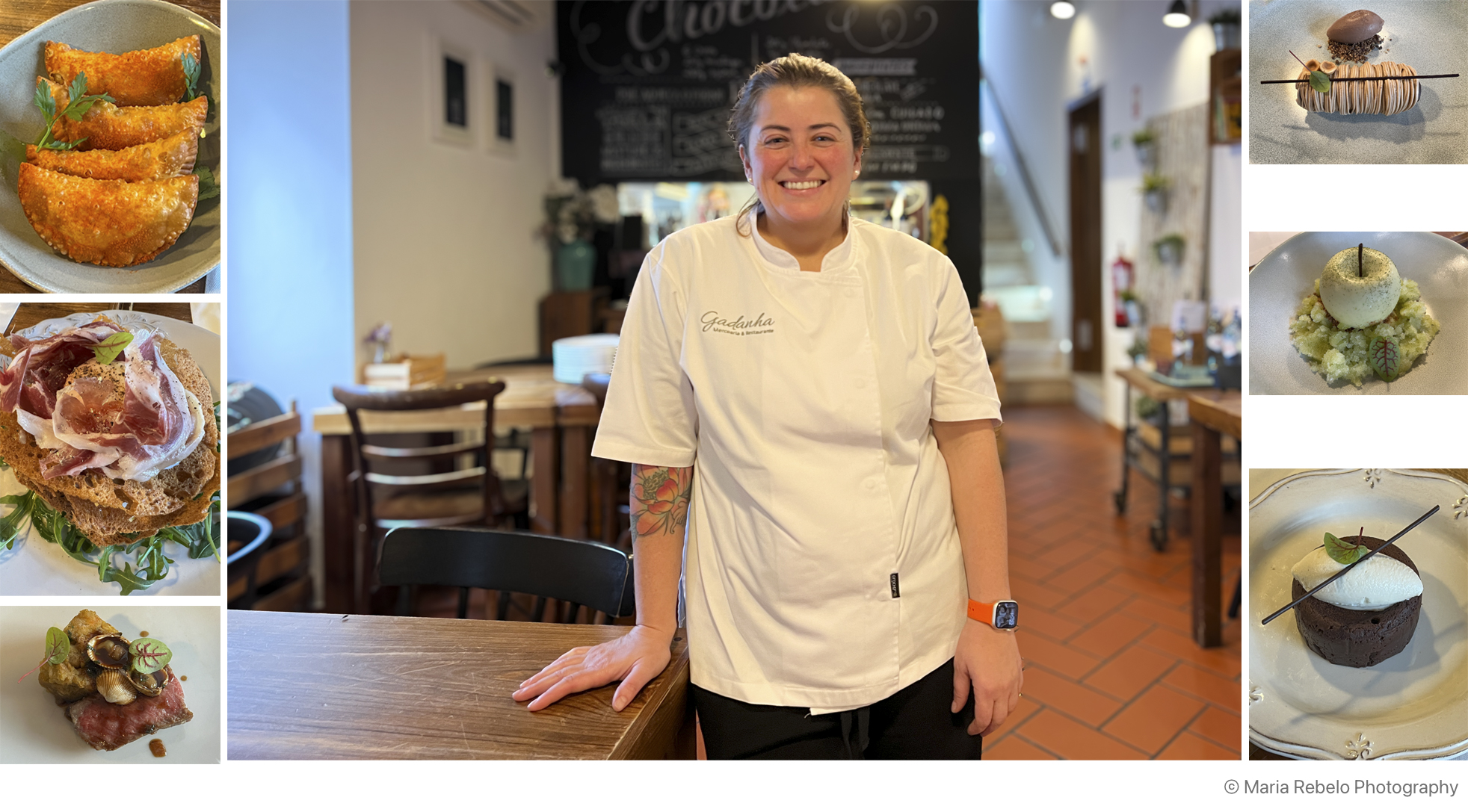
Chef Michelle Marques welcomed us into her restaurant with her radiant smile. She filled our glasses with Mainova, a white wine made with a harmonious trinity of Portuguese varietals (Arinto, Antão Vaz, and Verdelho). It has a wonderful acidity and a citrus aroma that kept us great company through the meal. 

Our lunch began with Gadanha’s classic lamb croquettes served with garlic confit mayonnaise. Each bite reminded us why this dish had long been a favorite.

Next came the quail, stewed to perfection and served with a rich demi-glace, an intense apple sauce, and some of the most flavorful potato chips we’ve ever had—thin, crispy, and seasoned with just a whisper of oregano.

Then came wild mushrooms with a soft-cooked egg, and a crumble of alheira sausage, each mouthful an explosion of umami.

The next course was a set of stunning cação pastries. Never was this fish so prized in Alentejo so wonderfully cooked. The pastry was crunchy, allowing the delicate flavors of the fish to shine.

Another favorite followed: the exquisite codfish mille-feuille, a combination of crispy Alentejo toasts, chickpea foam, codfish confit, and black-pork prosciutto. This dish alone is worth the journey to Gadanha.

The next course, black pork and cockles (berbigão) is a delicious reimagination of a traditional Alentejo recipe: pork and clams. The savory part of the meal ended with duck rice brimming with flavor.

We indulged in three desserts: a reconstructed apple with pennyroyal (poejo) and sheep milk ice cream, a medley of chocolate and hazelnut textures, and a chocolate and coffee delight with vanilla ice cream.

Michelle was born in Brazil, but she has lived in Portugal for so long that she lost her Brazilian accent. In its place she gained a culinary voice so original that it is worth traveling the distance to celebrate life’s best moments at her restaurant.

Gadanha is located at Largo Dragões de Olivença, 84 A in Estremoz, tel. 268 333 262. Click here for their website.

Xakra in Peniche

There’s something about dining on the beach that makes the food taste even better. Perhaps it’s the salty breeze that stirs the appetite or the beauty of the ocean that awakens the senses.

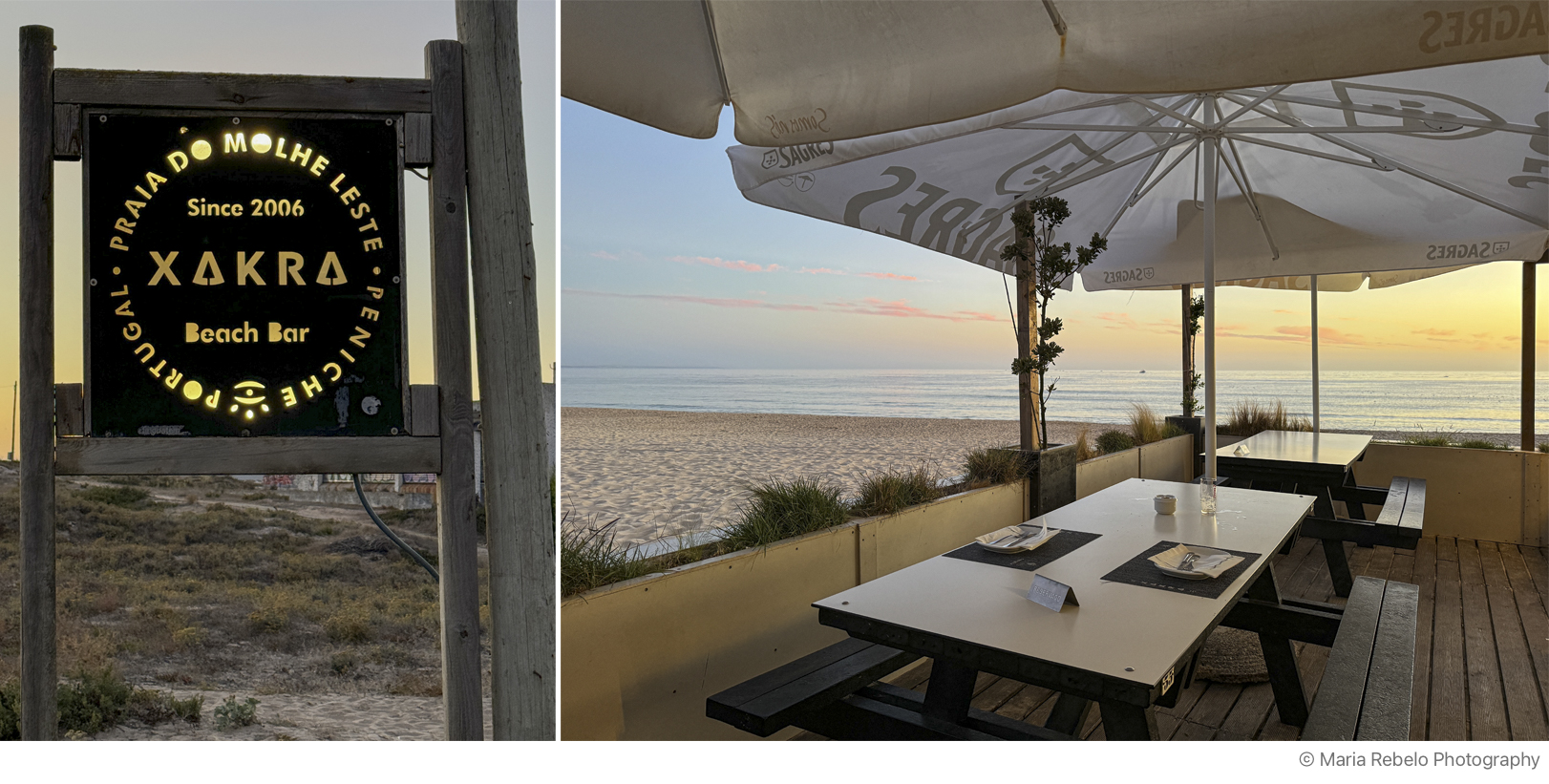
It used to be easy to find simple beachside restaurants that served freshly caught fish. But, as the price of wild fish went up, these places have become increasingly rare. That is why we were so delighted when some friends took us to Xakra at Molhe Leste, a beach in Peniche favored by surfers because of the consistency of its waves. 

Xakra’s decor is plain, but the view is luxurious. We ordered two starters, a soup, and a main course. The first starter was berbigão, a flavorful cockle prepared with olive oil, coriander and garlic. The second was a wonderful skate salad simply dressed with olive oil, vinegar, and onion. 

The fish soup had delicately cooked fillets immersed in a creamy vegetable broth. The vegetables of the land harmonize surprisingly well with the fruits of the sea. 

Finally, the pièce de résistance was freshly caught turbot perfectly grilled and served with small potatoes, cabbage, and a sprinkle of cornbread crumbs.

Xakra has been delighting guests since 2006. We’re sorry it took so long to discover it, but now we know!


Xakra is situated at Praia do Molho Leste in Peniche. For reservations, please call 965 172 166.

António Magalhães, keeper of Douro secrets

You might not be familiar with António Magalhães, the chief viticulturist of the famed Taylor-Fladgate port house, but if you enjoy exceptional port wines, you’ve likely experienced the fruits of his labor. António has worked for more than three decades in the rolling terraces of the Douro Valley. Throughout this time, nature has gradually revealed to him some of its winemaking secrets. Patience has been essential in this apprenticeship. It can take many years to grasp the impact of viticulture choices on wine production.

António is known for his thoughtful character and gentle disposition. But beneath this demeanor lies a powerful intellect–he has the rigor of a scientist, the curiosity of a historian, and the eloquence of a poet. He believes in combining scientific methods with traditional wisdom and has a deep reverence for the mysteries of winemaking. 

In collaboration with a statistician, António sought to unravel some of these mysteries, analyzing climate data since 1941 to identify weather patterns associated with vintage years, the finest for port wine production. They discovered that these years share three characteristics. First, the average temperature in July is less than 24.5 degrees Celsius. Second, two-thirds of the rain falls during the dormancy period (from November to February) and one-third during the growth period (from March to June). Third, there is less than 20 millimeters of rain in September. A small amount of rain at harvest time helps refine the grapes, says António, but too much rain in September fills the grapes with water and promotes fungal diseases. To António’s delight, they found that exceptional vintage years often deviate from the norm in unique ways, a testament to the magic of port wine.

Another facet of this magic is the art of blending. The Douro’s diverse microclimates provide winemakers with a rich palette to adapt to the annual variations in weather. They skillfully blend diverse varietals from vineyards with different locations, altitudes, and sun exposure. António has a profound understanding of the art of blending grounded on his comprehensive knowledge of the Douro subregions—the rain-soaked Baixo Corgo, the moderately wet Cima Corgo, and the arid Douro Superior. 

He has studied how grape varietals were adapted to counter the crisis created by phylloxera, an American insect that decimated European vines in the second half of the 19th century. The blight reached the Douro region in 1862-63 and became a severe problem in 1872. Farmers noticed that Mourisco, a varietal with lackluster enological properties, was the most resistant to phylloxera. For this reason, Mourisco was crossed with Touriga Nacional, considered the finest pre-phylloxera varietal, to create Touriga Francesa. The name, which means French Touriga, was likely chosen to honor the French school of viticulture and its contribution to creating phylloxera-resistant varietals. 

António also analyzed the various types of American vine roots brought from places like Texas to the Douro Valley to graft European vines and increase their resilience to phylloxera.

Since 1992, António has worked closely with David Guimaraens, the chief enologist at Taylor-Fladgate. Every year, António and David write several letters to the farmers who produce grapes for Taylor-Fladgate, offering insights into the vines’ current conditions and the most effective viticulture practices to respond to them. This educational effort is vital to the quality of the Taylor-Fladgate ports.

Concerned with the impact of heavy rainfall on soil erosion, António and David developed a new model for the terraces where the vines are planted. They had an epiphany while visiting the Benziger family, a biodynamic wine producer in California. It started to rain torrentially, and as they ran for shelter, they noticed that the rain was running with them. They realized that this kind of drainage, created by a three percent gradient, is what the Douro Valley needs.

António and David asked earthmoving companies to find a bulldozer narrow enough to fit in the terraces and capable of creating a three percent inclination. One of the companies found a second-hand machine used in rice plantations in the south of Portugal. The company’s manager called to say that the machine had an unusual device. “Bring it along,” said António. It turned out that the device was a laser that greatly simplified the task of creating a three percent slope. They later learned that the Benziger farmland had been graded by Chinese workers, who were likely to be familiar with the three percent inclination used in rice cultivation.

The Taylor-Fladgate farms stand out for their beauty because António is a sculptor of landscapes. He knows that cultivating a vineyard, planting a tree, or building a stone wall alters the scenery, and like an artist, he selects colors that harmonize, proportions that feel human, rhythms that please the eye.

António is passionate about researching the history of the Douro region. He often visits Torre do Tombo, a vast national archive with documents spanning nine centuries of Portuguese history. The writings of Álvaro Moreira da Fonseca (the creator of the vine quality scoring system still in use), the Baron of Fladgate, John Croft, José Costa Lima, A. Guerra Tenreiro, and many other Douro luminaries are his constant companions.

His extensive knowledge of history gives him a unique appreciation for the sacrifices made by generations of workers who have toiled in the Douro region. This understanding is evident in how António interacts with the people he manages. His sincere appreciation for their efforts earns him the loyalty and trust of his collaborators.

Today, António Magalhães retires as Taylor-Fladgate’s chief viticulturist. This milestone marks the beginning of a new chapter. We hope that António can now find the time to write a treatise on viticulture so that, as the climate continues to change, his erudition can illuminate the future of the Douro Valley.

The wondrous old brandies of Quinta do Rol

Lourinhã is one of the few regions demarcated to produce high-quality brandy, known in Portugal as “aguardente vínica.” Like Cognac and Armagnac, Lourinhã imposes strict rules on brandy production to guarantee quality and authenticity. This dedication to excellence has led locals to affectionately nickname the region Lourinhac.

While many local grapes are not ideal for table wine, they are perfect for brandy. The fertile soils yield grapes with higher water content. The proximity to the ocean moderates the temperature, resulting in less maturation and lower alcohol concentration. The cool nights enhance the grapes’ acidity. This acidity helps the delicate fruit and floral notes of the wine carry over into the brandy and provides a stable foundation for the aging process.

Quinta do Rol is the main distillery in Lourinhã. In 1995, Carlos de Mello Ribeiro, an accomplished manager, acquired the estate from his family and invested in producing premium brandy. He had the attributes essential for success: capital, managerial skill, and patience—high-quality brandy requires 12 years of aging to develop its depth of flavor, delicate vanilla aroma, and seductive amber color. What he lacked was a detailed knowledge of the production process. To fill this gap, Carlos and his enologist, Pedro Correia, traveled to Armagnac and Cognac to learn from French producers, who generously shared their secrets.

Upon returning to Portugal, Carlos committed to using traditional methods without shortcuts. He installed a copper distillation engine like those used in Armagnac and planted Tália grapes, the varietal favored in France for brandy production under the name Ugni Blanc. Since then, he has accumulated 30 years’ worth of precious brandies, aged first in new oak and then in used oak barrels. 

The region’s freshness also lends itself to producing interesting white wines. Carlos crafts a wonderful sparkling wine with Arinto and Pinot Noir and a great white wine with Arinto and Chardonnay. He also makes a delicious Moscatel.

The first king of Portugal, Dom Afonso Henriques, granted the Lourinhã region to a French knight called Jourdain, who fought valiantly in the conquest of Lisbon. The knight would likely be proud of Lourinhac’s success in the world of brandy.

A perfect picnic

Victorian novels describe picnics where friends have a grand time, enjoying delicious food in idyllic settings. But real-life picnics seldom measure up to these literary accounts. Sometimes, the sun is too harsh, and the shade is scarce. Other times, it is cold, the wind blows disagreeably, or the rain intrudes. Wine and beer are lukewarm by the time they are served. Sitting is uncomfortable, and troupes of insects join the party.

When our friend Abílio Tavares da Silva invited us for a picnic, we braced ourselves for the usual woes. But, as soon as we arrived at his Douro Valley estate, it was clear that this would be no ordinary affair.

It was a midsummer day with clear skies and a gentle breeze. Spacious wooden tables with comfortable benches awaited the lucky guests under the shade of two majestic linden trees. The view, with the Douro River stretching out in all its splendor, was worthy of being painted by Turner.

The picnic basket, prepared by the talented Rosário Buia at Toca da Raposa, was brimming with delicacies. There were farinheira tarts, shrimp rissoles, oranges seasoned with olive oil and minced garlic, chickpea salad, carrot and zucchini rice, olives, freshly baked bread, and a tortilla prepared with eggs so delicious that they were surely laid by the happiest of chicken.

The food was served in colorful pottery designed by the 19th-century master ceramist Rafael Bordallo Pinheiro. Abílio’s alluring Foz Torto white wine, made from precious old vines in Porrais, was poured into crystal glasses at the ideal temperature. 

The conversation flowed as freely as the food and the wine. The meal ended late in the afternoon with slices of Toca da Raposa’s famous drunken cake (bolo borrachão) accompanied by glasses of chilled 20-year-old Fonseca tawny port. Not even Jane Austen could imagine such a perfect picnic.