Hamilton Reis’ exhilarating wines

Extreme sports, like surfing giant waves, captivate enthusiasts with their exhilarating adrenaline rush. Hamilton Reis’ family wine project, Natus, offers this kind of thrill. The production is organic; the vines are not irrigated; the fermentation relies only on wild yeast and takes place first in the large clay pots that the Romans used and then in old oak barrels. The grapes are picked by hand and trodden by foot. Most modern winemaking techniques are set aside to produce wines with minimal intervention but meticulous attention to detail. Like a master surfer, Hamilton can afford to take these risks because of his extensive experience and depth of knowledge.

Natus means born in Latin. Hamilton chose the name to indicate that he and his family started this project from the ground up. They bought four hectares of land in Vidigueira, Alentejo in 2008. For ten years, Hamilton nurtured the soil so it could recover from decades of chemical abuse with herbicides and pesticides. During that time, he learned about the climate and the varietals planted in the region and talked to the elders about the local wine-making traditions. Those traditions are, for Hamilton, as much part of the terroir as everything else. 

He built a house for his family in the middle of the field so he could take care of the vines as if they were part of his family. The cellar is invisible. It lies underground so that gravity can help unload the grapes. 

An important aspect of the location is the absence of barriers between the land and the sea. The Mendro mountain, situated east of the property, forms a shell that keeps the cool air from the sea. The resulting climate produces elegant wines that are low in alcohol and yet rich in complexity, depth, and freshness. 

These unique wines are difficult to buy because only about 6,000 bottles are produced in each year. Hamilton is determined not to increase production to a level that would compromise his ability to maintain personal control over every aspect of the process. However, to meet the demand for his wines, he has initiated a new venture named Intus, the Latin word for “inside.” This wine is crafted from grapes sourced from a select group of farmers who refrain from irrigating their vines and agree to adopt the rigorous biodynamic methods that Hamilton champions. Like Natus, Intus wines are characterized by their low extraction and alcohol content. However, they undergo fermentation in stainless steel, which preserves the pure essence of the fruit.

The Natus label has a secret. Those who discover it get a glimpse of what Hamilton sees every day: vines that produce wines made without compromises, perfectly in tune with nature.

The Natus vineyards are on Estrada da Cancelinha in Vidigueira, Alentejo. Click here for the Natus website.

Days like this at Gaveto

Gaveto is a restaurant in Matosinhos where winemakers from the Douro Valley and the Vinho Verde regions often gather. It is easy for regulars to take for granted the meticulous selection of ingredients, the flawless execution of each dish, and the impeccable service. But this restaurant took a lifetime to build. 

Its founder, Manuel Pinheiro, began his culinary journey at age 12, working in Porto at the home of the banker António Borges. At age 18, Manuel got a job in a restaurant owned by the Borges family. He started by hauling coal for the stove and washing countless pots and pans. Over time, he learned to cook, to run the kitchen, and to manage the dining room. Ten years later, Manuel put all this knowledge to use by buying a small restaurant in Porto and turning it into a popular spot.

In 1984, while shopping for fish at the Matosinhos market, Manuel learned that a spacious restaurant called Gaveto was up for sale. Tempted by the opportunity to attract a larger clientele, he purchased the place. The investment was so large that his wife Margarida cried for two weeks, worrying that they might soon be ruined. 

Manuel involved his two sons, João Carlos (in the photo with his father) and José Manuel, in the business. Together, they turned Gaveto into a gastronomic landmark and built one of Portugal’s most impressive wine collections. Whenever they serve a rare wine from their cellar, João posts a photo of the bottle on Instagram captioned with his signature phrase: “There are days like this.” 

The menu includes only traditional Portuguese fare, yet the offerings are so tempting that we always struggle with our choices. During our last visit, we hesitated about whether to get the iconic lobster rice, the legendary lamprey, the exquisite tiger shrimp, the perfectly grilled fresh fish, or the tripe with beans, which former President Mário Soares considered the best in the country. 

When dessert time came, we debated whether to opt for one of the many puddings and tarts, get the traditional pão de ló, or taste the fine cheese that Manuel procures in the Estrela Mountain. These were not easy decisions. And at Gaveto, every day is like this.

Art and nature at Serralves

Hidden behind unassuming walls, the Serralves Foundation can be easily missed. But this beautiful park and contemporary art center in Porto is a must-visit destination.

Its story began in 1925 when Carlos Cabral, the 2nd Duke of Vizela, attended the International Exhibition of Modern Decorative and Industrial Arts in Paris with architect José Marques da Silva. The duke returned to Porto with the dream of building an Art Deco house on his family’s property. To realize this vision, he enlisted Marques da Silva and a cadre of French architects, including Charles Siclis, who worked on the villa, and Jacques Gréber, who designed the gardens. 

Siclis’ watercolor of a pink house on a hill became the blueprint for the elegant villa we know today. It took until 1944 to turn that sketch into reality. The cost was so extravagant that in 1955 Carlos Cabral sold the estate to Delfim Ferreira, a wealthy entrepreneur. To ensure that his dream villa would live on, Cabral imposed the condition that the house would be preserved without alterations.

In 1987, the Portuguese government acquired the estate to convert it into a contemporary art center. For the first time, this home, which was the subject of great fascination in Porto, was opened to the public. As soon as we step into the villa, we feel a desire to wear tuxedos from Saville Row and Chanel gowns so we can do justice to the elegance of the place. The villa’s intricate decor and aesthetic harmony are mesmerizing. 

In 1999, the new Museum of Contemporary Art, designed by renowned architect Álvaro Siza was inaugurated. Since then, it has become a beacon for contemporary art in Porto. With each passing year, the exhibition program expands, and the collection welcomes new works and new artists. 

In 2019, the House of Cinema dedicated to filmmaker Manoel de Oliveira and other auteur directors was inaugurated. More recently, the Álvaro Siza Wing added new exhibition spaces where delicately lit pristine walls patiently wait for the arrival of new canvases. 

Spread across 18 hectares, the Serralves Park is dotted with sculptures amid lush trees. Visitors can stroll on the Liquidambar Promenade, explore the Treetop Walk for stunning park views, or visit the gardens of the villa. 

Serralves is a place where nature relaxes the body and art stimulates the mind.

The Serralves Foundation is located at Rua D. João de Castro, 210, Porto.

The poetic sea

“Sea, half of my soul is made from sea breeze,” says Sophia de Mello Breyner Andresen in her poem Atlantic. In The Beginning of a Prayer, Filipa Leal writes, “Lord, fill my room with the high seas.”  These poets express with eloquence what all Portuguese feel–that the sea is vital to our life. 

We hope that the New Year is healthy and bright and that you can travel with ease to come experience the poetic radiance of the Portuguese sea.

10 years of Salt of Portugal!

Time flies by when we’re having fun. It’s hard to believe that we started Salt of Portugal one decade ago! 

It’s been a pleasure to travel from north to south in search of all that is glorious about Portugal. Thank you dear readers for sharing this journey with us. We hope your travels will bring you soon to this corner of the world. A place of castles and palaces, of mountains and valleys, of sand and sea. All bathed in warm light, all cooled by the breeze that carries the ocean’s salt, the salt of Portugal. 

Dining with Miguel Castro e Silva at Quinta de Ventozelo

We have for years admired chef Miguel Castro e Silva from the distance. We dined at his restaurants, read his cookbooks, tried his recipes (his marinated sardine preparation is a staple at our table). So it was a great privilege to have dinner with him at Quinta de Ventozelo

We met at Cantina, the restaurant that occupies the place where the old farm canteen used to be. Miguel arrived with a bottle of wine. “Do you want to try the wines I make at Ventozelo?” he asked as a way of introduction. Soon our glasses were filled with a white Viosinho from 2017 that is fresh and vibrant. It went perfectly with our first course, river fish “escabeche.” 

We told Miguel how much we had enjoyed the food we had for lunch in the picturesque esplanade of Cantina:  wild boar covilhetes (a version of the small pies popular in nearby Vila Real), a warm soup made with beets and apple, grilled octopus, and a peach tart that celebrated the natural sweetness of the peaches. We asked how does he manage to achieve such high standards in all his restaurants. Miguel told us that he inherited both his organization skills and creativity from his German mother. He writes meticulous recipes and coaches his cooks in their preparation until they meet his exacting standards.

Miguel started cooking professionally only at age 31. Born into a family of doctors in Porto, he was expected to study medicine. He studied biology in Germany but lost interest and became a musician. To earn a bit of money on the side, he started cooking. When he returned to Portugal, his friend Dirk Niepoort asked him to prepare food for his wine tastings. Dirk would describe the wines he planned to serve and Miguel had to come up with food that paired well with the wines. It was an experience that allowed him to perfect his cooking skills and learn a lot about wine. 

This enological knowledge is evident in the next wine we tried, a remarkable white that combines Viosinho with a blend of red varietals. It was a perfect complement to our second starter: a sausage called “alheira” topped with a fried quail egg. 

Miguel tells us that he is reviving and refining the cooking traditions of the Douro valley. Every Sunday, the cooks at Cantina prepare a roast in an oven fired with vine wood. The soup is made in old iron-cast pots on a large outdoor fire. All the ingredients come from the farm. The animals are naturally raised and everything from nose to tail is used in the kitchen.

Our main course, a suculent stewed rooster, was a perfect example of the refined, satisfying rustic food that Miguel is devising. It combined well with a delicate red wine aged in oak barrels previously used to make white wines.  

Several fruit-based desserts arrived. Once again, we admired the sparse use of sugar that gives the fruits their chance to shine. As the dinner came to an end, we made a few toasts with some old Dalva tawnies.

But there was one more thing. Miguel ordered a pot of tea. Ventozelo produces a wonderful gin with the aromatics that grow on the farm. Miguel had the idea of making an herbal tea with the same aromatics: lavender, lemon thyme, Portuguese thyme, and globe amaranth. It makes a fragrant infusion that was the perfect ending to a perfect meal. Thanks to chef Miguel Castro e Silva the food at Cantina is as spectacular as the view.

Click here for the web site of Cantina, the restaurant at Quinta de Ventozelo and here for Miguel Castro e Silva’s website.

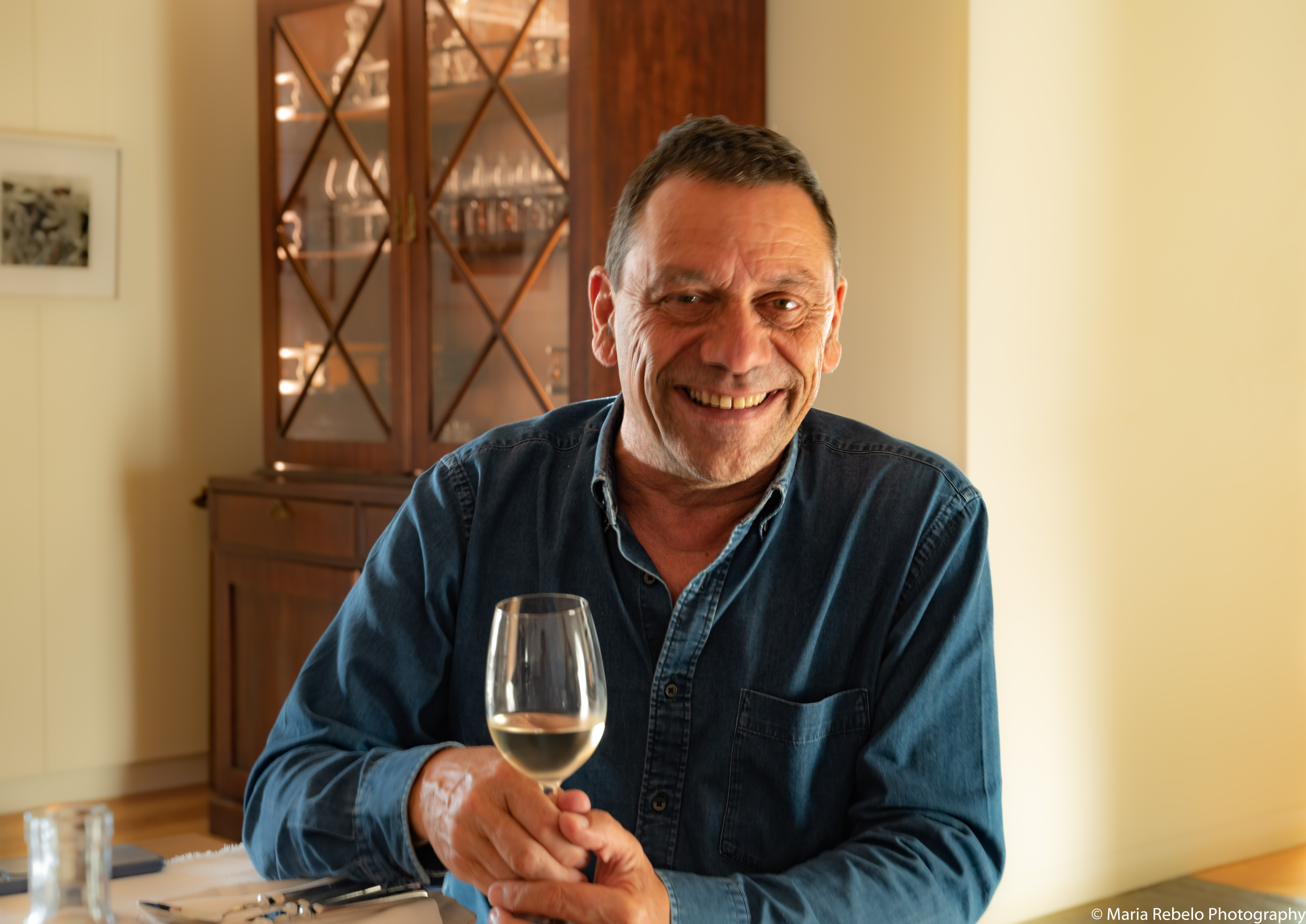
Vitor Claro’s handcrafted wines

Sometimes, we dream of having lunch at chef Vitor Claro’s restaurant in Paço de Arcos, near Lisbon. It is a place with a generous view of the ocean where the chef cooks with a lightness that surprises and delights. The menu offers codfish brandade with fresh tomatoes, partridge soup with foie gras, cauliflower with parmesan, sole in chickpea broth, shrimp ravioli with mushrooms, fried dough with chickpea puree, and much more.

Then, we wake up and remember that the restaurant is closed. A feeling of disappointment is followed by the joyful realization that Vitor Claro is now a wine maker and we have some of his bottles in our cellar!

Vitor was not a wine aficionado before meeting Dirk Niepoort, the legendary producer from the Douro Valley. The first time Vitor went for dinner at Dirk’s house, he found a glass of 1986 Chateaux Margaux waiting for him. This glass of wine opened the door to a new life. 

In 2010, while working in Alentejo, Victor fell in love with the wines from Portalegre. He managed to rent an old vineyard in this region to make wine with a friend who is an enologist. But one month before the harvest, his friend abandoned the project. Vitor called Dirk Niepoort to ask for help. Dirk told him “this is the best that could have happened to you.” Then, like a Zen master, Dirk said: “let the grapes do the work.” Vitor harvested the grapes, put them in barrels, crushed them gently and waited. 

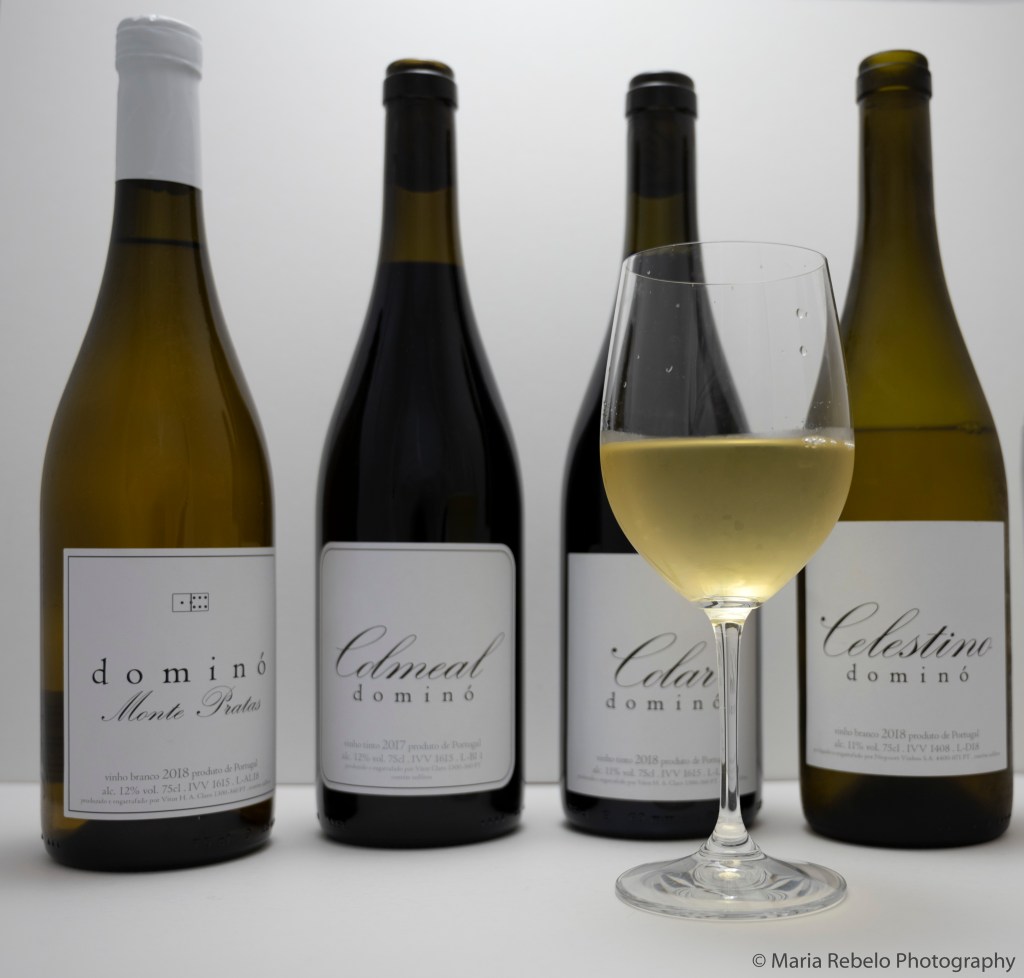
Two years later, he bottled the wine under the label Dominó. It was such a success that Vitor decided to close the restaurant to devote himself full time to wine making. He convinced his wife Rita to leave her architecture practice to work with him. The couple embraced a simple life style, sharing the toil and joy of winemaking. They do all the work themselves with the help of some seasonal workers. 

Today, Vitor’s wines are handcrafted using grapes from old vines rented in different parts of Portugal from Beira Interior to Carcavelos. Total production is only 20,000 bottles per year. When the wine does not appeal to Vitor’s refined senses, he does not bottle it. 

The lightness that Victor pursued in his cooking became the hallmark of his wines. They have bright flavors that interest the palate but never over power it. Instead, they surprise and delight.

Quinta de Ventozelo

There is a new jewel in the Douro valley called Quinta de Ventozelo. The setting is not new, the estate has produced wine since the beginning of the 16th century. But there are 29 new gems–luxurious rooms with magnificent vistas located in various houses throughout the quinta. Some houses have old roofs built with the same schist used to brace the terraces that hold the vines. Others are built out of giant balloons that once stored 80,000 liters of port wine. 

The sprawling estate is the perfect place to create wonderful memories. Of the rolling hills descending towards the river to bade in its green waters. Of the breeze caressing the silvery leaves of the olive trees. Of the restful silence punctuated only by the sounds of nature. Of the joy of sitting outdoors at sunset savoring a glass of wine in the company of friends. 

You can drive to the quinta, but it is much more spectacular to take the boat from Pinhão and arrive at the dock by the river. Arriving is the easy part. Leaving is hard to do. 

Quinta de Ventozelo is located in Ervedosa do Douro, S. João da Pesqueira. Click here for the quinta’s website.

The Douro historical train

Our journey begins with the clatter of a steam engine pulling five rickety wooden carriages into the Régua train station. Trains like this one have trod on the steel tracks that connect Régua to Pinhão since 1879. In 1883, the line was extended all the way to Foz do Tua.

Once all passengers get on board, the chimney blows a cloud of black smoke and we see Régua recede in the distance. The train moves slowly and yet there is not enough time to take in all that there is to admire, from the myriad colors of the river to the wondrous vine terraces sculpted into the mountain sides. 

A group of folk musicians walks through the carriages singing traditional tunes accompanied by accordion, triangle, “cavaquinho” (a small stringed instrument), and a drum made out of goat skin and wood. The musicians’ faces are weathered by a lifetime of work in the fields. But they sing with joy the tunes that lift the spirits of the laborers during the harvest. 

We arrive at the Tua station and the train stops for a well-deserved rest. As our journey resumes, we marvel at the feat of 19th-century engineering that allows the train to go back without turning around. The locomotive’s engine simply goes into reverse, pushing the carriages towards Régua. We travel on the same tracks as before, but the landscape looks different. The light has changed and the blues and greens are now mixed with yellows and oranges. 

The train crew serves us a glass of port wine and some traditional candy. We stop at the picturesque Pinhão train station to admire the 1937 tile panels that depict in blue hues the inimitable colors of the Douro landscape. Then, it is time to return to Régua. The locomotive screeches and puffs as it reaches the place where our journey ends.

It is a privilege to travel in this relic of the industrial revolution that saw the world change and the beauty of the Douro endure. 

Click here for more information about the Douro Historical Train. You can buy tickets online. The best seats are on the right side of the train since you can see the Douro valley from your window both on the way to Tua and on the return.

The incomparable wines from Colares

One of the coolest places you can find during the Portuguese Summer is the cellar of the wine cooperative of Colares, a bucolic town near Sintra. It is a place where large barrels fashioned out of exotic woods from Brazil rest, protected by thick walls that keep the temperature cool.  

The wines these barrels store are cool in attitude. They come from a unique “terroir” near the ocean where two varietals, Malvasia and Ramisco, grow on sandy soils. The roots of the vines have to stretch deep into the sand to find the moisture necessary to stay alive. 

All this toil paid off in the 19th century when phylloxera decimated European vines. Protected by sand, the vines of Colares escaped the bug’s voracity. 

These hard-working vines produce wines with exuberant tannins that need to be tamed. The reds age in barrels for almost a decade before bottling. Once bottled, both reds and whites continue to age beautifully, enjoying remarkable longevity.

Francisco Fezas, the resident enologist, told us that Adega Regional de Colares is the oldest wine cooperative in Portugal. The local wine makers got together in 1931 to buy the 19th-century cellar owned by a famous wine merchant, José Maria da Fonseca. In 1938, the government gave the cooperative the monopoly of production in order to guarantee the quality of the wine produced in Colares. The cooperative sold the wine to different distributors who bottled it under brands like Chitas, Adega Beira Mar and Viúva Gomes

In the 1960s, Colares had more than one million hectares of vines that produced more than one million liters of wine. Then, the vines were attacked by a foe more formidable than the phylloxera: urban sprawl. Many farmers succumbed to the temptation of selling their land to property developers who wanted to build houses near the ocean. As a result, the cultivation area dwindled to a paltry 23 hectares which produces a mere 18 thousand bottles, making Colares one of the world’s rarest historical wines. 

Francisco’s first harvest in Colares was in 1999, at a time when the cooperative was struggling financially and the future looked dim. Since then, there has been a remarkable renewal that preserves the future of the incomparable wines from Colares.

Adega Regional de Colares is located at Alameda Coronel Linhares de Lima, nº 32 in Colares, tel. 219 291 210, email geral@arcolares.com.. Click here for the adega’s website.