António Magalhães, keeper of Douro secrets

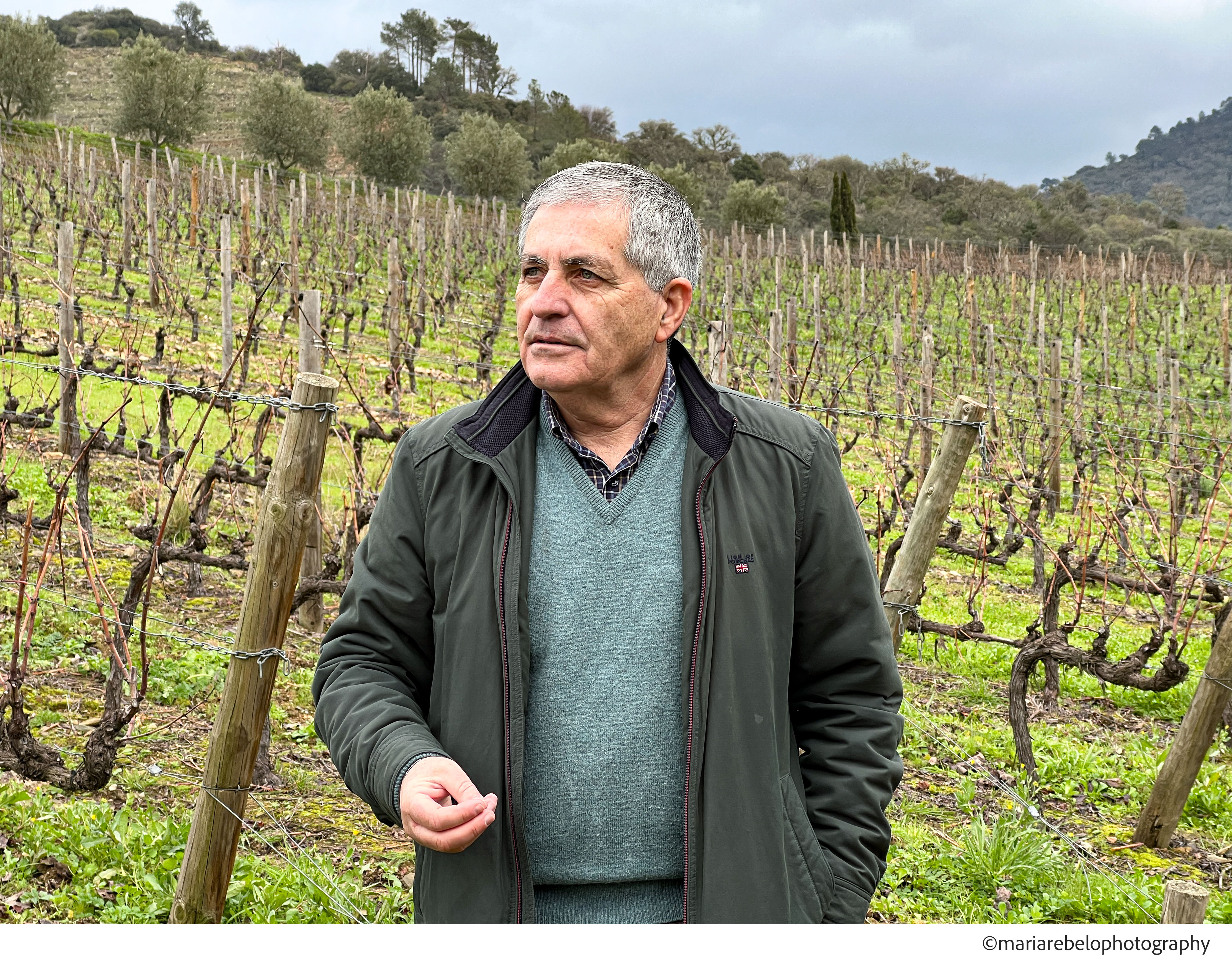
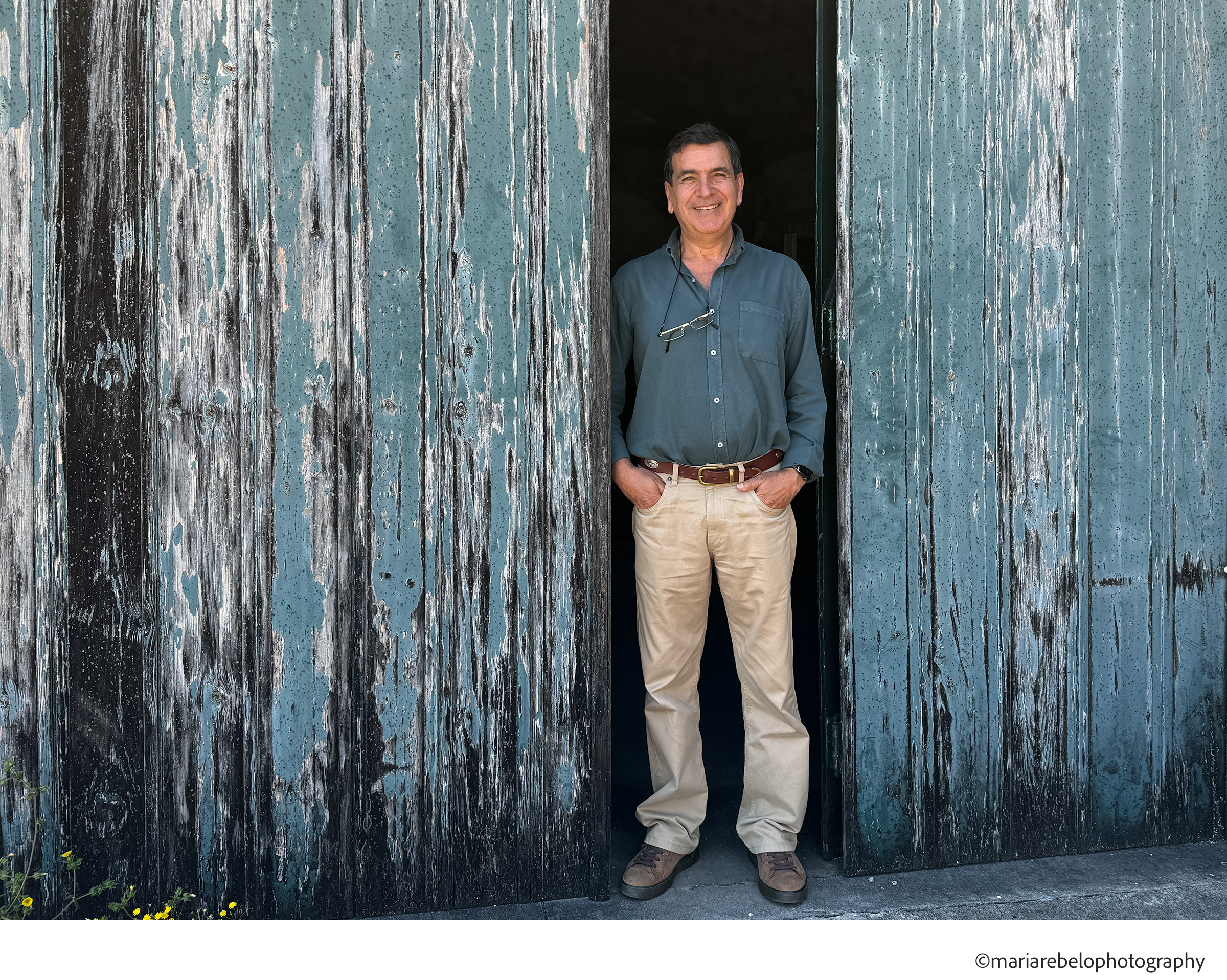
You might not be familiar with António Magalhães, the chief viticulturist of the famed Taylor-Fladgate port house, but if you enjoy exceptional port wines, you’ve likely experienced the fruits of his labor. António has worked for more than three decades in the rolling terraces of the Douro Valley. Throughout this time, nature has gradually revealed to him some of its winemaking secrets. Patience has been essential in this apprenticeship. It can take many years to grasp the impact of viticulture choices on wine production.

António is known for his thoughtful character and gentle disposition. But beneath this demeanor lies a powerful intellect–he has the rigor of a scientist, the curiosity of a historian, and the eloquence of a poet. He believes in combining scientific methods with traditional wisdom and has a deep reverence for the mysteries of winemaking. 

In collaboration with a statistician, António sought to unravel some of these mysteries, analyzing climate data since 1941 to identify weather patterns associated with vintage years, the finest for port wine production. They discovered that these years share three characteristics. First, the average temperature in July is less than 24.5 degrees Celsius. Second, two-thirds of the rain falls during the dormancy period (from November to February) and one-third during the growth period (from March to June). Third, there is less than 20 millimeters of rain in September. A small amount of rain at harvest time helps refine the grapes, says António, but too much rain in September fills the grapes with water and promotes fungal diseases. To António’s delight, they found that exceptional vintage years often deviate from the norm in unique ways, a testament to the magic of port wine.

Another facet of this magic is the art of blending. The Douro’s diverse microclimates provide winemakers with a rich palette to adapt to the annual variations in weather. They skillfully blend diverse varietals from vineyards with different locations, altitudes, and sun exposure. António has a profound understanding of the art of blending grounded on his comprehensive knowledge of the Douro subregions—the rain-soaked Baixo Corgo, the moderately wet Cima Corgo, and the arid Douro Superior. 

He has studied how grape varietals were adapted to counter the crisis created by phylloxera, an American insect that decimated European vines in the second half of the 19th century. The blight reached the Douro region in 1862-63 and became a severe problem in 1872. Farmers noticed that Mourisco, a varietal with lackluster enological properties, was the most resistant to phylloxera. For this reason, Mourisco was crossed with Touriga Nacional, considered the finest pre-phylloxera varietal, to create Touriga Francesa. The name, which means French Touriga, was likely chosen to honor the French school of viticulture and its contribution to creating phylloxera-resistant varietals. 

António also analyzed the various types of American vine roots brought from places like Texas to the Douro Valley to graft European vines and increase their resilience to phylloxera.

Since 1992, António has worked closely with David Guimaraens, the chief enologist at Taylor-Fladgate. Every year, António and David write several letters to the farmers who produce grapes for Taylor-Fladgate, offering insights into the vines’ current conditions and the most effective viticulture practices to respond to them. This educational effort is vital to the quality of the Taylor-Fladgate ports.

Concerned with the impact of heavy rainfall on soil erosion, António and David developed a new model for the terraces where the vines are planted. They had an epiphany while visiting the Benziger family, a biodynamic wine producer in California. It started to rain torrentially, and as they ran for shelter, they noticed that the rain was running with them. They realized that this kind of drainage, created by a three percent gradient, is what the Douro Valley needs.

António and David asked earthmoving companies to find a bulldozer narrow enough to fit in the terraces and capable of creating a three percent inclination. One of the companies found a second-hand machine used in rice plantations in the south of Portugal. The company’s manager called to say that the machine had an unusual device. “Bring it along,” said António. It turned out that the device was a laser that greatly simplified the task of creating a three percent slope. They later learned that the Benziger farmland had been graded by Chinese workers, who were likely to be familiar with the three percent inclination used in rice cultivation.

The Taylor-Fladgate farms stand out for their beauty because António is a sculptor of landscapes. He knows that cultivating a vineyard, planting a tree, or building a stone wall alters the scenery, and like an artist, he selects colors that harmonize, proportions that feel human, rhythms that please the eye.

António is passionate about researching the history of the Douro region. He often visits Torre do Tombo, a vast national archive with documents spanning nine centuries of Portuguese history. The writings of Álvaro Moreira da Fonseca (the creator of the vine quality scoring system still in use), the Baron of Fladgate, John Croft, José Costa Lima, A. Guerra Tenreiro, and many other Douro luminaries are his constant companions.

His extensive knowledge of history gives him a unique appreciation for the sacrifices made by generations of workers who have toiled in the Douro region. This understanding is evident in how António interacts with the people he manages. His sincere appreciation for their efforts earns him the loyalty and trust of his collaborators.

Today, António Magalhães retires as Taylor-Fladgate’s chief viticulturist. This milestone marks the beginning of a new chapter. We hope that António can now find the time to write a treatise on viticulture so that, as the climate continues to change, his erudition can illuminate the future of the Douro Valley.

The wondrous old brandies of Quinta do Rol

Lourinhã is one of the few regions demarcated to produce high-quality brandy, known in Portugal as “aguardente vínica.” Like Cognac and Armagnac, Lourinhã imposes strict rules on brandy production to guarantee quality and authenticity. This dedication to excellence has led locals to affectionately nickname the region Lourinhac.

While many local grapes are not ideal for table wine, they are perfect for brandy. The fertile soils yield grapes with higher water content. The proximity to the ocean moderates the temperature, resulting in less maturation and lower alcohol concentration. The cool nights enhance the grapes’ acidity. This acidity helps the delicate fruit and floral notes of the wine carry over into the brandy and provides a stable foundation for the aging process.

Quinta do Rol is the main distillery in Lourinhã. In 1995, Carlos de Mello Ribeiro, an accomplished manager, acquired the estate from his family and invested in producing premium brandy. He had the attributes essential for success: capital, managerial skill, and patience—high-quality brandy requires 12 years of aging to develop its depth of flavor, delicate vanilla aroma, and seductive amber color. What he lacked was a detailed knowledge of the production process. To fill this gap, Carlos and his enologist, Pedro Correia, traveled to Armagnac and Cognac to learn from French producers, who generously shared their secrets.

Upon returning to Portugal, Carlos committed to using traditional methods without shortcuts. He installed a copper distillation engine like those used in Armagnac and planted Tália grapes, the varietal favored in France for brandy production under the name Ugni Blanc. Since then, he has accumulated 30 years’ worth of precious brandies, aged first in new oak and then in used oak barrels. 

The region’s freshness also lends itself to producing interesting white wines. Carlos crafts a wonderful sparkling wine with Arinto and Pinot Noir and a great white wine with Arinto and Chardonnay. He also makes a delicious Moscatel.

The first king of Portugal, Dom Afonso Henriques, granted the Lourinhã region to a French knight called Jourdain, who fought valiantly in the conquest of Lisbon. The knight would likely be proud of Lourinhac’s success in the world of brandy.

A perfect picnic

Victorian novels describe picnics where friends have a grand time, enjoying delicious food in idyllic settings. But real-life picnics seldom measure up to these literary accounts. Sometimes, the sun is too harsh, and the shade is scarce. Other times, it is cold, the wind blows disagreeably, or the rain intrudes. Wine and beer are lukewarm by the time they are served. Sitting is uncomfortable, and troupes of insects join the party.

When our friend Abílio Tavares da Silva invited us for a picnic, we braced ourselves for the usual woes. But, as soon as we arrived at his Douro Valley estate, it was clear that this would be no ordinary affair.

It was a midsummer day with clear skies and a gentle breeze. Spacious wooden tables with comfortable benches awaited the lucky guests under the shade of two majestic linden trees. The view, with the Douro River stretching out in all its splendor, was worthy of being painted by Turner.

The picnic basket, prepared by the talented Rosário Buia at Toca da Raposa, was brimming with delicacies. There were farinheira tarts, shrimp rissoles, oranges seasoned with olive oil and minced garlic, chickpea salad, carrot and zucchini rice, olives, freshly baked bread, and a tortilla prepared with eggs so delicious that they were surely laid by the happiest of chicken.

The food was served in colorful pottery designed by the 19th-century master ceramist Rafael Bordallo Pinheiro. Abílio’s alluring Foz Torto white wine, made from precious old vines in Porrais, was poured into crystal glasses at the ideal temperature. 

The conversation flowed as freely as the food and the wine. The meal ended late in the afternoon with slices of Toca da Raposa’s famous drunken cake (bolo borrachão) accompanied by glasses of chilled 20-year-old Fonseca tawny port. Not even Jane Austen could imagine such a perfect picnic.

Quinta do Vale Meão

One of the Douro Valley’s ultimate experiences is visiting Quinta do Vale Meão. While the estate is not generally open to the public, it does receive a few small groups each year. You can email in advance to inquire whether they can host you.

Vale Meão was the last estate planted by the legendary Dona Antónia Ferreira. It was a colossal endeavor: 300 hectares of wild bush were converted into vineyards and olive groves. Dona Antónia invested in the remote Vale Meão against the advice of her general manager because of its unique characteristics. It is located on a geological fault with three different types of soil: schist, granite, and sedimentary clay deposited by the river. The weather is dry, as clouds rarely cross the Marvão mountain, reducing the prevalence of vine diseases like oidium.

The best way to reach Vale Meão is by taking the train from Pinhão to Pocinho. There are usually few passengers, so you can choose a seat by the riverside and enjoy a glorious hour beholding the Douro river in all its splendor. The train rushes through bridges and tunnels carved into granite hills, but the river is seldom out of sight.

You go by Cachão da Valeira, a treacherous spot before dams regulated the water flow. Here, Dona Antónia and the Baron of Forrester, another eminent figure of the Douro Valley, fell into the river in a boating accident. Dona Antónia survived, but the Baron drowned. The locals say in jest that her voluminous skirt saved her, while the Baron sank because his pockets were filled with gold coins.

Maria Ferreira, a former teacher who oversees enotourism at Vale Meão, picked us up at the Pocinho train station in a vintage Land Rover. Though not related to Dona Antónia, Maria speaks about the estate with such passion it feels as though she is part of the family. An eagle followed the Land Rover as we drove through Cortes de Veiga, a village created to house the many laborers who worked at Vale Meão between 1885 and 1887.

The name Meão, which means “middle,” refers to the river encircling the property, making it feel like an island. The vineyards are planted on a magnificent plateau by the river.

Maria took us on an exhilarating safari through the vineyards. We then visited Barca Velha, a cellar built in 1892 named after an old rowboat used to cross the river. Here, Fernando Nicolau d’Almeida crafted the first Barca Velha in 1952, combining grapes from Vale Meão with those grown at higher altitudes in Meda to craft a table wine that became iconic.

Our tour concluded at the main house, constructed by Dona Antónia in 1894. We were warmly received by three of her descendants: Francisco Olazabal, known as Vito, his son Francisco, known as Xito, and his daughter Luísa. They welcomed us with a refreshing white Monte Meão, made from a blend of two grape varietals grown at opposite ends of the estate—Arinto in the sedimentary soils of the north and Rabigato in the schist soils of the south. This wine beautifully showcases the diversity of the terroirs at Vale Meão.

As we talked to Vito, Xito, and Luísa, it became clear that wine is a language to them. Soils and grape varietals are like words that can express human craftsmanship and the whims of the seasons to make wine as fine as poetry. Their passion for wine is only matched by the generosity with which they share the fruits of this extraordinary place with those who visit.

We tasted the Monte Meão Vinha da Cantina, a surprising wine made from baga, a red grape from Bairrada. While in Bairrada, baga produces tannic, robust reds; here, it yields a light (11.5% alcohol), vibrant wine.

Next, we enjoyed a remarkable Monte Meão Touriga Nacional from the granite soils of Vinha dos Novos. It has a crimson color, a delicate floral aroma, and a supine elegance on the palate. It was followed by a beautiful Monte Meão from Casa das Máquinas, home to the estate’s oldest vineyards that combines Touriga Francesa and Tinta Barroca.

The tasting of table wines concluded with two stunning Vale Meão vintages. The 2014 vintage is a complex, alluring wine, and the 2002 vintage is exquisite in its subtlety and refinement. 

Then, port wines entered the scene. First, a 10-year-old tawny, which is all that a great tawny can be, offering notes of nuts, coffee, chocolate, and orange rind to enchant the palate. Then, a stunning 1999 colheita, that is richly satisfying.

In 1999, Vito took a significant risk by leaving his safe position as a director at Sogrape, the large wine company that acquired most of Dona Antónia’s properties, to start a new family project under the Vale Meão name. The many accolades earned since then, including inclusion in the Wine Spectator’s list of the world’s top 5 wines, show clearly that the risk paid off. From her celestial vantage point, Dona Antónia must be beaming with pride.

To inquire about a tour hosted by Maria Ferreira, email turismo@quintadovalemeao.pt. Click here, for the estate’s website.

Quinta de La Rosa

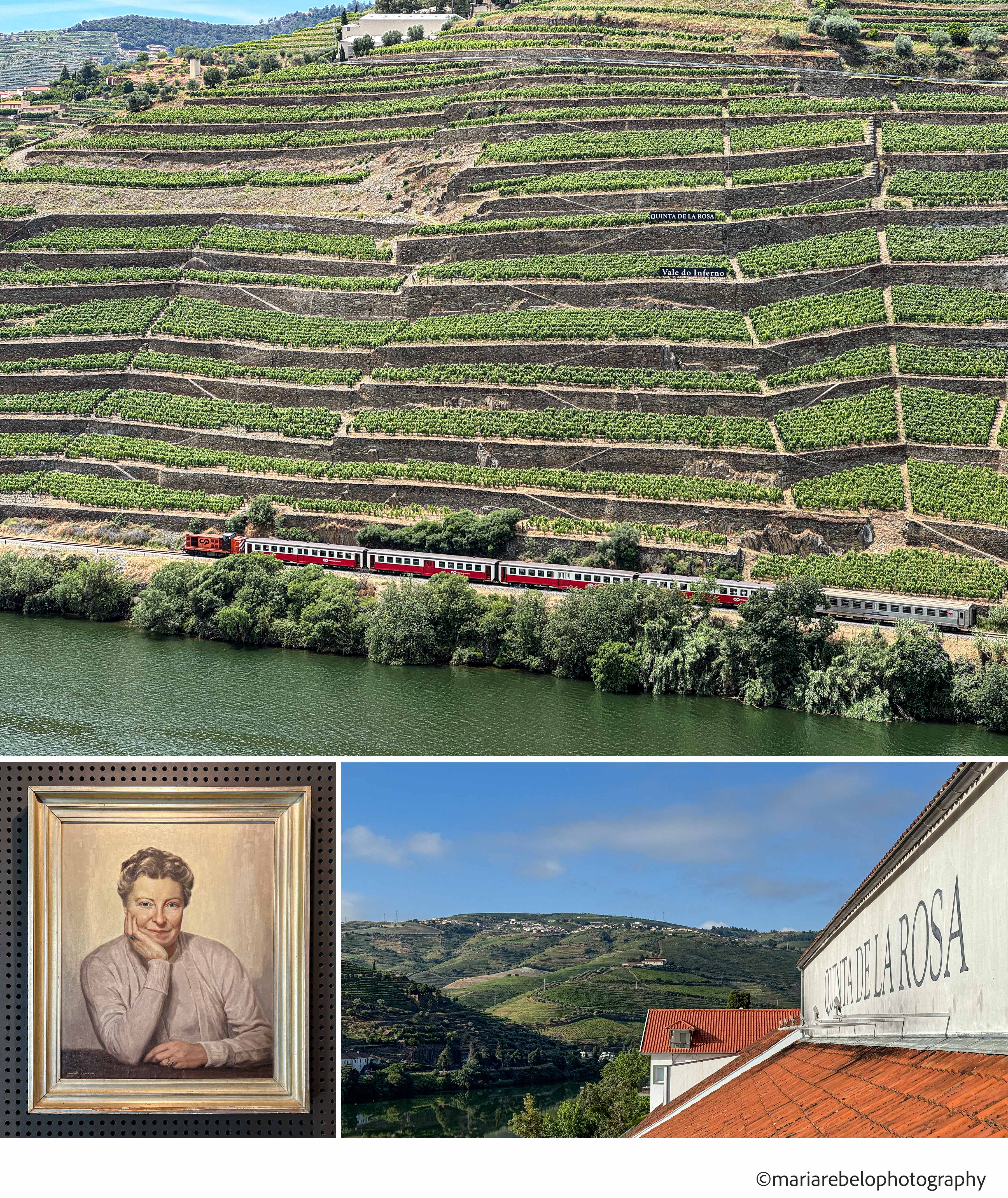
La Rosa was among the first estates in the Douro Valley to welcome guests. Over thirty years ago, several rustic houses were converted into accommodations, allowing visitors to stay amidst some of the region’s finest vines. The lodgings are simple, but the views are magnificent. Across the river, olive groves and vineyards ascend a steep hill. Below, the river flows without a care, its green waters sparkling in the sunlight like diamonds set in green turquoise. 

In the morning, the sun casts a golden glow over the vines, gently evaporating the dew and steadily raising the temperature. This process helps maintain the freshness of the grapes, which contributes to the wine’s unique character.

We wake up to the sounds of boats gliding on the river and roosters singing, accompanied by a choir of birds. It’s wonderful to sit in the shade and enjoy the stunning landscape. The terrace of the breakfast room offers one of the best views in the Douro Valley.

At the turn of the 20th century, the estate was known as Quinta das Bateiras and belonged to António Reis, a local doctor. The Feuerheards, a family of German port shippers, bought the quinta as a christening present for their granddaughter Claire. Her father renamed it La Rosa after a successful brand of sherry his company had launched. He used the estate’s grapes to make port under the Feuerheard label.

In 1935, the Feuerheard shipping company went bankrupt, but Claire kept the estate because it was her personal property. When Claire divorced in 1946, she moved to La Rosa and lived there until she died in 1972. The beauty of the place compensated for the challenges of running an estate that was always in need of maintenance and repairs. To make up for the remote location, Claire hosted lively house parties for visitors and neighbors.

When, in 1988, Sophie Bergqvist, Claire’s granddaughter, took over the business with her father, the estate was in disrepair. Sophie started making port under the La Rosa name. In 1991, she enlisted David Baverstock, a famous enologist, to make one of the first Douro table wines. Since then, the fame of the wines has continued to grow. In 2002, another renowned enologist, Jorge Moreira, took over wine-making at La Rosa. Prizes and accolades continue to accumulate. If Claire were alive today, she would undoubtedly throw a grand party to celebrate the success of La Rosa.

Quinta de La Rosa, situated near Pinhão, is easily recognizable by its main entrance adorned with wooden statues of the eagles featured on the family crest. Click here for their website.

Elegance and passion at Foz Torto

Because we were born 150 years apart, we did not have a chance to meet the Baron of Forrester, the British port wine trader who championed the Douro Valley. But we know Abílio Tavares da Silva, another outsider who became one of Douro’s best ambassadors. 

Originally a tech entrepreneur, Abílio sold his company in 2000 and retired at the age of 40 to pursue his passion for winemaking. He does not believe in taking shortcuts, so he built his expertise from the ground up by earning an enology degree at the University of Trás-os-Montes e Alto Douro. He also began his search for the ideal vineyards.

In 2004, he acquired Foz Torto, a picturesque estate near Pinhão, close to the confluence of the river Torto with the Douro. Planted with old vines, it offers stunning views of the Douro Valley. Abílio teamed up with Sandra Tavares da Silva, a star enologist, to craft his wines. Despite having the same surnames, Abílio and Sandra are not relatives. But they share a passion for making wines that combine elegance with great aging potential. Their portfolio includes a lavish red from 80-year-old vines and a beguiling white from 40-year-old vines grown in Porrais, 600 meters above sea level.

Abílio describes his winemaking philosophy as simple, yet as he explained his process, we quickly filled a notebook with intricate details. The caliber of his wines reflects not just the superior quality of the grapes but also the meticulous attention to detail that his engineering mindset brings to every facet of production—from managing the vineyards year-round, harvesting the grapes when they reach the perfect balance of sugar and acidity, controlling fermentation temperatures, and choosing the ideal aging processes.

Every August, Abílio helps organize a competition to select the finest heirloom tomatoes in the Douro Valley. This event brings winemakers together and showcases the Douro’s uniqueness. The poor schist soil encourages plants to grow deep roots, resulting in not only extraordinary wines but also exceptional fruits, herbs, vegetables, and olive oil. A few drops of the olive oil Abílio produces at Foz Torto can turn a simple salad into a culinary offering worthy of Mount Olympus.

For us, Abílio is much more than a gifted winemaker. He is a source of inspiration and a role model. When we grow up, we want to be like him.

Hamilton Reis’ exhilarating wines

Extreme sports, like surfing giant waves, captivate enthusiasts with their exhilarating adrenaline rush. Hamilton Reis’ family wine project, Natus, offers this kind of thrill. The production is organic; the vines are not irrigated; the fermentation relies only on wild yeast and takes place first in the large clay pots that the Romans used and then in old oak barrels. The grapes are picked by hand and trodden by foot. Most modern winemaking techniques are set aside to produce wines with minimal intervention but meticulous attention to detail. Like a master surfer, Hamilton can afford to take these risks because of his extensive experience and depth of knowledge.

Natus means born in Latin. Hamilton chose the name to indicate that he and his family started this project from the ground up. They bought four hectares of land in Vidigueira, Alentejo in 2008. For ten years, Hamilton nurtured the soil so it could recover from decades of chemical abuse with herbicides and pesticides. During that time, he learned about the climate and the varietals planted in the region and talked to the elders about the local wine-making traditions. Those traditions are, for Hamilton, as much part of the terroir as everything else. 

He built a house for his family in the middle of the field so he could take care of the vines as if they were part of his family. The cellar is invisible. It lies underground so that gravity can help unload the grapes. 

An important aspect of the location is the absence of barriers between the land and the sea. The Mendro mountain, situated east of the property, forms a shell that keeps the cool air from the sea. The resulting climate produces elegant wines that are low in alcohol and yet rich in complexity, depth, and freshness. 

These unique wines are difficult to buy because only about 6,000 bottles are produced in each year. Hamilton is determined not to increase production to a level that would compromise his ability to maintain personal control over every aspect of the process. However, to meet the demand for his wines, he has initiated a new venture named Intus, the Latin word for “inside.” This wine is crafted from grapes sourced from a select group of farmers who refrain from irrigating their vines and agree to adopt the rigorous biodynamic methods that Hamilton champions. Like Natus, Intus wines are characterized by their low extraction and alcohol content. However, they undergo fermentation in stainless steel, which preserves the pure essence of the fruit.

The Natus label has a secret. Those who discover it get a glimpse of what Hamilton sees every day: vines that produce wines made without compromises, perfectly in tune with nature.

The Natus vineyards are on Estrada da Cancelinha in Vidigueira, Alentejo. Click here for the Natus website.

Finding the secret of longevity in Colares

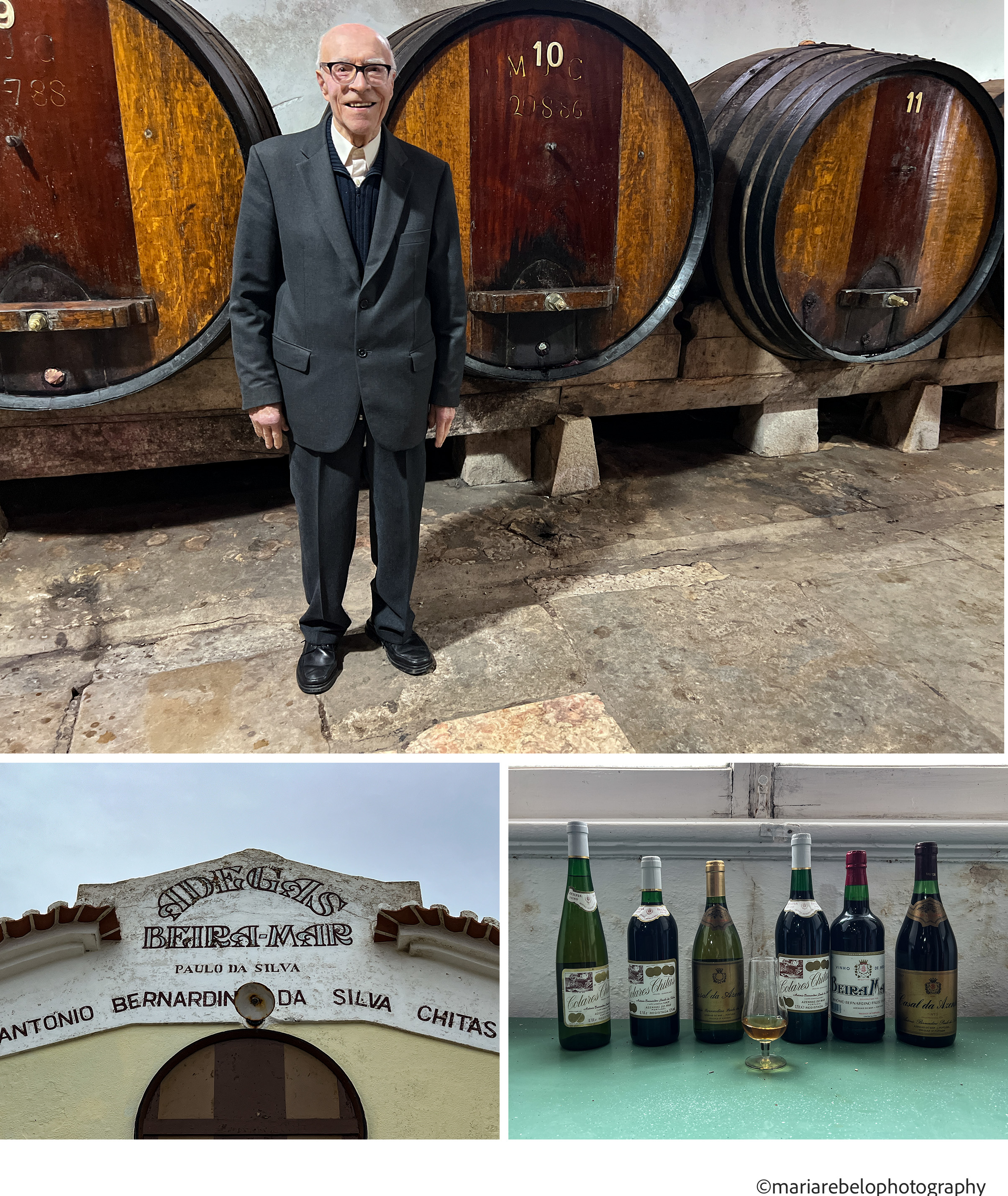
The rain fell hard, trying to make up for the dry spring and summer.  But we were not deterred. We drove through the narrow road that leads to Colares to meet a legendary winemaker: the 97-year-old Paulo da Silva, affectionately known as Chitas (pronounced cheetahs), the nickname he inherited from his grandfather.

We stopped at Adega Beira Mar, which means cellar by the sea, an apt description. Paulo came out to greet us, his slender figure dressed in a dark suit. It was chilly inside the building, but he did not seem to mind. “Is it the cold or the wine that is the secret of your longevity?” we asked. Paulo replied with a smile. “My father liked to say that drinking a bottle of our wine with lunch and another with dinner would extend your life. But I prefer a small glass of wine with my meals.”

Paulo has an amazing memory for dates, facts, and figures. He tells us the building was erected in 1898 by his grandfather. “This place has seen it all: the two world wars, the Great Depression.” 

In Colares, the vine planting process is unique. Farmers dig holes in the sand until they find a clay bed where they can plant the vine roots. The sandy soil served as a natural barrier against phylloxera, an insect that devastated many European vineyards in the latter half of the 19th century. 

With wine production declining in other regions, Colares thrived. Many producers prospered by exporting their wine to Brazil. Paulo’s grandfather, António, was a foreman for one of these exporters, Manuel José Colares. António’s work ethic and dedication were so great that Manuel bequeathed him part of his business. But when the Great Depression came, Brazil did not pay for the wine, and most companies went bankrupt. The few that survived have since been sold or closed. Only Paulo’s Adega Beira Mar remains in the same family. “The wines have earned 71 prizes since 1889, two just last year,” he tells us. 

Over the past few decades, the construction of summer residences in Colares has gradually encroached upon the land occupied by vineyards, reducing it to 30 hectares. Paulo da Silva owns some vines, but for most of his life, he was what the French call a “negociant,” a savvy wine merchant. His expertise lies in identifying superior wines, aging them to perfection, and then selling them.  “Time is the secret of Colares wine,” he explained. The region’s two signature varietals, the white Malvasia and the red Ramisco, need time to develop complexity and finesse.

On one occasion, the former President of Portugal, Jorge Sampaio came to visit Paulo. The president asked, “What is the oldest wine in the cellar?” “It is from 1955,” responded Paulo. “You kept that wine for too long,” said the president. “It has surely gone bad.” Paulo fetched a bottle from 1955 and offered it to the president. A few weeks later, the president called in the evening to say, “We tried that wine at dinner tonight, and it was exceptional. I learned something new— Colares wines have a remarkable longevity.”

We sampled a Malvasia from 1996 that was lively and crisp, with aromas of citrus and green olives and a hint of saltiness on the palate. A marvel!

Paulo led us to see some Ramisco vines he had planted in the sandy soil near the cellar just two years ago. “Look how well they’re doing,” he said with pride. He then gestured towards an unoccupied section of the yard. “Over there, I’m planning to build a new cellar to boost our production,” he explained.

Perhaps Colares wines are the secret to eternal youth and vigor. We purchased a few bottles to test this theory. It promises to be an enjoyable experiment.

Myths and secrets at Bussaco

King Charles I enjoyed hunting in the Bussaco forest so much that he decided to turn a local Carmelite monastery built in 1630 into a royal retreat. When construction began in 1888, the king engaged the most important Portuguese artists of the time in the project. 

It is a gorgeous place. Limestone from the nearby village of Ançã, carved with intricate motifs, decorates the outside. Beautiful tile murals and frescos depicting scenes inspired by literary works and historical events adorn the interiors. 

In 1910, Portugal abolished the monarchy and became a republic. The royal palace seemed destined to become a romantic ruin. But Alexandre de Almeida, a local entrepreneur, endeavored to save it. He negotiated a concession with the state to convert the palace into a luxury hotel. Inaugurated in 1917, it became a success with international celebrities like the mystery writer Agatha Christie.

In the 1920s, Alexandre de Almeida started bottling wines to serve in the dining room of the palace.  These wines gathered fame for their unique character and outstanding aging ability. 

Alexandre de Oliveira, the founder’s grandson, currently runs the hotel group that operates the Bussaco Palace. One of his childhood friends, António Rocha, directed the hotel for many years. Fifteen years ago, António told Alexandre that he would like to give up his managerial role to focus on producing Bussaco wines. Knowing António’s passion for these wines, Alexandre accepted his proposal.

We met António in the palace cellar. He’s been spending many hours there, patiently recorking old bottles so the wine can continue to age gracefully. He showed us with pride wines bottled in the 1940s. “They flow from the bottle with remarkable freshness and vigor, ready to be enjoyed,” he told us.

“What makes Bussaco’s wines so special?” we asked António. “Great wine is 60 percent myth and 40 percent secrets,” António answered, smiling. Bussaco is located between Bairrada and Dão, so the wines are made with grapes from both regions. The red is made from Touriga Nacional and Baga, the emblematic grape from Bairrada. The white is made with Bical, Maria Gomes, and Encruzado. Total annual production is small, only 20,000 bottles. But the cellar stores 200,000 precious bottles hoarded over the last century. 

Later, we joined António at a vinic dinner for a small group of wine connoisseurs at the famed Mesa de Lemos. There were many interesting wines to try, and as the wine flowed, so did the conversation. António tuned out the words to focus on the aromas and tastes of the wines. When it was time to sample the Bussaco wines he brought, António tried to be impartial, appreciate qualities, and identify aspects that can be improved. This passion and dedication is the true secret of Bussaco’s wines. 

Click here, for the Bussaco Palace web site.

Twin wines from Bairrada?

Luís Pato, the famous Bairrada winemaker, is always doing something new. One of his recent projects is a white wine made from a rare grape called Sercialinho. This varietal was created in the 1950s by crossing two iconic grapes: Sercial, used in Madeira wine, and Alvarinho, used in vinho verde (green wine). João Pato, Luís’ father, planted this new varietal about half a century ago on the sandy soils of his Quinta de Ribeirinho. Luís always loved the grape’s aromas, which resemble those of Alsatian Rieslings. For years, he has used Sercialinho to add acidity and aroma to his renowned Vinhas Velhas (old vines). In 2013 Luís made a single-varietal Sercialinho in his father’s honor. He started producing it regularly with great results since 2019. “I’m the world’s sole producer of Sercialinho,” Luís told us with pride.

But Sogrape, Portugal’s largest wine producer, also launched to great acclaim a Sercialinho wine produced in Bairrada (in Quinta de Pedralvites). It is part of their “Séries Ímpares” created to showcase unique varietals and terroirs. 

DNA analysis revealed that Sogrape’s Sercialinho is a cross of Vital and Uva Cão. Is this the same varietal that João Pato planted? Are the two Sercialinhos identical twins, fraternal twins, or homonymous strangers? It is a mystery. What we do know is that they’re both spectacular wines!