How Humans Made the Soil of the Douro Valley

This is the second lecture about the Douro Valley by the great viticulturist António Magalhães. Today’s theme goes literally beneath the surface. After exploring the climate in our first session, we turn to the second pillar of the region’s terroir: its soil.

A Soil Made by Hand

When you walk through a vineyard in the Douro Valley, take a moment to look down. You see the slow artistry of nature, which over millions of years created the schist beneath your feet, and the tireless toil of generations who transformed it into living soil where vines can thrive.

The Douro’s deep valleys were carved over millennia by the river and its tributaries. On those steep slopes, the native soils, known as leptosols, are little more than a palm’s depth of earth resting on hard schist. Left untouched, they would never have sustained flourishing vines.

But in the Douro, people refused to accept nature’s limits. Over the course of centuries, they created anthrosols — soils made by human hands. The locals call the act saibrar, agronomists surribar: it means breaking rock to create soil where vineyards can grow.

The photograph shows that the schist bedrock appears brittle and easily broken. Above it lies the soil created by human labor. Look closely, and you can see the vine roots reaching down, searching for that last drop of water that keeps them alive through the scorching summer heat.

The image illustrates the words of the Marquis of Villa Maior, from his 1875 treatise, Practical Viticulture:

“The longevity of the Douro and Burgundy vines is due to the extraordinary development of their roots, favored by the nature of the subsoil.”

Breaking Rock to Grow Life

Until the late 19th century, surribar was done with nothing more than pickaxes and iron bars. In the 20th century, dynamite was introduced, followed later by bulldozers and hydraulic excavators. Yet the goal remained the same: to give each vine at least a meter and a half of soil depth.

The schist fractures almost vertically, allowing roots to slip deep between its plates. There, the vine finds not abundance but balance: less than 1.5 percent organic matter, yet perfectly aerated and rich in minerals. These fractured layers also ensure excellent drainage, carrying away excess rainwater while retaining just enough moisture for the vines to endure the long dry season. It is a poor soil that yields noble fruit, a reminder that in wine, perhaps as in life, struggle builds character.

Stones and Gravel

Kneel in a Douro vineyard and you’ll see a glittering mosaic of crushed stone and gravel. To outsiders, it looks barren; to the vines, it’s paradise.

In 1947, agronomist Álvaro Moreira da Fonseca, who devised the Douro’s vineyard classification, ranked soils by their gravel content. His creed, simple and enduring, can be expressed in words worthy of being carved in stone: “Vines thrive on stony ground.”

The gravel plays alchemy with the elements: reflecting sunlight by day, releasing heat by night, regulating the vine’s rhythm. It stores warmth, tempers vigor, and transforms scarcity into intensity.

Counting by the Thousands

António says that “The poorer the soil, the closer the vines.” Douro farmers compensate for the soil’s low fertility by planting vines at higher densities. Each vine produces modestly, but together they create abundance. Instead of counting hectares, growers speak of milheiros — groups of a thousand vines.

After the phylloxera epidemic, the rebuilt terraces — socalcos — reached a density of 6.5 milheiros per hectare, enough to make every meter of stone wall worthwhile. 

Sculpting the Mountain

Rain, the same force that helped carve the Douro, also threatens to destroy it. The solution lies in building terraces to prevent soil from sliding away. During the surriba, the stones brought to the surface are removed and reused to build the vineyard walls. This operation, called despedrega, is a practice that makes the back-breaking labor of surribar more rewarding.

Some of the terraces devastated by phylloxera were never replanted. Many owners, overcome with despair, abandoned the region to rebuild their lives elsewhere. Others chose to start anew, replanting vines on gentler slopes with more forgiving soils and milder climates. 
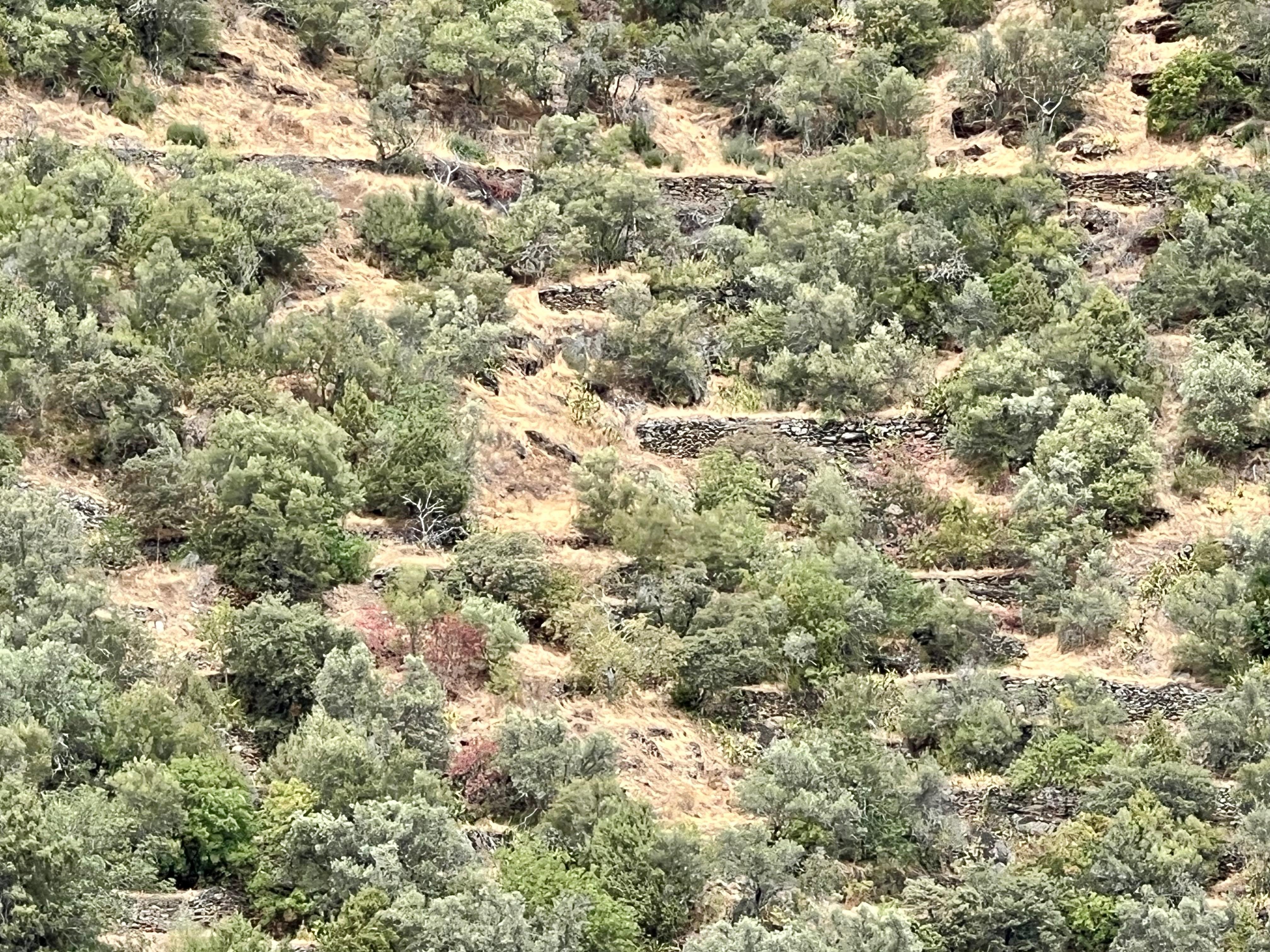
These abandoned terraces, known as mortórios, have been reclaimed by the Mediterranean forest. Their stone walls, now entwined with wild vegetation, stand as silent witnesses to a tragic chapter in the Douro’s history.

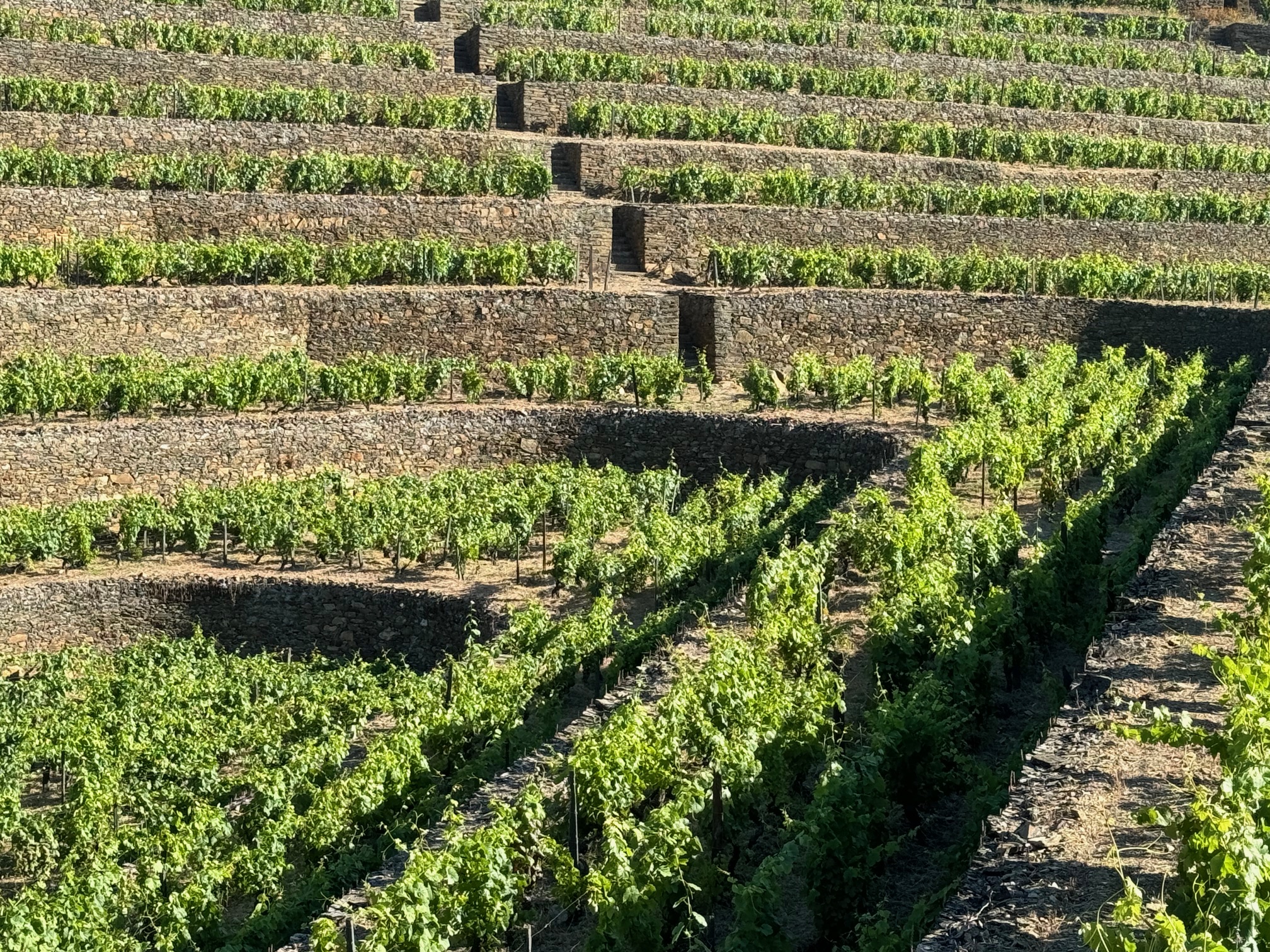
The oldest terraces, built after phylloxera, were supported by dry-stone walls, feats of balance and beauty where each stone rests “one upon two.” In the 1960s, as labor became scarce and tractors arrived, new earth-banked terraces (patamares), depicted below, took their place — practical but less graceful.
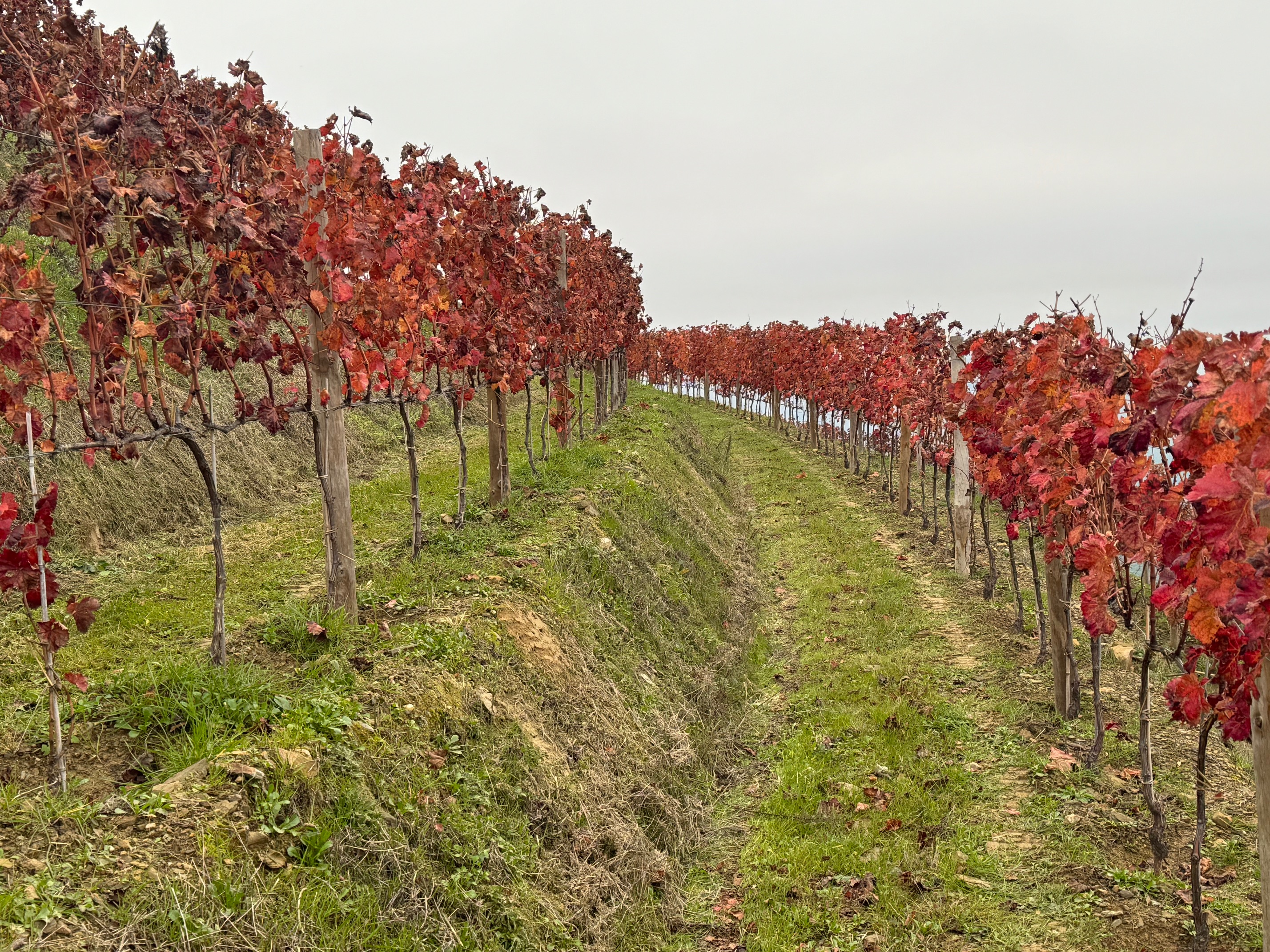
At the turn of this century, António Magalhães and David Guimaraens, the head winemaker of Taylor’s Fladgate, combined the beauty of the old dry-stone terraces with the practicality of the modern earth-banked ones. Inspired by California’s Benziger Family Winery, they built narrow terraces, just 1.5 meters wide, each with a single vine row and a gentle 3 percent slope to drain rainwater safely. Precision-leveled by laser, this innovation protects against erosion while preserving the Douro’s graceful geometry. 
Root and Rock
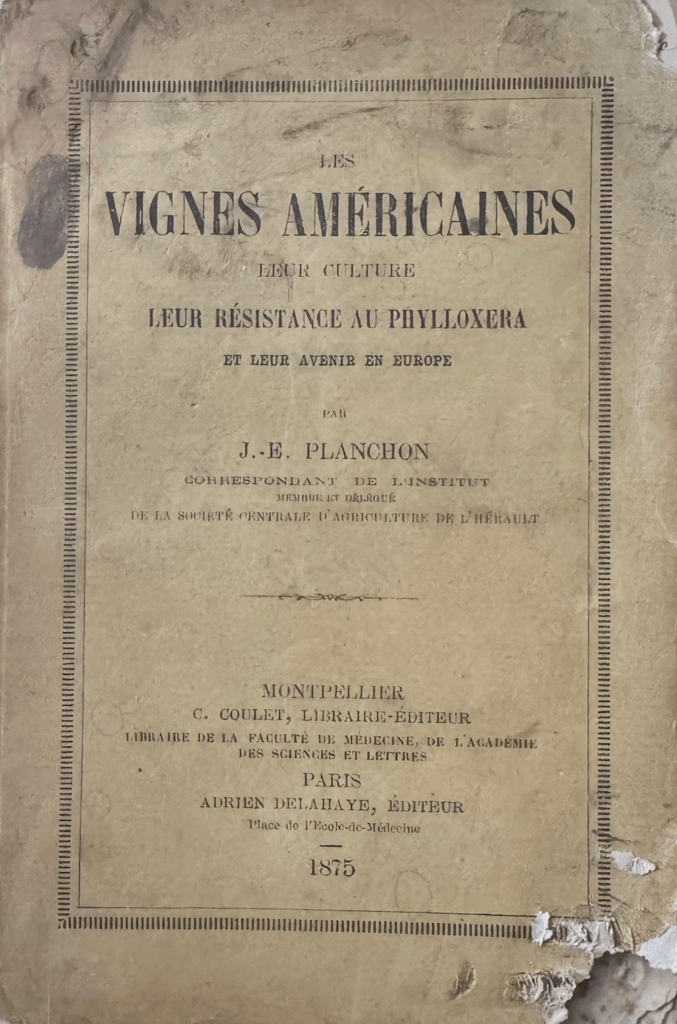
The phylloxera plague that ravaged European vineyards in the late nineteenth century arrived at the Douro in 1863-64.

Salvation only came after Jules-Émile Planchon, a French botanist, and Charles Valentine Riley, an American entomologist, discovered that grafting European grapevines (Vitis vinifera) onto American rootstocks could save the vines. 

One such rootstock, Rupestris du Lot, thrived on the Douro’s poor, dry, schistous hillsides.

It seems to facilitate potassium absorption. This mineral helps regulate the opening and closing of tiny pores on leaves, called stomata, which control transpiration and CO₂ uptake — both essential to photosynthesis.

For decades, the Rupestris du Lot anchored the valley’s post-phylloxera vineyards, its deep-seeking roots echoing the surriba’s purpose: to connect life to stone. Even as newer, more productive hybrids replaced it, António continues to praise its quiet virtues — longevity, restraint, and resilience — the very qualities that define the Douro itself.

Granite Lagares

The granite lagares of the Douro are among the most enduring symbols of the region’s winemaking heritage. Their coarse surfaces help regulate temperature during fermentation and impart a tactile connection to the land — the sensation of grape skins and must mingling with the mineral essence of granite itself.

For centuries, blocks of rock were quarried from places like Vila Pouca de Aguiar, Portugal’s self-proclaimed “granite capital,” where the stone’s density allows it to be cut into large rectangular slabs. 

António concludes his lecture with poetic words: “In the Douro where I grew up, the grapes journey from rock to rock — ripening in the heat of schist and fermenting in cool granite lagares.”

What to Visit

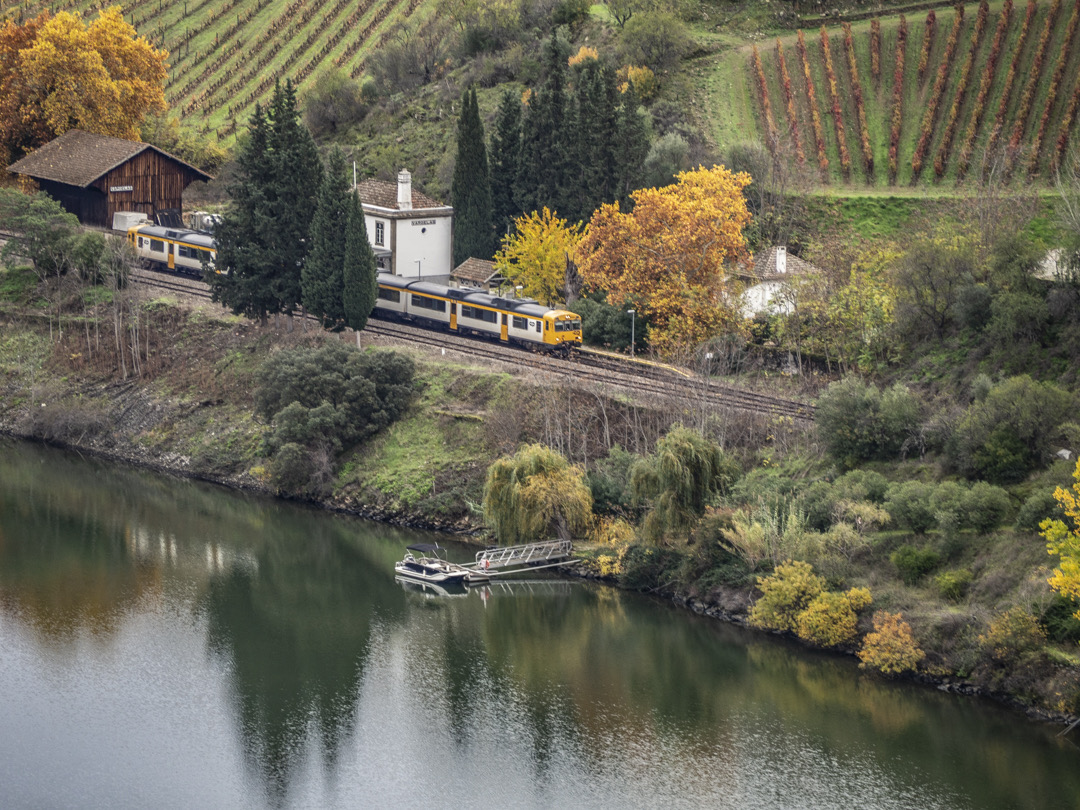
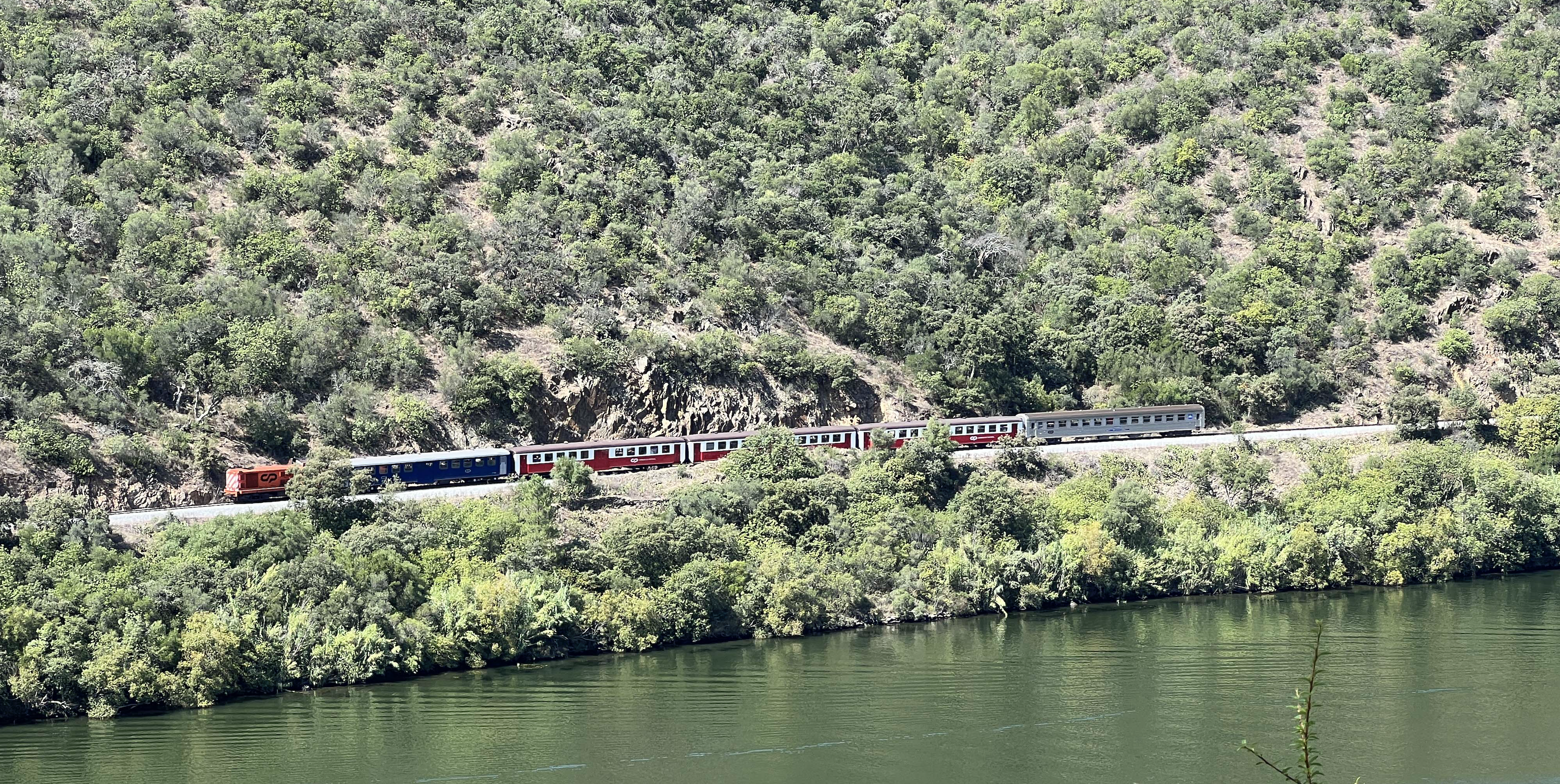
The train trip from Pinhão to Pocinho offers a geology lesson. Along the slopes that flank the railway, you see the leptosol with its thin layer of soil above the parent rock.
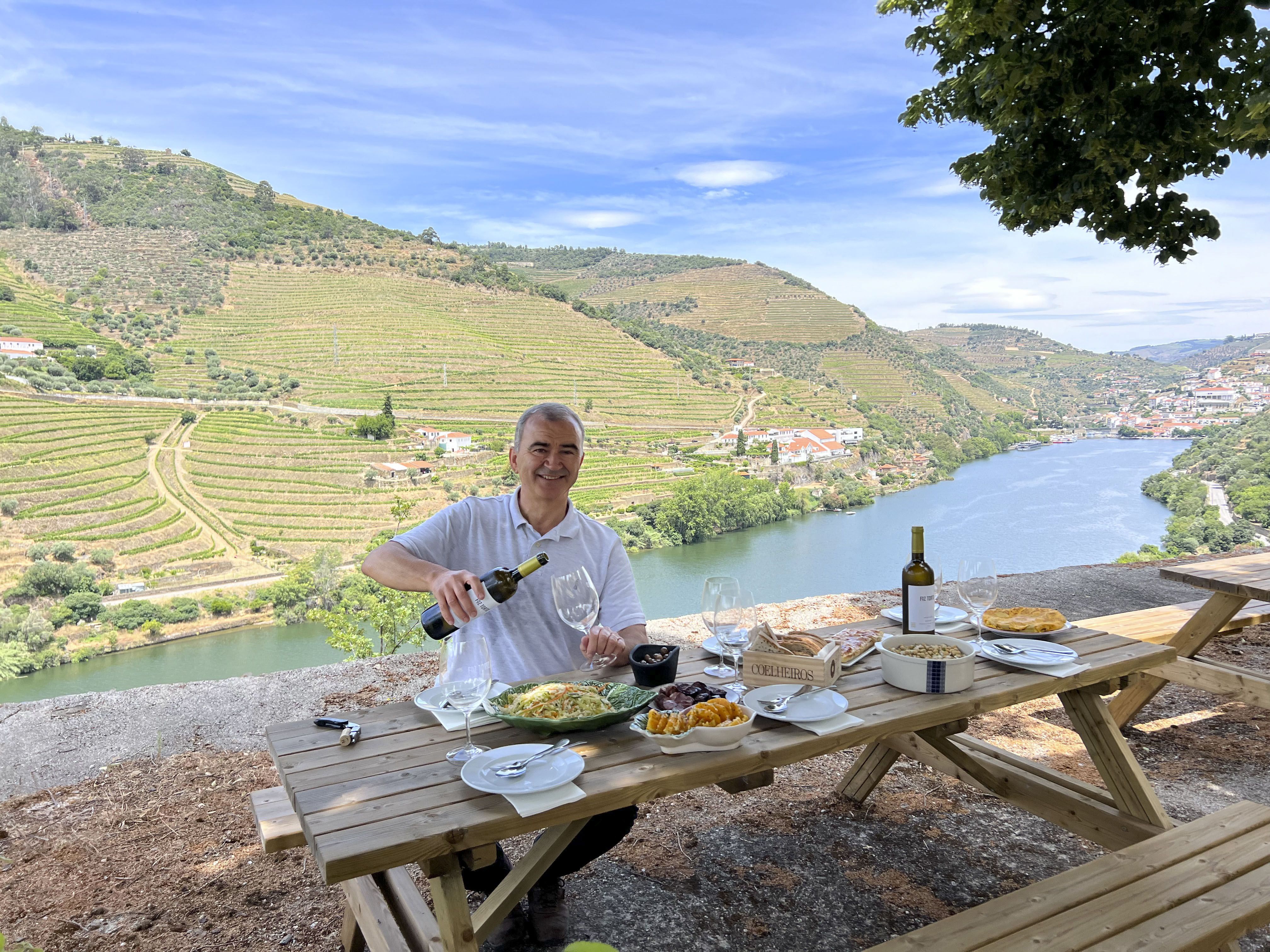
The art of building dry stone walls is beautifully explained at the Wine Museum in São João da Pesqueira, a town whose historic center also deserves exploration. The visit whets the appetite for lunch at Toca da Raposa, in Ervedosa do Douro, about 8 kilometers away along the National Road 222, heading toward the mouth of the Torto River — another magical tributary that shapes the wines of the Douro, alongside the Pinhão River. In the summer, you can also book an unforgettable picnic at the Foz Torto estate with our friend Abílio Tavares da Silva.
António recommends reading “Taste the Limestone: A Geologist Wanders Through the World of Wine,” by Alex Maltman. You’ll return home with a deeper understanding of soils and their decisive role in defining terroirs across the world.

A Journey Through the Douro’s Three Regions with António Magalhães

António Magalhães, former chief viticulturist of Taylor Fladgate, is revered throughout the Douro for his deep knowledge of its vineyards and terroir. He graciously agreed to give us a series of master classes about the Douro, and what follows are notes from the first of these sessions—an insider’s look at one of the world’s most extraordinary wine regions.

About António

António was born in Régua, in the heart of the Douro. Both of his parents came from families who cared for their own vineyards. He often spent time at his maternal grandfather’s estate, where his love for the Douro was first nurtured. Although he never inherited land, his studies were guided by a single calling: to work among the vines of his native valley.

A Land of Mountains and Microclimates

The Douro is immense — 250,000 hectares of rugged mountains, of which only 44,000 are occupied by vineyards. It is the largest mountain viticulture region in the world, and the only one with a Mediterranean climate crossed by a navigable river that flows into the Atlantic Ocean.

The basin of the Douro, the largest in the Iberian Peninsula, is shared by Portugal and Spain. Its main river and tributaries flow through a tapestry of vineyards across wine regions: Ribera del Duero, Rueda, Cigales, Toro, and Arribes, in Spain, Douro and Távora-Varosa in Portugal. You could say that the Douro is a river of wine.

The Douro’s rise as a great wine region began in 1703, when Portugal signed the Methuen Treaty with England, opening trade between the two nations. Douro’s Port wine became popular in England, and demand soared. Vineyards spread, and some producers began to cut corners—darkening their wines with elderberry juice and sweetening them with sugar. Port’s reputation faltered, and trust among English importers began to erode.

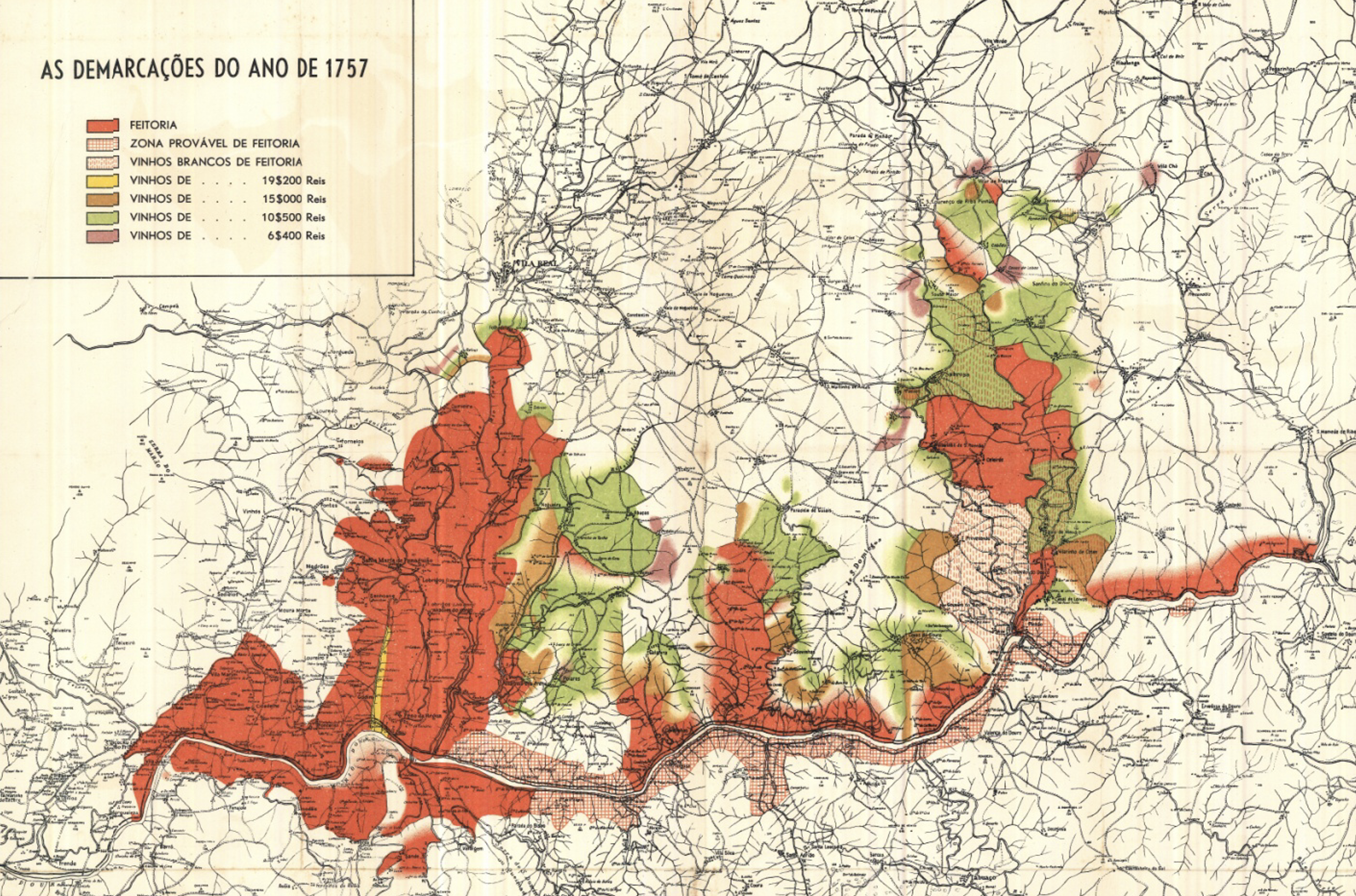
To restore order, avoid the use of fertile land for viticulture, and protect Port’s reputation, the Marquis of Pombal created the world’s first demarcated wine region in 1756. The Companhia Geral da Agricultura das Vinhas do Alto Douro, a public company, marked its boundaries with granite pillars known as marcos pombalinos and classified its vineyards. The finest plots produced the prized vinhos de feitoria, destined for the great British trading houses (feitorias) in Porto. Wines of intermediate quality, the vinhos de embarque, were partly exported, while the more modest vinhos de ramo were reserved for local consumption. With this demarcation, a singular landscape was born, shaped by nature’s hand and human will.

It was fortuitous that there was open land in Gaia, near Porto, on the southern bank at the mouth of the Douro. There, the north-facing slopes and the cooler, more humid weather provided ideal conditions for storing and aging wine. With its quality safeguarded and easy access to an Atlantic port from which ships could carry it abroad, Port wine flourished, becoming prized around the world.

The Douro River flows west to meet the Atlantic at Porto (Álvaro Moreira da Fonseca (1944–45)).

The climate and regions of the Douro

On what António calls the “Olympic podium” of terroir, climate wins gold, soil takes silver, and grape varieties bronze. Today, we focus on climate.

Vines don’t need irrigation, but they do require at least 500 mm of rainfall per year. In the Douro, however, the irregular rainfall and rapid runoff down the steep slopes increase that need to about 600–700 mm. The timing of that rain is crucial. It rains about as much in Pinhão, at the center of the Douro, as in Paris—around 640 mm annually. However, in the capital of France, rain falls throughout the year, whereas in the Douro, the rain is in tune with the vines’ vegetative cycle: it falls mainly in autumn and winter, when the vines are dormant. Planted in the right places, Douro vineyards never suffer from thirst, only from heat.

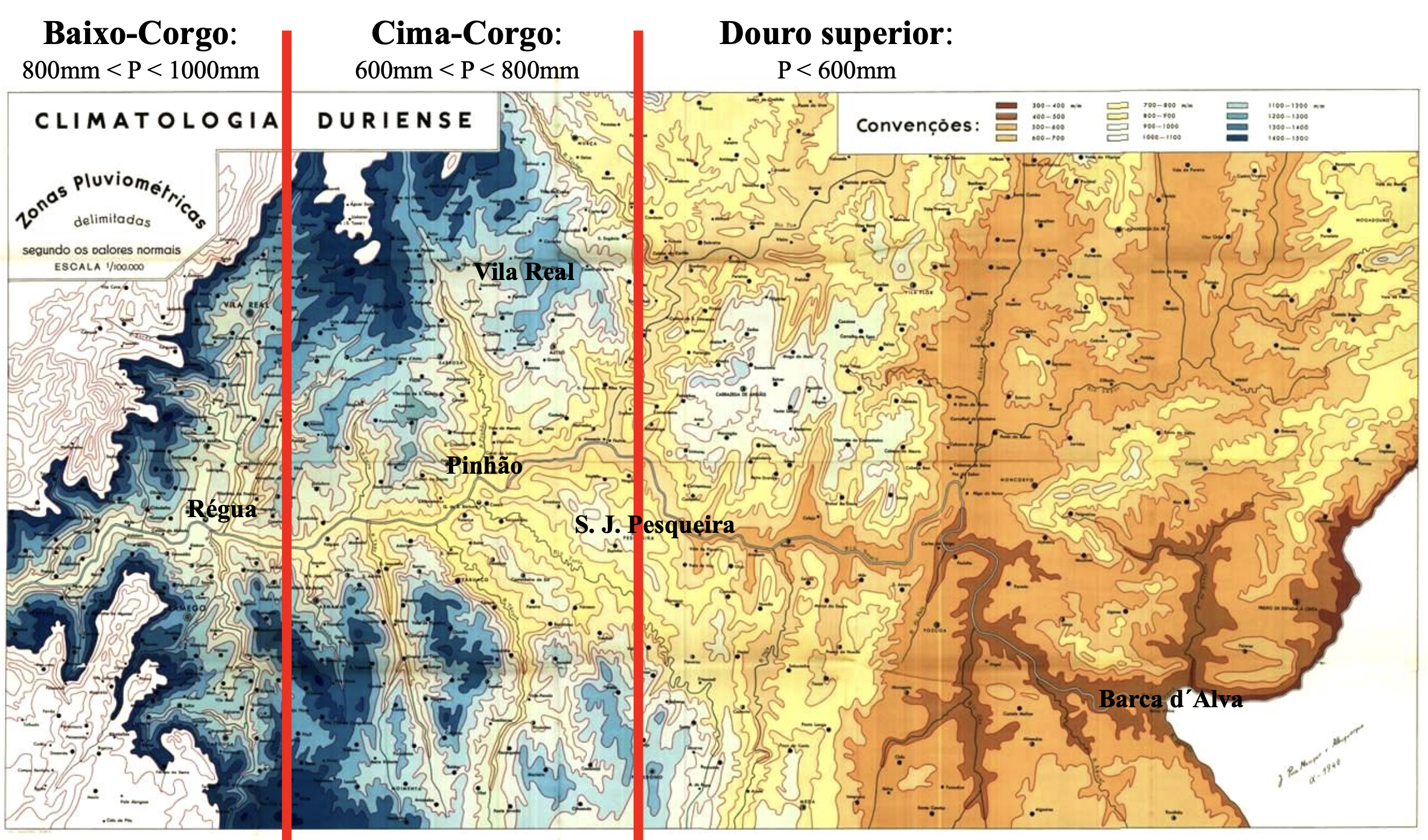
The distribution of rainfall divides the Douro into three distinct subregions. Baixo Corgo is lush and green, blessed with 800 to 1,000 mm of rain each year. Cima Corgo, home to the great Port houses, is drier, with 600 and 800 mm. Farther east lies Douro Superior — sun-scorched, rugged, and remote, where rainfall often falls below 600 mm.

Rainfall in the Douro: blue = high, yellow = medium, orange = low.

Vineyards are abundant in Baixo Corgo and sparse in Douro Superior, where cultivation is possible only in small islands with favorable microclimates. In recent decades, irrigated vines have appeared in Douro Superior, yet they rarely produce grapes suitable for making Port.

The scholar Alfredo Guerra Tenreiro wrote that “there is a uniqueness in the Douro climate that one can feel in the uniqueness of Port wine.” In the 1940s and 1950s, he mapped the aridity of the Douro using a simple measure: average temperature multiplied by 100, divided by rainfall. As one moves west or climbs the surrounding hills, aridity decreases because the temperature falls and rainfall increases. 

As we ascend the hills that flank the Douro and its tributaries, the temperature drops roughly 0.65°C per 100 meters. With peaks rising to 600 or 700 meters, temperatures can be as much as 3.6°C cooler than in vineyards planted near the river, at 100 meters of altitude.

Orientation also matters. South-facing slopes are, on average, two degrees warmer than north-facing ones during the summer — a subtle difference with dramatic effects. It explains why the Douro can yield everything from festive sparkling wines, such as Celso Pereira’s Vértice, to bright whites, velvety reds, and opulent Ports.

Álvaro Moreira da Fonseca used location, altitude, and orientation to craft his brilliant classification of the region’s vineyards, grading them from A to F. This system still underpins the benefício rules that determine how much of a vineyard’s production can be used for Port wine. His maps, drawn in 1944 and 1945, are masterpieces. Fonseca set 500 meters as the upper limit for Port production, deducting points for vineyards planted above that line.

Map by Álvaro Moreira da Fonseca (1944–45). Red marks top wine areas.

Looking at Fonseca’s maps, we see a “blessed valley” — Vale de Mendiz, where the Pinhão River meets the Douro. There, rainfall from the Baixo Corgo meets the warmth of the Cima Corgo, producing wines of exceptional balance. It is no coincidence that iconic estates like Quinta do Noval and Wine & Soul call Vale de Mendiz home.

Traveling Through the Douro

António recommends visiting the Douro between mid-May and mid-November, staying for several days to ensure you catch a sunny spell. Gray skies hide some of the valley’s splendor.

He suggests two journeys for those eager to understand the Douro.

First, drive along the A24 highway from Vila Real to Régua, crossing the Marão mountain — an invisible wall separating cool Atlantic air from the dry Mediterranean hinterland. You’ll cross the Baixo Corgo moving perpendicular to the course of the Douro River. The landscape is breathtaking, and along the way you can feel the shifts in temperature and altitude that shape the character of Douro wines. 

Begin in Vila Real at 450 meters of altitude, and as you descend toward Régua, at 100 meters, feel the temperature rise and watch the hills unfold into a sea of vines. Olive trees stand like sentinels at the edges of vineyards. Climb toward Lamego, at 540 meters, and feel the air cool once more. The whitewashed houses, stone wine lodges, and hillside villages lend a human touch to the landscape, making the journey unforgettable.

In Régua, stop at Aneto, a small, family-run restaurant where hospitality flows as generously as the wine produced in their own estate. In Lamego, stop at Pastelaria Velha da Sé for a bola de carne (savory meat-filled bread), visit the cathedral, the Escadório de Nossa Senhora dos Remédios, a Baroque stairway, and admire the Ribeiro da Conceição theater, a miniature La Scala.

The second journey is by train, linking three UNESCO World Heritage sites: Porto, the Douro, and the Côa Museum, which preserves paleolithic art.

The hills were carved to lay the train tracks, turning the voyage into a geology lesson on Douro’s mother rock, the schist. Its cleavage is almost vertical, allowing the vine roots to penetrate deeply into the cracks in search of precious water.

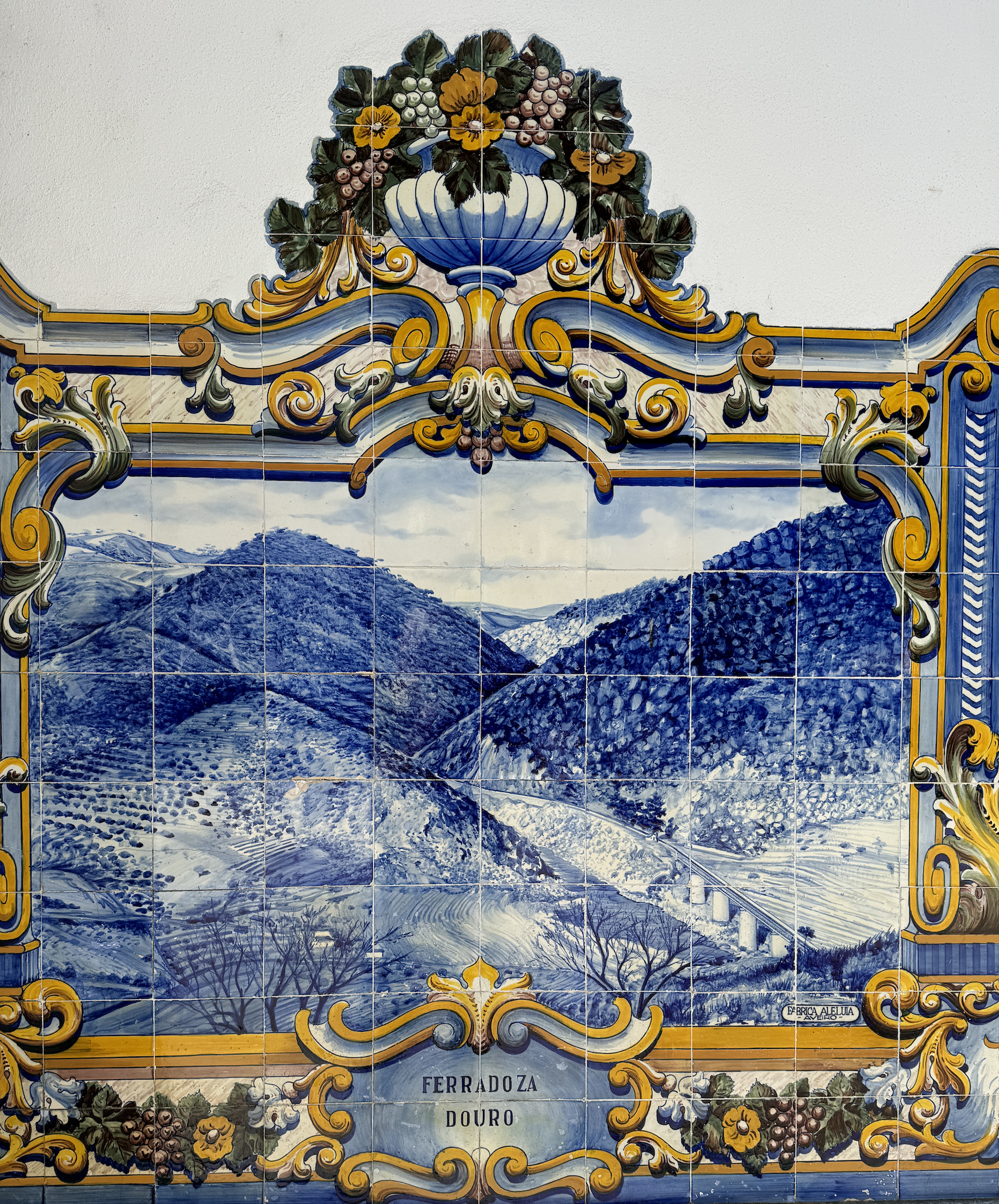
As the train leaves Régua, schist terraces rise and curve around the river. Disembark at Pinhão and linger a few days visiting nearby wine estates. Before you go, admire the station’s twenty-four azulejo panels, made in 1937 by the Aleluia Factory in Aveiro. They depict the Douro landscape and trace the making of Port—from the harvest of sun-ripened grapes to the voyage of slender rabelo boats, which carry barrels to the cellars of Vila Nova de Gaia.

Continue upriver through the Cima Corgo, the heartland of Port. In bygone days, train-station restaurants were famed for their quality. Calça Curta, at Tua Station, keeps this tradition alive. Farther along, stop at Ferradosa Station to dine at Toca da Raposa, celebrated for its regional cooking. 

As the train enters the Douro Superior, the air turns drier, the heat more intense, the hills steeper. At Cachão da Valeira, the landscape shifts to granite. Today, the river glides wide and serene, but it once raged against a massive granite barrier that made navigation perilous. Here, in 1861, tragedy struck: a boat capsized carrying two iconic figures—Dona Antónia Ferreira, owner of vast wine estates, and the Baron of Forrester, an English merchant and mapmaker who devoted his life to the region. According to legend, Dona Antónia survived, buoyed by her billowing skirts, while the Baron drowned, dragged down by the gold coins in his pockets. 

In summer, cicadas sing for travelers along the stretch between the Valeira gorge and Pocinho. As you near Pocinho, the heat intensifies—writer Francisco José Viegas once quipped that “hell’s heat comes from Pocinho.” Stop at Taberna da Julinha, a local restaurant that, in the summer, serves the valley’s celebrated tomatoes, bursting with flavor and sweetness.

The Côa Museum lies about 10 kilometers from the train station. There, you can contemplate the largest and oldest ensemble of open-air Paleolithic engravings in Europe. Horses, deer, and goats emerge from the stone, their lines layered in a dance of timeless motion. Dine on the museum’s terrace, overlooking the river laid bare in all its austere beauty—terraces and cliffs carved by nature and human will.

The Future of the Douro

The Douro was forged in hardship. Its people labored to carve terraces from unforgiving slopes; its vines learned to endure searing summers and biting winter frosts. Yet this endurance may be the valley’s greatest gift. It has prepared the Douro to face the trials of a changing world.