
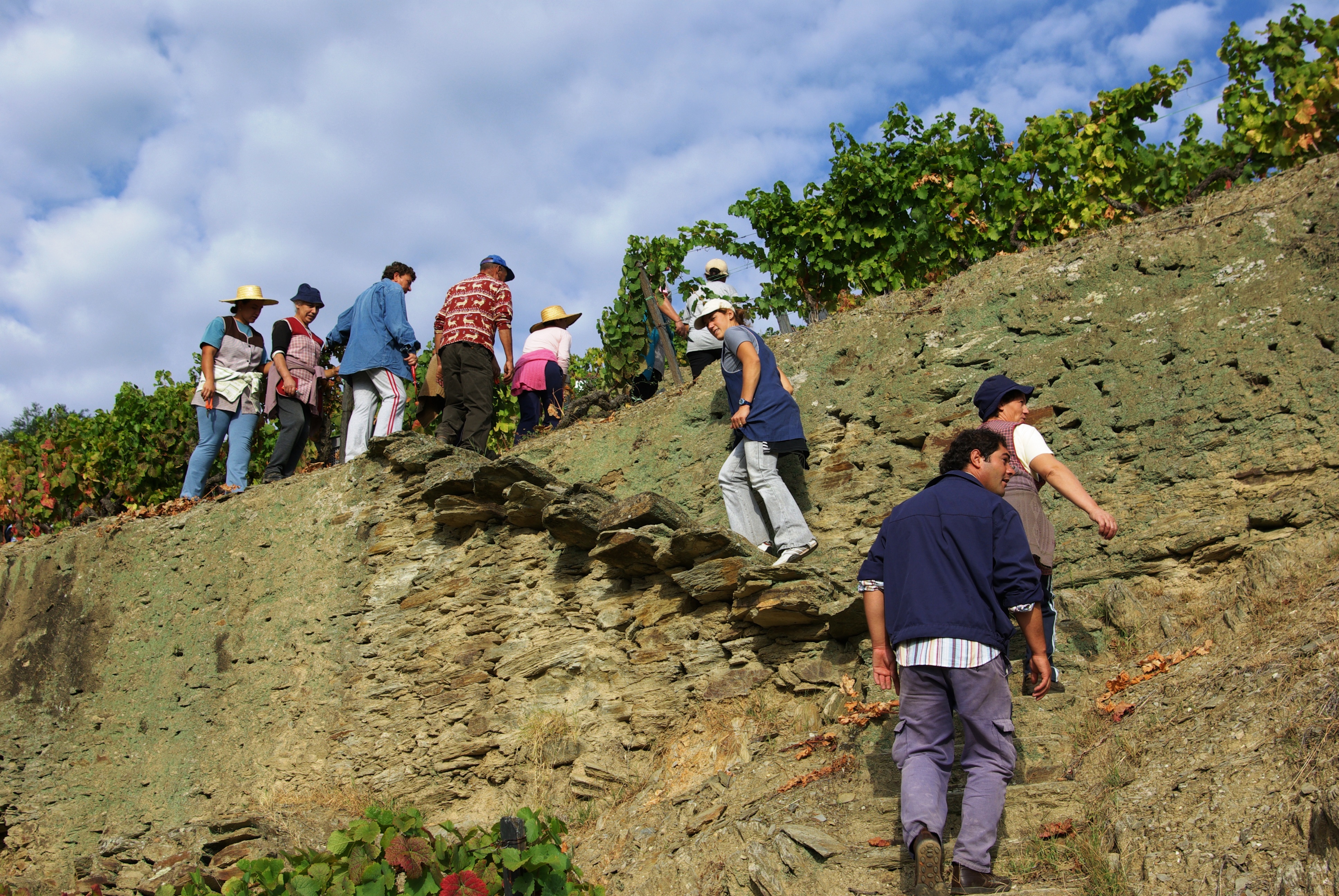
In this seventh lecture with viticulturist António Magalhães, we explore the hard work behind every bottle of Douro wine. The region’s steep, mountainous slopes make mechanization difficult, so much of the labor is still done by hand. Yet it is precisely this human touch that produces great wines: knowing how to prune and tend each vine, which grapes to harvest, and which to leave behind.
When António was a boy, he loved to play with the children of the agricultural workers and was often invited to share their simple meals. Because their homes had no electricity, supper was served late in the afternoon to take advantage of the last light of day.
The food was cooked in earthenware and cast-iron pots over the same hearth that warmed the house during the cold Douro winters. The walls were stained with soot from countless fires. At the table, the adults spoke freely in front of António, assuming that, as a child, he would not understand their conversations. But he listened intently.
He heard how hard their lives were. He heard their worries: how to stretch meager wages, how the women, already burdened with cooking, cleaning, and feeding the animals, took poorly paid part-time jobs to earn a little extra money. He heard their modest dreams: that all their children would finish primary school, that the most gifted might apprentice as carpenters, plumbers, or cabinetmakers, and escape the harsh life of the vineyards.
At the end of supper, António returned to his family home, the smell of smoke clinging to his clothes. He liked it, but his parents made him bathe and then sit down to a second dinner in the dining room, lit by the luxurious glow of incandescent bulbs. Here again, he listened to the conversations of the grown-ups. These reflected fewer worries and higher aspirations: the children were expected to attend university and pursue prestigious careers, becoming lawyers, doctors, or engineers.
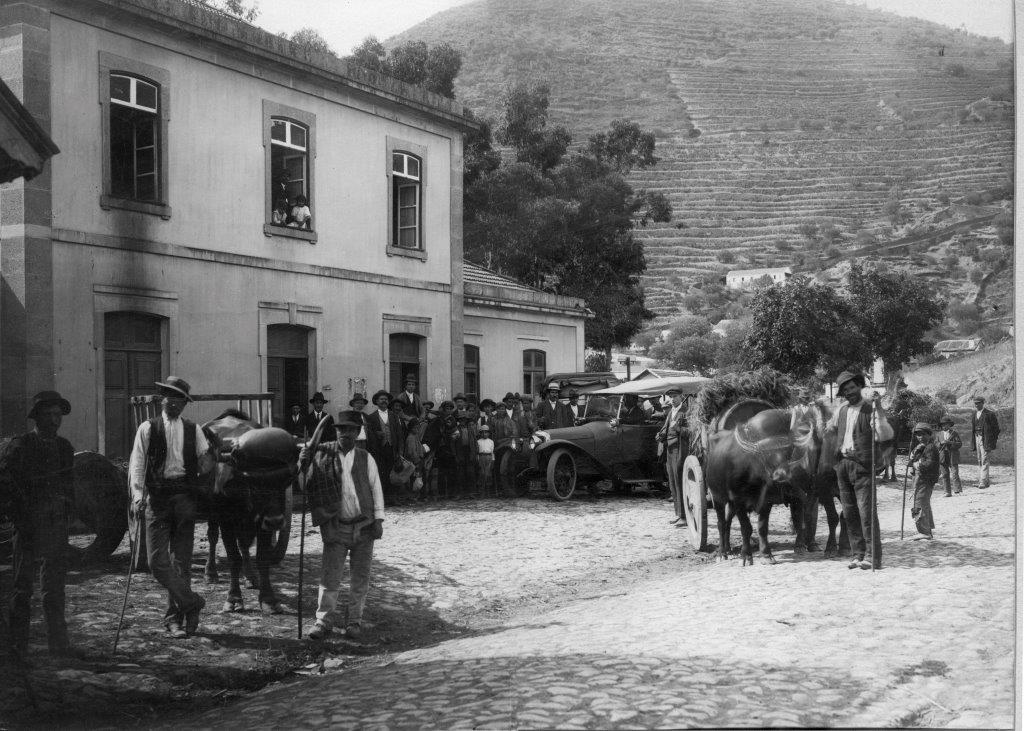
The parents of António’s childhood friends worked year-round on the large Douro estates. It was mostly at harvest time that the farms hired temporary workers, called rogas. They were gathered by a rogador and brought to Régua or Pinhão by train or bus. From there, they walked the long, narrow roads that led to the farms.
Most came from the high plateaus of Trás-os-Montes, where corn had been grown since the sixteenth century. For extra sustenance, they carried cornbread, along with a knife to cut it and a fork for their meals. At night, they slept in buildings called cardanhos, which were divided in half by a wooden wall. The men slept on one side and the women on the other. There was a large common blanket for each group.
The rogas worked twelve hours a day for two weeks to earn some extra money that would last them the rest of the year and perhaps allow them to buy a small plot of land. Those who could carried the heavy baskets of grapes, for this work paid three times as much as harvesting. All this toil is memorably described in Miguel Torga’s 1945 novel Grape Harvest.
Over the years, António came to understand the rhythm of vineyard life. Work starts at sunrise. In winter, it begins at first light to make the most of the day. In summer, the sun rises much earlier, and work also begins earlier, to escape the afternoon heat.
Vineyard labor is physically demanding. Workers leave for the fields fasting and pause around 9 a.m. for a light snack, usually a sandwich, to avoid feeling lightheaded. Lunch is the first hot meal of the day, often a vegetable broth eaten from a bowl: first, the vegetables are eaten with a fork, then the broth is drunk. In summer, there is no afternoon work, and heavy midday meals are avoided because of the heat.
The Douro was a poor region, so the food was simple and nothing was wasted. Rye and corn bread were always present, but wheat bread was rare. Pasta, potatoes, and beans were staples.
During the week, people relied on sausages such as chouriço and alheira, and on two essential fish: cod, prepared in countless ways, and sardines, eaten fresh or preserved in salt, a tradition that has largely vanished. Vegetables were seasonal: cabbages in winter, plump Douro tomatoes in summer, cut in half and seasoned with salt and raw onion. Workers helped themselves to the fruit of the trees, discarding the seeds at random and inadvertently planting new trees in the most unexpected places.
As a small bonus, the workers received either a light, low-alcohol wine or água-pé, the latter made by adding water to the pressed grape pomace and letting it ferment again. Some was drunk at lunch, and it usually accompanied dinner.
Sunday was a day of rest. The man shaved, a small indulgence at a time when blades were expensive. Lunch included meat (often tripe, chicken, or mutton) and their best wine, for there was no farm work in the afternoon.
Every family aspired to raise a pig for the annual slaughter, to make sausages and salted meats that could be consumed throughout the year. Those without the means or a pigsty raised one jointly with the estate owners they worked for, trading labor for shelter and the purchase of the animal. One advantage of the pig was that it did not compete with humans for food: it lived on fallen fruit and broth made from kitchen scraps, wilted vegetables.
This way of life began to unravel in the 1990s, as workers aged and their children turned away from agriculture. Large farms began to rely year-round mostly on contractors who supply temporary labor. These workers, however, have neither the experience nor the commitment of the full-time hands.
António stresses the importance of the people who work year-round on the farms of the Douro Valley. Working other people’s land is exhausting and offers little recognition. At the same time, many workers own a small vineyard. Tending that land is a source of pride and quiet joy. It is the same work, but it carries a different meaning.
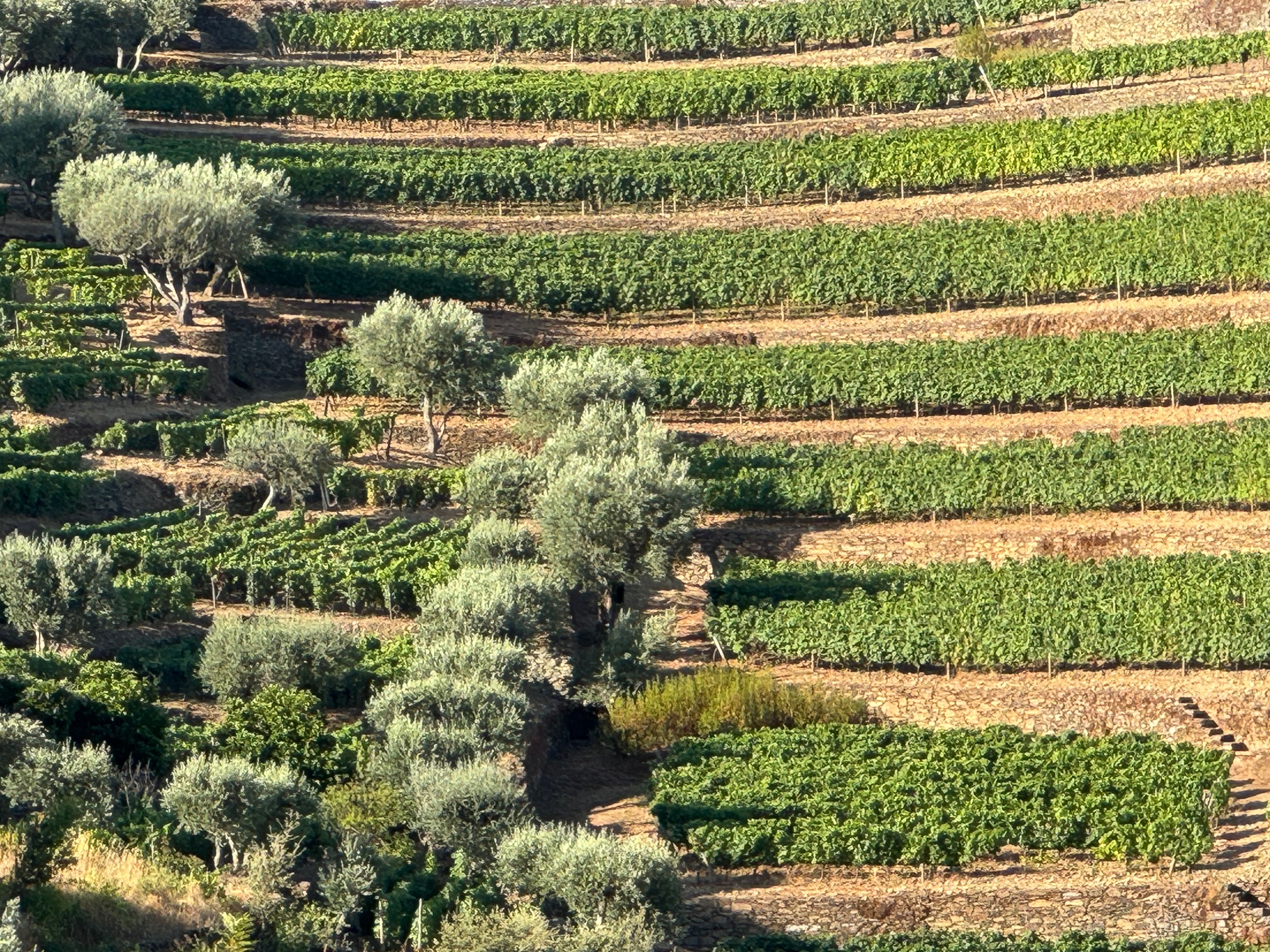
These vineyards have a human scale, with one, or at most two hectares that can be cared for by a farmer and their family. These small farms, ubiquitous throughout the valley, are key to preserving and improving the spectacular landscape, maintaining the fruit trees planted among the vines and the olive trees that surround them. The farmers who tend these vines are also guardians of a precious genetic legacy, preserving the different grape varieties that evolved through careful human selection over the years.
The way these vineyards are cared for reveals a profound respect for nature and the social fabric of the Douro. There is a transmission of skills from generation to generation, enriched by the wisdom and experience accumulated over time. This inheritance is valuable not just to them but also for the work they do on the large farms.
António thinks that the Douro needs to create conditions so that a new generation can choose to work in agriculture, supplying skilled labor to the large farms and tending their own human-scale vineyards. That means using technology to make the work easier: drones can be used to treat vines, and new machines can be designed and adapted to the Douro’s vineyards, as they have been in Champagne and the Mosel.
The recognition of the olive oil produced by the olival de bordadura, the trees surrounding the vines, as a product with protected designation of origin is another way to increase the income and status of Douro growers. The success of enotourism is an essential pillar of the region’s future.
But, above all, it is key to increase the value of the grapes. The region was designed to produce its prized wine, Port. Later came another fortified wine, the Moscatel de Favaios, and, in recent decades, the DOC Douro table wines. António supports the creation of another category, the analogue of vin de pays in France: a simple wine for local consumption. He proposes calling it Vinho de Ramo, an old name for tavern wine, after the branch (ramo) once placed by the door to signal that wine was for sale.
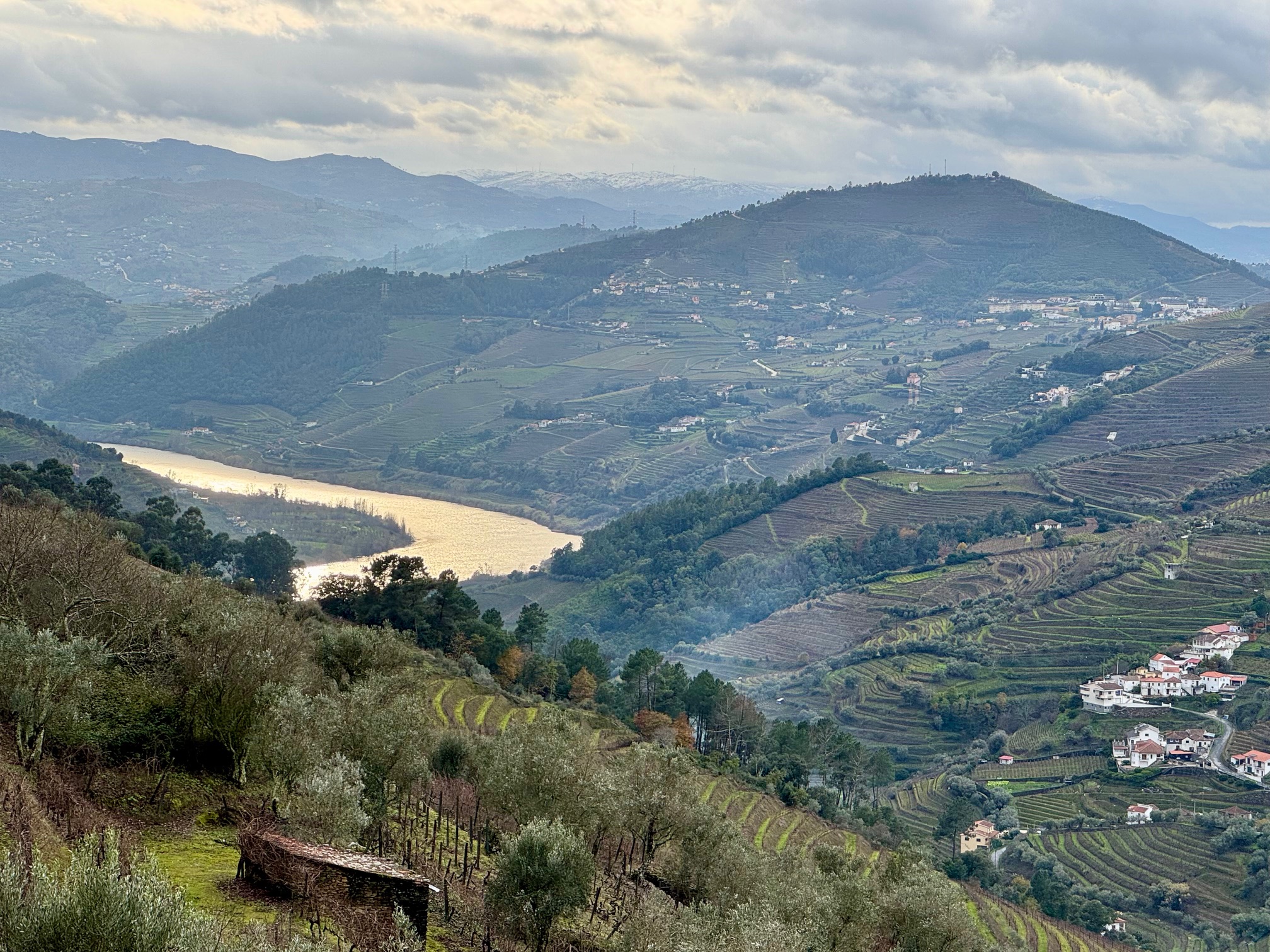
At the end of last year, António, who comes from a family of vineyard owners but inherited no land, bought Vinha da Porta, a human-scale vineyard in the small village of Cidadelhe, near Régua, in Baixo Corgo with sweeping views of the Marão mountains. He now rises with the sun to work in his vineyard. Will he produce Port wine, DOC Douro, or a simple Vinho de Ramo? Whatever it is, we cannot wait to taste it.
 Salt of Portugal
I wish him success and lots of luck. It’s such a beautiful area and enterprise xx
I will pass on your good wishes to António!