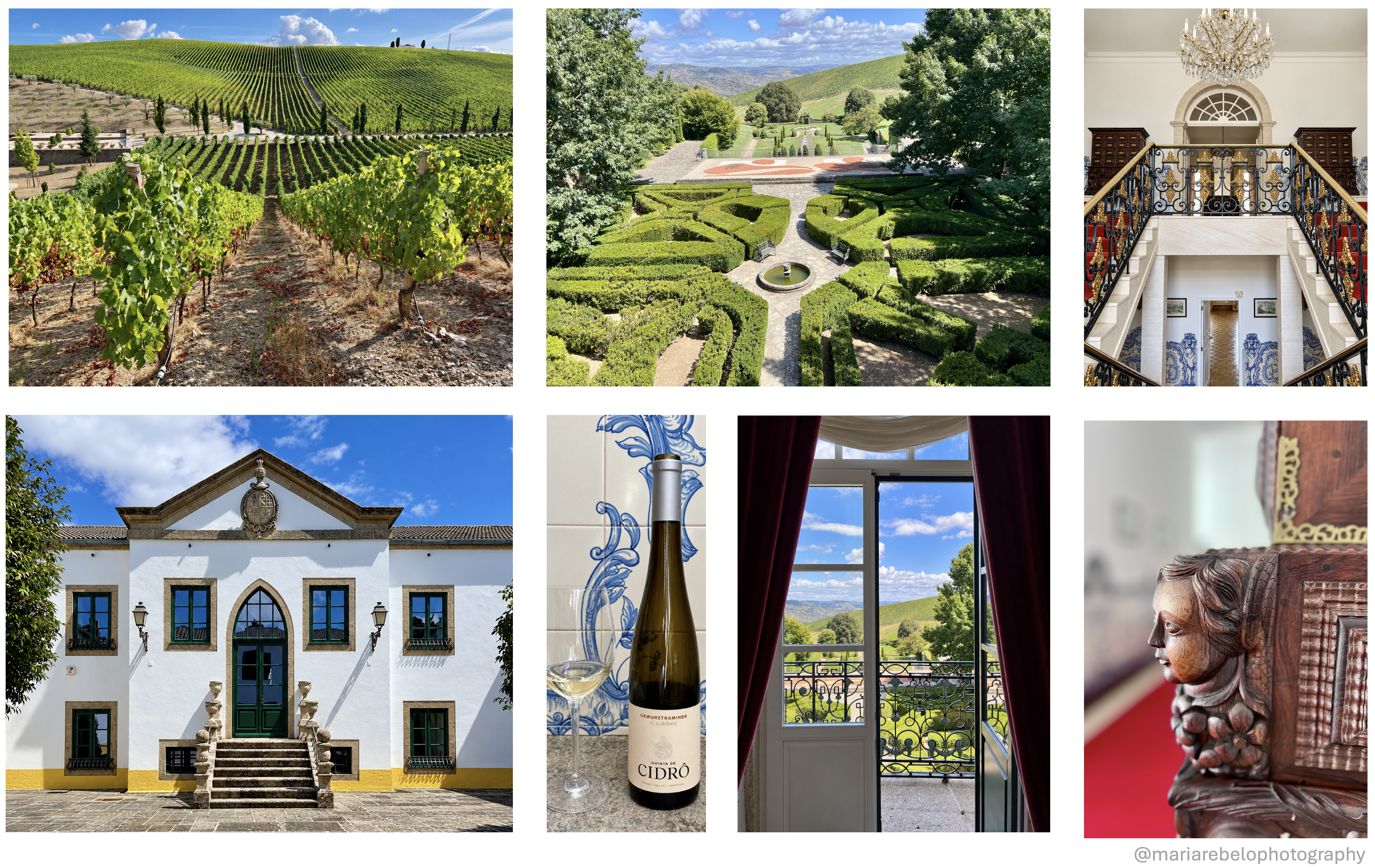
The road from Quinta das Carvalhas to Quinta de Cidrô winds through vine-covered hillsides. The harvest was at its peak, and the leaves were a bright yellow-green. A few white clouds dotted the sky. To us, they added to the beauty of the landscape; to farmers, they hinted at rain that could spoil the harvest.
We imagine painters once stood here in straw hats, working en plein air at their easels, but gave up, unable to fit the Douro onto small canvases.
As we climbed toward Cidrô, the Douro’s ancient terraces gradually gave way to long rows of vines planted ao alto, running straight up the slopes and disappearing into the distance.
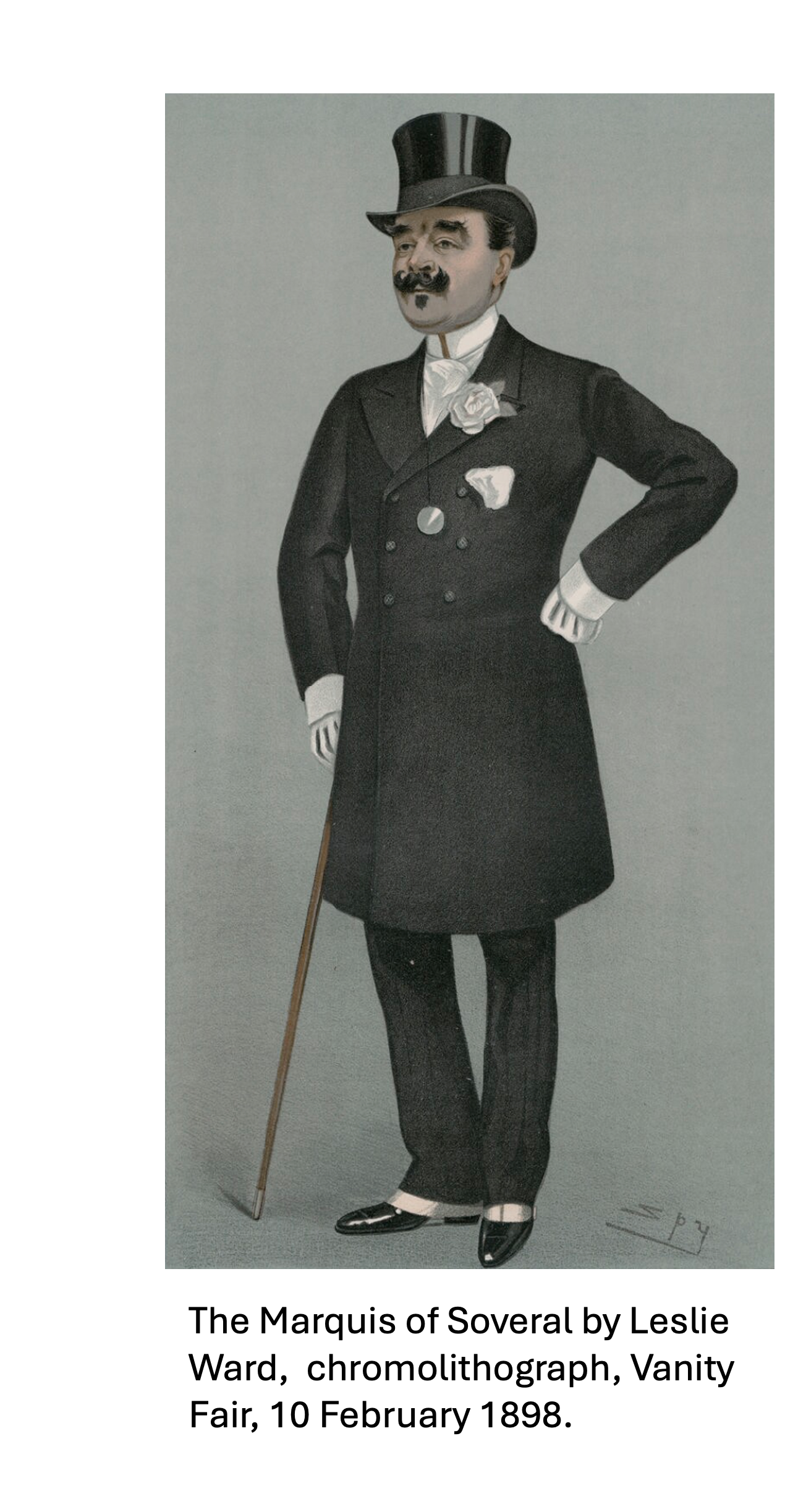
Cidrô belonged to the Soveral family for generations. Its austere granite palace and its first vineyards date from the nineteenth century. Luís Maria Augusto Pinto de Soveral was born here in 1851. In 1900, King Carlos I made him the first and, as it turned out, only Marquis of Soveral.
He served as Minister of Foreign Affairs and, for many years, represented Portugal at the Court of St. James’s. The Marquis was close to King Carlos and Queen Amélia and a confidant of the future King Edward VII. His contemporaries were so impressed by his intelligence, elegance, and wit that they coined an adjective in his honor: soveralesco.
According to oral tradition, Queen Amélia sought seclusion at Cidrô after her husband and their son, Crown Prince Luís Filipe, were assassinated in Lisbon’s Terreiro do Paço in 1908. Two years later, the monarchy fell, and the queen went into exile. No documents confirm her stay at Cidrô, an absence in keeping with the Marquis’s reputation for discretion. The close bond between Queen Amélia and the Marquis is better documented: when he died in Paris in 1922, the queen was at his side.
Cidrô passed into the hands of the Viscount of Asseca and later, according to local tradition, to a most unlikely proprietor. Francisco Lopes, a farmhand at Cidrô, rebelled against an overbearing foreman and vowed to emigrate to Brazil, make his fortune, return to Portugal, buy Cidrô, and fire the foreman.
Nearly everything unfolded according to Lopes’ plan. He prospered in Brazil, returned to Portugal, and bought Cidrô. But his revenge eluded him: by then, the foreman had died. Lopes occupied only a small part of the palace, letting the rest of the house and the farm slowly slip into disrepair.
The Real Companhia Velha acquired Cidrô in 1973 and began restoring the palace, the grounds, and the vineyards. The estate has since become one of the Douro’s leading centers for viticultural experimentation, with almost 140 hectares of vines planted in a continuous sweep across its high, gently undulating slopes.
Pedro Silva Reis tells us that Cidrô is particularly well suited to white wines. Portuguese varieties such as Alvarinho, Arinto, Samarrinho, and Gouveio share the land with foreign guests, including Chardonnay, Sauvignon Blanc, and Gewürztraminer. The Marquis would surely have approved of this international gathering.
The palace windows frame views of the garden, the Douro River and the rugged schist mountains. Inside, Portuguese tiles with floral motifs decorate the rooms with restrained elegance.
We tasted Douro almonds with a bright Gewürztraminer. Its rose and lychee aromas suggest sweetness, yet it is dry on the palate.
In the dining room, we were served Marquis Branco, a pure Sauvignon Blanc created in homage to the diplomat. Intense and precise, with a saline edge, it is an international variety speaking with an unmistakably Douro accent.
Finally, came a Pinot Noir so elegant and charming that it deserved to be called soveralesco. Like the Marquis himself, it is at home both in the Douro and in the world.
Click here for information on how to arrange a visit to Quinta de Cidrô.
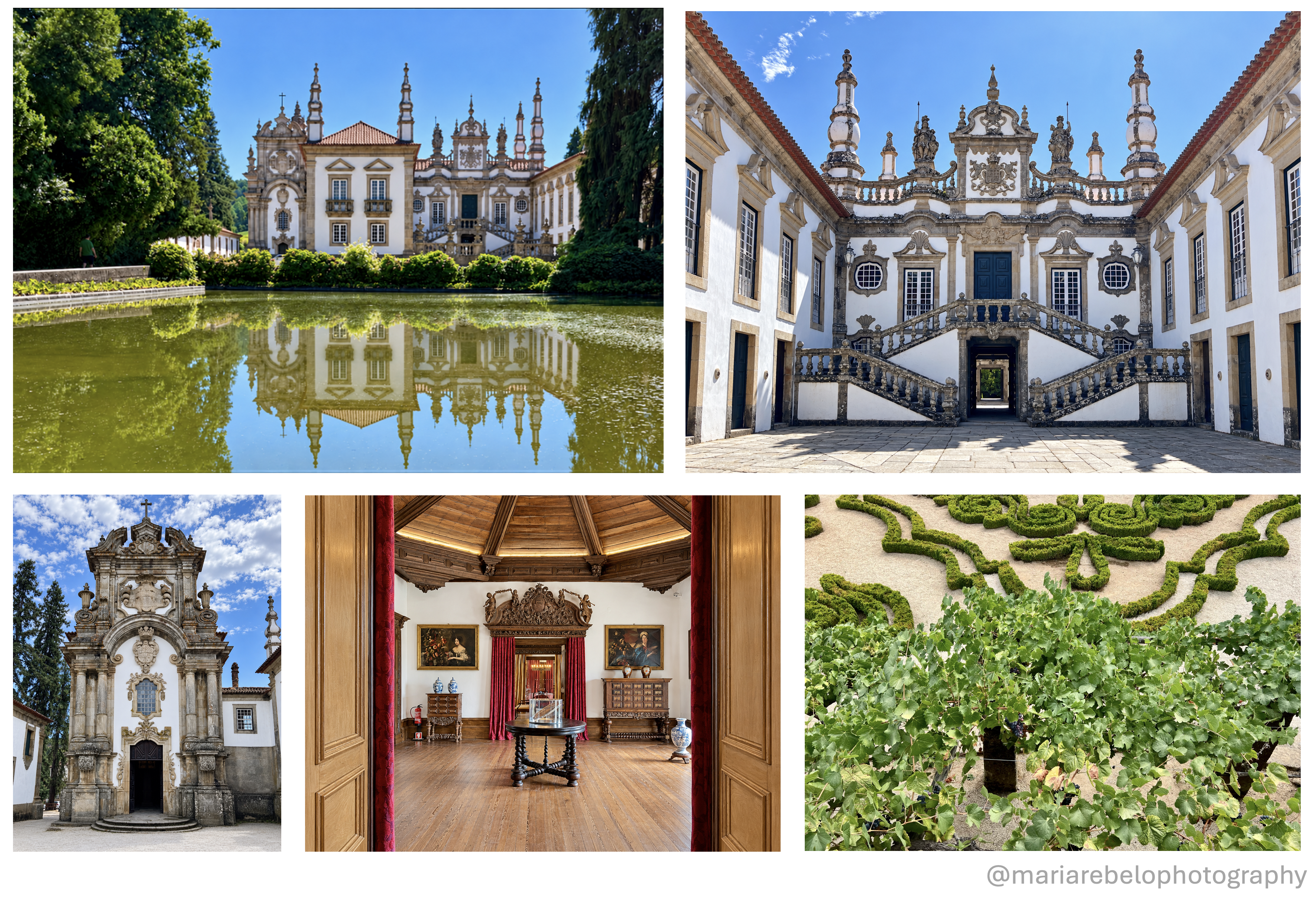
Casa de Mateus, near Vila Real, may be Portugal’s most famous palace. Millions of people around the world have seen its elegant façade on the label of Mateus Rosé.
Fernando van Zeller Guedes created the wine in 1942 and presented it in a distinctive flask-shaped bottle inspired by soldiers’ canteens. As the horrors of the Second World War receded, Mateus Rosé offered the perfect way to celebrate. Jimi Hendrix and other stars were photographed drinking it. Frank Borman, commander of Apollo 8, remarked: “I only regret that, when I was flying around the Moon, I had no Mateus wine to delight me.”
Some of the grapes used to make the wine came from the estate surrounding the palace. Guedes believed that the Baroque façade would give his creation an unmistakably Portuguese identity, so he approached the Count of Mangualde, husband of the heiress to the House of Mateus, for permission to use the family name and an image of the house.
According to a frequently told story, the Count was initially offered half an escudo for every bottle sold. Doubting that a pink wine would sell well, he soon exchanged the royalty for a single payment—an unfortunate decision, given that Mateus Rosé would go on to sell hundreds of millions of bottles.
The palace itself was built during the first half of the eighteenth century by António José Botelho Mourão, the third Morgado de Mateus. Its Baroque design is attributed to Nicolau Nasoni, the Italian architect who also designed the Clérigos Tower and the Freixo Palace in Porto.
Granite palaces are often austere, but at Mateus, Nasoni created lightness out of stone. Staircases climb playfully toward the first floor, competing for our attention with statues, balustrades and ornamental pinnacles. The reflecting pool added much later heightens the visual enchantment, uniting the façade, sky and water in a single composition.
In many palaces, the chapel is concealed within the house. At Mateus, the temporal and the sacred stand apart. Heavy wooden doors guard the palace entrance. Stepping inside feels like entering a private world the family might return to at any moment. The cool austerity of granite gives way to the warmth of wood, while the grandeur of the exterior yields to intimate rooms framed by graceful vaulted ceilings.
There are family portraits, antique furniture and religious objects, as well as an impressive library. Among its treasures is the monumental edition of Os Lusíadas, by the poet Luís Vaz de Camões, published in Paris in 1817 by José Maria de Sousa Botelho Mourão, the fifth Morgado de Mateus.
Behind the palace lies a garden that welcomes visitors with its serene geometry and restful silence. One expects Baroque music to pour from the palace windows at any moment. And music remains part of life at Mateus. In 1970, D. Francisco de Sousa Botelho de Albuquerque, a descendant of the Morgados de Mateus, established the Casa de Mateus Foundation to preserve the house and open it to the wider world. The foundation now organizes concerts, exhibitions and other cultural events, ensuring that Mateus remains not merely a monument to the past, but a living cultural institution.
Spending a few hours at Mateus offers a glimpse into the aristocratic life of the late eighteenth and early nineteenth centuries. Many of the comforts we now take for granted are absent, but in their place, we find a serenity that has become rare.
Casa de Mateus is 4 km from the centre of Vila Real on National Road 322. Click here to visit the House of Mateus Foundation website.
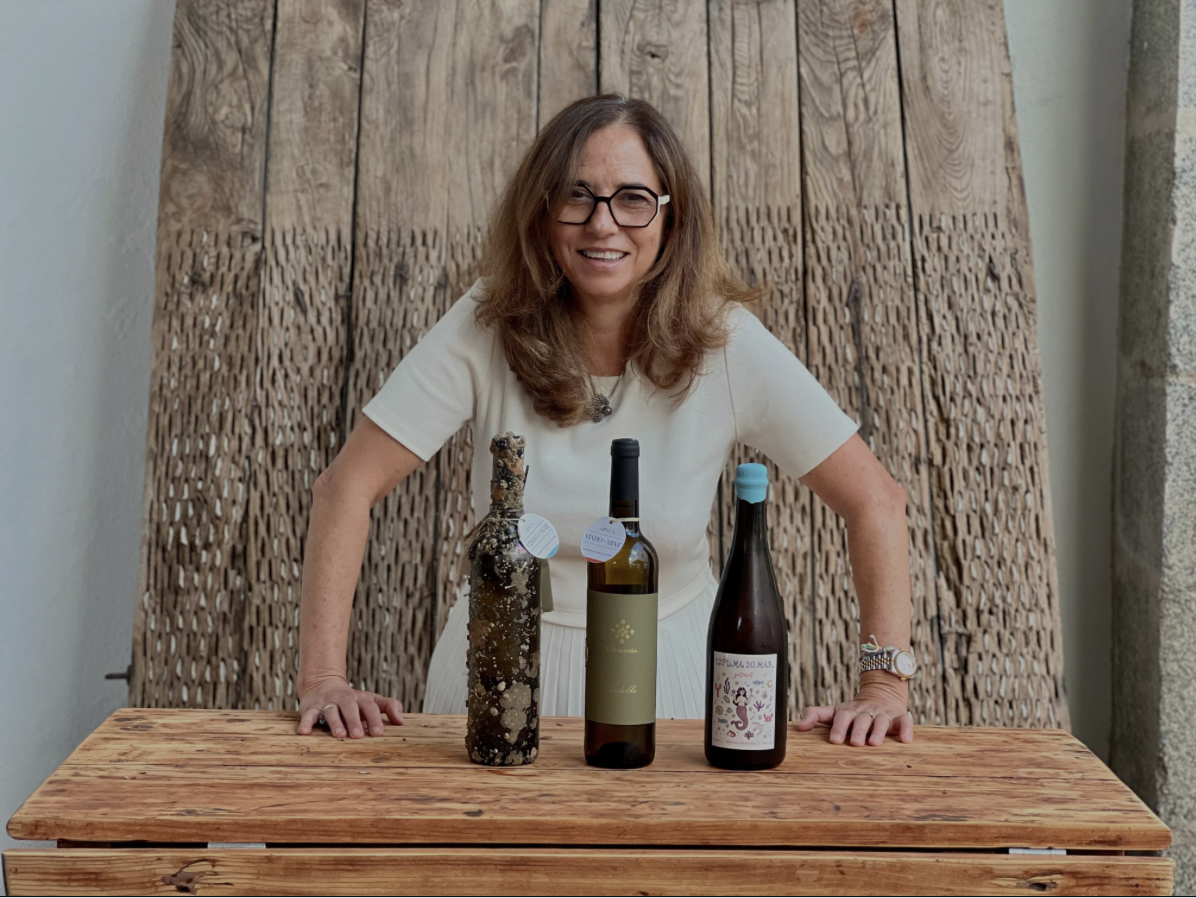
Serenada is a beautiful estate in the Alentejo that has been in winemaker Jacinta Sobral’s family for more than three centuries. Her father planted the first vines in 1961, the year Jacinta was born, so she affectionately calls them her sisters.
Driven by an adventurous spirit, Jacinta is constantly experimenting with new ways to create truly distinctive wines. Her wines aged 15 meters below the surface of the sea have attracted considerable attention, but Serenada’s portfolio offers many other treasures waiting to be discovered.
Among them is a seductive Pet Nat made from Touriga Nacional. The grapes are gently pressed, much as they would be for a rosé, but the wine is bottled before fermentation is complete. Fermentation then continues inside the bottle, trapping the carbon dioxide it naturally produces and giving the wine its delicate sparkle. Hence the name pétillant naturel,French for naturally sparkling, affectionately shortened to Pet Nat.
This style is probably close to how the earliest sparkling wines were made, before the development of the méthode champenoise, in which a finished dry wine undergoes a second fermentation in the bottle after the addition of yeast and sugar.
Making a consistently pleasurable Pet Nat requires considerable precision. Jacinta experimented with bottling at different densities, which indicate how much fermentable sugar remains, until she found precisely the balance she wanted.
To preserve the wine’s natural character, Jacinta adds no sulfites and does not disgorge it—a process in which the yeast sediment is collected in the neck of the bottle, frozen and expelled. As a result, the wine contains some yeast sediment, as well as harmless tartrate crystals: tiny crystalline deposits sometimes known as “wine diamonds.”
The wine comes in a bottle adorned with a whimsical label designed by Catarina Fuschini. Its pale rosé color is alluring, while the palate is fresh, lively and playful. “It is like a ballet for the palate,” says Jacinta. We call it a party in a bottle.
Having mastered the art of Pet Nat, she is already moving on to her next experiment: fermenting the wine in amphora, bottling it before fermentation is complete, and then aging it in the ocean. We can’t wait to taste the result!
Serenada is located near Grândola in Alentejo. Click here for their website.
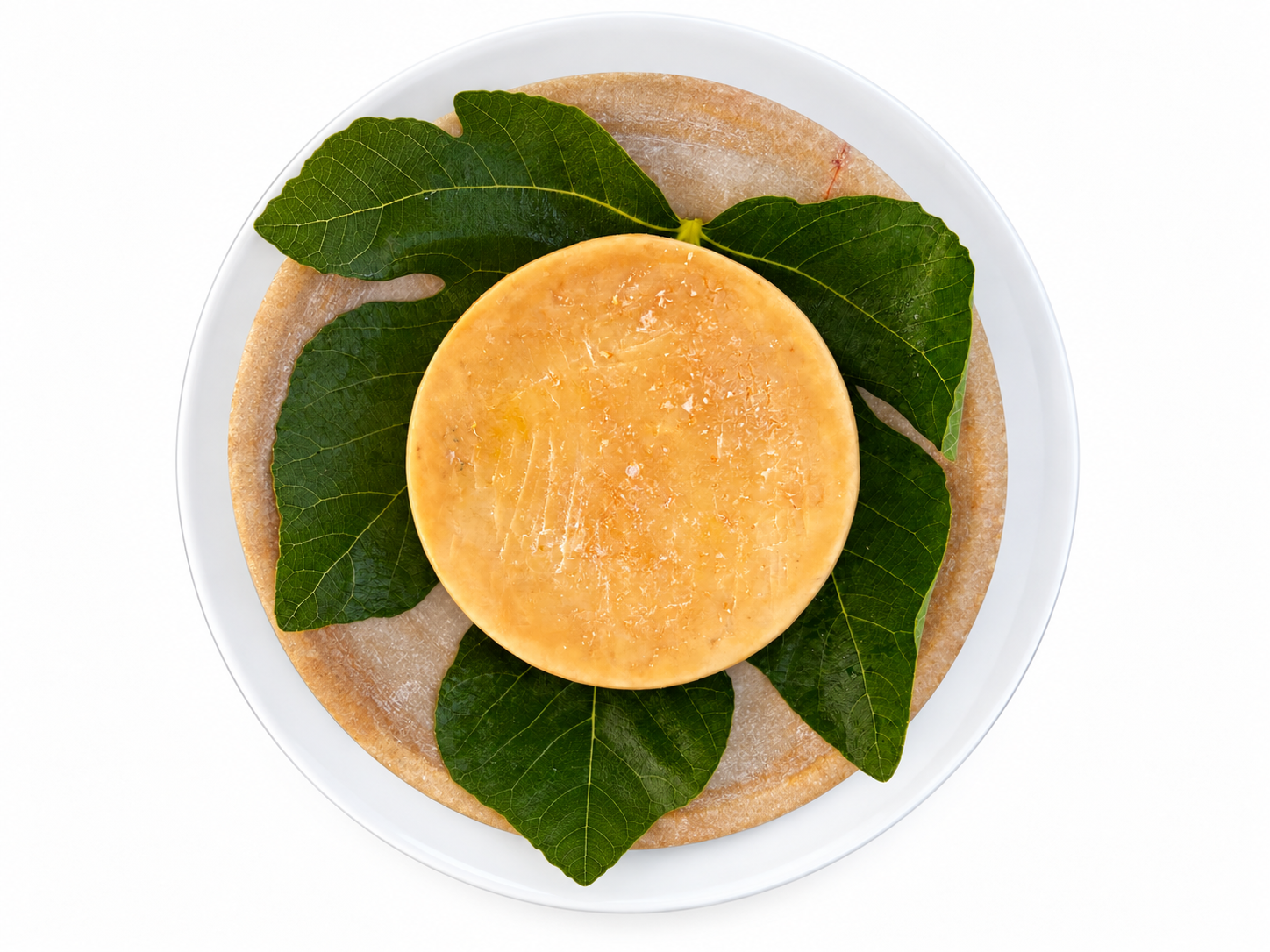
This summer, some dear friends gave us a mysterious goat cheese. It had no label; it offered no clue about its provenance. Heavy and dense, it demanded our sharpest knife. Its flavor was so intense that we soon learned to cut it into the thinnest of slices, so we could appreciate its complexity without overwhelming our palates. The story behind it proved every bit as extraordinary as the cheese itself.
It was made by Manfred Markl, who left Bavaria in 1984 with his wife and child to settle in Vale do Barco, a small village near Pedrógão Grande. There, they had a second child and built a life around organic, self-sufficient farming. The family produces much of what it consumes and sells cheese and other products to buy what it cannot make. It is a way of life once common across rural Europe, but now largely forgotten.
Manfred rises at dawn to milk his goats and then spends several hours leading them through the surrounding countryside. Along the way, they graze on brambles, olive branches, and wild vegetation, clearing the undergrowth and helping to reduce the risk of forest fires.
Once Manfred has collected one hundred liters of milk, which may take only a day in summer but several days in winter, he makes a new batch of cheese. He works with meticulous care, patiently crafting and aging each cheese before taking it to market in Pedrógão Grande.
When we were children, we were captivated by The Swiss Family Robinson, Johann David Wyss’s novel about a Swiss family shipwrecked on a remote tropical island who, through ingenuity and practical skill, create a comfortable, self-sufficient life.
Imagine our astonishment at discovering a real-life German Family Robinson in rural Portugal–living off the land and making extraordinary cheese.
You can watch a video about Manfred Markl’s project hereand buy his cheese at the market in Pedrógão Grande.
Arinto is one of Portugal’s great historic white grapes. Its name appears in fourteenth- and fifteenth-century documents drawing on now-lost medieval records from the Monastery of Alcobaça and the variety is later mentioned by Vicêncio Alarte in his 1712 treatise, Agricultura das Vinhas.
Although now grown throughout Portugal, Arinto is most closely associated with Bucelas, a small region north of Lisbon—hence its traditional name, Arinto de Bucelas. Its naturally firm acidity produces fresh, precise white wines with remarkable aging potential.
Bucelas enjoyed an extraordinary reputation in nineteenth-century Britain, where its wines were known as “Portuguese Hock,” a reference to the white wines of Germany’s Rhine region. During the Peninsular War, the Duke of Wellington commanded the Anglo-Portuguese forces fighting Napoleon’s invading armies. In 1810, the French advance toward Lisbon was halted at the Lines of Torres Vedras, a vast system of fortifications extending through the countryside around Bucelas. Legend has it that Wellington developed a taste for the local wine during the campaign and later introduced it to British society.
But the English connection may be much older. In Shakespeare’s Henry VI, written at the end of the sixteenth century, a character offers “a cup of charneco,” a wine thought to have been produced in Charneca, a village near Bucelas.
Three expressions of Arinto
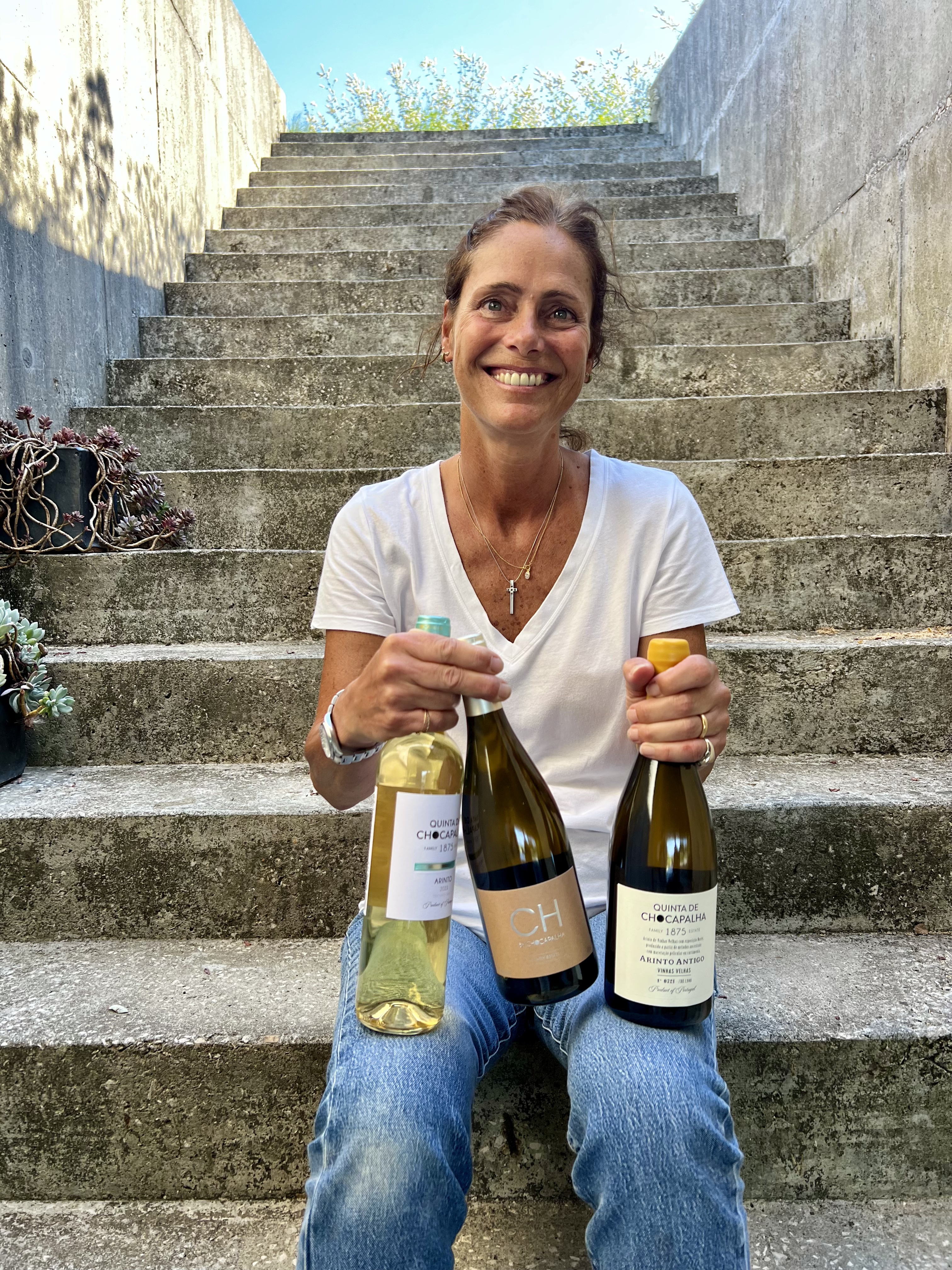
One of the best places to understand Arinto’s versatility and potential is Quinta de Chocapalha, an estate close to Bucelas that belongs to the Tavares da Silva family. Enologist Sandra Tavares da Silva makes the wines, and her sister Andrea (pictured in the photo) leads the project.
We visited Chocapalha on the first day of harvest. Andrea marked the occasion by photographing the talented group of young winemakers who had come from around the world to work at the estate, drawn by its distinctive terroir and by Andrea and Sandra’s uncompromising commitment to making great wine.
The team was finishing the day’s work, cleaning the equipment and scrubbing the floors until the winery was as pristine as a laboratory. A small speaker perched on a stainless-steel tank pumped out energetic music, helping everyone keep their spirits up at the end of a long day.
The sun was still shining generously when Andrea led us through the rolling hills covered in vineyards, speaking passionately about Arinto. Back at the winery, she showed us how three wines reveal different dimensions of the same grape.
The Quinta de Chocapalha Arinto shows the grape in its most direct and transparent expression. There is little between the grape and the glass. Fermented in stainless steel and aged for several months on its fine lees, it is pure and precise, with citrus and saline notes and a lovely sense of tension.
The CH Branco has a Burgundian character: elegant and structured, yet still unmistakably Arinto. Fermented in French oak and aged for nine months with bâtonnage, it retains the grape’s citrus freshness and firm acidity while gaining richness, texture, and volume on the palate.
Arinto Antigo explores an ancestral approach in which white grapes are vinified much like reds, with skin contact. The skins give the wine tannins, but they are remarkably fine. Produced from old, north-facing vines, it is aged for two years in neutral barriques. The result is greater salinity, tension, structure, and depth. This wine is both powerful and restrained. It is textured without heaviness, structured without losing freshness. It is the most complex of the three and perhaps the most striking demonstration of all that Arinto can be.
Few grapes can take on such different expressions while preserving such a clear identity. And few wineries can express those qualities with such grace.
Chocapalha is located at Aldeia Galega da Merceana, 50 km from Lisbon. You can schedule a wine tasting by emailing visitas@chocapalha.com. Click here for their website.
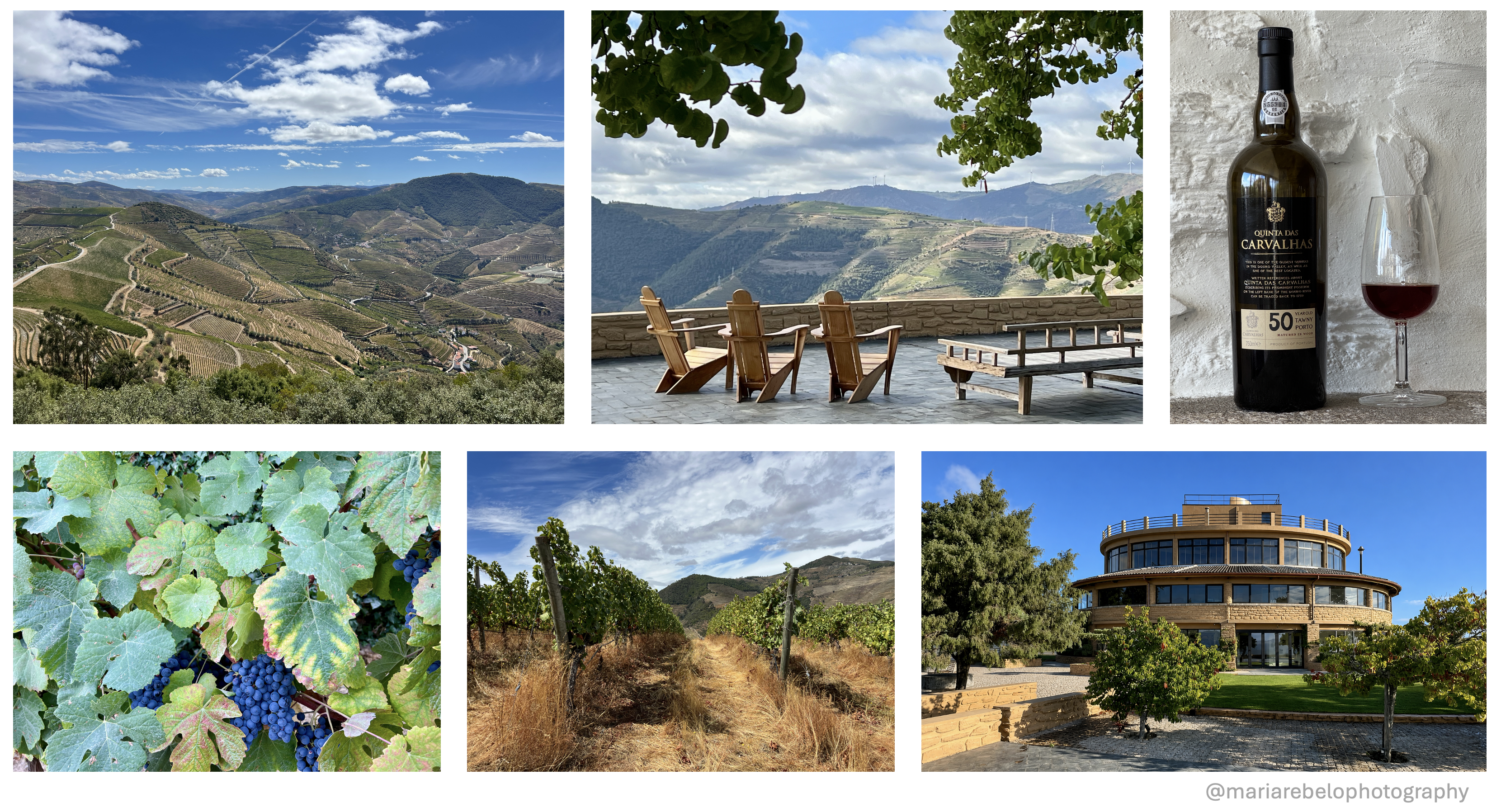
As you approach Pinhão, just before crossing the elegant iron bridge that spans the Douro river, a tall green gate quietly comes into view. It marks the entrance to Quinta das Carvalhas, one of the Douro Valley’s most remarkable estates.
Carvalhas belongs to Real Companhia Velha, founded in 1756 by the Marquis of Pombal, the powerful prime minister of King José I, to regulate the Port wine trade. In 1852, the government brought the company’s regulatory mandate to an end. Since 1960, Real Companhia Velha has been under the stewardship of the Silva Reis family. Today, Pedro Silva Reis leads the company alongside his sons, Tiago, who oversees its commercial activities, and Pedro Jr., an enologist.
The estate rises from the riverbank to an altitude of almost 500 meters. This variation in elevation allows both red and white grapes to thrive on the same property, something unusual in the Douro. Old vines cling to slopes facing every direction and at every altitude, creating a remarkable mosaic that offers the winemakers an exceptionally rich palette with which to work.
As we follow the winding road towards the summit, we find ourselves surrounded by an extraordinary abundance of life. The vines grow alongside olive trees, orange groves and wild vegetation. Carvalhas is far from a vineyard monoculture: biodiversity is deliberately nurtured and protected.
At the summit stands a round house. From there, the valley unfolds in a 360-degree panorama, offering the kind of view one imagines might be reserved for angels.
The estate’s resident viticulturist, Álvaro Martinho, takes us on a tour. He explains that temperatures can soar to 42°C in summer and fall to –3°C in winter. The soil contains little organic matter, yet life flourishes everywhere. The secret lies in the schist: fractured, porous and permeable, it allows water and oxygen to travel deep beneath the surface, sustaining microorganisms and encouraging the vines to send their roots several meters into the earth in search of nourishment.
These vines do not live amid abundance, but they find enough to flourish. Their yields are modest, yet their grapes possess remarkable intensity. This frugal existence also contributes to their longevity: some of the vines at Carvalhas are more than a century old.
In 2007, the estate stopped using insecticides and synthetic fungicides, replacing them with organic alternatives. The transformation was remarkable: leaves that had once appeared greyish green took on a vibrant hue.
Carvalhas is dotted with viewpoints from which visitors can pause and contemplate the magnificent landscape. But as the sun began to set, we gathered inside the round house for dinner.
Pedro Silva Reis invited two distinguished enologists to join us: Carlos Agrellos of Quinta do Noval and Jorge Moreira, head enologist at Carvalhas. Jorge spent the first seven years of his career at Carvalhas before leaving to focus on Poeira, his acclaimed family project. Seven years later, Pedro Silva Reis persuaded him to return to Carvalhas, where he now works while continuing to produce Poeira.
The delicious dinner, prepared with local produce, was accompanied by wines from Quinta das Carvalhas, alongside celebrated bottles from France and Italy. All were exceptional, but the Carvalhas wines linger in the memory like poems we long to know by heart.
The 2016 Reserva is a seductive wine of structure, depth and complexity. It blends grapes from vineyards with different sun exposures, including a very old north-facing parcel.
The Vinhas Velhas 2011 is elegant and slender, almost Burgundian in its restraint. When Jorge returned to Carvalhas, he recognized the potential of three north-facing parcels planted with vines nearly a century old. From them, he created this singular wine, foot-treading the grapes in granite lagares. It is intense yet astonishingly fresh, reflecting the vineyards’ cool northern exposure.
Then came Íncola, a wine born from a dream of Pedro Silva Reis Jr. Its name derives from the Latin word for “local inhabitant.” With haunting aromas, extraordinary tension and remarkable complexity, it comes from very old, south-facing vines and includes rare grape varieties such as Tinta Bastardinha and Rufete.
The meal concluded with a final revelation: the Quinta das Carvalhas 50-Year-Old Tawny. Layered, unctuous, and almost meditative, it is the perfect combination of age and youth. The blend, which includes wines from 1927, 1967, and 1978, can never be replicated; it is a once-in-a-lifetime composition.
We remained at the table, talking about wine and life until the candles burned low. The following morning, we awoke to find the valley dressed in soft light, with mist rising gently from the river. Still half-dreaming, we looked through the window and asked the only reasonable question: are we in heaven?
Winemakers always seem to know the best places to eat. So, when Afonso and Teresa Marques, from the wonderful Vale da Capucha winery, recommended Tasca da Ti’ Augusta, a rustic restaurant perched on the sand at Porto Dinheiro beach, we added it to our list.
The tasca dates to the 1940s, when Augusta began serving food to the fishermen of Porto Dinheiro before they went to sea and buying their freshly caught fish when they returned.
Her cooking gradually turned the modest beachside tavern into a local institution. After her death, the restaurant passed to her children, Alice and Fausto, who took turns running it during the summers, and later to another Maria Augusta, a talented cook who had long helped Alice. Today, the restaurant is run by her daughter Alexandra Fanha and the extended family. It opens only from June to September.
When we called to reserve a table, we were asked to choose in advance between the two main dishes: monkfish rice (arroz de tamboril) and fish stew (caldeirada). Naturally, we ordered both.
The restaurant is only a few meters from the ocean, wedged between two massive sandstone rocks dating from the late Jurassic period. The space between them has been enclosed with bits of brickwork, canvas and fishing nets. An old wooden door bears the scars of countless winters, when the sea washes over the place. The floor is made of cement, and a corrugated roof provides protection from sun and rain. The decoration consists mostly of nets, buoys and other remnants of fishing life.
There is something wonderfully improvised about the angular architecture. It reminded us, perhaps absurdly, of Frank Gehry’s house in Santa Monica. We wondered what Gehry would make of Ti’ Augusta.
We visited on one of those rare days with almost no wind, when the Atlantic turns a deep, saturated blue. The small beach beside the restaurant accumulates banks of seaweed, and the smell of algae, salt and iodine hangs in the air, whetting our appetite.
At the entrance, a few fishermen were drinking glasses of wine. They looked as though they had wandered out of a Marcel Pagnol film and been shipwrecked on the Portuguese coast.
Inside, the restaurant was packed with locals. Long tables held families and groups of friends, all talking loudly at once. For a moment, we wondered whether authenticity might be slightly overrated. Then huge pots were carried to the tables. The noise subsided. Suddenly everyone was enjoying the food.
The service at Ti’ Augusta is friendly but assertive. When a customer asked for salt, the waitress placed a one-kilogram bag on the table and informed him that the rice was already properly seasoned. Suitably chastened, he proceeded to eat it as served.
We watched the fishing boats coming and going from the little harbor—Porto Dinheiro, literally “Money Port,” remains a working fishing port.
An enormous serving spoon sat on our table, waiting to be used. First came the fish rice. The rice was seriously addictive, and the monkfish was perfectly cooked, swimming in an intensely flavorful tomato-and-fish broth.
The caldeirada was a revelation. The traditional version of this Portuguese fishermen’s stew is deceptively difficult to cook well. Clams are placed at the bottom of the pot, followed by layers of potatoes, onions, tomatoes, peppers and different fish. Everything cooks together. The romance of the method is undeniable, but so is the tendency for the potatoes, shellfish and at least some of the fish to be overcooked.
Not here. Everything arrived at precisely the right point: the large shrimp, the clams, the potatoes and three different fish: conger eel (safio), monkfish, and skate. We suspect that the different components were cooked separately and brought together at the end.
The sauce, made only with tomato, onion, and red pepper, had a glorious golden-red color. We appreciated the absence of green pepper, which so often gives the sauce an unappetizing grey cast. Alongside came a large plate piled with slices of fried bread, ready to absorb every last drop of the sauce.
The portions at Ti’ Augusta are monumental, and regulars arrive with containers for the inevitable leftovers. Seeing that we were novices, the restaurant supplied one. The next day, our leftovers became a magnificent fish soup.
The temperature by the sea was so pleasant that nobody seemed in any hurry to leave. Around us, people lingered over slices of melon, small pots of chocolate mousse, and plates of egg pudding scented with lemon.
The only stars at Tasca da Ti’ Augusta are the ones in the night sky over Porto Dinheiro beach. But the food shines.
Tasca da Ti’ Augusta is located in the Porto Dinheiro beach. You can call 919200397 to make reservations.
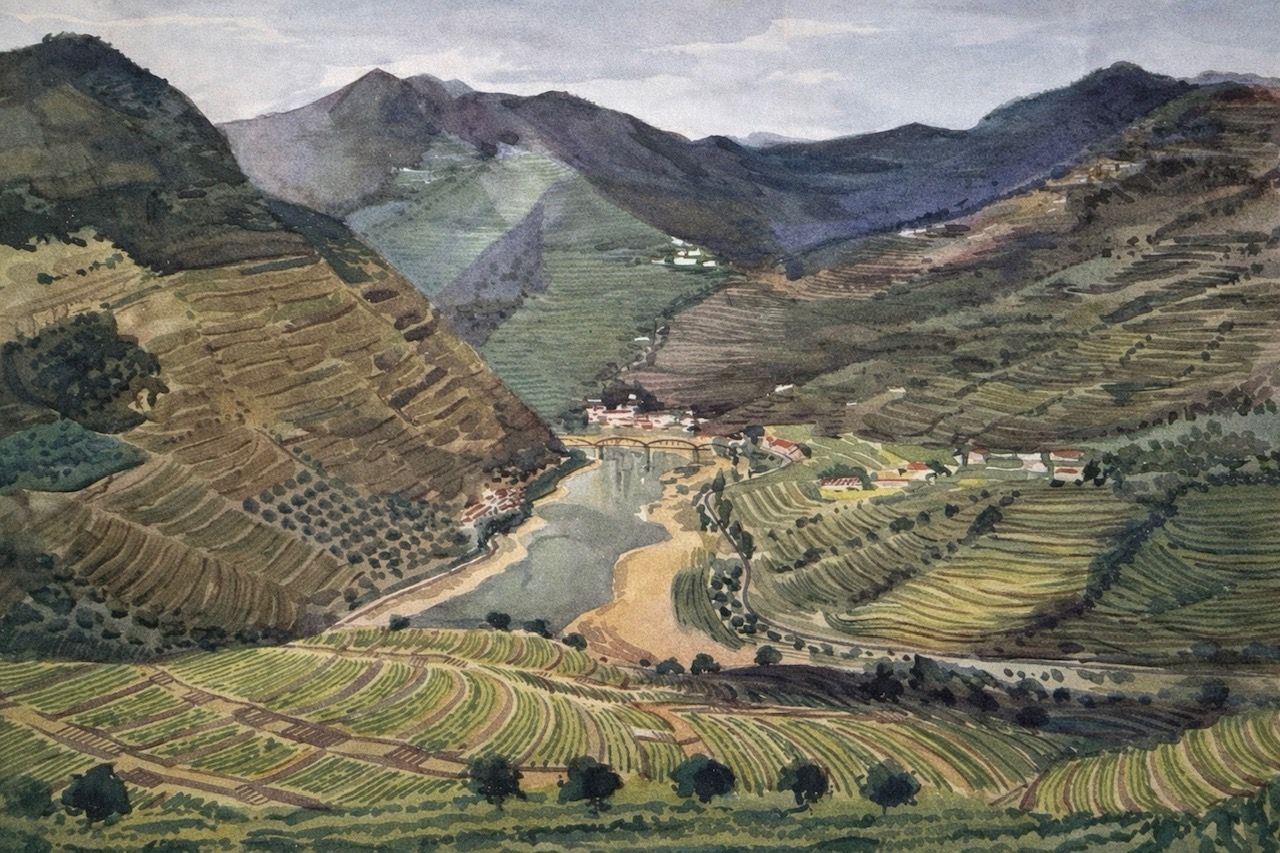
The Douro – Land of the Vine, Tobias de Sequeira, 1938
Names carry meaning. Some are formal, others affectionate; some austere, others charming. Most wines are known by the name of their producer, region, or grape variety. Port, however, is such a remarkable creation that it has acquired many names: vinho fino, or fine wine; vinho de cheiro, aromatic wine; vinho de feitoria, export wine; vinho de embarque, shipping wine; and vinho de benefício.
The last of these is perhaps the most intriguing, and certainly the most difficult to translate. In the modern regulatory system, the benefício is the right to use a specified quantity of grapes to produce Port. The rules governing this right are essential to understanding not only Port, but the Douro Valley itself. This eleventh lecture with master viticulturist António Magalhaes is devoted to that system.
The regulation of Port production began in 1756, when the Marquis of Pombal, prime minister to King Jose I, created the Royal Oporto Wine Company in response to a severe crisis. High Port prices during the 1730s had encouraged production to expand rapidly while quality declined. As a result, the price of Port plummeted by roughly 90 percent between 1731 and 1754.
Entrusted with safeguarding the quality and authenticity of Port, the company determined that Port could only be produced in the Douro, and regulated supply to stabilize prices. By serving as the sole intermediary between growers and merchants, the company also counterbalanced the bargaining power of the British Port merchants represented by the Factory House, founded in 1727.
The company classified wines as first, second, or third quality, and set prices for each tier. It also controlled the internal trade in wine and wine spirit across northern Portugal and held the exclusive right to export to four Brazilian captaincies.
The Royal Oporto Wine remained the dominant institution in the Douro until its public powers were withdrawn in the wake of the Liberal Revolution of 1834. They were briefly restored in 1838, and definitively ended in 1852, after which it operated as a private company.
Port is a fortified wine made by adding grape spirit. Before 1820, the spirit was generally added after fermentation had ended. Producers could then decide whether to leave the wine dry or fortify it to produce Port.
The 1820 vintage marked a turning point in the gradual shift from drier to sweeter styles of Port. From 1821 onward, producers increasingly added spirit while fermentation was still under way, halting the process and preserving some of the grapes’ natural sugar. The method was adopted to reproduce the naturally sweet character of the 1820 vintage, when exceptional heat produced grapes with so much sugar that the yeast could not convert it all into alcohol.
Shortly after the spirit is added, today at a ratio of roughly one part spirit to four parts must, the characteristic murmur of fermentation falls silent. The French call this moment mutage, a term derived from mutus, the Latin word for silence. From that silence emerges a sweet wine capable of withstanding long sea voyages.
It was this act of fortification that gave the word benefício its original technical meaning. The term derives from the Portuguese verb beneficiar, meaning “to improve.” Over time, benefício came to denote the authorization to use a specified quantity of grapes in the production of Port.
By the early twentieth century, it had become clear that the regulatory framework first established in 1756 required fundamental reform. The foundations of the modern system were laid in 1932 with the creation of the Port Wine Institute, now the Institute of Douro and Port Wines, and Casa do Douro, a compulsory association of grape growers. Between 1937 and 1945, Casa do Douro compiled a comprehensive register of the Douro Valley’s vineyards.
Drawing on this register, agronomist Álvaro Moreira da Fonseca developed a method for grading the vineyards in 1947-48. It became the basis for allocating the benefício.
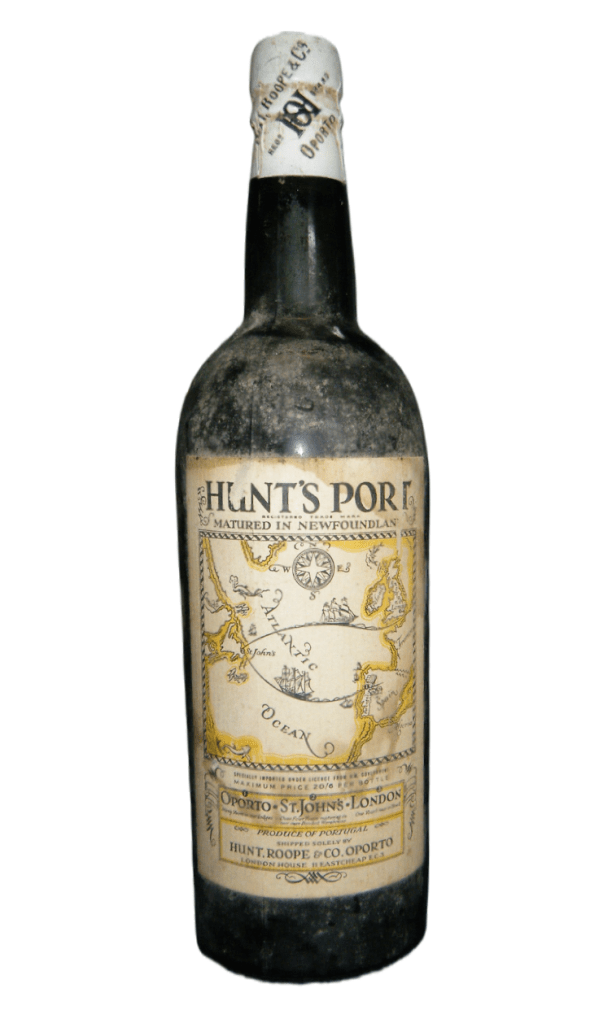
The value of this right, and the responsibility it carried, are illustrated by the experience of António’s grandfather, Francisco Tavares, a viticulturist and commission agent for Hunt, Roope & Co., a British company whose flagship Port was aged and bottled in Newfoundland.
On July 21, 1949, Francisco wrote to Casa do Douro requesting benefício for 49,500 liters of must from Eira Velha, an iconic estate. The must was to be produced from 67,500 kilograms of grapes grown on 110,000 vines, equivalent to just over 600 grams per vine.
The year, however, proved exceptionally hot and dry. On September 3, Francisco wrote a second letter requesting that his benefício be reduced to 38,500 liters because each vine was expected to yield an average of only 480 grams of grapes. The request was an act of generosity: the unused allocation could then be made available to other winegrowers.
View from Quinta da Eira Velha
At the time, the Douro suffered from a chronic surplus of wine. Between 1939 and 1953, winegrowers requested benefício for an average of 82,000 pipes per year, each containing 550 liters, while the volume granted barely exceeded 33,000 pipes. Grapes authorized for Port production were worth roughly 50 percent more than grapes destined for table wine, even though their production costs were essentially the same.
Moreira da Fonseca’s method awarded points for the different characteristics of each vineyard. Within this seemingly simple arrangement lay a crucial principle: the right to produce Port was assigned to the vineyard, not to a company or an individual.
This principle helped small growers survive. Their properties contribute greatly to the beauty of the landscape, while the growers themselves preserve and transmit essential skills, particularly pruning and grafting, to new generations of Douro farmers. Of the approximately 18,000 growers in the Douro Valley, around 13,000 cultivate less than two hectares of vines.
Vineyards were classified from A, the highest category, to I. At the time, vineyards rated F, G, H, or I did not qualify for benefício, although category F vineyards have since become eligible.
The point system followed the logic of the Douro terroir, which Moreira da Fonseca described in a celebrated passage: “The Douro wine country is a hot, dry region, encircled by high mountains that shelter it from the humid winds of the south, the sea breezes of the west, the cold winds of the north, and the dry easterly wind, which withers and scorches the crops. It is a region hemmed in by mountains, intensely warmed by the sun and flooded with light.”
Location formed the first layer of the classification, reflecting the substantial climatic differences among the Douro Valley’s three subregions: the Baixo Corgo, the Cima Corgo, and the Douro Superior.
Moreira da Fonseca captured the importance of proximity to the Douro River in another memorable passage: “We regard the slopes that drink directly from the Douro River, perhaps because they can hear the creak of the oars, as producing the finest wines among all vineyards situated on the same meridian.”
Altitude, exposure, and shelter formed a second group of criteria. The finest Ports were expected from vineyards below 300 meters, while those between 300 and 500 meters were generally associated with wines of more modest quality. Vineyards above 500 meters were not eligible for benefício because their wines tended to have greater acidity and less body. Today, some of these higher-altitude vineyards produce outstanding white table wines—a reminder that a classification designed for Port does not necessarily reflect a vineyard’s potential for table wine. A southern exposure received the most points because it intensified grape ripening, while shelter from cold northernwinds was also rewarded.
Soil and topography formed another group. The eighteenth-century demarcation admitted only schist, whose fragile, near-vertical structure allowed vines to develop deep roots. The later classification admitted some granite vineyards, but continued to exclude deep, fertile, or flood-prone soils. Hillsides also received additional points. Moreira da Fonseca invoked Virgil’s famous line, Bacchus amat colles: “Bacchus, the god of wine, loves the hills.” The Romans often encoded practical knowledge in verse so that it could be memorized and passed from one generation to the next. Virgil’s line captures the idea that hillsides produce more vibrant and interesting wines than flat land. Stony soils were likewise rewarded. “Vines do indeed delight in gravelly soils,” Moreira da Fonseca wrote.
Grape variety and vineyard structure completed the classification. If climate and soil were the gold and silver medals of terroir, grape varieties received the bronze. Moreira da Fonseca assigned points to 88 varieties, divided into five groups ranging from very good to bad. He also considered vine spacing, the training of vines in vertical hedgerows known as bardos, and the age of the vineyard, with older vines receiving more points.
Together, these criteria created a visual grammar that António would learn to recognize in the landscape. “Over the years, I learned to read Moreira da Fonseca’s classification in the landscape,” António says. “I could stand in a vineyard and sense, with little hesitation, whether it was an A, C, or E, and recognize the transitional qualities that placed others in categories B or D.”
António learned a system that seemed timeless. Yet both the institutions surrounding it and the vineyards it governed were already changing. After 1974, Casa do Douro gradually lost much of its authority and influence. In 2004, responsibility for maintaining the vineyard register passed from Casa do Douro to the Institute of Douro and Port Wines.
Much else has changed since Moreira da Fonseca’s time. Productivity and vine-spacing requirements were gradually relaxed, allowing yields of up to 7,500 kilograms per hectare for red grapes and 8,864 kilograms for white grapes. Minimum planting density was set at 4,000 vines per hectare, or 3,000 on modern terraces, with permitted tolerances.
The list of eligible grape varieties was also broadened as the vineyard survey revealed the presence of additional varieties across the region. Others may yet await discovery, most likely in the old vineyards planted in the aftermath of the phylloxera crisis.
Another major change concerned the unit used to allocate the benefício. The system moved from the milheiro, or one thousand vines, to the hectare. In the process, it abandoned a simple but sensible instruction to mountain growers: fill the land, above all, with vines.
From the 1960s onward, and especially in the 1980s, mechanization transformed vineyard design. Dry-stone terraces gave way to broader terraces supported by earth embankments, while gentler slopes were planted in vertical rows known as vinha ao alto. Space was lost to embankments and tractor lanes, sharply reducing planting density.
The shift from the milheiro to the hectare changed both the logic of the benefício and the Douro landscape. Growers were encouraged to focus on the boundaries of the vineyard rather than on filling it with vines, producing, in some cases, sparsely planted and visually discordant “vineyards without vines.”
António believes that irrigation presents another challenge to the logic of the benefício. An irrigated vineyard should not lose its eligibility, he argues, but its benefício should be suspended in any year in which it is irrigated.
Growers may irrigate because vines were planted on land poorly suited to them, because a vineyard was badly established and the soil inadequately prepared, or because they wish to reduce water stress. For António, however, ease of irrigation does not make it appropriate. Irrigation may be acceptable in the production of DOC Douro wines, but a vineyard suited to Port should be capable of producing it without irrigation.
Another source of tension is that the same vineyard is now often called upon to serve two different ambitions: producing Port and producing DOC Douro wine. Vineyards that yield both exceptional Douro table wines and outstanding Ports include Urtiga at Quinta do Bom Retiro, Maria Teresa at Quinta do Crasto, and Eirol at Quinta das Carvalhas.
In the year when the Douro Valley celebrates the 25th anniversary of its recognition as a UNESCO World Heritage Site, the central question is how to reform the beneficio in a region where the finest vineyards now produce both Port and DOC Douro wines. Such reform will require the Douro to decide not only which grapes may become Port, but also what kind of landscape, way of life, and winemaking tradition it wishes to carry into the future.
If you only have one day to venture outside Lisbon, spend it in Sintra. The town lies just 28 km away and is easily reached by car or by train from Rossio Station.
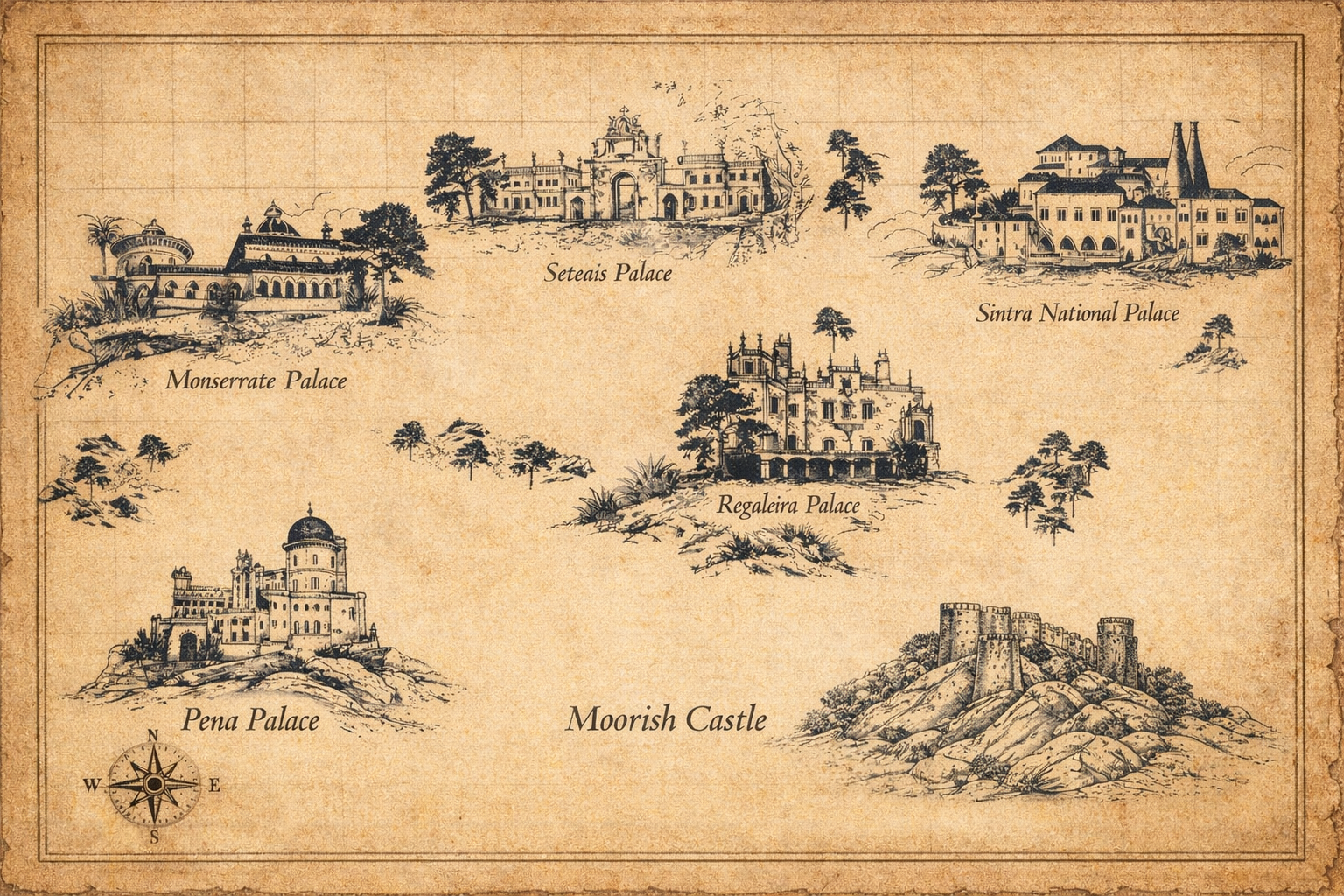
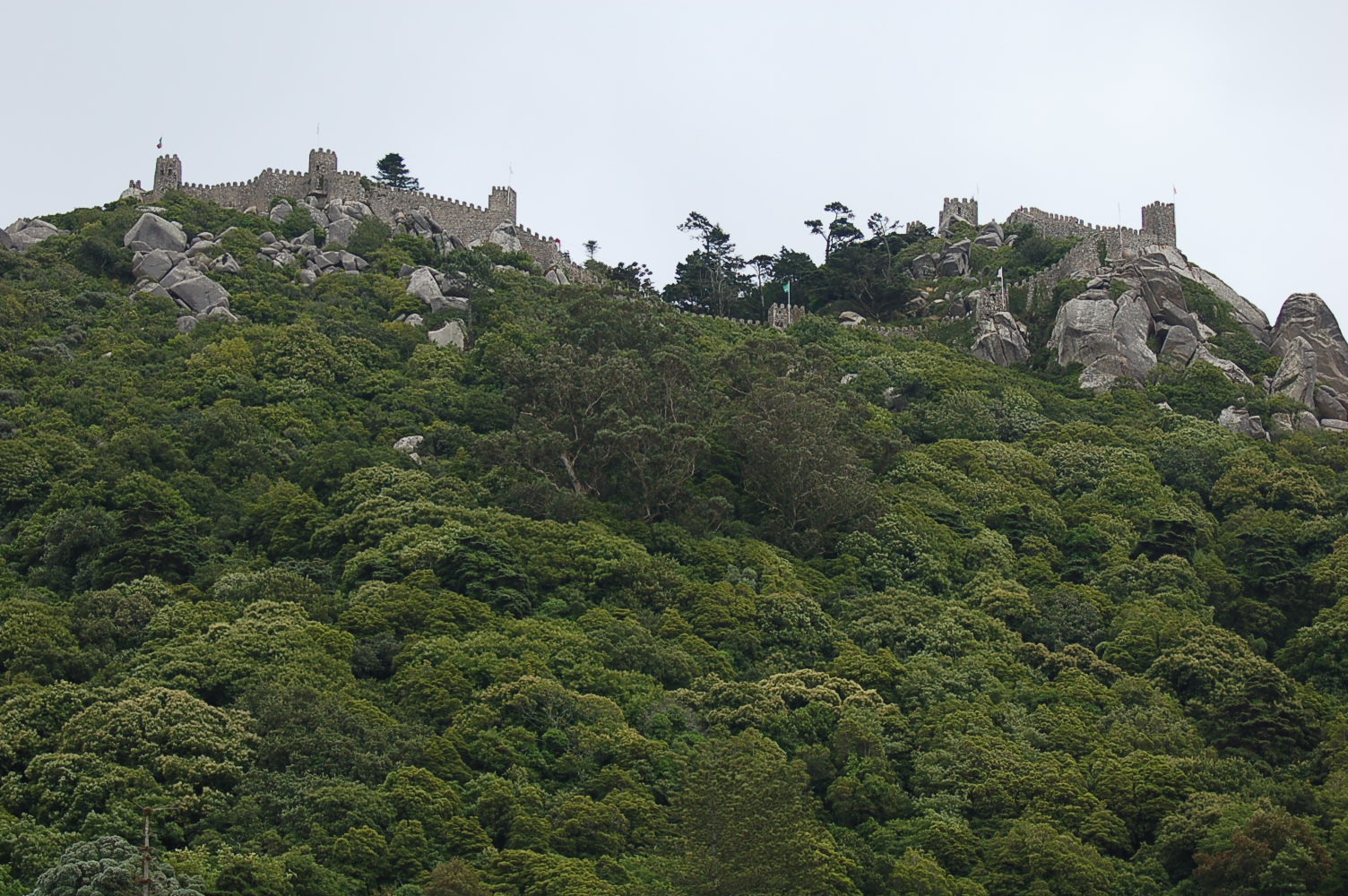
We love Sintra most on foggy days, when humid Atlantic air climbs the slopes of the Serra de Sintra, cooling as it rises until its vapor condenses into mist. You can walk along the ramparts of the Moorish castle as if you had slipped back to the eighth century, with no trace of the modern world on the horizon.
The Moorish castle
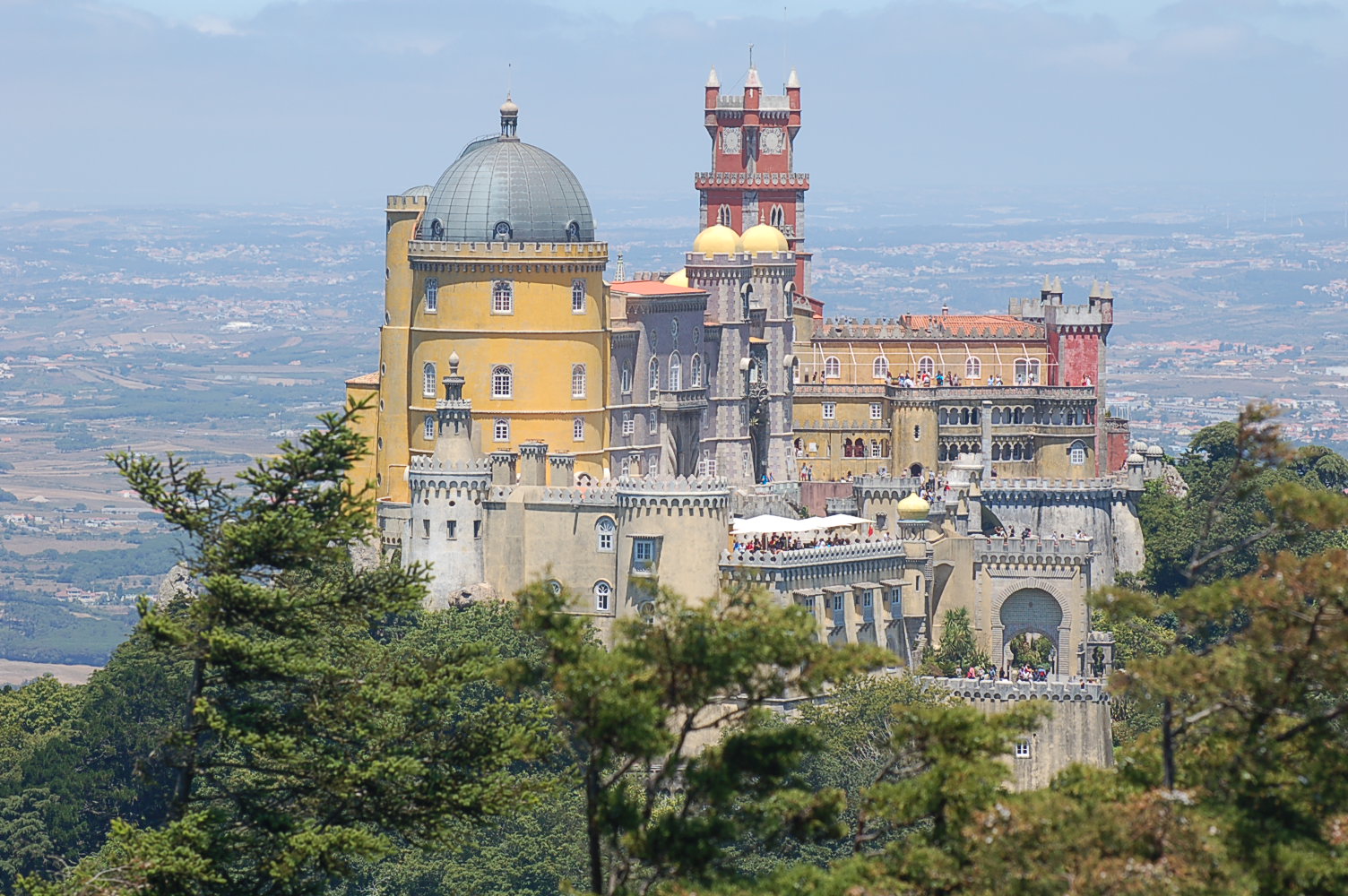
Climb the short kilometer that separates the castle from the Pena Palace, and you travel through eleven centuries, arriving in a setting worthy of a nineteenth-century fairy tale.
The Pena Palace
First day
Arrive at Palácio da Pena as early as possible to avoid the crowds. Built in the 1840s by King Ferdinand II on the ruins of a fifteenth-century convent, the palace crowns the Serra de Sintra with Romantic splendor. On clear days, the view stretches all the way to the Bay of Cascais. Tradition holds that from these heights, King Manuel I glimpsed the arrival of Vasco da Gama’s battered fleet returning from its first voyage to India.
The palace is a colorful blend of Moorish, Manueline, and Gothic styles. One of its many curiosities is a sculpture of the Monstrengo, the mythical sea creature said to guard the Cape of Good Hope at the southern tip of Africa from Portuguese sailors.
When Ferdinand II acquired the estate in 1838, the mountain was largely bare. He planted thousands of trees—sequoias from North America, Japanese cedars, camellias from China—creating a forest of luxuriant diversity. In the Valley of the Ferns, enormous tree ferns imported from Australia flourish in Sintra’s cool, misty climate.
If time allows, visit the Countess of Edla’s Chalet. After Queen Maria II’s death in 1853, Ferdinand fell in love with the opera singer Elise Hensler, whom he married in 1869. He built her a romantic Alpine-style chalet, now beautifully restored, an intimate testament to their unlikely love story.
Monserrate
From Pena, descend through the forest toward the western slopes of the Serra, to the Monserrate Palace. The name comes from a small sixteenth-century hermitage dedicated to Our Lady of Monserrate. In the late eighteenth century, the estate was leased first to the English merchant Gerard Devisme and later to William Beckford, a writer and heir to a vast Caribbean sugar fortune. After Beckford returned to England, the property gradually fell into disrepair. By the time Lord Byron visited in 1808, it had become a romantic ruin.
The estate was later purchased by the English collector Sir Francis Cook, who in 1856 hired architect James Knowles to create an elaborate palace combining Gothic, Moorish, Mughal, and Indian styles. The palace rises amid botanical gardens filled with plants gathered from around the world.
Seteais
After wandering through Monserrate’s lush gardens, it may be time for a refreshment: perhaps a chilled white Port at the nearby Seteais Palace. The origin of its name, meaning “seven signs,” has been lost to time.
The palace was built in the 1780s by the Dutch consul Daniel Gildemeester, who made his fortune as part of a merchant group with exclusive rights to import and sell tobacco. After returning to Holland, he sold the estate to the Viscount of Marialva, who expanded the palace, adding a triumphal arch in 1802 to mark a royal visit by the future King João VI of Portugal. Since 1954, the palace has operated as a luxury hotel, preserving the quiet elegance of Sintra’s aristocratic history.
Praia da Adraga and Azenhas do Mar
From Seteais, head west toward the Atlantic. In summer, finish your day with dinner by the sea at the beachside restaurant on Praia da Adraga. It’s a simple place serving grilled fish, but the catch is exceptionally fresh. Start with percebes or clams, and pair your meal with wine from the nearby Colares region.
If time allows, stop before dinner at Azenhas do Mar, a small village perched on cliffs overlooking the Atlantic. Here stands one of Portugal’s most famous beach houses, easily recognized by its white roofs. It was designed by Raúl Lino, the architect who codified Portuguese vernacular architecture and created archetypes that remain influential today.
Spending two or three more days in Sintra
After a day exploring Sintra’s Romantic palaces and Atlantic views, the following days reveal an older and more intimate side of the region.
Sintra National Palace
The Sintra National Palace
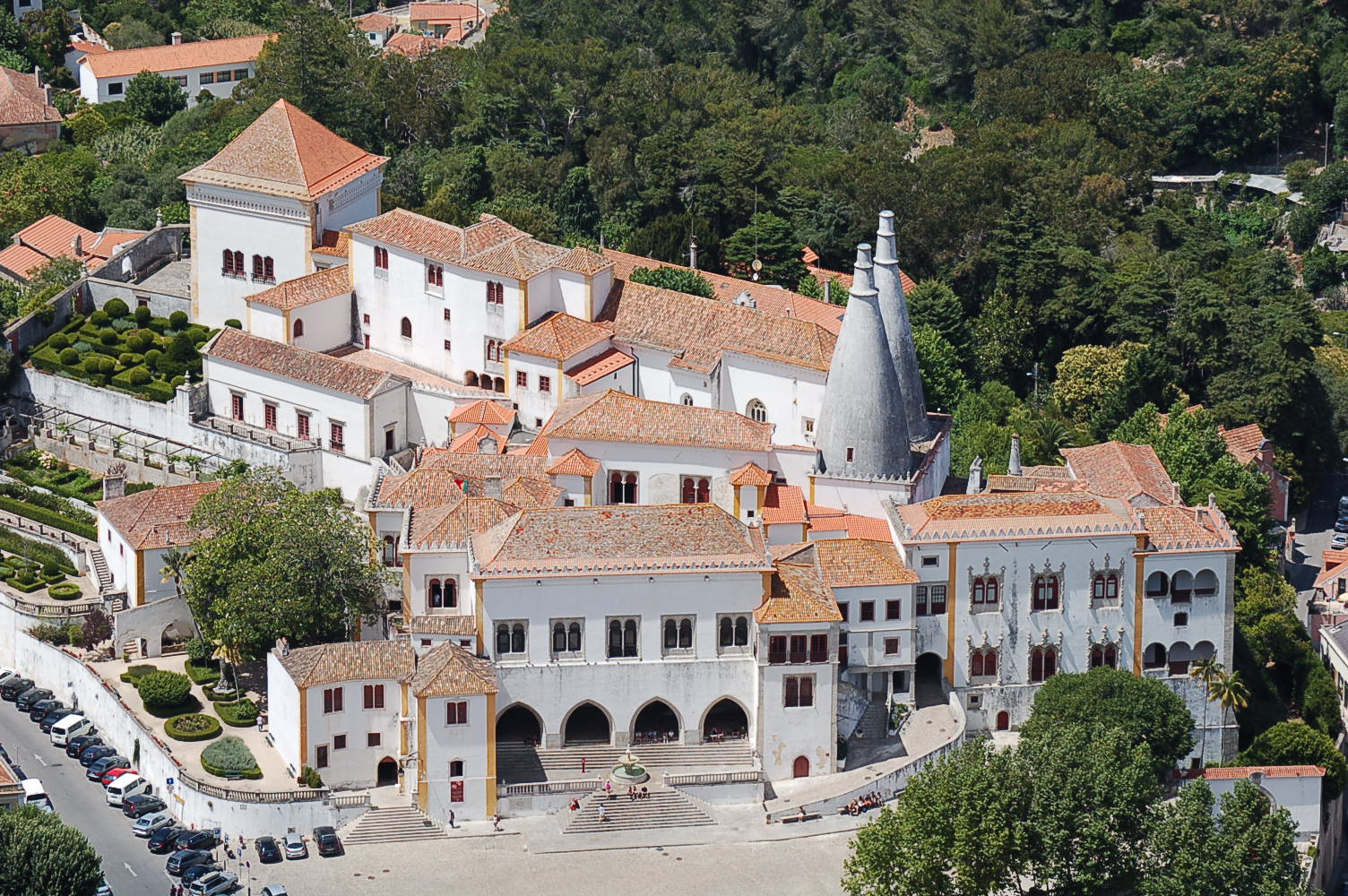
The Sintra National Palace, originally a Moorish palace, was gradually transformed after the conquest of Sintra in 1147. It later became a favored summer retreat for Portuguese royalty seeking relief from Lisbon’s heat. Its distinctive twin chimneys hint at the grand banquets once held here.
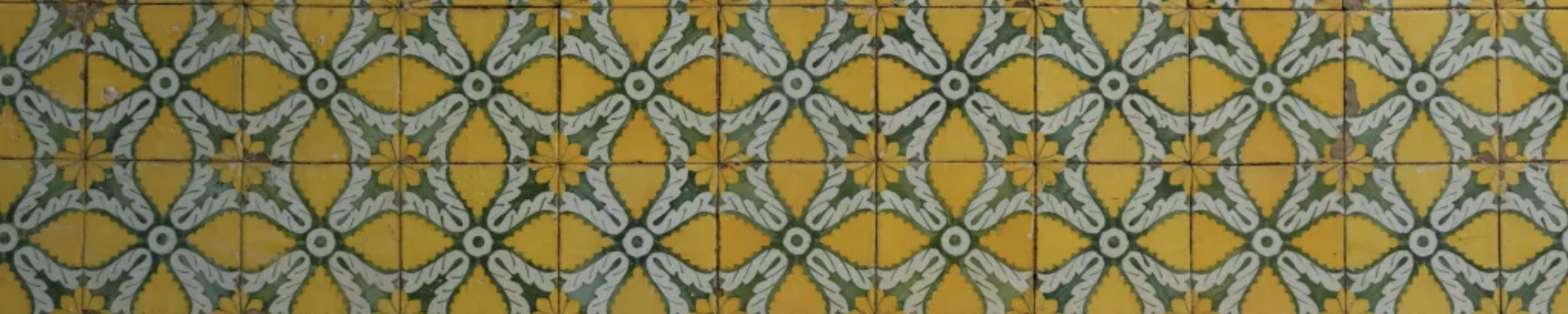
The building was extensively remodeled at the end of the fifteenth century by King Manuel I. Yet traces of its Moorish heritage remain in the geometric decoration, inner courtyards, and windows adorned with floral motifs. The nineteenth-century art historian Joaquim de Vasconcelos described the palace as “a veritable museum of the rarest and oldest azulejos in high relief that we possess.”
Among the many rooms, two are particularly memorable. The first is the Sala das Pegas, or Magpie Room, a playful reminder of King John I’s indiscretions. Queen Philippa of Lancaster caught the king kissing one of her ladies-in-waiting. He protested that it was done por bem—his intentions were good—but the episode became the talk of the court. To silence the gossip, the king ordered the ceiling painted with 136 magpies, one for every lady of the court, each bearing the words por bem in its beak.
The second is the Sala de Armas. King Manuel I commissioned a display of the coats of arms of noble families who had distinguished themselves in battle. Their heraldic insignia honored past achievements and reminded their sons and grandsons of their duty to defend the kingdom.
The palace also witnessed darker chapters of Portuguese history. Here, the young King Sebastião, only sixteen, held his final council before leading the Portuguese nobility on the ill-fated campaign to Morocco. He died in 1578 at the Battle of Alcácer Quibir, a disaster that ushered in sixty years of Spanish rule.
A century later, another monarch met a quieter fate within these walls. Afonso VI, crippled by a paralytic seizure, was overthrown in a coup led by his brother, the future Peter II. His wife, the beautiful Marie Françoise of Savoy, had their unconsummated marriage annulled and married Peter. Afonso spent the last nine years of his life confined in the palace, where he died in 1683.
Writing in 1903, the Count of Sabugosa saw the palace as a reflection of Portugal itself, where Celtic, Gothic, Arab, and other traditions blended into a spirit of “imagination, poetry, enthusiasm, and dreamy melancholy.”
Quinta da Regaleira
Quinta da Regaleira
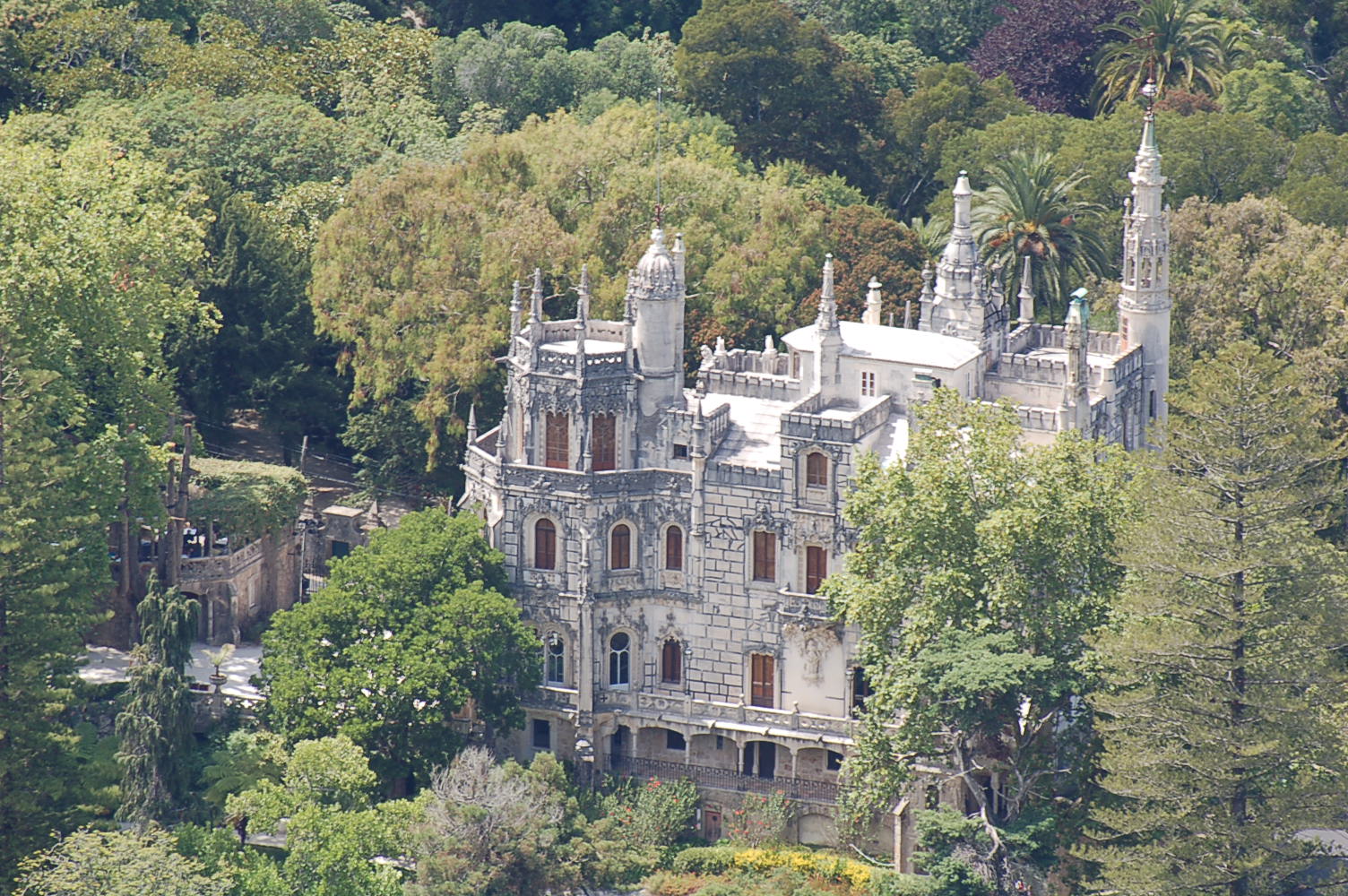
Our next stop is Quinta da Regaleira. Its palace was built between 1904 and 1910 by António Monteiro, a Portuguese businessman born in Brazil and nicknamed as Monteiro dos Milhões, “Monteiro the Millionaire.” Fascinated by alchemy, Freemasonry, the Knights Templar, Rosicrucianism, and symbolism, Monteiro designed the estate to reflect these esoteric interests.
The gardens unfold as a symbolic journey through caves, towers, lakes, hidden tunnels, and secret doors. The Initiation Well is an inverted tower with a spiral staircase descending deep into the earth. Its nine landings are often interpreted as alluding to the nine circles of Hell, the nine levels of Purgatory, and the nine heavens described in Dante’s Divine Comedy.
Capuchos Convent
It is now time to move from extravagance to austerity. The Convento dos Capuchos, founded in 1560, belonged to the Capuchin branch of the Franciscans, one of the most austere religious orders in early modern Europe. The monks lived within a small stone complex, sleeping on bare boards in tiny cells lined with cork for insulation. It is said that King Dom Sebastião, deeply religious, occasionally left the opulent court to seek spiritual counsel and reflection at this spartan convent.
Not all convents practiced such austerity. Many became famous for their sweets. According to local tradition, Friar João da Anunciação created a recipe for queijadas at the Penha Longa convent in the thirteenth century. These small tartlets have a crisp shell made from flour, lard, water, and salt. The filling combines requeijão (a ricotta-style cheese) and egg yolks with two ingredients that became plentiful in the fifteenth century: sugar and cinnamon.
Sintra residents take their queijadas seriously. An association certifies producers who follow the traditional recipe. You can taste them at Casa do Preto, Pastelaria Gregório, or Piriquita—each slightly different, yet equally delightful. At Piriquita, you will also find another local specialty: the famous travesseiros, pillow-shaped pastries filled with almond and egg cream.
Colares
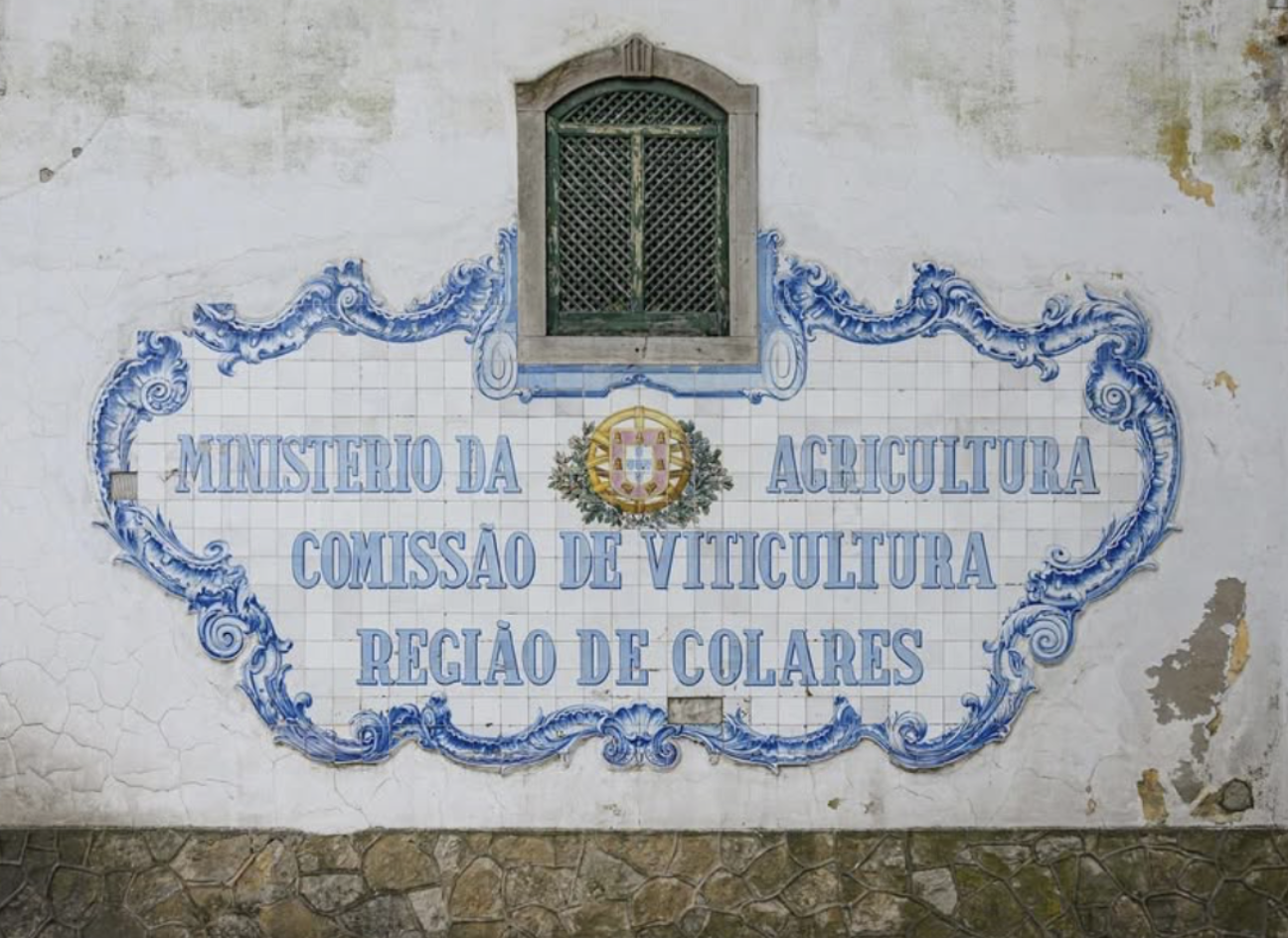
From the forests of Sintra, the land descends toward the Atlantic vineyards of Colares, a small but historically important wine region. In the second half of the nineteenth century, phylloxera devastated European vineyards by attacking vine roots. Most regions survived only by grafting European vines onto resistant American rootstocks. Colares is a rare exception: planted in deep sandy soils where phylloxera cannot reach, its vines remain ungrafted to this day.
Colares wines, made from the white Malvasia and the red Ramisco, are renowned for their exceptional longevity. The Adega Regional de Colares cooperative and Viúva Gomes are both worth visiting for a tasting of their distinctive wines.
The quaintest way to reach Colares is aboard the historic tram that has connected Sintra to the nearby beach of Praia das Maçãs since 1905. The ride is slow and charmingly uncomfortable, but memorable.
Cabo da Roca
Cabo da Roca
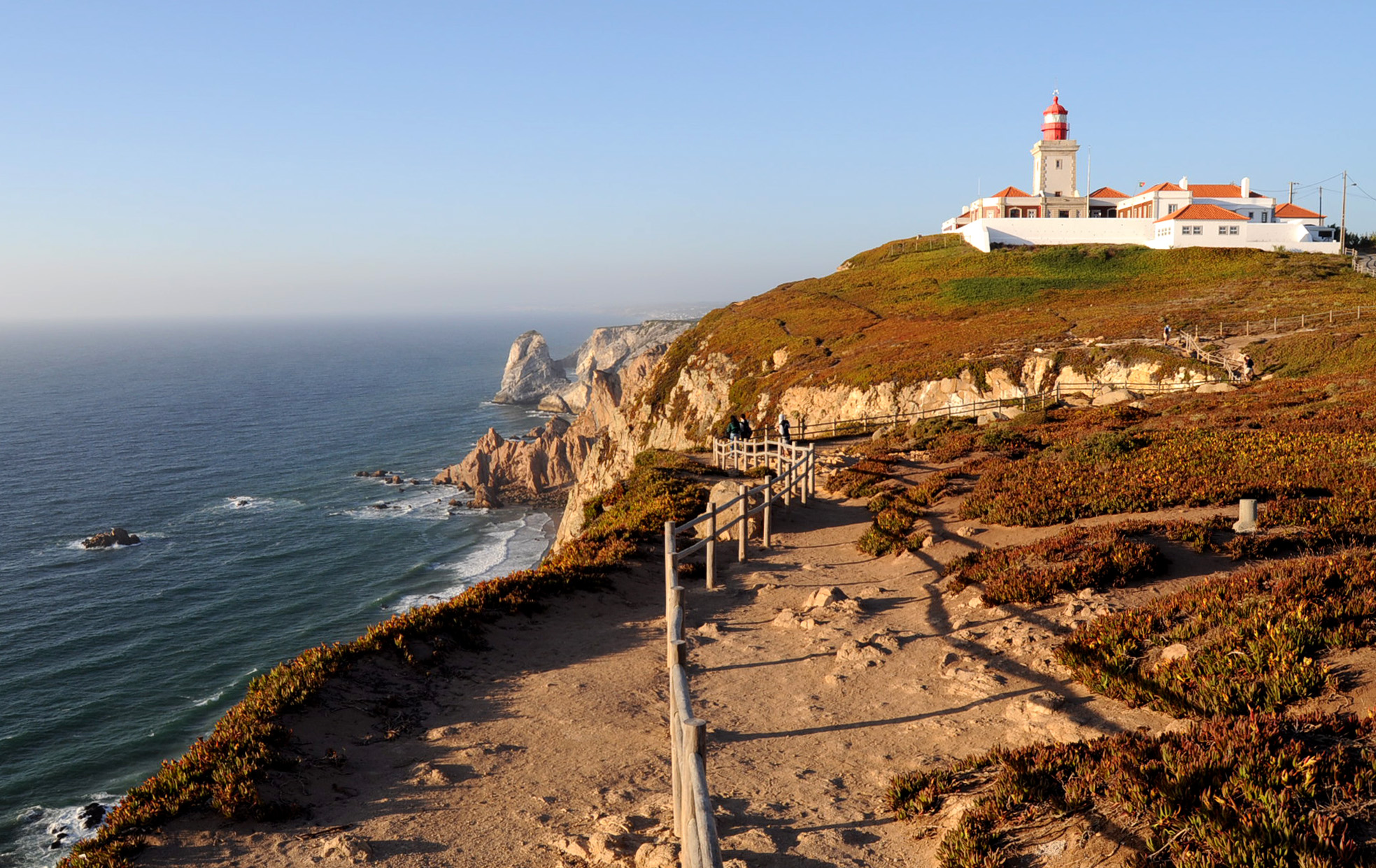
Another remarkable place to visit is Cabo da Roca, long regarded as the edge of the world. In the first century the Greek geographer Strabo described this coast as the western limit of the inhabited world. Centuries later, the poet Luís Vaz de Camões immortalized it as the place “where the land ends and the sea begins.”
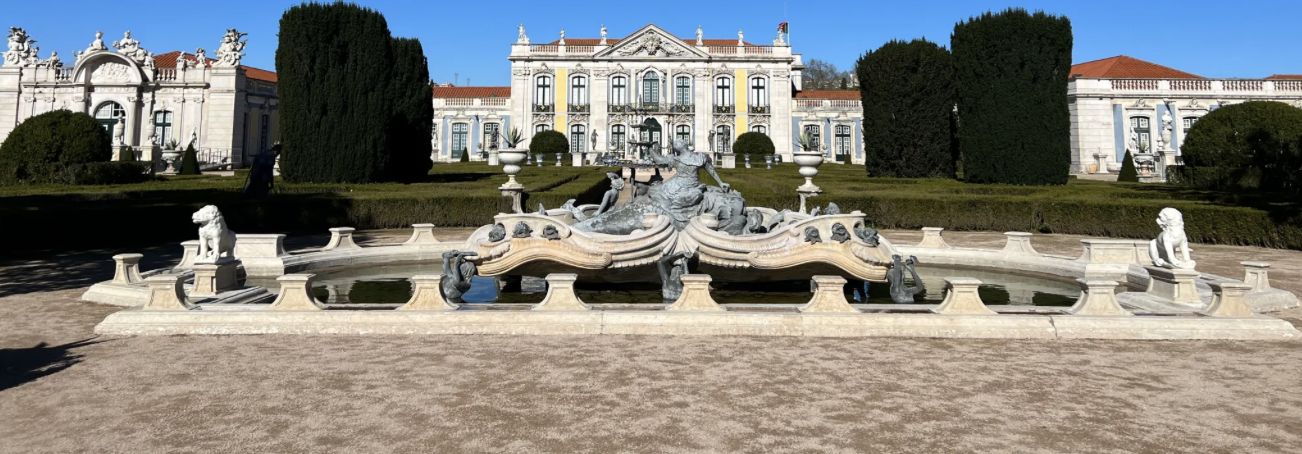
The Queluz Palace
Queluz
On the way back to Lisbon, consider stopping at Queluz, home to the vibrant Queluz National Palace, an elegant Rococo summer residence built in the mid-eighteenth century for Peter III, husband of Queen Maria I.
Just across from the palace, you can stay at the Pousada Palácio de Queluz, a charming historic hotel.
A Final Thought
You need three or four days to see all that the Sintra region has to offer. If you only have one day, resist the urge to rush from site to site.
Visiting Sintra is stepping back to an era when life unfolded slowly. More than any monument, it is the feeling the place evokes—the sense of living in a different time—that makes Sintra unforgettable.
The Romans called it Felicitas Julia, a city so blessed it deserved Julius Caesar’s protection. Those blessings endure: a mild climate, a deep river that flows serenely to the sea, a natural harbor that shelters ships from Atlantic storms, and hills that reach for the sky.
In 1620, Friar Nicolau de Oliveira wrote that Lisbon, like Rome, has seven hills. In truth, there are only three major elevations: the castle hill, Graça, and Bairro Alto. But in spirit, he was right: the streets rise and fall so much that, in the early 20th century, trams and elevators were built to help residents get around.
First Day
Begin your visit at St. George’s Castle. In the twelfth century, most of Lisbon lay within its walls. Below lies Alfama, whose Arabic name survived the city’s conquest by Portugal’s first king, Dom Afonso Henriques, in 1147. According to legend, a knight called Martim Moniz sacrificed his life, wedging his body in the castle gate so his fellow soldiers could break through. A square at the foot of the hill bears his name.
By the eighteenth century, Alfama was a poor neighborhood. The wealthy had relocated to Baixa, Bairro Alto, and Chiado. The 1755 earthquake devastated much of Lisbon but spared Alfama, a survival some interpreted as divine justice.
It is easy to get lost in Alfama’s winding streets lined with cobblestones, tile facades, and marble thresholds. A simple rule will help you find your way: uphill leads to the castle, downhill to the city center.
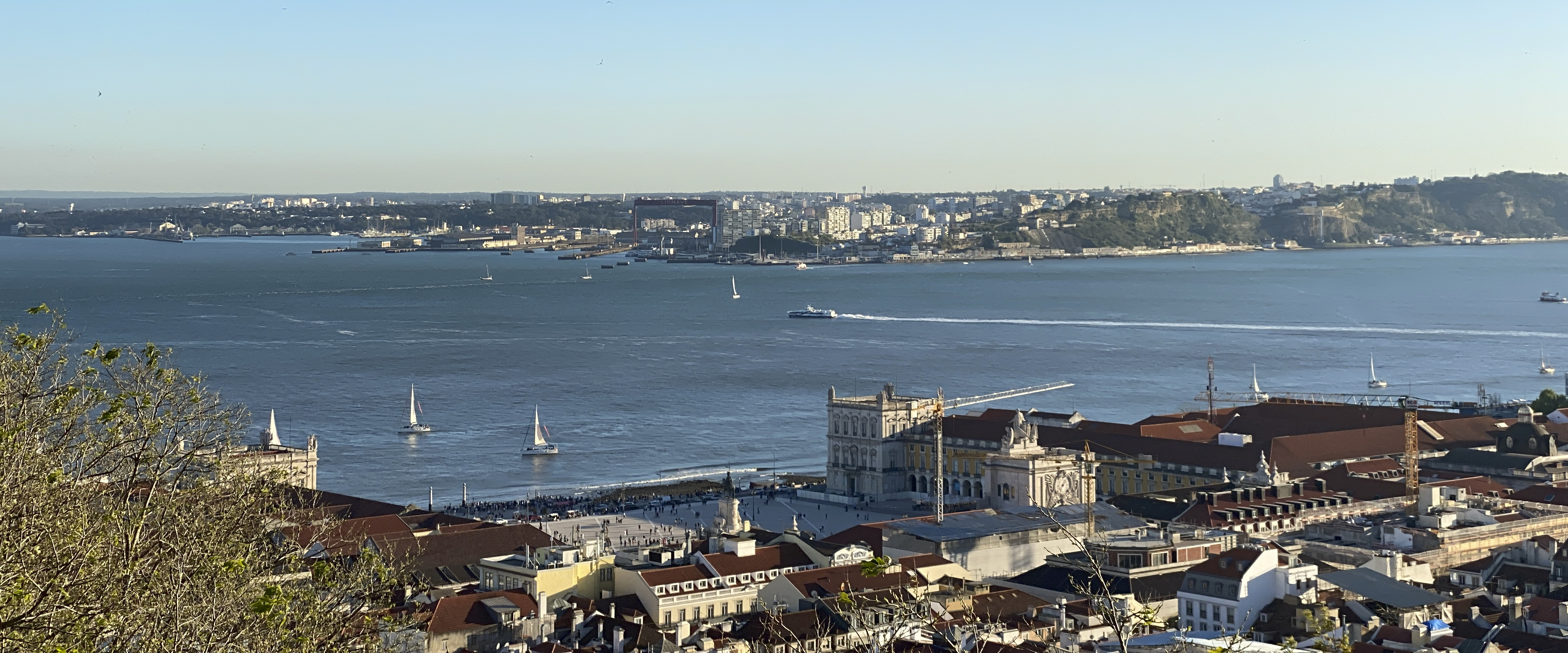
From the castle walls, the Tagus River dominates the horizon. Below lies Terreiro do Paço, the courtyard of the royal palace destroyed by the earthquake. Squint and you might imagine Baroque carriages arriving with courtiers seeking the king’s favor.
For a leisurely lunch, walk toward the Pantheon, a monumental church whose construction spanned more than three centuries. Nearby, Solo, inside the Santa Clara 1738 hotel, offers refined Portuguese cuisine made with the finest ingredients and served in an elegant setting.
After lunch, continue to Terreiro do Paço. At the river’s edge stands Cais das Colunas, the dock marked by two marble pillars where visitors once arrived by ship. Before air travel, this was Lisbon’s grand entrance. In the center of the square, the equestrian statue of King Dom José I greets you.
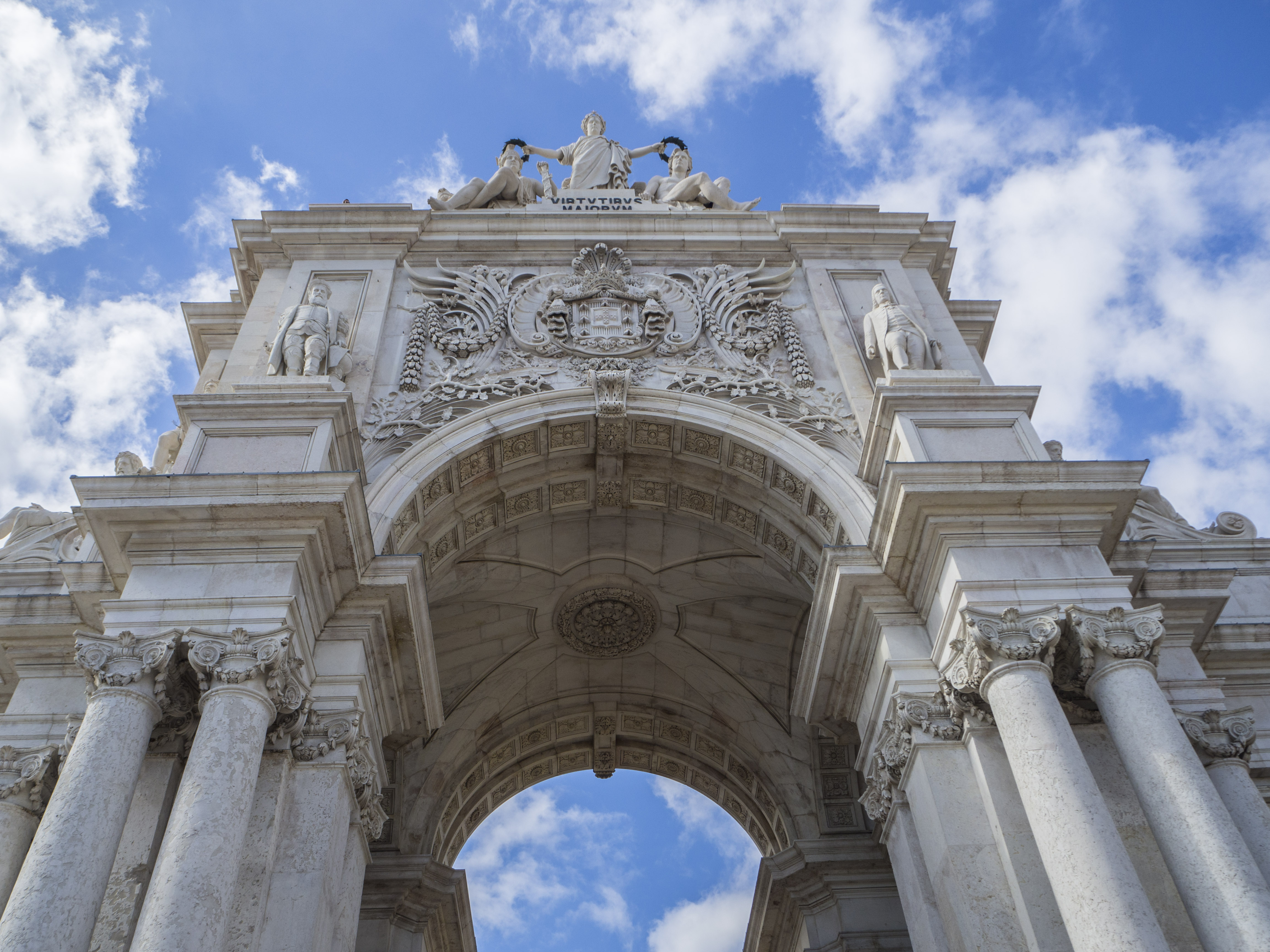
Walk toward the triumphal arch at the entrance of Augusta Street, named for one of the king’s daughters. You can take an elevator to the top for superb views. To the west stretches the Tagus River; to the east lies the orderly grid of the Baixa district, built after the earthquake under the direction of the king’s prime minister, the Marquis of Pombal.
The streets were organized by trade. In Rua do Ouro and Rua da Prata (Gold and Silver Streets), jewelers worked the precious metals arriving from Brazil. Merchants on Rua dos Fanqueiros sold woolen cloth, while Rua dos Correeiros specialized in leather equipment for horses and carriages.
From there, walk to Rossio. On the way, stop at Largo de São Domingos to savor a glass of ginjinha, the sweet cherry liqueur beloved by poet Fernando Pessoa.
Next, climb to Chiado for a pastel de nata at Manteigaria, where the crust is perfectly crisp and the custard delicately perfumed with lemon. Eat only one. Then cross to the Hotel do Bairro Alto terrace for a second. Try not to let the sweeping view cloud your judgment: which pastry wins your favor? The terrace is a wonderful place to rest before dinner. We include a list of restaurant suggestions below.
After dark, nothing expresses Lisbon’s soul like fado. Dressed in black, singers are accompanied by classical and Portuguese guitars, the latter a 12-string instrument with a distinctive mournful sound. Out of respect for the music, the audience is asked to remain silent. The singers’ voices hover between notes, producing pitches that a piano cannot play. They slow or quicken the tempo, confident that the musicians will follow. We are especially fond of the young fadista Beatriz Felício. If she is performing, don’t miss her.
Second day
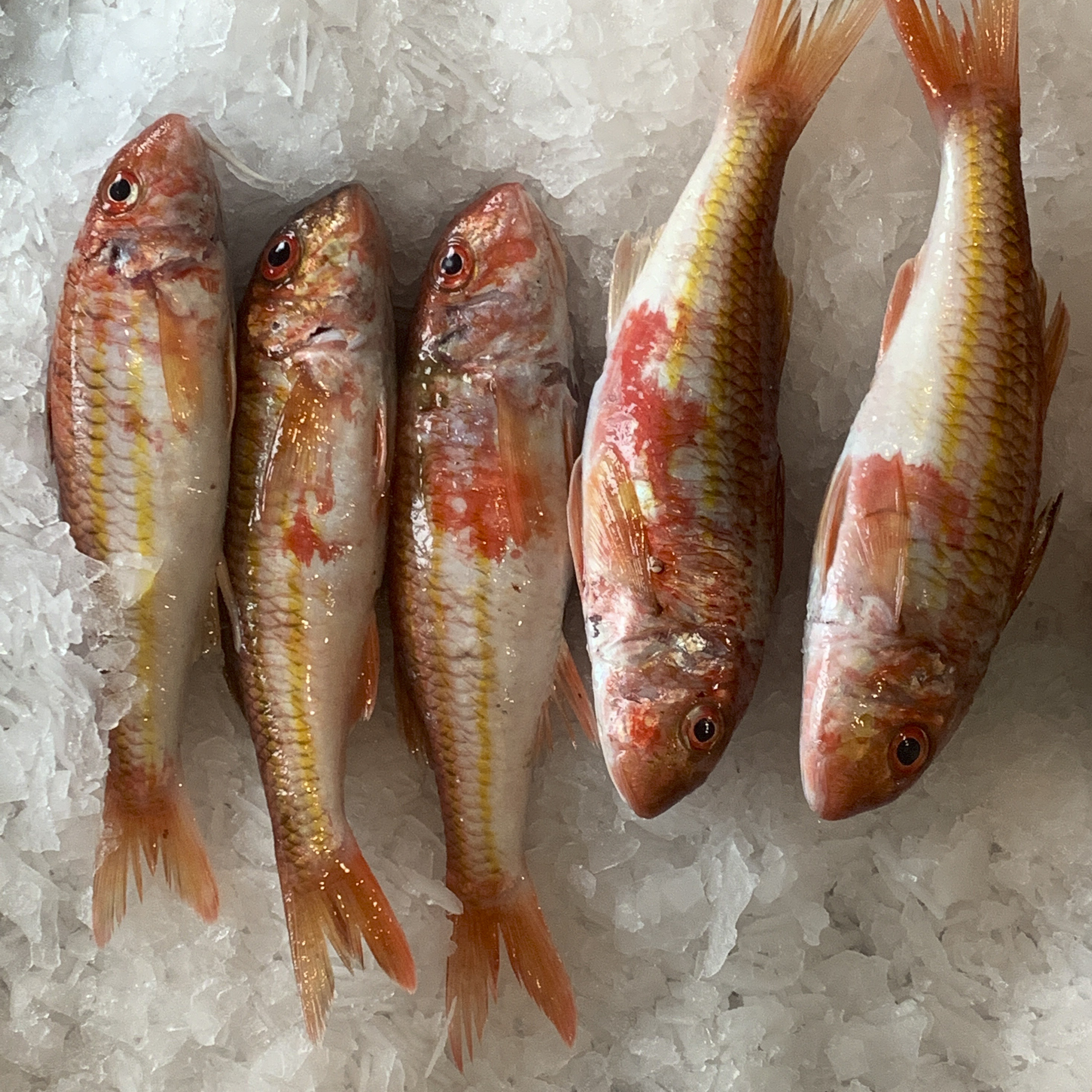
Start the day at the Time Out market. Many come for a quick meal, but you’re here to visit the adjacent farmers’ market. Browse the seasonal fruits and vegetables on display, then stop by the fish stall, which showcases some of the world’s freshest fish.
If you need refreshment, Bar da Odete offers a wonderful range of wines by the glass, curated by enologist Frederico Vilar Gomes. You can buy some of these wines at Garrafeira Nacional, a shop inside the market.
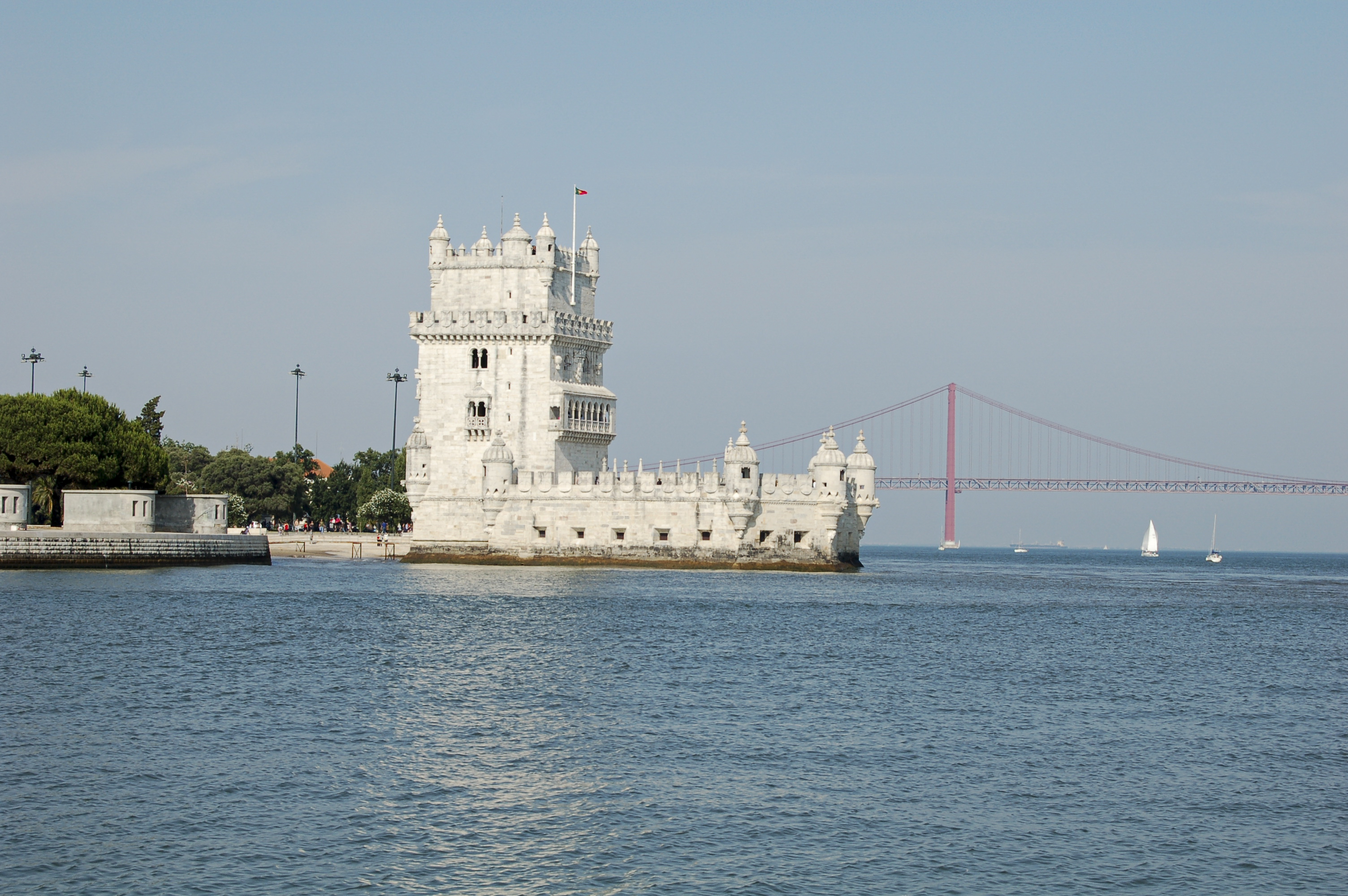
Continue toward Belém to visit the Belém Tower, an ornate fortress built to defend Lisbon from pirates, yet making the city even more alluring. Before the 1755 earthquake, the tower stood in the middle of the river rather than near the shore.
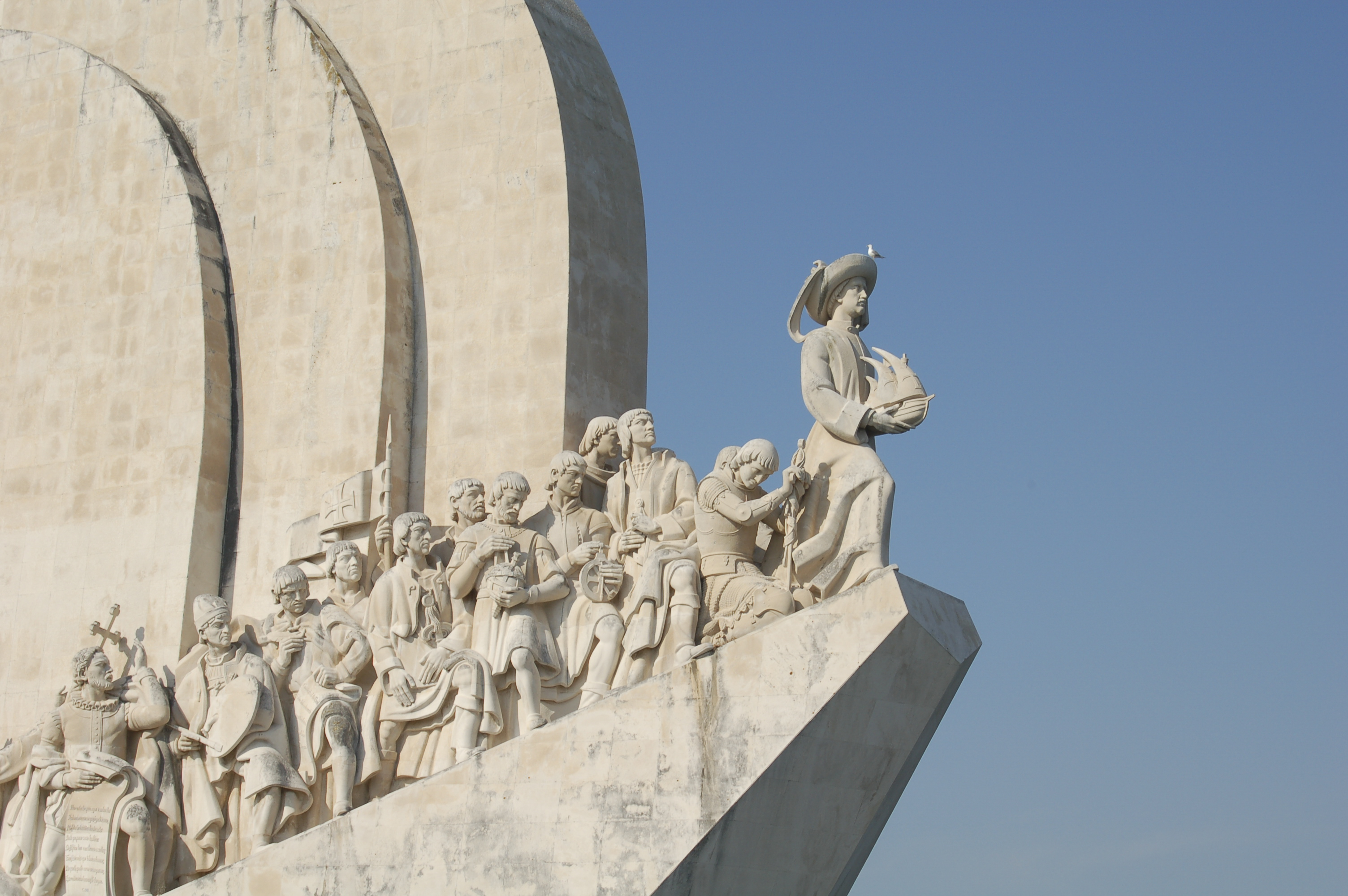
To the south stands the Monument to the Discoveries, a procession of stone figures led by Prince Henry the Navigator. Beginning in the 1420s, Portuguese sailors departed from Restelo into the unknown in ships called caravels, which, for the first time, could tack to sail against the wind.
In his epic poem Os Lusíadas, Luís Vaz de Camões imagines an old man on the shore warning that the quest for glory would bring suffering rather than triumph. In material terms, the discoveries were an extraordinary success. Vasco da Gama reached India, opening a sea route for the spice trade. Cabral reached Brazil, and ships soon returned to Lisbon laden first with brazilwood and, later, with gold. Yet these riches came at a terrible human cost. Many sailors perished in shipwrecks or from diseases, especially scurvy, caused by months at sea without fresh provisions, living on little more than hard biscuit.
Just to the east rises the magnificent Jerónimos Monastery, built with the wealth of the maritime empire. Its Manueline architecture blends late Gothic style with nautical motifs. Inside are the tombs of kings and queens, as well as Vasco da Gama and Luís Vaz de Camões.
To the north is the Cultural Center of Belém, a modern art complex built from stone from the same quarry as the monastery. Its concerts and exhibitions are worth checking out.
If you crave grilled fish, the modest O Último Porto, open only for lunch and patronized mostly by locals, serves fresh fish grilled to perfection. Robalo is always a great choice, and the mullets are divine.
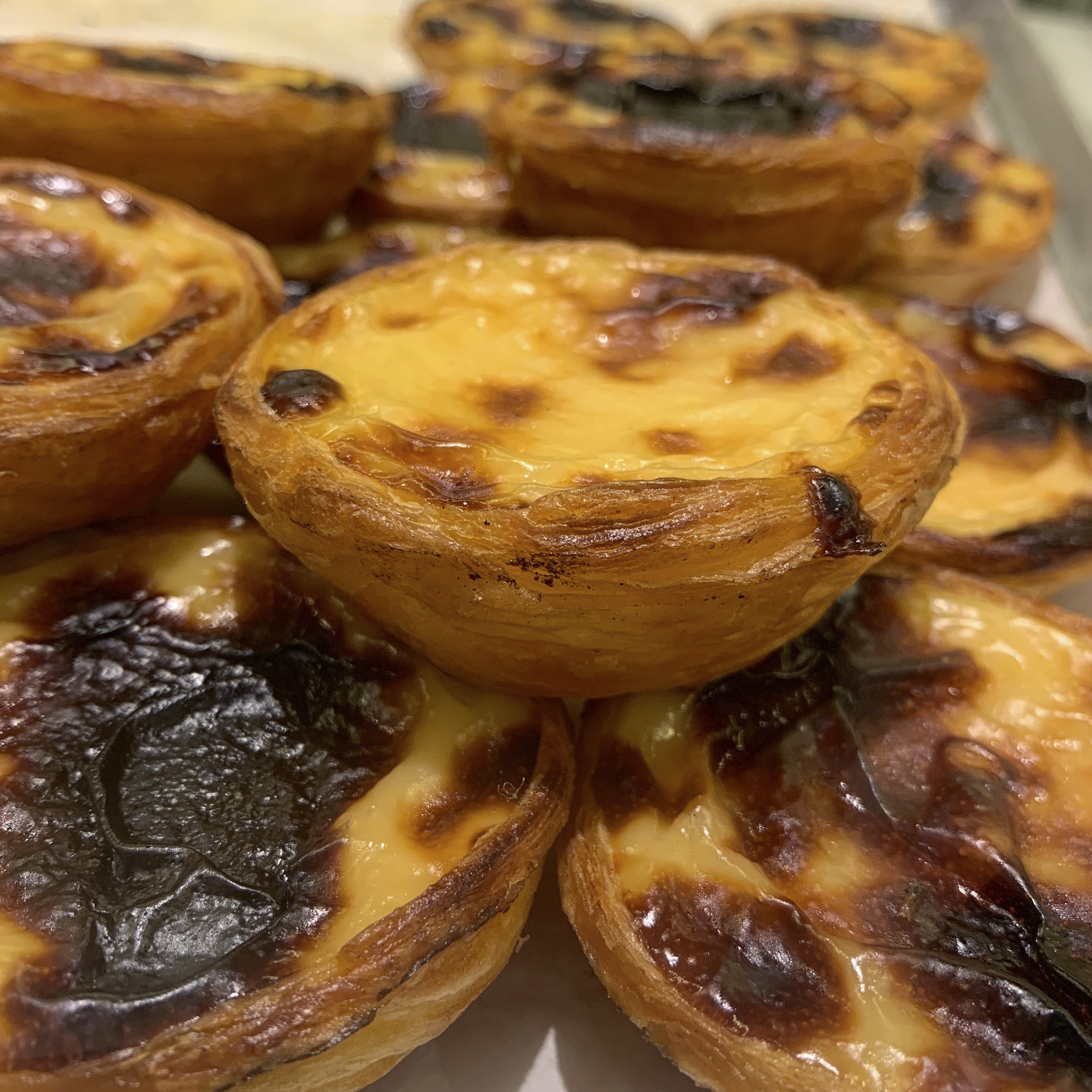
Skip dessert. You must return to Belém for the city’s most famous custard, the Pastel de Belém. The bakery has produced them since 1837, using a secret recipe shared by monks after the dissolution of the religious orders in 1834. Enjoy one warm pastry dusted with cinnamon, a fragrant echo of the spice trade that enriched Portugal. Now that you have tasted the city’s most celebrated pasteis de nata, which is your favorite?
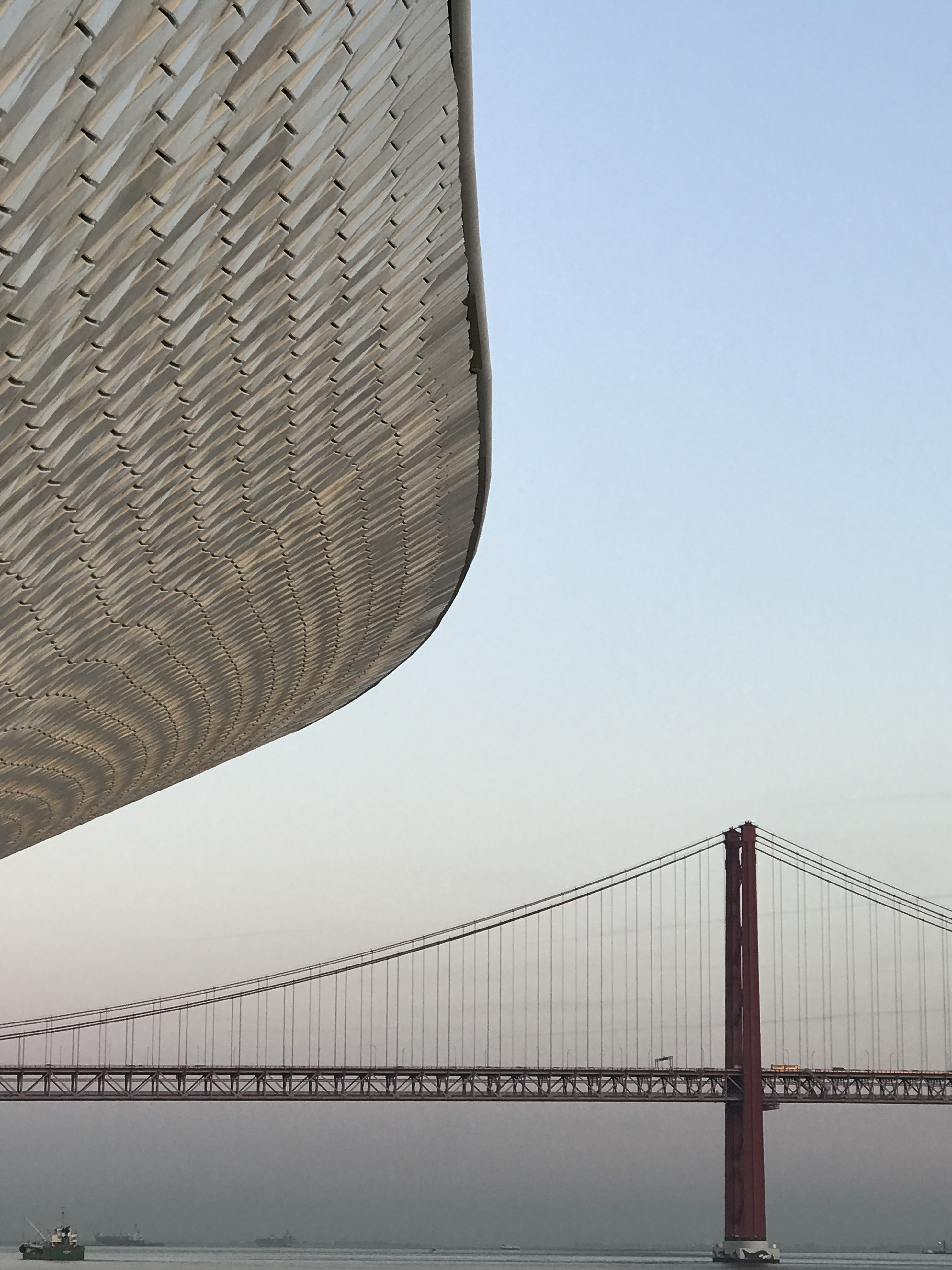
End the day at MAAT, the Museum of Art, Architecture and Technology. It offers interesting exhibitions and a roof that is one of the finest places to watch the sunset in Lisbon. As the sun sinks into the Atlantic, Lisbon’s hills glow amber, the color of the gold that once made it rich.
Here are some practical suggestions
Where to stay
Our favorite place to stay in Lisbon is Santa Clara 1728, a small hotel that exudes tranquility and elegance. It is part of Silent Living, a unique collection of hotels designed to help guests reconnect with place and nature.
The Pestana Palace, built around an early-20th-century palace, is another favorite. Set away from the center and surrounded by gardens, it offers a peaceful respite from the city’s bustle.
The Ritz Four Seasons is a mid-century modern landmark that provides classic old-world luxury.
Hotel do Bairro Alto, in the heart of Chiado, combines a central location with excellent service.
Where to eat
Not long ago, one could walk into almost any restaurant and enjoy an honest, modestly priced meal of local food and wine. Today, many restaurants cater primarily to tourists. To taste authentic cuisine, you need guidance, but rest assured, we’re here to provide it.
Lisbon’s fine-dining scene is vibrant. Belcanto, led by José Avillez, has elevated Portuguese cuisine while staying true to its roots. His recent book on Portuguese cuisine makes a wonderful gift for a gourmet friend. Marlene, by chef Marlene Vieira, reinterprets tradition with imagination and finesse. Loco, led by chef Alexandre Silva, offers exuberantly creative dishes made with local ingredients.
Beyond the Michelin constellation, many excellent restaurants await discovery. We mentioned two of our favorites in the main text. Solo offers a lunch menu where each dish is crafted from pristine organic ingredients sourced from Casa no Tempo. Último Porto is a rustic restaurant known for perfectly grilled fish.
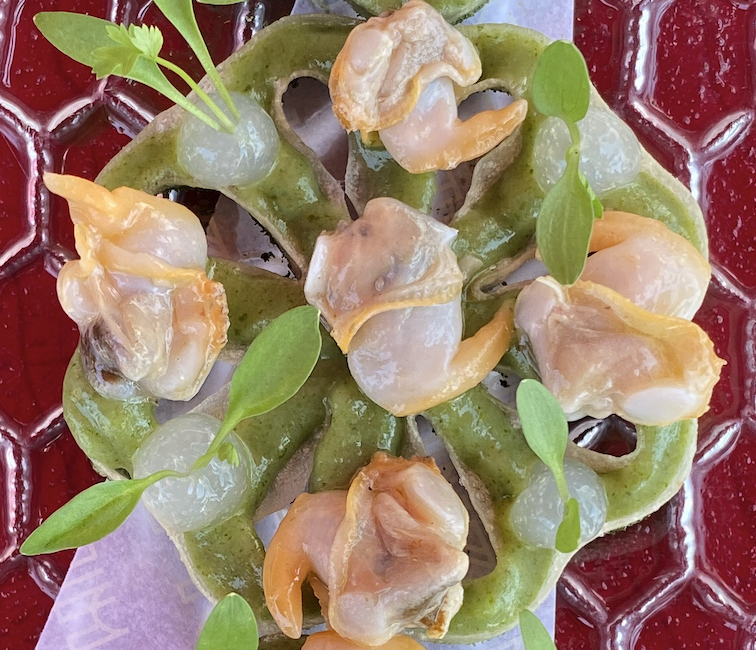
Zun Zum, Marlene Vieira’s bistro, showcases superb Portuguese ingredients prepared with inventiveness. Try their signature dish: “filhoses de berbigão,” large cockles served on star-shaped fried dough filled with a cream made from cockle broth, coriander, and lemon.
For seafood, Cervejaria Ramiro remains our top choice. It is noisy and crowded, but it is worth it. Reservations are not accepted, so arrive early. Do not miss the clams à Bulhão Pato, a classic of Portuguese cuisine.
Tasca da Esquina, by Vítor Sobral, consistently serves excellent interpretations of traditional dishes.
Canalha offers impeccable seasonal ingredients, prepared with precision. This acclaimed bistro is led by chef João Rodrigues, who left his Michelin stars behind to cook simple, deeply satisfying food.
Casa Tradição offers inventive takes on classic recipes by Samuel Mota, a chef who trained at Belcanto.
Our favorite vegetarian restaurant is Touta, led by Lebanese chef Cynthia Bitar.
For wine lovers, we recommend a visit to Quinta de Chocapalha, a superb producer near Lisbon.
Museums
The Calouste Gulbenkian Museum has one of the world’s finest private art collections, reflecting the founder’s motto: “only the best.” A visit is a journey spanning 5,000 years of human creativity. Among the collection’s highlights is Almada Negreiros’ portrait of the poet Fernando Pessoa.
Two major museums are currently closed for renovations. The Museu Nacional de Arte Antiga preserves Portugal’s most important collection of paintings, sculptures, and decorative arts. Housed in a former convent, Museu Nacional do Azulejo offers a collection of five centuries of Portuguese tile art, including a breathtaking panoramic panel of the city before the 1755 earthquake.
Shopping
We love Vista Alegre, a company that has produced beautiful porcelain since 1824. Its stores are spread throughout the city, with the most iconic located in Chiado. Nearby is Cutipol, a producer of elegant cutlery.
A Vida Portuguesa offers a carefully curated selection of artisanal products made with exceptional craftsmanship.
Reverso is a jewelry gallery featuring whimsical, elegant modern pieces.
Activities for kids
A visit to Lisbon’s outstanding Oceanarium is a perfect activity not only for kids but for anyone interested in the mysteries of the ocean and the protection of marine ecosystems.
Cruising the Tagus River aboard Santa Fé, a beautifully restored vintage boat, is one of the best ways to see the city.
Jezzus is a great place for pizza, a meal that kids are likely to enjoy.
Day trips
There are several historical towns on the outskirts of Lisbon that are well worth visiting. Sintra, once the summer residence of the Portuguese kings, is a fairy-tale village crowned by a Moorish castle and dotted with several enchanting palaces. Queluz offers a graceful palace with elegant gardens inspired by Versailles.
Mafra stands on a grander scale. This vast convent, built with the wealth of Portugal’s maritime empire, houses one of the world’s most beautiful libraries. The convent’s construction inspired José Saramago’s celebrated novel Baltasar and Blimunda, published in 1982—a book that will enrich any visit to Mafra.
And then there is Óbidos, a perfectly preserved medieval town, offered by King Dom Dinis to his bride, Isabel of Aragon.