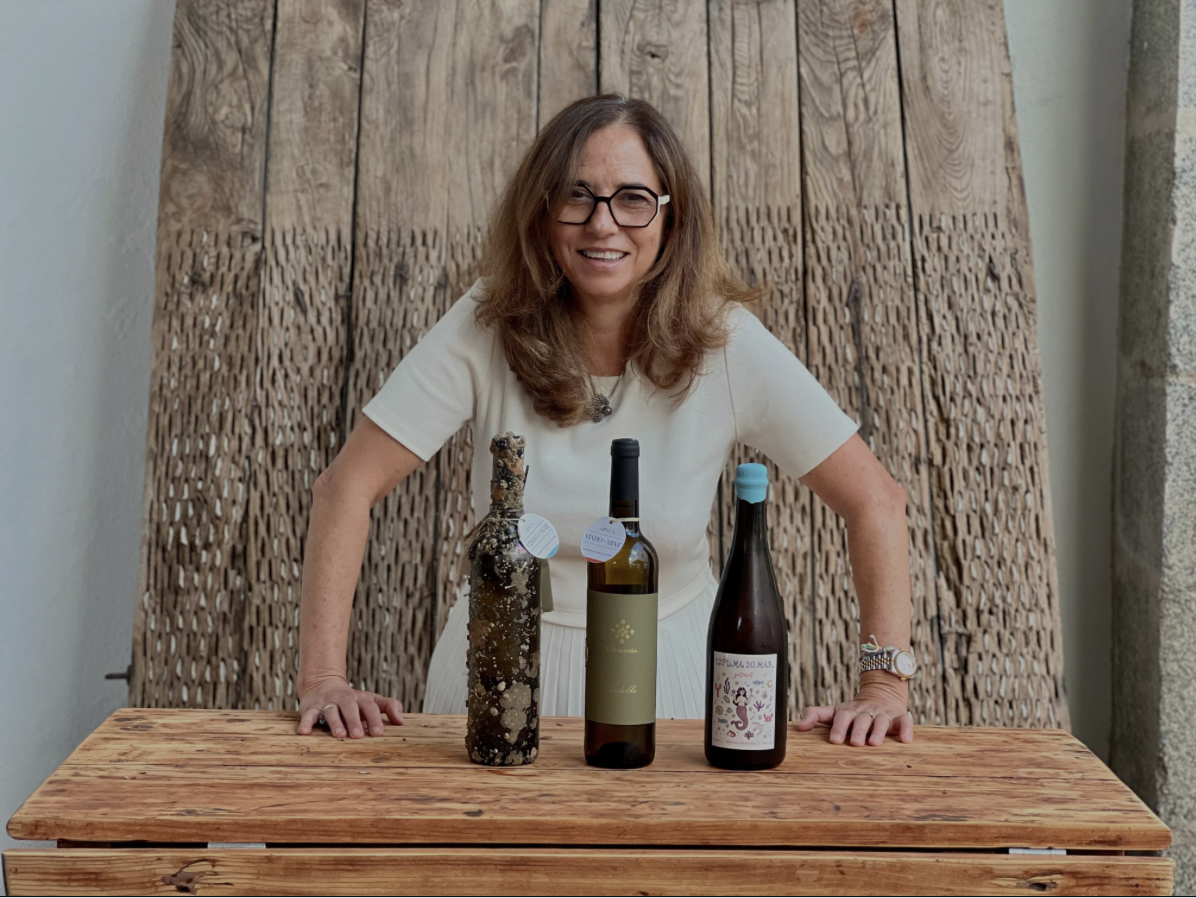
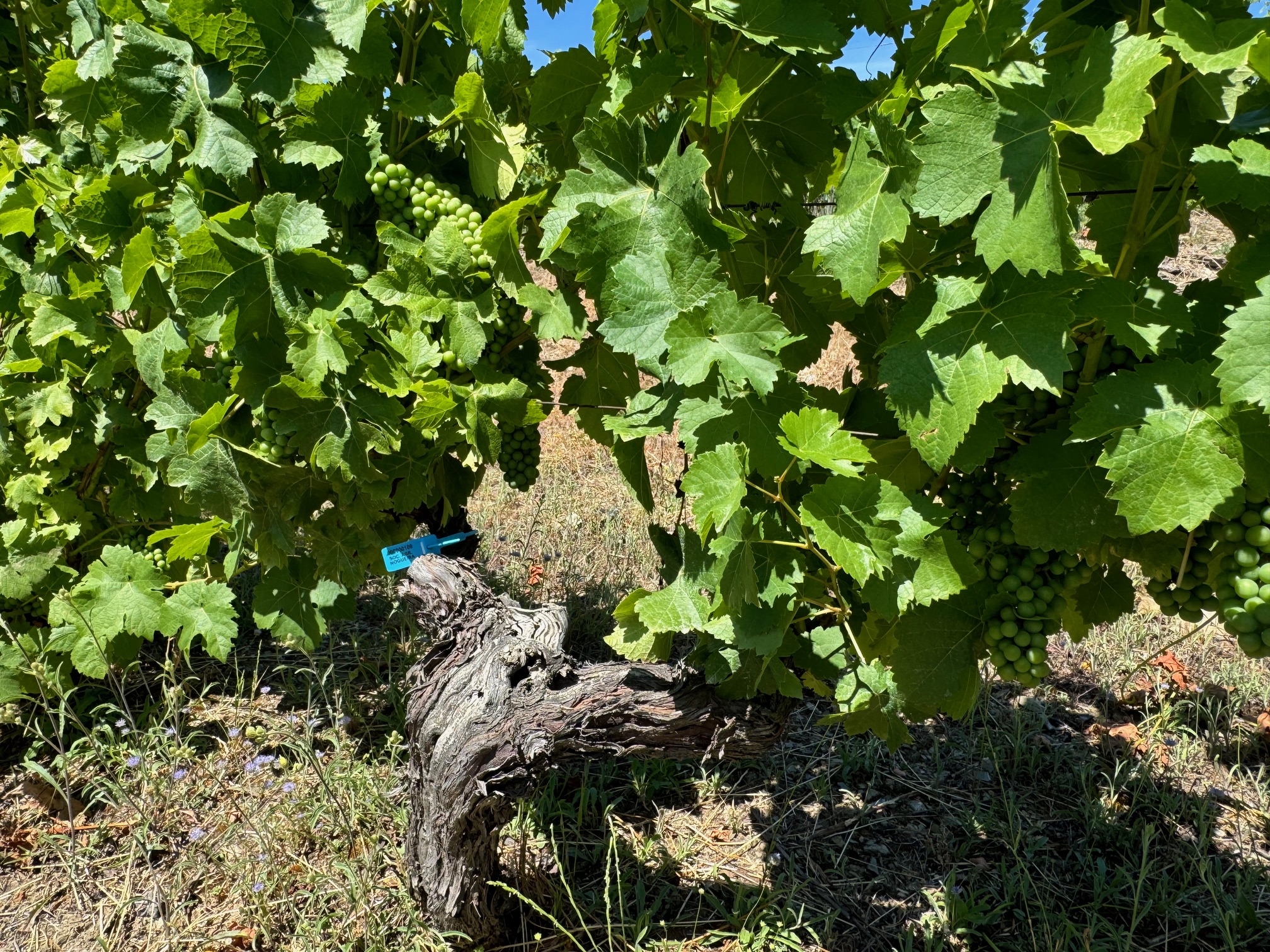
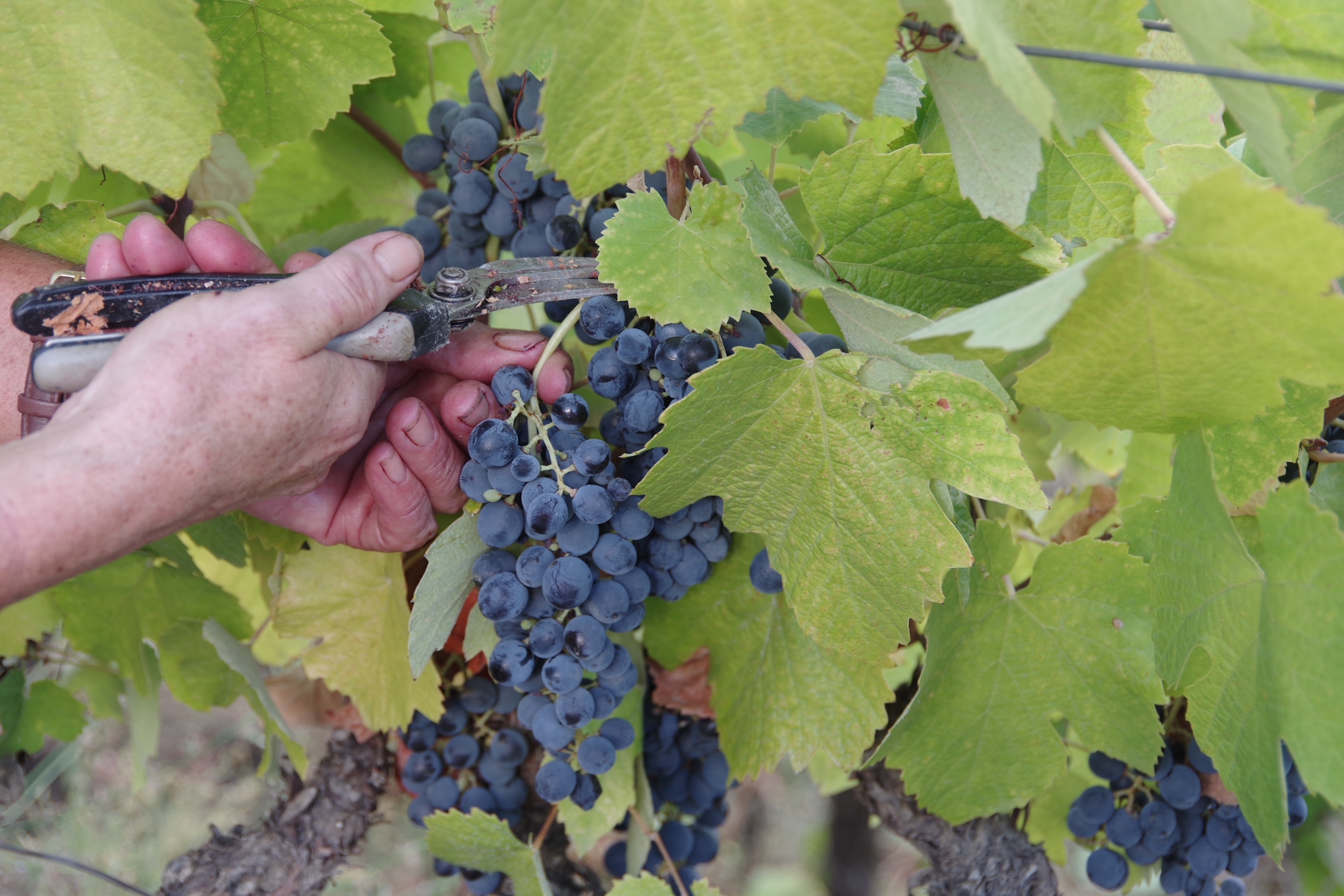
Serenada is a beautiful estate in the Alentejo that has been in winemaker Jacinta Sobral’s family for more than three centuries. Her father planted the first vines in 1961, the year Jacinta was born, so she affectionately calls them her sisters.
Driven by an adventurous spirit, Jacinta is constantly experimenting with new ways to create truly distinctive wines. Her wines aged 15 meters below the surface of the sea have attracted considerable attention, but Serenada’s portfolio offers many other treasures waiting to be discovered.
Among them is a seductive Pet Nat made from Touriga Nacional. The grapes are gently pressed, much as they would be for a rosé, but the wine is bottled before fermentation is complete. Fermentation then continues inside the bottle, trapping the carbon dioxide it naturally produces and giving the wine its delicate sparkle. Hence the name pétillant naturel,French for naturally sparkling, affectionately shortened to Pet Nat.
This style is probably close to how the earliest sparkling wines were made, before the development of the méthode champenoise, in which a finished dry wine undergoes a second fermentation in the bottle after the addition of yeast and sugar.
Making a consistently pleasurable Pet Nat requires considerable precision. Jacinta experimented with bottling at different densities, which indicate how much fermentable sugar remains, until she found precisely the balance she wanted.
To preserve the wine’s natural character, Jacinta adds no sulfites and does not disgorge it—a process in which the yeast sediment is collected in the neck of the bottle, frozen and expelled. As a result, the wine contains some yeast sediment, as well as harmless tartrate crystals: tiny crystalline deposits sometimes known as “wine diamonds.”
The wine comes in a bottle adorned with a whimsical label designed by Catarina Fuschini. Its pale rosé color is alluring, while the palate is fresh, lively and playful. “It is like a ballet for the palate,” says Jacinta. We call it a party in a bottle.
Having mastered the art of Pet Nat, she is already moving on to her next experiment: fermenting the wine in amphora, bottling it before fermentation is complete, and then aging it in the ocean. We can’t wait to taste the result!
Serenada is located near Grândola in Alentejo. Click here for their website.
This twelfth lecture in our series with viticulturist António Magalhães is a tribute to Álvaro Moreira da Fonseca, the agronomist who helped shape the destiny of the Douro by devising the method used to allocate the benefício—the authorization to produce Port wine.
The consequences of his method were profound. By tying the benefício to the vineyard rather than to an individual or company, Moreira da Fonseca helped preserve a place for the Douro’s small growers. Their labor, knowledge, and stewardship remain essential to the character of the region.
Moreira da Fonseca was born in Porto on August 25, 1902, into a family with deep roots in the Douro. He studied agronomy in Lisbon, where he met his future wife, Constança Maria. They married there in 1926 and later returned north with their growing family.
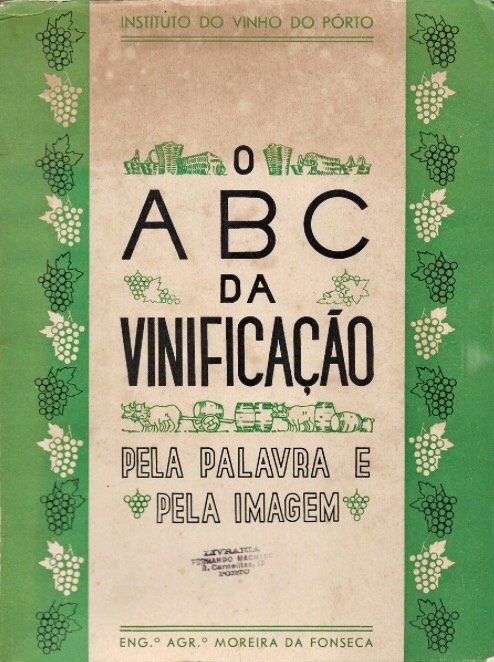
His first serious academic work was not about wine but about the pollination and varieties of fig trees. He later taught in Lamego and at the agricultural school in Alcobaça, where his gifts as a teacher soon became apparent. His first publication, The ABC of Winemaking, foreshadowed the subjects that would occupy him for the rest of his life: viticulture and winemaking.
Moreira da Fonseca spent most of his career at the Port Wine Institute, the regulator of the Port trade. He worked there from 1935 until his retirement in 1970, apart from 1946 to 1949, when he served first as vice-president and then as president of Casa do Douro, the compulsory association representing the region’s growers. At Casa do Douro, he devised the point system used to allocate the benefício and sought to correct an imbalance at the Institute, where the wine trade held three votes and growers only two.
Moreira da Fonseca believed that the Douro could not be governed wisely without first understanding its history. He approached historical research with the same rigor he applied to agronomy, carefully transcribing primary sources and combining archival work at the Torre do Tombo with an intimate knowledge of the region’s historic estates.
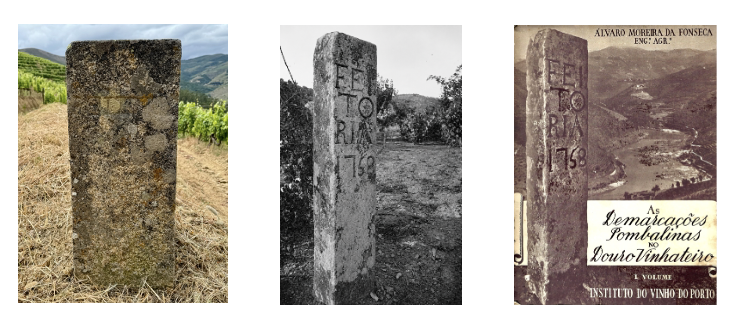
Granite markers and cover of Moreira da Fonseca book on the subject
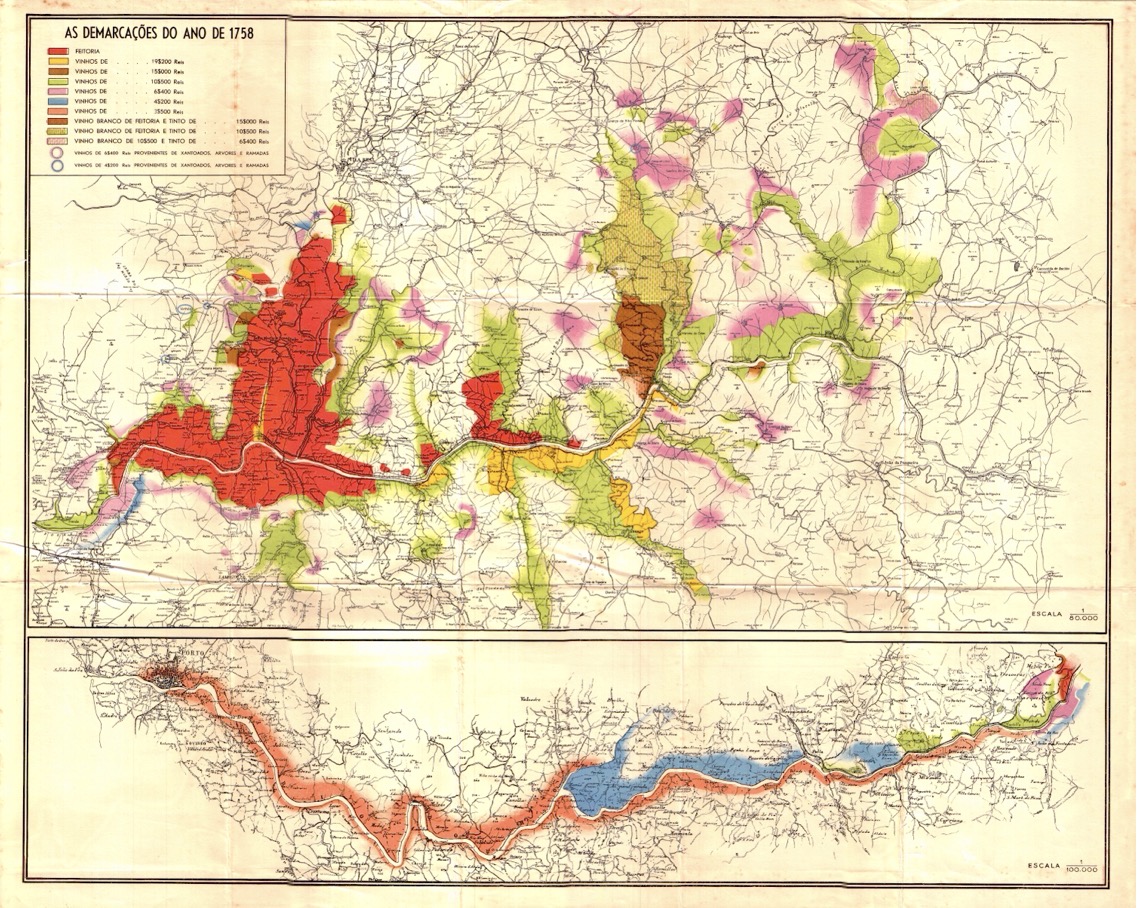
One episode reveals his remarkable curiosity and persistence. After encountering granite pillars erected under the Marquis of Pombal, prime minister to King José I, to mark the boundaries of the wine region, he became determined to reconstruct the Douro’s earliest demarcations. When searches at the Torre do Tombo archives failed to uncover the original maps, he travelled through the region in 1944 and 1945, matching eighteenth-century descriptions to the contours of the land. By 1949, he had identified 103 surviving Pombaline markers and reconstructed the demarcations of 1757, 1758, and 1761.
Map of historical Douro demarcations by Álvaro Moreira da Fonseca
His interests ranged from preserving the Douro’s past to embracing the latest scientific advances. Long before the creation of the Douro Museum in Peso da Régua, he helped assemble a collection of tools and objects. In 1959, he secured funding for a cathode-ray polarograph, which enabled the Port Wine Institute’s laboratory to detect minute quantities of substances in Port, including trace metals such as lead.
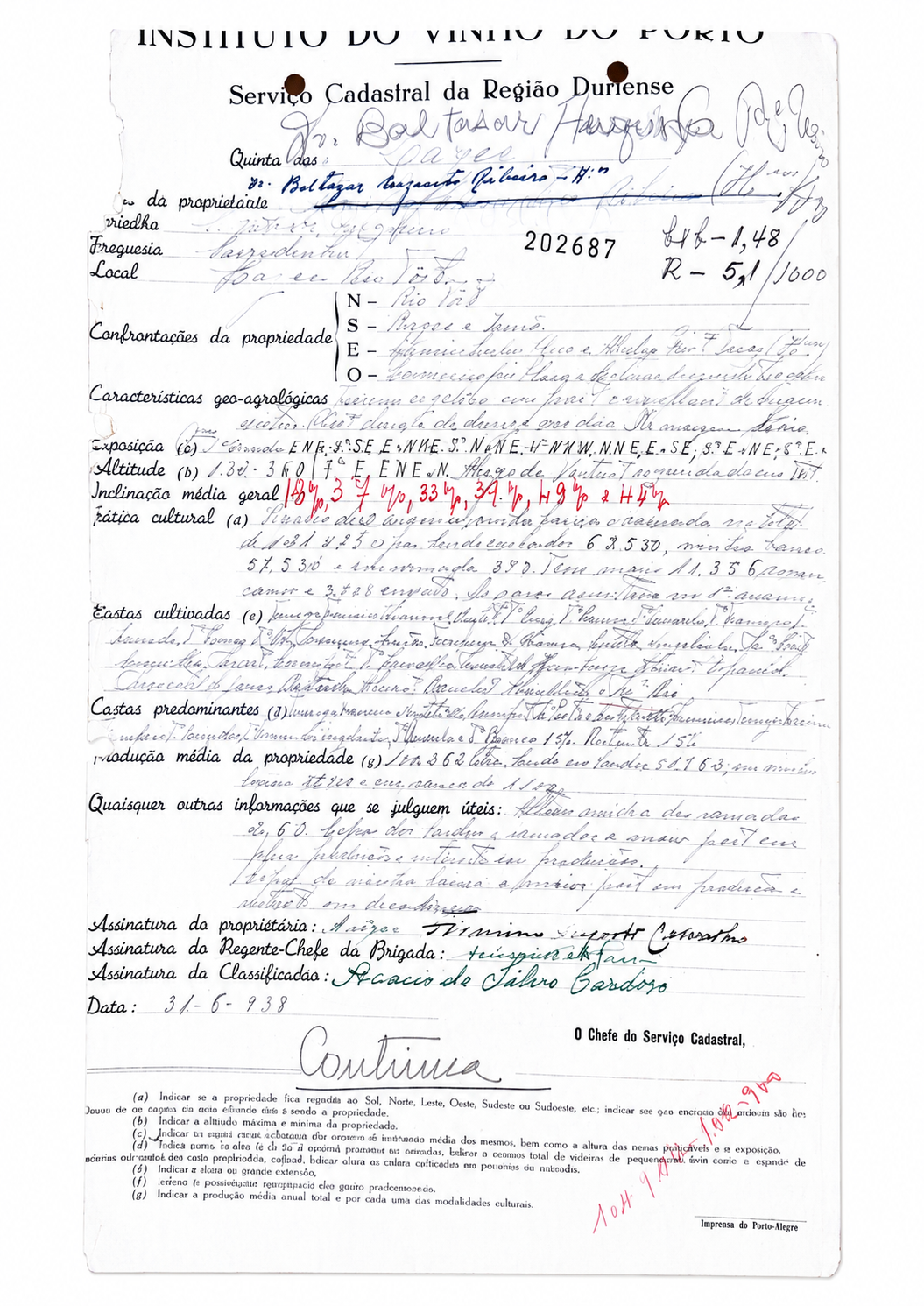
António Magalhães recently discovered an unexpected way to compare Moreira da Fonseca’s ideas with his actual practice: the viticultural registers of Quinta das Lages, his family estate.
By the time António visited the estate, its older vineyards had been replaced with newer plantings. Working with Moreira da Fonseca’s daughter, Maria José, now eighty-eight, he reconstructed their history from successive vineyard registers preserved in the archives of Casa do Douro.
Quinta das Lages had belonged to Moreira da Fonseca’s maternal grandfather, Baltazar Augusto Ribeiro. The estate later passed to his mother, Lúcia Ribeiro, and her sisters, Beatriz and Ambrosina. Following his mother’s death in 1961, Moreira da Fonseca assumed responsibility for the estate and managed it until his own death in 1980.
The registers reveal a striking detail: his scoring system penalized his family’s estate. Moreira da Fonseca favored wider planting distances, believing they encouraged root development, improved sunlight exposure, and strengthened resistance to drought. Yet in 1944, Quinta das Lages averaged just 1.2 square meters per vine, placing it squarely in the category his method marked down—a strong indication that the system was not designed to favor his own family.
Over time, the vineyard moved closer to his ideal. The average area per vine rose to 1.5 square meters in 1957 and 1.96 in 1975 as successive sections were replanted. The shift probably reflected both his influence and the mechanization of viticulture, which required wider rows for tractors.
Vine spacing is the one point on which António Magalhães disagrees with Moreira da Fonseca. Under Moreira da Fonseca’s scoring system, vineyards with more than 1.74 square meters per vine received the highest score, with no upper limit beyond which wider spacing was penalized. Studying the same vineyards decades later, António argues that there is no universally optimal spacing. He generally favors greater planting density, but believes that the appropriate spacing must be adapted to each vineyard’s soil, climate, and the configuration of the terrain, especially its slope.
António has an advantage over Moreira da Fonseca: he can draw on decades of accumulated evidence. Many vines planted during the Douro’s long recovery from phylloxera—some now nearly a century old—were still young when Moreira da Fonseca developed his ideas. He could not yet know what their maturity would reveal about their ability to withstand the region’s long, hot, dry summers. Moreira da Fonseca’s preference for lower planting density was therefore understandable given the evidence available to him.
The registers also open a window onto a Douro that has largely disappeared. Today, four grape varieties form the backbone of most vineyards: Touriga Nacional, Touriga Francesa, Tinta Roriz, and Tinta Barroca. In 1938 Quinta das Lages was planted with a very different mix. Touriga Francesa and Rufete—the latter widely grown around the village of Sarzedinho, where Quinta das Lages is located—together accounted for 30 percent of the vineyard. Cornifesto, Malvasia Preta, and Castelã—the latter now in danger of disappearing from the Douro—made up another 20 percent.
Touriga Nacional was not among the leading varieties. Dominant in the Douro before phylloxera and described by Baron Forrester as “the finest,” it declined after the crisis. Its place was increasingly taken by Touriga Francesa, a cross between Touriga Nacional and Mourisco Tinto, a variety noted for its resistance to phylloxera.
The 1938 viticultural register of Quinta das Lages contains the earliest reference to Touriga Francesa that António has found. It raises an intriguing question: when and how did the name first appear? António suspects that the answer lies somewhere in the archives of Casa do Douro, together with many other secrets waiting to be uncovered.
These archives are more than a collection of administrative records: they tell the history of the Douro through its estates, families, and vines. Organizing and safeguarding them would be a fitting tribute to Moreira da Fonseca, whose own work reminds us that the future of the Douro depends in part on preserving its memory.
Arinto is one of Portugal’s great historic white grapes. Its name appears in fourteenth- and fifteenth-century documents drawing on now-lost medieval records from the Monastery of Alcobaça and the variety is later mentioned by Vicêncio Alarte in his 1712 treatise, Agricultura das Vinhas.
Although now grown throughout Portugal, Arinto is most closely associated with Bucelas, a small region north of Lisbon—hence its traditional name, Arinto de Bucelas. Its naturally firm acidity produces fresh, precise white wines with remarkable aging potential.
Bucelas enjoyed an extraordinary reputation in nineteenth-century Britain, where its wines were known as “Portuguese Hock,” a reference to the white wines of Germany’s Rhine region. During the Peninsular War, the Duke of Wellington commanded the Anglo-Portuguese forces fighting Napoleon’s invading armies. In 1810, the French advance toward Lisbon was halted at the Lines of Torres Vedras, a vast system of fortifications extending through the countryside around Bucelas. Legend has it that Wellington developed a taste for the local wine during the campaign and later introduced it to British society.
But the English connection may be much older. In Shakespeare’s Henry VI, written at the end of the sixteenth century, a character offers “a cup of charneco,” a wine thought to have been produced in Charneca, a village near Bucelas.
Three expressions of Arinto
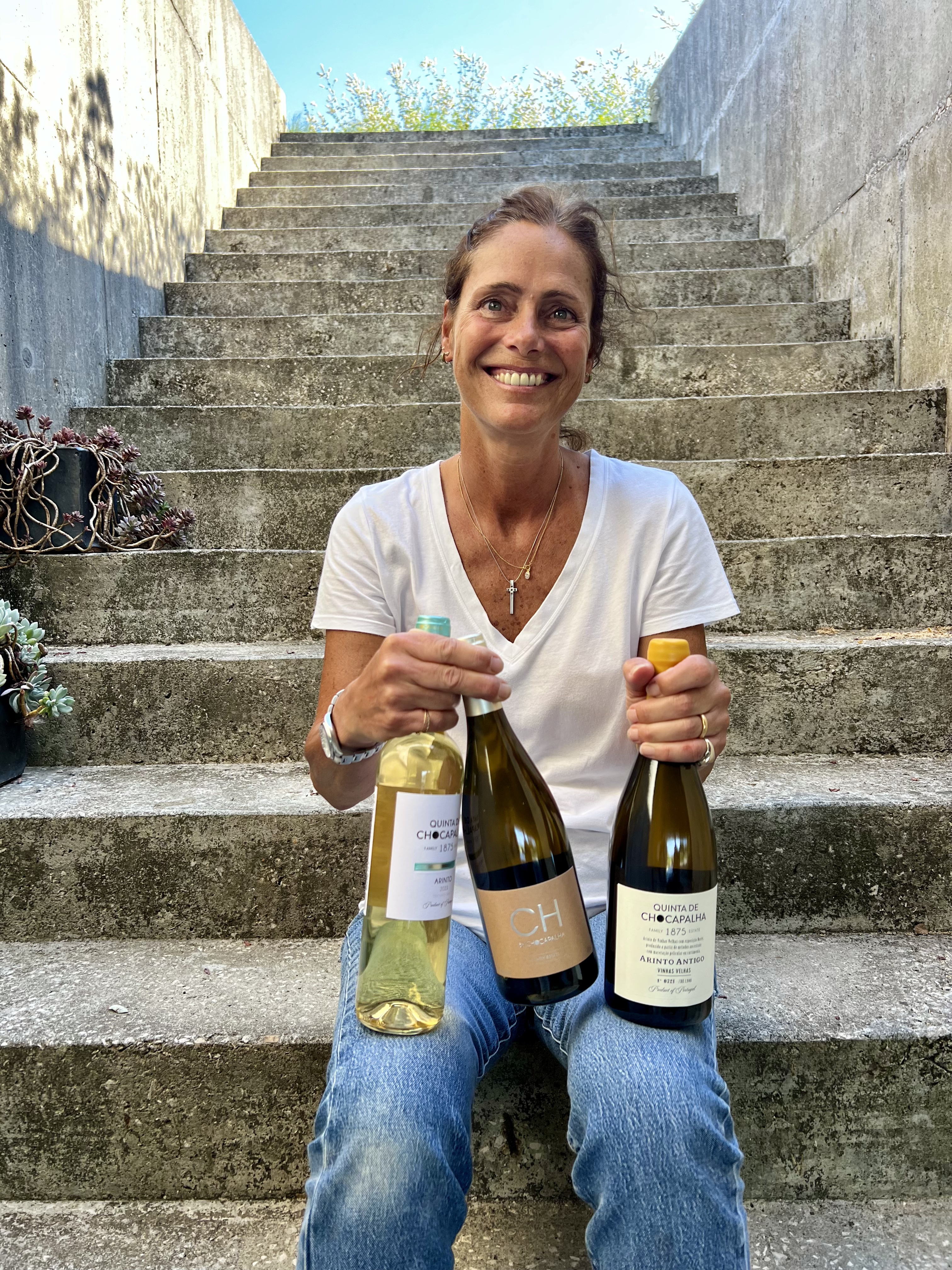
One of the best places to understand Arinto’s versatility and potential is Quinta de Chocapalha, an estate close to Bucelas that belongs to the Tavares da Silva family. Enologist Sandra Tavares da Silva makes the wines, and her sister Andrea (pictured in the photo) leads the project.
We visited Chocapalha on the first day of harvest. Andrea marked the occasion by photographing the talented group of young winemakers who had come from around the world to work at the estate, drawn by its distinctive terroir and by Andrea and Sandra’s uncompromising commitment to making great wine.
The team was finishing the day’s work, cleaning the equipment and scrubbing the floors until the winery was as pristine as a laboratory. A small speaker perched on a stainless-steel tank pumped out energetic music, helping everyone keep their spirits up at the end of a long day.
The sun was still shining generously when Andrea led us through the rolling hills covered in vineyards, speaking passionately about Arinto. Back at the winery, she showed us how three wines reveal different dimensions of the same grape.
The Quinta de Chocapalha Arinto shows the grape in its most direct and transparent expression. There is little between the grape and the glass. Fermented in stainless steel and aged for several months on its fine lees, it is pure and precise, with citrus and saline notes and a lovely sense of tension.
The CH Branco has a Burgundian character: elegant and structured, yet still unmistakably Arinto. Fermented in French oak and aged for nine months with bâtonnage, it retains the grape’s citrus freshness and firm acidity while gaining richness, texture, and volume on the palate.
Arinto Antigo explores an ancestral approach in which white grapes are vinified much like reds, with skin contact. The skins give the wine tannins, but they are remarkably fine. Produced from old, north-facing vines, it is aged for two years in neutral barriques. The result is greater salinity, tension, structure, and depth. This wine is both powerful and restrained. It is textured without heaviness, structured without losing freshness. It is the most complex of the three and perhaps the most striking demonstration of all that Arinto can be.
Few grapes can take on such different expressions while preserving such a clear identity. And few wineries can express those qualities with such grace.
Chocapalha is located at Aldeia Galega da Merceana, 50 km from Lisbon. You can schedule a wine tasting by emailing visitas@chocapalha.com. Click here for their website.
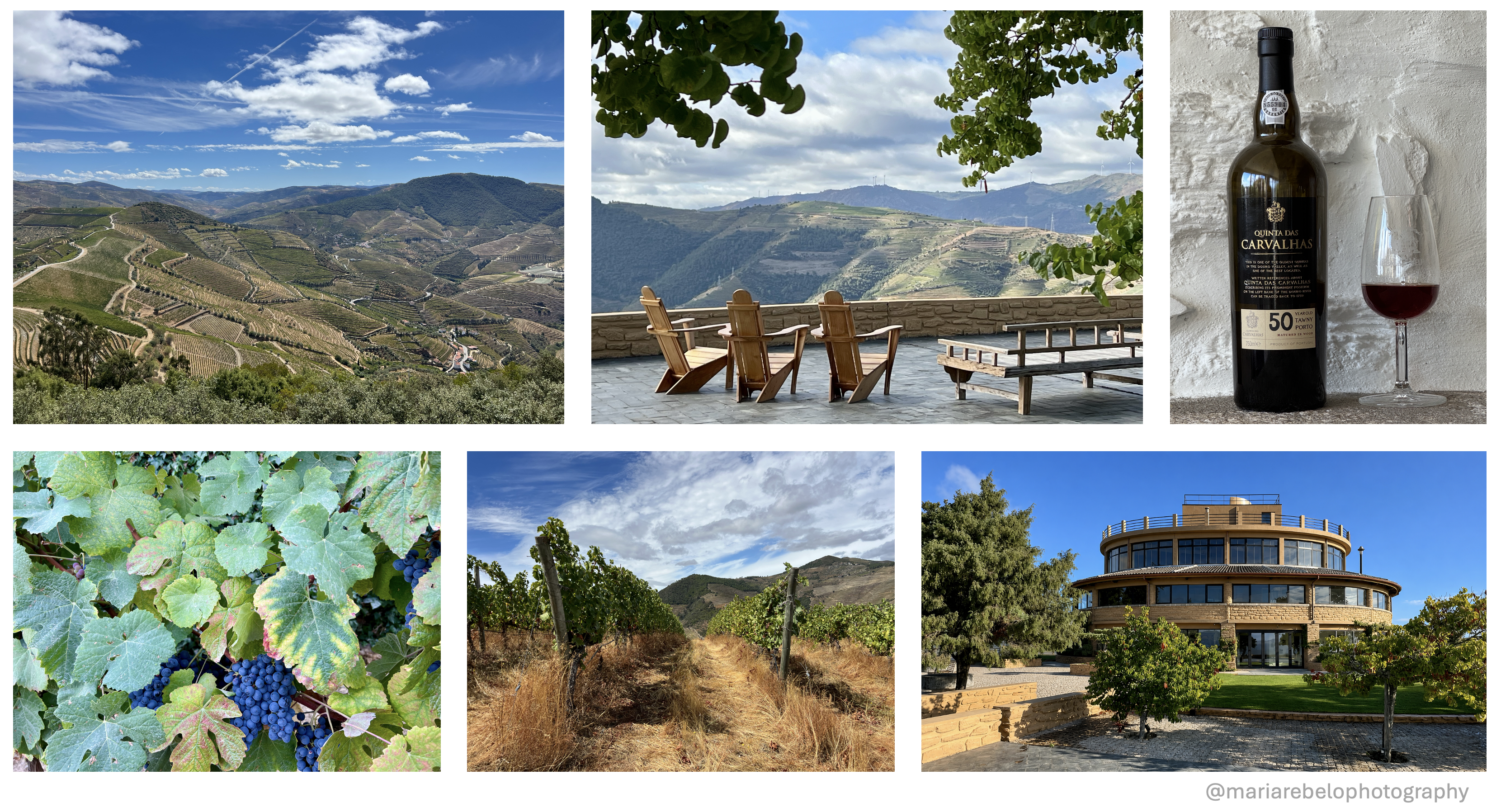
As you approach Pinhão, just before crossing the elegant iron bridge that spans the Douro river, a tall green gate quietly comes into view. It marks the entrance to Quinta das Carvalhas, one of the Douro Valley’s most remarkable estates.
Carvalhas belongs to Real Companhia Velha, founded in 1756 by the Marquis of Pombal, the powerful prime minister of King José I, to regulate the Port wine trade. In 1852, the government brought the company’s regulatory mandate to an end. Since 1960, Real Companhia Velha has been under the stewardship of the Silva Reis family. Today, Pedro Silva Reis leads the company alongside his sons, Tiago, who oversees its commercial activities, and Pedro Jr., an enologist.
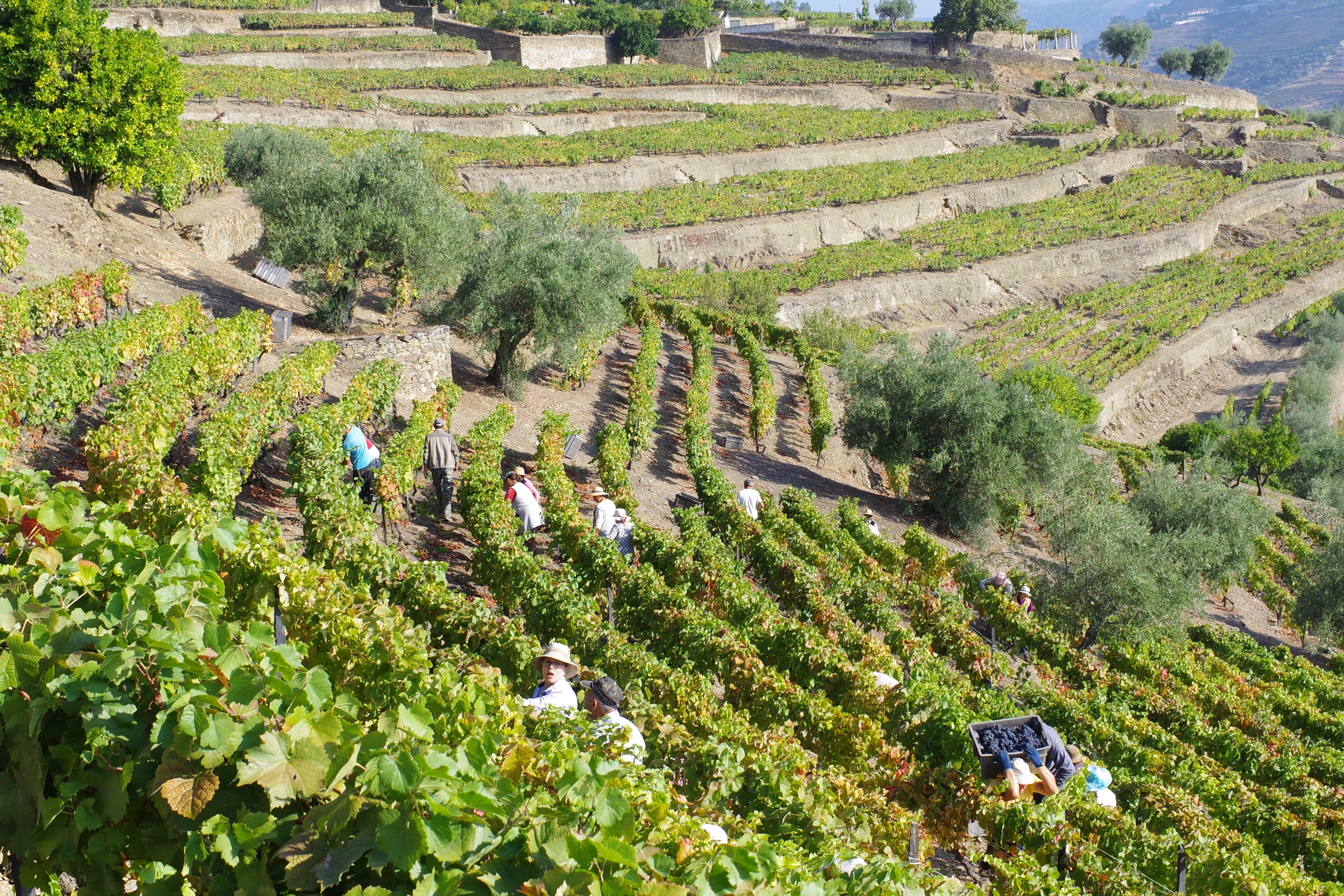
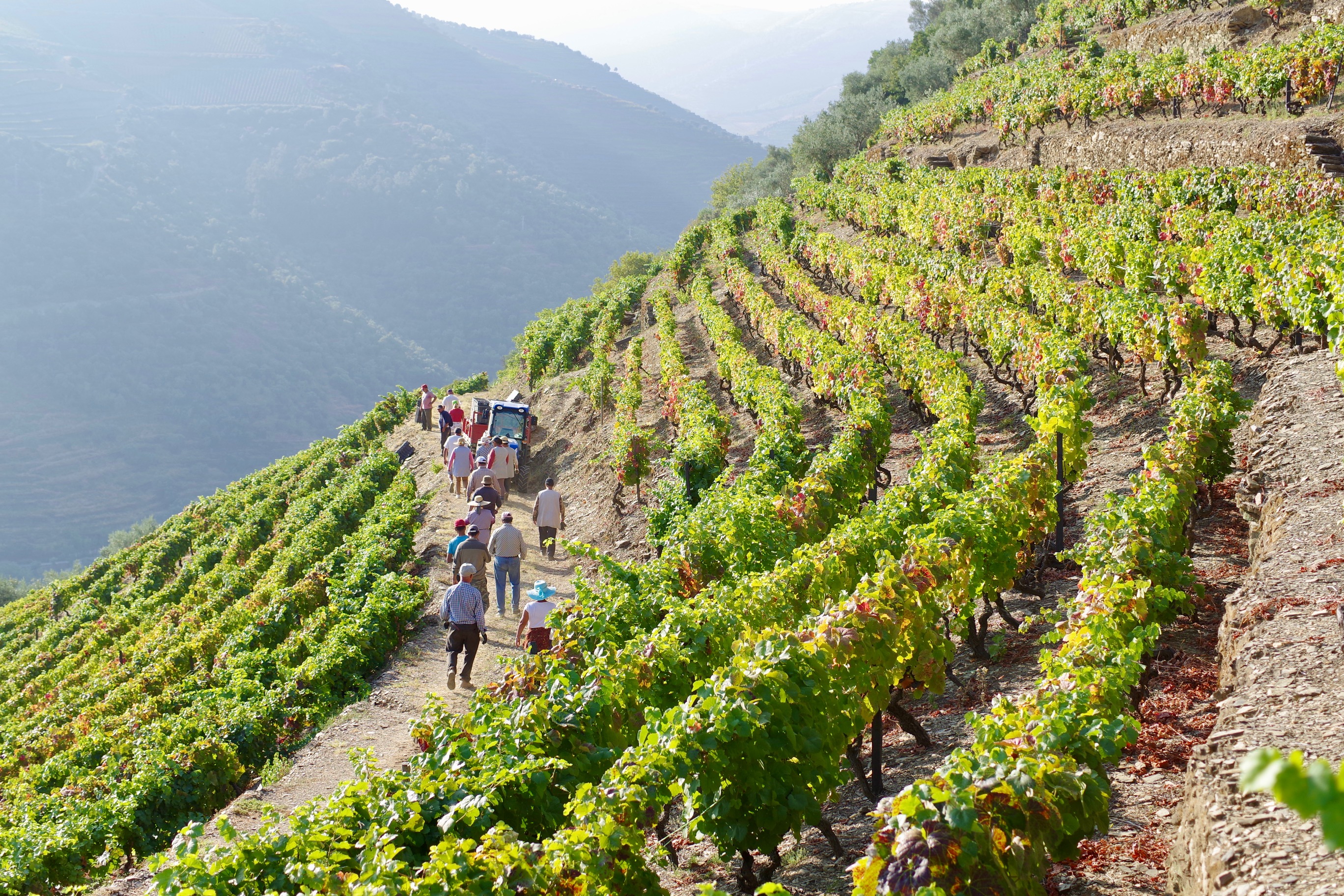
The estate rises from the riverbank to an altitude of almost 500 meters. This variation in elevation allows both red and white grapes to thrive on the same property, something unusual in the Douro. Old vines cling to slopes facing every direction and at every altitude, creating a remarkable mosaic that offers the winemakers an exceptionally rich palette with which to work.
As we follow the winding road towards the summit, we find ourselves surrounded by an extraordinary abundance of life. The vines grow alongside olive trees, orange groves and wild vegetation. Carvalhas is far from a vineyard monoculture: biodiversity is deliberately nurtured and protected.
At the summit stands a round house. From there, the valley unfolds in a 360-degree panorama, offering the kind of view one imagines might be reserved for angels.
The estate’s resident viticulturist, Álvaro Martinho, takes us on a tour. He explains that temperatures can soar to 42°C in summer and fall to –3°C in winter. The soil contains little organic matter, yet life flourishes everywhere. The secret lies in the schist: fractured, porous and permeable, it allows water and oxygen to travel deep beneath the surface, sustaining microorganisms and encouraging the vines to send their roots several meters into the earth in search of nourishment.
These vines do not live amid abundance, but they find enough to flourish. Their yields are modest, yet their grapes possess remarkable intensity. This frugal existence also contributes to their longevity: some of the vines at Carvalhas are more than a century old.
In 2007, the estate stopped using insecticides and synthetic fungicides, replacing them with organic alternatives. The transformation was remarkable: leaves that had once appeared greyish green took on a vibrant hue.
Carvalhas is dotted with viewpoints from which visitors can pause and contemplate the magnificent landscape. But as the sun began to set, we gathered inside the round house for dinner.
Pedro Silva Reis invited two distinguished enologists to join us: Carlos Agrellos of Quinta do Noval and Jorge Moreira, head enologist at Carvalhas. Jorge spent the first seven years of his career at Carvalhas before leaving to focus on Poeira, his acclaimed family project. Seven years later, Pedro Silva Reis persuaded him to return to Carvalhas, where he now works while continuing to produce Poeira.
The delicious dinner, prepared with local produce, was accompanied by wines from Quinta das Carvalhas, alongside celebrated bottles from France and Italy. All were exceptional, but the Carvalhas wines linger in the memory like poems we long to know by heart.
The 2016 Reserva is a seductive wine of structure, depth and complexity. It blends grapes from vineyards with different sun exposures, including a very old north-facing parcel.
The Vinhas Velhas 2011 is elegant and slender, almost Burgundian in its restraint. When Jorge returned to Carvalhas, he recognized the potential of three north-facing parcels planted with vines nearly a century old. From them, he created this singular wine, foot-treading the grapes in granite lagares. It is intense yet astonishingly fresh, reflecting the vineyards’ cool northern exposure.
Then came Íncola, a wine born from a dream of Pedro Silva Reis Jr. Its name derives from the Latin word for “local inhabitant.” With haunting aromas, extraordinary tension and remarkable complexity, it comes from very old, south-facing vines and includes rare grape varieties such as Tinta Bastardinha and Rufete.
The meal concluded with a final revelation: the Quinta das Carvalhas 50-Year-Old Tawny. Layered, unctuous, and almost meditative, it is the perfect combination of age and youth. The blend, which includes wines from 1927, 1967, and 1978, can never be replicated; it is a once-in-a-lifetime composition.
We remained at the table, talking about wine and life until the candles burned low. The following morning, we awoke to find the valley dressed in soft light, with mist rising gently from the river. Still half-dreaming, we looked through the window and asked the only reasonable question: are we in heaven?
The Douro – Land of the Vine, Tobias de Sequeira, 1938
Names carry meaning. Some are formal, others affectionate; some austere, others charming. Most wines are known by the name of their producer, region, or grape variety. Port, however, is such a remarkable creation that it has acquired many names: vinho fino, or fine wine; vinho de cheiro, aromatic wine; vinho de feitoria, export wine; vinho de embarque, shipping wine; and vinho de benefício.
The last of these is perhaps the most intriguing, and certainly the most difficult to translate. In the modern regulatory system, the benefício is the right to use a specified quantity of grapes to produce Port. The rules governing this right are essential to understanding not only Port, but the Douro Valley itself. This eleventh lecture with master viticulturist António Magalhaes is devoted to that system.
The regulation of Port production began in 1756, when the Marquis of Pombal, prime minister to King Jose I, created the Royal Oporto Wine Company in response to a severe crisis. High Port prices during the 1730s had encouraged production to expand rapidly while quality declined. As a result, the price of Port plummeted by roughly 90 percent between 1731 and 1754.
Entrusted with safeguarding the quality and authenticity of Port, the company determined that Port could only be produced in the Douro, and regulated supply to stabilize prices. By serving as the sole intermediary between growers and merchants, the company also counterbalanced the bargaining power of the British Port merchants represented by the Factory House, founded in 1727.
The company classified wines as first, second, or third quality, and set prices for each tier. It also controlled the internal trade in wine and wine spirit across northern Portugal and held the exclusive right to export to four Brazilian captaincies.
The Royal Oporto Wine remained the dominant institution in the Douro until its public powers were withdrawn in the wake of the Liberal Revolution of 1834. They were briefly restored in 1838, and definitively ended in 1852, after which it operated as a private company.
Port is a fortified wine made by adding grape spirit. Before 1820, the spirit was generally added after fermentation had ended. Producers could then decide whether to leave the wine dry or fortify it to produce Port.
The 1820 vintage marked a turning point in the gradual shift from drier to sweeter styles of Port. From 1821 onward, producers increasingly added spirit while fermentation was still under way, halting the process and preserving some of the grapes’ natural sugar. The method was adopted to reproduce the naturally sweet character of the 1820 vintage, when exceptional heat produced grapes with so much sugar that the yeast could not convert it all into alcohol.
Shortly after the spirit is added, today at a ratio of roughly one part spirit to four parts must, the characteristic murmur of fermentation falls silent. The French call this moment mutage, a term derived from mutus, the Latin word for silence. From that silence emerges a sweet wine capable of withstanding long sea voyages.
It was this act of fortification that gave the word benefício its original technical meaning. The term derives from the Portuguese verb beneficiar, meaning “to improve.” Over time, benefício came to denote the authorization to use a specified quantity of grapes in the production of Port.
By the early twentieth century, it had become clear that the regulatory framework first established in 1756 required fundamental reform. The foundations of the modern system were laid in 1932 with the creation of the Port Wine Institute, now the Institute of Douro and Port Wines, and Casa do Douro, a compulsory association of grape growers. Between 1937 and 1945, Casa do Douro compiled a comprehensive register of the Douro Valley’s vineyards.
Drawing on this register, agronomist Álvaro Moreira da Fonseca developed a method for grading the vineyards in 1947-48. It became the basis for allocating the benefício.
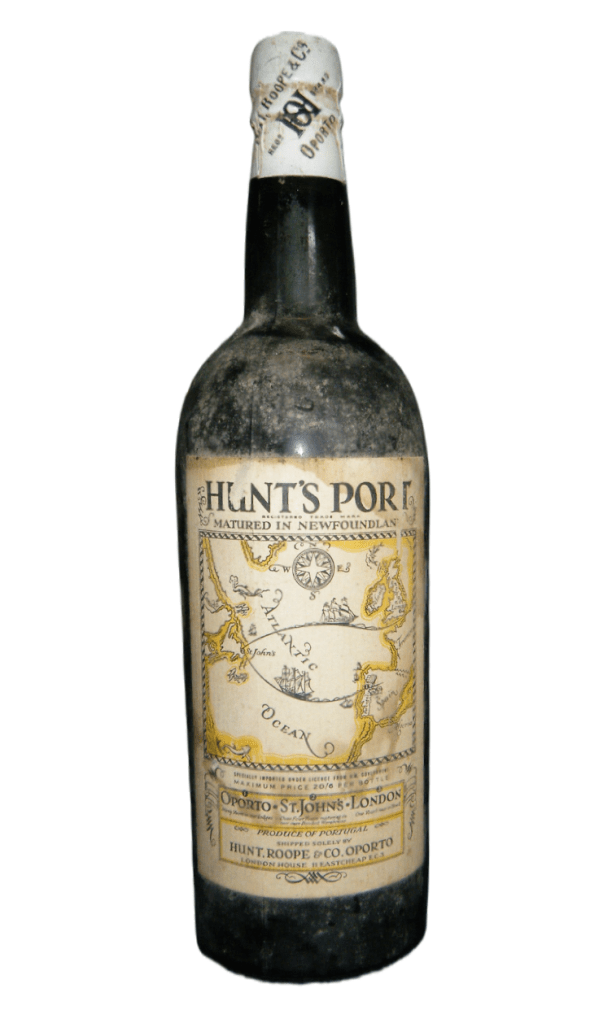
The value of this right, and the responsibility it carried, are illustrated by the experience of António’s grandfather, Francisco Tavares, a viticulturist and commission agent for Hunt, Roope & Co., a British company whose flagship Port was aged and bottled in Newfoundland.
On July 21, 1949, Francisco wrote to Casa do Douro requesting benefício for 49,500 liters of must from Eira Velha, an iconic estate. The must was to be produced from 67,500 kilograms of grapes grown on 110,000 vines, equivalent to just over 600 grams per vine.
The year, however, proved exceptionally hot and dry. On September 3, Francisco wrote a second letter requesting that his benefício be reduced to 38,500 liters because each vine was expected to yield an average of only 480 grams of grapes. The request was an act of generosity: the unused allocation could then be made available to other winegrowers.
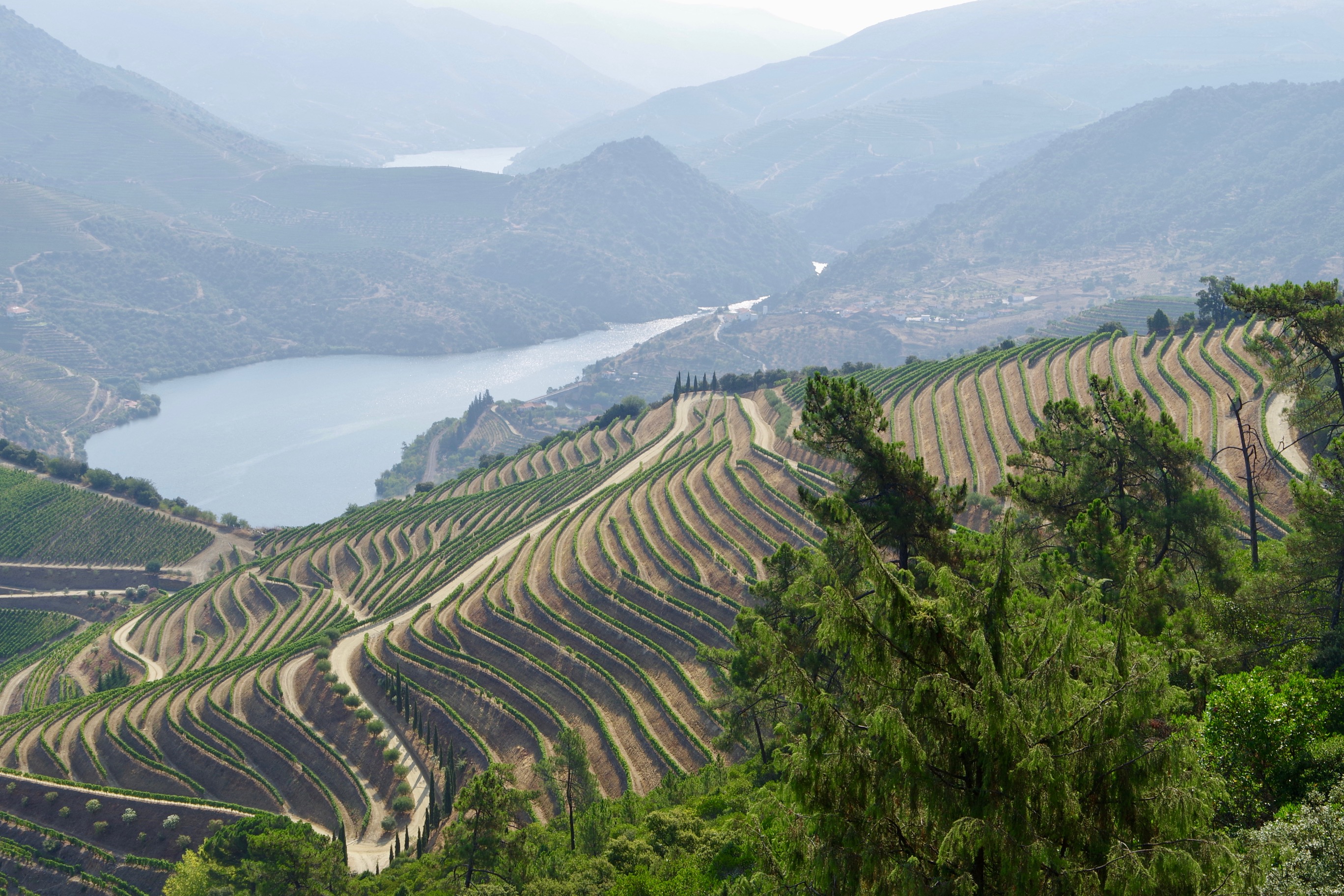
View from Quinta da Eira Velha
At the time, the Douro suffered from a chronic surplus of wine. Between 1939 and 1953, winegrowers requested benefício for an average of 82,000 pipes per year, each containing 550 liters, while the volume granted barely exceeded 33,000 pipes. Grapes authorized for Port production were worth roughly 50 percent more than grapes destined for table wine, even though their production costs were essentially the same.
Moreira da Fonseca’s method awarded points for the different characteristics of each vineyard. Within this seemingly simple arrangement lay a crucial principle: the right to produce Port was assigned to the vineyard, not to a company or an individual.
This principle helped small growers survive. Their properties contribute greatly to the beauty of the landscape, while the growers themselves preserve and transmit essential skills, particularly pruning and grafting, to new generations of Douro farmers. Of the approximately 18,000 growers in the Douro Valley, around 13,000 cultivate less than two hectares of vines.
Vineyards were classified from A, the highest category, to I. At the time, vineyards rated F, G, H, or I did not qualify for benefício, although category F vineyards have since become eligible.
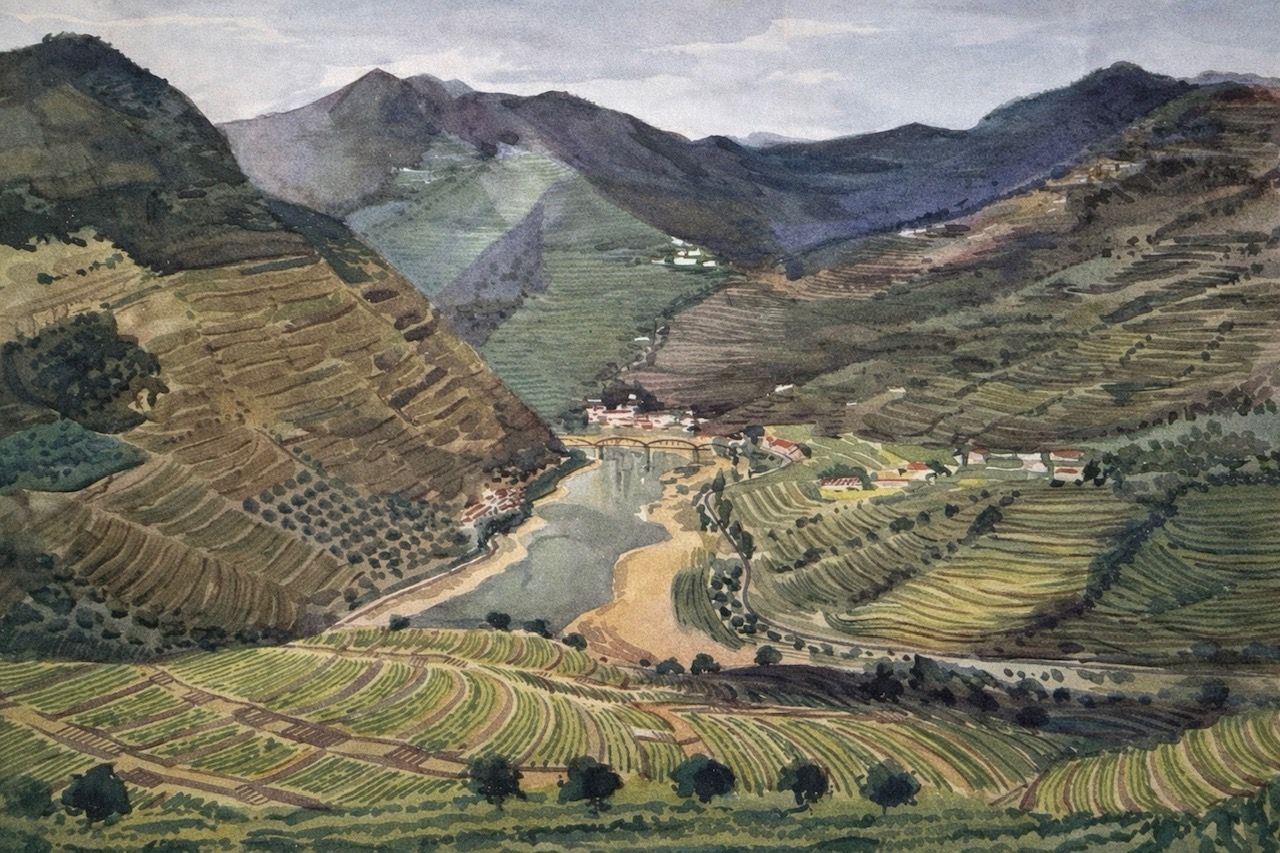
The point system followed the logic of the Douro terroir, which Moreira da Fonseca described in a celebrated passage: “The Douro wine country is a hot, dry region, encircled by high mountains that shelter it from the humid winds of the south, the sea breezes of the west, the cold winds of the north, and the dry easterly wind, which withers and scorches the crops. It is a region hemmed in by mountains, intensely warmed by the sun and flooded with light.”
Location formed the first layer of the classification, reflecting the substantial climatic differences among the Douro Valley’s three subregions: the Baixo Corgo, the Cima Corgo, and the Douro Superior.
Moreira da Fonseca captured the importance of proximity to the Douro River in another memorable passage: “We regard the slopes that drink directly from the Douro River, perhaps because they can hear the creak of the oars, as producing the finest wines among all vineyards situated on the same meridian.”
Altitude, exposure, and shelter formed a second group of criteria. The finest Ports were expected from vineyards below 300 meters, while those between 300 and 500 meters were generally associated with wines of more modest quality. Vineyards above 500 meters were not eligible for benefício because their wines tended to have greater acidity and less body. Today, some of these higher-altitude vineyards produce outstanding white table wines—a reminder that a classification designed for Port does not necessarily reflect a vineyard’s potential for table wine. A southern exposure received the most points because it intensified grape ripening, while shelter from cold northernwinds was also rewarded.
Soil and topography formed another group. The eighteenth-century demarcation admitted only schist, whose fragile, near-vertical structure allowed vines to develop deep roots. The later classification admitted some granite vineyards, but continued to exclude deep, fertile, or flood-prone soils. Hillsides also received additional points. Moreira da Fonseca invoked Virgil’s famous line, Bacchus amat colles: “Bacchus, the god of wine, loves the hills.” The Romans often encoded practical knowledge in verse so that it could be memorized and passed from one generation to the next. Virgil’s line captures the idea that hillsides produce more vibrant and interesting wines than flat land. Stony soils were likewise rewarded. “Vines do indeed delight in gravelly soils,” Moreira da Fonseca wrote.
Grape variety and vineyard structure completed the classification. If climate and soil were the gold and silver medals of terroir, grape varieties received the bronze. Moreira da Fonseca assigned points to 88 varieties, divided into five groups ranging from very good to bad. He also considered vine spacing, the training of vines in vertical hedgerows known as bardos, and the age of the vineyard, with older vines receiving more points.
Together, these criteria created a visual grammar that António would learn to recognize in the landscape. “Over the years, I learned to read Moreira da Fonseca’s classification in the landscape,” António says. “I could stand in a vineyard and sense, with little hesitation, whether it was an A, C, or E, and recognize the transitional qualities that placed others in categories B or D.”
António learned a system that seemed timeless. Yet both the institutions surrounding it and the vineyards it governed were already changing. After 1974, Casa do Douro gradually lost much of its authority and influence. In 2004, responsibility for maintaining the vineyard register passed from Casa do Douro to the Institute of Douro and Port Wines.
Much else has changed since Moreira da Fonseca’s time. Productivity and vine-spacing requirements were gradually relaxed, allowing yields of up to 7,500 kilograms per hectare for red grapes and 8,864 kilograms for white grapes. Minimum planting density was set at 4,000 vines per hectare, or 3,000 on modern terraces, with permitted tolerances.
The list of eligible grape varieties was also broadened as the vineyard survey revealed the presence of additional varieties across the region. Others may yet await discovery, most likely in the old vineyards planted in the aftermath of the phylloxera crisis.
Another major change concerned the unit used to allocate the benefício. The system moved from the milheiro, or one thousand vines, to the hectare. In the process, it abandoned a simple but sensible instruction to mountain growers: fill the land, above all, with vines.
From the 1960s onward, and especially in the 1980s, mechanization transformed vineyard design. Dry-stone terraces gave way to broader terraces supported by earth embankments, while gentler slopes were planted in vertical rows known as vinha ao alto. Space was lost to embankments and tractor lanes, sharply reducing planting density.
The shift from the milheiro to the hectare changed both the logic of the benefício and the Douro landscape. Growers were encouraged to focus on the boundaries of the vineyard rather than on filling it with vines, producing, in some cases, sparsely planted and visually discordant “vineyards without vines.”
António believes that irrigation presents another challenge to the logic of the benefício. An irrigated vineyard should not lose its eligibility, he argues, but its benefício should be suspended in any year in which it is irrigated.
Growers may irrigate because vines were planted on land poorly suited to them, because a vineyard was badly established and the soil inadequately prepared, or because they wish to reduce water stress. For António, however, ease of irrigation does not make it appropriate. Irrigation may be acceptable in the production of DOC Douro wines, but a vineyard suited to Port should be capable of producing it without irrigation.
Another source of tension is that the same vineyard is now often called upon to serve two different ambitions: producing Port and producing DOC Douro wine. Vineyards that yield both exceptional Douro table wines and outstanding Ports include Urtiga at Quinta do Bom Retiro, Maria Teresa at Quinta do Crasto, and Eirol at Quinta das Carvalhas.
In the year when the Douro Valley celebrates the 25th anniversary of its recognition as a UNESCO World Heritage Site, the central question is how to reform the beneficio in a region where the finest vineyards now produce both Port and DOC Douro wines. Such reform will require the Douro to decide not only which grapes may become Port, but also what kind of landscape, way of life, and winemaking tradition it wishes to carry into the future.
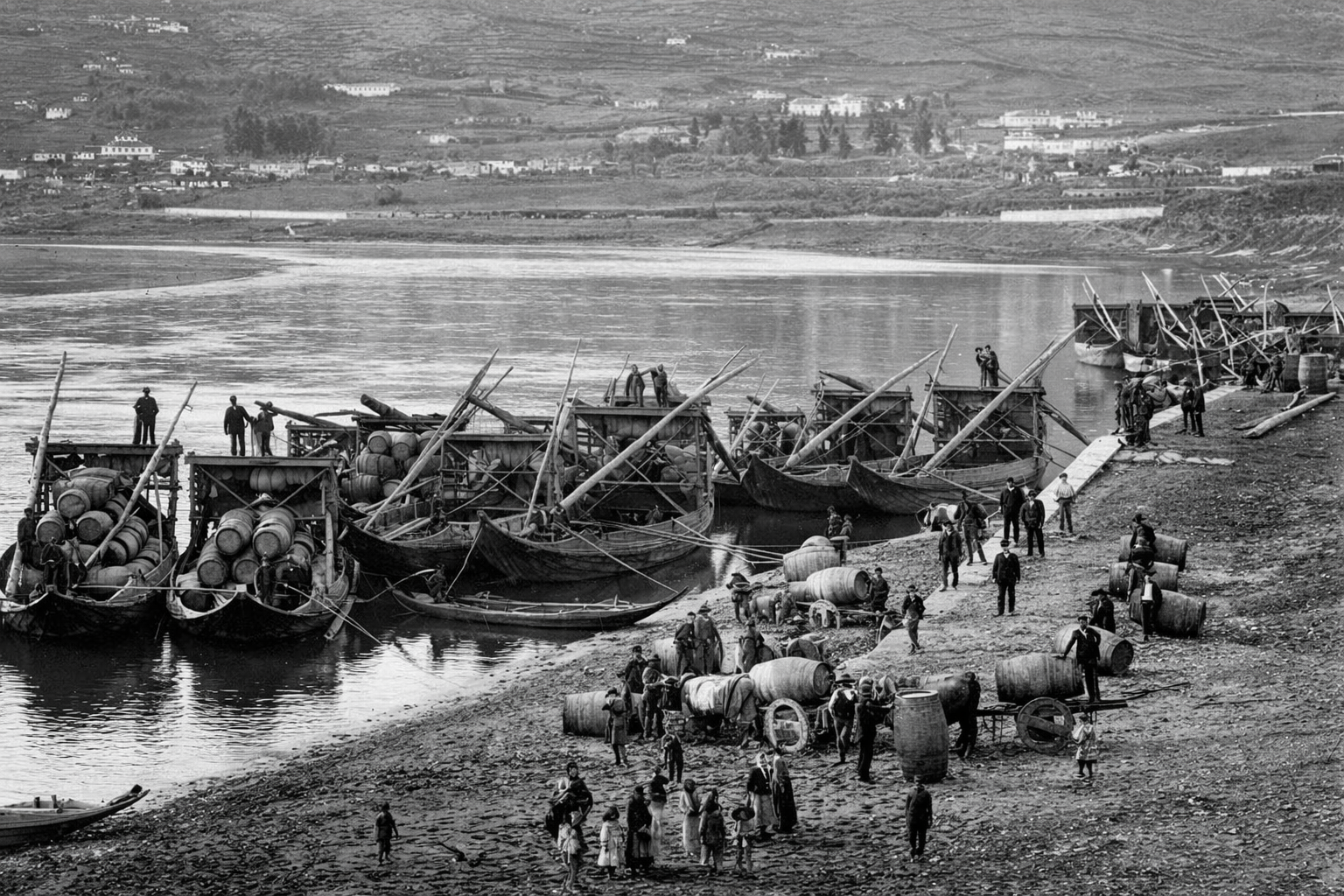
Traditional rabelo boats loaded with Port casks to carry downriver to Vila Nova de Gaia.
In this 10th masterclass, viticulturist António Magalhães explores the ultimate expression of the Douro Valley: Vintage Port.
António was steeped in the Tawny style of Port: his family produced it, and he began his career at Barros e Almeida, a house renowned for the finesse of its tawnies.
In 1992, he joined Taylor’s, where the emphasis was on Vintage and Late Bottled Vintage Ports. Head winemaker Bruce Guimaraens invited António to several dinners at which he poured the celebrated 1977 Vintage. António savored each sip, paying attention not only to the wine but also to Bruce’s simple, evocative way of speaking about it. These evenings conveyed an unspoken message: that only work of the highest quality in the vineyards could serve as the foundation of great Vintages.
The term “Vintage Port” first came into use in the late 1700s to describe wines from outstanding years. Its rise coincided with the adoption of cylindrical glass bottles, which allowed Port wines to age for many years.
Most grapes for this style come from vineyards below the mid-slope in Cima Corgo, where the right varieties are planted in the right sites and complex field blends offer resilience against changing seasons. Fruit from the finest old vines brings consistency and depth, while the contribution of younger vines is less reliable. They are capable of brilliance, yet occasionally unruly.
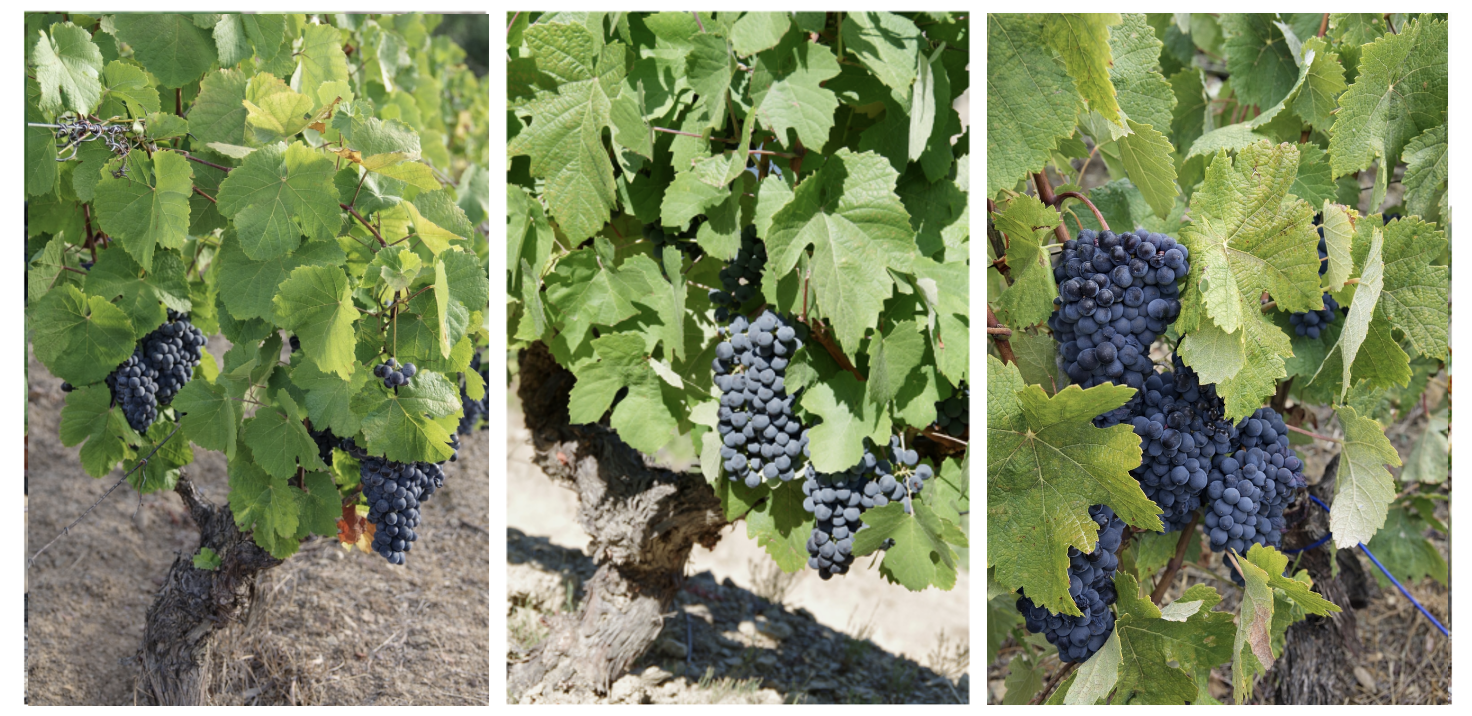
Touriga Francesa, Touriga Nacional and Tinta Roriz
Choosing which varieties to favor each year is central to the art of making great Port. Touriga Francesa, Touriga Nacional, and Tinta Roriz form the core, complemented by Tinta Amarela, Tinta Barroca, and Tinto Cão, among others.
What distinguishes a Vintage year is not merely favorable weather, but the right weather at the right time: a winter generous with rain, filling what António calls the “water piggy bank”; a calm and even flowering; a summer that is warm yet measured; a ripening season free of excess heat or rain; and, in drier years, a gentle rain that refines the grapes just before the harvest.
Cool nights are essential, allowing the vines to rejuvenate overnight after the day’s scorching heat. These wide diurnal temperature swings play a decisive role in ripening: hot days promote sugar accumulation and concentration, giving the wines structure and depth, while cool nights slow the loss of acidity, preserving freshness.
In the finest years, ripening occurs in two stages: first through natural maturation, then through further concentration from a hot, dry summer, which gently dehydrates the grapes while still on the vine.
At harvest, the finest fruit is handpicked at the right moment: never too early, never too late.
Douro grapes typically ripen with high sugar levels and relatively low acidity. Bruce Guimaraens taught António that a lagar should have the fragrance of fresh fruit, never the jam-like notes that signal over-maturation. At that time, sugar content was the key measure of grape quality: 12 degrees Baumé was the minimum, while 13 to 14 degrees was considered ideal.
With the rise of DOC Douro wines, greater attention has been paid to acidity and its role in aging. Yet sugar remains critical: fermentation is interrupted after 72 hours by the addition of grape spirit, limiting extraction. Ripeness is therefore essential to ensure depth.
Once the harvest is finished, wines from each parcel are vinified separately. After fortification, they spend the winter resting in the Douro. In January and February, they are tasted for the first time. It is a moment of quiet reflection, when the year’s work in the vineyards is assessed and its lessons gathered to guide the seasons ahead.
Wines with potential to become Vintage spend two winters in large wood vats (either vertical balseiros or horizontal toneis) rather than in small casks, preserving origin and freshness through gentle maturation in seasoned wood. After the first winter, an initial blending brings greater harmony to the lots.
In the spring, the wines travel downriver to Vila Nova de Gaia, where they age in cool, north-facing lodges, sheltered from the Douro’s summer heat. In their second year, they are tasted again, alongside wines from the most recent harvest, and the final blend is made. The wine is then bottled unfiltered, allowing it to continue evolving in glass. Each bottle becomes a time capsule, a chronicle of vineyard life.
Port houses decide independently whether to declare a Vintage year. This declaration is a promise of longevity: the wine should reward both present and future generations.
“Classic Vintages” describe years when weather patterns bring out the finest expression of the main red grape varieties, allowing a declaration across most estates. Such years occur only two or three times per decade.
In other years, select sites within the Douro’s hills and valleys can still excel, producing wines with quality and character that merit the Vintage Port designation.
The longevity of Vintage Port results from several factors. The natural concentration of sugars, tannins, and phenolic compounds provides structure and density, preserved by fortification, giving the wines the ability to endure. The quality of the grape spirit is decisive, while the balance among alcohol, acidity, and sweetness ensures stability over time.
Vintage Port carries an unmistakable human imprint, shaped by choices in viticulture, winemaking, and blending. Each house has its own style, most evident in family-run firms where traditions are passed down across generations.
To age well, Vintage Port should be stored horizontally, keeping the cork moist at a stable temperature between 12°C and 16°C. With minimal oxygen exposure, the wine gradually develops aromatic complexity, while the polymerization of tannins and pigments softens astringency, alters the color, and leads to the formation of natural sediment—hence the need for decanting.
This slow transformation, from youthful austerity to layered refinement, is visible in the glass. The deep purple of youth gradually softens. Aromas evolve from fresh fruit toward greater complexity, forming the bouquet of aging. On the palate, firm structure gives way to a velvety texture.
As wine critic James Suckling writes: “After tasting a 1948 Fonseca or 1945 Croft, it is hard to believe better wines exist. The layers of concentrated aromas and flavors in such wines offer a kaleidoscope of sensations. Each sip seems better than the last, as your taste buds react to this nectar.”
We asked António which vintages he finds most memorable. Unsurprisingly, he turns to the wines of Taylor Fladgate, where he spent more than three decades.
The 2016 and 2017 Vintage Ports, he says, already offer great pleasure. António speaks with particular affection about 2017. Walking through Quinta de Vargellas on the morning of August 18, with David Guimaraens, head winemaker, and Alistair Robertson chairman of Taylor Fladgate, renowned for his sharp palate, they found the grapes already at 13.7º Baumé. “Forty-five… nineteen forty-five…” murmured Alistair, comparing the year to the great 1945 vintage.
The harvest began on August 31, the only time António recalls picking red grapes in August. It yielded a classic Croft Vintage and the Serikos from Roeda’s remarkable post-phylloxera vines.
Quinta de Vargellas
From the previous decade, the 2003 Vintage stands out. The intense heat of early August marked the onset of a warmer climatic cycle. It also revealed the importance of human judgment: severe sunburn on west-facing grapes was managed through meticulous, cluster-by-cluster selection.
In the following decade, 2011 stands out. Dow’s Vintage 2011 was named Wine of the Year by Wine Spectator in 2014, and Jancis Robinson wrote that the Vargellas Vinha Velha 2011 “may just be the finest wine produced anywhere in the world in 2011.”
It was also the year António had the privilege of contributing to Quinta da Eira Velha Vintage, a superb wine rooted in the estate’s first post-phylloxera vines, complemented by fruit from the Sagrado vineyard. Quinta da Eira Velha itself has a storied past, connected to Hunt’s Port, whose wines were shipped to age in casks in Newfoundland.
Harvest at Quinta da Eira
From the 1990s, two years stand out: 1992 and 1994. In 1992, António learned how a touch of September rain can refine the grapes and yield an exceptional Vintage. In 1994, he was captivated by the beauty of the vineyards in summer. During a tasting in the Vargellas lagares, he recalls David remarking, “I don’t know if I will ever make a wine as good as this one again.” Few could have imagined that the 1994 Taylor Fladgate and Fonseca Vintages would both later be named Wines of the Year, each scoring 100 points.
Reaching further back, António points to 1985, another exceptional year; 1977, the vintage that marked his initiation at Taylor Fladgate; 1970, which he chose in magnum to celebrate his fiftieth birthday; 1966 and 1963, forever inviting the question of which is finer; 1955, unforgettable at Fonseca; and 1945, often compared to 2017. One could go further still, to 1927 and 1912, remarkable years that defy description.
So far, Niepoort, Ramos Pinto, Sogrape, Symington, and Wine & Soul have declared 2024 a Vintage year. In a nod to the historic role of British merchants, Taylor Fladgate announces Vintage declarations on April 23, the feast day of England’s patron saint, Saint George. Today, they, too, confirmed 2024 as a Vintage year.
The growing season was both warmer and wetter than usual, with an especially hot July and a harvest under clear, dry skies. It is heartening that, even amid climate change, the Douro continues to produce Classic Vintages destined to endure for generations.
For António, the moment has deep personal meaning: his distinguished career at Taylor Fladgate is framed by two classic declarations, 1992 and 2024.
An old Tinta Francisca vine selected to contribute grafting cuttings
In his final months at Taylor’s, July and August 2024, António worked on a massal selection in the Fladgate vineyards, establishing at Quinta da Roeda a mother vineyard for grafting material of the main red varieties to be planted by the next generation. To escape the heat, he began at dawn, assessing thousands of vines over 40 years old, capable of producing grapes suited for Vintage Port. He selected roughly 700. In doing so, António fulfilled the silent promise he made to his mentor, Bruce Guimaraens, during those dinners in 1992: to lay the foundation for great Vintage Ports yet to come.
To taste a Vintage Port is to travel through time and across the slopes of the Douro Valley. The experience lingers well beyond the final sip, the result of work that transforms the hardships of mountain viticulture into something enduringly sublime.
For those looking to deepen their understanding, António recommends three excellent books on Port wine. The first is the comprehensive “Port Vintages – The Chronicle of Vintage Ports, from the Beginning” by J. D. A. Wiseman, Académie du Vin Library, 2nd edition, 2022.
The second is ‘Vintage Port, The Wine Spectator’s Ultimate Guide for Consumers, Collectors, and Investors’ by James Suckling, Wine Spectator Press. 1990. It is out of print, but you can find second-hand copies.
If you read Portuguese, another great book is Porto Vintage by Gaspar Martins Pereira and João Nicolau de Almeida, Instituto do Vinho do Porto e Campo de Letras. 2nd edition, 2002.
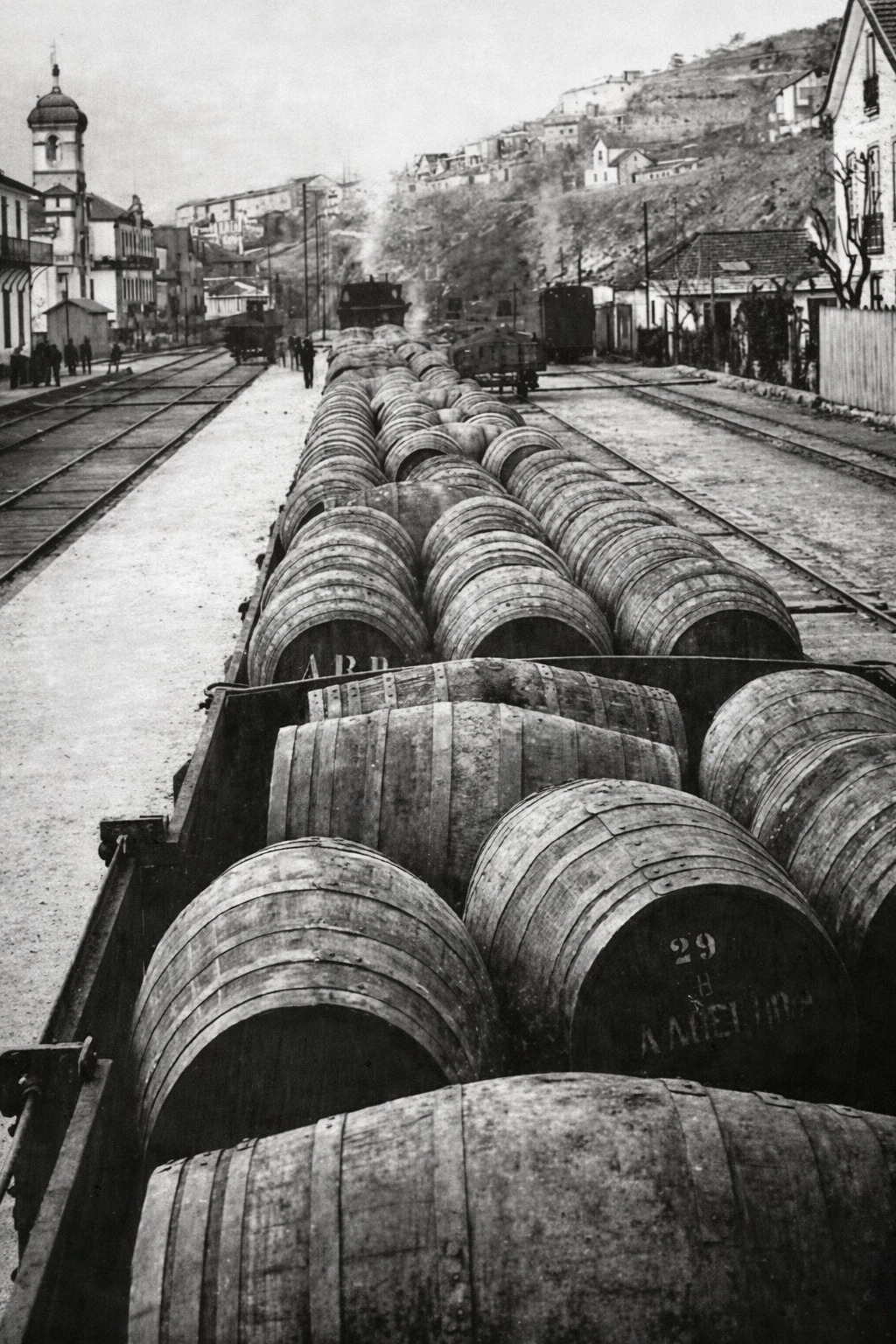
Casks of Port wine waiting to be shipped at the Régua train station.
The evolution of Tawny Port from 10 to 80 years (Taylor-Fladgate archives)
A young Port appears impenetrable; its purple hue is so dense that it seems to swallow the light. Yet time works a quiet alchemy, transforming that darkness into amber, copper, and finally gold. Few wines undergo such a dramatic transformation. In this ninth lecture with Douro viticulturist António Magalhães, we turn to the mystery of Port’s color.
To understand why color exerts such power over our perception of wine, we must consider how human vision evolved. Our ancestors lived in trees, where survival depended on gauging distances and spotting ripe fruit at a glance. Vision became our dominant sense, forming impressions almost instantly, while taste and smell unfold more slowly. That may be why color matters so profoundly in wine: the moment we see it, the mind begins to anticipate flavor, aroma, and structure. As the neuroscientist Gordon Shepherd observed, we drink with our eyes.
In Port, a deep red hue has long been a mark of quality, eagerly pursued by producers. In his 1788 treatise, John Croft recounts what might be called Port’s original sin: the discovery of an artifice to darken its color. On his way to the Douro, Peter Bearsley, an English factor living in Viana in the mid-eighteenth century, pressed elderberry juice at a roadside inn and mixed it with ordinary wine, finding that it “heightened and improved its colour.”
The elder tree (Sambucus nigra) bears intensely pigmented berries long valued for their coloring power and reputed medicinal virtues. Local tradition held that each tree sheltered the spirit of a healer unjustly burned as a witch. In spring, its delicate white blossoms resemble lace woven by fairy hands into a bridal bouquet.
Elderberry flowers
Before the Marquis of Pombal demarcated the Douro in 1756, adding elderberry juice was a common practice. Its use sparked a bitter dispute in 1754 between the English Factory and its agents in the Douro. The latter argued that merchants’ dissatisfaction stemmed from their unreasonable expectations. They sought wines that were “a potable fire in the spirits, gunpowder in combustion, ink in color, Brazil in sweetness, and India in aroma.” Only artifices, the agents insisted, could produce such a wine.
The demarcation created the world’s first system to safeguard the wine’s origin and quality. A 1757 edict prohibited the use of elderberry to “taint, arrange, or improve” wine and ordered the uprooting of all bushes within five leagues of the Douro River. A further decree in 1771 extended the ban to neighboring provinces. Pombal enforced the rules with legendary severity.
Once elderberry was forbidden, growers sought natural ways to achieve the coveted dark color. Most red grapes have pale pulp, but a few varieties, known as teinturier, or “ink-producers,” have red flesh. One such grape, known as Vinhão in Minho and Sousón in Galicia, was brought to the Douro Valley under the name Sousão.
In 1790, Francisco Rebelo de Sousa noted that landowners planted Sousão widely in hopes of achieving a vivid ruby hue, but the results proved highly site-dependent: generous in fertile soils, meager in poor ones, and prone to shriveling before ripening.
Hopes that Sousão would, by itself, produce great Port soon faded. In 1830, John Delaforce judged the grape unsuitable for Port, producing wine “of darker colour but in general bad — green.” The Baron of Forrester described it simply as “the deepest in color.” Growers learned that color intensity did not guarantee quality.
After phylloxera, two other teinturier grapes appeared in small quantities: Alicante Bouschet and Grand Noir de la Calmette, known locally as Grand Noir. Unlike Sousão, whose color lies chiefly in the skin, these varieties contain red pigment in both pulp and skin. Both were the result of 19th-century crossings by Louis Bouschet and his son Henri, designed to combine high yields with intense color. Although deeply pigmented, they never became central to Port production and were not highly regarded by older Douro growers. In recent decades, however, Alicante Bouschet has gained favor among some table wine producers.
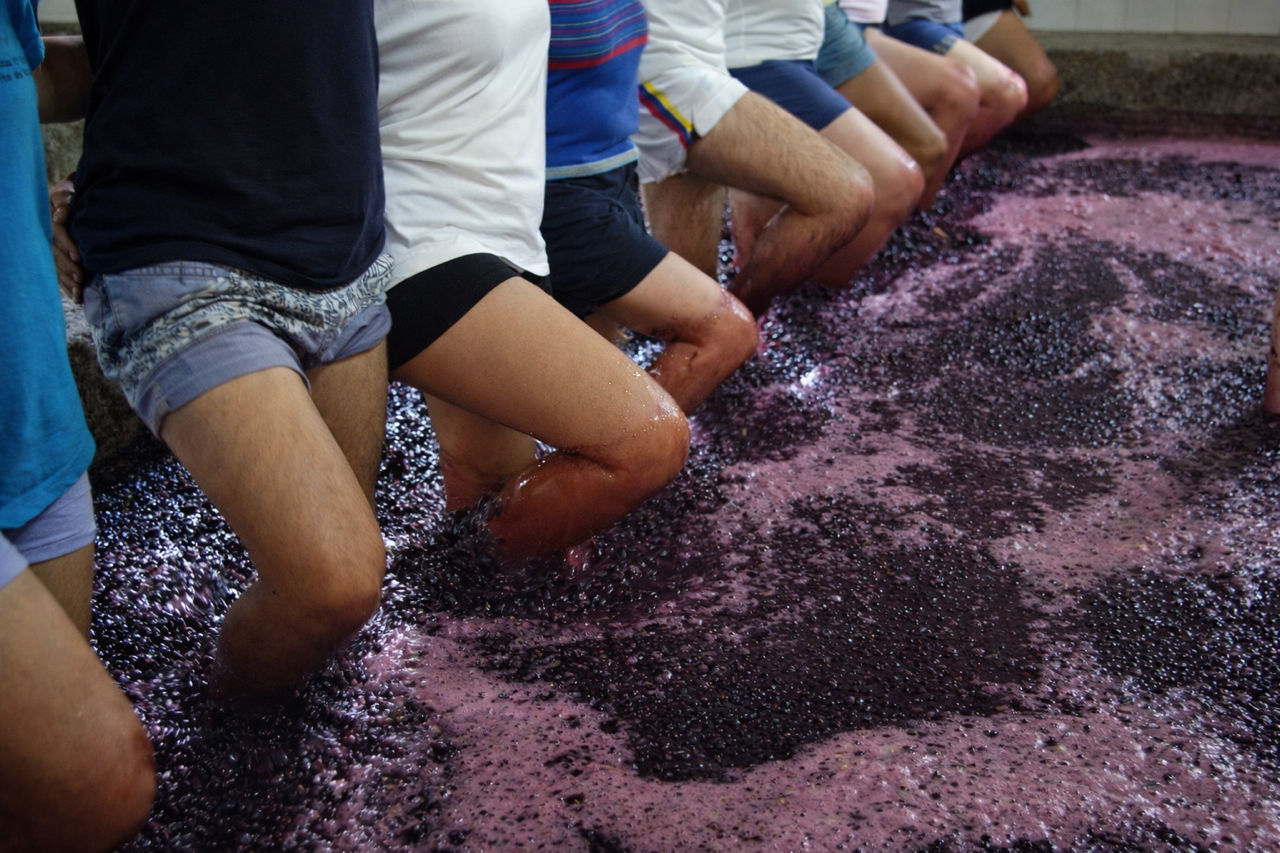
Foot treading
Color is ultimately extracted during vinification. Traditionally, the grapes are trodden by foot in granite lagares, a practice now often reproduced mechanically, gently crushing the berries and releasing the free-run juice while drawing deep color from the skins. Fermentation lasts about 72 hours before fortification, sufficient to extract pigments and tannins. The remaining skins and seeds are then pressed in a basket press, producing a denser wine, rich in color and structure. This press wine is fortified separately and may later be blended into the fortified free-run wine to reinforce the final blend.
A basket press
Where, then, does Port derive its color? From the outset, color was a key criterion in selecting Douro red varieties. Two moments illustrate this importance. After phylloxera, Bastardo, a pale variety, was replaced by Touriga Francesa. Later, when Port merchants became large-scale growers, they restored the pre-phylloxera primacy of Touriga Nacional, another deeply colored grape that the Baron of Forrester regarded as “the finest.”
The color of red Port results from a chain of choices and circumstances. Dry, sun-exposed sites promote full ripening and deep color concentration. Weather, especially September rainfall, can dilute or intensify the color, while careful harvest selection affects color by removing unripe or damaged fruit before it reaches the winery.
Harvest in the Douro Valley
Aging completes the transformation. Small casks expose the wine to oxygen, gradually turning its red hues tawny, amber, and eventually golden, while large vats admit far less air and preserve the wine’s youthful depth. Over time, this slow oxidation reshapes not only the color but the wine’s entire character.
Casks for aging Tawny Port
In 1950, the Port Wine Institute proposed a scale for red Ports that traces how the wine’s color evolves under the combined influence of time and blending. The scale moves from the opaque purple of very young wines (retinto), through a clearer red (tinto), to ruby (tinto aloirado), then to tawny tones (alourado) as oxidation begins, and finally to pale light tawny (alourado claro) after prolonged aging in wood. Here, “tawny” refers to color rather than to the Tawny style of Port.
A freshly bottled Vintage appears deeply purple, but over time it may acquire tawny hues reminiscent of wood-aged wines. Tawny Ports undergo an even more dramatic chromatic journey, from reddish amber at ten years to luminous copper or gold after many decades. White Ports follow their own path, gradually deepening from pale to straw to golden tones as they age.
Nothing reveals Port’s color better than a thin crystal glass, slightly tilted so light passes through the wine. The same Port that once seemed to swallow the light can, with time, glow softly by candlelight at a wedding banquet, perhaps with elderflowers adorning the table.
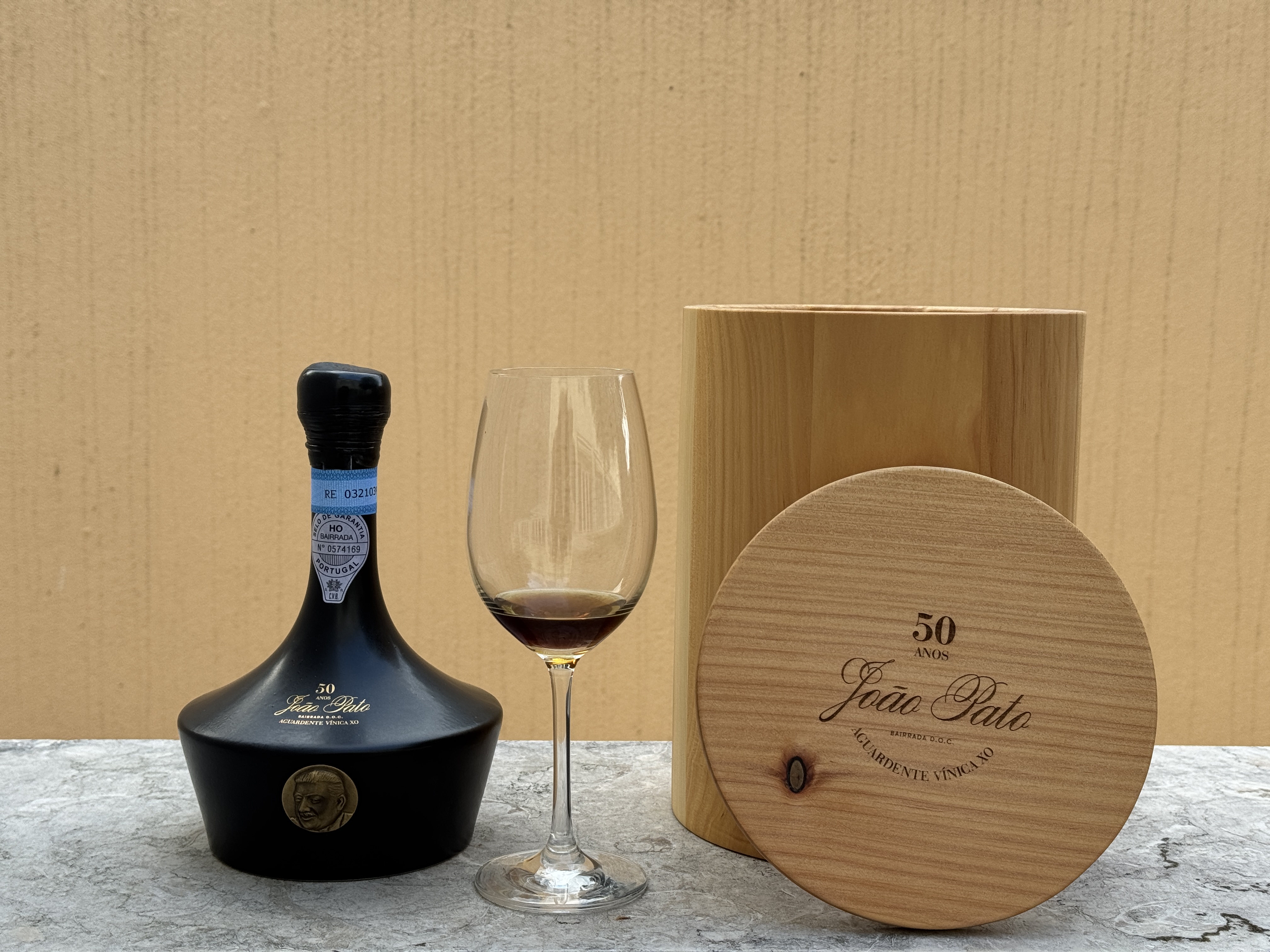
In 1964, João Pato, father of the iconic Bairrada winemaker Luís Pato, installed a new piece of equipment at his winery in the village of Amoreira da Gândara: a rectifying chamber fitted to the traditional copper alembic. It enabled him to distill, with unusual precision, wine made from Baga, Bairrada’s emblematic red grape.
Distillation is, at its core, an act of selection. The wine is heated so that alcohol and aromatic compounds vaporize, then condensed back into liquid. But not all that emerges is equal. The first flow is harsh and volatile, the last coarse and heavy. Only the middle portion, known as the “heart,” carries purity, balance, and the true character of the wine. João entrusted the slow, exacting work to his right-hand man, Avelino Ribeiro, who distilled the wine twice, each time keeping only the heart.
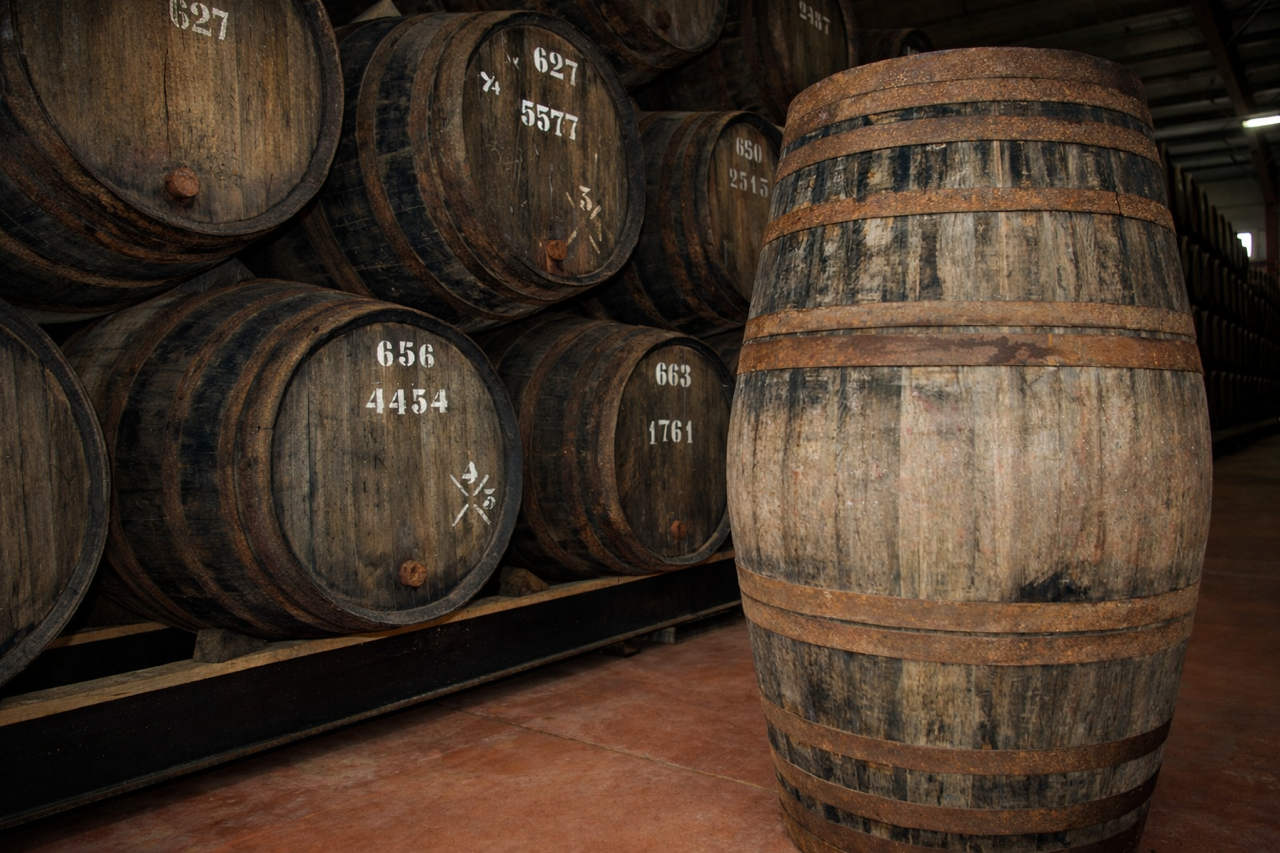
João produced brandy between 1965 and 1985, the year before he died. The spirit was first aged in Portuguese chestnut casks and later transferred to used Port barrels, long favored for maturing fine brandies. João left the barrels as an inheritance for his son.
In the 1990s, Luís moved the brandy into barrels that had previously held his most celebrated wines — Pé Franco Quinta do Ribeirinho, Vinha Pan, and Vinha Barrosa — layering the spirit with further echoes of Bairrada’s finest terroirs.
Half a century after the first distillation, Luís released only a handful of bottles. Each feels like an heirloom: an elegant black porcelain vessel resting inside a handmade wooden box, the lid closing with the soft click of a magnet, as if sealing a secret.
Winemakers whimsically call the liquid that evaporates during aging the angel’s share. In this case, the angels were clearly thirsty. Of every six liters laid down fifty years ago, barely enough is left today to fill a single 700-milliliter bottle. But what remains is the essence: flavors and aromas deepened and refined by time.
In the glass, the brandy glows deep amber. Its aroma rises with quiet confidence, warm wood, dried fruit, and a hint of smoke. On the palate, it is rich and profound, inviting slow, reverent sipping.
Sommeliers who have tasted it often describe it as incomparable, a fitting judgment for a brandy that is part of Bairrada’s history.
Ângelo Ataíde, a judge passionate about wine, decided to plant a vineyard on the Alentejo estate his wife, Rosário, had inherited. Local farmers advised him against it. The site, in a valley near the Montargil dam, has a humid microclimate where downy and powdery mildew thrive. Undeterred, the judge planted the first vines in 2000.
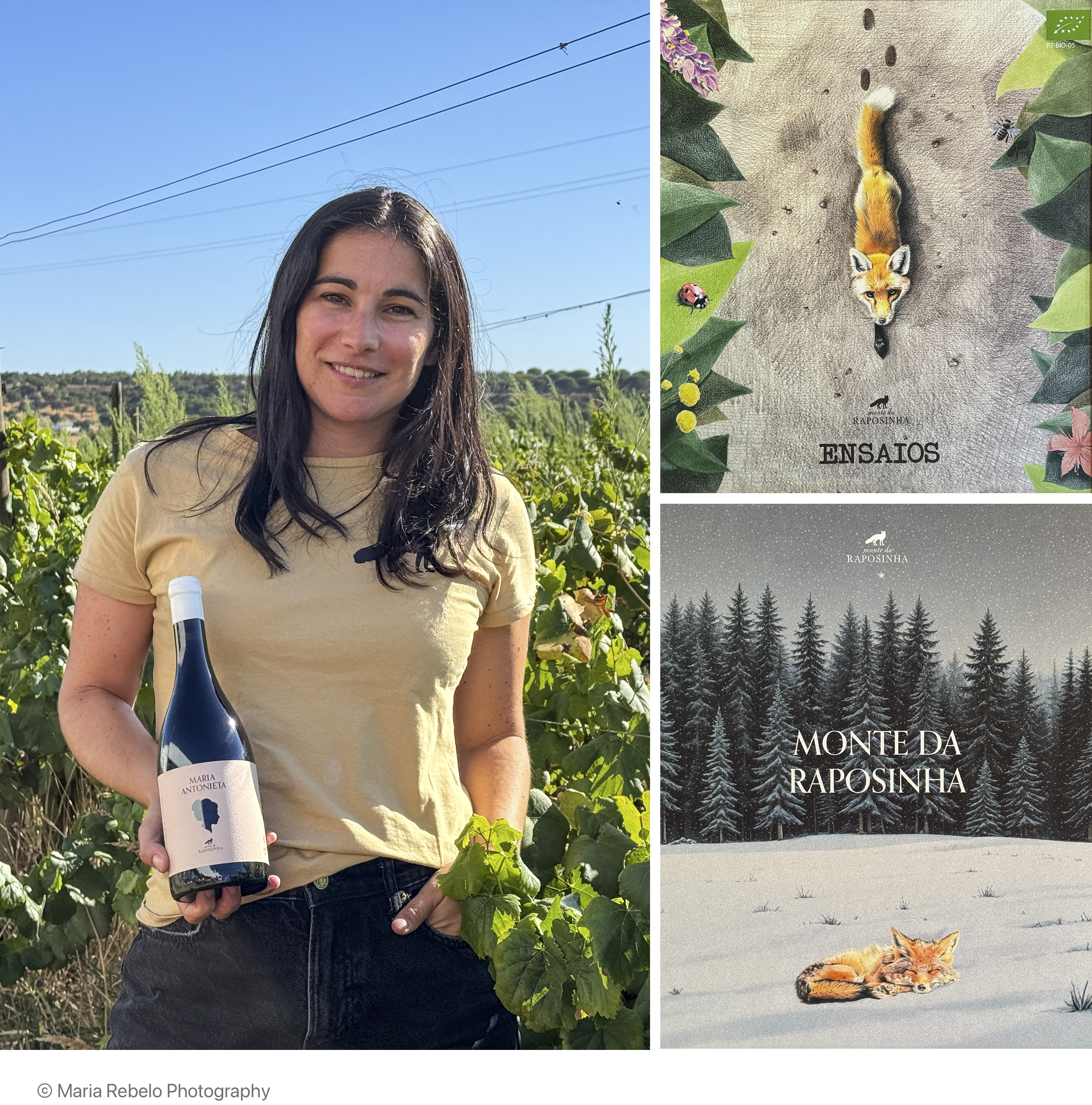
Rosário’s father used to call her raposinha (little fox). When foxes began strolling through the young vines at dusk, Ângelo and Rosário renamed the farm Monte da Raposinha.
Today, the estate is in the hands of the next generation: Rosário’s son, João, oversees the business, while his wife, Paula, leads viticulture and enology.
João followed the family tradition and studied law, but he never took to office life. He preferred the freedom of the open fields.
Paula’s father, a doctor fascinated by wine, invited her as a child to smell different wines and describe their aromas. She grew up loving animals and plants, and later studied agronomy in Lisbon, specializing in viticulture. As a student, she often passed Monte da Raposinha on her way to her grandmother’s house, sometimes stopping to buy a few bottles whose distinctive character intrigued her.
She met João through mutual friends. They fell in love and married at Monte da Raposinha, which became their life’s project. João and Paula do nearly everything themselves: pruning and harvesting, fermenting and aging, bottling and labeling.
Paula explains how the morning dew brings freshness to this otherwise hot region, cooling the grapes and slowing maturation. To preserve the fruit’s character, she relies entirely on the wild yeasts that live on the grape skins, rather than adding commercial strains. The result is less predictable, but truer to the vineyards.
They practice regenerative, organic farming, no small challenge in such a humid climate. The vines are protected with the traditional Bordeaux mixture, a solution of copper sulfate, lime, and water. They also spray infusions of acacia, nettle, and willow. In difficult years, João and Paula accept losses; in 2025, they lost 80 percent of their production.
And what do they get in return? “A land that is alive,” Paula says. She speaks passionately about the worms in the soil, the legumes that fix nitrogen, the birds and bees that share the vineyard. Her affection for these creatures runs so deep that she asked designer Francisco Eduardo to include them on the wine labels.
The estate has a guest house with expansive views over the fields and an inviting swimming pool. Staying there is the best way to understand their work: mornings in the vines, afternoons in the cellar, evenings around the table, enjoying the wines born from their soil.
For João and Paula, the health of the land, the authenticity of place, and the singular voice of their wines come first.
Their rosé, made from Touriga Nacional, is bright and expressive, all freshness and immediacy. The white reserve draws its body from Viosinho, ripened under the generous Alentejo sun, while Arinto and Esgana Cão lend tension and acidity. The blend carries delicate aromatics and a long, persistent finish that both cleanses and lingers. The extraordinary Maria Antonieta, named in homage to João’s great-grandmother, is made from Touriga Nacional grown on a small plot with soil made from river stones.
Monte da Raposinha proves that great wines can come from improbable places, but only for those with the courage and endurance to care for them.
Monte da Raposinha is located at Estrada do Couço, S/N. 7425-144 Montargil. Click here for their website.
At the beginning of the last century, the German poet Rainer Maria Rilke wrote a series of letters to a young man who aspired to become a poet, urging patience, humility, and trust in the slow ripening of ideas.
In that spirit, we invited viticulturist António Magalhães to write a letter to a young Douro farmer. This eighth masterclass takes that form.
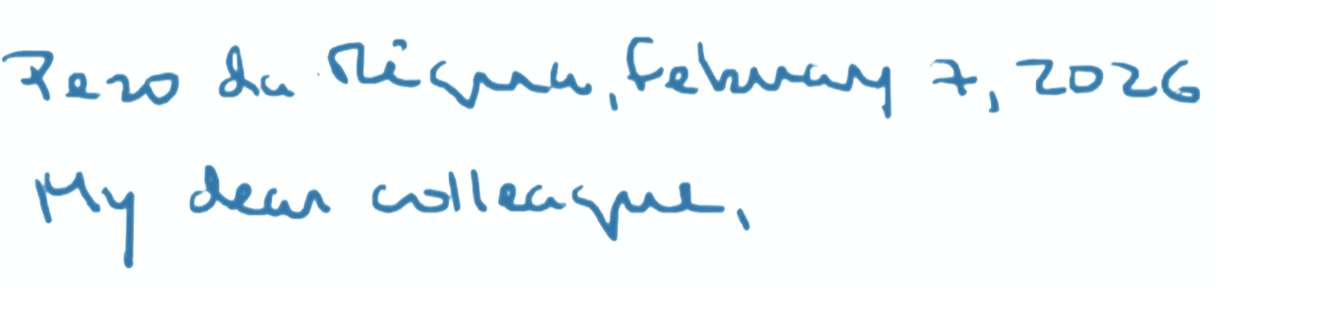
Peso da Régua, February 7, 2026
My dear colleague,
You asked me for advice on how to begin a life in the vineyards of the Douro Valley. I will try to answer simply, because in viticulture simplicity is often the most difficult achievement.
On tradition
First, understand that making great wine in a mountain region is never the work of a single lifetime. It is a relay race: you receive the vineyard, care for it as best you can, and pass it on to the next generation. You did not choose your starting point, and you will not see the finish line. This realization should make you both humble and demanding of yourself. Viticulture is the art of continuity: your vineyard must be able to thrive far into the future.
Learn from those who pruned your vines before you. In our profession, novelty is often overvalued. The vine breeder François Morisson-Couderc, successor to the great Georges Couderc, whose rootstocks helped rescue Europe’s vineyards after phylloxera, once said that a good idea in viticulture is one that remains a good idea twenty years later.
During the phylloxera crisis, Douro growers learned which sites to abandon and which never to plant at all. They set aside ill-adapted varieties such as Bastardo and Donzelinho Tinto, and created new ones, most notably Touriga Francesa, by crossing rustic, phylloxera-resistant Mourisco Tinto with Touriga Nacional, which the Baron Forrester called “the finest.” They also knew how to shape the post-phylloxera terraces, so that vineyards could once again thrive.
On respect
Unless your vineyard has a human scale that allows you to tend to it by yourself, you will have workers in your employ. Agricultural work is hard, and those who do it deserve our deep respect. Never ask anyone to perform a task without first explaining its purpose and why it matters.
Respect is owed not only to people, but also to the land.
Hand-built vineyard hedges
On caring for the soil
Care for the soil by embracing organic viticulture. It is prudent to first gain experience on a small parcel. That is how, more than three decades ago, David Guimaraens, the head winemaker of Taylor Fladgate, and I took our first steps into organic viticulture, guided by David’s father, Bruce Guimaraens.
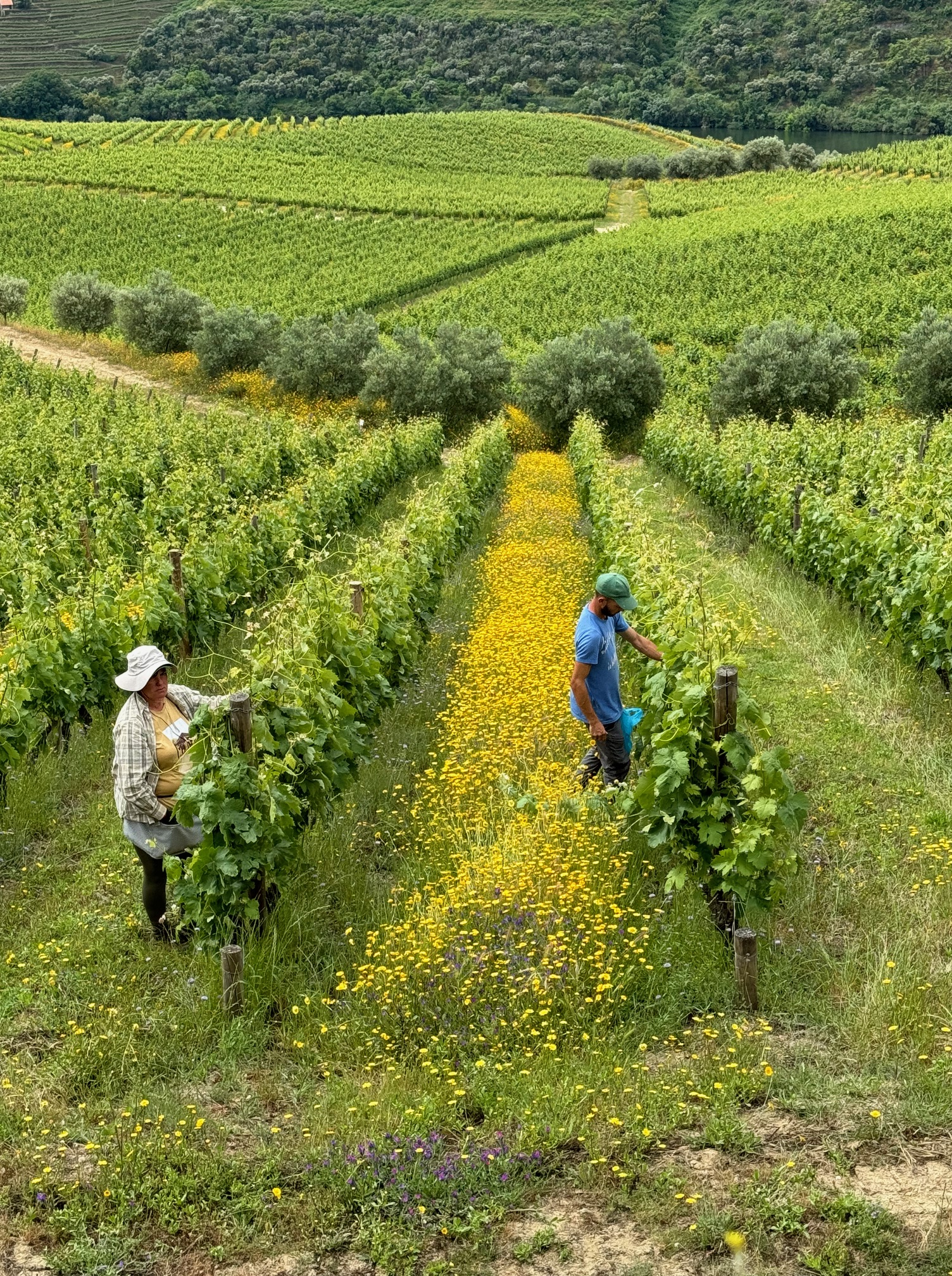
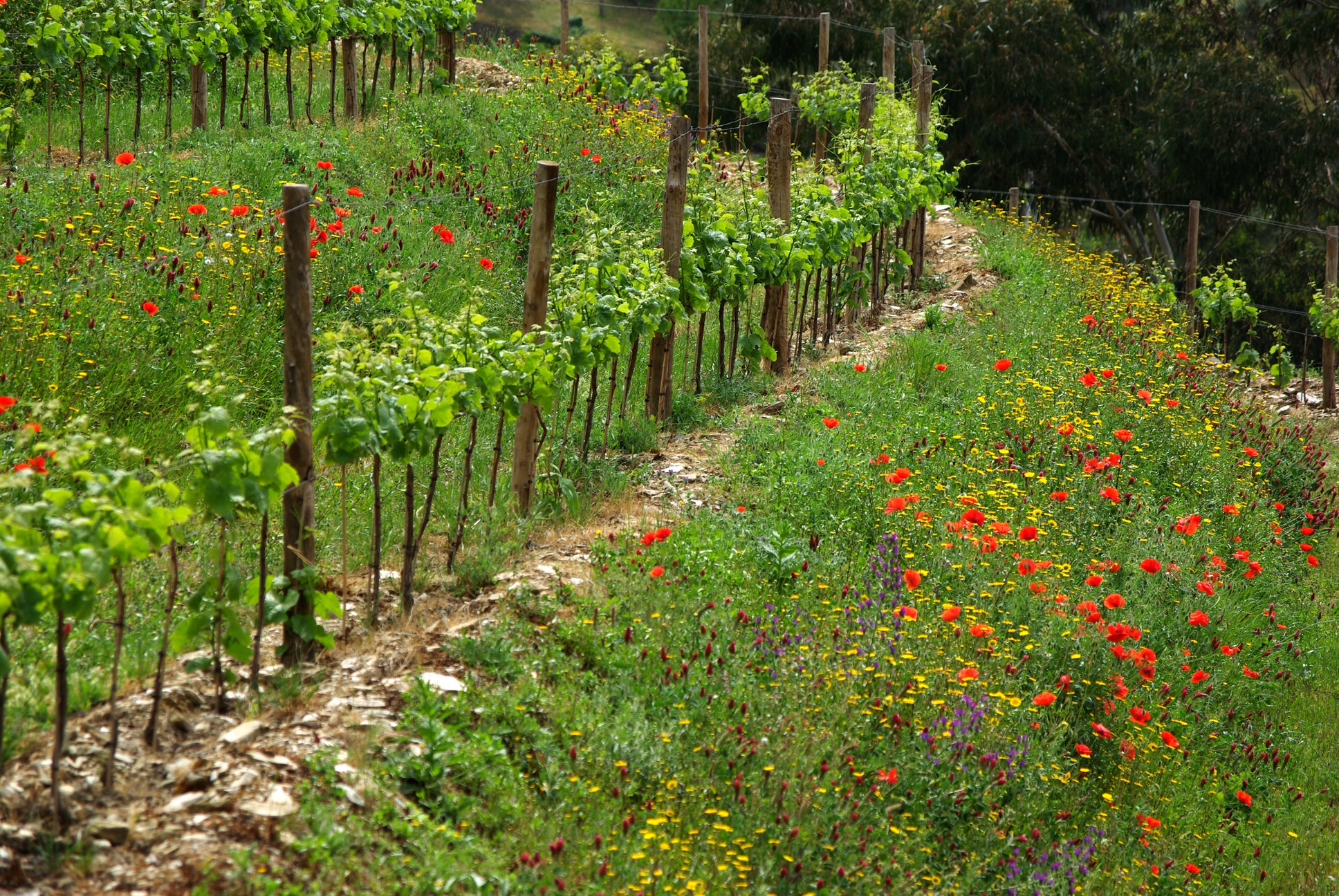
Learn to live more harmoniously with spontaneous vegetation, to accept its life cycle, and to intervene only as much as necessary to prevent these plants from harming the vines or carpeting the vineyard and raising the risk of fire.
Copper and sulphur are effective, irreplaceable, and complementary fungicides in maintaining vineyard health. Their effectiveness is greatly enhanced by choosing the right moment to intervene.
Taste Terra Prima, the ruby Port produced by Fonseca Guimaraens with grapes from an organic vineyard and fortified with organic brandy. I hope it inspires you to create an organic dry white Port. There is none on the market, a significant gap worth filling.
Spontaneous vegetation
On the ideal vineyard
Only after learning to respect tradition, people, and the soil can you begin to ask the most difficult question of all: where should a vineyard be planted?
I am firmly convinced that, during the post-phylloxera period through 1965, growers planted the finest vineyards, deliberately choosing sites where vines could naturally thrive. After 1965, and even more after 1980, bulldozers enabled large-scale expansion, and earthen terraces replaced traditional dry-stone walls. Often, these new sites have soils that are either deep or stony and shallow, with poor exposure and a fragile natural water balance. They lack intrinsic viticultural character. Why plant vines in inferior terrain to make room for tractors? A vineyard that does not thrive naturally rarely rewards you with great wine.
Listen to what the landscape is telling you. The old walls indicate where vines once survived without irrigation. The abandoned terraces often mark the limits beyond which quality becomes uncertain. The best lessons are written in stone, not on maps.
As we travel east from Baixo Corgo to Douro Superior, vineyard density decreases. This fall reflects dwindling rainfall and rising heat. Why defy the logic suggested by the climate by planting vineyards where irrigation becomes necessary?
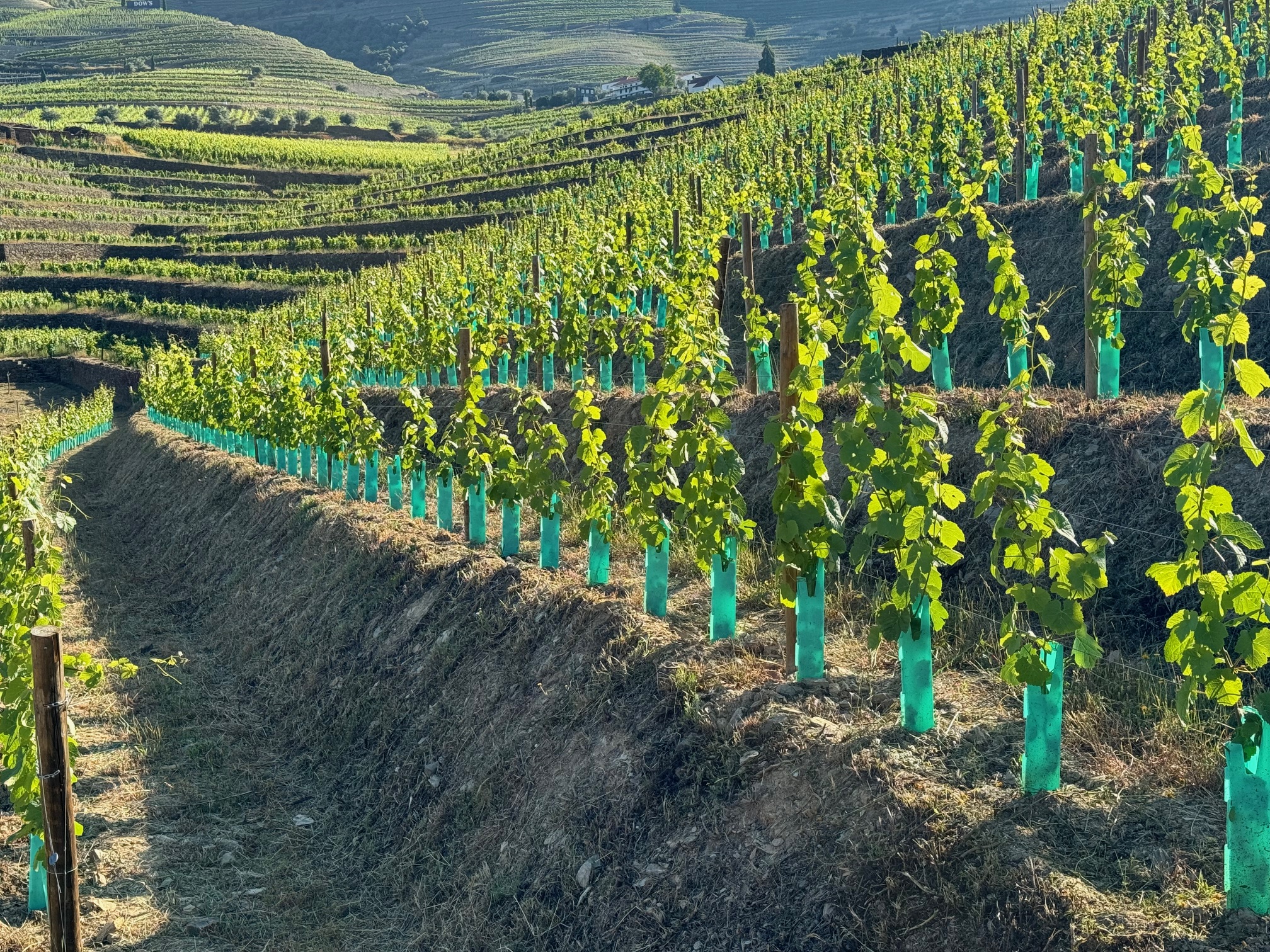
Planting a new vineyard
On the importance of olive trees
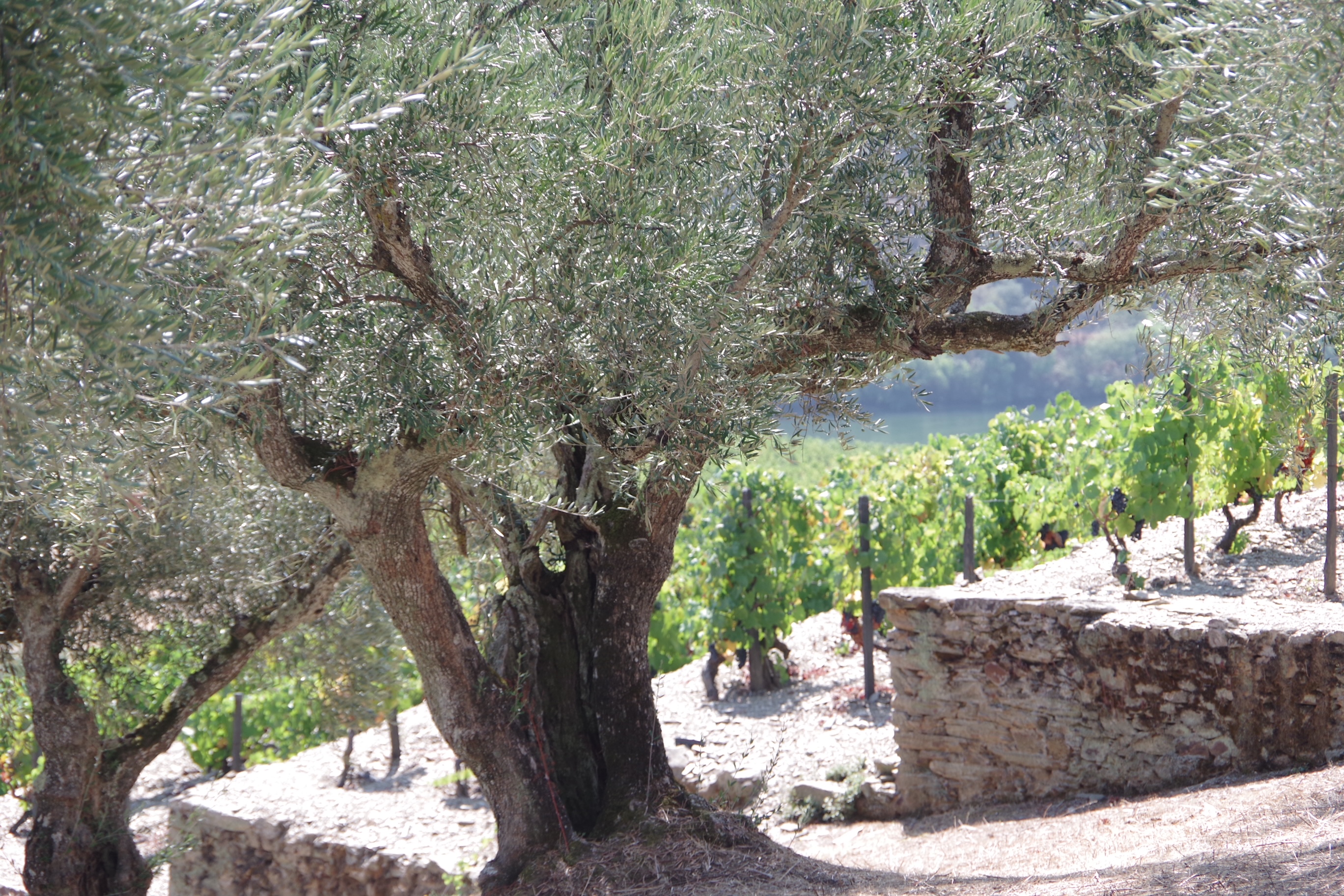
Plant olive trees around the vines. Known in the Douro Valley as an olival de bordadura, this natural border frames the vineyard beautifully and yields exceptional olive oil, a valuable additional source of income.
Olive trees surrounding the vines
On caring for the vineyard
When you acquire a vineyard, do not rush to renew it. Take time to observe, learn, experiment, and reflect. Pay close attention to the neighboring vineyards. Renewing without understanding what truly needs to change is a serious mistake. A new vineyard should be guided by experience and judgment, never by whim.
On the Douro terraces
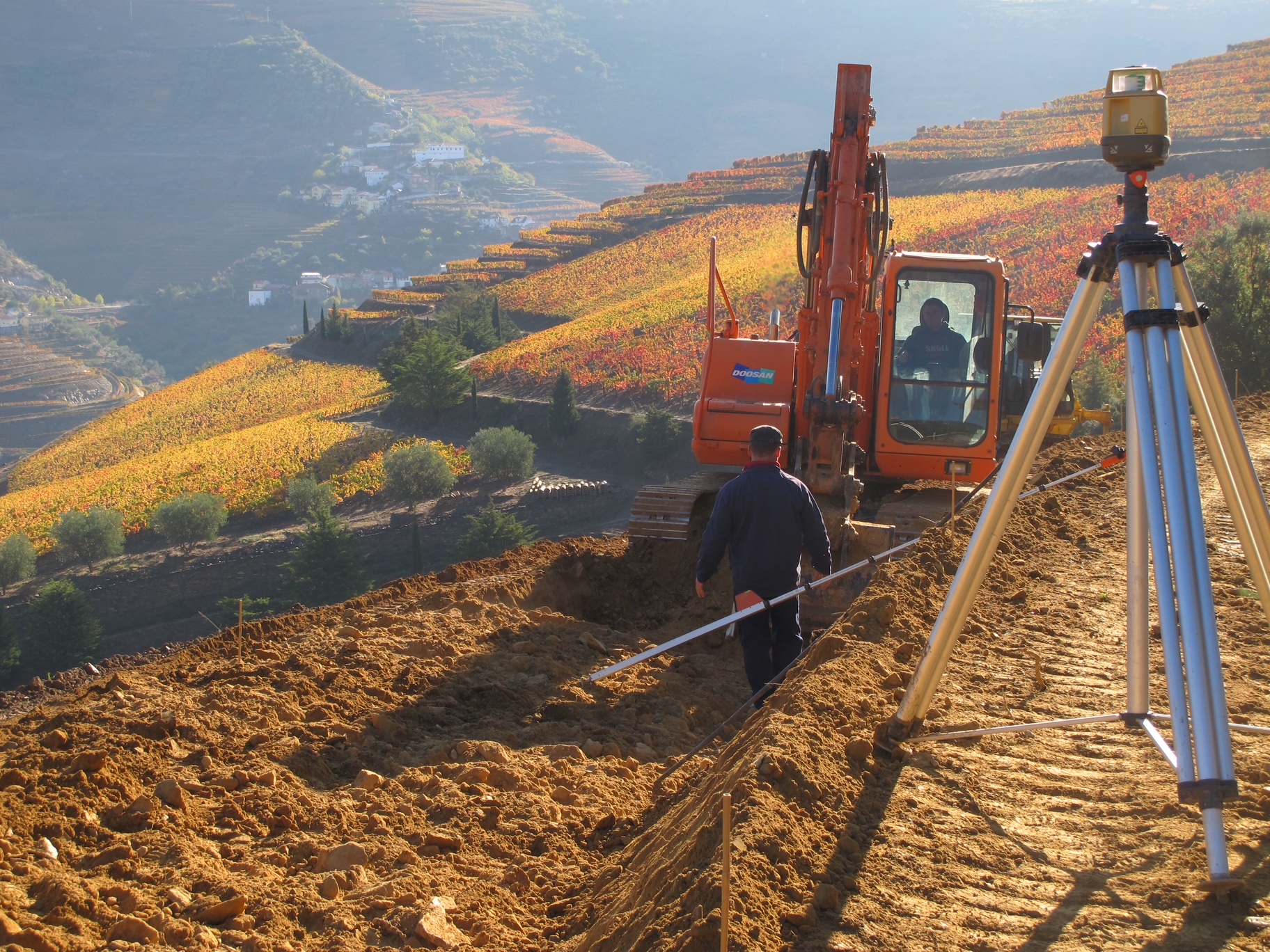
Rain causes erosion in hillside vineyards. Careful land design is therefore essential. Vines were once arranged in terraces supported by dry-stone walls. They are now preferably planted on successive narrow stepped platforms, separated by earthen embankments and laid out with laser guidance to ensure, on each level, a longitudinal gradient of about 3 percent, ideal for draining torrential rainfall.
Building terraces
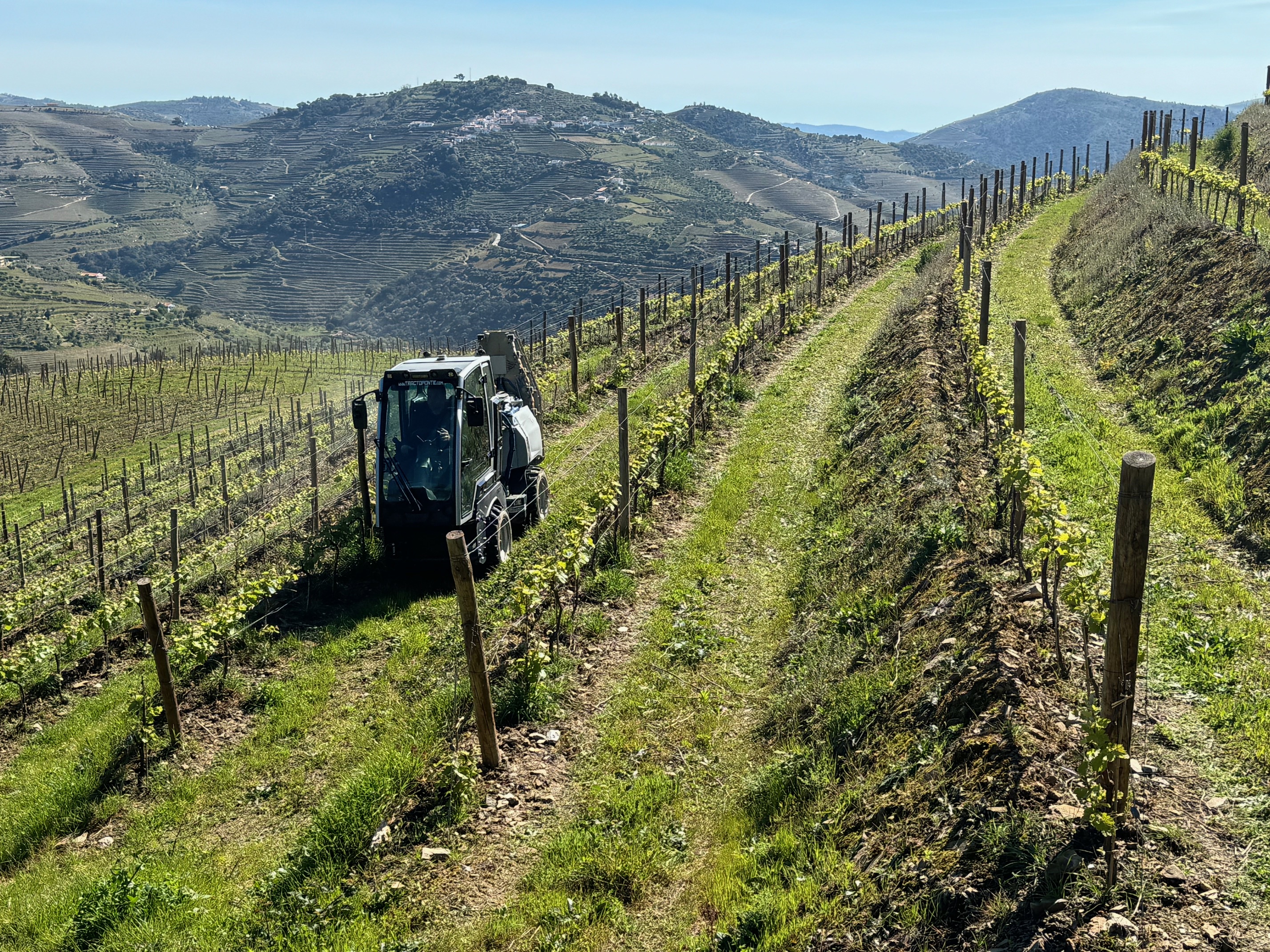
Each terrace is designed to support only a single row of vines (bardo), laid out at a fixed distance from the embankment shoulder to ensure circulation and access for machinery along the slope. At the same time, the terrace width should be reduced as much as possible, increasing vine density without compromising mechanization. This approach uses the land more efficiently and simplifies vineyard work, easing physical labor, which is a priority in mountain viticulture.
Narrow terraces
On grape varieties
You must study the Douro grape varieties. The choice of what to plant should be shaped by the diversity of soils and microclimates, not guided solely by enological objectives. Planting vines in a new vineyard is like sewing a patchwork quilt, whose meaning and beauty emerge only in the whole. A field blend of judiciously chosen varieties creates the complexity needed for great wines and the resilience to deliver consistency from one vintage to the next.
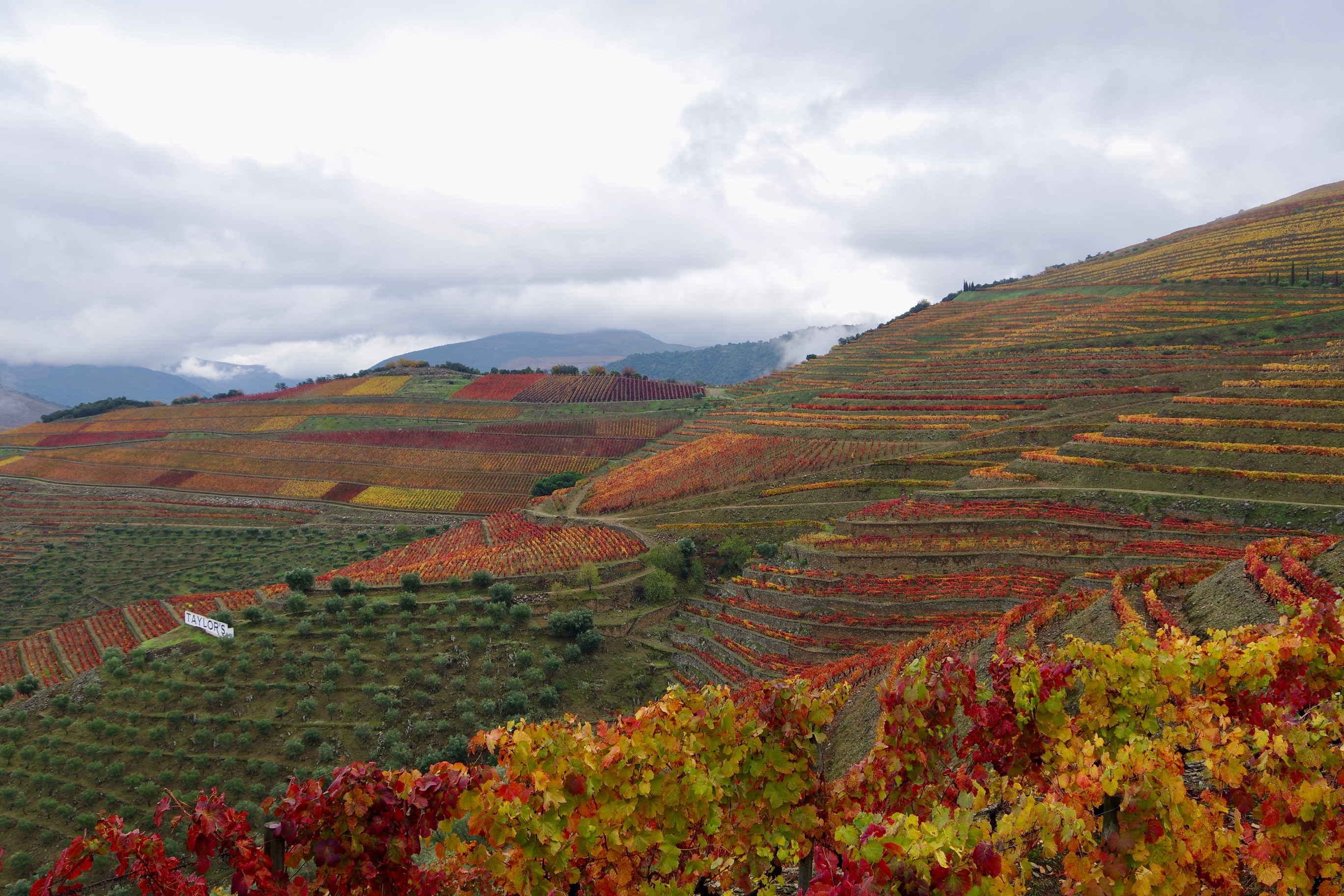
Fall in Quinta de Vargellas
Let me mention a few of my favorite red varieties. Touriga Francesa is, without question, the conductor of the Douro’s varietal orchestra. It is the most resistant to downy and powdery mildew, a quality that helps explain its prominence in the Douro.
Tinta Cão, which “ripens well, neither shrivels nor rots,” as Francisco Rebelo da Fonseca wrote in the eighteenth century, can be precious in arid years because it survives the heat.
I have a special fondness for Tinta Francisca and Viosinho. They make slender vines, luminous spring hedges, and perfectly ripened grapes, blue-black in the Francisca, golden-yellow in the Viosinho.
Two varieties that can help the Douro face a warming climate are Malvasia Preta and Tinta Aguiar. We need to better understand their properties in the vineyard and cellar.
The Douro is also rich in local white grape varieties. A magic quartet—Malvasia Fina, Viosinho, Rabigato, and Gouveio—forms the backbone of the finest white Ports. On their own or together, they produce outstanding table wines. Beyond these, many other grapes wait to be planted.
On the importance of the blend
The vastness of the region and the diversity of its valleys and hills yield a wide range of grapes. Through blending, producers can create wines with a balance and depth rarely achievable from a single site.
Growers must decide whether a vineyard’s grapes are destined for Port or for table wine (DOC Douro), two different expressions of the same landscape, with any surplus going to simpler, unclassified wines. In any given year, the fruit suits only one style, a vocation that may shift with the weather. As ripening unfolds, the vineyard’s calling becomes clear and is confirmed at harvest. The aim is always to guide each parcel toward its finest possible expression.
On rootstocks
To guard against phylloxera, European vines are grafted onto American rootstocks. The rootstock type is often shared by all vines in a vineyard. One of the earliest and most enduring choices was Rupestris du Lot. To forget it would be to lose history, diversity, and perhaps future resilience.
Today, drought resistance is paramount, so Richter-110 and 1103-Paulsen are common rootstock choices. Both coexist across the valley, but Richter-110 predominates in the Douro Superior and in the Cima Corgo, especially below the mid-slope. 1103-Paulsen tends to perform better in deeper soils with greater spring moisture and is therefore more prevalent in the Baixo Corgo and on the higher slopes of the Cima Corgo.
On planting the vines
I advocate mass selection, propagating vines from many outstanding plants in traditional vineyards, over clonal selection, which reproduces a single “mother vine.” I believe it is the duty of all Douro winegrowers to preserve and multiply our viticultural genetic heritage, especially minor varieties now on the brink of extinction.
On pruning the vines
Cane pruning, known as Guyot, is often the better choice in drier climates or in shallow soils without irrigation. Under such conditions, the individualized, vine-by-vine approach characteristic of this system is justified, and it offers the added advantage of allowing the vines to be continuously renewed.
Yet there are sites and grape varieties that lend themselves better to spur-pruned cordon training, known as Royat: a simple form of pruning, though one that demands no less care and precision in its execution. In the right place, for example, Touriga Nacional benefits greatly from this method, given its somewhat awkward natural growth pattern.
On the harvest
In the Douro, when planted where they belong, vines do not suffer from thirst, only from heat. But before that heat turns harsh, the grapes ripen to perfection for Port. They should never be overripe. Port tolerates only the faintest hint of raisining, and only in limited proportions, in varieties such as Tinta Barroca, Malvasia Fina, and a few others.
In 1992, I learned from Alistair Robertson and Bruce Guimaraens the importance of waiting for the right moment to harvest. Day after day passed without the grapes reaching full maturation. While others chose to pick, Alistair and Bruce held back, convinced that a touch of rain would refine the grapes and bring them to full maturity.
The rain arrived late, at the end of September. It was only 13.5 mm, but Bruce Guimaraens, meticulous about water to the point of counting the drops of morning dew, guaranteed it was enough. His judgement was vindicated: the 1992 Taylor’s Vintage Port would go on to receive a perfect score from Robert Parker.
Harvesting grapes
On Port
Port wine is made without artifice, by people who use simple equipment and have a deep respect for tradition.
Producing a great Port requires a wide variety of grapes, careful choice of harvest dates, and the ability to select grapes by hand in the vineyard.
The proportions of different grapes are adjusted from year to year. Co-fermenting them in the same lagar enhances complexity and balance.
Some final words
It is a privilege to work in the vineyards of the Douro Valley. No other major wine region combines such diversity of longitude, altitude, sun exposure, grape varieties, and soil depth with the production of a fortified wine as delicious, long-lived, and unique as Port.
If you work with patience, with respect for the place, and with attention to what only time can teach, the vineyard will reward you. Not always quickly, but usually honestly.