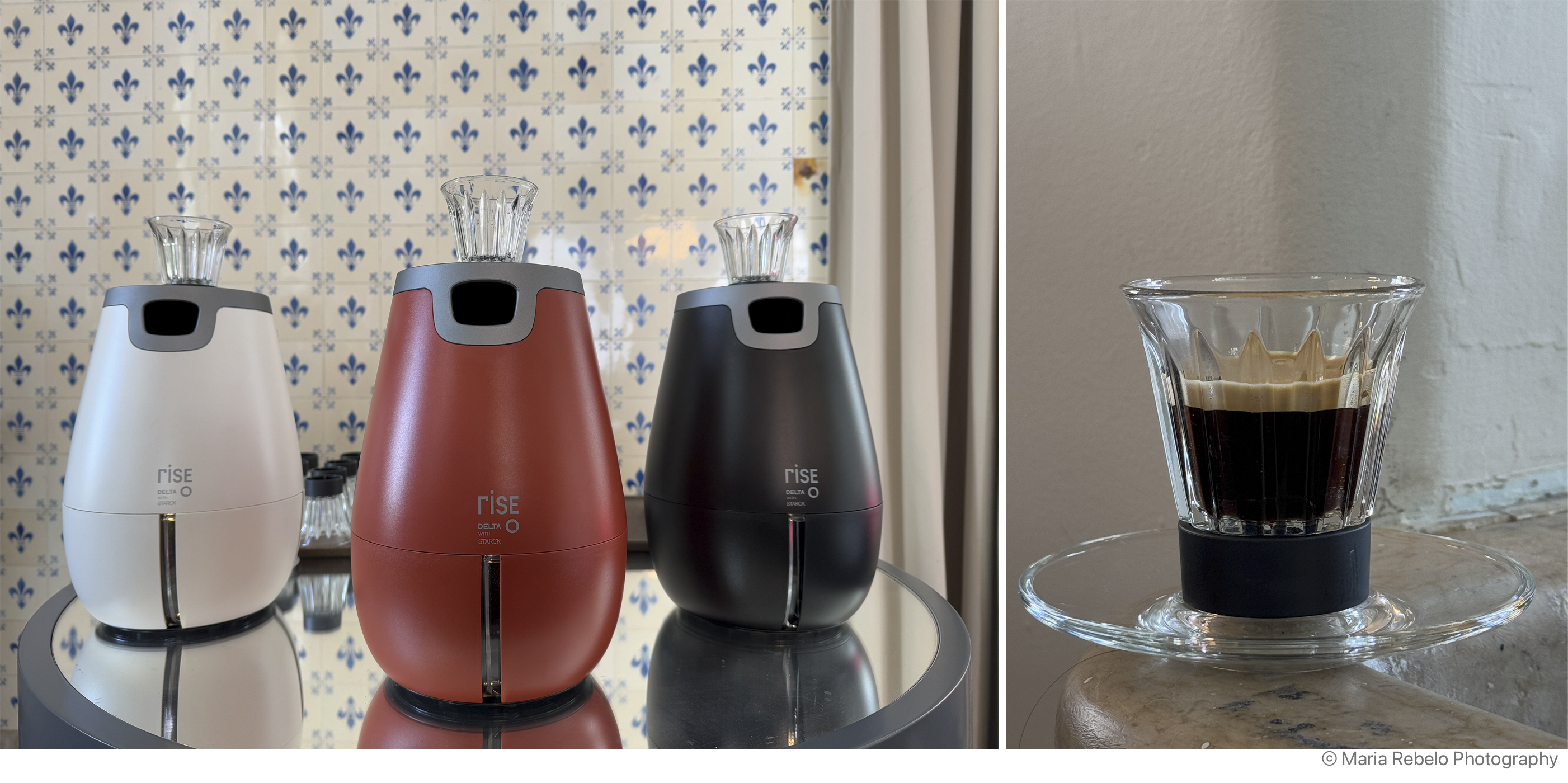
RISE, a coffee machine invented by Delta Cafés, is turning the world of coffee upside down. A strong contender for the world’s best coffee maker, RISE takes its name from its unique brewing process that uses a reverse injection system.
It is mesmerizing to see the coffee defy gravity and magically rise inside the cup. Engineered to preserve freshness, RISE fills the cup without exposing the coffee to air. It also maintains the perfect temperature, enhances natural flavors and aromas, and delivers a rich, long-lasting crema.
Designed by Philippe Starck, RISE is as much a work of art as a feat of engineering. The machine is so good looking that afficionados display it in their living rooms instead of keeping it in the kitchen.
Founded in 1961 by Comendador Rui Nabeiro in a small Alentejo village called Campo Maior, Delta Cafés has spent decades perfecting the art of coffee—sourcing, roasting, blending, and extracting. Now, they’ve created a machine that elevates coffee to new heights.
When we were young, we spent our summer vacations camping by the sea. We packed cans of berbigão- small, flavorful cockles- and used them to make rice dishes that tasted divine after a swim in the ocean.
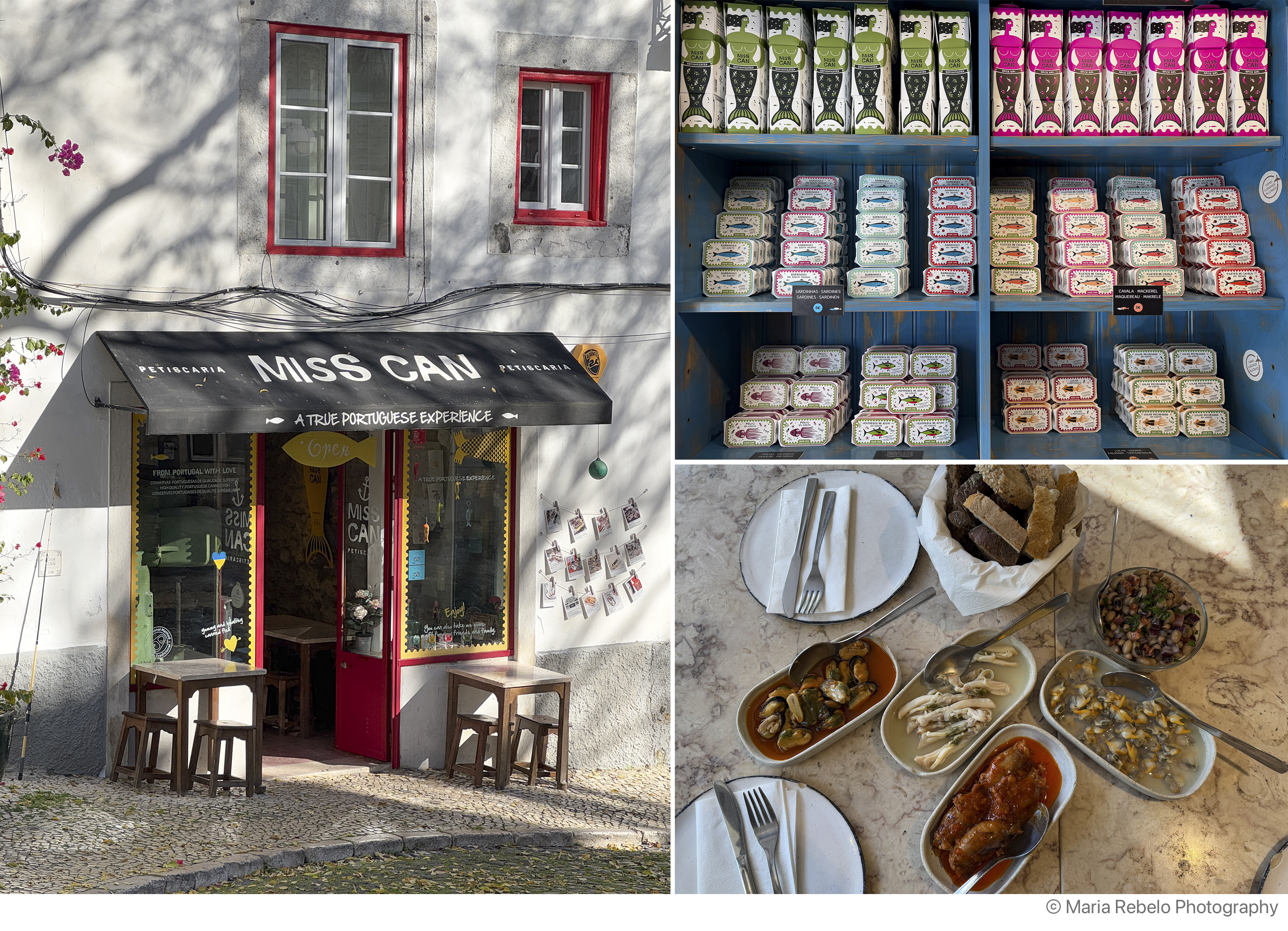
Over the years, canned berbigão nearly vanished from store shelves. Fortunately, Miss Can has brought it back, along with various other delicacies. In addition to classics like sardines and tuna, their selection includes razor clams, squid, mussels, octopus, and more.
The brand’s origins date back to 1911, when Alberto Soares Ribeiro established two canning plants—one in Setúbal, near Lisbon, and another in Olhão, Algarve. Like many others, these plants closed their doors during the years of economic turmoil that followed the 1974 revolution. Almost a century later, Alberto’s great-grandson, Tiago Soares Ribeiro, brought the family’s canning legacy back to life. Together with his relatives, Tiago launched Miss Can, a brand dedicated to high-quality, artisanal canned fish.
The rebirth began in 2013 when Tiago started producing small batches of canned fish and selling them from a yellow Piaggio motorcycle in Lisbon’s St. Jorge Castle neighborhood. In 2015, Miss Can received two prestigious awards, enabling Tiago to open a charming eatery near St. Jorge’s Castle, where visitors can experience the exceptional quality of his products.
All the fish, except cod, are sourced from the Portuguese coast. The canning process follows the same traditional method used a century ago. The fish are gently steamed to preserve their texture and natural flavor.
With Miss Can, we can effortlessly create a delicious salad, a rich pasta, or a comforting rice dish that brings back the taste of our carefree vacations by the sea.
You can sample Miss Can’s products at Largo do Contador Mor, 17 Castelo in Lisbon. Miss Can is available in the U.S. at World Market stores. Click here for Miss Can’s website.
Since the dawn of civilization, Babylonians, Egyptians, and Greeks have studied the skies to chart the stars. But these luminous bodies shined whether or not they were included in celestial atlases.
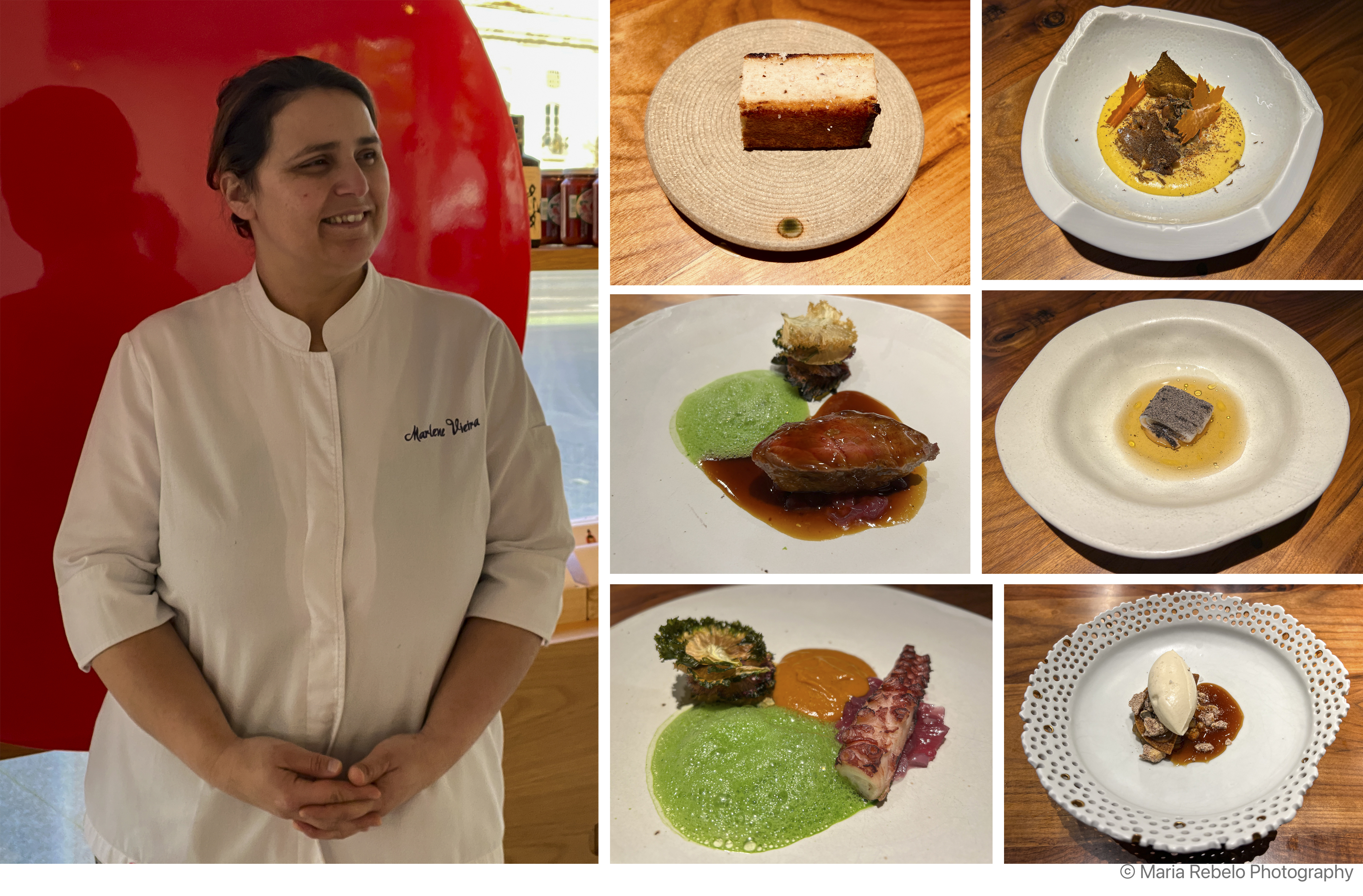
Last Tuesday, Marlene received a Michelin star—a richly deserved honor that celebrates her extraordinary talent and dedication. But long before this important accolade, her light had already illuminated the world of gastronomy. What fuels her radiance is the belief that cooking is an act of love. Each time we dine at her Zun Zum restaurant, we feel not just deeply satisfied but cared for.
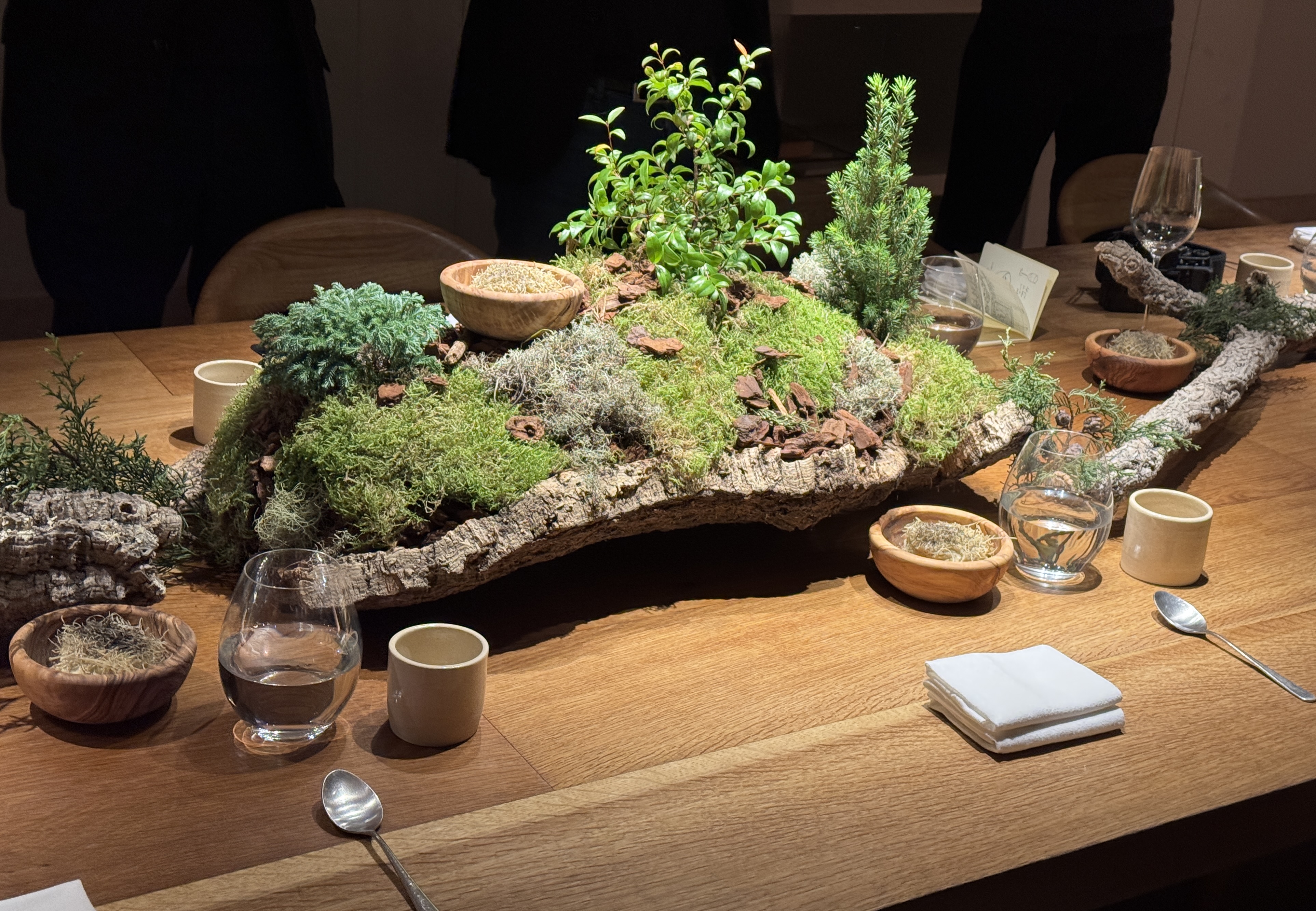
Now, at the restaurant that bears her name, Marlene is elevating Portuguese cuisine to new heights. The space exudes serenity, with the kitchen at its heart—an altar where ingredients are transformed into a transcendent gastronomical experience. The menu evolves constantly, and once a recipe leaves, it does not return, making each meal a singular experience.
Guiding this culinary journey alongside Marlene is Chef Mário Cruz. He searches land and sea for exquisite treasures—sea urchins, Algarve red shrimp, wild mushrooms, cuttlefish, mullet, octopus, and partridge.
The food is visually stunning, but, more importantly, it is delicious and it has soul. The irresistible cornbread, kneaded from white corn, wheat, and rye, follows Marlene’s grandmother’s recipe. The Azorean bluefin tuna, cured as if it were prosciutto, accompanied by gazpacho served in a bowl lined with sumac, transported us to the Algarve, to a sunlit table by the sea.
The partridge is cooked according to a famous recipe. During the Napoleonic invasions, General Junot’s troops looted the library of the Alcântara Monastery. Among the stolen manuscripts was a recipe for partridge stuffed with foie gras and truffles. Junot sent it to his wife, who introduced it to France as “Partridge, Alcântara style.” The renowned chef Auguste Escoffier declared it one of the finest spoils of the Napoleonic wars. Marlene’s reimagined version of this historic dish is so extraordinary that it might provoke another French invasion.
Marlene Vieira is a star–not because she has been recognized among the constellations of fine dining, but because she has always shined. If you find yourself in Lisbon, take the time to sit at her table to savor the brilliance of her cuisine.
Marlene is located at Av. Infante D. Henrique, Doca do Jardim do Tabaco, Lisboa, tel. 351 912 626 761, email marlene@marlene.pt.
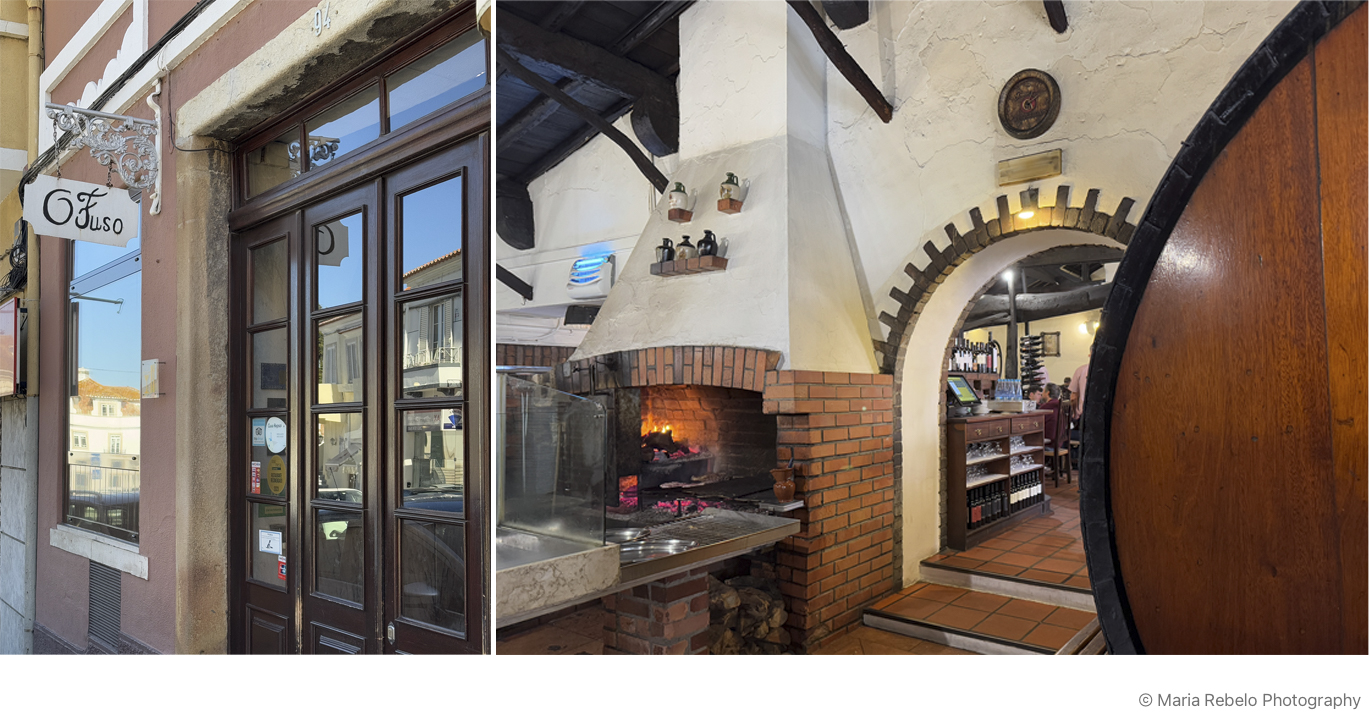
Located in Arruda dos Vinhos, 20 miles north of Lisbon, Fuso is a restaurant from another era. It opened its doors, in the space once used as a winery and a tavern, on March 9, 1973.
The concept for the restaurant was created by Fernando Guerra Cardoso, a successful car salesman who enjoyed socializing over food. He persuaded his friend, Armindo Mera Dominguez, to open a restaurant serving oversized portions that encouraged people to bring their friends. Today, the restaurant is run by the great-grandchildren of both founders.
Diogo Coucello, Fernando’s great-grandson, leads a team of 30 waiters and kitchen staff, ensuring seamless service for up to 300 guests. Reservations are essential—Fuso is always full.
Since 1973, the menu has remained unchanged, focusing on two signature dishes: charcoal-grilled codfish and bone-in rib steak. Your meal can begin with delectable appetizers such as prosciutto, savory sausages, or grilled shrimp and end with various desserts, ranging from roasted apples to egg puddings and chocolate cake. But the main attractions are grilled codfish and steak.
You can find these dishes in many other restaurants, but Fuso’s renditions are exceptional. The codfish, imported from Norway, is meticulously selected for its succulence and rich flavor. The rib steak, consistently tender and tasty, has been sourced from the same butcher since the restaurant’s inception.
Fuso’s rustic décor has remained untouched since its opening. The restaurant’s name refers to the fuso, or spindle—a large wooden screw—attached to the wine press that still occupies the center of the dining room. The entrance is dominated by towering wine barrels made from exotic wood and a grand charcoal grill glowing with embers.
In a world where everything feels fleeting, it’s a privilege to eat at a restaurant that has been a gathering place for friends who love food for over half a century.
Fuso is located at Rua Cândido dos Reis, 94, Arruda dos Vinhos, tel. 263 975 121, 263 978 547.
Francisco Melícias, the general manager of Quinta de São Sebastião, invited us to visit the estate. So, we traveled along narrow roads that wind through villages where houses are nestled among vineyards until we arrived at Arruda dos Vinhos. This historic town, established in 1160 by Portugal’s first king, owes its name, “wine route,” to its role as a transit point for wines transported by horse-drawn carts to Lisbon.
Arruda’s soils, predominantly limestone and clay with patches of sand, create ideal conditions for viticulture. Limestone promotes deep root growth and imparts minerality and acidity to the wines, while clay retains water, adding richness and structure. The region’s rolling hills and refreshing Atlantic breezes lend complexity to its wines.
The town is steeped in history and faith. São Sebastião, its patron saint, is credited with three miracles. First, in the 14th century, Arruda was spared from the bubonic plague that devastated much of Portugal. Second, in 1755, the town escaped the earthquake, tsunami, and fires that reduced nearby Lisbon to ruins, prompting King José I and his family to seek refuge in Arruda. Third, in the late 18th century, the region’s sand patches protected its vineyards from the phylloxera pest that devastated European vineyards.
Our journey continued up a steep hill to Quinta de São Sebastião, an estate established in 1755. We visited the chapel, once part of a monastery founded by monks who sought peaceful retreat. Francisco tells us that during the Napoleonic invasions, the estate played a role in the Lines of Torres Vedras, a network of fortifications built in 1809–1810 to defend Lisbon against Napoleon’s troops. Today, the remnants of these fortifications are a reminder of the estate’s historical importance.
In the 1980s, António Parente, an industrialist, bought Quinta de São Sebastião and invested in its future. The vineyards, planted on steep hills with different exposures, offer diverse terroirs that allow winemaker Filipe Sevinate Pinto to create distinctive blends. These wines combine traditional local varietals like Touriga Nacional with carefully selected French grapes.
We sampled some remarkable wines in the estate’s tasting room, which overlooks a picturesque riding arena where horses are trained. The 2022 Reserva Branco, a blend of Arinto, Cercial, and Sauvignon Blanc, has a pleasurable intensity and minerality. The Sauvignon Blanc provides a seasoning touch that allows the blend to shine. A surprising single-varietal made from Cercial, a grape known as Esgana-Cão in the Douro Valley, impressed us with its elegance and freshness. The Provence-style rosé, Dona Aninhas, pays tribute to António Parente’s mother with its delightful balance and vibrant acidity.
We also tried three reds. The first, a Reserva, is a blend of Touriga Nacional, Merlot, and Sousão. The aromatic Touriga complements the delicate Merlot, while the lively Sousão provides a touch of exuberance. The second, a blend of Alicante Bouschet and Syrah is intense, offering a beautiful harmony of flavors. Finally, the Grande Reserva—a daring mix of Merlot and Sousão— captivated us with its depth, complexity, and character. This wine is an ode to joy!
Quinta de São Sebastião is building on its rich heritage to create wines that are distinctive and deeply enjoyable.
Quinta de São Sebastião is situated in Arruda dos Vinhos. Click here for their website.
As John Coltrane’s career evolved, his music underwent a profound transformation. He began as a virtuoso, dazzling audiences with his fluency and flair. But then, he transcended virtuosity, creating music that other players could not imagine because it came from a deeper source of inspiration.
The evolution of Ceia parallels this creative arch. From its inception, this restaurant, nestled within Lisbon’s most elegant hotel, offered unforgettable culinary experiences. But its current menu, orchestrated by a team led by chef Renato Bonfim, transcends technical skill to offer food that is new and exciting.
Titled Change, the menu is a series of culinary moments inspired by our planet and the way we interact with it. Most produce comes from Herdade no Tempo an estate in Alentejo that follows regenerative agriculture practices. Ceia transforms these products into elegies of cooking and celebrations of flavor.
We generally like to describe the tastes, aromas, and sensations that the food evokes, but Ceia’s menu is so unique that revealing too much would detract from its magic. What we can tell you is that the names of the menu entries could be titles of Coltrane tunes: Ocean, Carbon, Air, You Look but Don’t Sea, Solo.
The service at Ceia, as seamless as always, keeps the guests in a state of enchantment. Francisco Guilerme curates a pairing of rare wines that elevate every dish and Kristin Liebold offers an exquisite selection of non-alcoholic drinks.
Ceia is creating new culinary melodies from a deeper source of inspiration to feed our hunger and nourish our souls.
Ceia is located at Campo de Santa Clara, 128. Lisbon. Click here for the restaurant’s website.
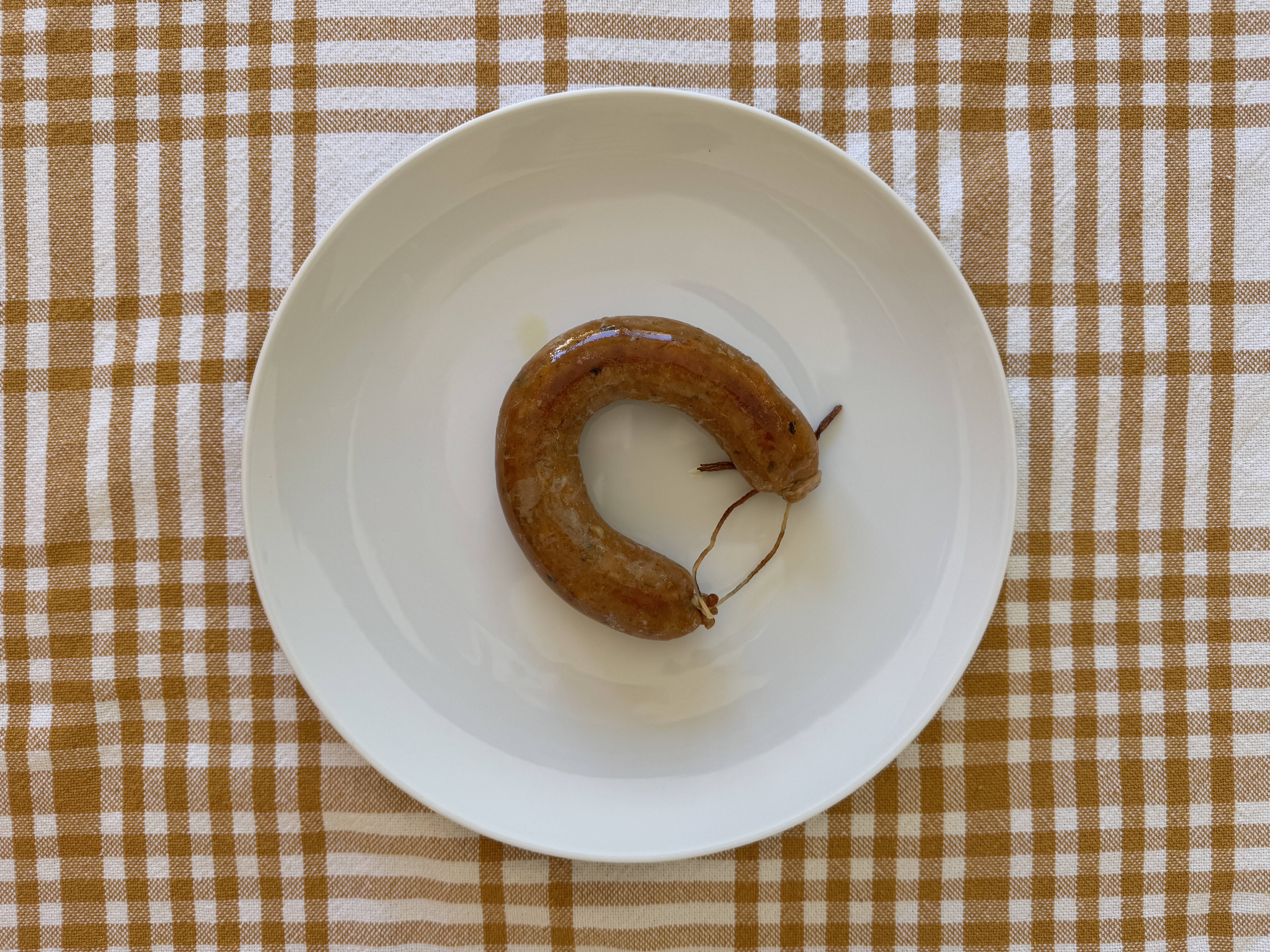
The origin of alheiras (pronounced ahl-yay-ras), a traditional Portuguese sausage, is intertwined with the history of Portugal’s Jewish community during the reign of King Dom Manuel I (1495–1521).
Dom Manuel sought to strengthen Portugal’s standing in Europe by marrying the daughter of the Spanish Catholic Monarchs, Ferdinand of Aragon and Isabella of Castile. However, the union came with a condition: Portugal had to adopt Spain’s policies toward Jews, forcing them to either convert to Christianity and become “New Christians” or leave the country.
Jewish dietary laws forbid the consumption of pork, a staple of Portuguese cuisine. To avoid persecution, New Christians ingeniously created a pork-free sausage using bread, garlic, and other meats such as poultry or game. These sausages, known as alheiras (from alho, the Portuguese word for garlic), were smoked to resemble traditional pork sausages, allowing Jewish families to appear to conform to local customs.
Today, alheiras are a cherished element of Portuguese cuisine, particularly in the Trás-os-Montes region, where they originated. The town of Mirandela is especially famous for its alheiras. Although modern recipes often include pork, these sausages stand out for their distinctive flavor.
Preparing alheiras is far more complex than making traditional chouriços. To make chouriços, pork is marinated in vinha d’alhos—a flavorful blend of garlic, bay leaf, salt, olive oil, paprika, and wine—before being stuffed into casings and smoked until dry. In contrast, alheiras require meticulous preparation: a variety of meats are carefully cooked and then combined with bread and spices before filling the casings and smoking the sausages. Every detail is crucial in this labor-intensive process.
The finest alheiras we’ve ever tasted are crafted by Maria da Graça Gomes and her daughter, Rosário Buia, at Toca da Raposa in the Douro Valley. They are made with an exquisite mix of meats, including rabbit and pheasant, and seasoned with great finesse. Grilled, lightly fried in olive oil, or baked in the oven, these sausages are a culinary feast.
Toca da Raposa makes alheiras between November and January. You can place an order by calling 969951191.
Foreign residents often wonder how they’ll know they’ve been embraced as locals. A simple test involving jeropiga (pronounced zheh-roh-pee-guh), a traditional Portuguese beverage, provides the answer.
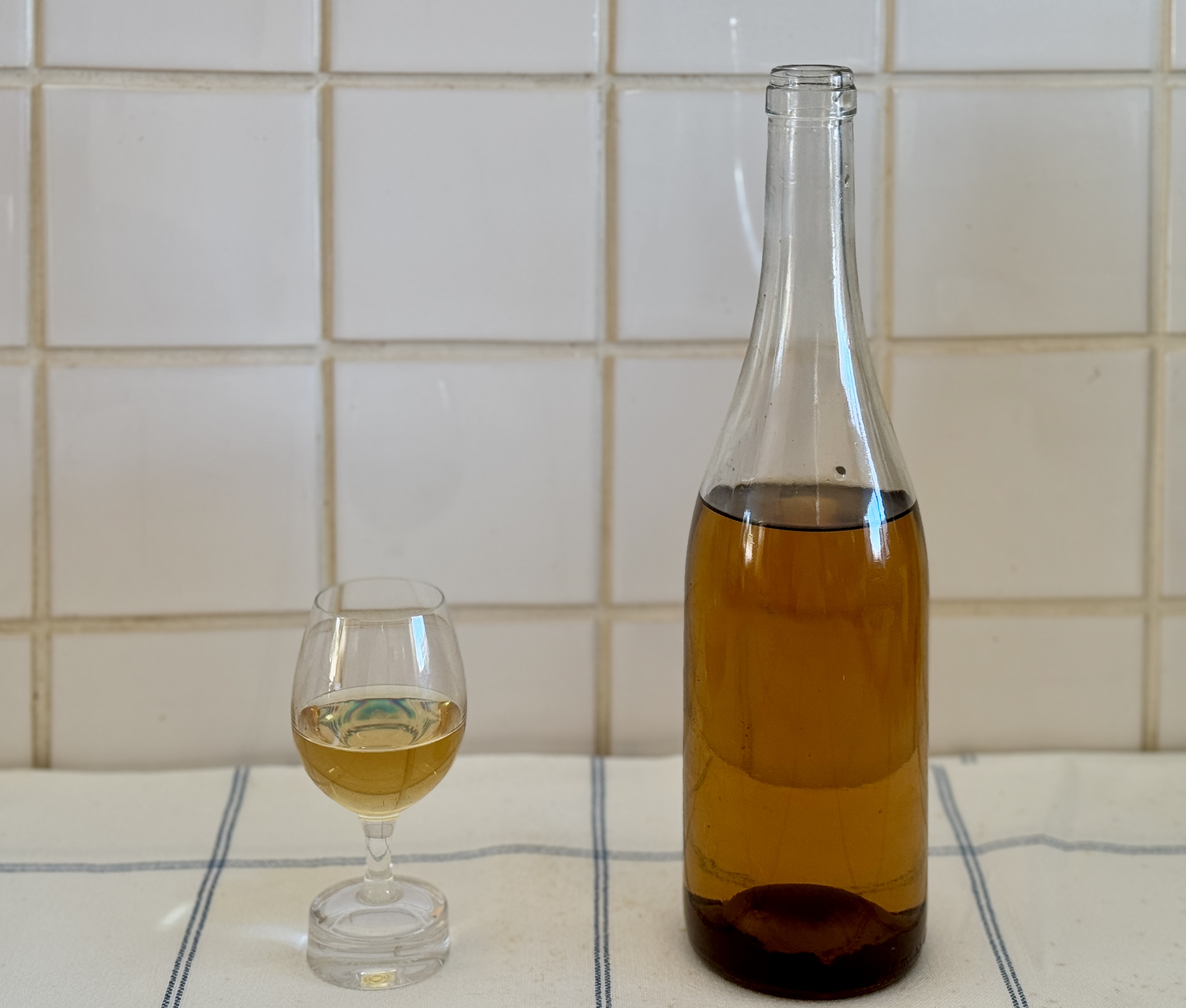
Jeropiga is made by combining grape must (freshly pressed, unfermented grape juice) with aguardente, Portuguese brandy. The brandy kills the wild yeast that lives on the skin of the grapes, preventing it from converting the grapes’ fructose into alcohol. The result is a fortified drink with an alcohol content between 16 and 20 percent that preserves the grapes’ natural sweetness. It is the perfect pairing for roasted chestnuts.
You cannot generally buy jeropiga. Farmers make it in small batches for personal consumption and to share with friends. Receiving a bottle is a clear sign that someone regards you as a local.
People rarely tell you where they got their jeropiga, but we’re happy to reveal that ours comes from our friend Raul Reis. Not content with growing the finest potatoes in Portugal, he also makes wonderful jeropiga in Sobral, a village near Lourinhã. This region is known for the excellence of its brandies, so it is no wonder Raul’s jeropiga is so great.
The ancients used to say, “In January, you see the weather for the whole year” (em Janeiro vês o tempo do ano inteiro). The first 12 days of January, called “arremedas,” were considered a burn-in period not useful for predicting the weather. Instead, the days from January 13 to 24 were thought to represent the weather for each of the 12 months ahead. For example, a rainy January 13 signals a wet January, while a sunny January 14 points to a bright February, and so forth.
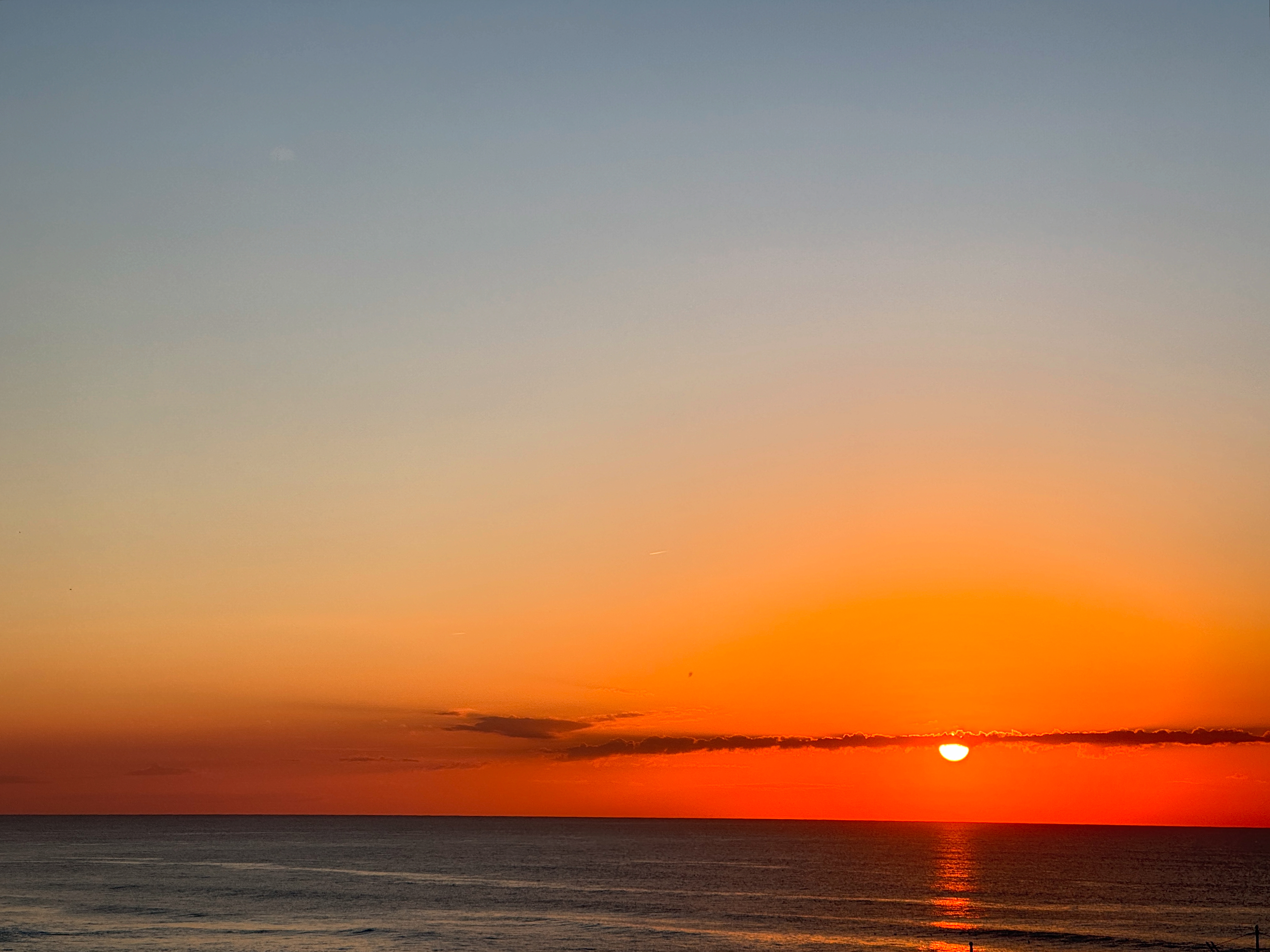
As January unfolds, we’ll closely examine its clues about the weather in 2025. Regardless of the predictions, we look forward to returning to this beautiful corner of the world—and we hope you’ll join us. Happy New Year!
If you’re looking for last-minute holiday gifts, check out Bordallo Pinheiro, an irreverent Portuguese ceramics brand.
Rafael Bordallo Pinheiro, born in 1846 to an artistic family, learned to draw and paint with his father. He started his career as a cartoonist focused on political satire and then brought the same playful spirit to his ceramics work.
His cabbage-shaped tableware, exuberant animal motifs, and unique use of bright colors and textures become iconic, recognized for their artistry and distinct Portuguese flair.
These timeless pieces have been crafted in the same factory in Caldas da Rainha since 1884. But the old factory is also learning new tricks. Over the past 15 years, contemporary designers have been invited to answer the question: what would Bordallo Pinheiro design today? Their imaginative answers honor the legacy of the great ceramist, producing pieces that, like the originals, surprise and delight.
Bordallo Pinheiro ceramics bring fun and joy to our dining tables, turning every meal into a special occasion.



 Salt of Portugal