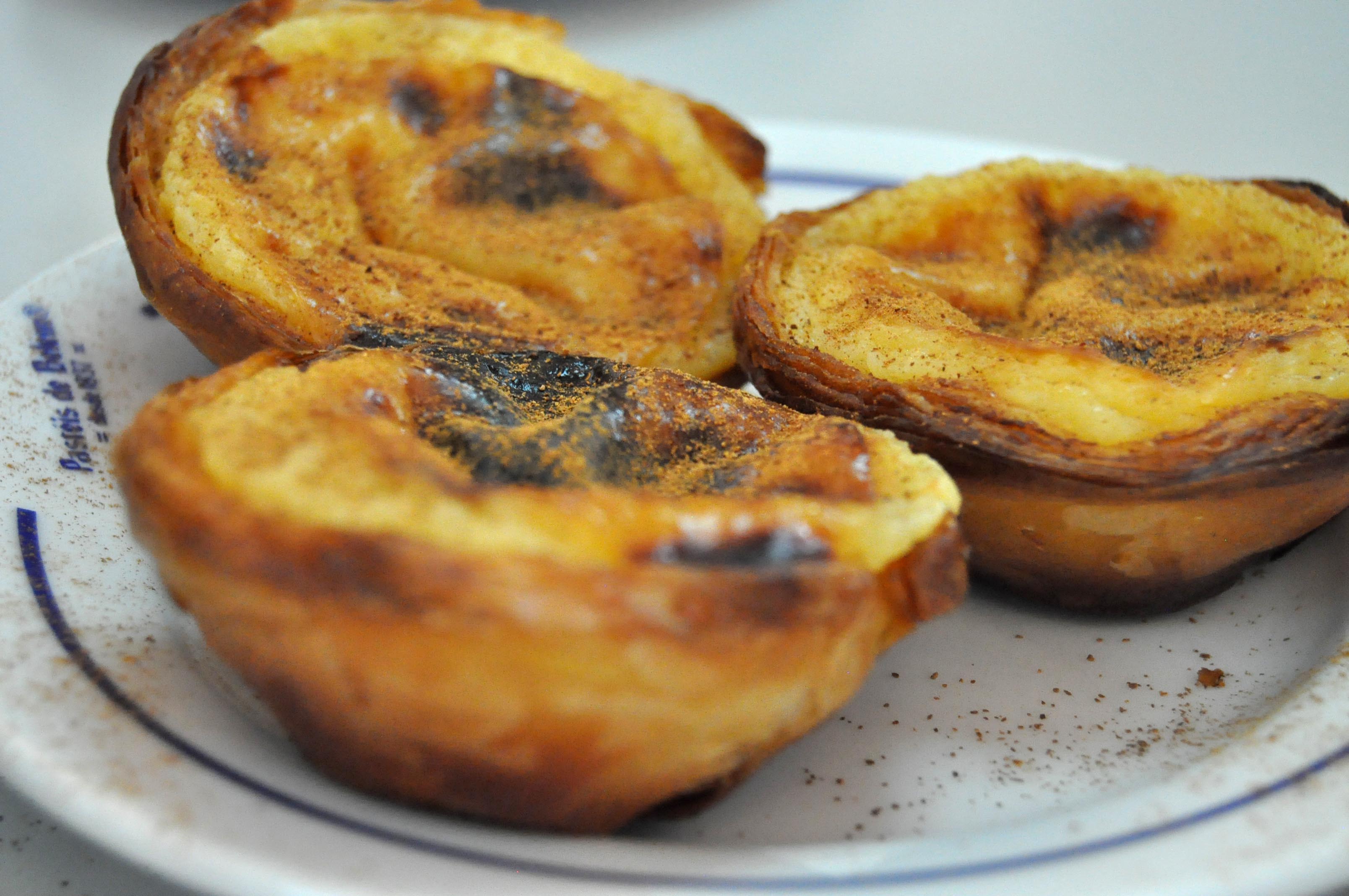
Pasteis de Belém

When you land in the Lisbon airport, there’s a heightened anticipation for what comes next. There’s the usual ritual of waiting in line, searching for your luggage, going through customs, all transforming you from in transit to landed. But here, arriving isn’t the best part. You drive out of the airport towards the river Tagus. As you get close, you first see the seagulls. Then, you see the Tower of Belém and the Jerónimos Monastery, monuments to the many “caravelas” that departed from a nearby dock. A marble Henry the Navigator leads a pack of explorers, pointing the way to the new world. But that’s not why you came here. You came here for a small pastry shop just down the road.

In 1834, the government closed down all Portuguese convents and monasteries. The friars of the Jerónimos Monastery needed a source of income. So, like other religious orders in Portugal, they used their ancient recipes to make pastries for sale. The Jerónimos monks made little cups of flaky pastry dough filled with custard and topped with cinnamon. All monastery pastries are delicious, but these “pasteis de Belém” are a piece of heaven. The recipe hasn’t changed since the pastry shop opened in 1837, and everything about it is shrouded in mystery. Only three master patissiers, who prepare the cream and dough in the “Oficina do Segredo” (secret workshop), know the recipe.

These pastries are ephemeral bites of cinnamon and warmth. They must be eaten right away, never saved for later. Every coffee shop in Portugal produces an imitation, but none quite captures the lightness of the dough, the creaminess of the filling. These imitations even bear a different name: “pasteis de nata.” Because there is only one place in the world where you can get “pasteis de Belém.”

Antiga Confeitaria de Belém, Rua de Belém, 84-92, Lisbon. Tel. 21-363-7423. Email: pasteisdebelem@pasteisdebelem.pt. Click here for website.

The perfect espresso cups

Coffee lovers are on a constant search for aromatic coffee beans, roasted to perfection. They get up early on weekends to study Italian, hoping to uncover the nuances lost in the translation of their espresso-machine manual. They mumble incantations like “ruotare la manopola in senso antiorario per aprire il rubinetto di erogazione vapore” with a passion normally reserved for the poetry of Dante. They listen in rapture to the machine’s rumbles as the water rushes through the coffee at the ideal pressure.

But, after all this effort, they pour their brew into bulky, thick porcelain cups. European cafés use these cups, they tell you with pride. True, but cafés only use them because they rarely break. The coffee tastes so much better in thin coffee cups!

Vista Alegre, the great Portuguese porcelain maker, produces the best espresso cups we have ever tried.  They have the perfect shape and come in bright, joyful colors. These cups are hard to find outside of Portugal. So, if you are visiting Portugal, here’s your chance to bring something unique to your java friends.

Here is a link to the Vista Alegre website.

The Portuguese house

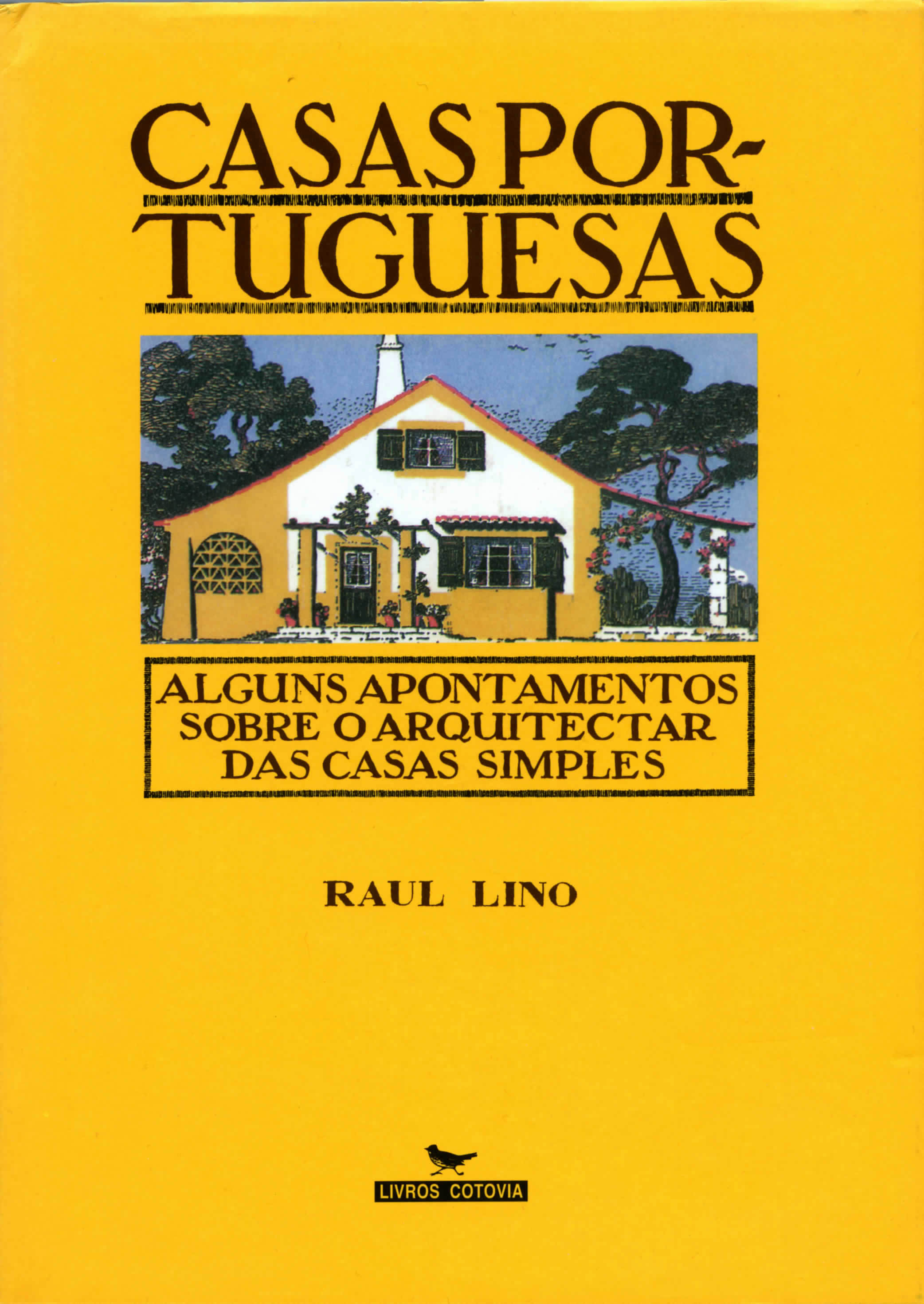
Raul Lino is a Portuguese architect who was influential in the first half of the 20th century. In an era shattered by two World Wars and the Great Depression, Lino craved the stability and permanence that he associated with tradition. He codified this tradition, inherited from the Romans and adapted throughout the centuries, creating the archetypal Portuguese house. Using stone, brick, and terracotta roof tiles, he designed homes that infused the vernacular architecture with proportion and elegance. Some felt that Lino should have looked forward instead of backwards, adopting the modernism of Le Corbusier and Mies van der Rohe. But, by embracing the past, he helped preserve the sense of place that we feel when we see a Portuguese house.

In 1912, Raul Lino built a private residence for his family, the “Casa do Cipreste” in Sintra. It is perched on a hill, overlooking the Sintra Palace. Thanks to the blog of Rui Morais de Sousa, a virtuoso of large-format photography, we can visit this graceful home with just the click of a mouse (here). What a privilege!

Arraiolos

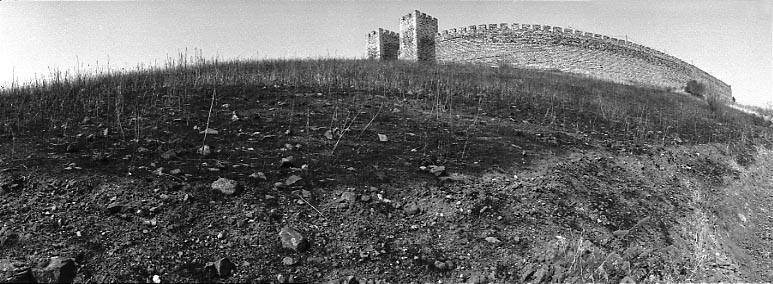
Medieval Arraiolos, Maria Rebelo, gelatin silver print, 2003.

Arraiolos is a picturesque Alentejo village with traditional whitewashed houses and an oval-shaped castle built in 1305.

The town is famous for the production of beautiful needlework rugs. It is also known for the story of an indecisive bride. With her wedding about to start, she could not decide what to wear. She kept hesitating while the guests waited … for two weeks! In the end, she chose to wear only a shepherd’s mantle.

It was well worth the wait to see this Arraiolos bride discover that “less is more” centuries before Mies van der Rohe.

Reverso’s jewels

“Verso” means rhyme. “Reverso” means the other side. Portugal has a long jewelry tradition. At Reverso you see the other side: the work of contemporary jewelers, not just from Portugal but from all over the world. Many of these pieces are quite affordable. Their value is not measured in ounces and carats but in originality and creativity. Paula Crespo, Reverso’s owner, loves to show her work and that of other artists. And she makes Reverso rhyme with elegance.

Galeria Reverso, Rua da Esperança, nº 59/61, 1200 – 655 Lisboa, Tel. 213 951 407, mail@reversodasbernardas.com, click here for website.

Barca Velha

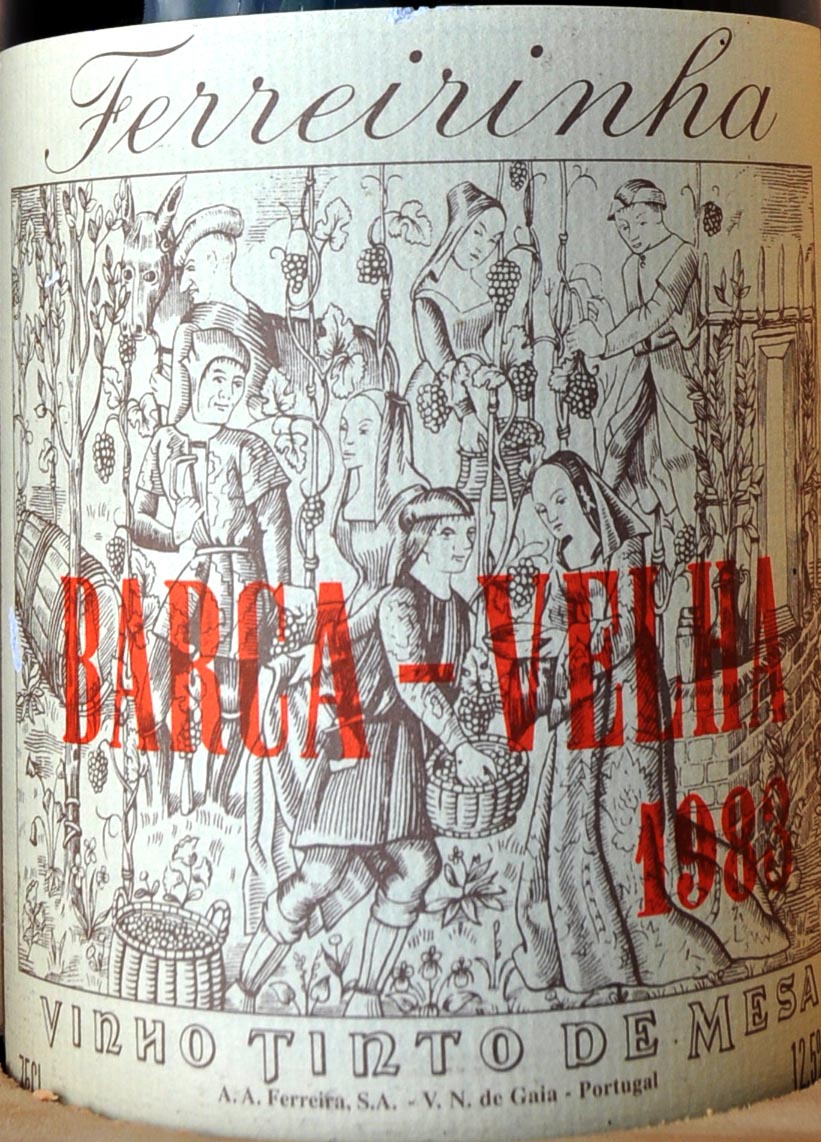
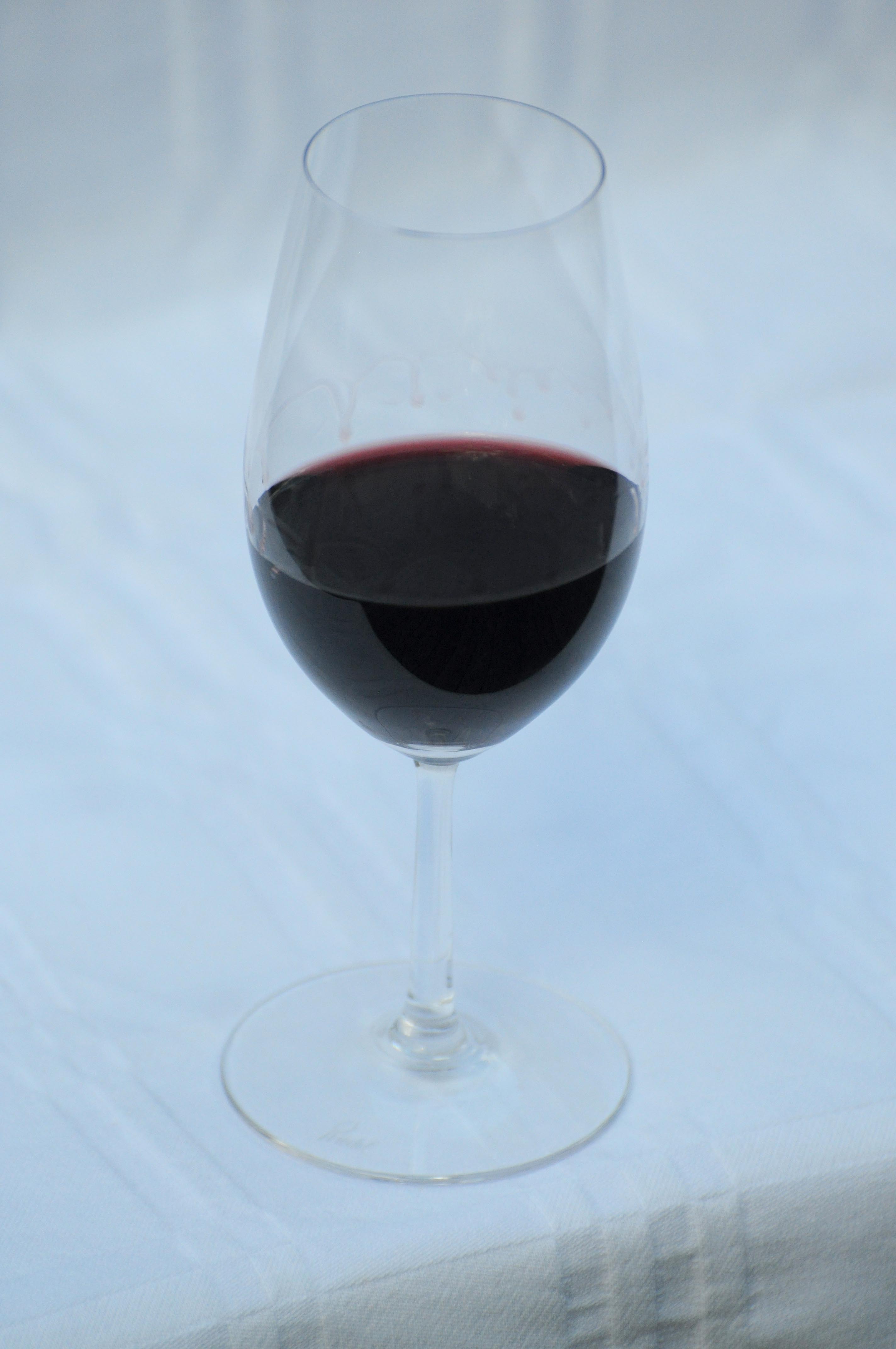
Barca Velha is a mythical wine, the first Portuguese table wine to acquire an international reputation. Fernando Nicolau de Almeida, Casa Ferreirinha’s enologist, adapted the techniques used to produce vintage ports to make superlative table wine. After years of experimentation, he produced the first Barca Velha in 1952 with grapes from a vineyard planted by Dona Antónia Ferreira.

Since then, Barca Velha has been produced only 12 times, when the sun and the clouds joined forces to create exceptional grapes.

How did Nicolau de Almeida decide whether a vintage merited the Barca Velha name?  He relied on his wife. He took an unlabeled bottle home to share with her at dinner. If they finished the bottle by the end of the meal, the vintage was a Barca Velha.

Two Port wine stories

The first story is about the death of Dona Antónia Ferreira’s grandfather. He had a chance encounter with Napoleon’s troops and, eager to show off, addressed the soldiers in impeccable French. The soldiers assumed that he was a deserter from the French army and shot him.

The second story is about Admiral Horatio Nelson. Nelson drank port while he devised his strategy for the battle of Trafalgar. According to legend, he dipped his finger in port wine to draw a map of the fleet positions he later used.

Some might infer from these stories that in times of danger it is a good idea to drink port and a bad idea to speak French. But the lessons from history are always subjective.

Ferreirinha

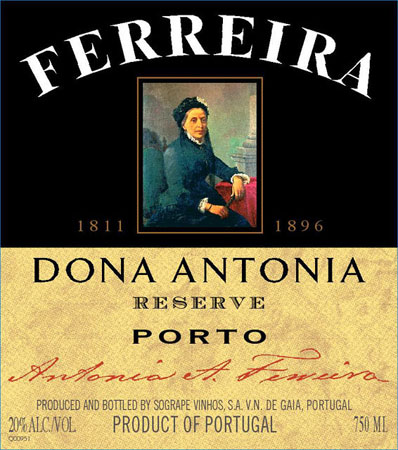
Dona Antónia Ferreira lived in turbulent times. She was born in 1811, the year in which Napoleon’s troops finally retreated from Portugal. When she inherited her grandfather’s wine business, another enemy came: the phylloxera epidemic.

Dona Antónia hired thousands of workers to graft her vines into the roots of American vines resistant to the pest. And it worked!

She went on to produce great port wines, plant new vineyards, and make a fortune. She used some of her wealth to endow schools and hospitals, earning the nickname Ferreirinha (little Ferreira) for her generosity.

In 1987, her descendants sold her company to Sogrape, another wine maker. But the brand Casa Ferreirinha endures as a symbol of quality. So, if you see a Ferreirinha bottle in your wine shop, take it home. And make a toast to Dona Antónia who believed that one can plant the seeds of prosperity during hard times.

António Tá Certo

It is always pleasant to have lunch at a beach side restaurant, with sea and sky as backdrop and the sound of waves as soundtrack. And, when you find a restaurant like António Tá Certo that serves freshly caught fish, just off the boat, the experience can be idyllic.

Tá Certo is located on the beach of Vale do Garrão, close to Faro in the Algarve. It offers an impressive assortment of robalos (sea bass), douradas (sea bream), garoupas (grouper), and pargos (red snapper). If you ask the staff why their fish tastes so great, they smile and answer: our fish slept in the sea.

There is only one problem with enjoying these simple moments on the seashore: you might never want to leave.

Praia do Garrão Nascente, Vale do Lobo. 8135, Almancil, tel. (289) 396-456. GPS: N’ 37.03815 / W’ 8.04699.

Timeless tiles

Portugal has produced tiles (“azulejos”) since the 15th century. This production reached its golden age in the 18th century, when beautiful tiles were used to decorate grand palaces and elegant manor houses.

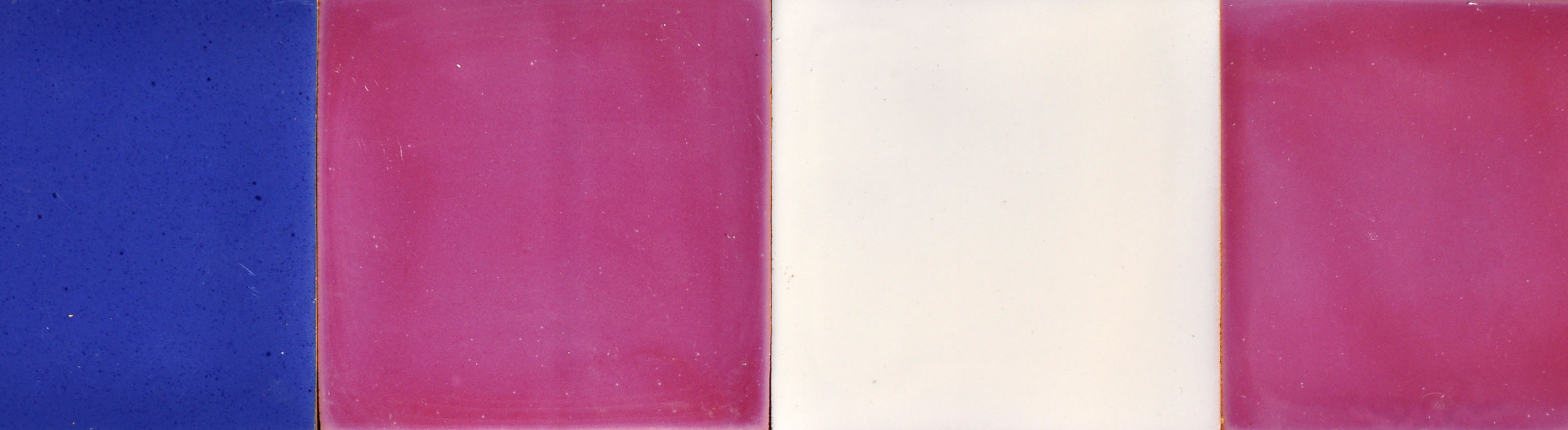
Wouldn’t it be great if you could travel back in time and order tiles from an 18th century master craftsman? Well, you can. Bicesse, a tile factory near Lisbon, makes tiles of pure clay, painted and glazed by hand, just like in the 18th century.

These tiles have the exquisite color nuances of a Rothko painting and the irregular reflections of an ancient mirror. Like fingerprints, no two tiles are exactly alike. Each is a unique work of art.

Cerâmica de Bicesse, Rua da Chapaneira, 81, Bicesse 2645-325 Alcabideche (Cascais), Tel. 214 690 528, email geral@ceramicabicesse.com, click here for website.