The Mafra palace


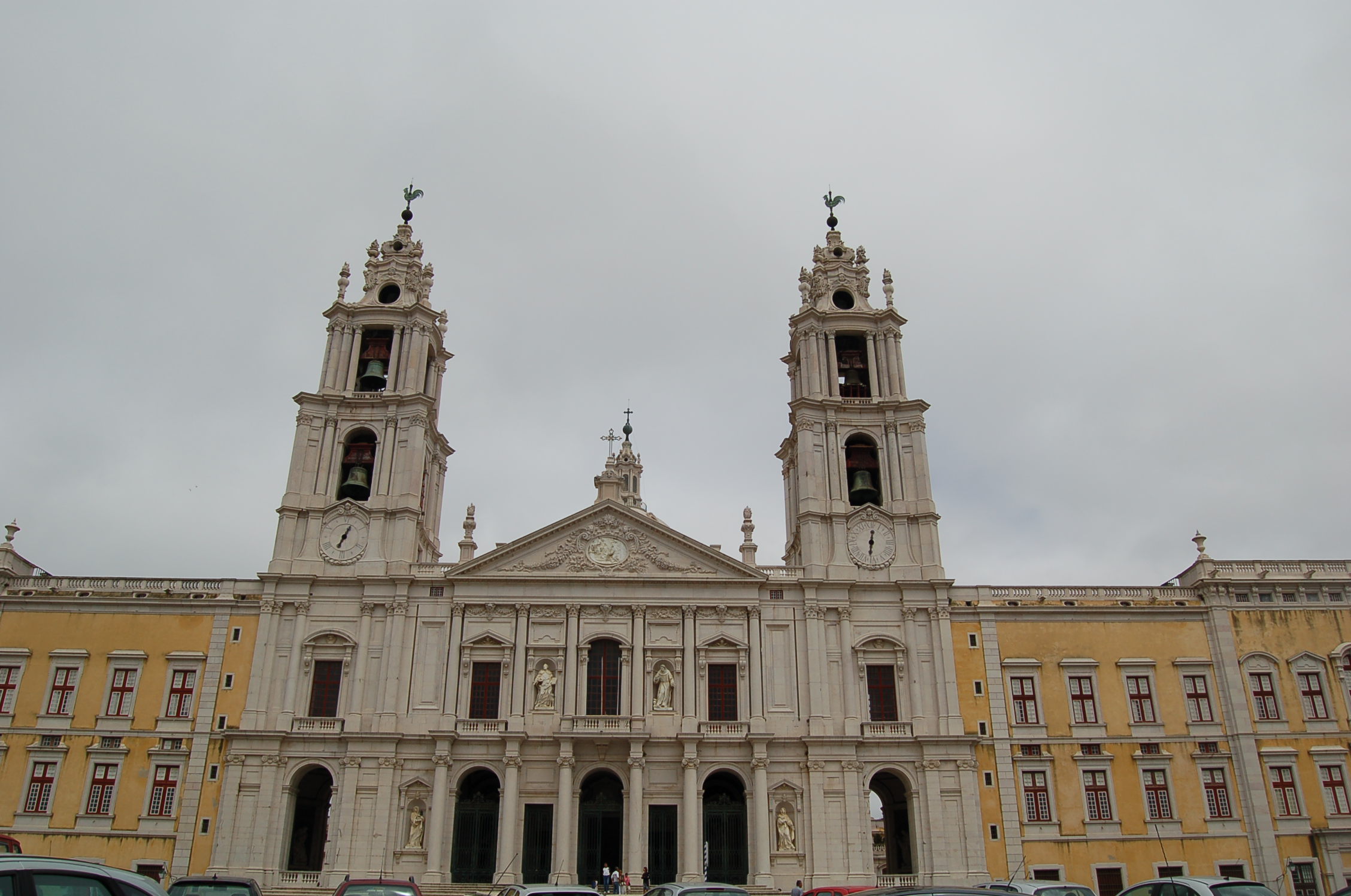
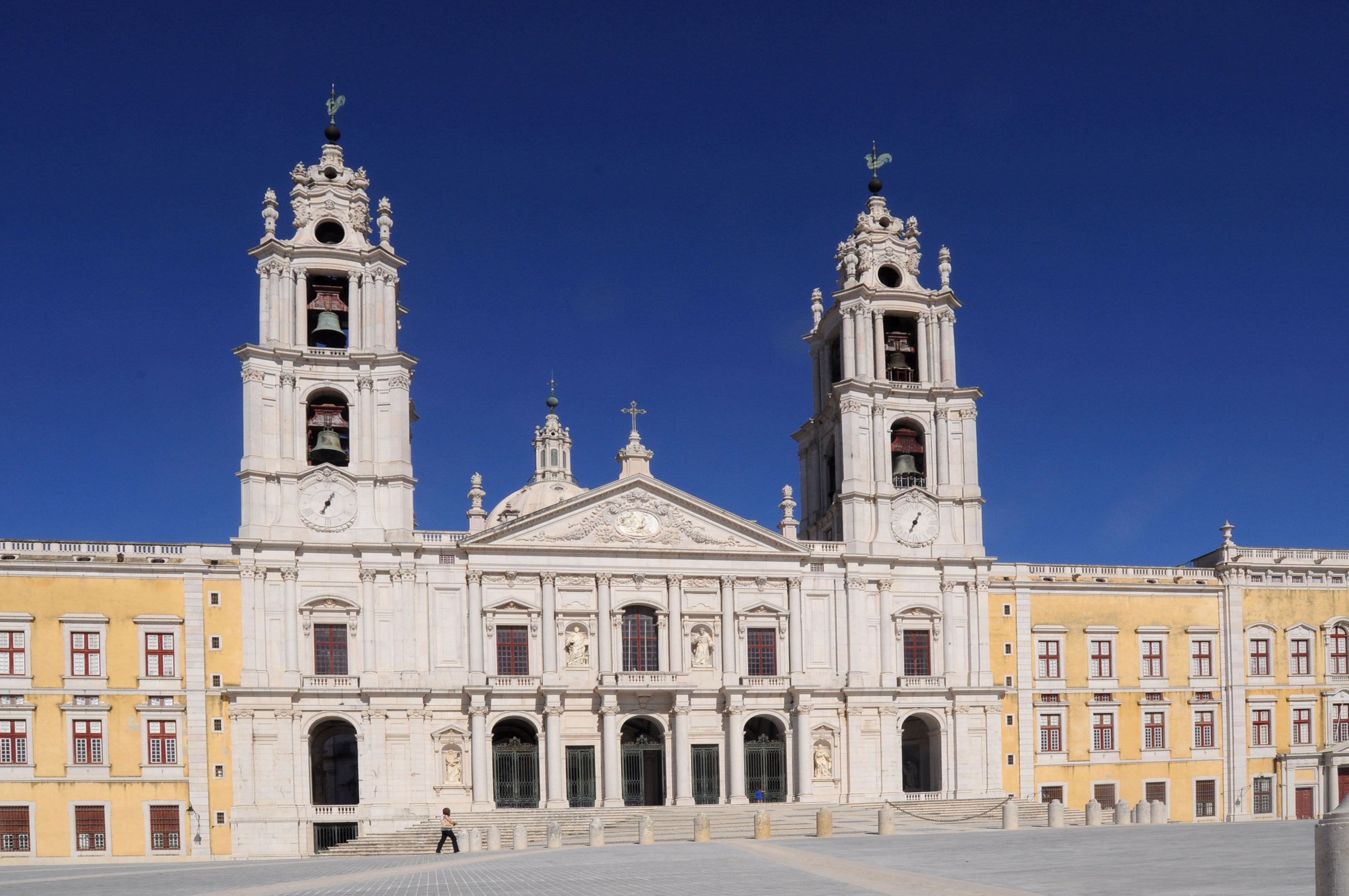
Every morning King D. João V looked in the mirror and told his reflection: you’re magnificent!  There was only one cloud in his life: he did not have an heir to the throne. So, he promised that, if Queen D. Maria Ana got pregnant, he would build a magnificent monastery. That is, according to legend, how the Mafra Palace came to be built.

Financed with gold from Brazil, it features sumptuous accommodations for the king and queen, a magnificent Basilica with six pipe organs, and an enormous library.  This library has been preserved by a colony of bats that prey on the insects that would otherwise devour the book pages. It is well worth it to visit this 18th century palace built by a vain Portuguese king for an austere Austrian queen, guarded by Franciscan monks and their learned bats.
The Bombarral wine fair

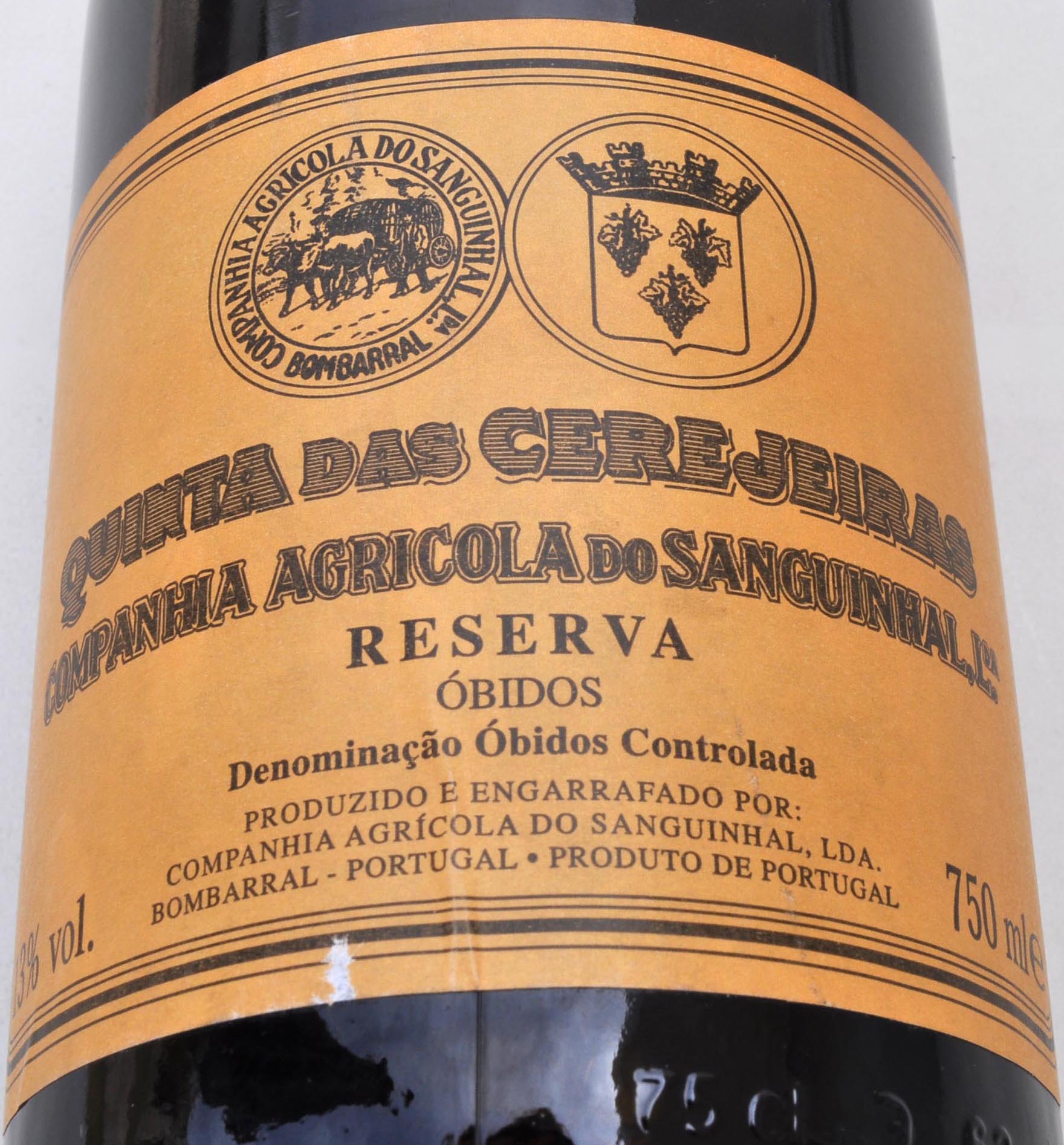
Cistercians monks started producing wine in the Bombarral region in 1153. The Bombarral wine fair, which takes place in early August, celebrates this ancient wine-making tradition.

You’ll find few tourists there. It is an event designed for the locals, which makes it a lot more fun. You can buy a glass for a nominal amount (about 3 Euros) and use it to try the wines of many producers, including one of our favorites, Quinta do Sanguinhal.

You can meet the famous D. Amélia, maker of an incredible pear cake and many other delicacies. And eat outdoors underneath the foliage of ancient oak trees at the Zélia restaurant stand. They serve an astonishing grilled rabbit and a lot of other great fare. Mark your calendars!

Tremoço

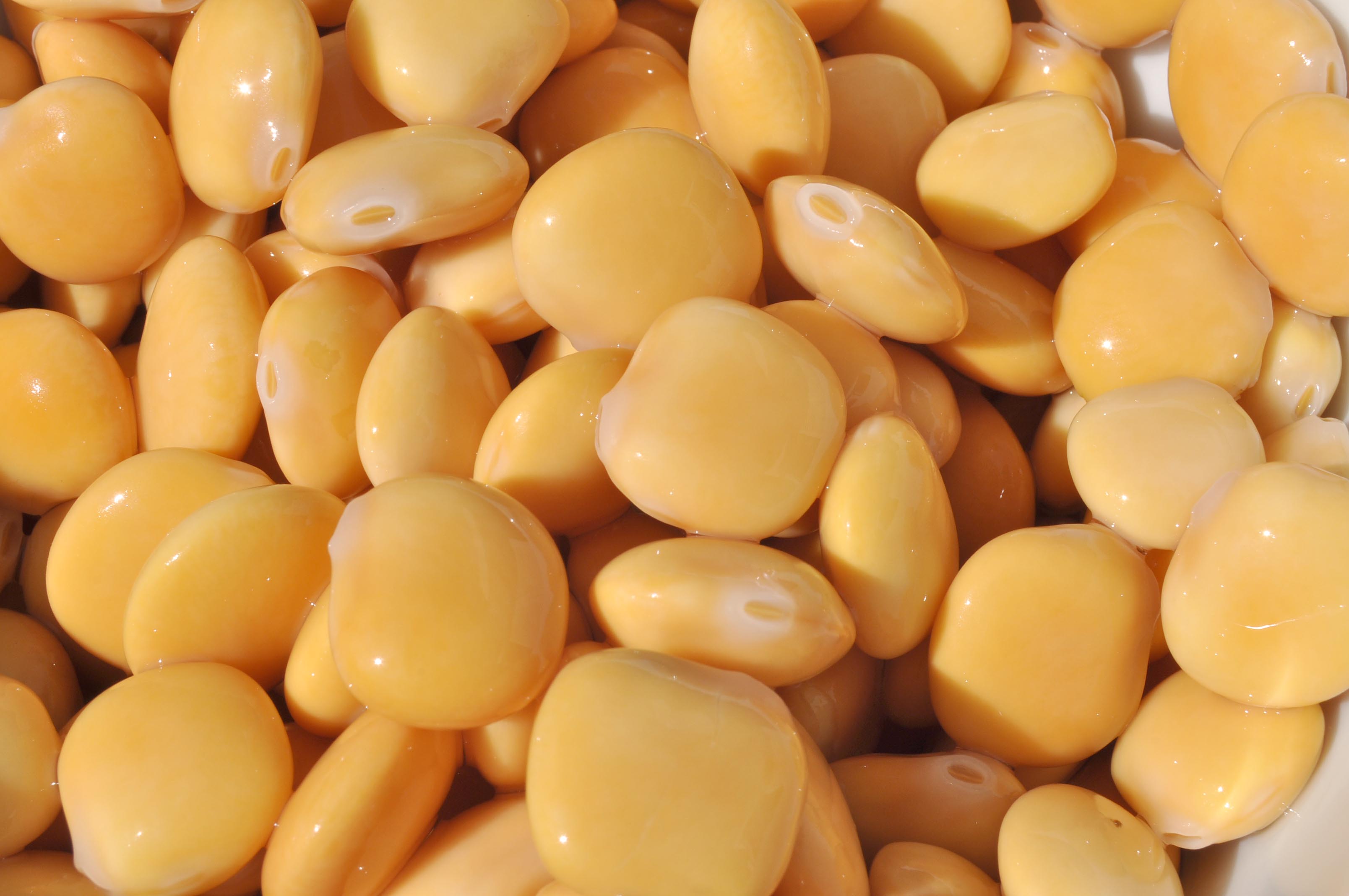
If percebes are too adventurous for you, your next best bet is tremoços (lupini beans). You eat them by tearing the skin with your teeth and popping the seed into your mouth. Recent research finds that the tremoço is a great health food. These findings would not surprise Hippocrates who touted their health benefits 2,500 years ago.

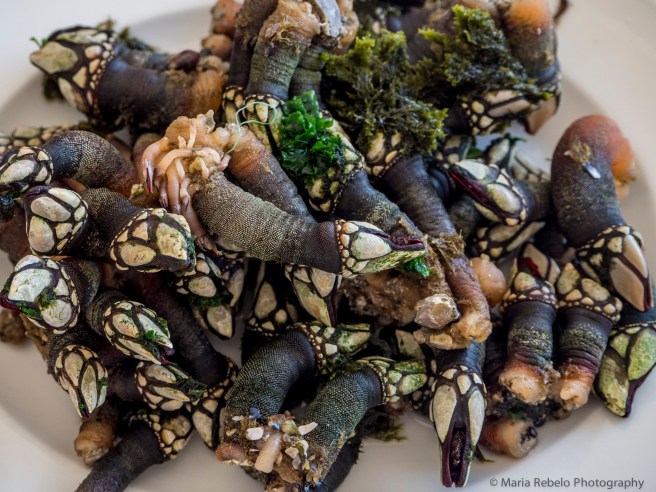
Percebes

OLYMPUS DIGITAL CAMERA

You eat these pre-historic looking crustaceans by twisting off their heads and exposing their meat. They taste and smell like the sea and they are great with beer.

The English name for percebes, “gooseneck barnacles,” comes from the medieval theory that they are embryonic barnacle geese. This theory conveniently explained why flocks of geese would suddenly appear out of nowhere (the fact that birds migrate was not known in the Middle Ages).

In any case, do not worry. There are no recent reports of percebes flying off the plate to migrate south.

Portuguese beer

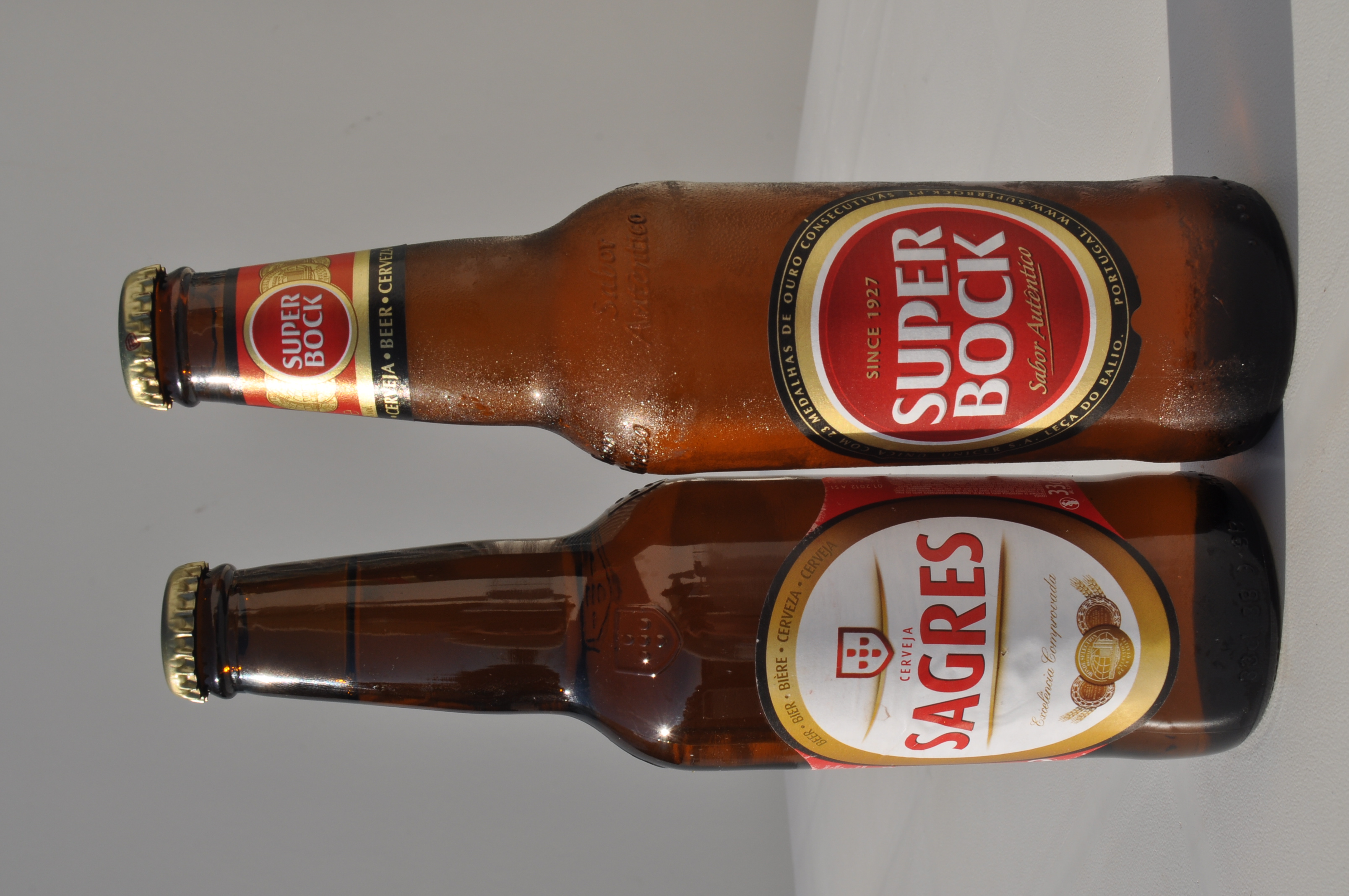
Beer has been produced in Portugal at least since the Lusitanos occupied the region. Issues with refrigeration and poor branding prevented the Lusitanos from gaining market share in the Iberian Peninsula before the Roman conquest in 27 B.C. These problems were gradually surpassed over the next 20 centuries.

Two leading brands eventually emerged: Super Bock, introduced in the 1930s, and Sagres, introduced in the 1940s.  Both beers taste great on a hot Summer day. Both taste even better in their draft versions, which you can enjoy at many beach-side cafés.

Super Bock is more popular in the north of Portugal while Sagres is more popular in the south. We try not to take sides in the Sagres versus Super Bock controversy. But, the perceptive reader might find signs of a slight bias on our part.

The tide tables

During beach vacations life follows the rhythm of the tides. Low tide is the best time to walk on the hard, moist sea sand. The sun and the moon regulate the tides with designs that only physicists understand. Luckily, Portugal’s Ocean Institute publishes tide tables, so we don’t have to study physics to know the perfect time to walk on the beach.

Click here to see the tide tables.

Ginjinha

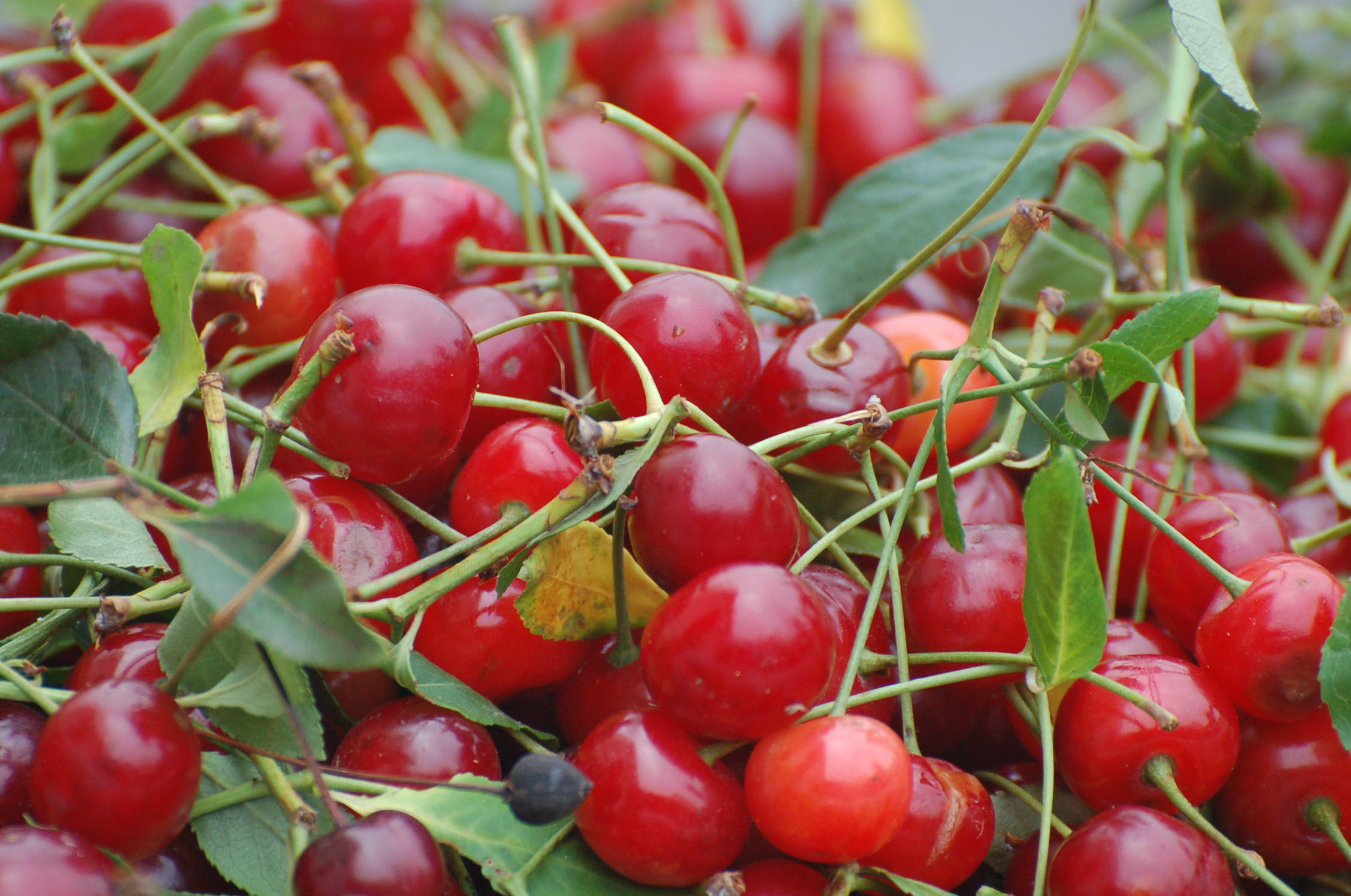
“Ginjinha” is a liquor made from sour cherries called “ginjas.” It is produced in various locations, including Alcobaça, Bombarral, and Caldas da Rainha. But the most famous ginjinha comes from Óbidos, a region where the Romans planted cherry trees.

There are several producers, including FrutÓbidos, Oppidum (the Latin name for Óbidos), and Ibn Errik Rex (the Arab name for the first king of Portugal, D. Afonso Henriques). Each producer has its proprietary, carefully guarded, secret recipe.

You won’t be surprised, dear reader, to know that we have our own secret ginjinha recipe. Rumor has it that our ginjinha is made only from ginjas harvested during the new moon and that it uses dew collected at dawn from the petals of wild flowers. We are neither confirming nor denying.

Óbidos

Imagine that the year is 1282 and that you are king D. Dinis. What wedding present would you choose to impress your bride, Isabel of Aragon?

1) a passionate “cantiga de amor” (a medieval love poem);

2) a state-of-the art ship that can crest ocean waves without capsizing;

3) silk and jewels;

4) a medieval town.

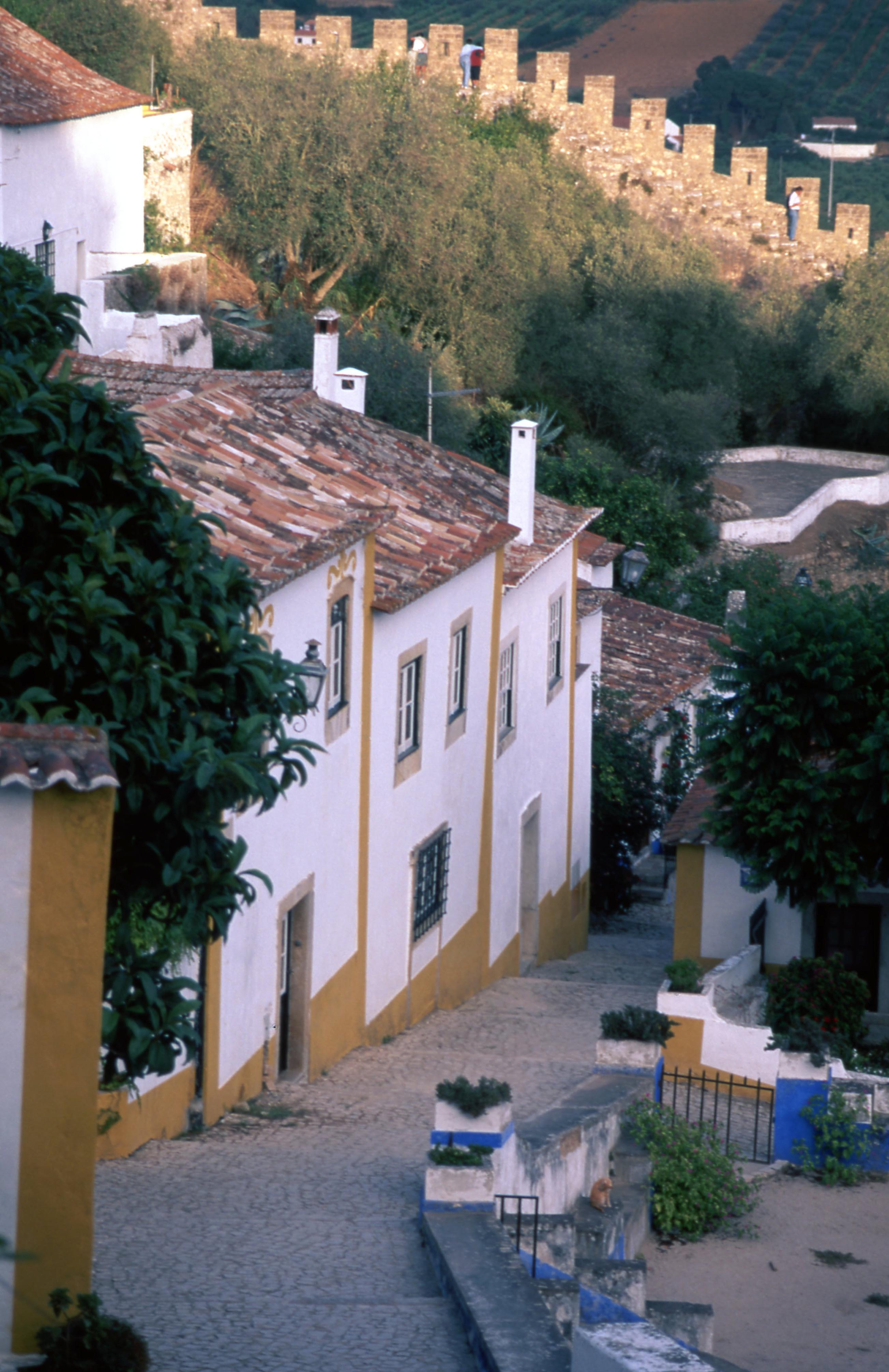
If you guessed 4), you are correct. King Dinis offered Queen Isabel the town of Óbidos. And, while the gift might seem extravagant, Queen Isabel repaid it many times over by helping the poor and maintaining peace in the realm.

Óbidos’ beauty is unique. Inside the castle walls it is easy to imagine we are in the Middle Ages and that we might bump into the “Lidador,” the knight who helped conquer the town in 1148.

If you cannot afford giving your loved one a medieval town, you can settle for the next best thing: a visit to Óbidos.

Pousadas

OLYMPUS DIGITAL CAMERA

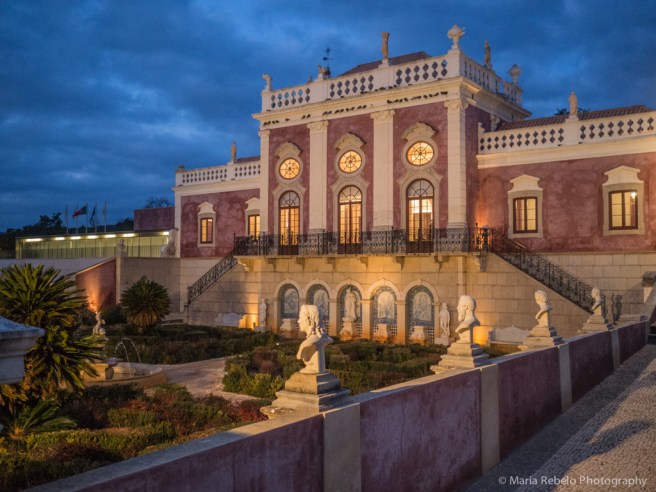
In the 1940s, the Portuguese government started converting many castles, palaces and monasteries into historical hotels called pousadas. There are now more than forty of these wonderful establishments. They are places where you can sleep and eat like royalty without having to wear funny-looking hairdos or worry about court intrigue.

Click here for the pousadas website.

Queijadas de Sintra


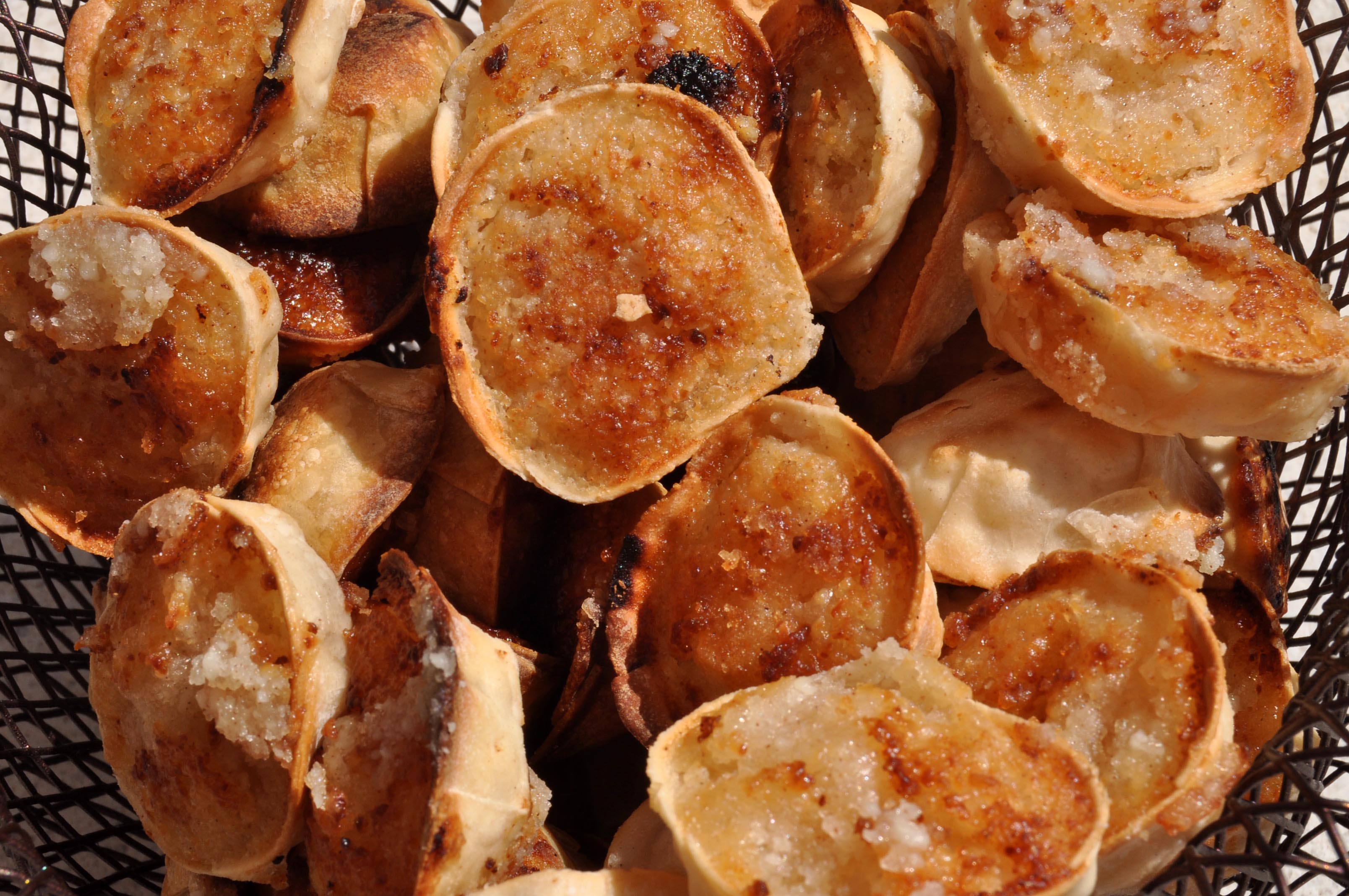
Queijadas de Sintra are cheese tarts made from fresh cow’s cheese, eggs, sugar, flour, and cinnamon. There are several producers and there is even an association that certifies whether the recipe is authentic. The ones featured here are from Casa do Preto (Estrada Chão Meninos, 44, Sintra).

Historians think that the first Sintra queijadas were produced in the Middle Ages (presumably without cinnamon). It is easy to believe that it has taken a few centuries to figure out how to make the shell so thin and the filling so moist and flavorful. And, if you try them, you will see that all this effort has paid off.