A magical stew

RBD_raia low resolution
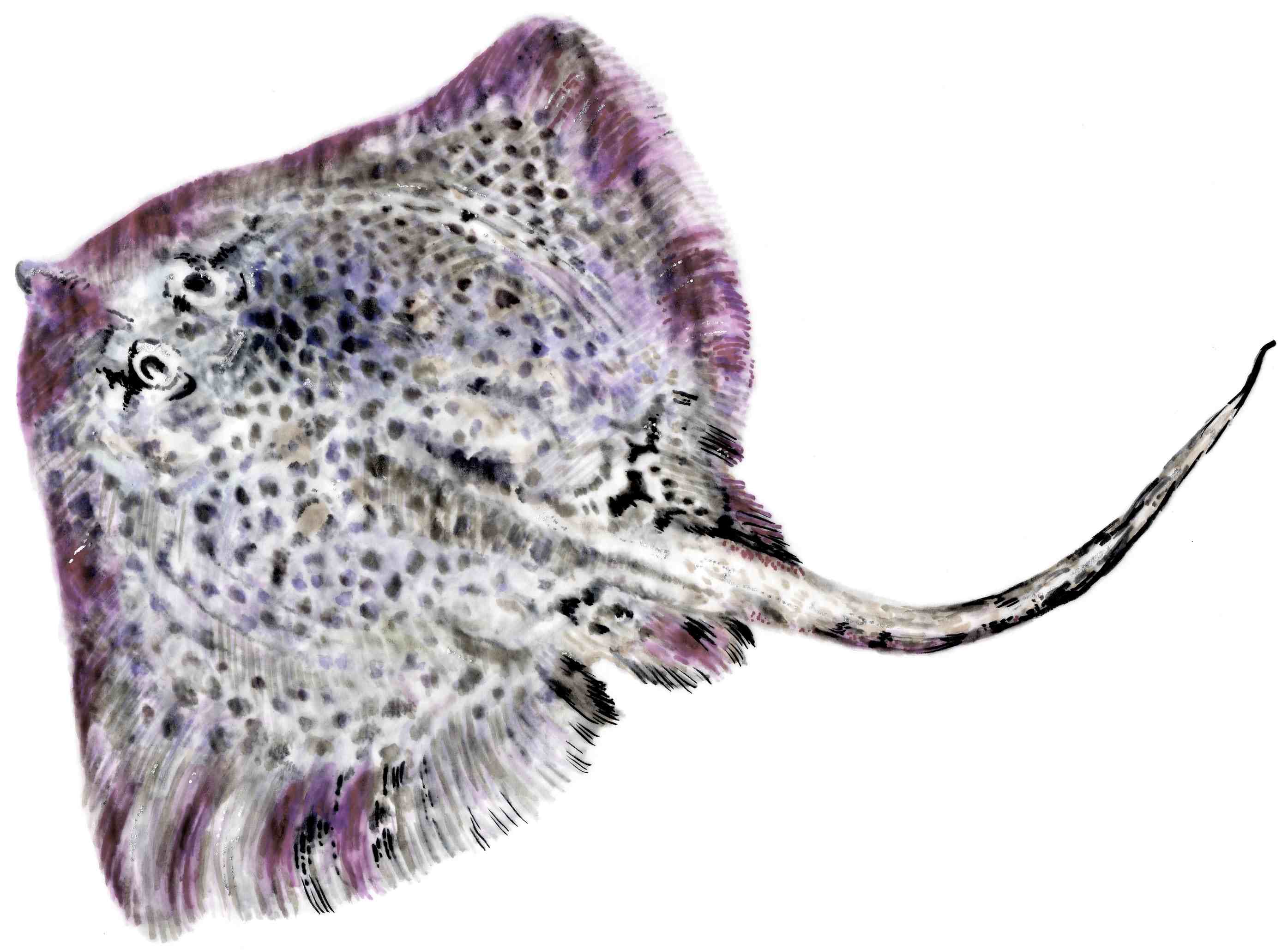
Raia, Rui Barreiros Duarte, ink on paper, 2013.

All southern European countries have their own fisherman’s stew. In Portugal, this classic dish is called caldeirada (pronounced “qaldeirahda”). It’s an appropriate name, since caldeira means caldron, a pot used in alchemy. When you combine fish, vegetables, and white wine, the result is indeed magical.

You can use different fish varieties, but the star of the caldeirada is the skate. Its delicious white flesh combines perfectly with the rich stock.

The best places to eat caldeirada are near the ocean because this dish requires the freshest fish. According to Marcel Pagnol, the French writer born in Marseille, the secret of the fisherman’s stew is to put the fish in the pot while their tails are still moving. If you’re near the Portuguese coast, don’t miss a chance to eat a memorable caldeirada.
The fish formerly known as wood face

Carapau_RBD2
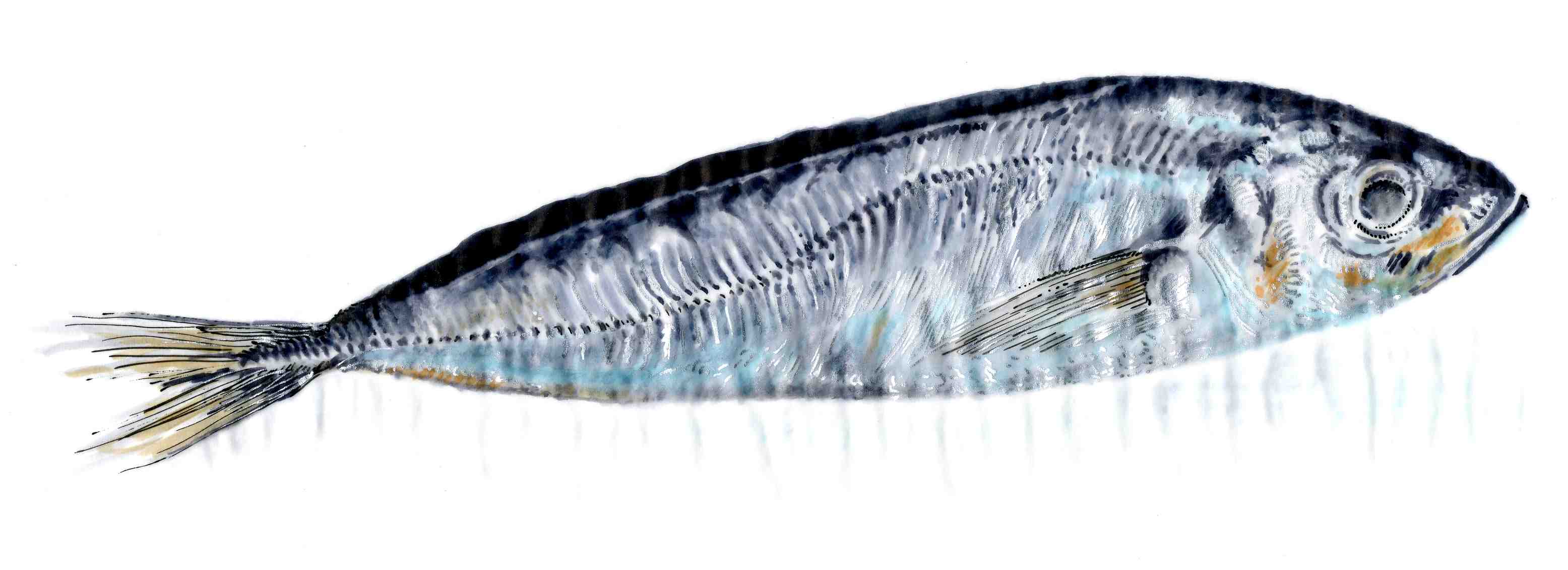
Carapau, Rui Barreiros Duarte, ink on paper, 2013.

The carapau is one of the most delicious fish in the Portuguese coast. Yet, it toils in obscurity while the Portuguese sardine basks in glory.  Why? First, there’s the name. Carapau means “wood face”; who wants to eat a fish called wood face? Second, grilled carapau is often served with Spanish sauce (“molho à espanhola”). How can a Portuguese fish shine drowning in a Spanish sauce?

We propose giving the carapau the recognition it deserves by changing its name to imperial sardine. This new identity will make carapau irresistible. Wouldn’t you prefer an imperial sardine to a regular one?

Please help us spread the word about carapau’s new name; tweet, facebook, text, call. Let’s make the wood face smile!

Cherishing the mackerel

RBD_desenho-cavala
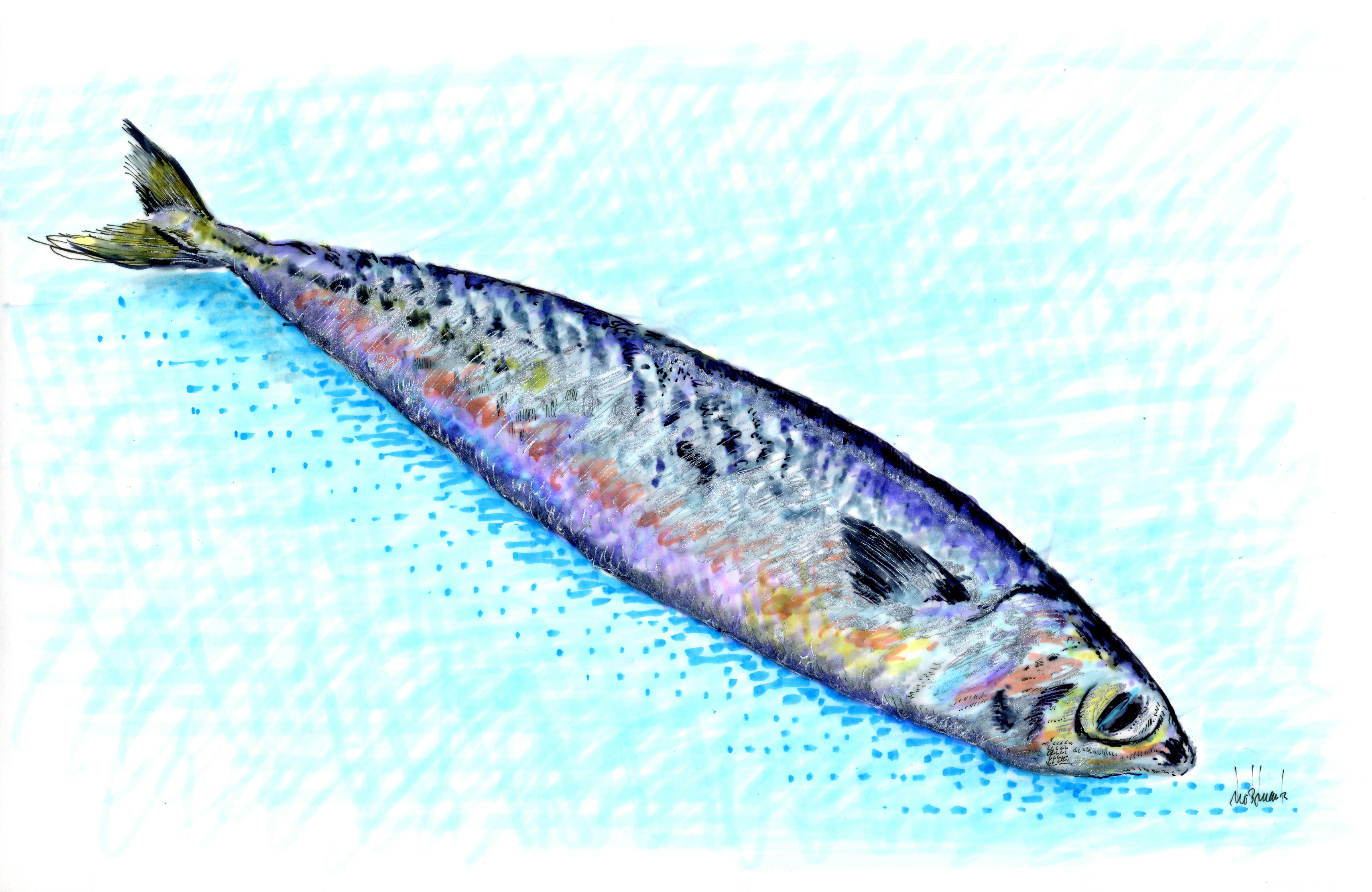
A cavala, Rui Barreiros Duarte, ink on paper, 2012.

Fernand Point’s famous cookbook, Ma Gastronomie, includes two mackerel recipes. But in Portugal this fish, known as “cavala,” has never been popular. When fish mongers find mackerel mixed with other fish, they often give it away.

We worry that our national indifference toward the mackerel might make it swim to France in search of recognition. Luckily, chef José Avillez decided to pay tribute to this wonderful fish at his restaurant, Belcanto.  His recipe starts with a traditional “salmoura”: the fish is soaked in water, salt and sugar. It is then sliced and marinated in an infusion of rice vinegar and green apples. Finally, the mackerel is seared and served with delicately pickled vegetables.

If you go to Belcanto, please order this delicious dish. Help us keep the mackerel on the Portuguese coast!

Cavala Belcanto

Belcanto is located at Largo de S. Carlos, 10 in Lisbon. Tel. 213-420-607.

Portuguese lesson: how to order an espresso

Uma bica, Rui Barreiros Duarte, ink on paper, 2012.

You can order an espresso by saying:  “Um espresso, por favor. “ (oom espresso poer faevoer). “Um” means “one,” and “por favor” means “please.” This method works fine, but the Portuguese don’t use the word espresso. So, here’s how to order coffee like a local.

In Lisbon, an espresso is called a “bica” (pronounced beeca), so the right thing to say is: “Uma bica por favor” (ooma beeca poer faevoer). In case you’re wondering, “bica” means spout, so the name probably comes from the spout that channels the coffee into the cup.

Now that we covered the basics, let’s discuss some advanced topics. There are two types of “bica.” The “bica curta” (beeca coorta) is a short espresso, sometimes so short that you can barely taste any coffee. A “bica cheia” (beeca sheia) is a long espresso. Your choice of bica reveals a lot about your personality. People who like the “bica curta” are usually intense, while those who enjoy the “bica cheia” tend to be more relaxed.

In Oporto they call an espresso a “cimbalino” (ceenbaleeno) in homage to La Cimbali, a popular Italian brand of espresso machines. Foreigners who know this arcane fact are often honored with a state banquet and given the keys to the city.

Where can you find a list of the best coffee shops in Portugal?  There’s no such list. With more than three centuries of experience brewing coffee, Portugal has as many great coffee shops as beautiful beaches.

Pink glamour

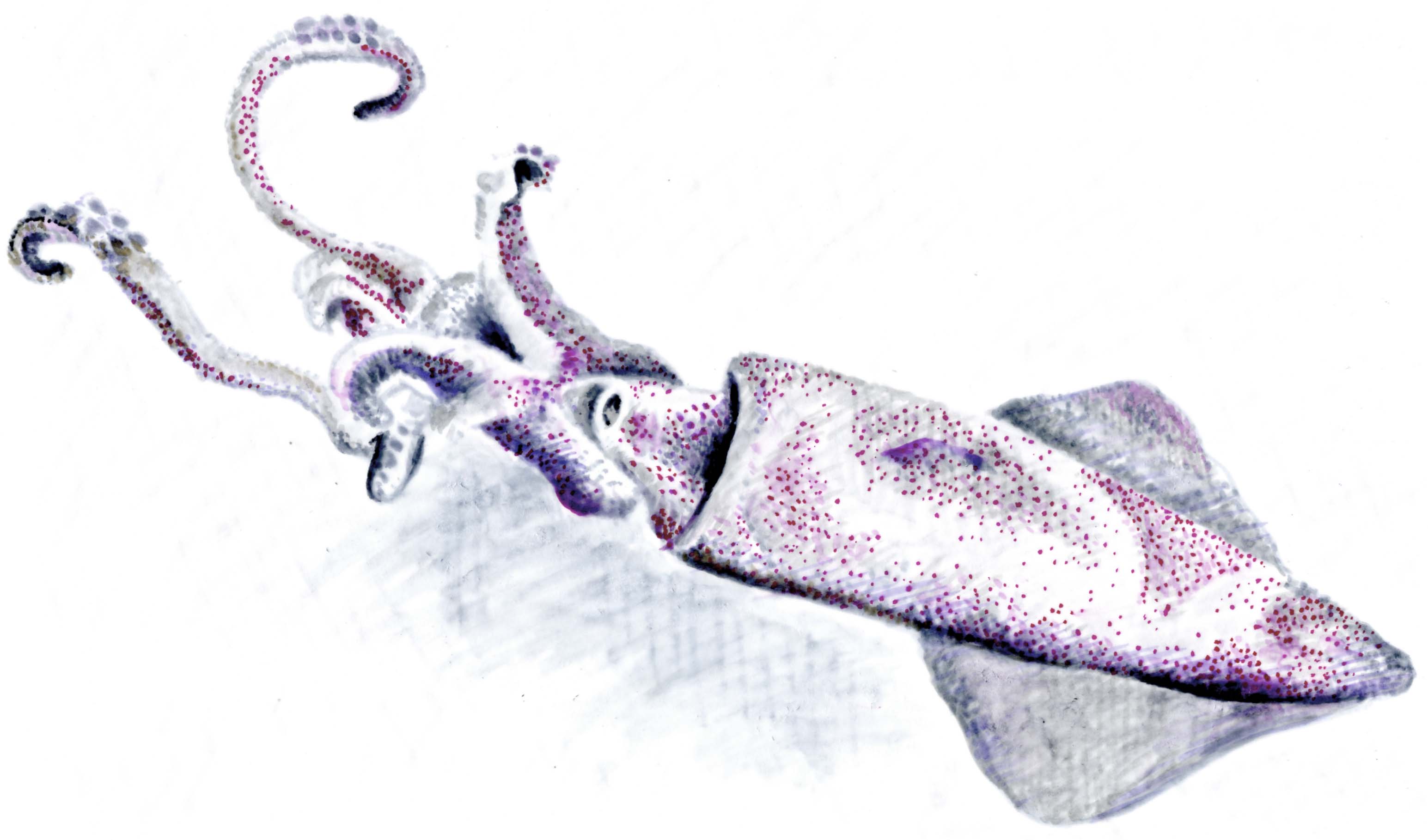
Lula, Rui Barreiros Duarte, ink on paper, 2012.

The squid is a sea socialite, always hopping from shrimp to smelt parties, elegant and glamorous in its pink-dotted design gown. This cephalopod has in recent years become a globe trotter. Every day, billions of squid travel by road, sea and air to the menus of fashionable restaurants around the world. But all this roving takes a toll on the delicate mollusk, which arrives tired and frozen, long on frequent-flyer miles and short on taste.

If you’re in Portugal, don’t miss the chance to try some fresh squid. The best way to cook it is “Algarve style” (lulas à Algarvia):  the squid is lightly fried in olive oil, garlic, and bay leaves. It’s a simple preparation and yet, it produces sublime results that do justice to the squid’s diaphanous freshness.

A Portuguese sardine answers the Proust questionnaire

A Portuguese Sardine, Rui Barreiros Duarte, ink on paper, 2012.

In the late 19th century it was fashionable to make a list of questions and keep a notebook with the answers supplied by friends and family. The answers of the French writer Marcel Proust were so admired that these lists became known as Proust questionnaires.

To our knowledge, no fish has ever answered a Proust questionnaire until now. Here are the answers offered by a Portuguese sardine.

Your favorite virtue: I’m rich in omega-3, but it’s hard to buy things with it.
Your main fault: Being a sustainable species. People think I’m replaceable!
Your idea of happiness: A world-wide ban on canning small, cute fish.
Your idea of misery: Being smoked; do I look like a cigar to you?
Your favorite food: Plankton!
Where would you like to live: The island of Sardinia.
What others misunderstand about you: There’s no need to chop off my head; I don’t bite!
What you don’t understand about others: Why they hate my guts.
Favorite expression: Let then eat hake!
Favorite motto: Salty is the new sweet, silver the new gold.

A Portuguese folk song

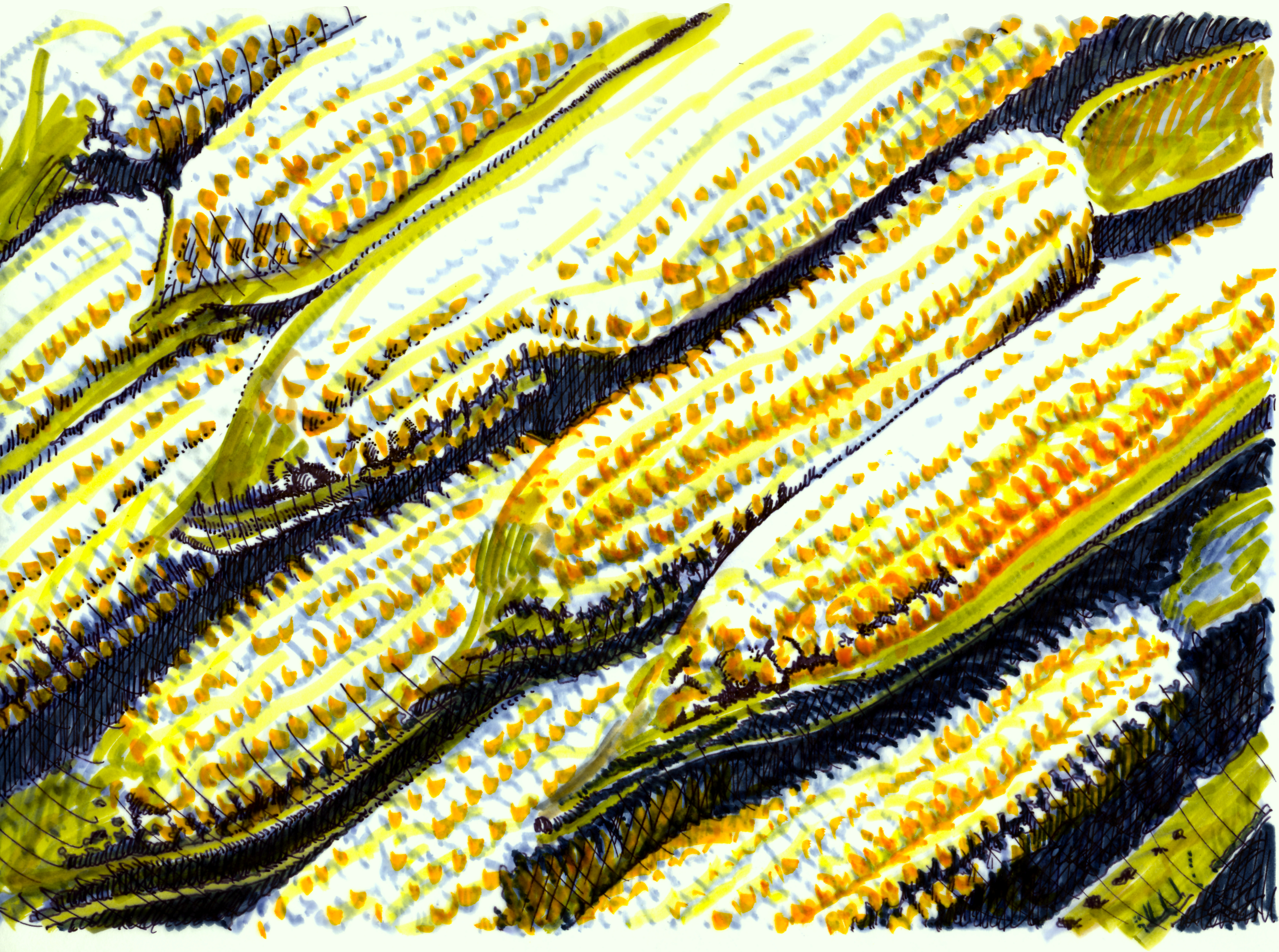
Milho verde, Rui Barreiros Duarte, ink on paper, 2012.

Milho verde (green corn) is a Portuguese folk song made famous by the singer José Afonso. It is a song that was probably sang by farmers, in sync with the rhythm of their labor as they tended the fields. This version uses the soundscape of a Portuguese farmers market as the background.

Pedro Rebelo (concertina and soundscape) and Sergio Rebelo (dobro).

Portugal’s star wine varietal

Touriga Nacional, Rui Barreiros Duarte, ink on paper, 2012.

There is a Portuguese saying, “muita parra, pouca uva,” (leafs are many but grapes are few) that applies to Touriga nacional. This varietal has very small grapes. But they burst with flavor through a thick skin that gives the wine an intense red color. Touriga has been planted for centuries in the Dão region but has little name recognition outside of Portugal.

If you are a wine lover, it is worthwhile to learn how to say Touriga nacional (toereega nacional), because this grape is destined for stardom. So, when the Touriga frenzy takes over the world, you’ll be able to say: I drank those fantastic Touriga wines when they were great buys because almost no one outside Portugal knew about them.

The Portuguese oranges of Louis XIV

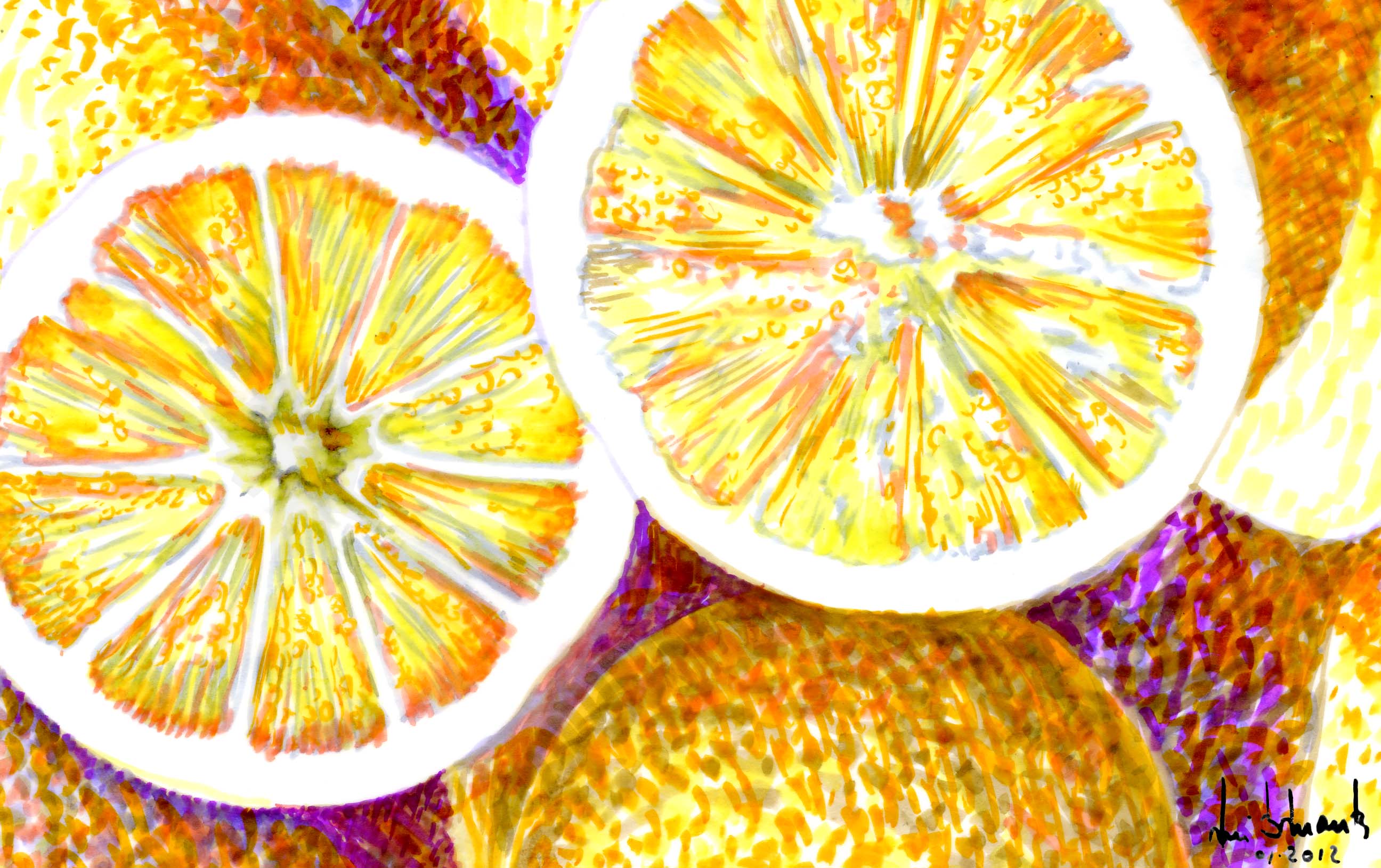
As laranjas Portuguesas de Luis XIV, Rui Barreiros Duarte, ink on paper, 2012.

“Portugal,” “Portugal,” cried the street vendors in 17th century Paris. They were selling a novelty fruit: sweet oranges from Portugal. European oranges were bitter, good only to make marmalade.  That all changed when the Portuguese brought sweet-orange trees from India and China. These trees produced the most fashionable fruit in Europe. Portuguese oranges were so expensive, that Moliére used them in his play The Miser to signify extravagance. Louis XIV, who thought that sweet oranges looked like the sun, adopted them as his personal symbol and did not rest until he had his own “orangerie.”

If you visit Portugal, order a freshly squeezed orange juice in an outdoors café in an old neighborhood. Imagine yourself in the 17th century. Enjoy this luxurious drink that only kings and nobles can afford. Doesn’t it taste sweet?

The tower of Belém

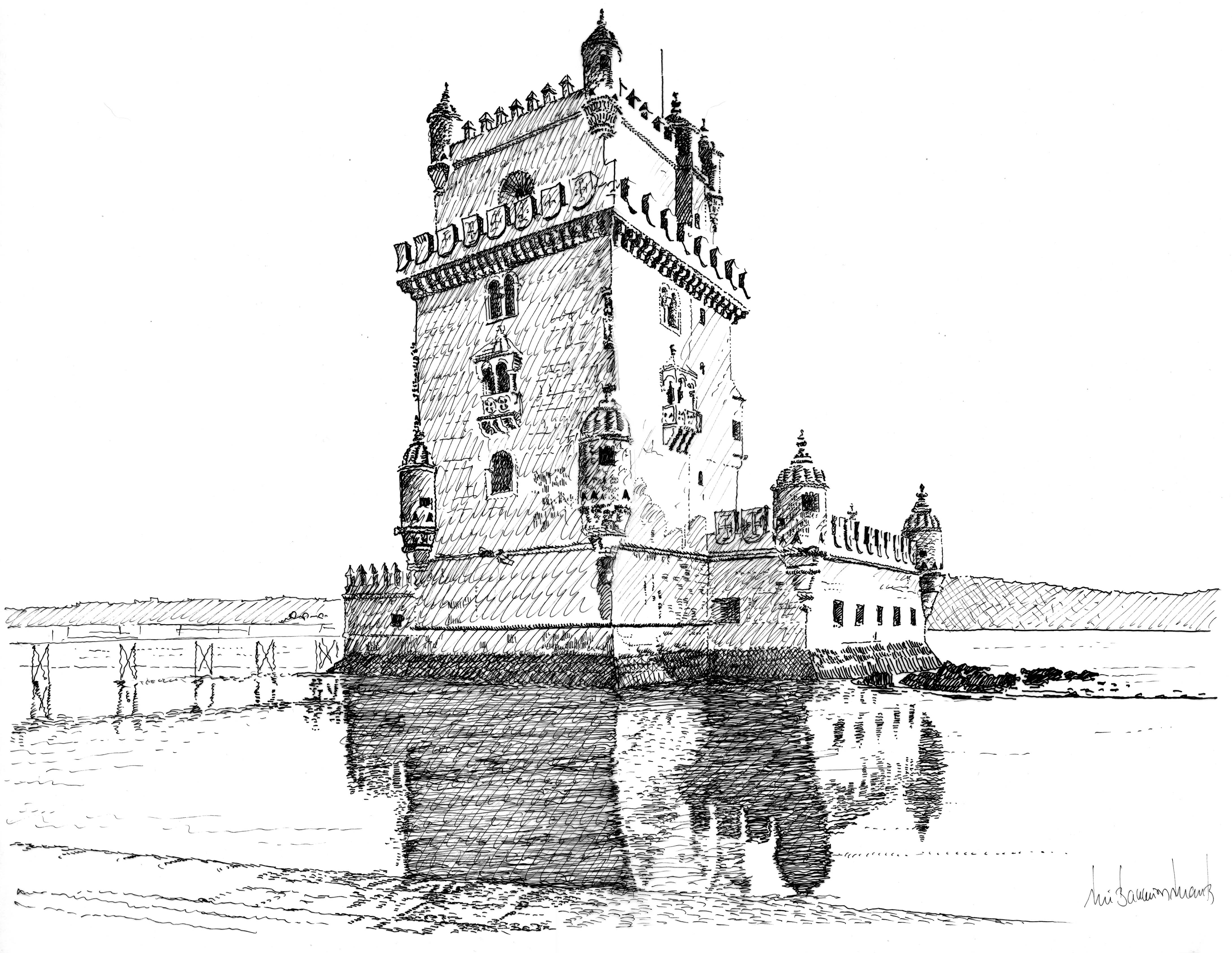
The Belém tower, Rui Barreiros Duarte, ink on paper, 2011.

Many guidebooks describe the tower of Belém as a chess piece forgotten on the Tagus river. The poet Fernando Pessoa thought that there is much more to the tower than this first impression. In 1925, he wrote an English-language guide to Lisbon, titled “What the Tourist Should See.” This book, discovered only in 1988, was meant to restore Lisbon to its rightful place as one of the great European cities. Here’s what Pessoa writes about the tower of Belém:

“This marvel of oriental architecture was erected in the Restelo beach, famous as the point from which the ships sailed forth for the Great Discoveries, and was meant for the defense of the river and of the Portuguese capital. It was King Manuel I who ordered its erection; its was built within the river, and the project is due to the great master of “laced” architecture, Francisco de Arruda. It was begun in 1515 and completed six years afterwards. Later the river sank away, from that point, leaving the Tower definitely connected with the shore. […]

The Tower of Belem, seen from the outside, is a magnificent stone-jewel, and it is with astonishment and a growing appreciation that the stranger beholds its peculiar beauty. It is lace, and fine lace at that, in its delicate stonework which glimmers white afar, striking at once the sight of those on board ships entering the river. It is no less beautiful inside; and from its balconies and terraces there is a view of the river and of the sea beyond, which is not easily forgotten.”