Legendary moments at Quinta da Boavista

Quinta da Boa Vista Composit

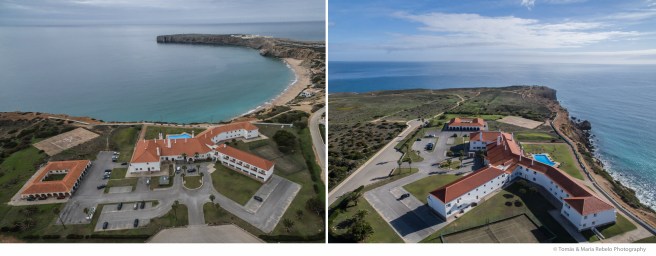
Some quintas in the Douro valley experienced one legendary moment. But Quinta da Boavista experienced two. The first came in May 1809 when Joseph James Forrester rented the quinta to work on his masterpiece, a detailed map of the Douro river. This map quickly became an indispensable reference for port-wine makers. It also made Forrester one of the most important figures in the port-wine trade. Forrester fought for the production of high-quality wines that reflected the unique terroir of the Douro valley. As a recognition for his service, king Dom Pedro V made him a Baron.

The second moment happened thanks to Marcelo Lima and Tony Smith, a duo of entrepreneurs who bought the quinta in 2013. They realized that the grapes from Boavista, grown in some of the Douro’s tallest terraces, are like precious stones. So they went in search of a master jeweler who could polish them. They knew that the ideal person would be Jean-Claude Berrouet, the enologist responsible for 44 vintages of Château Pétrus. But he had retired in 2007, took very few consulting jobs and had never worked in Portugal.

In July 2013, Marcelo and Tony brought Jean-Claude to Boavista. The enologist stood on the varanda of the house of the Baron of Forrester for a long time contemplating an iconic vineyard named Oratório (oratory) after its shape. When he finally broke the silence, he said “Ça c’est fort!” Marcelo and Tony smiled–they had found his jeweler. Since then, Jean-Claude has worked with Rui Cunha, the quinta’s resident enologist, to perfect the way in which wines from different parcels are blended. He also brought his profound knowledge of the Bordeaux oak barrel producers to choose the ideal barrels for aging the grapes from each vineyard.

When the first vintage of Oratório came out, Marcelo, Tony, and Jean-Claude sat on the terrace overlooking the vineyard. Jean-Claude took time to evaluate the color of the wine, appreciate its delicate aromas and to take a few sips. When he finally broke the silence, he said “C’est un grand vin!”

Click here for the website of Quinta da Boavista.

Sun and rain

OLYMPUS DIGITAL CAMERA

We can’t blame the moon for feeling unappreciated. Its life revolves around the earth and yet people prefer sunsets to moonrises. In the first day of the year, the full moon commanded the waves to bathe the beach sand and the clouds to sprinkle the earth with their blessed water.

The sun, feeling guilty about the droughts of the old year, let the moon have its way. But in the last few minutes of the day the star sent its rays to pierce the clouds and make everything shine.

We hope the New Year will have enough rain so you can come to Portugal to see lush green fields illuminated by brilliant sunshine.


Holiday cabbages

Couves de Natal

Codfish is the star of the Portuguese Christmas-eve supper, but a cabbage called “penca” plays an essential supporting role. It is a hardy variety, capable of surviving the frost that usually covers the fields in December.

Penca is often planted next to “couve galega” a cabbage similar to kale used to make the traditional “caldo verde” (green soup) served at midnight on New Year’s Eve.

We love to see the fields of Portugal planted with these cabbages, dressed for the holidays in stunning green hues.

Mister leitão

Mr. Leitão

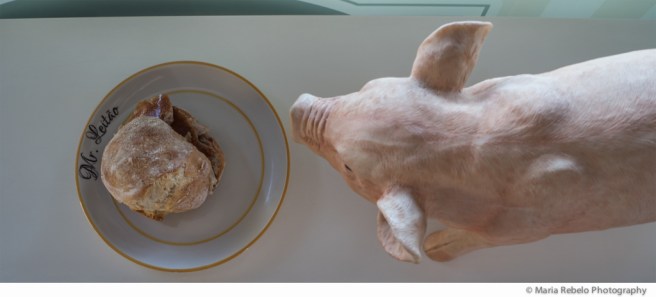
A completely reliable source told us that the best roasted suckling pig sandwich came not from Bairrada, the region famous for this culinary delicacy, but from a small café in Fátima called Mister Leitão. We couldn’t ignore this tantalizing tip, so we got on the road to Fátima to investigate.

We were advised to call in advance to reserve our sandwiches and we duly contacted José Miguel Vitório, the restaurant owner. He confirmed that they always run out of roasted suckling pig at some point in the early afternoon and that a reservation is indeed wise.

Mister Leitão has no place to sit, just a few counters where the sandwiches can be enjoyed. There’s always a line because the sandwiches are made to order. The air is filed with the smell of the roasted suckling pig and the bread baked in the premises. These appetizing aromas make the few minutes we waited seem like hours.

But the wait was well worth it. The sandwiches are amazing: the warm, crispy bread enfolds the succulent meat that is lean and has a deep taste reminiscent of prosciutto.

José Miguel is the heir to a tradition that started with his father in 1956. It takes a lifetime to learn how to roast a suckling pig. There are many details, seasoning the meat, sowing the animal, choosing the right fire wood, learning how to read and adjust the temperature of the oven. “But all the technique in the world will not matter if the ingredients are not great,” says José. He uses only fresh ingredients bought directly from selected farmers. “We peel by hand large quantities of fresh garlic. But that is what it takes to get the flavor we strive for,” he says. José carefully selects all the suckling pigs he uses, making sure that they were not fed with grain but were breastfed by their mothers.

After talking to José we felt hungry again. So we went back in line for another dose of suckling pig perfection.

Mister Leitão is located at Estrada da Batalha, 6, 2495 Fátima, tel. 249-538-120.


A Portuguese chair

Composit Chairs

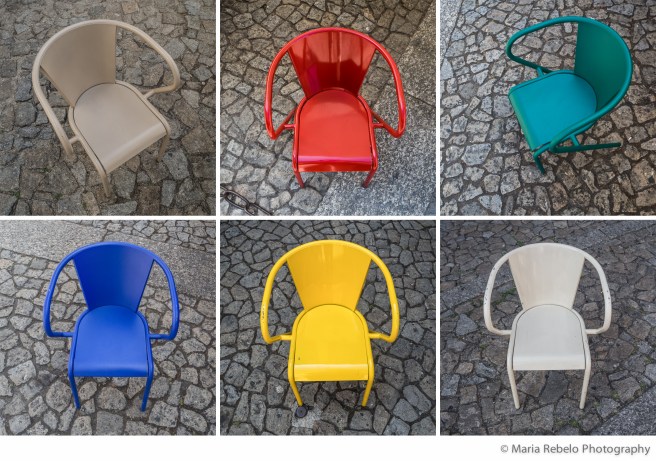
Late in the afternoon, groups of friends gather in cafés and esplanades all over Portugal to enjoy the last rays of sun and talk about their lives. They seat on metal chairs painted in bright colors that create a festive atmosphere.

These chairs were designed half a century ago by a craftsman called Gonçalo Rodrigues dos Santos. They are elegant but sturdy and can be stacked for storage. These virtues make them perfect pieces of urban furniture for enjoying leisure and celebrating friendships. If you visit Portugal be sure to try them!

The Gonçalo chair is produced by Arcalo. Click here for their web site.

Fairy tales

Composit Fairy Tales

In October 1956, the Duke of Edinburgh embarked on a long tour of the Southern Hemisphere without his wife, Queen Elizabeth II. There were rumors that the couple was going to separate.

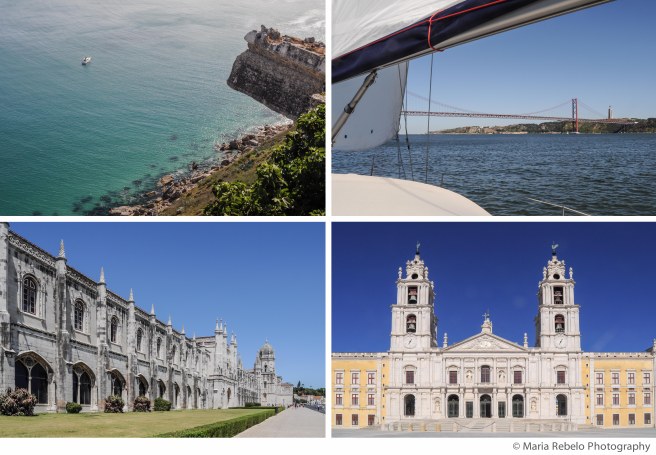
When the Duke arrived in Portugal in February 1957, the Queen flew from England to meet him. For four days the royal couple did what so many other tourists do in Portugal. They ate canned sardines, sailed on the Tagus river, toured the Jeronimos monastery,  visited Mafra and the Nazaré beach. Then, they flew back to England and lived happily ever after.

Portugal is a place where fairy tales can come true.

Missing Portugal

Baleal.JPG

When we’re away from Portugal, we miss the taste of the fruits of our land and sea.

We miss the golden light that guilds castles and palaces, valleys and hills.

We miss the touch of the breeze, the perfume of the ocean, the sound of the waves rehearsing their steps on the seashore.

Our solace is a glass of port wine shared with friends. Every sip is a reminder of the sweetness of Portugal.

A fish club

composit-casa-janeiro

Casa Janeiro is an unusual restaurant. Located in the small village of Brejos de Azeitão, 30 km south of Lisbon, it functions as a club for the appreciation of fine grilled fish. To be considered as a member, you need to be patient and love eating fish. Patience is a must because the restaurant does not take reservations and there’s always a long line

Most customers are regulars. Some are locals, others are hard-core fans that drive to Brejos de Azeitão just to eat at Casa Janeiro. Over the years, the customers get to know each other, so the restaurant feels like a club.

While we waited in line, a group of regulars came to chat with us, eager to talk about their favorite restaurant: “You’re going to love it!” “We no longer grill fish at home, this quality is impossible to replicate,” “No one grills fish like Mr. António.”  “And the prices, unbeatable!”

Ana Cristina overseas the dining room and her husband, António Janeiro is in charge of the colossal grill.  António was working as a car mechanic when he became fascinated by the art of grilling fish. He started hanging out with fishermen and cooks so he could learn their secrets. When his repair shop closed, he took the plunge and, together with his wife, opened Casa Janeiro.

His day starts with a trip to the fish market in the port of Setúbal. He comes back to the restaurant to make the “brasas,” the layers of red-hot charcoal that produce intense heat. He compresses these layers, reducing the airflow to make the charcoal last longer. Then, he covers the charcoal with ash to reduce the heat. “I stir the charcoal when I want more heat and apply more ash when I want less,” he explained to us.

We watched Janeiro prepare the fish with speed and precision and then pause for a brief moment, perhaps to give thanks for the bounty of the sea. Janeiro salted the fish and placed it on the grill. He didn’t take his eyes of the grill, constantly adjusting the coals to make sure the fish was perfectly cooked.

“Which fish do you recommend?”  we asked Ana Cristina. “Chicharro,” she answered without hesitation. We expressed surprise. After all, this is an unglamorous fish, the cheapest on the modestly priced menu. “But it is the best fish on the menu,” she insisted. “This month the chicharro is fat and delicious. If you don’t like it, you don’t need to pay.”  “Ok,” we said accepting the bargain.

As soon as we sat at the table, we regretted our decision—we saw amazing sea bass and grouper go by our table. But, when our chicharro arrived, succulent and delicious, we realized we had made the right choice. “What else should we try?” we asked Ana Cristina. She recommended the squid, which was the best we have ever had, tender and full of flavor.

When we returned the next day for more grilled chicharro and squid, Ana Cristina gave us a big smile. And that’s when we knew that we had been accepted as members of the club.


Casa Janeiro is located on Rua da Serração 57, Brejos de Azeitão, tel. 21 218 8124. If you don’t like to wait, you need to arrive at around 11:30 am for lunch and 6:30 pm for dinner. At lunch, the restaurant serves grilled fish. At dinner, it serves light seafood such as clams, crab and shrimp. 


Two geniuses

Fernando Pessoa

We often celebrate rulers and conquerers, but a country without artists is just a mount of dust. Artists are the tellers of tales, the architects of meaning. During the 20th century, Portugal was recreated by the writing of Fernando Pessoa and reshaped by the painting of José de Almada Negreiros. They left us a country with a richer identity and a deeper imagination.

The paintings in the photo bring together these two great Portuguese artists. The first painting (on the left) was commissioned in 1954 by the owner of a restaurant where Orpheus, a modernist group that included Almada and Pessoa, used to gather. The second painting (on the right), commissioned by the Calouste Gulbenkian Museum in 1964, is a mirror image of the original.

Pessoa visited Almada’s first exhibition and declared that the painter was not a genius. Out of respect, Almada did not paint Pessoa while the poet was alive. Because the exuberant portrait that the painter carried in his mind and later transferred to canvas shows that Almada was a genius.

If you’re in Lisbon, do not miss the exhibition of the works of Almada Negreiros on display at the Calouste Gulbenkian Museum until June 7, 2017.


The rain in Portugal

rainy-day

Billy Collins, a former U.S. poet laureate, has a new book called The Rain in Portugal. He says that the title is an admission of his difficulties in constructing rhymes.

The rhyming possibilities of “Portugal” are much more limited than those of “Spain.” Yet, Collins finds a way capture the poetry of life in Portugal. Here’s an excerpt of the poem that contains the title of the book.

On Rhyme

“[…] instead of recalling today where it pours mostly in Spain I’m going to picture the rain in Portugal.

How it falls on the hillside vineyards, on the surface of the deep harbors where fishing boats are swaying.

And in the narrow alleys of the cities where three boys in t-shirts are kicking a soccer ball in the rain ignoring the window cries of their mothers.”