A gourmet fish

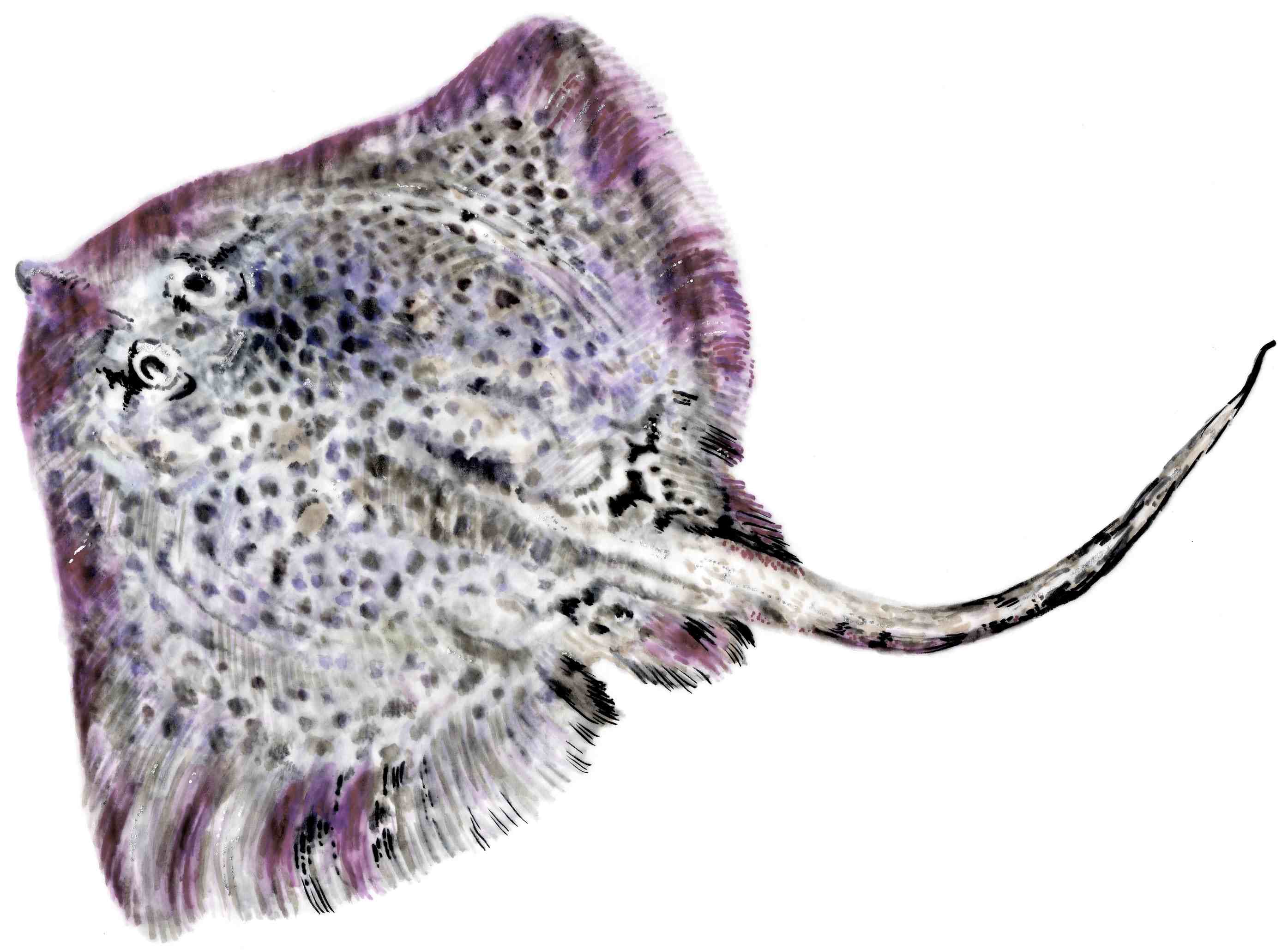
Robalo, Maria Rebelo, digital print image, 2012.

Portuguese restaurant waiters like to give all fish equal opportunity. Ask them about one variety and they’ll tell you that it’s very very fresh and very very good. Ask about another variety, and you’ll hear much the same.

After the waiter sings the praises of all fish on the menu, we usually choose a robalo. This species is known in English as “common snook,” but there’s nothing common about it. The robalo is a voracious, discerning foodie who loves to feast on small crabs. As a result, it has a really unique taste. Try it, and you’ll see that it is very very delicious.

A regal cake

BoloRei

During the Christmas season, Portuguese pastry stores transform many tons of flour, sugar, eggs, port wine, and candied fruit into the popular king’s cake (bolo rei).

Bolo rei was introduced in Portugal in the second half of the 19th century by Confeitaria Nacional, a pastry store in downtown Lisbon. It was based on France’s “gateaux des rois,” a royal cake forbidden during the French revolution until pastry chefs renamed it the “people’s cake” (gateaux des sans culottes).

Over time, Confeitaria Nacional’s recipe was imitated and adapted, and bolo rei became an integral part of Portuguese culture. So much so that, when the monarchy was abolished in 1910, the Portuguese parliament renamed it Republic’s cake. But the awkward name never caught on.

Pastry stores used to hide two objects inside the cake: a gift (a trinket or, in some cases, a gold coin) and a dried fava bean. The gift has been eliminated but the fava bean is still included. According to tradition, whoever gets it has to buy the next cake.

The custom of hiding a fava bean inside a cake originated in the ancient Roman festival of Saturnalia. The person who found the fava bean became king of the Saturnalia and served as the festival’s master of ceremonies.

If you’re in Portugal during the Christmas season, make sure you try some bolo rei. It’s a sweet piece of European history.

Contemporary art in Cascais

If you’re interested in contemporary art, be sure to visit the Cascais museum devoted to the Portuguese painter Paula Rego. Her work is housed in a striking building designed by Eduardo Souto de Moura, a Portuguese architect who received the Pritzker prize in 2011. Rego uses ordinary faces, objects, and landscapes from Portugal to paint unusual scenes that challenge visual and social conventions.

How the angels like it

The village of Alfeizerão, near Nazaré, is famous for its sponge cake. The original recipe came from the Spanish kingdom of Castile, so the cake used to be called Pão de Castela (bread from Castile).  When the Portuguese started trading with Japan, in the 16th century, they introduced it to the residents of the port of Nagasaki. The cake remains popular in Japan, where it is called Castella or Kasutera. In Portugal, the name of the cake changed in the 19th century to Pão de Ló, probably after a cook nicknamed Ló.

Pão de Ló is usually a dry cake, but the nuns of Alcobaça’s Cister Order developed a version that is wonderfully soft and moist. When the religious orders were abolished in the 19th century, the nuns gave their recipe to a family from Alfeizeirão that offered them shelter. Five generations later, the same family still uses this recipe to make Pão de Ló at Casa Ferreira in Alfeizerão.

During a recent visit, we asked our server at Casa Ferreira what makes their cake so special. She answered without hesitation: “we make Pão de Ló the way the angels like it.” We could not confirm the veracity of this claim but, after trying the cake, it struck us as completely plausible.

Casa Ferreira, Rua 25 de Abril, 215, Alfeizerão, tel. 262 990 719.

Three reasons to learn Portuguese

1. To understand more. The Italians say that “traduttore, traditore,” translators are traitors.  Authors labor over every word, but much of the meaning they create is lost in translation. Learning Portuguese opens the doors to a new world of elegant novels, inspired poetry and fabulous travel tales by Portuguese, Brazilian and African writers. Which other language allows you to read the literary hearts and minds of three continents?

2. To gain more insight. The philosopher Ludwig Wittgenstein wrote that  “what we cannot speak about we must pass over in silence.” Language is the scaffold of thought. A new language can take your thinking to new heights, forming synapses that feed creativity and insight. Why learn Portuguese? Here you have to trust the great poet Fernando Pessoa who said that English is the language of science but Portuguese is the language of feelings. So you need both, you see?

3. To sway knowingly to the sound of Bossa Nova. Brazilian music is an irresistible combination of African rhythms, jazz harmonies, and tropical sensibility. And these songs have romantic, funny, sunny lyrics which will make your heart sing.

How to cook fresh octopus

When you eat octopus in a Portuguese restaurant, it is always tender and delicious. But, when you buy fresh octopus and cook it at home, it often turns into a rubbery disappointment.

Portuguese chefs stage an elaborate disinformation campaign to keep secret their cooking technique. They tell you to cook the octopus with an onion, a cork, or a nail; or leave it in the pot until the water is cold; or cook it in red wine or in red vinegar; or beat it three times on the kitchen counter; or “scare” it by raising it from the boiling water. All these tricks produce inedible, chewy octopus.

So, how do you tenderize this eight-armed mollusk? You freeze the fresh octopus before you cook it! That’s all. But please don’t tell anyone; it’s a secret.

The beauty of mail

Abstrait 9, Renée-Paule Danthine, stamp and watercolor, 2010.

Renée-Paule Danthine is a Swiss painter who, in her miniature series, celebrates the allure of old-fashioned mail. We have all but forgotten the pleasure of handwriting a letter, hiding it in an envelope and affixing the stamp, trusting the precious package to a mysterious delivery system that, somehow, almost always worked. Danthine reminds us of all that we lost by using post-office stamps as the point of departure for her work. Her travels to Portugal inspired several paintings in this series. Each of her wonderful watercolors is a lesson on how to see the extraordinary in the ordinary.

Click here to see more of Renée-Paule Danthine’s work.

Portuguese canned sardines

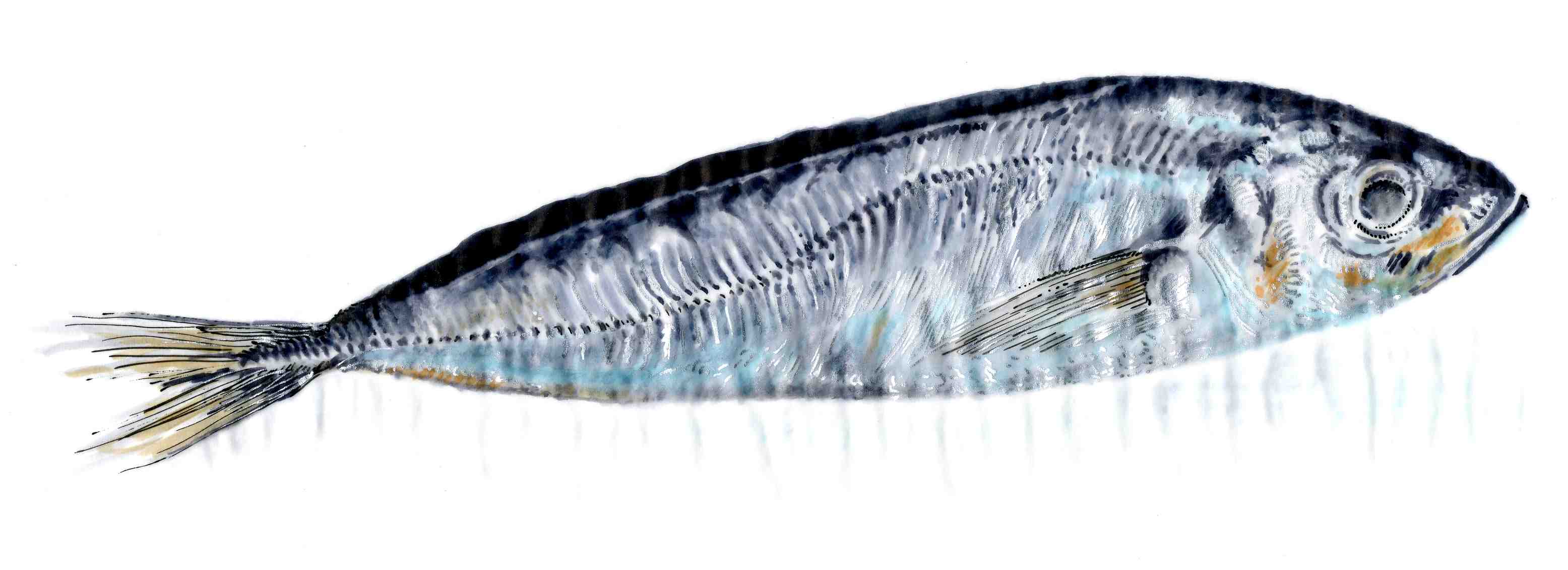
Portugal’s wonderful canned sardines have, according to legend, a French origin. Britanny had a thriving canned sardine industry in the late 19th century. But fish stocks started to dwindle, forcing Breton fishermen to venture farther from the coast. A fishing boat that sailed west to avoid a raging storm, ended up on the Portuguese shore. There, the French fishermen hauled the biggest sardine catch they had ever seen. They all promised to keep their discovery secret but, eventually, word got out.

Brittany canners came to Portugal and set up operations in Lagos, Setúbal, and Olhão. Soon, Portuguese brands started to compete with the French and an industry was born.

A can of Portuguese sardines contains much more than delicious fish. It has the story of an old sea storm and of a crew of fishermen who couldn’t keep a secret.

A Winter day in Portugal

If you were here today, you could spend the morning on the beach, collecting shells, wondering why no one told the sun that it’s not Summer. You could have a simple lunch of roasted chicken with piri-piri sauce, visit a romantic palace, and sit on a cliff, watching the sun bathe in the ocean. You could dine on grilled fish, drink a great local wine, and go out into the warm night to gaze at the stars. And, when the day is done, you would know the meaning of the word felicidade.