The Portuguese Tea Company

Composit Companhia do Chá.jpg

Portugal played a leading role in the trade with the Far East after Vasco da Gama discovered the sea way to India in 1498. One of the commodities brought from the orient by the caravels were the dried leaves of a plant called Caméllia sinensis. The Portuguese called these leaves and their infusion chá, after the Cantonese word chàh. Their Dutch rivals preferred a word from China’s Fujian province: tea.

When Catherine of Braganza, a Portuguese princess, married Charles II of England in 1662, her trousseau included a basket of tea leaves. She used them to throw tea parties at court. These parties were such a success that drinking tea became a fashion that endures.

Two centuries later, Wenceslaus de Moraes, a Portuguese diplomat who lived in the orient, wrote a poetic book called The Cult of Tea. His goal was to introduce Europeans to the ancient art of serving tea.

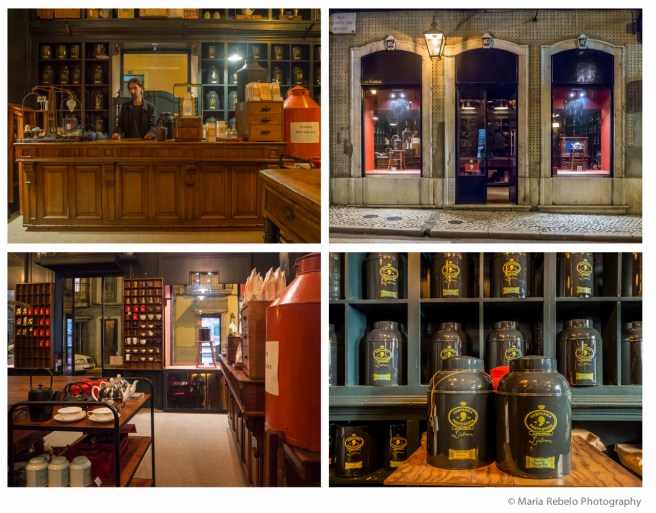
Despite these historical connections, Portugal didn’t have a purveyor of fine teas until an Argentinian called Sebastian Filgueiros came to live in Lisbon. Trained as a tea sommelier, he decided to create the Companhia Portugueza de Chá (the Portuguese tea company). The company’s logo combines the profile of Catherine of Braganza with the word Lisbon handwritten by Wenceslaus de Moraes.

Sebastian travels often to the Far East in search of new producers. His favorite teas are the Darjeelings from India and the old black teas from China. But he is very proud of the teas made in Portugal. He’s been able to source two wonderful teas from Azores. The first is a delicate white tea made in cooperation with a research institute. The second is a rare Oolong from the Gorreana plantation. Sebastian sells a fragrant earl grey produced with bergamot oil from Alentejo and his own tea blend called Lisbon breakfast.

When he talks about tea, Sebastian has all the time in the world. And there’s a lot to talk about, from the harvest and oxidization of the leaves, to the way each tea is prepared and served. He speaks softly, as if the secrets of tea are for our ears only. It is worth listening because on the shelves of his store lies a world of tantalizing aromas and flavors waiting to be discovered.

The Companhia Portugueza do Chá operates in Rua do Poço dos Negros, 105, near Chiado, tel. 21-395-1614.


A faithful friend

OLYMPUS DIGITAL CAMERA

Portugal’s favorite fish does not swim in Portuguese waters. Since the 16th century, Portuguese fishermen have sailed to Newfoundland in search of gadus morhua, more commonly known as codfish. The French call the bland-tasting fresh cod “cabillaud” and the more appetizing salted cod “morue.” In Portugal this distinction is superfluous because only the salted variety is appreciated. So, one word suffices: “bacalhau.”

Since cod has very little fat, once it is cured in salt it keeps for a long time without becoming rancid. For this reason, dried codfish was often consumed by those who lived far from the coast in days of religious abstinence from meat like Christmas Eve.

The quality of the cod depends on the size of the fish (the larger the better) and the type of cure. To produce the best cod, the cure must begin on the boat, shortly after the fish is captured. This cure continues on land, usually in open-air pavilions. Lesser cod is stored frozen in the boat and cured only on land. Much of the codfish consumed in Portugal is cured in Ílhavo, a region with abundant sea salt.

Two popular sources of cod are Norway and Canada, but the best cod is caught in Iceland by Portuguese fishermen.

Before cooking, salted cod is soaked in water for two or three days to re-hydrate and remove most of the salt. The fish is then ready to be combined with symbiotic ingredients such as garlic, potatoes and olive oil.

The commerce of “bacalhau” is so important that there’s a whole street in Lisbon, Rua dos Bacalhoeiros, that was once reserved for codfish vendors.

In good times and bad, the Portuguese gather at the table to share this fish we call “fiel amigo” (faithful friend). It is a delicacy that comes from afar but has the taste of home.

Eels from Murtosa

OLYMPUS DIGITAL CAMERA

When we were young, every September our family ate fried eels that came from Murtosa, a small town in the estuary of the Vouga river. The eels were marinated in “escabeche,” a sauce made with olive oil, white wine, onions, paprika, laurel, and vinegar.  These ingredients were combined according to ancient rules of alchemy so that when the eels, the sauce and boiled potatoes were placed on the plate, they transformed into culinary gold.

Eels are mysterious creatures. They spend their early years in fresh river waters. After reaching maturity, they swim to the middle of the Atlantic ocean to lay their eggs in the Sargasso Sea. The baby eels swim back in search of fresh river water and the cycle of life restarts.

How do the infant eels know where to go? And why do the best tasting eels end up in Murtosa? These are inscrutable mysteries.

Before refrigeration was available, the Murtosa eels were a local delicacy. The fisherman ate them fried or in a “caldeirada” that combines the fish with potatoes, tomato, onion, garlic, olive oil, lard, herbs, and spices.

In the first half of the 20th century, some local cooks started marinating fried eels in escabeche sauce. First they packed them in wooden barrels and later in tin cans. These marinated eels gained great fame and popularity in the center of Portugal.

Over time, eels became scarce, the number of fisherman declined, canning factories closed, and it became hard to find marinated eels. So imagine our surprise when, strolling in downtown Lisbon, we found a store called 1942 that specializes in marinated eels from Murtosa! The cans come from a factory that has been processing eels since 1942.

We took this precious find home and opened the can slowly, preparing to be disappointed. But, when we placed the eels, the sauce and boiled potatoes on a plate, the old magic flavors came to life and we felt young again.

The 1942 store  is located on the corner of Rua da Conceição and Rua da Prata in Lisbon (tel. 21-599-9890).

Ambrosia from Azores

OLYMPUS DIGITAL CAMERA

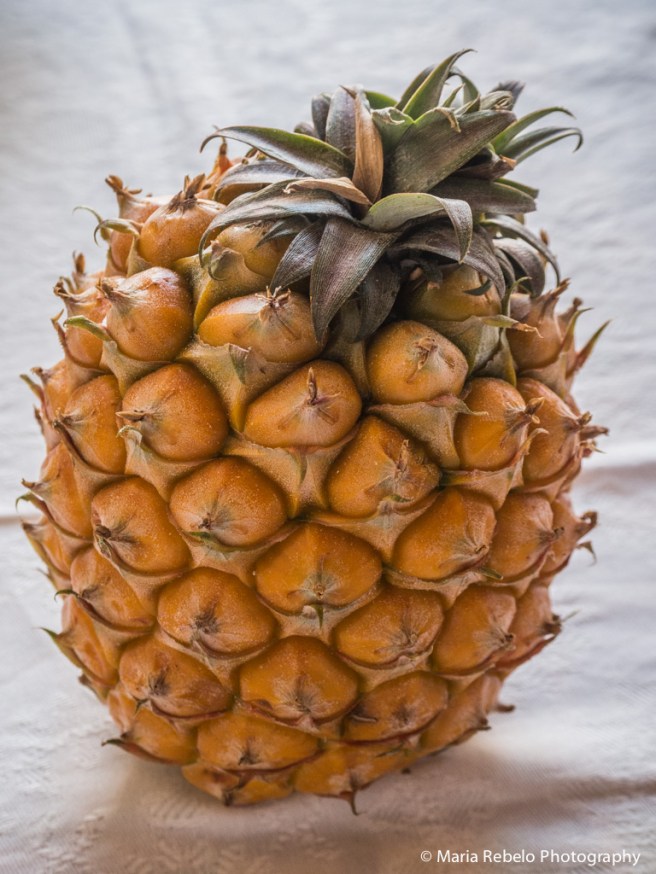
The ancient gods of Greece and Rome satiated their hunger with ambrosia, a food with exuberant colors, an elegant aroma and a taste that has the perfect combination of sweetness and acidity.

No one knows what this divine food looks like except the people from the island of São Miguel in Azores.  It is an open secret that ambrosia grows in the island in the form of a small pineapple.

While other places produce ordinary pineapples meant for human consumption, São Miguel produces extraordinary pineapples meant for the gods.

If you visit the island, don’t miss the chance to try this transcendent food. Just make sure the gods are not looking.


A cheese revolution

Composit Queijaria 2016

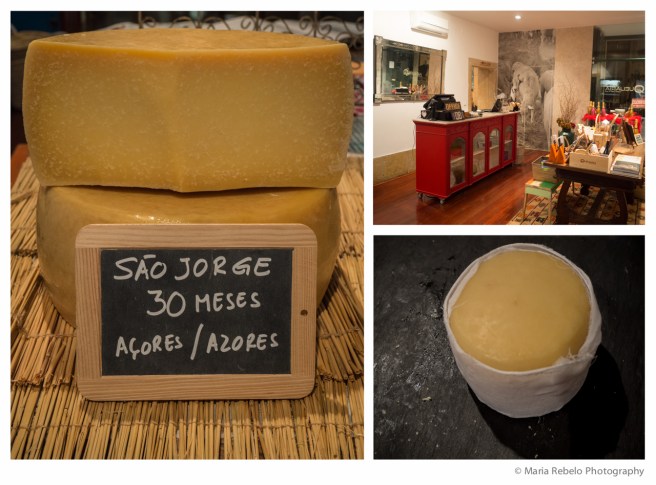
Queijaria, our favorite cheese store in Lisbon, keeps getting better. It is a place where the ordinary is banned to make room for extraordinary artisanal cheeses made in small batches by traditional producers.

On our last visit Pedro Cardoso, one of the owners, invited us to taste two unique cheeses. The first was from São Jorge, an island in the Azores archipelago. It is made with the milk of happy cows that roam free on the island. São Jorge cheese is always delicious but this one was the best we ever had–sharp, peppery and full of flavor. “This cheese is aged for 30 months which makes all the difference. It is very hard to find because the production is tiny and almost all consumed locally,” said Pedro.

The second cheese was from Serra da Estrela. It melted in our mouths leaving an amazing buttery after taste. It is made with milk from “bordalesa” sheep. This breed is being replaced with sheep whose milk is less flavorful but more abundant. “Eating this cheese is an act of defiance. It is saying that we don’t want this wonderful taste to disappear; that quality trumps quantity.”

Pedro speaks with revolutionary zeal. He wants to preserve and enrich Portugal’s wonderful cheese heritage. Will you support his cause?

Queijaria is in the Principe Real neighborhood at Rua do Monte Olivete, 40, tel. 21 346 0474. Click here for their web site.


Liquid inspiration

Ginginha

“Com elas ou sem elas?” with or without, asked the waiter as we got to the front of the line at “A Ginjinha,” a small bar in Lisbon’s Largo of São Domingos. “With” we answered. He nodded with approval, picking up a bottle with a cherry infusion to pour the liquid into a small glass, deftly lifting a wood stopper to let a single cherry go by.

The bar’s specialty is a delicious liqueur called “ginjinha” made of sour cherries. It is produced in the nearby village of Arruda dos Vinhos and bottled under the brand Espinheira. The name is a tribute to Francisco Espinheira, the monk who, according to legend, had the brilliant idea of macerating sour cherries (ginjas) in brandy, sugar, and cinnamon.

A Galician entrepreneur opened the bar in 1840 to serve ginjinha to the public. Five generations later, the bar still belongs to his family.

Fernando Pessoa, the great poet, was a regular customer at A Ginjinha.  What a privilege it is to drink from the same source of inspiration!

A Ginjinha is located on Largo de São Domingos, 8, Lisbon.


A fruitful exchange

OLYMPUS DIGITAL CAMERA

According to legend, when Portuguese navigators reached China in the 16th century, they offered Chinese dignitaries a rose bush. The Chinese felt that this gift was an insult–the bush was full of thorns and had no flowers. To signal their displeasure, they offered the Portuguese a tree whose fruit was tart and hard to digest.

The Chinese planted the bush and when the first roses bloomed they marveled at their beauty and perfume.

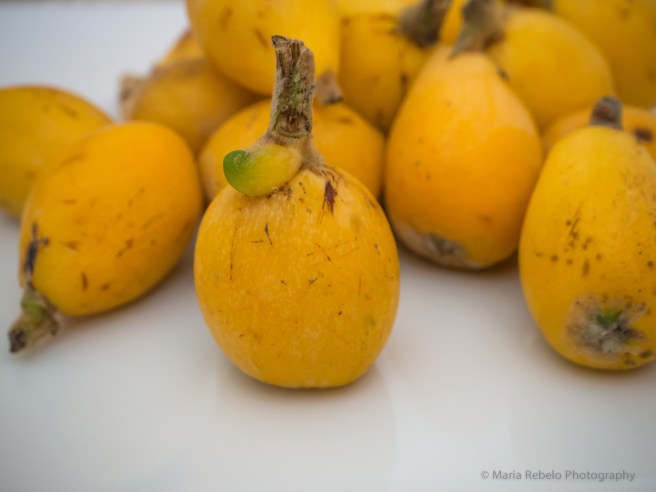
The Portuguese planted the tree and loved its fruit because the sunny weather had made it deliciously sweet. They called it “nêspera” (loquat).  It is the first fruit to ripen in the Spring. If you’re in Portugal during this season, don’t miss the chance to try it!

Bolo Bolacha

Bolo de bolacha

Plato thought that the circle was a symbol of the divine. Alberti, an Italian architect, considered it the perfect shape. But no one was more obsessed with the circle than Guarino Guarini, a brilliant Baroque architect. His buildings are made of concave and convex spaces delineated by circles. One of his most important works, the church of Santa Maria da Divina Providência in Lisbon, was famous for its undulating facade. Sadly, the church was destroyed by the 1755 earthquake.

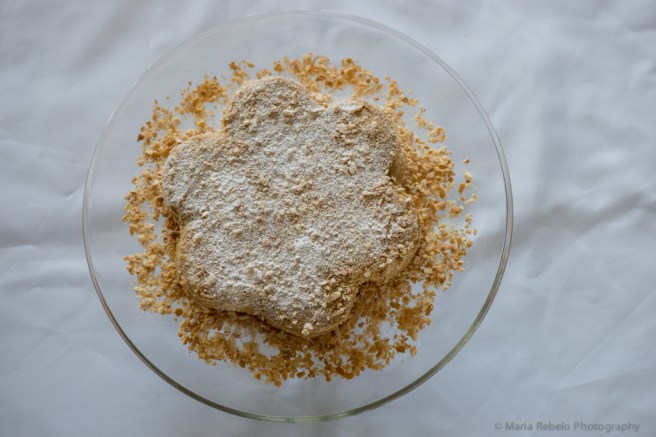
By happenstance, the circular shapes included in Guarini’s treatise, Architettura Civile, resurfaced in Portugal in the 20th century in the design of the popular bolo bolacha (biscuit cake). This cake is made with the circular Maria biscuits invented in 1874 by an English baker to celebrate the marriage of the Duke of Edinburgh with the Russian Duchess Maria Alexandrovna. To make the cake, the biscuits are dipped in strong coffee, layered with buttercream and then assembled according to designs that would make Guarini proud.

If you see bolo bolacha on a restaurant menu, give it a try. Like the circle, it is simple, but divine.

The apple of paradise

OLYMPUS DIGITAL CAMERA

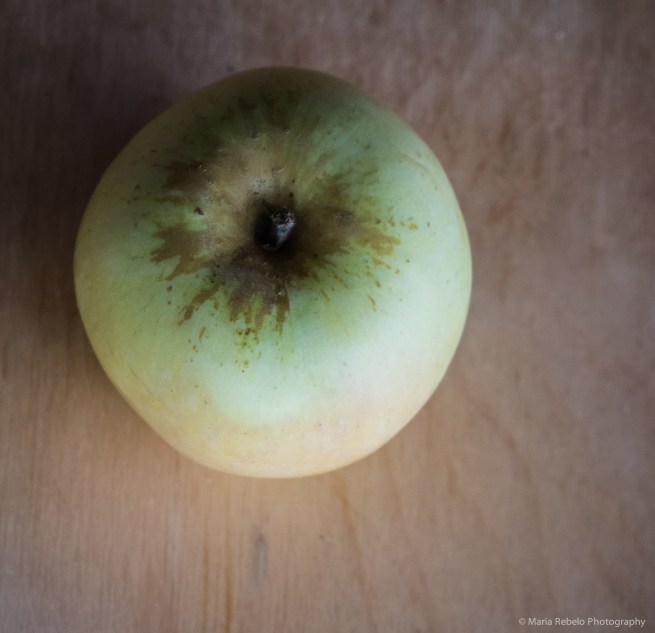
The best apple we’ve ever tried is a Portuguese variety called Bravo de Esmolfe. It was discovered two centuries ago in a small Beira-Alta village called Esmolfe.

You can find prettier apples, but don’t be fooled by the unassuming look of Bravo de Esmolfe. Its taste is a revelation, the perfect combination of sweetness and tartness. And its inside is so full of antioxidants that it makes us feel immortal.

Biting into a Bravo de Esmolfe helps us understand Adam’s temptation and makes us wonder whether the village of Esmolfe was once the Garden of Eden.

If you visit Portugal in Fall or Winter, don’t miss the chance to try Bravo de Esmolfe, an apple that belongs in paradise.

We hope it rains in August

OLYMPUS DIGITAL CAMERA

When friends who visit Portugal tell us they tasted some amazing mushrooms, we always worry they are mistaken. During hard times, Portuguese cooks found ways to make tasty dishes out of many animal parts to make sure nothing went to waste. So those delicious “mushrooms” were probably pig ears in coriander sauce or sautéed veal kidneys.

But Portugal does have amazing wild mushrooms. They’re called “míscaros” (pronounced “meescaros”) and grow in the pine forests of the Beira region.  You can stew them, cook them with meat, or combine them with rice. Míscaros are one of the crown jewels of Portuguese cuisine.

One of our grandfathers loved eating míscaros. He was always happy when it rained in August because that meant that míscaros would be abundant in the Fall. We remember him very fondly for many things, big and small. And we always like it when it rains in August.

You can often find míscaros in the Fall at Salsa & Coentros, one of our favorite restaurants in Lisbon. Click here for more information about the restaurant.