Miss Can

When we were young, we spent our summer vacations camping by the sea. We packed cans of berbigão- small, flavorful cockles- and used them to make rice dishes that tasted divine after a swim in the ocean.

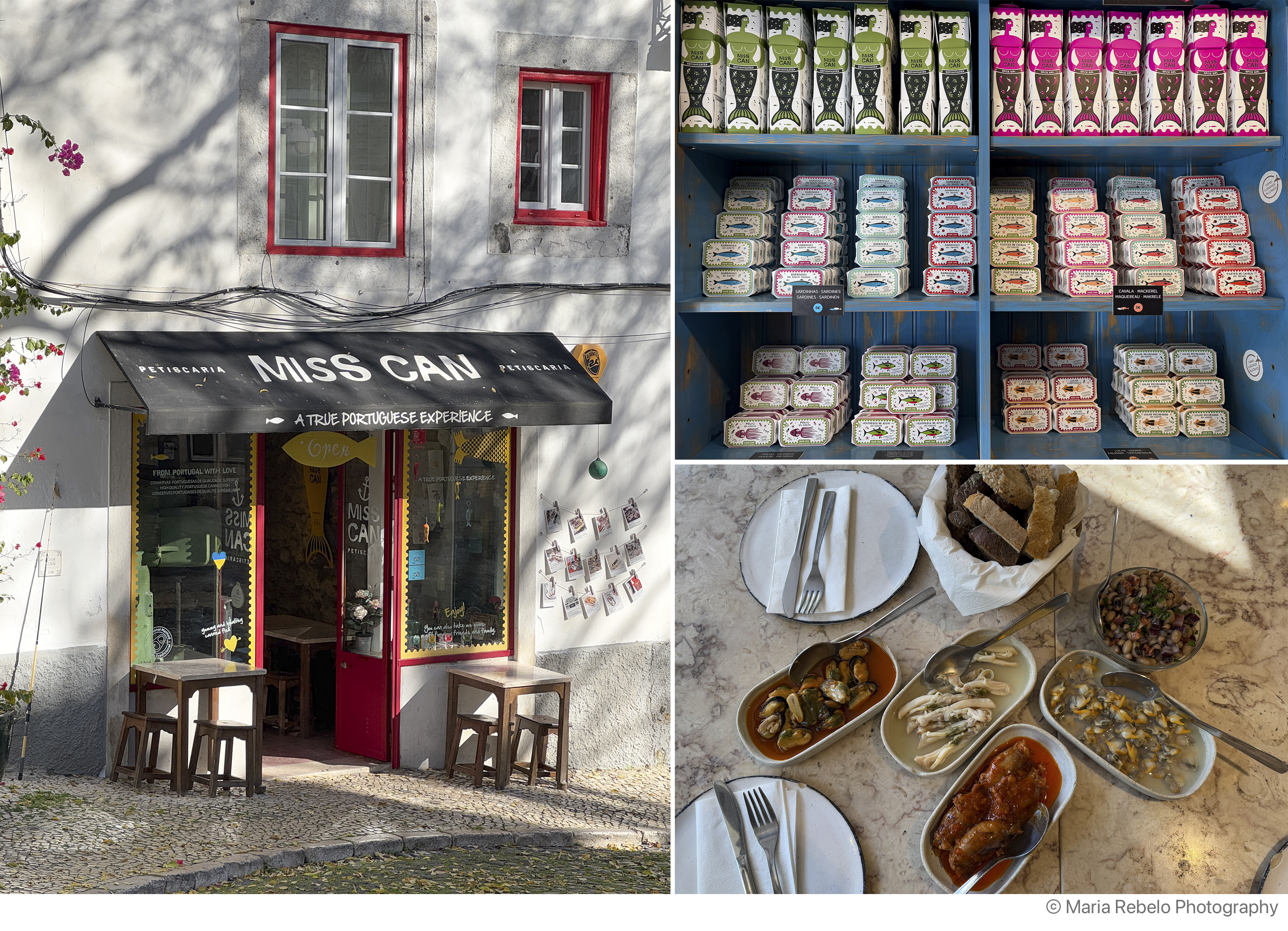
Over the years, canned berbigão nearly vanished from store shelves. Fortunately, Miss Can has brought it back, along with various other delicacies. In addition to classics like sardines and tuna, their selection includes razor clams, squid, mussels, octopus, and more.

The brand’s origins date back to 1911, when Alberto Soares Ribeiro established two canning plants—one in Setúbal, near Lisbon, and another in Olhão, Algarve. Like many others, these plants closed their doors during the years of economic turmoil that followed the 1974 revolution. Almost a century later, Alberto’s great-grandson, Tiago Soares Ribeiro, brought the family’s canning legacy back to life. Together with his relatives, Tiago launched Miss Can, a brand dedicated to high-quality, artisanal canned fish.

The rebirth began in 2013 when Tiago started producing small batches of canned fish and selling them from a yellow Piaggio motorcycle in Lisbon’s St. Jorge Castle neighborhood. In 2015, Miss Can received two prestigious awards, enabling Tiago to open a charming eatery near St. Jorge’s Castle, where visitors can experience the exceptional quality of his products.

All the fish, except cod, are sourced from the Portuguese coast. The canning process follows the same traditional method used a century ago. The fish are gently steamed to preserve their texture and natural flavor.

With Miss Can, we can effortlessly create a delicious salad, a rich pasta, or a comforting rice dish that brings back the taste of our carefree vacations by the sea.

You can sample Miss Can’s products at Largo do Contador Mor, 17 Castelo in Lisbon. Miss Can is available in the U.S. at World Market stores. Click here for Miss Can’s website.

Bordallo Pinheiro

If you’re looking for last-minute holiday gifts, check out Bordallo Pinheiro, an irreverent Portuguese ceramics brand. 

Rafael Bordallo Pinheiro, born in 1846 to an artistic family, learned to draw and paint with his father. He started his career as a cartoonist focused on political satire and then brought the same playful spirit to his ceramics work. 

His cabbage-shaped tableware, exuberant animal motifs, and unique use of bright colors and textures become iconic, recognized for their artistry and distinct Portuguese flair. 

These timeless pieces have been crafted in the same factory in Caldas da Rainha since 1884. But the old factory is also learning new tricks. Over the past 15 years, contemporary designers have been invited to answer the question: what would Bordallo Pinheiro design today? Their imaginative answers honor the legacy of the great ceramist, producing pieces that, like the originals, surprise and delight.

Bordallo Pinheiro ceramics bring fun and joy to our dining tables, turning every meal into a special occasion.

Click here for the Bordallo Pinheiro website.

Garum from Troia

If you’re looking for a unique gift from Lisbon for a food-loving friend, we have just the thing. Can the Can, a restaurant in Terreiro do Paço, sells flasks of garum. This fermented fish sauce created by the Greeks was coveted throughout the Roman Empire. Like Asian fermented fish sauces, it enhances flavor, adding a rich umami taste.

The Troia peninsula in Setúbal is home to sprawling remains of piscinae, large basins used by the Romans for salting and fermenting fish. Along Portugal’s Atlantic seaboard, this region is ideal for garum production, thanks to its plentiful fish stocks and a climate favorable for fermentation. 

Maria da Luz and Vitor Vicente, two entrepreneurs, revived the production of garum in Troia using mackerel (favored by the Greeks), swordfish, tuna, sea bream, octopus, mullets, and sardines (our favorite). 

In the Roman Empire, garum was a symbol of extravagance. Pliny the Elder described it in his Natural History as a “liquoris exquisiti,” an exquisite liquor. Priced on par with the rarest perfumes, it was reserved for the tables of the affluent. Today, thanks to Can the Can, this nearly forgotten delicacy is both accessible and affordable.

Can the Can is located at Terreiro do Paço, 82/83 in Lisbon. Click here for their website.

A master bladesmith

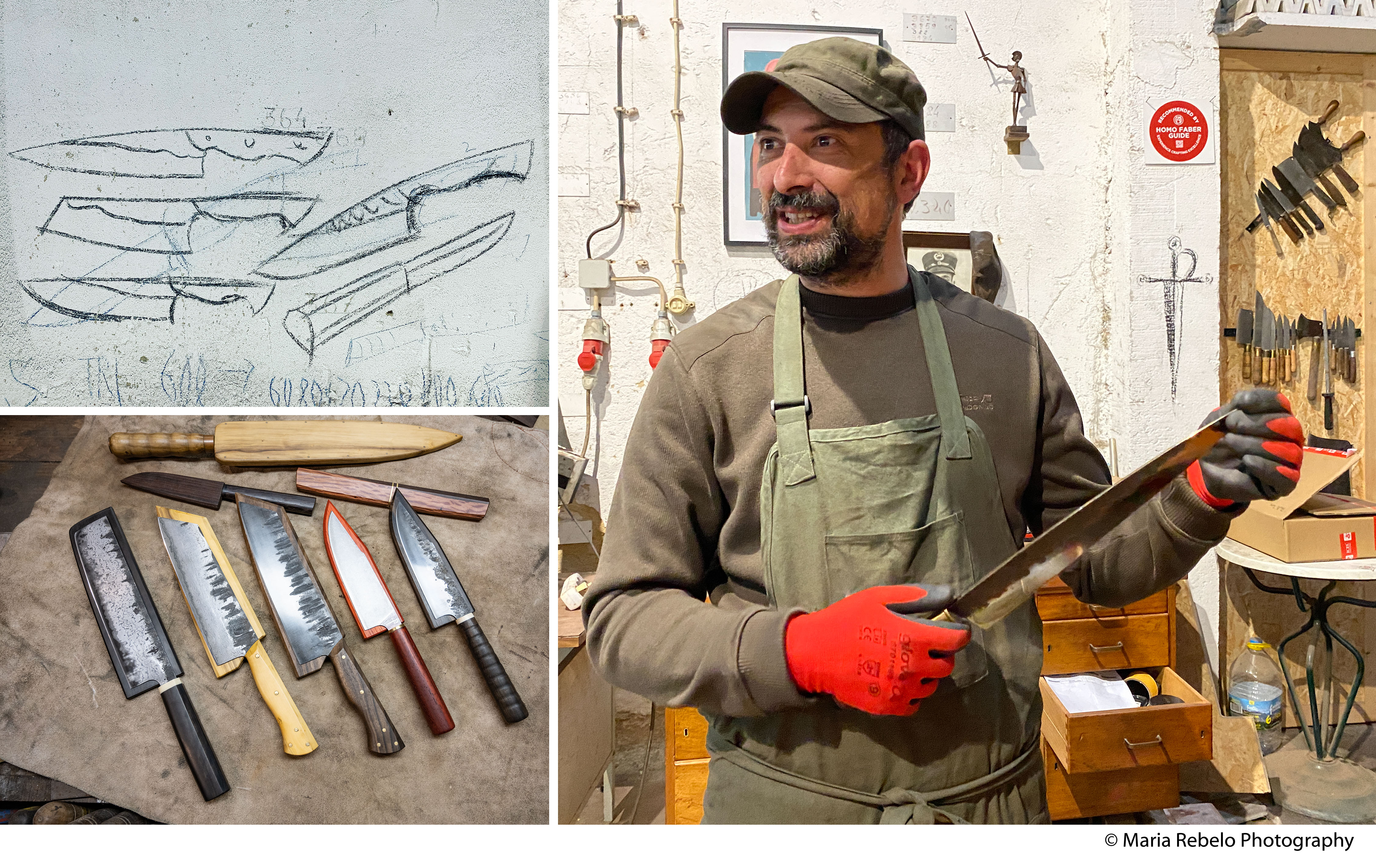
Have you ever met a bladesmith? We hadn’t until we visited Paulo Tuna’s atelier in Caldas da Rainha. We knocked on a large blue door and Paulo came out. He looks like a revolutionary–someone who can bend the world to his will.

Paulo trained as an artist at the local art school. For many years, he built large sculptures that questioned our notions of weight, scale, and balance. But he was always interested in knives. His grandfather gave him a pocket knife for his 7th birthday. Later, he took him to a blacksmith so that Paulo could make his first knife. 

Knife drawings inspired by old art books fill the walls of the atelier. “Drawing is easy. Forging is hard,” says Paulo. He switched from sculpture to knife making after a friend placed an order for two knives. Paulo enjoyed the production process and started learning all he could about bladesmithing, even working in cutlery factories for a while. In 2012, he began making knives full time. An order of 50 knives from René Redzepi, Noma’s famous chef, confirmed that he was on the right track.

“Do you want me to make a knife?” Paulo asked. He takes a steel blade and places it inside a red-hot oven, heated to almost 1,000 degrees Celsius. The steel seems to resist at first, but, little by little, it becomes as red as planet Mars. Then the alchemy starts. Paulo brushes the anvil with a steel brush, takes the blade from the oven, and hammers it to thin the metal. Sparks fly. When the steel becomes crimson, he puts it back into the oven until it regains a fiery-red color. Paulo repeats the process, using different hammers to bend the steel to his designs. Then, he places the blade in a bed of ashes to cool it off. The next step is to sand the knife. He leaves some of the hammer marks as a record of the forging process. 

Paulo likes to rescue holly or olive wood pieces destined to the fireplace and turn them into elegant knife handles. He also uses Bakelite from old domino sets. Currently, his favorite handles come from the wood of a 300-year-old tree from the Bussaco forest. 

He urged us to try his knives. They are well balanced, perfectly proportioned, surprisingly light, and frighteningly sharp. Paulo Tuna makes knives that are works of art.

Click here for Paul Tuna’s website.

Josefinas

“Pede dextro,” advised the Romans. In Ancient Rome, you could curry favor with the gods by entering a house or a temple with the right foot. 

The importance of putting the best foot forward was not lost on architect Filipa Júlio. In 2013, she created a luxury line of footwear called Josefinas inspired by the shoes worn by classical ballerinas. Each shoe is handcrafted with exquisite materials by talented Portuguese artisans. 

The company strives to make the experience of receiving and wearing their shoes unforgettable. Each pair arrives with a handwritten message by the team that produced it. A “chief officer of customer delight” dreams up festive packaging, customizations, and surprise deliveries.

In a world where elegance is often associated with uncomfortable high heels, Josefinas combine grace with comfort. As these flat shoes gained cult status among fashionistas, the company felt external pressure to adopt industrial production processes that would support fast growth. But Josefinas’ managers resisted. They reinforced their commitment to unhurried, meticulous manufacturing methods. They cultivated their brand ethos: shoes designed by women for women. And they used some of the fruits of the brand’s success to support women-rights causes. For all these reasons, we’re certain that Roman goddesses favor Josefinas. 

Click here for Josefina’s website and here for their Instagram page.

Fragrances from the Azores

Aqua dos Açores

In 1957, there were large volcano eruptions off the coast of Faial, an island in the Azores archipelago. These eruptions, which lasted for more than a year, destroyed the village of Capelinhos, leaving its houses in ruins and its fields buried in volcanic ash.

Fifty years after the eruptions, a Florentine couple, Cinzia Caiazzo and Gianni Mancassola, visited Capelinhos and fell in love with its lunar landscape. On a whim, they bought a vacation home in the small village. Eventually, they retired from their jobs and moved to Capelinhos.

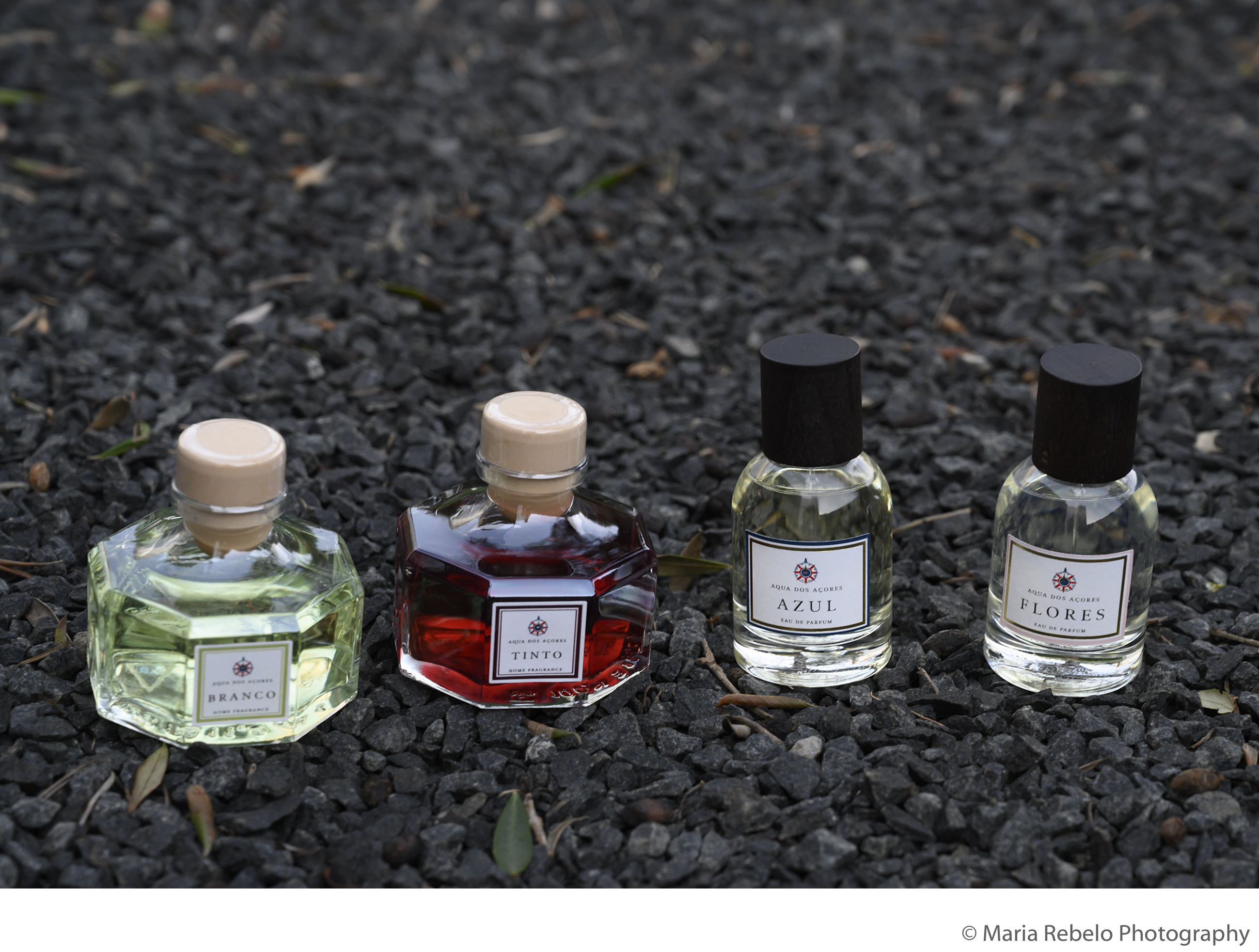
Cinzia and Gianni relish the earth and sea aromas that make the islands so alluring. So, they decided to create perfumes using essential oils made with plants from the Azores.  They call their collection Aqua dos Açores.

Flores, the Portuguese word for flowers, is a perfume that fills the air with the scent of exotic blooms and wet grass blended with the maritime breeze. Azul, the Portuguese word for blue, is a fragrance that enfolds us with the exuberance of the ocean.

Their home fragrances, Branco and Tinto, are inspired by their other passion: producing wine in the Azores. These fragrances capture the delicate, evanescent aromas of freshly-picked grapes.

There is a powerful connection between scents and memory. If you wear these fragrances when you visit the Azores, they will forever be linked to the lush, rugged landscape of these beautiful islands.  And from then on, a whiff of these perfumes will take you instantly back to the Azores.

Click here for the Aqua dos Açores web site.


A short guide to the cuisine of Portugal

Cozinha Portuguesa Book

In one of the letters collected in the volume Lettres Provinciales, published in 1657, the philosopher Blaise Pascal writes that “I have made this letter longer than usual because I did not have time to make it shorter.” Brevity is a virtue that requires time, skill and effort. This is the reason why we appreciate so much a small volume titled “Portuguese Cuisine: a Brief Look” recently published by the Portuguese Academy of Gastronomy.

Summarizing the astonishing diversity of ingredients and preparation methods of the Portuguese cuisine is a herculean task. But with 11 recipes carefully written and beautiful illustrated, this book succeeds in this difficult endeavor.

The collection opens with Portuguese meat pies with collard-greens rice. It is an inspired choice because this staple of home-cooked meals is a test of a cook’s skill. Different  people following the same recipe can produce results that vary from adequate to sublime.

The second recipe, Setúbal-style grilled red mullet, is a simple preparation that starts you off on a journey to master the fine art of grilling fish. The freshness of the fish, the amount of salt used to season it, the hotness of the coals, the distance from the coals to the fish, and the timing of the grilling all determine the final results.

Brás-style codfish is a brilliant recipe: an implausible combination of thin, fried potatos, eggs and codfish that surprises and delights. The preparation is quite forgiving, so even a novice can produce great results.

Making Algarve-style fish requires a cataplana, an oval pot that traps the steam to keep the fish moist. This device also collects the delicious juices and reduces them to enhance their flavor. The result is pure magic.

Marinated partridge uses a vinegar-based sauce called “escabeche.” The idea of marinating with acids is thought to come from Persia. It produces a wonderful dish that you can prepare in advance and serve at a dinner party.

Chicken with “cabidela” rice is a traditional recipe that uses the blood of the chicken to make the sauce for the rice. Combine it with a great red wine and you create a symphony of bold flavors that is deeply satisfying.

Roast kid goat is often served at family lunches on Easter Sunday. It is great comfort food that always creates harmony at the table.

Sweet angel hair pasta and honey cake are two easy-to-make, crowd-pleasing desserts.

Pudim Abade de Priscos is an unusual mixture of eggs, sugar, port wine, bacon, and spices invented by an abbot who was an exceptional cook.

The book ends with pasteis de nata (custard tarts). It is a time-consuming, difficult recipe. But if you take the time and effort to master it, you will earn the unending admiration of your dinner guests.

This precious little book can set you off on a culinary journey through the flavors of Portugal with recipes that you can enjoy right away and that you can perfect and refine every time you gather friends and family around the table.

Pearly plates from Estremoz

Ela Pedra

During a delightful lunch at Gadanha in Estremoz, we praised the marble serving pieces used at the restaurant. Chef Michele Marques offered to introduce us to Filipa André, the person who makes them.

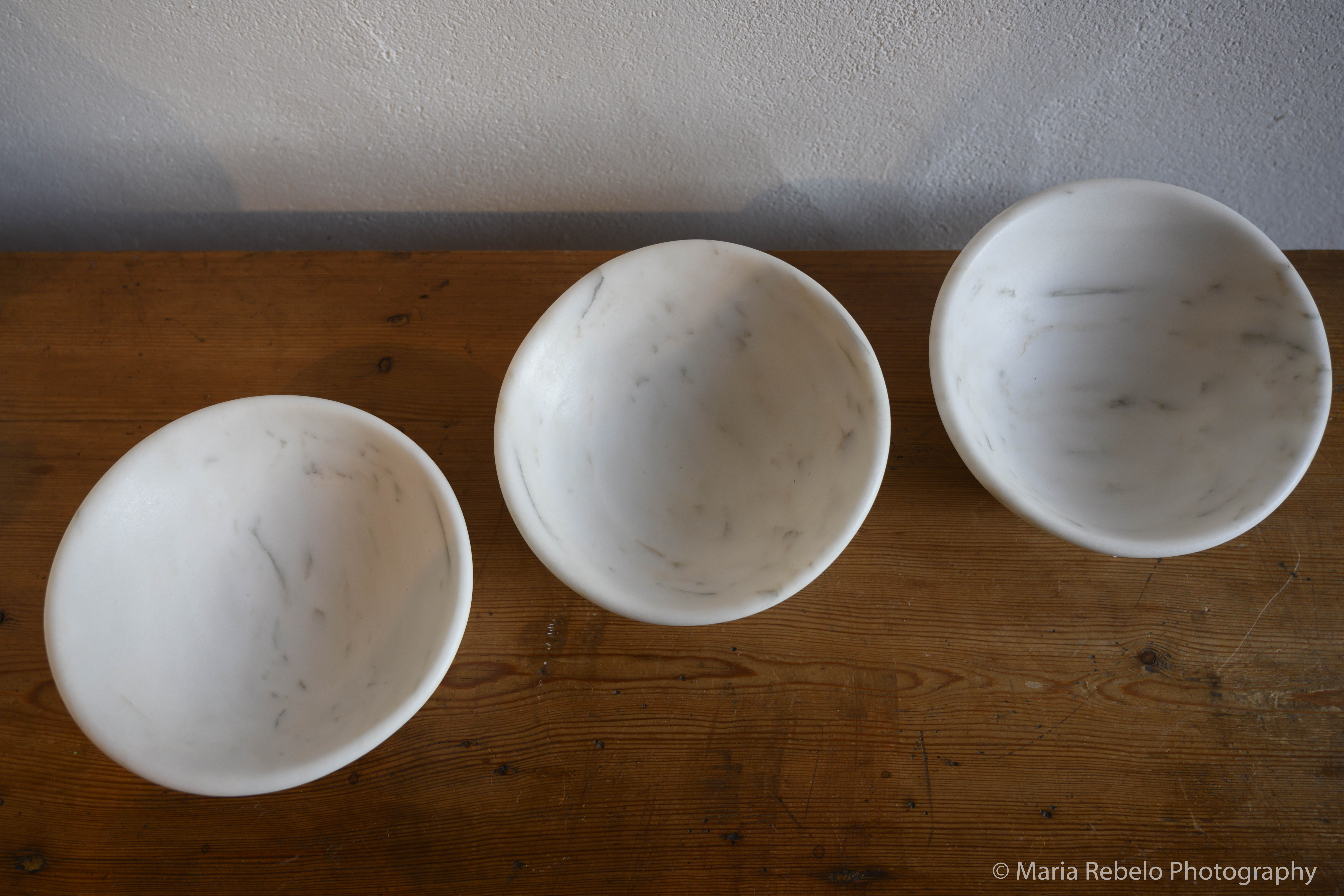
Filipa owns a gallery in Largo Dom Dinis, right by the royal palace of Estremoz. She told us how in school she longed to get into the marble sculpting classes that were open only to boys. Many years later, Filipa fulfilled her dream of learning how to work with the pearly marble of Estremoz.

Her pieces have an understated elegance that makes the food served on them shine. Every time her plates and bowls grace our dinner table people ask us: where did you get them? Now you know.

Filipa André’s gallery, Elapedra is located at Largo D. Dinis n. 13 in Estremoz, email elapedra.etz@gmail.com, tel.963273440.

Mercearia Prado

Prado (loja) Composit

António Galapito, the chef of Prado, a new restaurant in Lisbon, had a problem. Despite his large ensemble of proficient waiters, service was at times slow. The reason was that customers asked many questions about the provenance of the ingredients used in the restaurant.

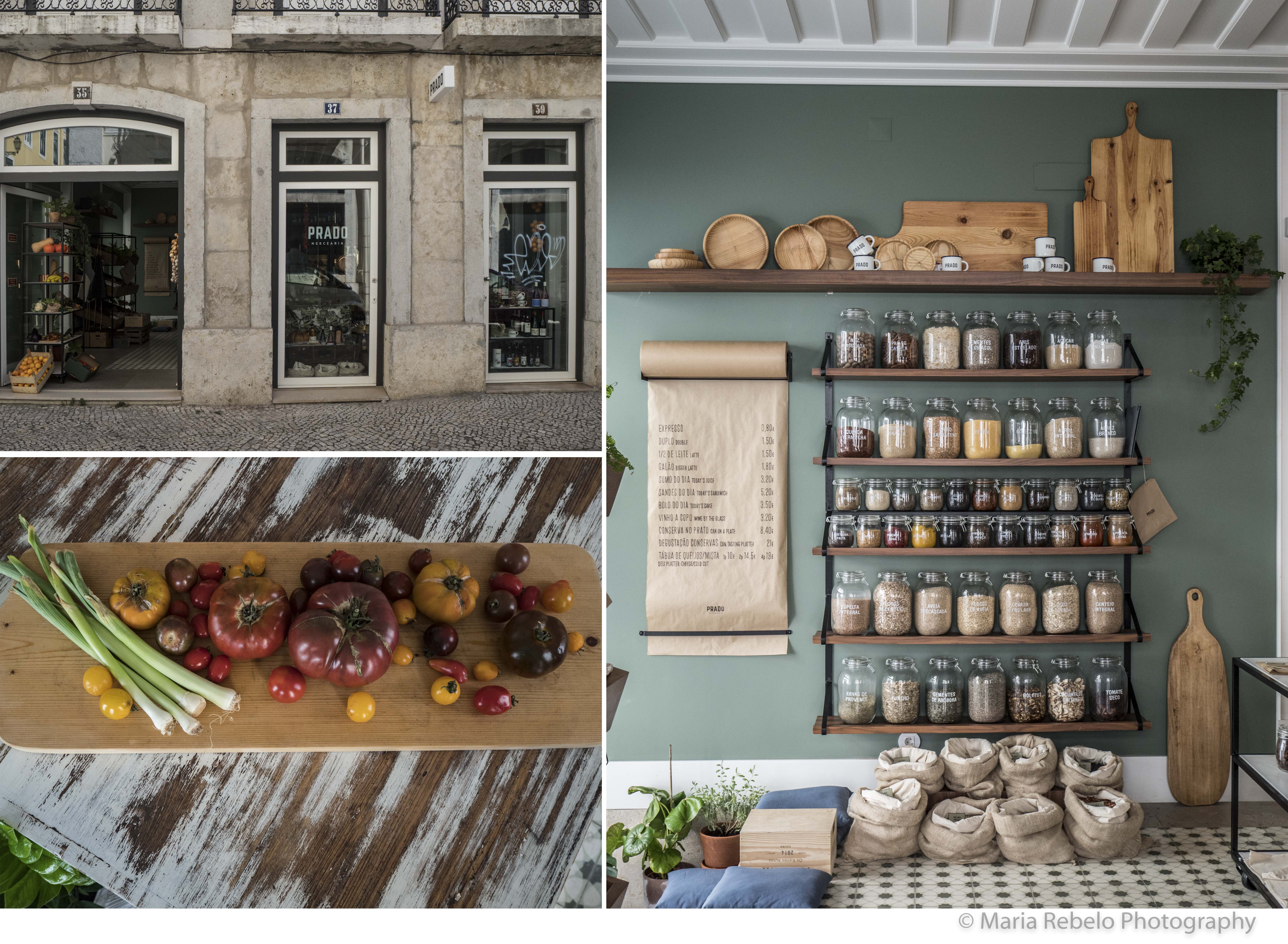
Galapito took an unusual step to solve this problem: he opened Mercearia Prado, a grocery store that stocks the products he cooks with. So now his waiters can say: you find our ingredients in the grocery store around the corner.

Mercearia Prado is the perfect place to enjoy a light lunch or to shop for a gourmet picnic. Its shelfs are brimming with wines, cheese, prosciutto, canned fish, bread, vegetables, gourmet sandwiches, jams, and desserts. The products are so carefully curated that you can shop blindfolded and be certain that everything you choose tastes great!

Mercearia Prado is located at Rua das Pedras Negras, 37, Lisbon, tel. 960 280 492. 

Silk drawings

Scarves FL

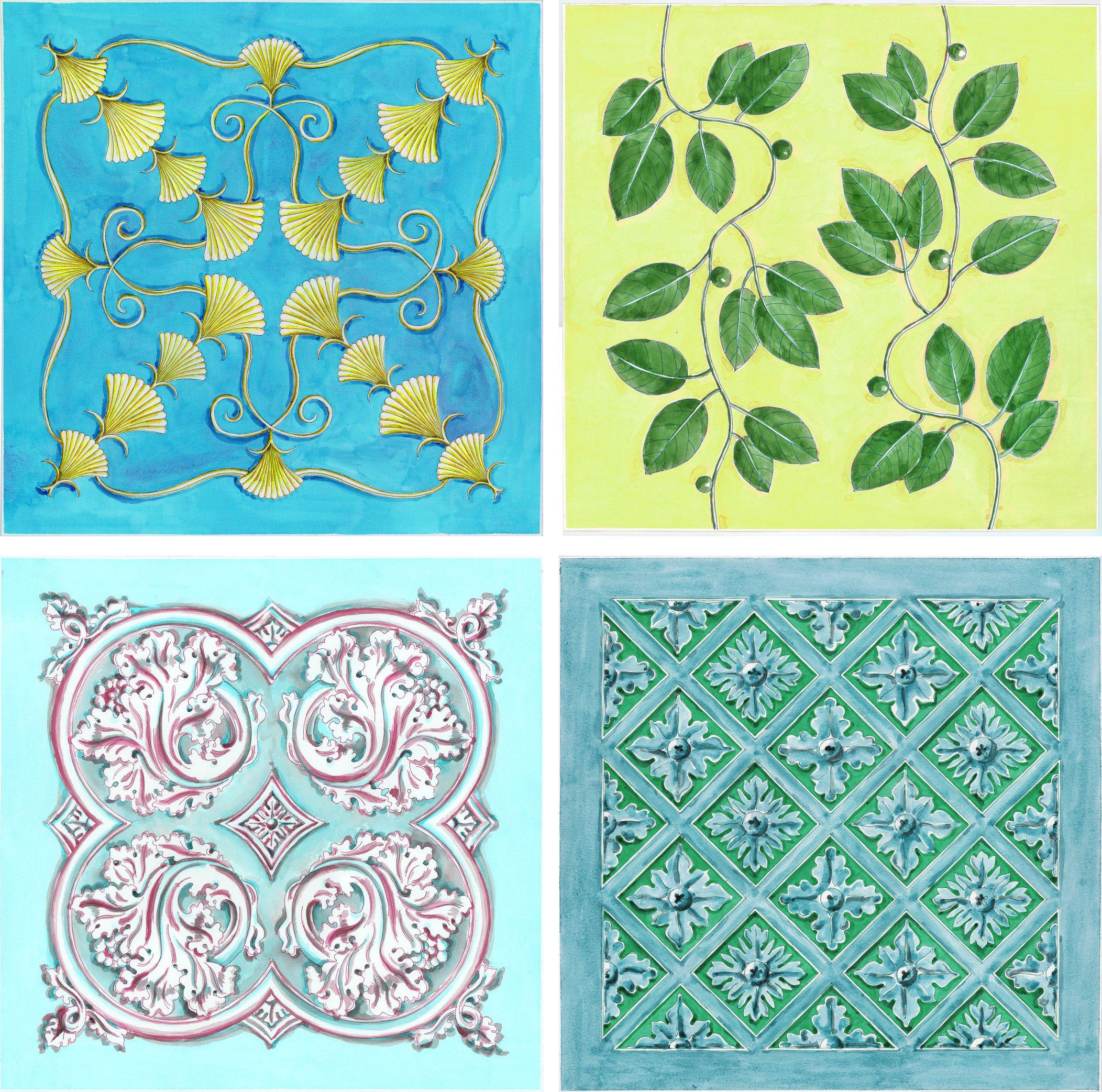
When Fernanda Lamelas travels, she tends to disappear. We’ll find her in a quiet corner seeing beauty that often goes unnoticed. Trained as an architect, Lamelas became an avid watercolorist who carries her paints everywhere. Her brushes dance on white paper, making the paints flow with precision and grace. It looks easy, but it takes a lifetime of observation to choose which lines to draw, which contours to omit.

Fernanda accumulated a large collection of sketchbooks filled with drawings from her travels. But they lied in a quiet corner gathering dust. Seeking to infuse life into these sketchbooks, Fernanda used the drawing of an architectural motif from the Carmo Convent in Lisbon to make a silk scarf. The scarf received so much praise that Fernanda felt encouraged to produce more designs. And so details from Rossio in Lisbon, the Serralves Foundation in Oporto, the Pena Palace in Sintra and from many other places came alive on canvases made of silk.

If you’re looking for a memento of a blissful vacation in Portugal, it’s hard to find anything more elegant than a Lamelas scarf.

Click here for the website of Fernanda Lamelas Arts.