When lunch time comes, some Lisbon residents dream about being magically transported to the plains of Alentejo. “O Magano,” a restaurant in the Campo de Ourique neighborhood, is a place where these dreams come true. Open for more than a decade, it brings to the capital untranslatable Alentejo delights such as “pézinhos de coentrada” and “carne de alguidar.”
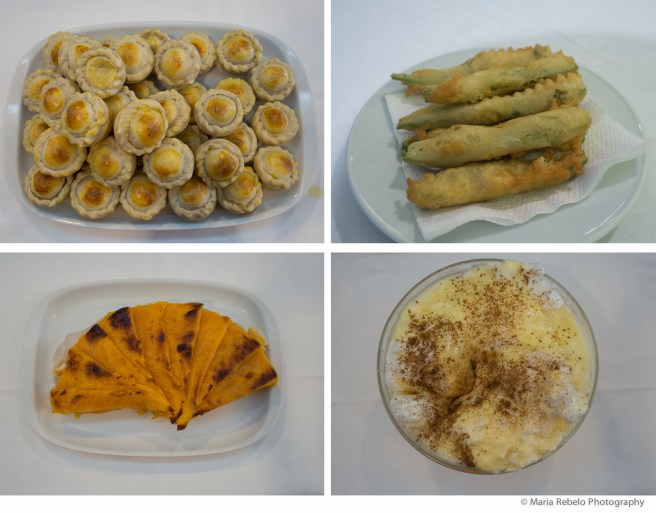
We told our waiter that we wanted to try a little of everything. “I can bring you the menu or you can leave it up to me,” he said with a twinkle in his eyes. We agreed to put him in charge and soon the table was covered with small plates of codfish with chickpeas, grilled peppers, favas with chouriço, miniature pies, green bean tempura, and marinated partridge with razor-thin fried potatoes.
“This was a wonderful lunch,” we said, complimenting our waiter on his choices “It’s not a problem if you want to skip it,” he said “but I had something else for you to try.” He went to the kitchen and brought back a steaming terrine of tomato broth. He carefully placed a piece of bread on each soup plate. Then, he poured the tomato broth and toped each piece of bread with a slice of grouper. The result was pure culinary satisfaction.
We made it clear that we didn’t have room for dessert. “I understand,” our waiter said with an enigmatic smile. He then brought us a plate with “queijadas,” “lérias,” “fidalgo,” and a Portuguese version of “îles flottantes.” “Just in case you change your mind and decide to end the meal on a sweet note,” he said. It was a pleasure to succumb to these temptations.
Magano means mischievous boy in the slang of Alentejo. Our waiter is a magano who knows that no one can resist the brilliant simplicity of the food of Alentejo.
O Magano is located at Rua Tomás Anunciacão 52 in Lisbon, tel. 21 395 4522. Reservations are a must.
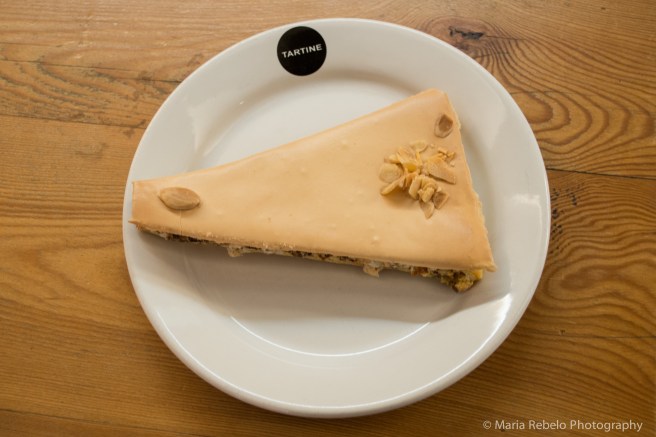
We have a major weakness for a Portuguese pastry called “jesuita.” Its shape and color resemble the habits of Jesuit priests, hence the name.
The “jesuita” was invented more than a century ago by a Spanish pastry chef who worked in Santo Tirso, a town in the north of Portugal. It combines puff pastry with two egg-based creams. The whites and the yolks are separated. The yolks are used to make a cream that is layered inside the puff pastry. The whites are used for the frosting.
The quality of “jesuitas” varies from satisfying to divine, depending on the excellence of the ingredients and the exactness of the execution. One of the best “jesuitas” we ever tried came from a wonderful pastry store near Chiado called Tartine. We bit into this delight, and the yolks and whites reunited into a mystical explosion of flavor!
Tartine is located on Rua Serpa Pinto, 15-A, tel 21-342-9108. Click here for their web site.
In the 19th century, photographers were sorcerers who could conjure life-like images that were exhilarating. Today, photos are so common that much of the wonder of the early days of photography is lost.
We were curious when we heard about Silverbox, a studio in Lisbon that specializes in portraits taken with an old photographic process. The studio is located in an elegant early 20th-century building. We entered the ornate iron elevator and pressed the key of the 4th floor to embark on our trip to the past of photography. Rute Magalhães, who runs the studio with Filipe Alves, was waiting for us.
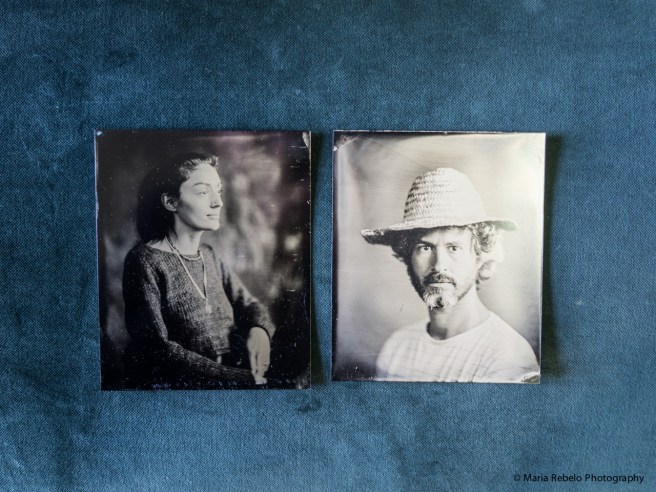
Rute and Filipe are architects who fell in love with alternative photographic processes. After trying different methods, they specialized in wet collodium. This technique, invented in 1851 by a sculptor called Frederick Archer, was widely used between 1855 and 1880. Rute and Filipe mastered this difficult process after years of experimentation under the tutelage of Quiin Jacobson, an American authority on early photographic processes.
To take a photo, Rute and Filipe coat a glass plate with collodium and then immerse it in a silver nitrate solution that makes the plate sensitive to light. Before the collodium dries, they place the glass plate in a view camera and take the exposure. The plate is then bathed in a fixing agent and washed with water. The result is a precious image that is exhilarating.
Silverbox is located on Rua Braamcamp, nº88 4 esq. in Lisbon, email info@silverbox.pt, tel. 915074612 /218057735. Click here for their web site.
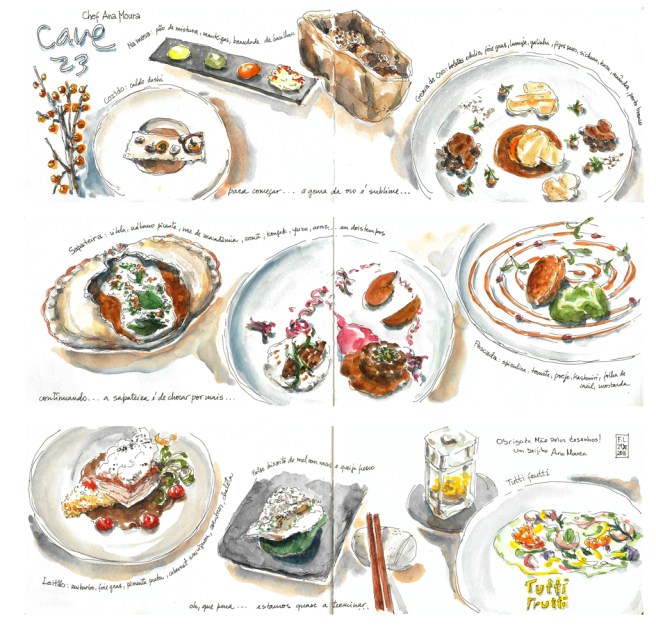
Dinner at Cave 23, ink and watercolor on paper, Fernanda Lamelas, December 2016.
Ana Moura, the young chef at Cave 23 in Lisbon, was born in a family of gourmands who planed vacations around restaurant outings. Her father, António Moura, runs a jewelry firm that produces sumptuous pieces of handcrafted filigree. Her mother, Fernanda Lamelas, is an architect and a talented watercolor painter.
It is easy to find traces of parental influence in Ana’s food: there’s an architectural quality to the presentation and an intricate detail that makes each dish look like a piece of jewelry. The hake, as white as a pearl, came adorned with a spirulina mayonnaise, dressed with a bouillabaisse sauce, and accompanied by pennyroyal, mustard, curry leaves, Alentejo bread, manga and white truffles. The cheese tart was encrusted with a ruby-red muscatel gelatin, delicate milk paper and honey foam.
Ana’s cuisine is centered on the flavors of the Portuguese cuisine. She uses foreign ingredients—Indian bread, Japanese roots, Vietnamese puffed rice—but only to make local ingredients shine brighter.
A passage through Arzak, a famous Basque restaurant, left Ana with a taste for bold flavors. She served us a large shrimp paired with bone marrow, the two flavors enhancing each other. The sublime crab soup was made with broth reduced for two days.
The menu features creative combinations of flavors that work well together: the rabbit rice came with persimmon, the crab meat with a radish bisque, the shrimp with a mousse of arugula and Azores cheese.
Cave 23 is a new star in the firmament of Lisbon restaurants. Our dinner was an intense, memorable experience.
Sadly, Ana Moura and her team left Cave 23 in the end of March, 2017. We can’t wait to be part of Ana’s next culinary adventure!
Portugal played a leading role in the trade with the Far East after Vasco da Gama discovered the sea way to India in 1498. One of the commodities brought from the orient by the caravels were the dried leaves of a plant called Caméllia sinensis. The Portuguese called these leaves and their infusion chá, after the Cantonese word chàh. Their Dutch rivals preferred a word from China’s Fujian province: tea.
When Catherine of Braganza, a Portuguese princess, married Charles II of England in 1662, her trousseau included a basket of tea leaves. She used them to throw tea parties at court. These parties were such a success that drinking tea became a fashion that endures.
Two centuries later, Wenceslaus de Moraes, a Portuguese diplomat who lived in the orient, wrote a poetic book called The Cult of Tea. His goal was to introduce Europeans to the ancient art of serving tea.
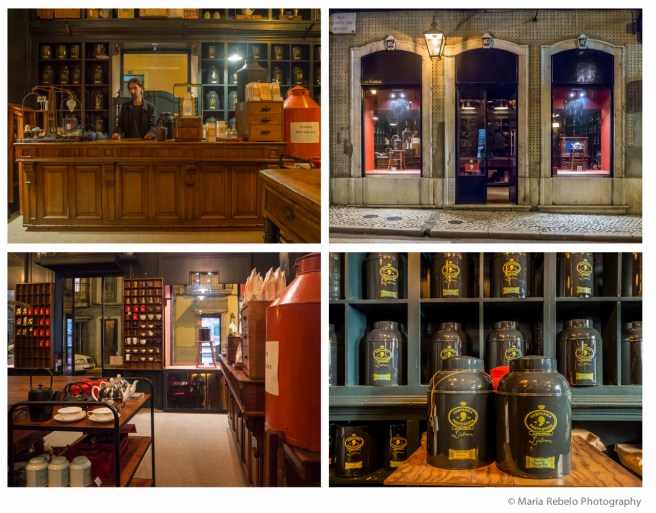
Despite these historical connections, Portugal didn’t have a purveyor of fine teas until an Argentinian called Sebastian Filgueiros came to live in Lisbon. Trained as a tea sommelier, he decided to create the Companhia Portugueza de Chá (the Portuguese tea company). The company’s logo combines the profile of Catherine of Braganza with the word Lisbon handwritten by Wenceslaus de Moraes.
Sebastian travels often to the Far East in search of new producers. His favorite teas are the Darjeelings from India and the old black teas from China. But he is very proud of the teas made in Portugal. He’s been able to source two wonderful teas from Azores. The first is a delicate white tea made in cooperation with a research institute. The second is a rare Oolong from the Gorreana plantation. Sebastian sells a fragrant earl grey produced with bergamot oil from Alentejo and his own tea blend called Lisbon breakfast.
When he talks about tea, Sebastian has all the time in the world. And there’s a lot to talk about, from the harvest and oxidization of the leaves, to the way each tea is prepared and served. He speaks softly, as if the secrets of tea are for our ears only. It is worth listening because on the shelves of his store lies a world of tantalizing aromas and flavors waiting to be discovered.
The Companhia Portugueza do Chá operates in Rua do Poço dos Negros, 105, near Chiado, tel. 21-395-1614.
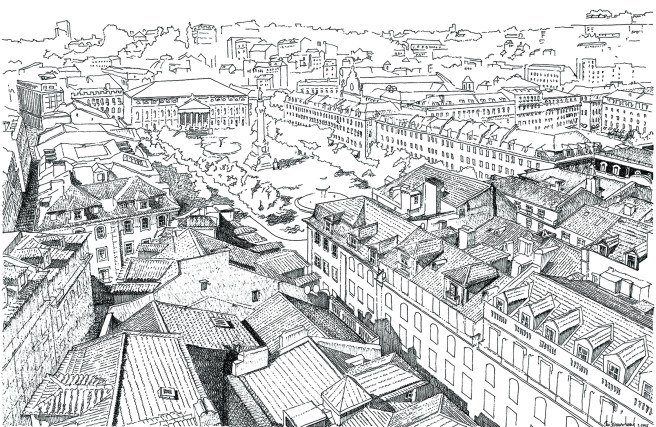
Rossio, Rui Barreiros Duarte, ink on paper, December 2016.
We envy the early risers. They see Lisbon wake up, dress in pale blue light, put on a cinnamon fragrance and get ready to enchant its visitors.
We’re often asked about the drawings used on our blog. They’re the work of architect Rui Barreiros Duarte. For the first time, he’s selling a few original drawings like the one on this post. The sizes are around 60 cm x 40 cm and the prices around 200 euros. If you’re interested, email apprbd@gmail.com .
We love showing Lisbon to our friends. It is a joy to stroll through streets where so much history was written, admiring the old architecture, visiting interesting shops, stopping by beautiful cafés for coffee and pastries. So, when VoiceMap invited us to record a voice-guided walking tour of Lisbon, we didn’t hesitate.
VoiceMap is a new company that produces GPS-based walking tours. To go on a tour, all you need is a smart phone. You can download the tour in advance and use the maps offline.
Their app shows you a map with your current location and where you should go next. The audio is synchronized with the map, so you can walk at your own pace while your guide tells you about what you’re seeing. It is a great way to immerse yourself in the place you are visiting.
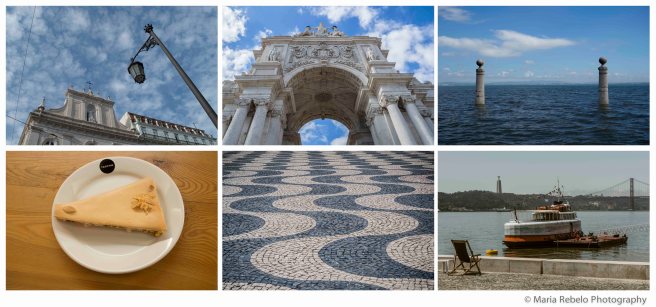
Our tour is about the relationship of Lisbon with the Tagus river. We start at Chiado, by the iconic Brasileira coffee shop, and stroll down to Baixa, the area of downtown Lisbon that was rebuilt after the 1755 earthquake. On the way, we tell you about everything from myths and legends to royal gossip. We show you the architecture and the views of the Tagus river that inspired so many poets. And we end the tour with a celebratory drink in the most beautiful esplanade in Lisbon. Come join us!
Click here to download our VoiceMap tour of Lisbon.
When we were young, every September our family ate fried eels that came from Murtosa, a small town in the estuary of the Vouga river. The eels were marinated in “escabeche,” a sauce made with olive oil, white wine, onions, paprika, laurel, and vinegar. These ingredients were combined according to ancient rules of alchemy so that when the eels, the sauce and boiled potatoes were placed on the plate, they transformed into culinary gold.
Eels are mysterious creatures. They spend their early years in fresh river waters. After reaching maturity, they swim to the middle of the Atlantic ocean to lay their eggs in the Sargasso Sea. The baby eels swim back in search of fresh river water and the cycle of life restarts.
How do the infant eels know where to go? And why do the best tasting eels end up in Murtosa? These are inscrutable mysteries.
Before refrigeration was available, the Murtosa eels were a local delicacy. The fisherman ate them fried or in a “caldeirada” that combines the fish with potatoes, tomato, onion, garlic, olive oil, lard, herbs, and spices.
In the first half of the 20th century, some local cooks started marinating fried eels in escabeche sauce. First they packed them in wooden barrels and later in tin cans. These marinated eels gained great fame and popularity in the center of Portugal.
Over time, eels became scarce, the number of fisherman declined, canning factories closed, and it became hard to find marinated eels. So imagine our surprise when, strolling in downtown Lisbon, we found a store called 1942 that specializes in marinated eels from Murtosa! The cans come from a factory that has been processing eels since 1942.
We took this precious find home and opened the can slowly, preparing to be disappointed. But, when we placed the eels, the sauce and boiled potatoes on a plate, the old magic flavors came to life and we felt young again.
The 1942 store is located on the corner of Rua da Conceição and Rua da Prata in Lisbon (tel. 21-599-9890).
If you arrive in Lisbon by ship, you might understand how Portuguese navigators felt as they entered the tranquil waters of the Tagus river to glide into the city’s warm embrace.
The Belém tower
Every week, a Royal Caribbean cruise ship treads the same waters where Vasco da Gama once sailed to bring its passengers to Lisbon. The cruise operator asked us: what is the best way for our passengers to spend 10 hours in Lisbon? This post is about our suggestions.
The most convenient way to travel in Lisbon is to take taxis. Their fares are relatively inexpensive and the drivers are experts at navigating the narrow streets of the old neighborhoods. Traffic can at times be heavy, so it is a good idea to plan on taking about 30 minutes to travel between the three locations we describe below (Belém, St. George’s castle, and Chiado).
Morning
We recommend for your first stop the Antiga Confeitaria de Belém (Belém’s Old Pastry Store, Rua de Belém, 84-92).
Belém
When the religious orders were abolished in 1834, the monks of the Jerónimos monastery started selling custard tarts to earn some income. These tarts, which became known as “pasteis de Belém,” gained great popularity.
Pasteis de Belém
The convent’s pastry chef sold the recipe to an entrepreneur who opened the Confeitaria in 1937. Today, this pastry store continues to thrive as one of Lisbon’s most popular destinations.
Unlike the “pasteis de nata” you find elsewhere in the city, these custards are best enjoyed while they’re still warm. The Confeitaria is always full and there’s often a long line of people waiting to order. We suggest that you bypass the line and go to the large room in the back where you can sit down and enjoy these pastries without waiting.
The Jeronimos Monastery
Next, we recommend a visit to the Jerónimos monastery. Financed with a tax on the gold, silver and spices brought from Africa and the Far East, its construction began in 1501 and finished only one century later. It is a masterpiece of the Manueline, a Portuguese gothic style that uses nautical motifs, such as sirens, nets, ropes, corals, and seaweed. See if you can spot these motifs during your visit.
Inside Jerónimos, you’ll find monuments to two Portuguese heroes. The first is Luis Vaz de Camões, the author of a famous epic poem about the exploits of Portuguese navigators in “seas that had never been sailed, facing perils and wars with force that is rare in humans.” The second is Vasco da Gama, the navigator who discovered how to sail from Portugal to India. This discovery allowed Portugal to bring rare spices from the Orient, such as pepper, clover and cinnamon, and sell them for extravagant prices in Europe.
After visiting Jerónimos, walk towards the Tagus river to the monument to the discoveries. In the 15th century, the river came close to the monastery, so you are walking on land claimed from the Tagus.
The monument to the discoveries was first built in 1940 with plaster and then rebuilt in 1960 with cement and stone. It features the statues of navigators, and other important protagonists of the age of discovery.
Monument to the discoveries
Henry the Navigator, the prince who sponsored Portugal’s first naval explorations, has pride of place in front of the monument. Some say his stern demeanor comes from contemplating the perils that Portuguese explorers had to face. Others, think that he is afraid of being pushed into the river (despite his nautical fame, prince Henry did not know how to swim).
There are a few additional activities available in Belém. You can take the elevator to the top of the monument to the discoveries for a breathtaking view of the river and the city. You can also walk to the beautiful Tower of Belém, a defensive structure built in the 16th century to guard the city from pirates and other foes. If you’re traveling with kids, you might want to visit the nearby Coach Museum (Avenida da Índia, 136). It has a beautiful collection of ancient coaches.
Lunch
We have three lunch suggestions. Wherever you choose to go, if you find clams Bulhão Pato on the menu, order them. They are culinary poetry.
For a quick lunch, visit Mercado da Ribeira (Avenida 24 de Julho, 49).
From Belém to Mercado da Ribeira
You can tour the beautiful food market to admire the freshness of the fish and produce. Then, walk over to a large food court set up by Time Out magazine where many of the top chefs in Lisbon have stalls.
Time Out food court at Mercado da Ribeira
It is always crowded, but it offers a wide selection so you can sample well-prepared versions of many popular Portuguese dishes. Seafood rice, codfish cakes, and roasted piglet (leitão assado) are obvious choices. Paired with a glass of Portuguese wine, they make a great meal.
Afternoon
If you have lots of energy left, we suggest you take a taxi or a tuk tuk to St. Jorge’s castle.
Otherwise, take a taxi to Chiado.
St. George’s castle was occupied by the Romans, the Visigoths and the Moors. Dom Afonso Henriques, the first king of Portugal, conquered the castle in 1147 and built there the first royal palace. The castle has beautiful views of the city. It is great fun to wander around in Alfama, the neighborhood between the castle and the Tagus river.
Mercado da Ribeira to St. Jorge’s castleLisbon’s tuk tuks.
It is Lisbon’s oldest neighborhood, the only one to survive the devastating 1755 earthquake.
Next, we recommend you go to Chiado. One fun way to get there is to board the famous tram 28 (but please watch out for pick pockets on the tram). Alternatively, you can take a taxi.
St. Jorge castle to Chiado
Once you reach Chiado, you can participate in an important debate. On the corner of the Camões plaza you’ll find Manteigaria (Rua do Loreto, 2), a new “pastel de nata” store. Try their custard tarts and compare them to the ones you tried in Belém. Which ones do you like the best? We eagerly await your views in the comments to this post!
You can now walk towards Lisbon’s most famous café, A Brasileira (Rua Garrett, 120).
A Brasileira
Inaugurated in 1905 to sell coffee from Brazil, it quickly became a popular meeting point for painters and writers. Go in to see the interior. In the esplanade, you’ll find the bronze statue of Fernando Pessoa, a great Portuguese poet who often came to A Brasileira to write.
If you’d like to buy a gift for a friend, check out the Vista Alegre porcelain store (Largo do Chiado 20-23). They have beautiful plates and the world’s most perfect tea and espresso cups.
Espresso cups from Vista Alegre
Now you have two options. The first is to take a walking tour (all downhill) with us as your guide. Click here to log on to VoiceMap to download the audio tour and we will guide you through the streets of Lisbon.
Chiado to Ribeira das Naus
The second option is to take a self-guided walking tour.
Santini ice cream store
We recommend that you go down on Rua Garrett and turn left on Rua do Carmo. You can stop at Santini (Rua do Carmo, 9) to try one of their famous ice creams. Continue on Rua do Carmo until you reach Rossio, one of Lisbon’s main plazas.
Cross the plaza and find Rua Augusta. Keep walking towards the river until you reach the Rua Augusta arch. On your left, you can buy tickets to take an elevator to the top of the arch which offers spectacular views of downtown Lisbon.
View from the top of the Rua Augusta arch
Once you cross the arch, you are in Terreiro do Paço, also called Praça do Comércio (commerce plaza). This is the place where the second royal palace was located before it was destroyed by the 1755 earthquake. It was here that king Dom Carlos and his son were assassinated in 1908 by revolutionaries. Two years later, in 1910, Portugal became a republic.
We recommend that you walk past the statue of king Dom José towards the two columns on the river. This is the “cais das colunas” (the pier of the columns).
Cais das colunas
In the days when most visitors arrived in Lisbon by sea, this pier was the port of entry for VIPs. Now walk towards Ribeira das Naus, the place where the caravels used to be built and repaired.
There you’ll find the most beautiful esplanade in Lisbon. We recommend that you order an aperitif from the kiosk. Our favorite is Favaios, made in the Douro from moscatel grapes. Sit on a chair and enjoy the magnificent view.
Ribeira das Naus esplanade.
We hope you have enjoyed your 10 hours in Lisbon. You have seen a lot, but Lisbon does not reveal all its charms on a first date. We look forward to seeing you back; our blog will be here to guide you.
What is the best pastel de nata in Lisbon? The answer depends on our mood. Some days, we like them perfumed with lemon. Other days, we prefer them scented with vanilla.
Our current favorites are the lemony kind. They are made by Manteigaria in Praça Camões near Chiado at a location that was once occupied by a butter shop (manteiga is the Portuguese word for butter). Perhaps as an homage to the past, Manteigaria’s pasteis have a buttery taste. The crispy crust and the rich filling are so satisfying that they make us feel, for a moment, that we discovered the meaning of life.
Whenever a new batch of pasteis comes hot out of the oven, Mantegaria’s cashier rings a bell. You’ll see people dropping what they’re doing and rushing to Manteigaria in search of a moment of sweetness.
Manteigaria is located on Rua do Loreto, 2 near Chiado in Lisbon, tel. 21-347-1492.