An hotel in the land of silence

Composit Colmeal

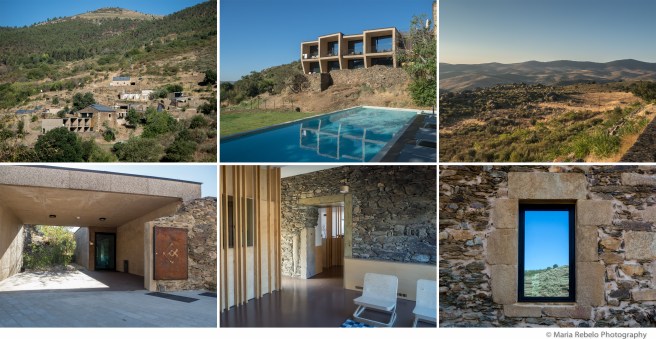
As we drove on the narrow road from Figueira do Castelo Rodrigo to Colmeal, we felt we were leaving the modern world behind. All we saw ahead of us were granite hills and fertile valleys under a sapphire blue sky. Even as we got close to the hotel, the building remained invisible. Its honeycomb shape dissolves into the landscape leaving us with a pristine view of the Marofa mountain. The same view that the Neolithic people saw when they made their paintings nearby, 3,000 years ago. The same panorama that welcomed the pilgrims who followed the ancient spring that goes by the village of Colmeal, on their way to Santiago de Compostela. This water, crystalline and pure, was a blessing to the travelers. And so was the food and hospitality offered by the population of this village that dates back to the 12th century.

The new Colmeal Countryside Hotel seeks to revive this tradition of hospitality.  In the evening we enjoyed a simple meal of watercress soup, local cheese and fruit. When we asked our waiter why the soup tasted so great, he told us that one of the secrets is the local spring water. “Anything cooked with this water is transformed,” he said.

The hotel, designed by architect Pedro Brígida, is warm and welcoming. It integrates perfectly with its the surroundings, which include a manor house and a church that once belonged to the family of Pedro Álvares Cabral, the navigator who discovered Brazil.

The environment is so peaceful that we found ourselves whispering to avoid staining the immaculate silence. We sat on the terrace on a warm Summer night bathing in star light, happy to have left the modern word behind.

Click here for the hotel’s website.

Celebrating the passage of time at Ramos Pinto

Composit Ramos Pinto

Port wine used to be sold in austere black bottles with somber labels. Adriano Ramos Pinto, a maverick entrepreneur who entered the port wine trade in 1880, changed all that. He wrapped port wine with sensuous images, elegant packaging, and clever marketing.

One of Ramos Pinto’s publicity coups took place in 1922. Two pilots, Gago Coutinho and Sacadura Cabral, planned to make the first aerial crossing of the South Atlantic, flying from Lisbon to Rio de Janeiro. Ramos Pinto convinced them to take a bottle of his port wine on board to celebrate their landing in Rio de Janeiro. On the first two attempts, the airplane sunk near the coast of Brazil. But both the pilots and the bottle were saved. The third attempt was successful and the bottle was finally opened to great acclaim. This and other exploits made Adriano Ramos Pinto so famous in Brazil that a glass of port was often called an Adriano.

Tasting port wines at the cellars of Ramos Pinto in Vila Nova de Gaia is a sumptuous experience. You can try splendid tawnies, made by man with the help of God, and divine vintages, made by God with the help of man.

Tawnies are aged in 600-liter wood barrels where they acquire a golden color and the taste of dry fruits, almonds and nuts. As time goes by, some of the wine evaporates and the barrels have to be topped off. This evaporation has a whimsical name: the “angel’s share.”

A bottle of tawny is a blend of wine from different harvests. A 30-year-old tawny is made with wines that average 30 years of age, so it often contains wine that is 60, 70, even 100 years old. The passage of time is a key factor in the production of great ports. There are 4 million liters of port stored in Ramos Pinto’s cellars.  Master blenders use these nectars produced by older generations and save some barrels from the current harvests to be blended by future generations.

Vintage ports are produced from a single harvest in exceptional years. They stage for only two years in wood barrels called balseiros. These barrels are very old and very large, holding 60,000 liters of wine. They are used to smooth the tannins without imparting the taste of wood to the wine. Vintage port is bottled and stored in the dark to preserve its rich red color and the taste of fresh fruit.

Ramos Pinto also produces alluring white ports. We tried a 7-year white blend that has enticing notes of honey and citrus. There are also wonderful late bottled vintage (LVB) ports. Produced more often than the rare vintages, LVBs are aged in balseiros for 4 years and then bottled without being filtered, so they can continue to improve in the bottle.

In 1990, Ramos Pinto was acquired by Roederer, the producer of the famed Cristal champagne. But the company is managed by a Portuguese enologist, João Nicolau de Almeida, son of the legendary Fernando Nicolau de Almeida, creator of the iconic Barca Velha. In addition to wonderful ports, João Nicolau d’Almeida makes two impressive table wines: Duas Quintas and Bons Ares.

It is traditional to buy a bottle of port from the year in which one’s child is born for them to make a toast when they come of age. Buying this birthday bottle for your children is a great excuse to visit the Ramos Pinto cellars and a beautiful way to celebrate the passage of time.

Click here for the Ramos Pinto web site. The cellars are located at Av. Ramos Pinto 400, Vila Nova de Gaia near Oporto.

Covela’s prima donna grapes

Composit Quinta da Covela

In his novel “A Cidade e as Serras” (The city and the mountains) the great 19th-century writer Eça de Queiroz describes the life of Jacinto, a wealthy Portuguese who enjoys a glamorous life in Paris. Jacinto frequents the theater and the opera, attends scientific and artistic gatherings, reads the newest books and dresses according to the latest fashion. After an earthquake damages his ancestral mansion in the Douro valley, he decides to go home to oversee its reconstruction.  Jacinto falls in love with the simple pleasures of life in the Douro and lives there happily ever after.

Sometimes life imitates art. Tony Smith was a successful journalist who lived a glamorous life in Rio de Janeiro and New York. He used to spend vacations in the Algarve where he liked to drink a wine called Covela. By happenstance, Tony learned that the estate that produces Covela was up for sale. On a whim, he made a purchase offer. Month of negotiations ensued. After he thought all was lost, he managed to buy the property together with his business partner, Marcelo Lima. Tony imagined that producing wine would be a part time occupation. But just like Jacinto, he fell in love with the Douro valley and never left.

We sat at a stone table in the end of a brilliant afternoon admiring the granite terraces where the vines are planted. The quinta, which remounts to the 16th century, has ideal conditions to produce a young white wine known as “vinho verde” (green wine). It is primarily planted with Avesso, a prized local white varietal that has the temperament of a prima donna. Too much heat or too much rain make the grapes unhappy.

Covela produces some of the happiest Avesso in the world. Its remarkable acidity and minerality make every glass of wine an aria of aromas and flavors.

Our palates were still savoring the fantastic white wine made at Covela solely with Avesso when Tony brought out an enticing rosé produced with Touriga Nacional. The grape juice was left in contact with the red skins for a short period of time, just enough to produce a gorgeous rose color. It is a perfect Summer wine, full of joy and freshness.

Finally, Tony brought us two blends of the excitable Avesso with the even-tempered Chardonnay, the “Escolha” and the “Reserva.” The Escolha has everything: an alluring perfume, a perfect body, an irresistible elegance. The Reserva is full of confidence and aristocratic charm. It is the ideal wine to enjoy in the Winter by the fireplace with a slice of cheese from Serra da Estrela.

We thanked Tony for sharing his treasures with us. “You have to return next year,” he said. “Marcelo and I just bought Quinta da Boavista.” We were speechless. This is the legendary property that belonged to the Baron of Forester, author of the famous map of the Douro river published in 1848. “Come visit me at Boavista,” Tony said with a genial smile. We surely will!

Quinta de Covela is located at S. Tomé de Covela, Baião. Click here for the Covela website. 

A taste of Alcobaça in Lisbon

Alcoa

Alcoa, a pastry store in the historical town of Alcobaça, has been producing magical concoctions of flour, sugar and eggs since 1957. They use ancient recipes developed by monks of the order of Cister from two local monasteries, Alcobaça and Santa Maria do Coa.

Alcoa’s pastries have always been revered in the Alcobaça region. But outside the region, only a few knowledgeable gourmets made regular pilgrimages to taste Alcoa’s delights. That all changed when Alcoa started winning top prizes in the annual competition for the best “pastel de nata.” Suddenly, Alcobaça became a destination for dessert lovers.

Neophytes journeyed to Alcoa for the “pastel de nata” only to find a new world of delights with whimsical names and exotic shapes: cornucopias, Saint Peter’s secret, fradinho (little monk), eggs of paradise, and much more. The happiness of Lisbon residents plummeted with the knowledge that these heavenly sweets were 120 km away. Luckily, the owners of Alcoa felt pity for Lisbon’s dwellers and decided to bring their sweet alchemy to Chiado. And now, happiness has returned to the capital city.

The original Alcoa pastry store is on Praça 25 de Abril, 44 in Alcobaça, tel. 262 597 474. The new store in Lisbon is on Rua Garret, 37-39, Chiado, tel 21 1367183.

A rhyming guide to Lisbon

RBD_Lisboa_Sé
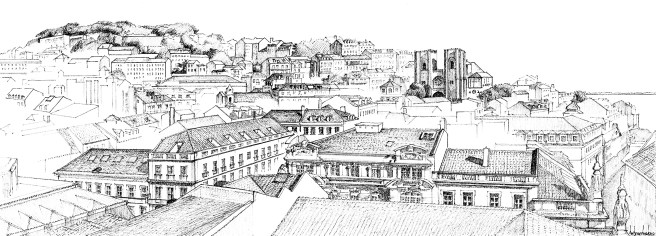
Lisbon, ink on paper, Rui Barreiros Duarte December 2017.

It you come to Lisbon by boat or by plane
As soon as you land, you must go to Belém
For there you can try sweet pastries so fine 
They serve them in heaven since 1837

There’s an old monastery, majestic and faery
And a tower that’s built with such precious marbles
Fish jump from the Tagus to see how it sparkles

If it is time for lunch
You do as you wish
But do not go home
Without trying codfish

Clams Bullhão Pato you also must try
It’s a dish so sublime
Foodies rave about it in prose and in rhyme

Which restaurant to choose?
If you really insist
We’ll tell you our favorites
Click here for a list

There are three main plazas that are worthy to see
Terreiro do Paço where the king used to live
Rossio that’s spacious and pretty like few
And then there’s Chiado with shops old and new

You must go to Alfama
The sole place to survive
The Lisbon earthquake of 1755

Then you can relax in an old coffee shop
And pencil a poem about love or loss
If you need inspiration, we know where to go
For a glass of “ginginha” that’ll make your words flow.

You can shop for a gift
For whomever you pick
Here’s a list of suggestions
Diverse and unique

If you’d like to hear fado, stop by Sr. Vinho
To see singers in black make their voices go far
Embraced by the sound of an ancient guitar

Lisbon forgives if you leave for a day
To see Sintra‘s palaces
Cascais and its bay

But you must come back soon
For the city has charms that it only reveals
To those who spend time in its seven hills

Worshiping the sun in Belém

MAAT Composit

If you’re visiting Lisbon, we recommend spending an afternoon in the Belém neighborhood. We like to start by sitting at one of the tables of the old Confeitaria de Belém to enjoy an espresso with a warm pastel de Belém. We eat the pastry slowly, taking small bites while the aroma of cinnamon and vanilla surround us and the taste of cream, eggs and sugar melts in our mouth.

We are then ready to stroll by the river to the Belém tower. Before the 1755 earthquake, the tower was close to the middle of the river. It was equipped with cannons meant to protect the city from pirates. But instead of scaring marauders, the beautiful tower made Lisbon more alluring and desirable.

Our next stop is the Monument to the Discoveries. It marks the point of departure of the caravels that sailed into the unknown seas to discover new lands.  From there, we cross the garden surrounded by olive trees to visit the Jerónimos Monastery. It is a majestic monument that celebrates the age of discovery in a gothic style that makes exuberant use of maritime motifs.

After spending much of the afternoon visiting the past, it’s time to look at the future. We like to arrive 45 minutes before sunset to the next destination: the new Museum of Art, Architecture and Technology, known as MAAT. Designed by British architect Amanda Levet, the sensuous building looks like a ship that could sail into space. Its roof has become a favorite destination for sun worshipers. Standing there, we see the Tagus river change into orange vests to praise the star that divides night and day while the white museum glows in the golden light. Five centuries after the construction of the Belém tower the MAAT makes Lisbon feel young and desirable again.

The MAAT is located at Av. Brasília, Central Tejo in Belém, Lisbon. Click here for the MAAT’s website. 


Tranquility at Quinta de Guimarães

Quinta de Guimarães

The best way to experience the magic of the Douro valley is to sojourn at a local farm. It was this possibility that attracted us to Quinta de Guimarães, an estate that dates back to the year 1720. It offers rooms in an ancient manor house and in two beautifully restored country homes surrounded by vineyards.

We loved the tranquility of the quinta and the sumptuous meals that Fernanda Pinto, the property caretaker, prepares with produce from the farm. Breakfast includes country breads, homemade sausages and prociuttos, eggs from happy chicken, and traditional desserts. We enjoyed a wonderful dinner composed of spinach soup, baby goat with roasted potatoes, followed by the farm’s luscious fruit. The meal was accompanied by a bright “vinho verde” (slightly sparkling white wine) produced on the property under the label Cazas Novas.

A visit to Quinta de Guimarães is a journey to a place where time has stopped because it found perfection.

Quinta de Guimarães is located at Lugar de Miguas, Sta. Marinha do Zézere, tel. 912 915 699. Click here for the quinta’s website.


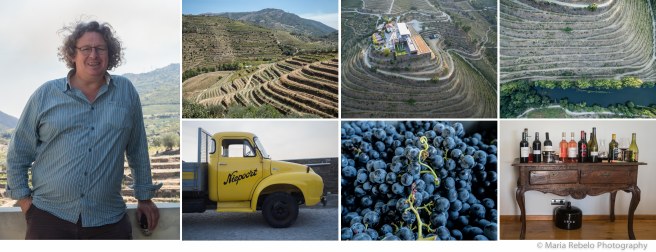
Lunch with Dirk Niepoort

Niepoort Composit_

We got in touch with Dirk Niepoort, a legendary Douro valley wine maker, through a common friend. We asked Dirk whether we could come by Quinta de Nápoles to take some photographs. “Why don’t you come for lunch?” he replied. And so we did.

Dirk welcomed us to the dining room and started opening a few wine bottles. There were 20 people getting seated around the table. A few were Summer interns who came from afar to apprentice with Dirk. Others were people related to the wine business, enologists, producers, sommeliers of starred Michelin restaurants.

There were no speeches, Dirk circulated around the table sitting in different places so that he could talk to everybody. His demeanor is shy but his charisma is obvious. When he talks to someone, he makes them feel like they are the only people in the room.

The table was set with pataniscas (fried cod) and pasteis de massa tenra (turnovers) made with a sausage called alheira.  Dirk poured everybody some Redoma Reserva, his brilliant white wine made from 80-year old vines. Plates steaming with a hearty country soup were passed around. Soon our glasses were filled with an experimental “vinho verde” (green wine). We were still savoring its bright, lightly sparkling taste when another star white wine from the Niepoort stable arrived: the luxurious Coche.

When Dirk sat in our table corner, we asked him to explain his wine-making philosophy. Discussing wine with Dirk Niepoort is like playing chess with Gary Kasparov. Both are so many moves ahead that they are playing a different game. Most of the world is producing bolder wines with higher alcohol, more taste, deeper color. Dirk is doing the opposite. He wants to produce wines that are fresher, more aromatic, with less alcohol, less extraction and concentration. “Once we start drinking these lighter wines, we might find the old styles boring,” he says.

Dirk created a new project called Nat’cool to promote some of these new wines. He generously invited a few young wine makers to join this project. One of these wine makers, Luís Cândido Silva, was with us at lunch. Luis served his Primata, a wine that is easy to drink with bright acidity and only 9 percent alcohol.

Terrines of savory octopus rice filled the table as Dirk poured Blah, Blah, Blais a wine that is a testament to his generosity. Dirk gave Frederick Blais, a regular Summer intern from Canada, the opportunity to make this wine with old vines from one of the Niepoort’s estates!

A serra cheese started to circulate, accompanied by a wine with a tong-in-cheek name: Clos de Crappe. “It’s a technical disaster that worked out great,” Dirk said grinning.

Local pastries were served with an ice wine made by Dirk’s young daughter. She floated around the table like a fairy, serving her wine and enchanting everybody.

Finally, we tried two Niepoort port wines from 2005, a Late Bottled Vintage and a Colheita. These twin wines have different personalities but both share the richness and depth that only the Douro can produce.

It was time to say goodbye. We thanked Dirk for his generosity and walked towards the parking lot with the other guests. We have different professions, backgrounds and nationalities. But we all felt the same: we were descending from the mount Olympus of wine, where we had tasted nectars made for the gods.

Click here for the Niepoort wines website.

Óbidos becomes a literary village

Óbidos Bookstores-Edit

It’s not like Óbidos needs any more attractions. This beautiful medieval town is a must-see destination in Portugal. Inside its castle walls live the echoes of an age of chivalry that is long gone.

Now that books are disappearing, their cellular fibers replaced by electric impulses, Óbidos has created unique bookstores in ancient spaces.

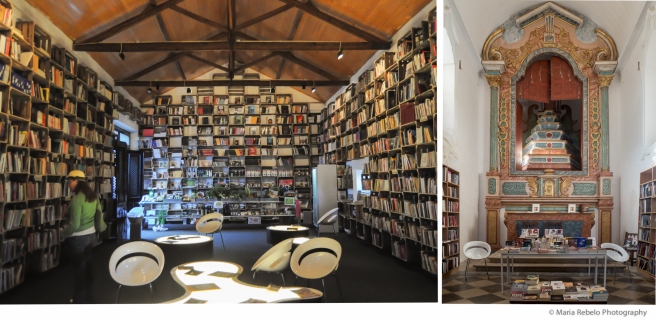
One of our favorites is Livraria do Mercado (the market bookstore). It occupies the wine cellar of an old manor house and doubles as an organic market. Here, the fruits of the land share the space with the fruits of the imagination, everything stored inside one thousand rustic wooden boxes.

Another favorite is Livraria Santiago which occupies a 12th century church. It is a peaceful place where books wait in silence for the readers who seek their blessings.

These bookstores transformed Óbidos into a literary village, a place where the thick castle walls protect the precious art of reading.

Click here to see the list of Óbidos bookstores.


The luxurious Dom Feijão

Dom Feijão

There are plenty of “tascas” in Lisbon, small informal restaurants that offer seasonal menus at low prices. But when locals want to have a nice meal with friends or family, they don’t go to a tasca. They prefer to pay a little bit more and eat at a neighborhood restaurant with better ingredients and service.

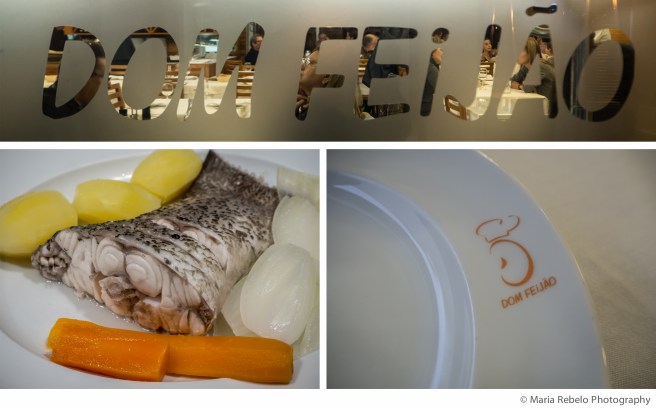
One of our favorite neighborhood restaurants in Lisbon is Dom Feijão (Sir Bean), a place with generous portions, modest prices and top-notch ingredients. What’s the catch? You have to be persistent to get a reservation or be prepared to wait for a table. The waiters don’t answer the reservations phone line when they’re very busy and they’re almost always very busy.

The restaurant is popular with families, on our last visit the place was full of grandparents, parents and children sharing the pleasures of the table.

Before we had time to open the menu, our waiter brought us some delicious fried marinated sardines and a plate of the same black-pork prosciutto they serve in heaven on special occasions.

We’d seen a large “sável,” a prized river fish, in the restaurant’s refrigerator so we asked the waiter whether we could order it. “Not today,” he replied “The sável has to be thinly sliced and marinated for a few hours. Sorry, but we cannot rush the preparation.”

We ordered instead poached cherne (sea bream). It was deliciously succulent, a reminder that when the ingredients are perfect, simple preparations are the best.

Next, we had grilled “secretos,” divine slices of fatty black pork. Two decades ago, these cuts of black pork were exported to Spain. Since then, the Portuguese have wised up and started consuming them. Exports suffered but our happiness boomed.

We ended the meal with some grilled codfish. The waiter asked what was our favorite part of the codfish so he could ask the chef to prepare it. Large tranches of codfish swimming with roasted potatoes in a sea of olive oil made our delights.

We told chef João Araújo how much we enjoyed the meal. “We’re a simple restaurant that serves traditional Portuguese food,” he said. “Our only luxury is the ingredients we use.”   This is, of course, the kind of luxury we fancy.

Dom Feijão is located near the posh Avenida de Roma at Largo Machado de Assis 7 D, tel. 21 846 4038. There’s a convenient paid garage underneath the restaurant. You can ask the waiter to validate your parking.