The Óbidos Pousada

Obidos Composit The first king of Portugal, Dom Afonso Henriques, laid siege to the Óbidos castle for two months, but the moorish population resisted his attack. One moonless night, a beautiful lady came down from the castle to speak to the king. She told him that, even though she lived in the castle, she was not moorish. And that she had a recurrent dream she had to fulfill. The king was to attack the castle’s main door. At the same time, he would send a small group of soldiers to the back. There, the lady would leave an open door to let them in. Their surprise attach would secure the victory of the Portuguese troops.

The king of Portugal feared falling into a trap. But something about the lady’s demeanor convinced him to adopt her plan. The next day, the castle back door was indeed open and the Portuguese conquered Óbidos. The king looked everywhere for the beautiful lady, but she had vanished.


The castle of Óbidos was converted into a beautiful historical hotel. After entering though the front door, the one the king attacked, you find a romantic place with wonderful views of the countryside. One of the best views is just outside a door painted red. It is the door the lady left open.

In the dining room two beautiful windows, the sun and moon windows, give us a choice between seeing the sunset and the moonrise. This choice between astral spectacles is one of the many enchanting details that makes a stay at the pousada so memorable.

The pousada is the perfect place to stay at Óbidos. After all, who wouldn’t want to be treated like royalty in a medieval town?

Click here for the Pousadas’ website and here for more photos of the Óbidos Pousada.
The extraordinary salt of Castro Marim

Castro Marin Composit

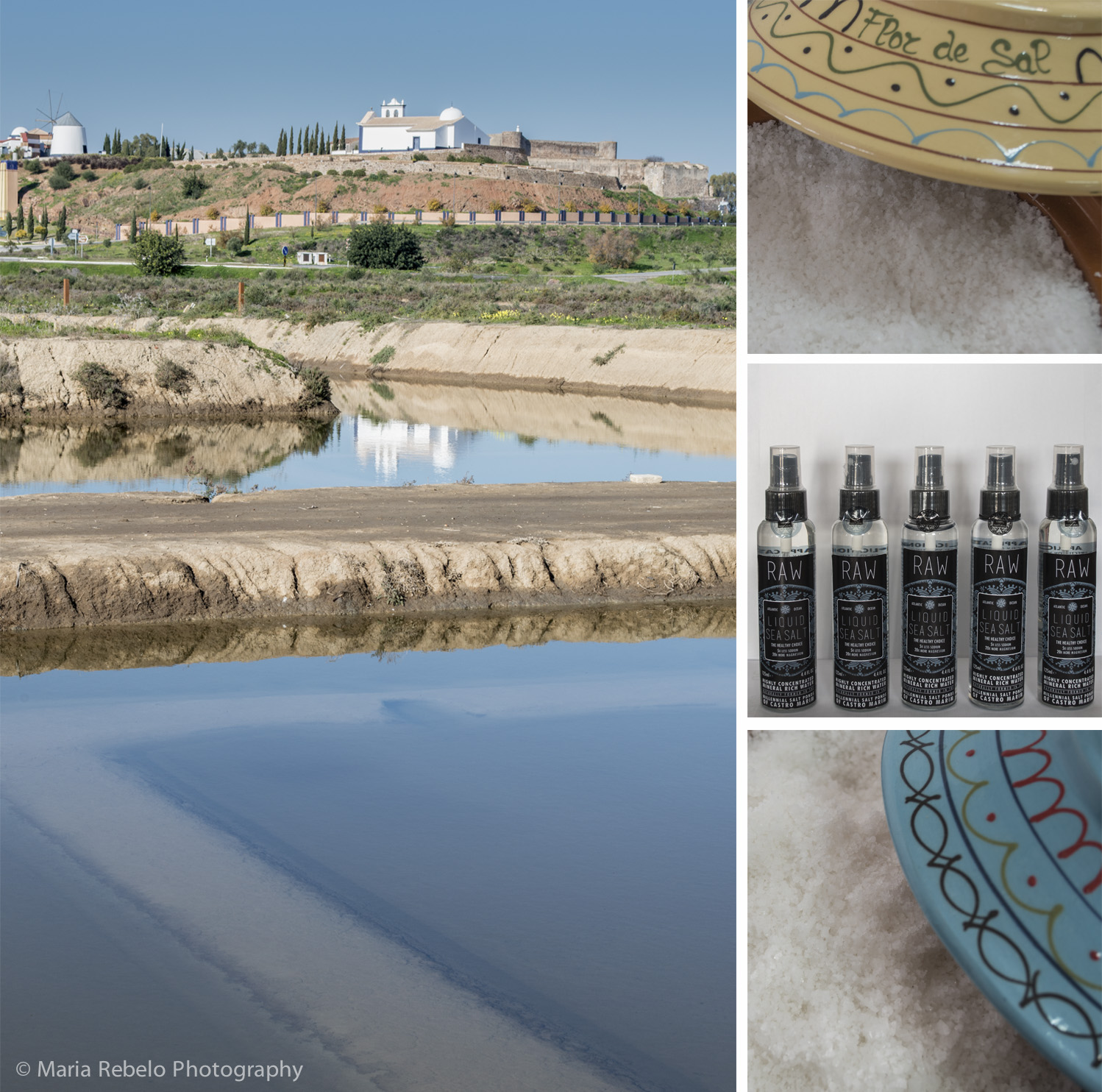
The Romans loved salt. They used it to cook, to preserve food, and as a form of currency (the practice of paying soldiers in salt is the origin of the word salary). So, it is not surprising that the Romans settled in Castro Marim. This small town on the marshes of the Guadiana river produced great salt.

During the 20th century, this production became industrialized. The salt was harvested with heavy machinery that leaves plenty of chemical residues. It was then washed and processed to turn its grey color into white, striping the salt of magnesium, potassium, and other important minerals.

Artisanal producers abandoned their salt ponds and so did the fish and birds that used them as habitats. Centuries of knowledge about producing great salt was on the verge of being lost.

But then, the tide turned. In the late 1990s, a cooperative called Terras de Sal revived the artisanal salt trade. It invited a French certification body to establish the strictest certification norms to ensure the highest standard of quality. It created the conditions to attract a new generation of producers who left their city jobs and came to Castro Marim to produce the best salt in the world.

These producers harvest the salt manually with wooden tools, a slow process that is essential to avoid chemical contamination. They do not wash the salt, to ensure that it retains all its important minerals. Since rain muddies the water, they only harvest when the weather is dry, between May and September.

One of the cooperative’s producers is called Água Mãe. Their salt is amazingly white and flavorful. Their “fleur de sel,” made of fine crystals created by temperature differentials between water and air, is exquisite. Água Mãe also bottles liquid salt, which is low in sodium and high in magnesium. When we spray it on our salads it gives them layers of delicate flavor.

The Romans were prescient in their love of salt. An amazing fact about our bodies is that, because life began in the sea, the composition of our tissue fluid resembles that of natural sea salt.

The ordinary act of seasoning our food becomes extraordinary when we use salt from Castro Marim. It is a privilege to nourish our body with the same pristine salt prized by the Romans 2000 years ago.

You can find the Água Mãe salt store on Travessa dos 3 Marcos, n.º 11, Castro Marim, Algarve, tel. 961380503, email  aguamae@aguamae.pt . Click here for the Terras de Sal web site. To buy the wondrous salt of Castro Marim in the U.S., click here.

Old and new

Terras D'Alter composit @

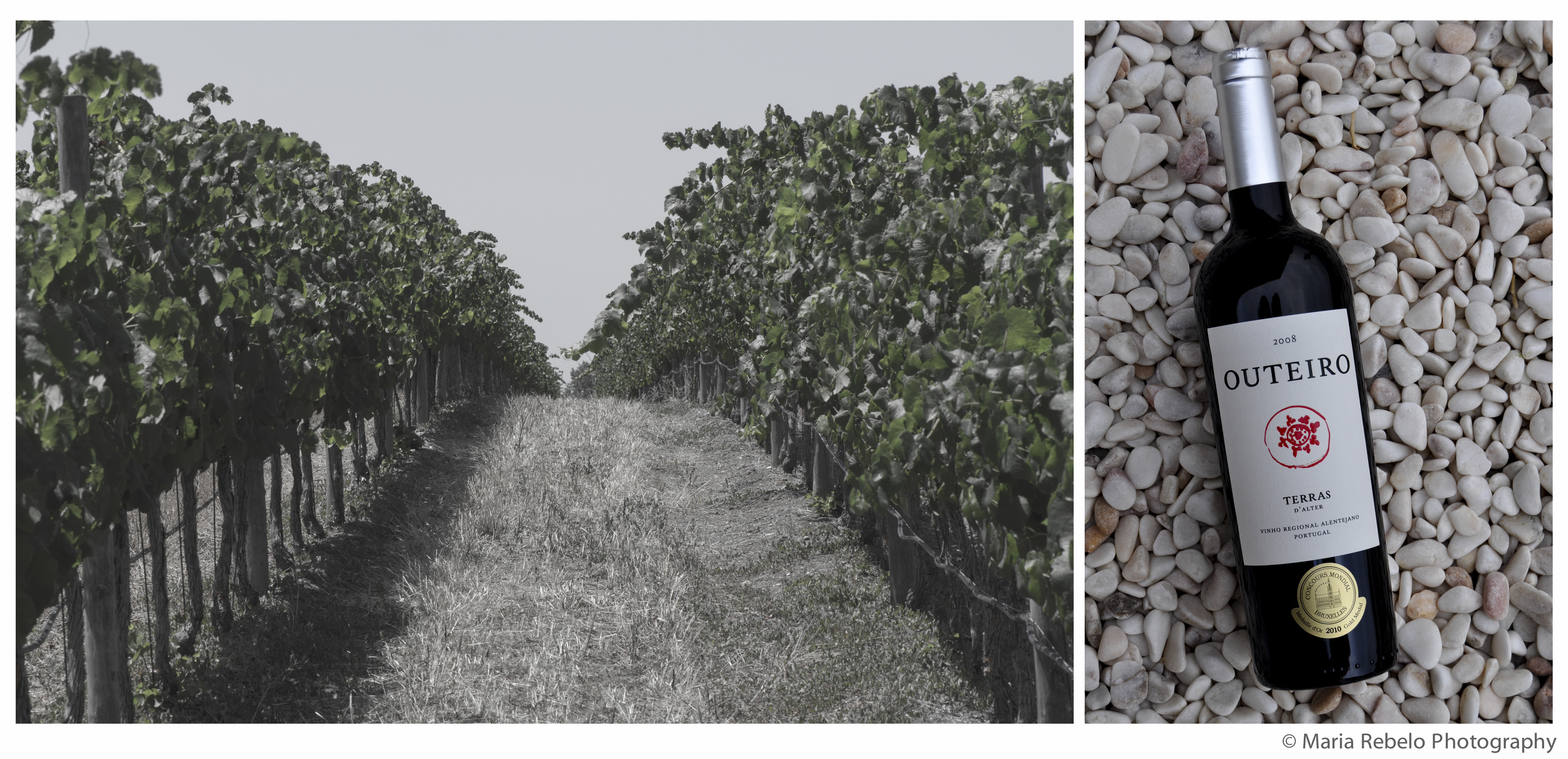
We happened to be the first to arrive at a friend’s dinner party. He suggested it would be fun to decant the bottle of wine we had brought to do a blind tasting.

When the other guests arrived, our host asked everybody to guess the provenance of this very special wine. Glasses were filled and moments of silence ensued while everybody focused on taste and smell. Many highly appreciative comments followed. Some guests thought that the wine was from the old world, probably from France, perhaps from Côtes du Rhône. Others thought it was a wine from the new world, possibly from Australia. The wine was Terras d’Alter, Outeiro, 2008.

Terras d’Alter has impeccable old-world credentials. The grapes come from old quintas in Alentejo.  But the wine is made by an Australian enologist, Peter Bright, who eschews traditional wine-making methods in favor of new-world technology. The result is the best of the old and new worlds.

When we drink Terras d’Alter, we feel transported to a sun-drenched day in Alentejo, our body soaking in the warmth, our mind relaxed by the endless vistas. How can other wines compete with this feeling?

Click here to see the web site of Terras d’Alter.


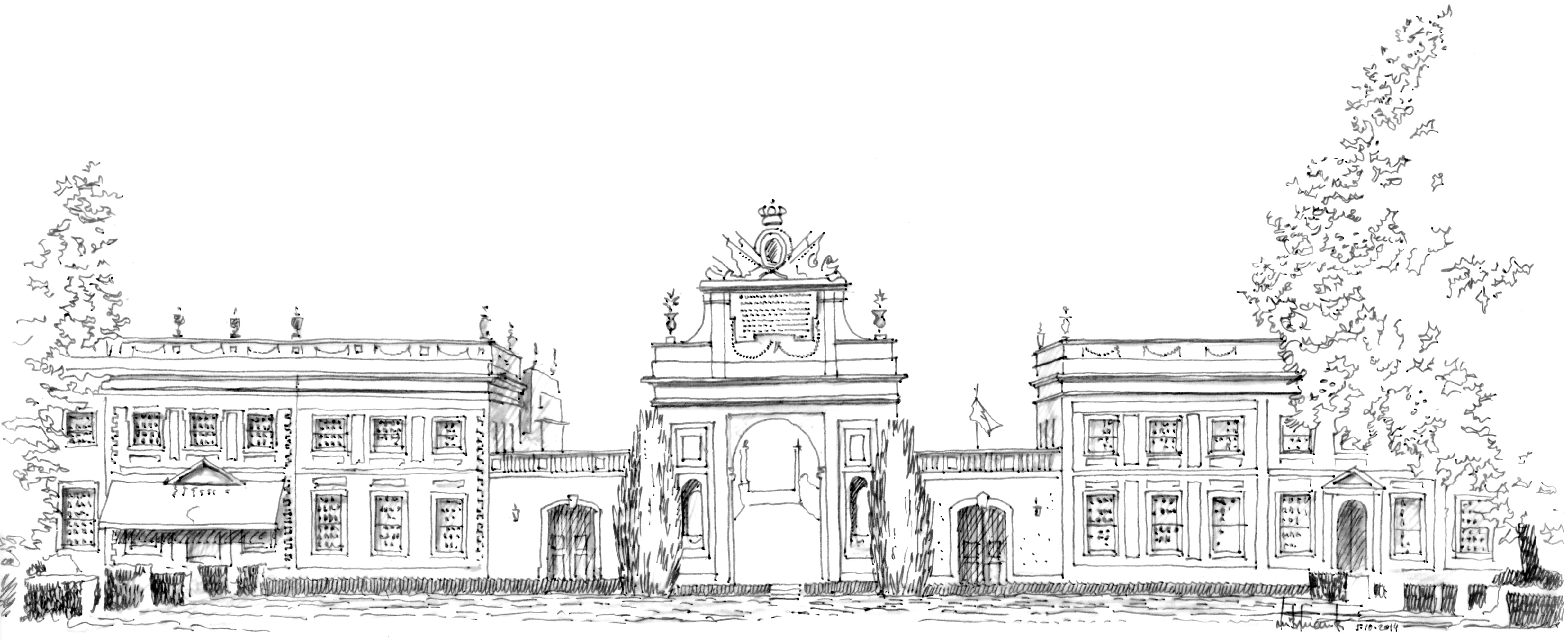
The Seteais palace

The Seteais Palace, Rui Barreiros Duarte, ink on paper, 2014.

Seteais means seven sighs, a name inspired, according to legend, by the romance between a Portuguese noble and a Moorish princess.

The Seteais palace was built in Sintra in 1787 by the Dutch consul and later sold to the wealthy Marquis of Marialva.

In 1954, the palace was converted into a luxury hotel. Booking a room at Seteais guarantees you’ll have a memorable experience. If you don’t stay at the hotel, you can still experience its unique atmosphere by visiting the elegant bar for a glass of white port before dinner.

In 1802, the Marquis of Marialva invited the Prince Regent, John IV and his wife for a visit. To celebrate the occasion, the Marquis built an archway decorated with busts of the royals. A Latin inscription praises the prince for his wisdom and prudence. No one could guess that five years later the Portuguese royal family would flee to Brazil to escape Napoleon’s troops.

The echoes of these twists and turns of Portuguese history have long faded. What remains, is one of the most romantic places in the world.

 Click here to see the Seteais Palace website.

The octopus capital

St. Luzia (Polvo) Composit

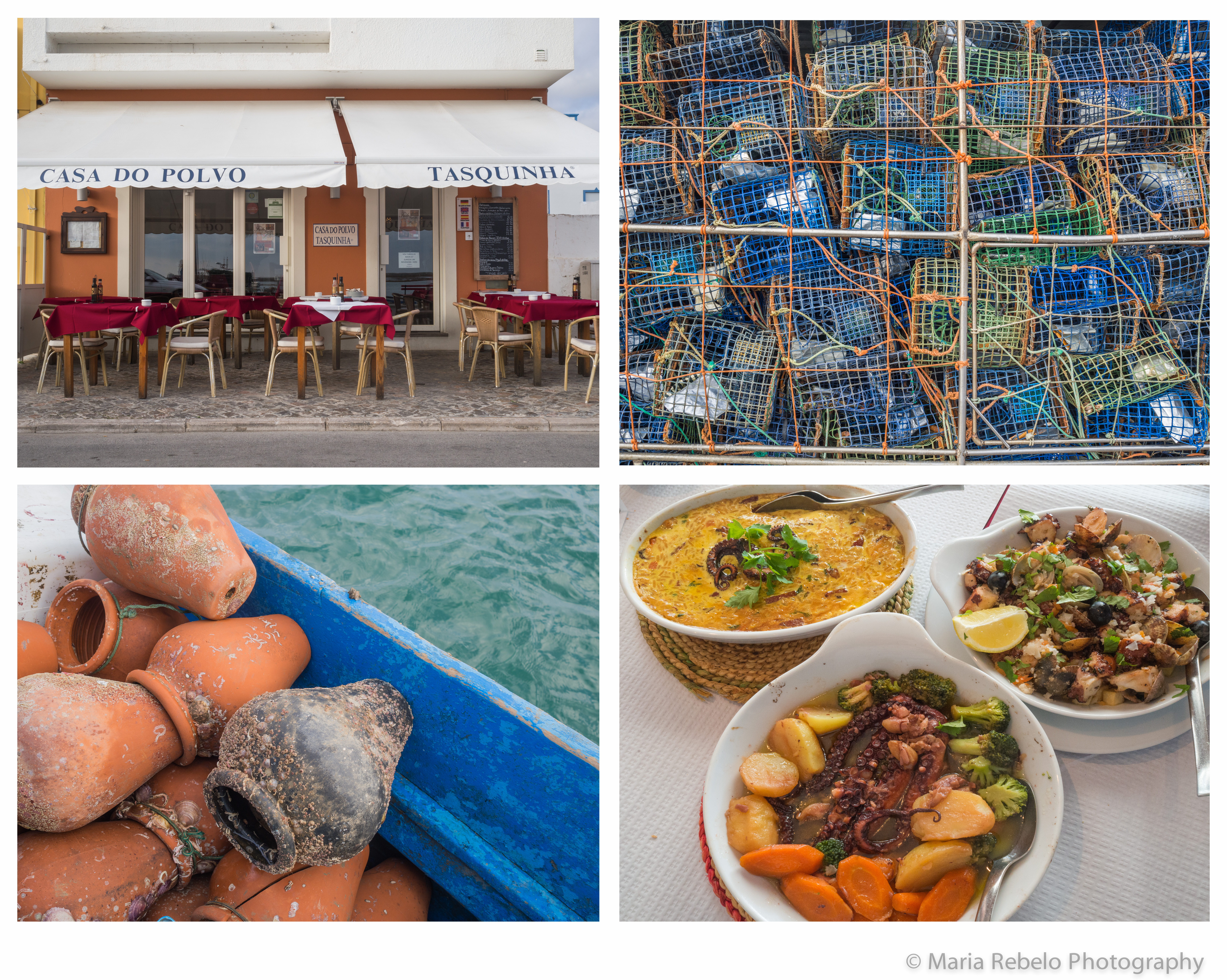
The best octopus in Portugal comes from Santa Luzia, a small village near Tavira in the Algarve. The locals proudly call it octopus capital.

The shores of Santa Luzia are full of small shrimp that attract the octopi. Old-time fishermen lay clay pots called “alcatruz” in the water. The octopi cuddle in these pots to sleep and get caught when the pots are removed from the water.

Younger fishermen don’t like to wait for the mollusks to fall asleep, so they prefer to use a “covo,” a plastic trap with a sardine inside.

Old timers swear that the octopus caught with the alcatruz tastes much better than the one caught with the covo. But young and old agree that Casa do Polvo is a great place to eat octopus. There are many preparations to choose from, including carpaccio, stewed, fried, and roasted. Our favorite is “polvo panado,” octopus combined with egg and bread crumbs and then fried. No matter which preparation you choose, the octopus is tender and delicious.

If you’re traveling in the Algarve, it is a great idea to include Santa Luzia on your itinerary. You’ll have the opportunity to enjoy a wonderful meal and earn the right to brag that you’ve visited the octopus capital.

Casa do Polvo is on Avenida Eng. Duarte Pacheco, N. 8, Santa Luzia, Tavira. Tel. 281-328-527. In the Summer reservations are a must.

Portuguese Madonas

Composit SantasIf you visit Crato, a beautiful village in Alentejo, don’t miss the chance to see the wonderful collection of Madonas housed in the Flor da Rosa Pousada.

The statues were carved in limestone, gilded and painted in Portuguese workshops during the 15th and 16th century. We can tell that the images were not drawn from the artists’ imagination because the faces are unmistakably Portuguese. How did the artists choose the women who inspired these  sculptures? Perhaps they saw in their humanity a glimpse of the divine.


The Crato castle was converted into a beautiful historical hotel called Flor da Rosa, which is part of the Pousadas network. Click here for the Pousadas’ website and here for photos of the castle.

August Braga

Braga Composit

Walking in Braga, a beautiful city in the north of Portugal, is like taking a journey from ancient times to the present. The city flourished during the Roman era when emperor Augustus honored it with the name Bracara Augusta. But, with the demise of the Roman empire, Braga fell on hard times. The city emerged again in the 11th century, when the king of Castile and Léon offered it as a wedding present to his daughter Teresa. Her son, Dom Afonso Henriques, became the first king of Portugal.

In the early years of Portugal as a nation, the archbishop of Braga, Pedro Julião, became pope John XXI. Perhaps that is why the city has as many reflections of spiritual power (convents and churches) as temporal power (defensive towers, palaces, and manor houses).

In his book “The Design of Cities,” published in 1967, Edmund Bacon writes that: “Throughout history, architects have lavished much of their tenderest care on the part of the building which meets the sky.” Braga provides many wonderful examples of what Bacon has in mind. Its monuments are made of heavy granite but they rise towards the heavens.

First impressions of Lisbon

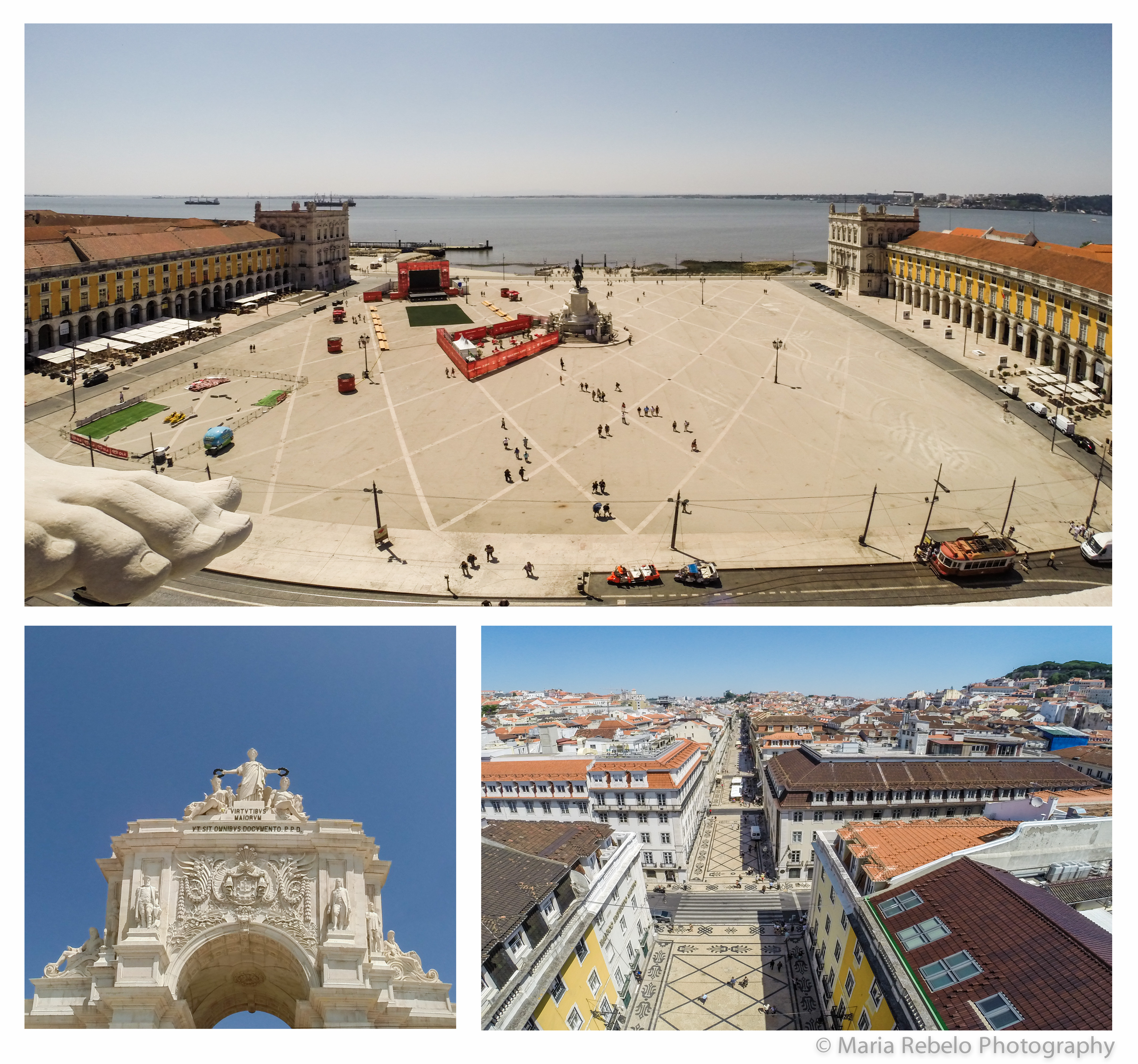
Composit LisboaFirst impressions are important, so we recommend for your first stop in Lisbon the top of the Rua Augusta arch. More than a century in the making (from 1759 to 1875), the arch is a symbol of the reconstruction of the city after the devastating 1755 earthquake.

The three statues on top of the arch (glory, valor, and genius) remind us of what Portugal at its best can do. The two statues on the sides, which personify the Douro and Tagus rivers, are symbols of the country’s natural beauty. The remaining four statues represent important historical figures: Viriato, a military leader who resisted the Roman invasion, Nuno Alvares Pereira, the hero of a key medieval battle against Castile, Vasco da Gama, the famous navigator, and the Marquis of Pombal, who oversaw the efforts to rebuild Lisbon after the earthquake.

You can reach the top of the arch by elevator. The views are breathtaking. On the North side, you see St. Jorge’s castle, the ancient cathedral, and the spacious, orderly downtown district that replaced, after the earthquake, the narrow, irregular medieval streets. On the South side, you see Terreiro do Paço, the entry hall of the city, adorned by the Tagus river. And so you’ll meet Lisbon, a city that is rich and poor, extroverted and mysterious, an aristocratic old lady full of youthful charm.

Contemporary tiles

Azulejos PedroIf you’re an art lover, make sure to visit Ratton, a wonderful art gallery in Lisbon that commissions works in azulejo (the Portuguese word for glazed tiles) from contemporary artists.

When Ana Viegas opened the gallery in 1987, tiles were no longer considered an art medium; they were made cheaply for utilitarian purposes. To convince artists to create works for azulejo, Viegas procured the finest clay and searched for artisans who could paint and glaze tiles by hand, using techniques perfected in the 18th century. Soon, she had great artists like Paula Rego, Julio Pomar, and Menez working for Ratton. Today, you can see the gallery’s azulejos all over Portugal and as far away as Russia or Brazil.

The photo shows a piece by Lourdes de Castro inspired by the “invitations figures” that were popular in the 18th and 19th centuries. These panels of azulejos with life-size images of footmen, nobleman and aristocratic women were placed in stairs and patios to welcome visitors. Castro used her own silhouette, as if she is inviting us to experience her art.

It is this interplay between inspiration from past and present that makes the work exhibited at Ratton so unique.

Ratton is located on Rua da Academia das Ciências, 2C, tel. 21 346 0948.