A monarchic cake

Dona Amélia

In 1901, the Portuguese royal family traveled to the islands of Madeira and Azores. The visit was a great honor for the local populations, but presented them with a difficult problem: how do you choose a gift for monarchs who have everything?

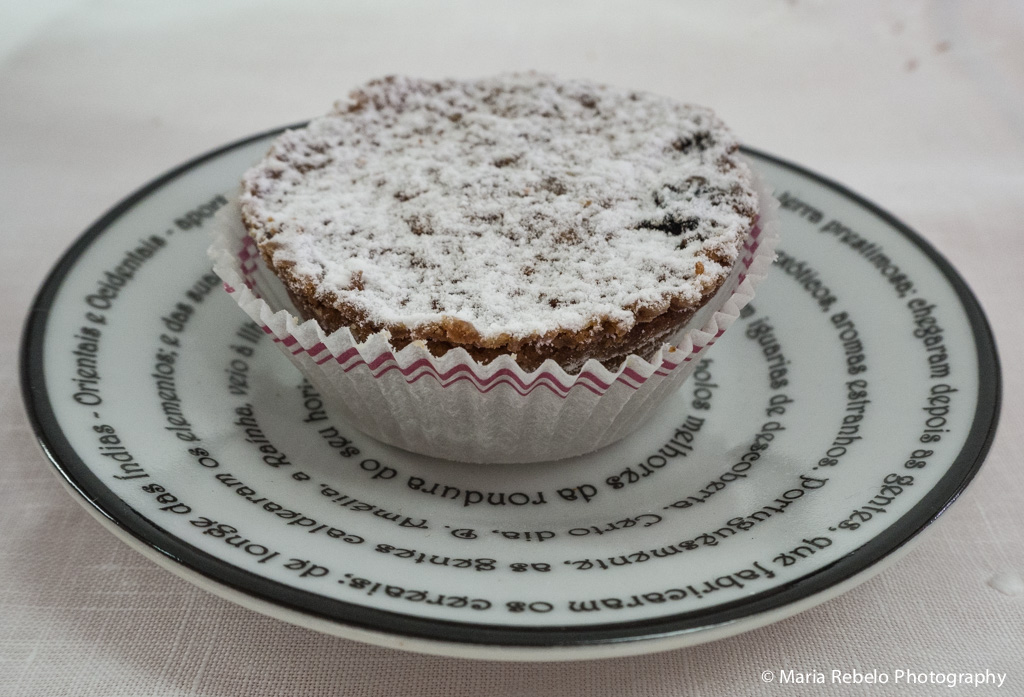
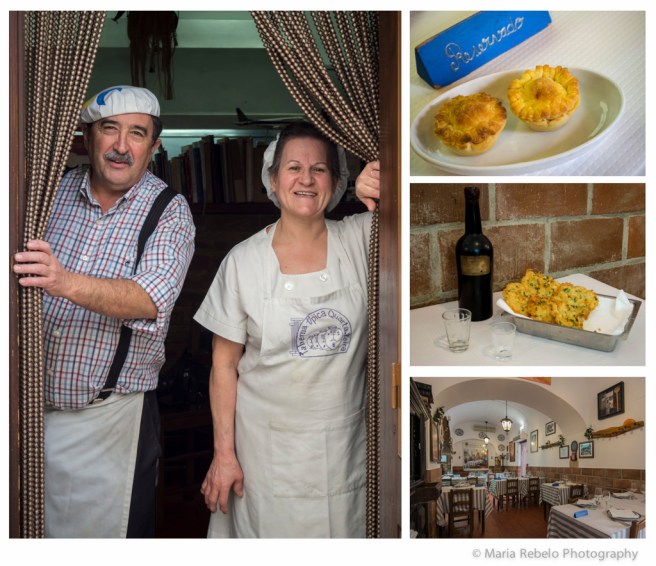
The Azores, Terceira Island, offered Queen Dona Amélia a new cake made with local ingredients: corn flour, raisins, sugar cane molasses, and cinnamon. The queen enjoyed it so much that the new creation became known as the Dona Amélia cake.

More than a century later, the cake continues to be popular in the Terceira island and for a good reason. We loved the Donas Amélias we tried at O Forno, a great pastry store in downtown Angra do Heroism.

The ability of royalty to inspire the delicious Donas Amélias makes us wonder whether we should restore the monarchy.

O Forno is located on Rua São João in Angra do Heroismo, Terceira, Azores, tel. 295 213 729.

The third island

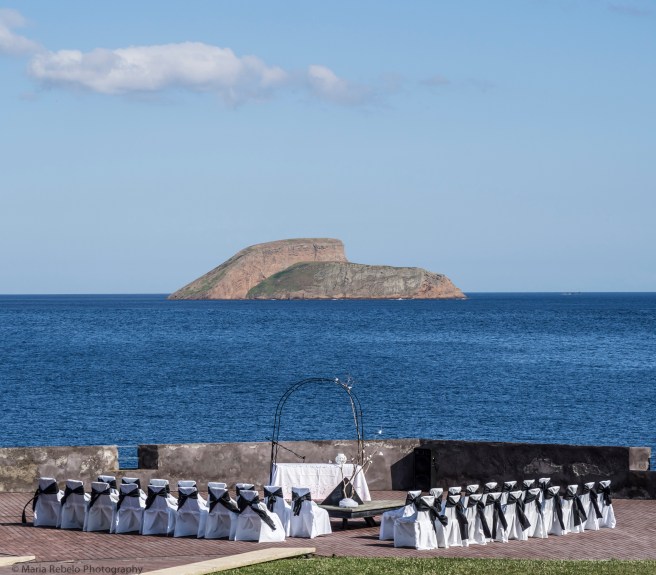
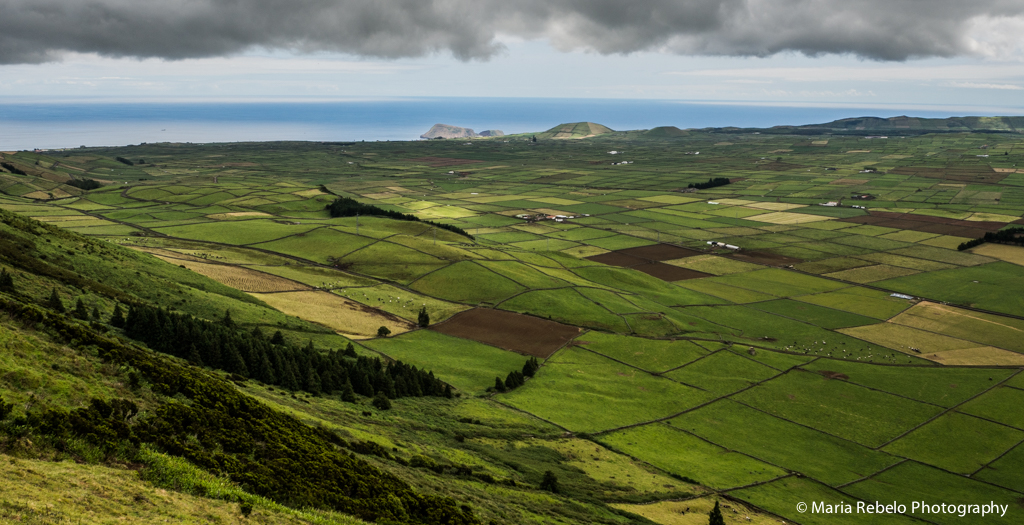
Açores 47 - cropedThis year we visited Terceira, an island in Azores. After Madeira and the Canary islands, Azores was the third group of islands discovered by Portuguese navigators. Initially, the Portuguese called the whole archipelago Terceiras (the Portuguese word for thirds), but later they renamed it Azores and reserved the name Terceira for the largest island.

Terceira is a perfect destination for a relaxing vacation. There are many beaches to enjoy and hiking trails to explore. Restaurants serve great food for modest prices. And the traditional architecture makes us feel as if we are in a time gone by, when life was simpler and time was not a luxury.

Vitorino Nemésio, a great poet from Terceira, wrote that here you are “at the very bosom and infinitude of the sea, like the medusas and the fish.”

The green valleys of Terceira compete with the beauty of the sea. For Nemésio, this competition is futile because “The islands are ephemeral and dispensable. Only the sea is eternal and essential.”

Our favorite tasca in Lisbon

Das FloresTascas are modest, inexpensive restaurants that offer a small, seasonal menu. They are often family affairs; the parents cook and the kids wait the tables. The quality of tascas is highly variable, some are good, a few are great, many are just passable.

When tascas become popular, they often have trouble coping with success, and their quality suffers. That is why people who find a great tasca usually like to keep it secret.

We’ll break with these social norms and tell you the name of our favorite tasca in Lisbon: Das Flores in Rua das Flores. This establishment is not to be confused with the more posh (and also very good) Taverna da Rua das Flores located on the same street.

You could write a dissertation about the eating habits of Lisbon residents by studying Das Flores’ menu. It includes items like poached grouper, grilled sole, codfish cakes with tomato rice, pork and clams Alentejo, and grilled lamb chops. All perfectly prepared with pristine ingredients. Many items on the menu cost less than 10 euros, which is why the small dining room is always crowded. The restaurant caters to its regular customers, so it can be difficult to get a table.

Das Flores is not a place for a romantic date. But it is a great choice if you want to experience traditional Portuguese food on a budget. Just don’t tell anyone else, ok?

Das Flores is located on Rua das Flores 76, Lisbon, tel. 21 342 8828. If you do go to Das Flores on a date, skip dessert and go to Landeau on the same street for chocolate cake. It will make the whole experience more glamorous.

Adventures on the peach tree island

Composit do Pessegueiro-3One of the most captivating beaches in Portugal is the Pessegueiro (peach tree) beach near Porto Covo in Alentejo. It is wonderful to seat on the sand feeling the sea breeze and enjoying the view of the Pessegueiro island. The island looks so mysterious that it is impossible to resist the temptation to plunge in the emerald waters and swim a shore. It is great fun to explore the 15th century fort and the ruins that date from Roman times.

In the afternoon, it is fantastic to go horseback ridding along the coast. Claudia Castanheira and Paulo Rosa of Herdade do Pessegueiro provide all you need: well-trained, intelligent horses, horse-riding instruction, and a picnic. Riding a horse through trails and sand dunes, feeling one with nature is an unforgettable adventure.

Click here for the Herdade do Pessegueiro web site.

The past and future of Portuguese wine

AmphorasCrato

The Flor da Rosa Pousada in Crato has a beautiful collection of “talhas” (clay amphoras) made by potters in Alentejo.  The small amphoras were used to store olives or olive oil. The large ones were used to produce wine, a tradition that goes back to Roman times.

Several Portuguese wine makers are rediscovering the lost art of producing wine in amphoras. One of them is Dirk Niepoort, a great producer from the Douro region. We can’t wait to try these wines which bring the past into the future!

Click here for the Pousadas’ website and here for more photos of Flor da Rosa.

Chocolate tastes new again

OLYMPUS DIGITAL CAMERA

Isabel Landeau is a designer who, as a hobby, baked chocolate cakes to share with her friends. She loved so much the oohs and aahs that her cakes inspired, that she became obsessed with perfecting her recipe. For nine months, she experimented with different chocolates and cocoas. The result is a master piece, a cake that is deliciously light but layered with exquisite chocolate flavors.

When Landeau opened a store to share her creation with the world, she was surprised at the praise lavished by the international press (the New York Times called her cake “devilishly good”). Her store has become an obligatory place of pilgrimage for chocolate lovers.

Landeau makes chocolate taste as exciting as when it was brought to Europe in the 16th century, as exotic as when Aztecs used it in religious cerimonies. Try a slice of Landeau cake and you’ll see.

Landeau is located on Rua das Flores, N. 70, 911-810-801. Click here for their website.

A pink palace in the Algarve

358 - Pousada de Estói - @mariarebelophotography.comFIt takes a long time to build a beautiful palace. An Algarve aristocrat started in 1840 to build the Estoi palace in an estate near Faro. When he died, his son took over. But by 1893, the building was still unfinished and seemed destined to become a decorative ruin. It was then that a wealthy landowner bought the palace and spent a fortune on its completion. The sumptuous inauguration took place in May 1909. Decades later, the palace was abandoned.

In 2009, a century after its inauguration, Estoi opened once again, this time as a luxury historical hotel. It is a place out of a fairytale, its opulent salons and elegant gardens restored to their original glory.

Our stay at Estoi was an extraordinary experience. Some days, we relaxed by the pool and spent time admiring the statues, fountains and myriad of architectural details. Other days, we went to the beach and enjoyed the pleasures of the sea even more than usual. For we knew that when the day was done, we would have our pink palace to return to.

The Estoi palace is part of a network of historical hotels called Pousadas. Click here for the Pousadas’ website and here to see a large collection of photos of the palace.

Tasting Portuguese cheese

Queijaria Composit- ©mariarebelophotography.comPresident Charles de Gaulle asked how could people expect him to run a country with 246 kinds of cheese. Judged by this metric, Portugal is easier to govern than France. We have fewer cheese varieties. But there are still many regions, types of milk, producers, and styles.

Many interesting Portuguese cheeses are hard to find. They are made in small quantities by artisanal producers and sold in local markets. Queijaria, a new store in Lisbon, makes it easy to sample these local specialties.

The store is run by people who are passionate about cheese and wine, so they are uniquely qualified to serve as your guide. They prepare a degustacion of different cheeses, perfectly sequenced and paired with great wines. In one sitting, your palate can travel from North to South, to the island of Azores and back to continental Portugal. It’s a gastronomical journey you will not forget!

Queijaria is in the Principe Real neighborhood at Rua do Monte Olivete, 40, tel. 21 346 0474. Click here for their web site.

Memorable fish

Os Arcos Composit- ©mariarebelophotography.com

The Portuguese like to eat their fish by the sea. Since Lisbon is located on the Tagus river, its residents have to drive to a nearby beach whenever they want to enjoy a serious fish meal. The Bugio lighthouse conveniently marks the place where the Tagus meets the sea. It is not a coincidence that Paço d’Arcos, the beach town that overlooks the Bugio, has several fish restaurants.

Os Arcos (which means “the arches”) serves some of the best fish we have ever had. The restaurant occupies an ancient building constructed shortly after the 1755 earthquake. The dining room features old wood beams and the brick and mortar arches that inspired the restaurant’s name.

The  specialty of Os Arcos is “robalo no capote” (fish baked in bread). The fish is covered with a thin layer of bread and baked in the oven for about 30 minutes. That is just the right amount of time to enjoy some clams from Algarve and shrimp from Cascais.

When the fish-shaped bread arrives at the table, the experienced waiter gives the guests a couple of minutes to say their oohs and ahs. He then divides the fish, removing all the bones. Everybody eats in silence, for there are no words to describe the taste of the succulent robalo and the delicious bread that envelops it.

Any serious fish lover who visits Lisbon should drive, hike, bike, swim or run to Paço d’Arcos because eating “robalo” baked in bread at Os Arcos is simply unforgettable.

Os Arcos is located on Rua Costa Pinto, 47 in Paço de Arcos, tel. 214-433-374. Click here for their website.

The coolest bar in Lisbon

OLYMPUS DIGITAL CAMERA

“By the wine,” the coolest bar in Lisbon, has a ceiling decorated with 3267 bottles of Periquita, one of the oldest table wines in Portugal. The bar belongs to Periquita’s producer, José Maria da Fonseca. This company has produced wine since 1834, including the famous Setúbal Moscatel.

“By the wine,” is the perfect place to have a few bites: slices of memorable sausages and prosciutto, cheese, and seafood.

José Maria da Fonseca stocks the bar with a great selection of wines, including some that are hard to find because they are produced in small quantities. It is a delight to try these unique wines surrounded by the beautiful people that give this bar a wonderful vibe!

By the Wine is on Rua das Flores, 41/43, near Chiado, tel. 213420319.