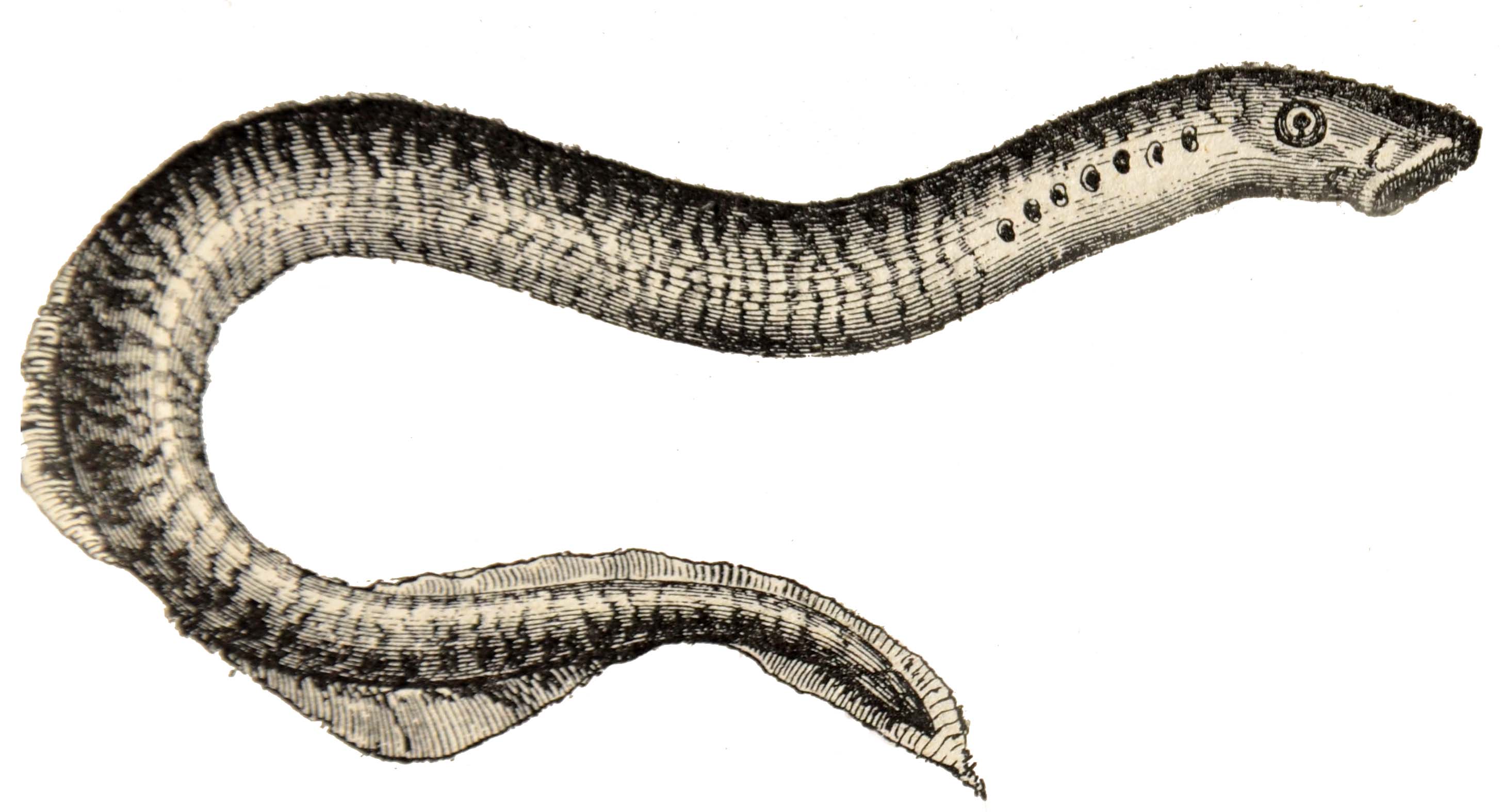
Lamprey is in season!

Lampreia (lamprey) is a very strange fish that, somehow, gained favor with emperors and kings. The Romans included it in banquets prepared for Julius Caesar. The oldest known Portuguese cookbook, a 16th century collection of recipes attributed to Infanta D. Maria, has a single fish recipe that describes how to prepare and cook lamprey.

You don’t have to conquer Gaul or marry royalty to eat lamprey. Many Portuguese restaurants offer this delicacy between January and April. It is usually served stewed, accompanied with rice. You find excellent lamprey at Solar dos Presuntos, a traditional Lisbon restaurant where you can dine like a king.

Restaurante Solar dos Presuntos, Rua das Portas de Stº Antão, 150, Lisbon. Tel. 21 342 42 53, GPS coordinates: 38º43’07″N and 9º08’51″O. Click here for their website. 

Coimbra

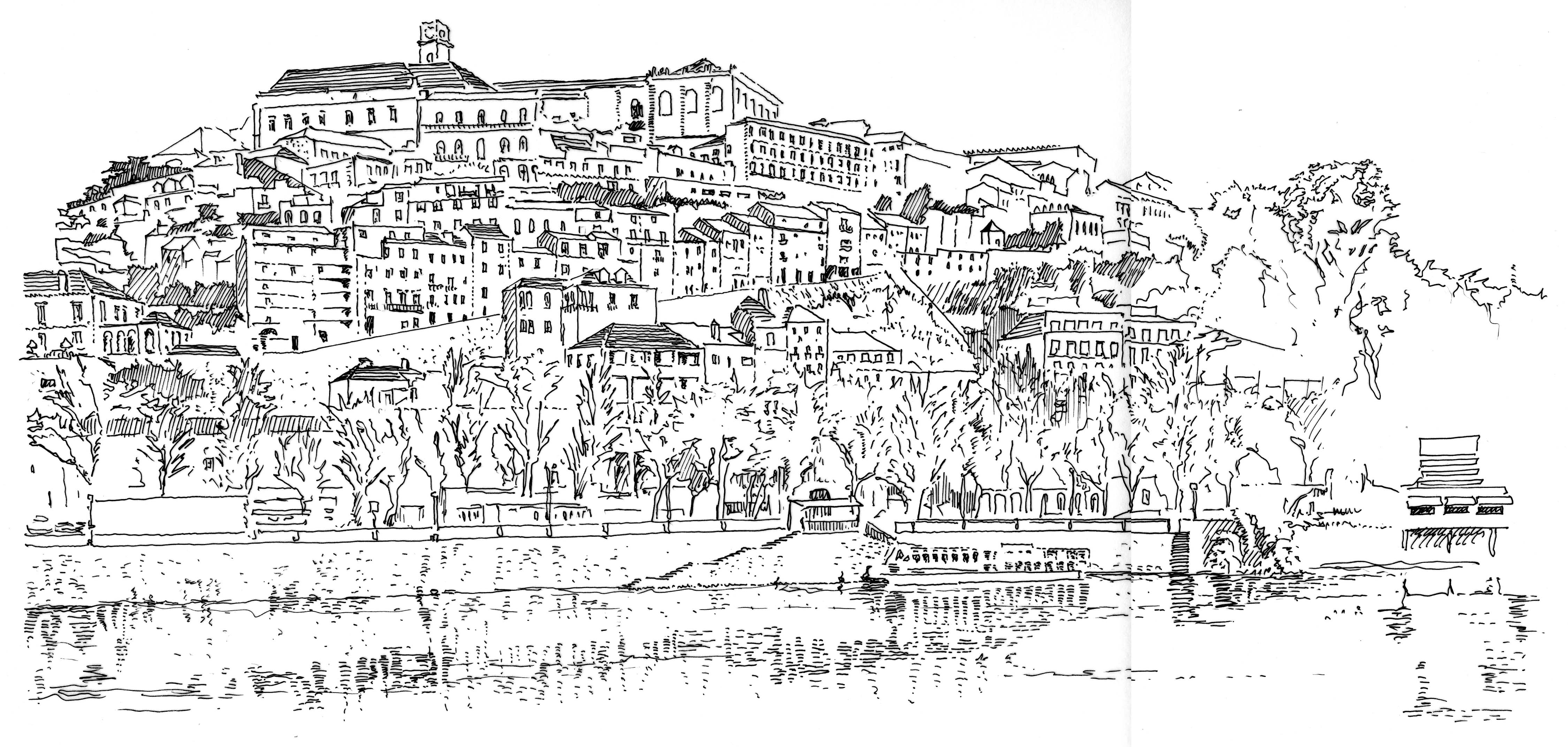
Coimbra, Rui Barreiros Duarte, ink on paper, 2011.

Coimbra is famous for its university, one of the oldest in the world. It is a beautiful city that seduces its visitors slowly, with its winding streets, ancient buildings, and academic traditions. According to an old folk song “Coimbra is most alluring when you try to say goodbye.” Hans Christian Andersen, the author of “The Little Mermaid” and other popular fairytales, visited Coimbra in 1866 and fell under its spell. Here’s what he wrote:

“We drove along the Mondego river whose broad bed displayed more dry sand than running water. Yet, what freshness and forest charm all around! The city rose as the loveliest flower in the whole bouquet. Coimbra rests upon the mountain side, one street higher than another. The streets are narrow, crooked, and rise continually. Shops and bookstores are here in abundance.

From the cloister of Santa Cruz the streets ascend towards the university, an extensive building that occupies the highest site in the city. Up there, through the dilapidated walls of the fortress, one enters the botanical garden, which is rich in rare flowers and trees.

I met some students all in their medieval garb: one went by himself, reading; three others passed in lively conversation with the guitar strung over the shoulder; their wild pranks in these surroundings put me in a cheerful mood; it was as if I lived back in an earlier century.”

The world’s best chocolate cake

Who created the world’s best chocolate cake?  Gaston Lenôtre? Pierre Hermé? Jacques Torres? Guess again. The cake is made with French chocolate, but the chef’s name is Portuguese: Carlos Braz Lopes.

His cake has three chocolate meringue disks layered with chocolate mousse and topped with a chocolate ganache. He started selling it in a tiny store in an obscure corner of Lisbon’s Campo d’Ourique neighborhood. But the cake is so good that word of mouth attracted chocolate lovers from all over the world.

The French gourmet Brillat-Savarin wrote that discovering a new recipe brings more happiness than discovering a new star. There is no better way to savor the truth in this aphorism than to taste a slice of Carlos Braz Lopes’ wondrous cake.

O Melhor Bolo de Chocolate do Mundo by Carlos Braz Lopes, Rua Coelho da Rocha 99, Campo de Ourique, Lisboa, tel. 21 396 53 72, email: geral@omelhorbolodechocolatedomundobycbl.com. 

O Cantinho do Avillez

This small restaurant near Chiado has a funky, bohemian décor that makes it look like a theater set. The servers, all implausibly good looking and articulate, are clearly trained actors.

Chef José Avillez directs this food theater. He has great credentials, having apprenticed with Alain Ducasse and Ferran Adrià. Here he cooks traditional fare with original variations that create new layers of taste.

It is difficult to choose from the menu because everything is so delicious. There is vegetable tempura that is crunchy and crisp, savory partridge turnovers with an intense, gamey flavor, homemade canned tuna with a pungent mayonnaise of ginger and lime, sautéed chicken liver and grapes perfumed with Port wine, and so much more.

When you leave O Cantinho you feel like you’ve just seen a wonderful play that you would love to see again.

Rua dos Duques de Bragança, 7, Lisboa, tel. 21-199-2369. Click here for the restaurant’s website. Reservations are a must.

Pêra Manca

Pêra Manca is a cult wine produced near Évora, in Alentejo. It has a long pedigree that is intertwined with the history of Portugal. Pedro Álvares Cabral took bottles of Pêra Manca in the voyage that resulted in the discovery of Brazil, in 1500. The wine continued to gather fame, wining gold medals in Bordeaux in 1879 and 1898, but its production ended with the death of the vineyard’s owner in 1920.

In 1990 the Eugénio de Almeida Foundation resumed the production of Pêra Manca, aging the wine in the cellar of a 1580 Jesuit monastery. Francisco Colaço do Rosário, an enologist who did a groundbreaking study of the Alentejo varietals, selected an old vineyard for this project.

The white Pêra Manca is made with Antão Vaz and Arinto grapes. The red Pêra Manca is made with Trincadeira and Aragonês grapes and it is produced only in exceptional years.

It is a wonderful wine for a special occasion. After all, it was good enough to celebrate the discovery of Brazil.

Click here for the Eugénio de Almeida Foundation Cartuxa winery website.

Pasteis de Belém

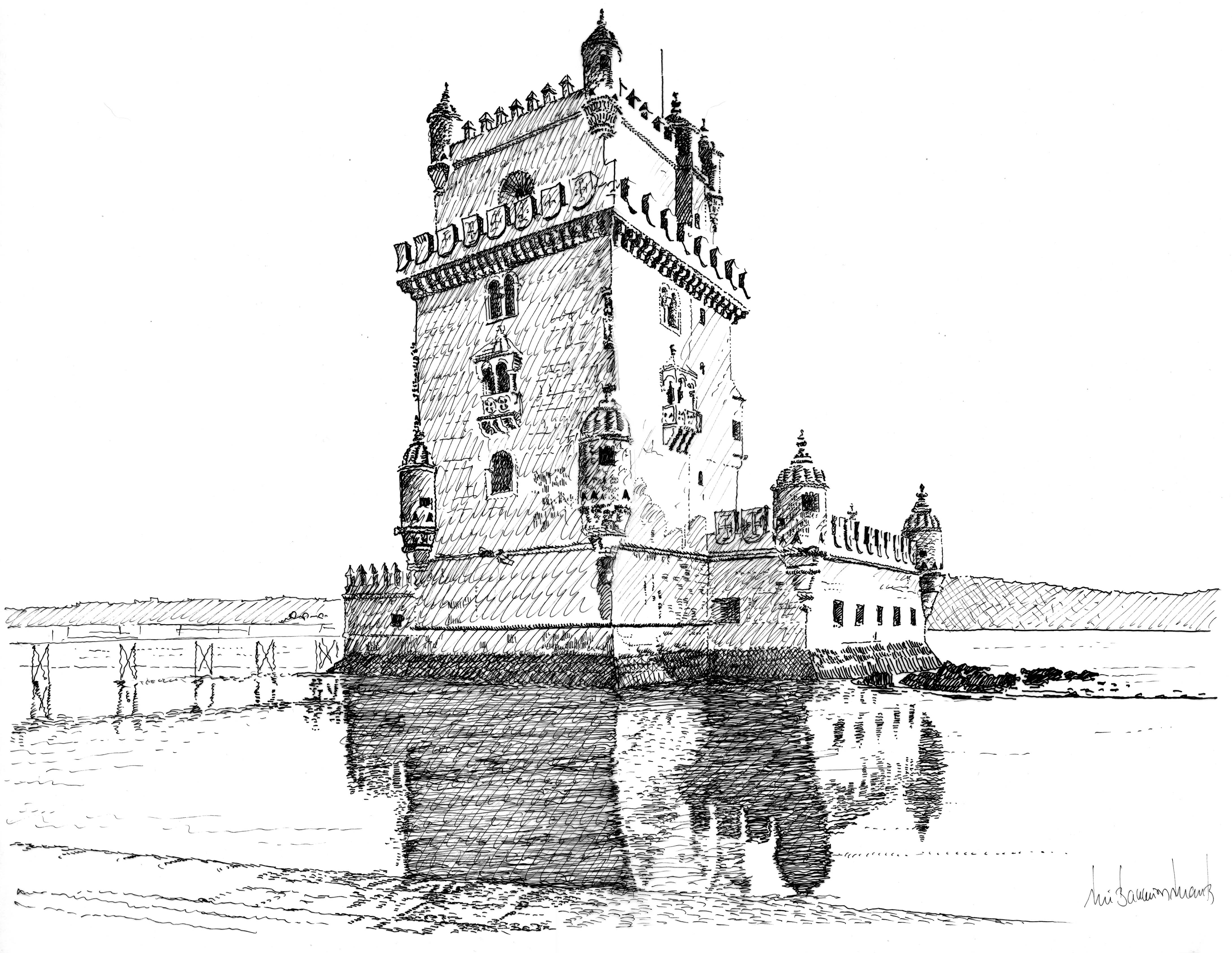
When you land in the Lisbon airport, there’s a heightened anticipation for what comes next. There’s the usual ritual of waiting in line, searching for your luggage, going through customs, all transforming you from in transit to landed. But here, arriving isn’t the best part. You drive out of the airport towards the river Tagus. As you get close, you first see the seagulls. Then, you see the Tower of Belém and the Jerónimos Monastery, monuments to the many “caravelas” that departed from a nearby dock. A marble Henry the Navigator leads a pack of explorers, pointing the way to the new world. But that’s not why you came here. You came here for a small pastry shop just down the road.

In 1834, the government closed down all Portuguese convents and monasteries. The friars of the Jerónimos Monastery needed a source of income. So, like other religious orders in Portugal, they used their ancient recipes to make pastries for sale. The Jerónimos monks made little cups of flaky pastry dough filled with custard and topped with cinnamon. All monastery pastries are delicious, but these “pasteis de Belém” are a piece of heaven. The recipe hasn’t changed since the pastry shop opened in 1837, and everything about it is shrouded in mystery. Only three master patissiers, who prepare the cream and dough in the “Oficina do Segredo” (secret workshop), know the recipe.

These pastries are ephemeral bites of cinnamon and warmth. They must be eaten right away, never saved for later. Every coffee shop in Portugal produces an imitation, but none quite captures the lightness of the dough, the creaminess of the filling. These imitations even bear a different name: “pasteis de nata.” Because there is only one place in the world where you can get “pasteis de Belém.”

Antiga Confeitaria de Belém, Rua de Belém, 84-92, Lisbon. Tel. 21-363-7423. Email: pasteisdebelem@pasteisdebelem.pt. Click here for website.

Arraiolos

Medieval Arraiolos, Maria Rebelo, gelatin silver print, 2003.

Arraiolos is a picturesque Alentejo village with traditional whitewashed houses and an oval-shaped castle built in 1305.

The town is famous for the production of beautiful needlework rugs. It is also known for the story of an indecisive bride. With her wedding about to start, she could not decide what to wear. She kept hesitating while the guests waited … for two weeks! In the end, she chose to wear only a shepherd’s mantle.

It was well worth the wait to see this Arraiolos bride discover that “less is more” centuries before Mies van der Rohe.

Reverso’s jewels

“Verso” means rhyme. “Reverso” means the other side. Portugal has a long jewelry tradition. At Reverso you see the other side: the work of contemporary jewelers, not just from Portugal but from all over the world. Many of these pieces are quite affordable. Their value is not measured in ounces and carats but in originality and creativity. Paula Crespo, Reverso’s owner, loves to show her work and that of other artists. And she makes Reverso rhyme with elegance.

Galeria Reverso, Rua da Esperança, nº 59/61, 1200 – 655 Lisboa, Tel. 213 951 407, mail@reversodasbernardas.com, click here for website.

António Tá Certo

It is always pleasant to have lunch at a beach side restaurant, with sea and sky as backdrop and the sound of waves as soundtrack. And, when you find a restaurant like António Tá Certo that serves freshly caught fish, just off the boat, the experience can be idyllic.

Tá Certo is located on the beach of Vale do Garrão, close to Faro in the Algarve. It offers an impressive assortment of robalos (sea bass), douradas (sea bream), garoupas (grouper), and pargos (red snapper). If you ask the staff why their fish tastes so great, they smile and answer: our fish slept in the sea.

There is only one problem with enjoying these simple moments on the seashore: you might never want to leave.

Praia do Garrão Nascente, Vale do Lobo. 8135, Almancil, tel. (289) 396-456. GPS: N’ 37.03815 / W’ 8.04699.

LXfactory

In his story “The Library of Babel,” Jorge Luis Borges describes a library with an infinite number of books. Each book consists of pages with random combinations of characters, spaces, and punctuation. Most books are gibberish. But the library also contains all books that have been written and will be written. The problem is finding the meaningful books amongst all the nonsense.

The story’s protagonist would probably love the bookstore “Ler Devagar” (slow reading). This bookstore is part of the LXfactory, a Lisbon arts center housed in a 19th century textile factory. At the LXfactory you can listen to live music, see the work of contemporary artists, and eat in the restaurant located in the old factory canteen. You’ll have time for all these activities because “Ler Devagar” has a book selection that is both good and finite.

Lxfactory, Rua Rodrigues de Faria, 103, Lisboa, tel. 21 314 33 99, email lxfactory@mainside.pt, click here for website.