On the way to Viseu

Tile panel, Rossio, 1931

Many of those who visit Portugal gravitate toward places that increasingly offer an international experience, lightly seasoned with local color. The surest way to gain a deeper sense of the country is to spend time in the small towns and villages outside the main tourist centers.

One such place is Viseu, our birthplace.

Granite quarried nearby paves its streets and lines its façades, giving the city a quiet, understated presence, echoed in the character of its residents.

Viriato’s statue

Viseu first gained renown in the 2nd century BCE as a stronghold of resistance to Roman expansion. Viriato, leader of a loose network of tribes known as the Lusitanos, waged a remarkably effective guerrilla war against Rome. The Romans prevailed only after bribing three of his companions to assassinate him in his sleep in 139 BCE. When the murderers claimed their reward, they were dismissed with the words: Roma traditoribus non praemiat (Rome does not reward traitors). 

The Lusitanos were defeated, yet Portugal later adopted them as symbolic ancestors, and Lusitano became a synonym for Portuguese. In that sense, Viriato won the war.

It is therefore fitting to begin a visit at the Cava do Viriato, where a statue of the warrior stands atop a rock, surrounded by his fierce companions. From here, you can take a stroll on a boardwalk that offers sweeping views of the city.

Dom Duarte’s window

Next, walk uphill to Rua Direita, a narrow street built in Roman times, now lined with small, traditional shops. Turn onto Rua Dom Duarte, where you’ll see a building with a window adorned with ropes and armillary spheres. Legend has it that King Dom Duarte, who ruled Portugal from 1433 to 1438, was born there. Continue up the street, and you’ll find his statue. 

Just around the corner stands the 12th-century cathedral, built in the Romanesque style and later enriched with Gothic, Manueline, Renaissance, and Mannerist elements.

Viseu Catedral

On the same square rise the Baroque Igreja da Misericórdia and the Grão Vasco Museum, home to the finest works of Portugal’s greatest Renaissance painter.

Misericórdia church

From Rua do Adro, continue to Largo Pintor Gata and head south along Rua Nunes de Carvalho until you reach Rossio, the city’s central plaza. Shaded by old linden trees, it is surrounded by tile panels depicting rural life: shepherds from the nearby Estrela Mountain and farmers arriving in Viseu to sell their goods. 

Foremost among those products is wine. Viseu lies at the heart of the Dão, one of Portugal’s most important wine regions. While most Dão wines are blends, two grapes stand out: the red Touriga Nacional and the white EncruzadoTouriga Nacional is emblematic of the Douro Valley, but its name likely comes from Tourigo, a village near Viseu. In the Dão’s granite soils, the grape produces elegant, floral wines. Encruzado is prized for its combination of texture, depth, and restraint. You can enjoy a tasting of Dão wines at Solar do Vinho do Dão, a 12th-century episcopal palace located in Fontelo, a park with ancient trees that is home to a flock of peacocks.

Another emblematic product is queijo da serra, made from sheep’s milk in the nearby Estrela Mountains. Our favorite cheese shop is Celeiro dos Sonhos, on Avenida Capitão Silva Pereira. Their selection ranges from soft, spoonable cheeses to cured versions finished with olive oil and paprika, as well as requeijão. All are worth trying.

When it comes to restaurants, we always return to two longtime favorites. O Cortiço, on a narrow street named after the 19th-century fado singer Augusto Hilário, is famed for its arroz de carqueja (wild broom rice). This dish is so intriguing that Maria de Lurdes Modesto, the chef who codified Portuguese cuisine, came here repeatedly to perfect her own version. On the outskirts of town, Quinta da Magarenha serves local classics such as rojões (pan-fried marinated pork) and veal slowly cooked in a clay pot.

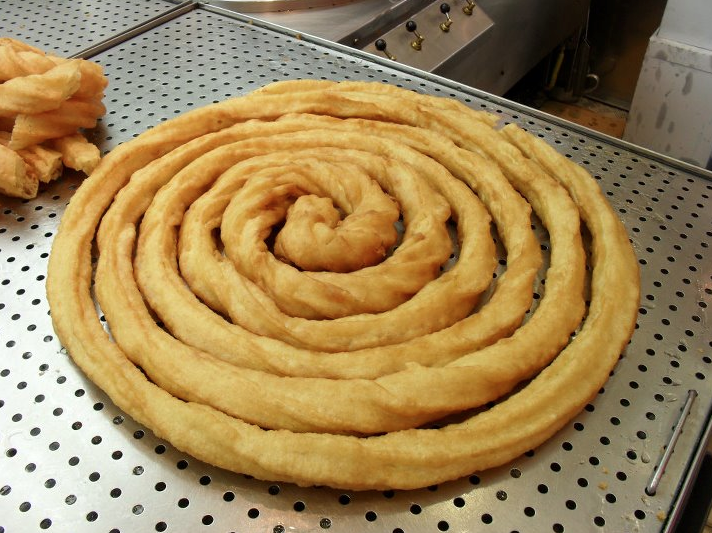
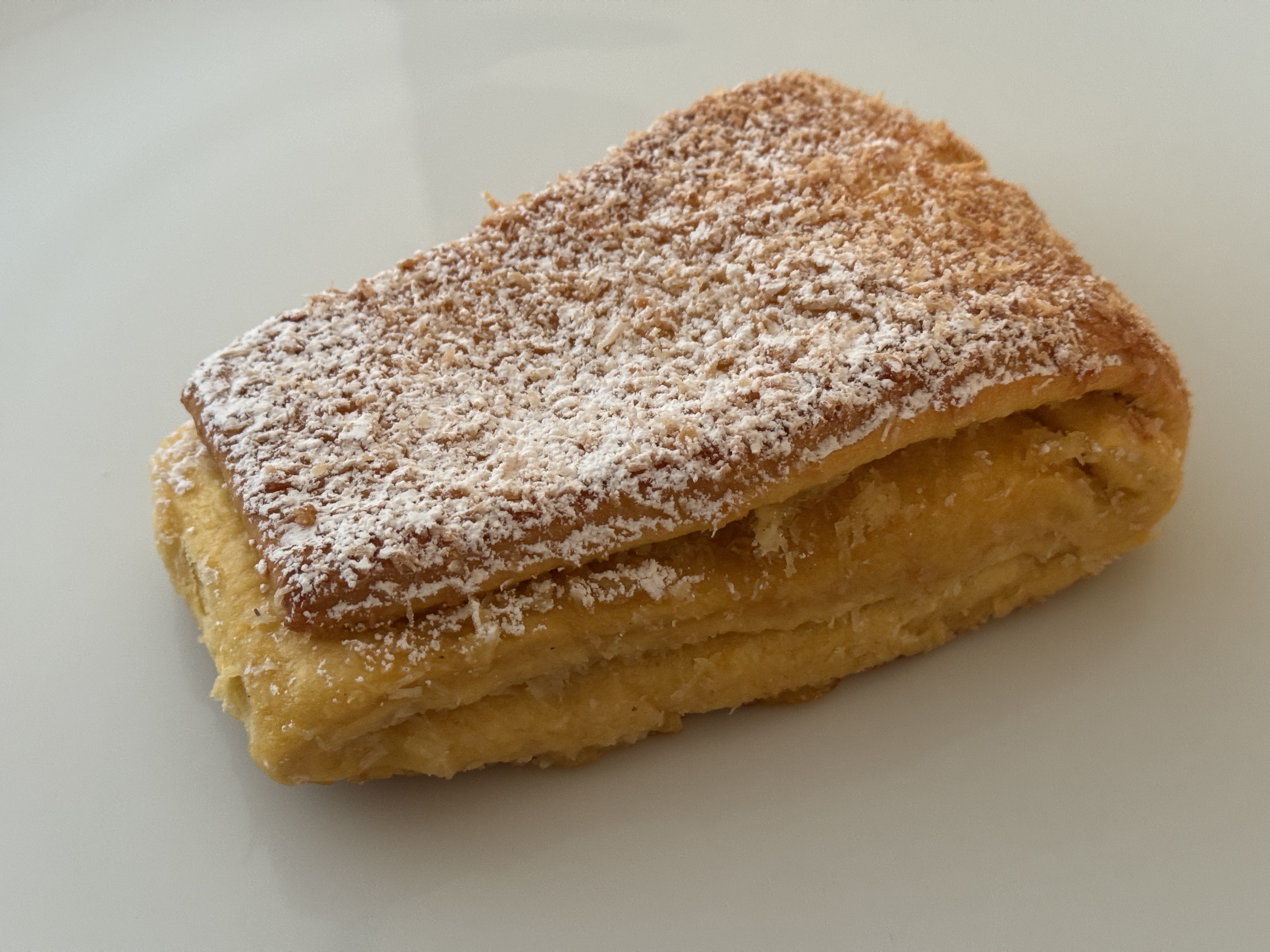
For coffee and pastries, our current favorite is Lobo, on Rua Alexandre Lobo. It was recently taken over by the Oliveira family, long known for their farturas (sweet strips of fried dough) sold at fairs across Portugal. Don’t miss the Viriato, a V-shaped pastry created in homage to the legendary figure, made from baker’s dough, topped with grated coconut, and generously filled with silky pastry cream.

For a stay, the Pousada de Viseu, housed in a building dating back to 1793, offers great comfort and beautiful views over the city.

There is an old song titled “Indo eu, indo eu, a caminho de Viseu,” about going to Viseu and finding love along the way. Its lyrics read:

“As I walk, as I walk, on the way to Viseu,

I met my one true love—oh my Lord, here I go.”

We leave you with an instrumental version of the tune, with apologies to Michel Giacometti and Fernando Lopes-Graça, whose work preserved Portugal’s traditional melodies, for taking a few liberties along the way.

With this song, we wish you a blissful New Year—one that, we hope, leads you to Viseu.

Vouzela pastries

No visit to Vouzela is complete without tasting the famous local pastries. The recipe, created by nuns of the order of Santa Clara, involves an impossibly thin Philo-like dough that wraps a luscious filling made of sugar and egg yolks. In the 19th century, an orphan adopted by the nuns mastered the tricky recipe and started selling “pasteis de Vouzela” to make a living. Today, four families produce these pastries.

We stopped at Café Central, which, as the name promises, has a central location. It is close to the village pillory and has a view of the cobalt blue tiles that cover the façade of the Misericordia church. The café was inaugurated in 1929, just in time to bring some sweetness to the lives affected by the Great Depression.

Tengúgal and Vouzela are rivals, each town claiming to produce the finest version of the same convent recipe. We ordered a couple of pastries and asked whether we could photograph a tray full of pastries. Before agreeing, the waiter asked, “Have you tried Tentúgal’s pastries?” “Yes, but we find their dough slightly thicker,” we answered. “I’m glad you noticed,” replied the waiter with evident satisfaction, bringing a tray for us to photograph.

We sat at a table, enjoying our “pasteis.” Created by nuns who lived in prayer and solitude, every bite is a glimpse of heaven.

Finding a culinary treasure in Viseu

The heart of Viseu, our home town, is the “four corners,” the intersection of Rua Direita (straight street) and Rua Formosa (pretty street). One of these corners was once occupied by Pastelaria Santos, a legendary pastry store. Its service was impeccable. Attentive waiters dispensed a wide variety of pastries and beverages in plates and cups made from porcelain. Coffee and tea pots, forks, spoons and knives were all made of silver. 

The pastries were culinary gold. The queen of the savories was a chicken “empada,” a small pie shaped like a crown with a crisp dough and a luscious filling. The king of the sweets was the “pastel de feijão,” a traditional convent confection made with light puff pastry filled with a delicate mixture of white beans, eggs and sugar. 

Santos’ pastry chef was called Adelino. He selected the best ingredients and was meticulous about their preparation. When Adelino became too old for the kitchen grind, he taught a young chef called António all his secrets.  When times were busy, an industrious 16-year-old waiter called João volunteered in the kitchen. He had an eye for detail and, little by little, he too learned the secrets of chef Adelino.

In 1985, Pastelaria Santos was replaced by a lottery store and the city lost a culinary fortune. Luckily, António and João were hired by a new coffee shop. It offered quicker service and less variety, but the famous chicken pies and bean pastries continued to delight the city’s gourmands. After a few years, the coffee shop was sold. The new owner demanded faster production methods and cheaper ingredients. António and João tried to adapt but, eventually, they left, disenchanted. Other pastry stores offered chicken pies and bean pastries. But these were mere imitations. The culinary treasures of Pastelaria Santos seemed forever lost.

We recently heard that a small shop called Flor da Ponte was selling pastries made according to the original Santos recipes. The store is owned by João Mendes Marques, the waiter who started working at Pastelaria Santos when he was 16. We talked to him on the phone and he invited us to his kitchen. His directions resembled the instructions of a treasure map. “Find a house that looks like a castle and then take a narrow road that seems to lead nowhere. You’ll find me at the end of the road.”

He was indeed there waiting for us with two trays of chicken pies ready to be baked. João covered the pies with a generous egg wash and tucked them in the oven. He then returned to the granite table in the middle of the kitchen to show us how to make the crown. While his fingers worked the dough, he told us about the many details that contribute to the final product, from the quality and composition of the flour to the time it takes for the dough to rest. Even the chicken filling requires an elaborate process that involves an ice bath to cool the meat right after it is cooked.

Next, João showed us how he makes the bean pastries. The puff pastry is made by hand. The sugar point needs to be exact, the consistency of the eggs and beans mixture needs to be perfect. We tried some freshly-made pastries. They are heavenly; light and full of flavor.

João peaked into the oven and announced that the chicken pies were ready. He took the trays out and let them cool a bit. As soon as we tried them, their extraordinary taste took us back to our childhood.

We thanked João for preserving these wonderful recipes. He tells us he is planning for the future. His two sons work with him and they will carry on once he retires.

And this is how, in the last few days of spring, at the end of a road that seemed to lead nowhere, we found a culinary treasure. 

Flor da Ponte is located at Travessa do Forno 13, 3510-799 Viseu, tel. 964 186 043.

The delights of Vale da Estrela

Composit Queijaria Vale da Serra

Our grandfather loved cheese from Serra da Estrela, the highest mountain in continental Portugal. He used to buy most of the cheese made by a small producer. Half of this cache he offered to friends. The other half was consumed in our house, either fresh or cured with olive oil and paprika. Every day of the year there was cheese on the table.

We were delighted when Maria João Coelho invited us to visit Queijaria Vale da Estrela, her father’s new artisanal cheese workshop in Mangualde near Viseu. The first thing we noticed when we entered the workshop were the wonderful cheese aromas, so familiar from our childhood.

Jorge Coelho, Maria João’s father, showed us around. He inherited his love for cheese from his grandfather Raul, an “affineur” who procured the best Estrela cheese to sell to gourmet stores in Lisbon.

Serra cheese is made with only three ingredients: sheep milk, thistle flower, and salt. Vale da Estrela only uses milk from Bordaleira ewes, which are indigenous to Serra da Estrela. The precious milk is collected at night and processed immediately to guarantee the best results.

All the cheese is made by hand with rhythmic gestures that transform humble ingredientes into something transcendent. The whey left over from the production process is heated to make “requeijão,” a soft, ricotta-style cheese.

“We make very good cheese but our requeijão is the best in the world,” said Jorge Coelho with pride. We first admired the cheese with its firm texture and delicate taste. Then, we tried the requeijão. As professional requeijão eaters we sampled many wonderful specimens over the years. But nothing as sublime as the requeijão from Vale da Estrela with its silky texture, depth of flavor, and exceptional freshness.

You can generally find the cheese and requeijão from Vale de Serra in supermarkets throughout the country. But when there’s a special occasion in heaven these products disappear from the shelfs because angels come in disguise to get them for the tables of paradise.

Queijaria Vale da Estrela is located in Mangualde on Estrada Nacional 16, n.º 43 São Cosmado. Click here for the queijaria’s website. 


Mesa de Lemos

Composit Quinta de Lemos

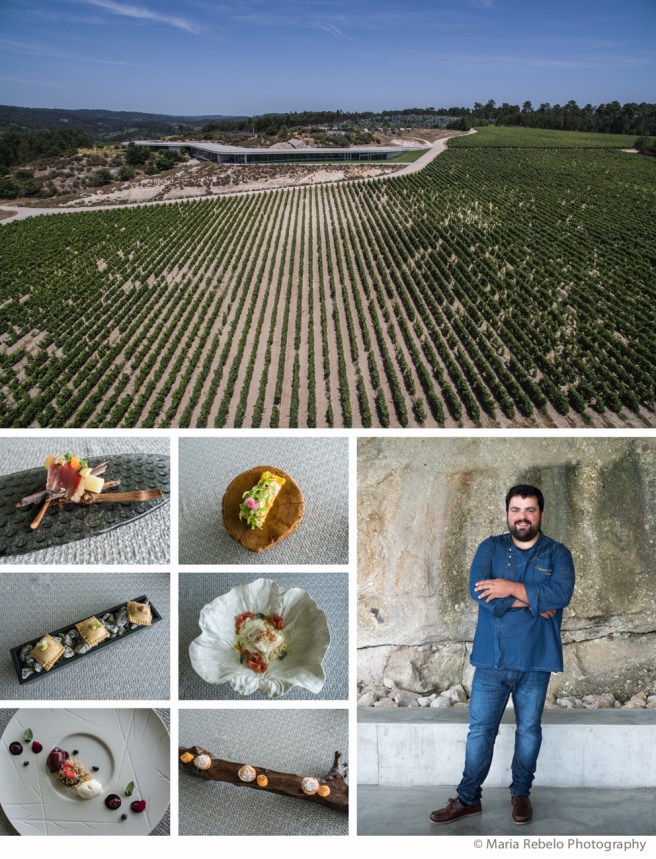
The most elegant place to dine in the Beira region is called Mesa de Lemos. Located near the village of Canas de Senhorim, the building is ensconced in the ancient granite boulders and looks like an integral part of the landscape. It was built three years ago by Celso de Lemos to showcase the wonderful wines he produces in the winery that also bears his name.

The restaurant tables overlook the surrounding vineyards, making us feel as if we are dining in the middle of the vines. There’s a fixed menu with optional, but indispensable, wine pairings. The delicious food is created by chef Diogo Rocha who was born in Canas de Senhorim. He draws inspirations from local traditional recipes to produce food that is elegant and satisfying.

Our meal started with a joyous sparkling wine called Geraldine in honor of Celso’s daughter. It has very fine bubbles and an elegant brioche aroma that combines perfectly with Diogo Rocha’s appetizers, a set of preparations reminiscent of a picnic in the countryside.

Next came Dona Santana, a complex red made from the four emblematic varietals cultivated in the Dão region: Touriga Nacional, Tinta Roriz, Jaen, and Afrocheiro. It paired perfectly with the braised bízaro pork. The last entrée was codfish adorned with an ethereal parsley foam and paired with an elegant red wine made from a single varietal, Afrocheiro.

The dessert feast started with an interesting experimental fortified wine produced by the quinta. It continued with a cherry pudding and a salty ice cream made from requeijão, a pastry filled with a sweet bean paste and a chestnut-shaped concoction made from egg yolks.

The wines of Quinta de Lemos are diamonds that sparkle anywhere. But at Mesa de Lemos they have their perfect setting.

Click here for the Mesa de Lemos web site. The restaurant is located at Quinta de Lemos, Passos de Silgueiros, near Viseu, tel 961 158 503.
Ephemeral gardens in Viseu

OLYMPUS DIGITAL CAMERA

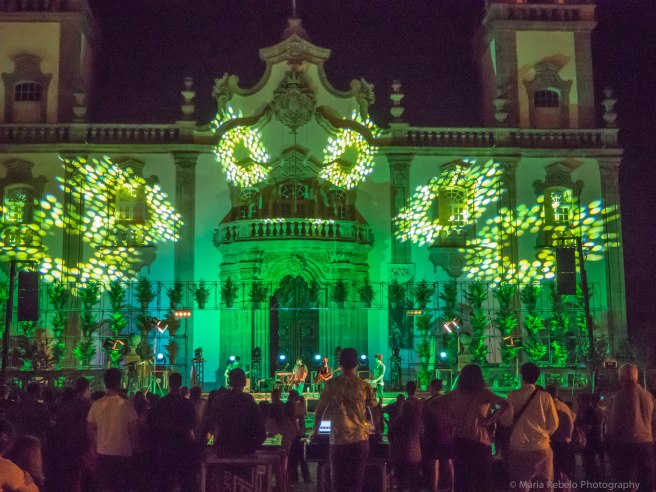
Every year, the Ephemeral Gardens festival jolts Viseu, a serene city in the interior of Portugal. Sandra Oliveira organizes this grand event, inspiring a large troupe of collaborators to adorn Viseu with modern art and serenade it with contemporary music.

Shops become installation spaces, ancient churches double as music venues, old walls serve as canvases for street art. Every plaza seems to have its own DJ, every garden its own sculpture show.

Stores, bookshops, restaurants, and bars stay open until late. The flowers of the linden trees blend their fragrance with the aromas of chocolate, vanilla and popcorn. There are workshops to attend, movies to watch, performances not to miss. It is a wonderful celebration of the many ways in which the old inspires the new.

The Ephemeral Gardens (Jardins Efémeros) festival runs from July 1 to 10, 2016. All events are free. Click here to see the program. 

The great Vasco

OLYMPUS DIGITAL CAMERA

Vasco Fernandes worked as a painter in Viseu during the first half of the 16th century. His prodigious talent earned him the nickname Grão Vasco, the great Vasco. According to legend, he once painted a fly that looked so real that his apprentices tried to shoo it away.

It is easy to believe this story when you’re standing in front of his masterpiece, a painting called Saint Peter that is the crown jewel of Viseu’s Grão Vasco Museum. The intricate architectural elements and background scenes are influenced by the work of Italian, German and Flemish painters. But the pope’s rugged face and gentle look are Portuguese.

Who was the model for the painting?  We like to think that it was a shepherd from the Estrela mountain. That the great painter trusted the keys of heaven to someone who on earth lived a simple life.

The Grão Vasco museum is located at Adro Sé in Viseu, tel 232 422 049.


The coolest place in Viseu

OLYMPUS DIGITAL CAMERA

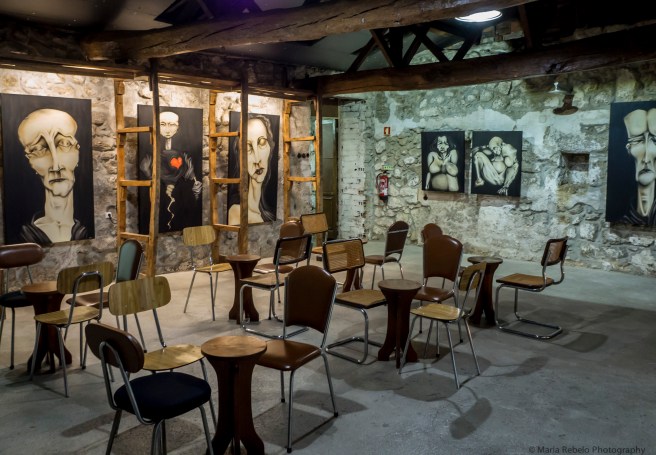
The coolest place in Viseu is called Carmo 81. It is an art gallery where you can have a drink, listen to live music, watch a movie, attend a workshop or simply hang out. Located on a winding street in the heart of the old city, the name of the gallery doubles as its address: Rua do Carmo, 81.

The gallery occupies a space that was for many years a farming equipment store. The thick granite walls and elegant oak beans retired from a hard life of selling irrigation equipment to pursue their dream of being surrounded by art.

Viseu is already the coolest place in Portugal during July, when the Ephemeral Gardens festival fills this ancient city with art installations, live music and modern dancing. Now, with Carmo 81, Viseu is cool all year round!

Carmo 81 is located on Rua do Carmo 81, Viseu, tel. 232 094 366. Click here to see a list of upcoming events.

Wood saints

Christmas Card 2015

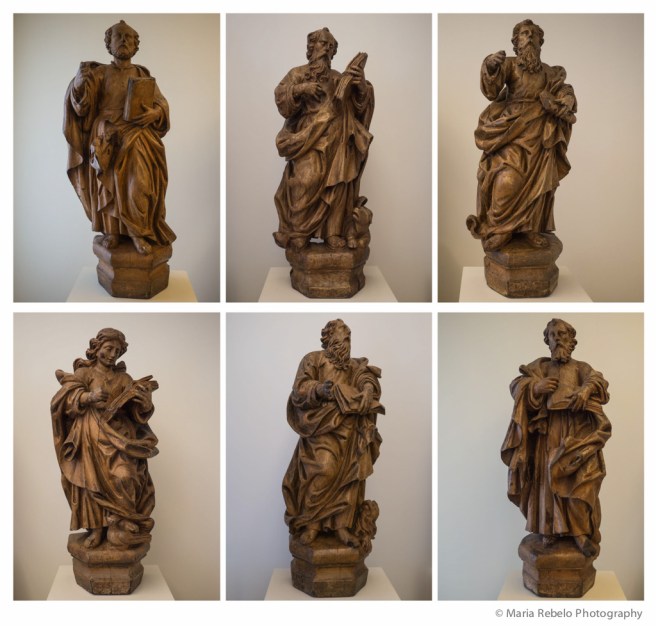
The Grão Vasco museum in Viseu houses an exquisite collection of wood statues from the 18th century. The names of the sculptors who created these pieces have long been lost. What remains is the mastery with which they used their mallets and chisels to breathe life into wood.

The Grão Vasco museum is located at Adro Sé in Viseu, tel 232 422 049.

Viseu turned upside down

Mesas

Roman cities are generally organized around two perpendicular streets, the “cardo” and the “documanus.” In Viseu, an elegant city in the interior of Portugal, the cardo is called Rua Direita. This ancient street has been turned upside down by an installation called Mesas (the Portuguese word for tables). Artists Pedro Rebelo and Ricardo Jacinto suspended in the air tables once used by jewelers, tailors, office workers, school children, card and ping-pong players. These tables project sounds recorded while they were in use, inviting us to celebrate the people who study, work, and play in this city.

Mesas is part of Ephemeral Gardens, a great annual event which fills the streets of Viseu with art, music, dance, theater, and gastronomy. Click here for more information.