Silk drawings

Scarves FL

When Fernanda Lamelas travels, she tends to disappear. We’ll find her in a quiet corner seeing beauty that often goes unnoticed. Trained as an architect, Lamelas became an avid watercolorist who carries her paints everywhere. Her brushes dance on white paper, making the paints flow with precision and grace. It looks easy, but it takes a lifetime of observation to choose which lines to draw, which contours to omit.

Fernanda accumulated a large collection of sketchbooks filled with drawings from her travels. But they lied in a quiet corner gathering dust. Seeking to infuse life into these sketchbooks, Fernanda used the drawing of an architectural motif from the Carmo Convent in Lisbon to make a silk scarf. The scarf received so much praise that Fernanda felt encouraged to produce more designs. And so details from Rossio in Lisbon, the Serralves Foundation in Oporto, the Pena Palace in Sintra and from many other places came alive on canvases made of silk.

If you’re looking for a memento of a blissful vacation in Portugal, it’s hard to find anything more elegant than a Lamelas scarf.

Click here for the website of Fernanda Lamelas Arts.

Mário Sérgio, a Portuguese vigneron

OLYMPUS DIGITAL CAMERA

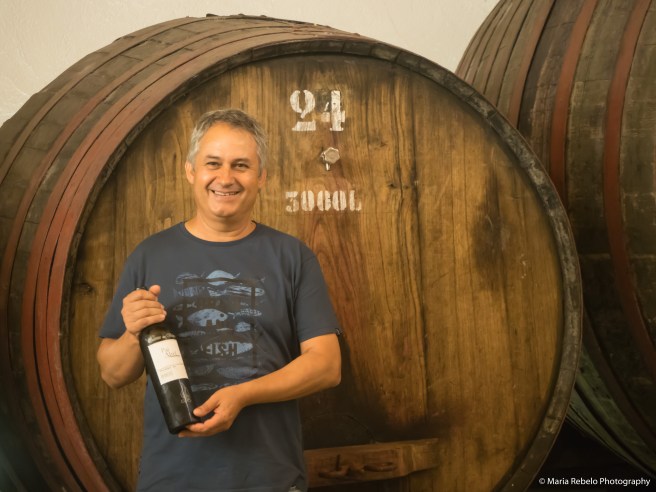
The people of Epernay, a town at the heart of the Champagne region, know more about sparkling wine than almost anyone in the world. So it is remarkable that Mario Sérgio, a producer from Bairrada, found a market for his sparkling wines in Epernay.

This success has been more than a century in the making–Mário is a 4th generation wine maker. His 81-old father still labors 10 hours a day tending to the vineyards.

Mário’s family used to sell their grapes to the famed Caves São João. In 1989, at age of 23, Mário decided to reserve the grapes to make his own wines under the label Quinta das Bágeiras. From the beginning, he paid no attention to what is most fashionable or profitable. Instead, he focused on making great wines in Bairrada.

One of the first hints that Mário was on the path to greatness came in 2001 when, in a blind tasting organized in France, the judges selected two wines: a very expensive Château Haut-Brion and a modestly-priced Quinta das Bágeiras garrafeira.

Mário shuns everything that is artificial. He uses no yeasts, no filtering, no stabilization techniques. Reds are made with old wine presses using the notoriously difficult baga varietal. Sparkling wines are all Natural Brut, an exacting style that requires that there be no residual sugar in the wine.

Just like the French vignerons, Mário buys no grapes. All his wines are produced from grapes hand picked in his properties.  He knows every parcel and plants vines only in soils that can produce excellent results. “I am often offered grapes from properties adjacent to mine. But many times, the soil and sun exposure are completely different from those of the parcels I own.”

Mário is particularly proud of the vineyard that produces the grapes for Pai Abel, a wine named after his father. He makes 2,000 bottles a year. Using a practice that is rare in Portugal, he sells 80 percent “en primeur” to lucky subscribers who buy the wine at a discount two years before it is ready for delivery.

A profound believer in the aging potential of Bairrada whites, he stored his 1994 white wine for 12 years before releasing it for sale. When he brought home a bottle to share with his wife, she told him: “There’s no market for aged white wine, you’ll never sell a single bottle.” When by the end of the meal the bottle was empty, she conceded that “maybe you’ll sell some of this wine.” Mário sent a couple of bottles to his friend Dirk Niepoort. In return, he received the biggest compliment a wine maker can give to another: Dirk asked to buy all the stock of Quinta das Bágeiras 1994 white!

Every Saturday, Mário Sérgio opens the door of his winery to visitors. If you’re a wine lover, it is hard to find a more enjoyable way to spend a Saturday than to pay a visit to Quinta das Bageiras.

Quinta das Bágeiras is located at Rua Principal nº598, Fogueira in Sangalhos (N 40º 29.109′ ; W 8º 29.969′), tel. 234 742 102, email mariosergio@quintadasbageiras.pt. Click here for their website.


Red gold from the Douro valley

Abílio Tavares da Silva

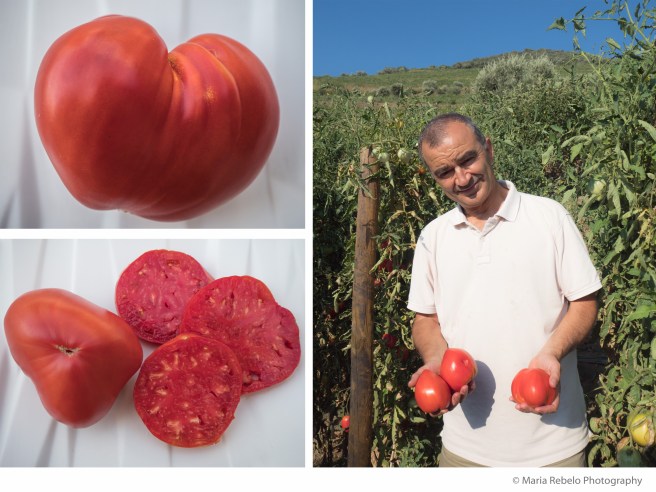
“God gave Douro precious wines so that people would come and find all the other treasures,” says Abílio Tavares da Silva. He is a successful software engineer who fell under the spell of the Douro valley. After going back to school to study enology at the famed UTAD in Vila Real, he uprooted his family from Lisbon to the Douro. Abílio bought Foz Torto, an estate with perfect sun exposure, and began producing wonderful wines. It was only then that he found the other treasures.

One day, someone brought local heirloom tomatoes to a gathering of wine producers. “I had never tasted tomatoes like those, so I decided to plant some tomatoes at Foz Torto. In July and August, the Douro is very hot and this heat produces extraordinary results. The plants struggle, their roots are forced to go deep in search of the last few drops of water. That is why the tomatoes are not watery; they are firm and full of flavor.”

As soon as we sat down for lunch, a beautiful plate of heirloom tomatoes arrived. Abílio had picked them in the morning to make sure they were perfectly ripe. They had a luscious red color, an intense flavor, and the perfect balance of sweetness and acidity. These heirloom tomatoes are as good as fine wine.

Abílio smiled, pleased with our reaction. “It is not just the heat that produces these results,” he explained. “The soil in the Douro valley comes from sedimentary rock that was at the bottom of the ocean millions of years ago. When the rock disaggregated, it became home to a lush microbiological ecosystem that made the soil rich in micronutrients. These micronutrients make all the difference in the production of fruits and vegetables.”

After lunch, we drove to Foz Torto. In the vineyard, Abílio explained how the design of the beautiful Douro terraces evolved in response to the shortage of labor and the need to avoid soil drainage. He then showed us his fruit trees and vegetable garden. The figs, peaches and strawberries were dripping with sweetness. They are more satisfying than the most sumptuous desserts.

“In the old days, the Douro farms were self sufficient, they had wonderful orchards and great vegetable gardens. When the train came to the Douro, the farms started buying fruit and vegetables from the rest of the country and focused on the production of port wine. The tradition of growing fruits and vegetables was lost. But there’s a group of wine producers that is bringing back those old crops.”

Together with Celeste Pereira from the event company alldouro.com  and journalist Edgardo Pacheco, Abílio organizes an annual competition for the best heirloom tomato in the Douro valley. The tomatoes are tasted blind by a panel of chefs, enologist and food writers. Wine makers from many quintas participate in the event.

This year, the competition takes place at Quinta do Vallado on August 24. On August 25 there’s an agricultural market where people can taste heirloom tomatos, olive oil, fleur de sel, Douro wines, and traditional local food. If you’re on the Douro valley, do not miss the opportunity to participate in these unique gastronomical events. And if you go, please cheer for Abílio Tavares da Silva, we hope that his extraordinary heirloom tomatoes win the first prize!

To participate in the heirloom tomato competition events please email   greengrape@greengrape.pt.The events are free.

The story of Portugal

OLYMPUS DIGITAL CAMERA

Travel is like so much else; we get what we put into it.  You’ll enjoy a trip to Portugal much more if you learn a little about the rich history of this small corner of the world.

But what should you read?  Travel guidebooks reduce centuries of history to a few lines, leaving us with little more than a boring list of names and dates. History books, on the other hand, are often so dense with scholarship that it is easy to get lost.

Luckily, John dos Passos, a great American writer whose father was from the island of Madeira, produced a highly readable account of Portugal’s age of discovery. His book introduces us to the main protagonists that shaped this golden era. Through their triumphs and defeats, their joys and tears, we learn the story of Portugal.

John Dos Passos, The Portugal Story: Three Centuries of Exploration and Discovery, Doubleday, 1995.

Rooster fish

RBD_Desenho Peixe Galo
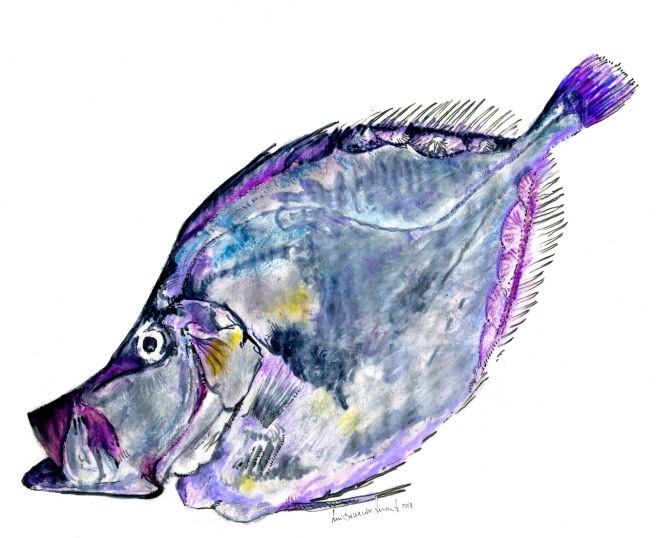
Peixe Galo, Rui Barreiros Duarte, ink on paper, July 2018.

One of Portugal’s most appetizing fish is the Selene Setapinnis, commonly known as “peixe galo” (rooster fish). In Peniche, fishermen call it “alfaquique.” It is a word with an Arab origin, suggesting that this fish was prized centuries ago.

Peixe galo swims with a serious demeanor near the ocean floor where its colors make it almost invisible. It stays slim on a diet of squid, cuttlefish, and shrimp. Perhaps that is why its meat tastes so good.

Fried peixe galo with an açorda made with its fish eggs is a sumptuous meal, one of the simply extraordinary pleasures of the Portuguese cuisine.

A widow from Colares and her extraordinary wines

Viuva Gomes Composit

About 25 years ago, we hosted a friend who’s a great wine connoisseur for a couple of weeks in Lisbon. He tried Portuguese wines from different regions and always had something nice to say. But we noticed that his enthusiasm for these wines paled in comparison to his passion for the French wines that filled his cellar.

Towards the end of his stay, we had dinner at a small restaurant that had a rare wine on its list. “This wine is amazing!” exclaimed our friend after taking a sip. “How many more bottles do you have?,” he asked the waiter. “Two,” the waiter replied. “That is perfect. I am spending two more nights in Lisbon. Can we make dinner reservations for both nights and also reserve the two bottles?”

The wine that so impressed our oenophile friend was a 1969 Viúva Gomes. Its origin goes back to 1808, the year when José Gomes da Silva built a cellar in the village of Almoçageme to produce wines in Colares, near Sintra.

The tiny Colares region is home to two unique grape varietals: the white Malvasia and the red Ramisco. These grapes survived the onset of phylloxera in the 19th century because they are planted on clay soils covered with sand that protected the roots from the deadly bug.

After Gomes da Silva died, his widow and sons continued to produce wine which they sold under the label Viúva Gomes (viúva is the Portuguese word for widow). Their company was sold in 1920 and resold in 1931. By 1988, it was once again up for sale. It was then that José Baeta seized the opportunity to buy the vineyards, the cellar and a treasure trove of vintages going back to beginning of the 20th century.

We knocked on the door of the 1808 cellar and soon José Baeta came to greet us. Visiting this building full of old bottles and ancient wine barrels made from precious woods is a voyage into the 19th century.

José spoke with great passion about the unique character of the Viúva Gomes wines. We sampled a wonderful 2016 white Malvasia that is exuberant, with hints of salt from the Atlantic Ocean. We then tried a red Ramisco from 2009. It is an alluring, intense wine with notes of dried cherries. While most wines pale in the presence of food with bold flavors, the Viúva Gomes Ramisco holds its own and helps the meal sparkle.

Only 2,000 bottles of white and 4,000 bottles of red are produced every year. “I always run out of wine to sell before the year ends,” says José Baeta. With the help of his son Diogo, José is trying to expand his production, finding the right soils to plant more vines.

Drinking a bottle of Viúva Gomes is an extraordinary experience. These are nectars  made from the rarest vines, caressed by the Atlantic winds and guarded by millions of grains of sands.

The cellar of Viúva Gomes is located at Largo Comendador Gomes da Silva, 2 Almoçageme, Colares, tel. 219 290 903 and 967 248 345, email  info@adegaviuvagomes.com . Click here for the Viúva Gomes website.


Two recipes from Ílhavo

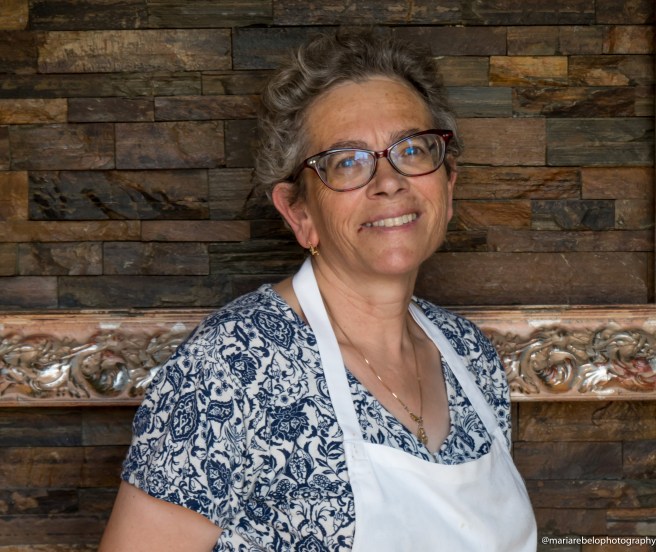
16 - Chefe Cristina Almeida - @mariarebelophotography.com

The Montebelo Vista Alegre hotel in Ílhavo is a hidden travel-destination gem in the center of Portugal. The hotel has a stunning location on the marshes where river and sea water meet.

The building complex incorporates the elegant manor house of José Pinto Bastos, the entrepreneur who two centuries ago pioneered the production of porcelain in Portugal. You can visit an interesting museum that traces the evolution of Vista Alegre from a risky experiment to a renowned porcelain brand. It is also wonderful to visit the porcelain factory, the place where earth and fire combine to serve the imagination of designers and sculptors.

One of the pleasures of a stay at the Vista Alegre hotel are the appetizing meals served in the restaurant headed by chef Cristina Almeida. For the last three decades, Cristina has been creating and refining recipes based on Portugal’s culinary tradition. Since she opened the hotel’s restaurant in 2016, Cristina has had the luxury of serving her food in the elegant dinnerware produced by Vista Alegre.

Two of our favorite dishes at the Vista Alegre restaurant are lamb rice with mushrooms and chestnuts and velvety codfish. We enjoyed these culinary treasures so much that we dared to ask Cristina whether she would share the recipe with our readers. She graciously agreed, so here they are.

Lamb rice with mushrooms and chestnuts

Ingredients for four people

  1. 600 grams of baby lamb
  2. 400 grams of rice (Cristina uses the Carolino variety produced in Portugal)
  3. 1 garlic clove
  4. 250 grams of onions
  5. 100 grams of chestnuts
  6. 100 grams of mushrooms
  7. 0.2 liters of white wine
  8. 0.1 liters of red wine
  9. 0.1 liters of olive oil
  10. Seasonings: thyme, bay leaf, piri-piri, and salt

Cut the lamb into small pieces. Marinate it with garlic, bay leaf, the two wines, thyme and salt. Dice the onion and fry it in olive oil. Add the lamb and fry with the onion. Add the chestnuts, mushrooms, and let the mixture cook a bit more. Add enough water to cook the rice and make plenty of sauce. Wait until the mixture boils and add the rice. As soon as the rice is cooked, serve immediately.

Velvety codfish

Ingredients for five people

  1. 200 grams of codfish without bones
  2. 0ne leek
  3. 1 garlic clove
  4. 150 grams of onion
  5. 1 kg. of potatoes
  6. 0.15 liters of olive oil
  7. Seasonings: parsley and coriander.
  8. Garnish: roasted peppers

Cut the codfish in cubes. Place the codfish, leek, onion, potatoes, parsley, and coriander in a pot. Cover the ingredients with water and let them boil until cooked. In a frying pan, fry the garlic with 1/3 of the olive oil. Add to the boiling mixture. Put the mixture in a blender and blend until smooth. Serve garnished with roasted peppers.

Click here for the website of the Montebelo Vista Alegre hotel. 


The delights of Alkazar

Alcacer - @mariarebelophotography.com

Helena Silva was born and raised in Alcácer do Sal. As a kid, she was fascinated by the history of this ancient city and wanted to become an archeologist to find out more about its past.

Instead, Helena opened a gourmet store called Alkazar (the Arab name for Alcácer do Sal) on the city’s main street, overlooking the Sado river. With the patience of an archeologist, she gathered the best products from the region.

Alcácer is known for the production of salt, pine nuts and rice, so these products have pride of place in Helena’s store. But there are also interesting wines, artisanal honey, appetizing canned fish, regional sweets, and much more.

Our favorite discovery was “pinhoada,” a highly-addictive nougat made with local pine nuts and honey. There’re many good reasons to visit the wonderful town of Alcacer do Sal. But the taste of the pinhoada alone justifies a visit.

Helena Silva’s store, Alkazar Gourmet is located on Rua Machado dos Santos n º4, 7580-162 Alcácer do Sal, Tel. 265088739.

A belly full of fish

Barrigada Restaurant

Right on the Lagos harbor there’s an old shack that houses a restaurant called A Barrigada (a full belly). It is a simple place that serves grilled fish, cataplanas and other seafood delights. Outside the restaurant, you see the fish nets and octopus traps used by some of the fishermen that supply the restaurant.

The wine list is surprisingly good. Our waiter recommended a white wine called Invisivel produced by Ervideira. It is made from the red grape Aragonês and paired perfectly with the fish feast that followed: douradas, carapau and cavalas all perfectly grilled and seasoned. The fish comes with simple accompaniments: boiled potatoes seasoned with garlic and oregano and a salad with tomatoes, cucumbers and onion.

The waiters look like friendly pirates. Are they descendants of Sir Francis Drake the buccaneer who made Sagres his home base in 1587? All we know is that Barrigada is always full of people from all ages and nationalities enjoying a bounty of fish.

A Barrigada is located at Estrada de São Roque, Cais Sul, MeiaPraia, in Lagos, tel. 282 792 453, email abarrigada@hotmail.com. Click here for the restaurant’s website,  

Modern luxury at the Four Seasons Hotel Ritz in Lisbon

Ritz

António Salazar, the man who ruled Portugal from 1932 to 1968, detested extravagance so he resisted the idea of building a Ritz hotel in Lisbon. But a group of entrepreneurs convinced him to support the project. Salazar visited the hotel before the inauguration and disliked what he saw. He exited through the back door and never came back. Despite Salazar’s disapproval, the Lisbon Ritz was a huge success.

The entrepreneurs tapped Porfirio Pardal Monteiro to be the architect. It was an inspired choice. Monteiro used the Parthenon and the Erechtheum to guide his search for the ideal location. But he avoided the temptation to build a hotel that imitates the past. Instead, he drew inspiration from Le Corbusier to design a modern building with beautiful proportions.

Monteiro was friends with the great painter Almada Negreiros. He engaged Almada and other artists to produce works of art for the new hotel. The result is a stunning art collection that creates unique interior spaces. Almada designed exuberant tapestries with centaurs and etched agricultural motifs into black granite using gold leaf. His wife Sarah Afonso produced a joyous allegory of the seasons. Querubim Lapa, Martins Correia, Carlos Botelho and many others contributed to the collection of roughly 600 works of art.

The hotel has 4 elevators for the guests and 12 elevators for the staff. When it opened in 1959, it had 330 rooms and 400 employees. Even though the ratio is no longer the same, the service is still flawless. Run by the Four Reasons group, the hotel has been regularly renovated to continue to offer outstanding comfort. The elegant breakfast room is the perfect place to start your morning in Lisbon. The rooftop was converted into a modern gym with a running track that offers expansive views of the city.

The Four Seasons Hotel Ritz is one of Europe’s grand hotels, a unique combination of architecture, art, comfort, and hospitality that creates an unforgettable experience.

The Four Seasons Hotel Ritz in Lisbon is located at Rua Rodrigo da Fonseca, 88, tel. (21) 381-1400. Click here for the hotel website.