A widow from Colares and her extraordinary wines

Viuva Gomes Composit

About 25 years ago, we hosted a friend who’s a great wine connoisseur for a couple of weeks in Lisbon. He tried Portuguese wines from different regions and always had something nice to say. But we noticed that his enthusiasm for these wines paled in comparison to his passion for the French wines that filled his cellar.

Towards the end of his stay, we had dinner at a small restaurant that had a rare wine on its list. “This wine is amazing!” exclaimed our friend after taking a sip. “How many more bottles do you have?,” he asked the waiter. “Two,” the waiter replied. “That is perfect. I am spending two more nights in Lisbon. Can we make dinner reservations for both nights and also reserve the two bottles?”

The wine that so impressed our oenophile friend was a 1969 Viúva Gomes. Its origin goes back to 1808, the year when José Gomes da Silva built a cellar in the village of Almoçageme to produce wines in Colares, near Sintra.

The tiny Colares region is home to two unique grape varietals: the white Malvasia and the red Ramisco. These grapes survived the onset of phylloxera in the 19th century because they are planted on clay soils covered with sand that protected the roots from the deadly bug.

After Gomes da Silva died, his widow and sons continued to produce wine which they sold under the label Viúva Gomes (viúva is the Portuguese word for widow). Their company was sold in 1920 and resold in 1931. By 1988, it was once again up for sale. It was then that José Baeta seized the opportunity to buy the vineyards, the cellar and a treasure trove of vintages going back to beginning of the 20th century.

We knocked on the door of the 1808 cellar and soon José Baeta came to greet us. Visiting this building full of old bottles and ancient wine barrels made from precious woods is a voyage into the 19th century.

José spoke with great passion about the unique character of the Viúva Gomes wines. We sampled a wonderful 2016 white Malvasia that is exuberant, with hints of salt from the Atlantic Ocean. We then tried a red Ramisco from 2009. It is an alluring, intense wine with notes of dried cherries. While most wines pale in the presence of food with bold flavors, the Viúva Gomes Ramisco holds its own and helps the meal sparkle.

Only 2,000 bottles of white and 4,000 bottles of red are produced every year. “I always run out of wine to sell before the year ends,” says José Baeta. With the help of his son Diogo, José is trying to expand his production, finding the right soils to plant more vines.

Drinking a bottle of Viúva Gomes is an extraordinary experience. These are nectars  made from the rarest vines, caressed by the Atlantic winds and guarded by millions of grains of sands.

The cellar of Viúva Gomes is located at Largo Comendador Gomes da Silva, 2 Almoçageme, Colares, tel. 219 290 903 and 967 248 345, email  info@adegaviuvagomes.com . Click here for the Viúva Gomes website.


Two recipes from Ílhavo

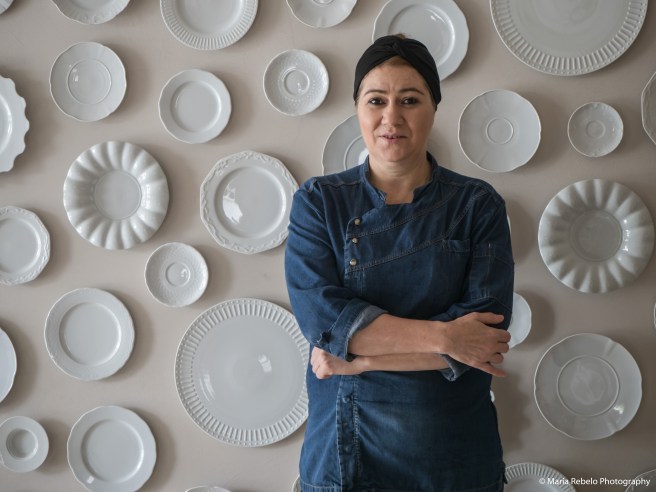
16 - Chefe Cristina Almeida - @mariarebelophotography.com

The Montebelo Vista Alegre hotel in Ílhavo is a hidden travel-destination gem in the center of Portugal. The hotel has a stunning location on the marshes where river and sea water meet.

The building complex incorporates the elegant manor house of José Pinto Bastos, the entrepreneur who two centuries ago pioneered the production of porcelain in Portugal. You can visit an interesting museum that traces the evolution of Vista Alegre from a risky experiment to a renowned porcelain brand. It is also wonderful to visit the porcelain factory, the place where earth and fire combine to serve the imagination of designers and sculptors.

One of the pleasures of a stay at the Vista Alegre hotel are the appetizing meals served in the restaurant headed by chef Cristina Almeida. For the last three decades, Cristina has been creating and refining recipes based on Portugal’s culinary tradition. Since she opened the hotel’s restaurant in 2016, Cristina has had the luxury of serving her food in the elegant dinnerware produced by Vista Alegre.

Two of our favorite dishes at the Vista Alegre restaurant are lamb rice with mushrooms and chestnuts and velvety codfish. We enjoyed these culinary treasures so much that we dared to ask Cristina whether she would share the recipe with our readers. She graciously agreed, so here they are.

Lamb rice with mushrooms and chestnuts

Ingredients for four people

  1. 600 grams of baby lamb
  2. 400 grams of rice (Cristina uses the Carolino variety produced in Portugal)
  3. 1 garlic clove
  4. 250 grams of onions
  5. 100 grams of chestnuts
  6. 100 grams of mushrooms
  7. 0.2 liters of white wine
  8. 0.1 liters of red wine
  9. 0.1 liters of olive oil
  10. Seasonings: thyme, bay leaf, piri-piri, and salt

Cut the lamb into small pieces. Marinate it with garlic, bay leaf, the two wines, thyme and salt. Dice the onion and fry it in olive oil. Add the lamb and fry with the onion. Add the chestnuts, mushrooms, and let the mixture cook a bit more. Add enough water to cook the rice and make plenty of sauce. Wait until the mixture boils and add the rice. As soon as the rice is cooked, serve immediately.

Velvety codfish

Ingredients for five people

  1. 200 grams of codfish without bones
  2. 0ne leek
  3. 1 garlic clove
  4. 150 grams of onion
  5. 1 kg. of potatoes
  6. 0.15 liters of olive oil
  7. Seasonings: parsley and coriander.
  8. Garnish: roasted peppers

Cut the codfish in cubes. Place the codfish, leek, onion, potatoes, parsley, and coriander in a pot. Cover the ingredients with water and let them boil until cooked. In a frying pan, fry the garlic with 1/3 of the olive oil. Add to the boiling mixture. Put the mixture in a blender and blend until smooth. Serve garnished with roasted peppers.

Click here for the website of the Montebelo Vista Alegre hotel. 


The delights of Alkazar

Alcacer - @mariarebelophotography.com

Helena Silva was born and raised in Alcácer do Sal. As a kid, she was fascinated by the history of this ancient city and wanted to become an archeologist to find out more about its past.

Instead, Helena opened a gourmet store called Alkazar (the Arab name for Alcácer do Sal) on the city’s main street, overlooking the Sado river. With the patience of an archeologist, she gathered the best products from the region.

Alcácer is known for the production of salt, pine nuts and rice, so these products have pride of place in Helena’s store. But there are also interesting wines, artisanal honey, appetizing canned fish, regional sweets, and much more.

Our favorite discovery was “pinhoada,” a highly-addictive nougat made with local pine nuts and honey. There’re many good reasons to visit the wonderful town of Alcacer do Sal. But the taste of the pinhoada alone justifies a visit.

Helena Silva’s store, Alkazar Gourmet is located on Rua Machado dos Santos n º4, 7580-162 Alcácer do Sal, Tel. 265088739.

A belly full of fish

Barrigada Restaurant

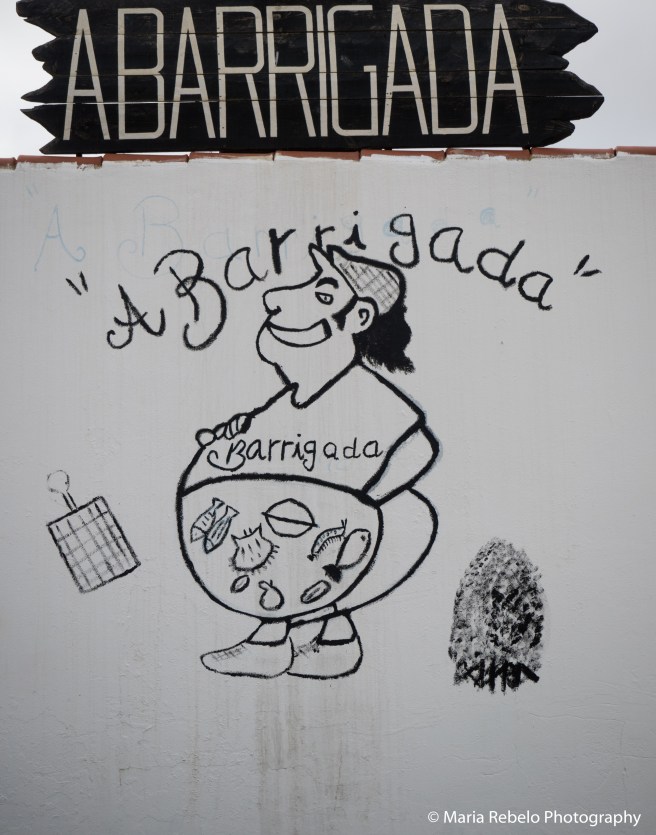
Right on the Lagos harbor there’s an old shack that houses a restaurant called A Barrigada (a full belly). It is a simple place that serves grilled fish, cataplanas and other seafood delights. Outside the restaurant, you see the fish nets and octopus traps used by some of the fishermen that supply the restaurant.

The wine list is surprisingly good. Our waiter recommended a white wine called Invisivel produced by Ervideira. It is made from the red grape Aragonês and paired perfectly with the fish feast that followed: douradas, carapau and cavalas all perfectly grilled and seasoned. The fish comes with simple accompaniments: boiled potatoes seasoned with garlic and oregano and a salad with tomatoes, cucumbers and onion.

The waiters look like friendly pirates. Are they descendants of Sir Francis Drake the buccaneer who made Sagres his home base in 1587? All we know is that Barrigada is always full of people from all ages and nationalities enjoying a bounty of fish.

A Barrigada is located at Estrada de São Roque, Cais Sul, MeiaPraia, in Lagos, tel. 282 792 453, email abarrigada@hotmail.com. Click here for the restaurant’s website,  

Modern luxury at the Four Seasons Hotel Ritz in Lisbon

Ritz

António Salazar, the man who ruled Portugal from 1932 to 1968, detested extravagance so he resisted the idea of building a Ritz hotel in Lisbon. But a group of entrepreneurs convinced him to support the project. Salazar visited the hotel before the inauguration and disliked what he saw. He exited through the back door and never came back. Despite Salazar’s disapproval, the Lisbon Ritz was a huge success.

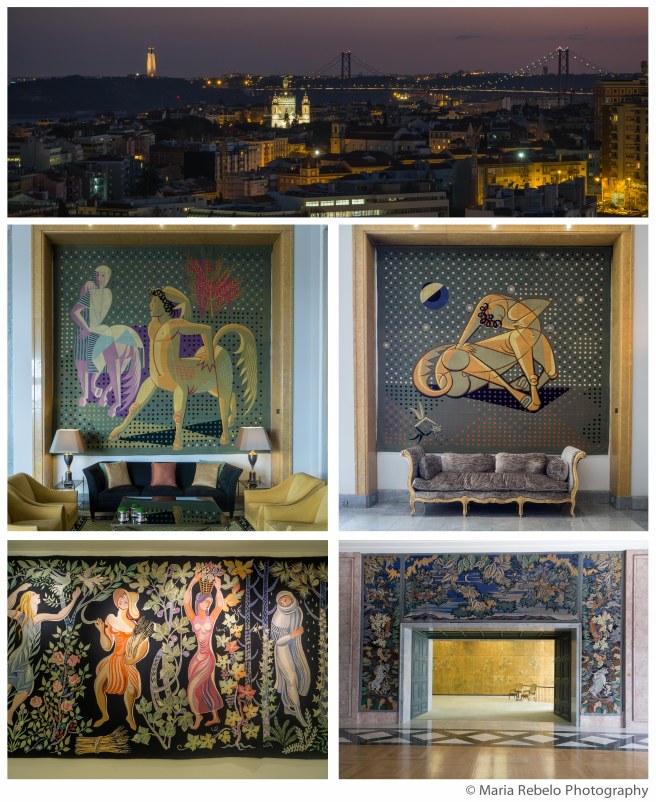
The entrepreneurs tapped Porfirio Pardal Monteiro to be the architect. It was an inspired choice. Monteiro used the Parthenon and the Erechtheum to guide his search for the ideal location. But he avoided the temptation to build a hotel that imitates the past. Instead, he drew inspiration from Le Corbusier to design a modern building with beautiful proportions.

Monteiro was friends with the great painter Almada Negreiros. He engaged Almada and other artists to produce works of art for the new hotel. The result is a stunning art collection that creates unique interior spaces. Almada designed exuberant tapestries with centaurs and etched agricultural motifs into black granite using gold leaf. His wife Sarah Afonso produced a joyous allegory of the seasons. Querubim Lapa, Martins Correia, Carlos Botelho and many others contributed to the collection of roughly 600 works of art.

The hotel has 4 elevators for the guests and 12 elevators for the staff. When it opened in 1959, it had 330 rooms and 400 employees. Even though the ratio is no longer the same, the service is still flawless. Run by the Four Reasons group, the hotel has been regularly renovated to continue to offer outstanding comfort. The elegant breakfast room is the perfect place to start your morning in Lisbon. The rooftop was converted into a modern gym with a running track that offers expansive views of the city.

The Four Seasons Hotel Ritz is one of Europe’s grand hotels, a unique combination of architecture, art, comfort, and hospitality that creates an unforgettable experience.

The Four Seasons Hotel Ritz in Lisbon is located at Rua Rodrigo da Fonseca, 88, tel. (21) 381-1400. Click here for the hotel website. 


Quinta do Crasto

Composit Quinta do Crasto

In ancient times, the Romans built on the Douro valley a “castrum,” which means fort in Latin. The fort was surrounded by steep hills descending towards the Douro river with perfect exposure to the sun. Even though it was hard work to plant vines in this treacherous terrain, the Romans embraced the challenge. They knew that the vines would please Bacchus, the god of wine, and that he would reward them with great vintages.

There is no record of the quality of the wines made by the Romans on these hills. But we know that by 1615 the estate, called Quinta do Crasto in honor of the old Roman fort, was producing superior wines.

The Quinta is situated on the right bank of the Douro river between Régua and Pinhão. The views are spectacular and so are the table and port wines which regularly receive high accolades from wine critics. We think Bacchus would be pleased.

Click here for the Quinta do Crasto website.


A convent carved in rock

Composit Capuchos

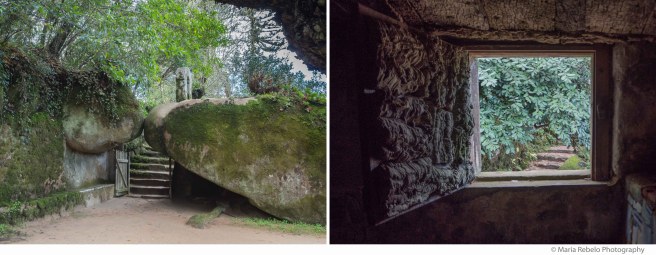
The most poignant monument in Sintra is not a palace or a castle. It is the Convent of the Capuchos, also known as the Convent of the Holly Cross. Founded in 1560, it is a place where monks lived a life of frugality and contemplation.

Long before architects designed buildings in harmony with their surroundings, this convent was built to blend into the landscape of the Sintra mountain. Made primarily out of rock, its interior is lined with cork to offer some protection against the cold and dampness of Winter.

In 1581, when Portugal was under Spanish domination, king Philip of Spain and Portugal visited the Sintra convent and declared: “In all my kingdoms there are two places that I highly prize, the Monastery of Escorial for being so rich and the Convent of the Holly Cross for being so poor.”

We wonder how the monks experienced the passage of time. Did time pass slowly in tiny droplets of interminable minutes? Did their minds transcend the discomfort of the body to find richness in the life of the spirit?

Cooking pork and clams on the trail of Jamie Oliver

OLYMPUS DIGITAL CAMERA

We asked Dália Soromenho, the chef/owner of Porto Santana in Alcácer do Sal,  what alchemy made her pork and clams so magical. “I don’t give out my recipes,” she said sternly. “But I have to confess that I taught the recipe to Jamie Oliver when he came to the restaurant,” she continued with pride. “That is like telling everybody!” we argued. Dália relented and shared her recipe with us. So, here it is dear reader, the recipe for the best pork and clams we ever tasted.

Dália Soromenho’s Pork and Clams Recipe

Dália likes to cook this recipe with two cuts of pork: either “pá” (shoulder) of black pork or “cachaço” (neck) of white pork. The quality of the ingredients is essential.

First, marinate the pork cut into cubes with minced garlic and “pimentão,” a paste made of red peppers and salt. Then, slowly simmer the pork in lard until it becomes deliciously tender. The cooked pork can be refrigerated at this point. When you are ready to serve, fry the pork in lard in a frying pan over high heat. Place the clams on top of the pork and cover until the clams open. Cut the potatoes into small pieces and fry them separately. Add the potatoes to the pork-and-clams combination, season with chopped coriander and serve your lucky guests

“You’re welcome to come back to cook the recipe with me,” Dália offered as we said goodbye. We surely will!

Porto Santana is located at Senhora Santana, Alcacer do Sal, tel. 969 020 740.


Eating pork and clams in Alcácer do Sal

OLYMPUS DIGITAL CAMERA

The staff of the pousadas, a network of historical hotels with fabulous locations, has always great restaurant tips, so when they recommended Porto Santana in Alcácer do Sal, we called to make reservations.

The restaurant remounts to the days when people traveled by horse to Alcácer and crossed the Sado river through a small wooden bridge to work in the fields. They left their horses by the restaurant building and came in for a bite before work. Later, the place became a tavern where people enjoyed a glass of wine. Later still, it became a “tasca,” a humble eatery that catered to local residents. The restaurant was purchased more than a decade ago by Dália Soromenho, a chef who learned from her mother the traditional recipes of Alentejo. She modernized the old place but preserved key elements of its past like the stone floor and the straw-padded roof.

Our waiter took us to a cozy table by the fireplace. The other tables were occupied by locals, most of whom seemed to be involved in agriculture. They were giving thanks for the rain that was blessing the fields and talked with excitement about their wines and their crops.

Our meal started with a soup made with clams, spinach and rice. The flavors blended perfectly and the rice grains were firm, so there was no starch from the rice clouding the flavorful broth. The meal continued with fried fillets of “peixe galo” accompanied by an “açorda” made with fish eggs. The fish was delicious, but it had a hard time competing with the magnificent açorda, the best we ever had. It was a culinary masterpiece made with fish broth, fish eggs, bread, olive oil, and garlic. Finally, we tried black pork “secretos” salted and grilled to perfection.

We told our waiter how much we liked our meal. “But you didn’t try our pork and clams Alentejo style, they are really outstanding.” he said in a tone that made us feel like we had gone to Rome and not seen the pope.

We repented and returned the next day to Porto Santana for lunch. We were received by Dália Soromenho who recommended we also try her tomato soup as a prelude to the pork and clams.

The meal started with a couvert composed of bread, olives, a delicious carrot salad seasoned with minced garlic and coriander, and fried sardines in an “escabeche” sauce made from olive oil, bay leaves and vinegar. The tomato soup was great, the acidity of the tomato contrasting with the creamy poached eggs. The pork and clams were indeed spectacular. They have everything that is lacking in ordinary preparations: the pork was succulent, the clams were not overcooked, and the fried potatoes were crisp and delicious. The dessert was a combination of eggs yolks and the famous pine nuts from Alcácer.

Dália sat at our table and asked us what we thought about the meal. We told her that it is people like her that make Portugal a place full of culinary treasures waiting to be discovered.

Porto Santana is located at Senhora Santana, Alcacer do Sal, tel. 969 020 740.

Madeira rediscovered

OLYMPUS DIGITAL CAMERA

In 1418, on All Saints’ Day, Portuguese navigators discovered the island of Porto Santo off the coast of Africa. After more exploration, they realized that Porto Santo is part of a lush subtropical archipelago. The largest island in the archipelago was covered by dense forests so the sailors named it “ilha da Madeira,” the wooded island.

Madeira was planted early in the 15th century with vines from many varietals, including verdelho, sercial, and malvasia. The style of wine making evolved until producers learned to make fortified wines that could survive long sea voyages. The fermentation process is interrupted by adding alcohol so that the yeast does not consume all the grape sugar. The wines are then aged for at least a decade in bottles or wood barrels. Madeira producers discovered that the wine stored in barrels that returned from sea voyages in hot climates had improved in quality. So, they started refining some of their wines by exposing them to heat.

In the 17th and 18th century, Madeira wine became a major export. From East to  West, aristocrats demanded this wine full of complexity and allure.

Six centuries after Madeira was discovered, we can taste a remarkable vinegar made with Madeira wine by a great olive-oil producer called Gallo. The acidity and sweetness are perfectly balanced to create a seductive vinegar like no other. Try it while you can, for soon gourmets from East to West will demand their salads dressed with this star vinegar.