A cheese revolution

Composit Queijaria 2016

Queijaria, our favorite cheese store in Lisbon, keeps getting better. It is a place where the ordinary is banned to make room for extraordinary artisanal cheeses made in small batches by traditional producers.

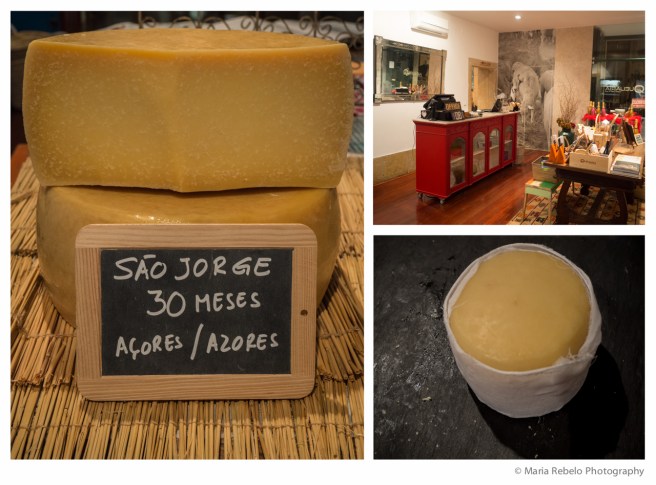
On our last visit Pedro Cardoso, one of the owners, invited us to taste two unique cheeses. The first was from São Jorge, an island in the Azores archipelago. It is made with the milk of happy cows that roam free on the island. São Jorge cheese is always delicious but this one was the best we ever had–sharp, peppery and full of flavor. “This cheese is aged for 30 months which makes all the difference. It is very hard to find because the production is tiny and almost all consumed locally,” said Pedro.

The second cheese was from Serra da Estrela. It melted in our mouths leaving an amazing buttery after taste. It is made with milk from “bordalesa” sheep. This breed is being replaced with sheep whose milk is less flavorful but more abundant. “Eating this cheese is an act of defiance. It is saying that we don’t want this wonderful taste to disappear; that quality trumps quantity.”

Pedro speaks with revolutionary zeal. He wants to preserve and enrich Portugal’s wonderful cheese heritage. Will you support his cause?

Queijaria is in the Principe Real neighborhood at Rua do Monte Olivete, 40, tel. 21 346 0474. Click here for their web site.


Bussaco’s mystical wines

Buçaco Branco

Karl Baedeker, the famous guidebook writer, recommended a visit to Bussaco in his “Spain and Portugal, a Handbook for Travelers,” published in 1908. Here’s what he wrote:

“The royal domain of Bussaco vies with Sintra in natural beauty. In variety of trees and shrubs, the woods are without a rival in Europe and the views ranging from the Atlantic to the Estrela mountain are as picturesque as they are extensive. […] The woods […] include not only trees indigenous to Portugal but also a large number of exotic varieties, some brought home by the Portuguese navigators as early as the 16th century.”

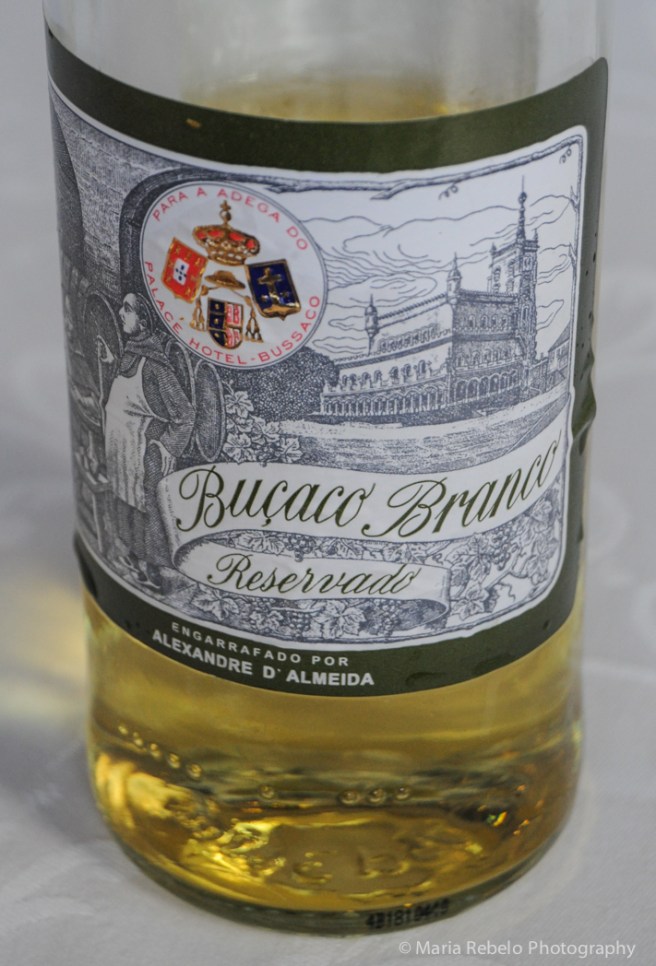
Baedeker arrived too early to appreciate one of the great pleasures of Bussaco, which is the wine produced by the Bussaco Palace Hotel. The first bottles date back to 1917.

The Palace Hotel owns no vineyards, it buys its grapes from the Bairrada and Dão region. The quality of the wine comes from the careful grape selection and the meticulous traditional methods used in production. Bussaco wines taste great when they are young and taste even better when they lived for some decades. Both whites and reds are famous for their longevity.

These wines are difficult to buy, the easiest way to try them is to stay at the magnificent Palace Hotel. The cellar of the palace stores thousands of bottles going back to the 1920s. Trying these old Bussacos can be a mystical experience. The cellar walls are used to hearing visitors say words like divine, blessed, and sacred. These words would have delighted Friar João Batista, the Carmelite monk who started making wine in Bussaco in the 17th century.

Click here, for the Bussaco Palace web site.

Portuguese pop art

RBD_Pastéis de nata edit
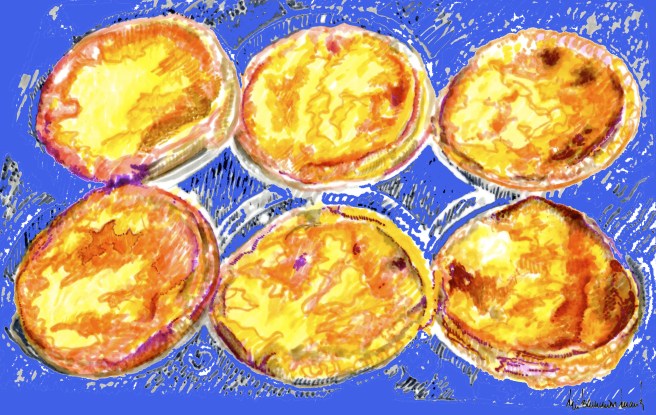
Pasteis de nata, Rui Barreiros Duarte, ink on paper, 2014.

Andy Warhol captured the essence of American culture using simple images: the appeal of convenience with cans of soup, the allure of fame with portraits of Marilyn Monroe, the love of brands with bottles of Coca Cola.

We wonder how Warhol would have captured the essence of Portugal. A good candidate image is the pastel de nata. It is sweet, with an exotic touch lent by vanilla and cinnamon. The crust gives it substance and the combination is unforgettable.

A school lunch

OLYMPUS DIGITAL CAMERA

In 1940, the Portuguese government announced its “centennial plan,” a program to build a large number of primary schools. The schools in the north of the country, designed by Rogério de Azevedo, look austere with their granite and schist exteriors. The schools in the south, designed by Raul Lino, have graceful arches and whitewashed walls. Both designs used elements of the vernacular architecture and became integral parts of the Portuguese landscape.

With the number of children in decline, some of these schools have been closing. The school in the village of Cachopos near Comporta in Alentejo closed in the late 1990s but found new life as a restaurant appropriately called A Escola (the school).

The building is located in a beautiful woodland. Our arrival was greeted by the chirping of birds and perfumed by the scent of eucalyptus.

As we sat at the table remembering learning the three Rs, a plate of marinated rabbit and a carrot salad arrived. The menu has lots of great offerings, including cuttlefish rice with shrimp, fried eels, pasta with sea bass, stewed partridge, and rabbit pie with pine nut rice. The portions are generous and the food is delicious. A Escola is a great place to enjoy the simple, hearty cuisine of Alentejo.

On the school wall there’s an old map of the Portuguese empire. Those vast possessions of land and sea are long gone. But the empire of the senses–Portugal’s wonderful culinary tradition–continues to thrive.

A Escola is located at Estrada Nacional 253, Cachopos, Alcácer do Sal, tel. 265 612 816.


The great Vasco

OLYMPUS DIGITAL CAMERA

Vasco Fernandes worked as a painter in Viseu during the first half of the 16th century. His prodigious talent earned him the nickname Grão Vasco, the great Vasco. According to legend, he once painted a fly that looked so real that his apprentices tried to shoo it away.

It is easy to believe this story when you’re standing in front of his masterpiece, a painting called Saint Peter that is the crown jewel of Viseu’s Grão Vasco Museum. The intricate architectural elements and background scenes are influenced by the work of Italian, German and Flemish painters. But the pope’s rugged face and gentle look are Portuguese.

Who was the model for the painting?  We like to think that it was a shepherd from the Estrela mountain. That the great painter trusted the keys of heaven to someone who on earth lived a simple life.

The Grão Vasco museum is located at Adro Sé in Viseu, tel 232 422 049.


Liquid inspiration

Ginginha

“Com elas ou sem elas?” with or without, asked the waiter as we got to the front of the line at “A Ginjinha,” a small bar in Lisbon’s Largo of São Domingos. “With” we answered. He nodded with approval, picking up a bottle with a cherry infusion to pour the liquid into a small glass, deftly lifting a wood stopper to let a single cherry go by.

The bar’s specialty is a delicious liqueur called “ginjinha” made of sour cherries. It is produced in the nearby village of Arruda dos Vinhos and bottled under the brand Espinheira. The name is a tribute to Francisco Espinheira, the monk who, according to legend, had the brilliant idea of macerating sour cherries (ginjas) in brandy, sugar, and cinnamon.

A Galician entrepreneur opened the bar in 1840 to serve ginjinha to the public. Five generations later, the bar still belongs to his family.

Fernando Pessoa, the great poet, was a regular customer at A Ginjinha.  What a privilege it is to drink from the same source of inspiration!

A Ginjinha is located on Largo de São Domingos, 8, Lisbon.


A comet called Noélia

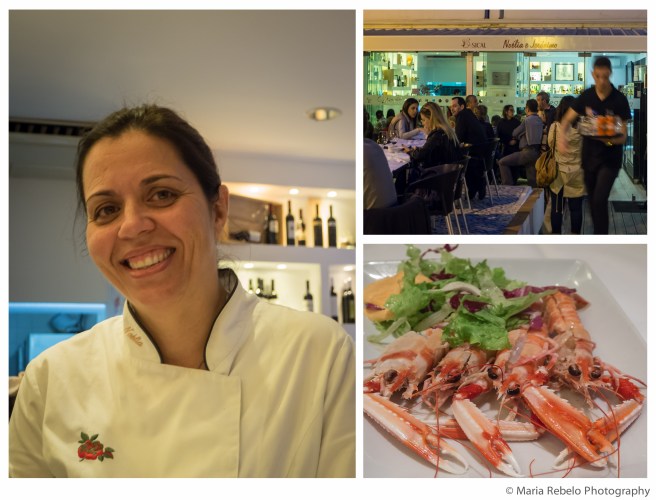
Noélia composit

“One good thing about Winter is that it is easier to dine at Noélia” our Algarve friends told us. “In the Summer it is impossible to get in.” Curious, we made reservations a week in advance.

As soon as we sat down in this seaside restaurant in the village of Cabanas, we knew we were in for something special. There was a festive atmosphere and the aromas of the sea filled the air.

The restaurant is noisy but our waiter was a mind reader who guessed what we wanted without the need for much verbal communication. And so a perfectly chilled bottle of sparkling wine arrived, followed by a plate of steamed langoustines. “They were caught this morning” the waiter told us. “I know you’ll like them.” We were so impressed by the crustaceans’ exquisite taste that we vowed never to eat frozen seafood again.

Our main dish was rice with lemon, corvina, and conquilhas, small cockles that only exist in the Algarve. We appreciated in silence the sublime combination of flavors. A Dom Rodrigo, a sweet combination of fios de ovos (egg threads) and almonds, rounded the meal.

Noélia, the chef, seemed to be everywhere: cooking, talking to regulars, giving instructions to the staff, making final adjustments to the plates before they were brought out. She is a culinary comet that brightens everything she touches.

Suddenly, she arrived at our table and asked: “did you like the food?” “We loved it,” we replied. “But we’re sorry we’re too full to try other dishes.” “Next time order oyster risotto and favas with cuttle fish,” she said. “I get up at 6:00 am to make sure I buy the best oysters in Algarve.” And she was gone as quickly as she had arrived.

Outside, the moon was painting the sea with its silver light. But no one in the restaurant paid any attention. The moon cannot compete with a comet called Noélia.

The Restaurante Noélia & Jerónimo is located in the village of Cabanas near Tavira, Algarve at Rua da Fortaleza, Edifício Cabanas-Mar, Loja 6, tel, 281370649. Reservations are a must.


A fruitful exchange

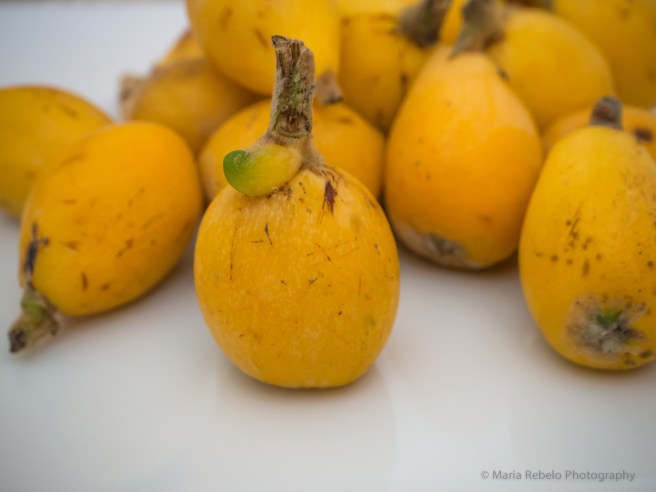
OLYMPUS DIGITAL CAMERA

According to legend, when Portuguese navigators reached China in the 16th century, they offered Chinese dignitaries a rose bush. The Chinese felt that this gift was an insult–the bush was full of thorns and had no flowers. To signal their displeasure, they offered the Portuguese a tree whose fruit was tart and hard to digest.

The Chinese planted the bush and when the first roses bloomed they marveled at their beauty and perfume.

The Portuguese planted the tree and loved its fruit because the sunny weather had made it deliciously sweet. They called it “nêspera” (loquat).  It is the first fruit to ripen in the Spring. If you’re in Portugal during this season, don’t miss the chance to try it!

Perfect moments in Alentejo

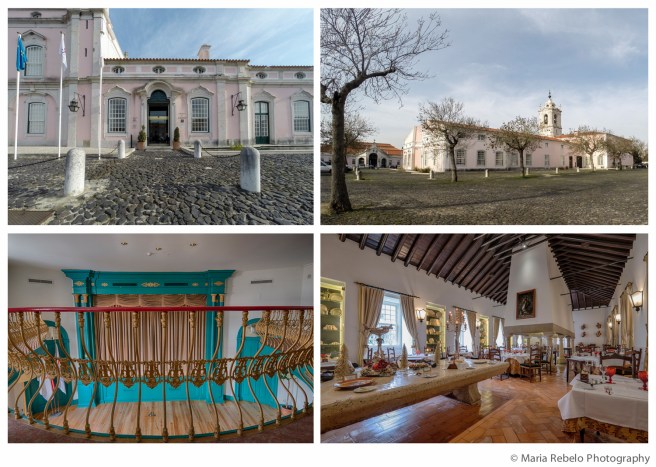
Monte Barrão Composit

Many tourists drive from Lisbon to Algarve without stopping in Alentejo. If the beautiful landscapes you see from the highway tempt you to make a detour, you’ll be richly rewarded. Alentejo is a place where days are blessed by warm light and nights bejeweled by precious stars.

The best way to discover Alentejo is to stay at a local farm. Being surrounded by nature helps us put aside schedules and to-do lists to go where our senses take us: follow the scent of lavender, the sight of a stork in flight, the shade of an olive tree, or the chant of a local brook.

If you don’t have friends who own a farm in Alentejo, we can introduce you to Helena and João Borges. They receive guests in their beautiful farm near Alter do Chão through a program called Perfect Moments. You can take horseback ridding lessons, taste wines with their enologist, try the farm’s magical olive oil, eat wonderful meals cooked with local produce, and stroll through pristine fields painted with colors that no artist can rival.

Our friends Helena and João are wonderful hosts who are passionate about the land that has been in their family for centuries. If you visit them, you’ll have a great time and we bet you’ll become their friends.

Click here for the Perfect Moments web site.