Taberna da Rua das Flores

Taberna da rua das flores

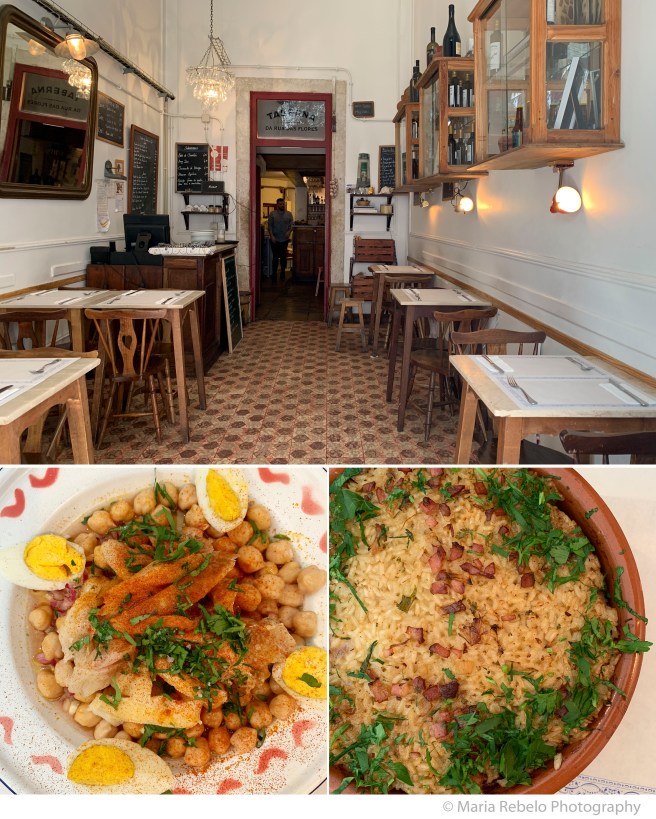
The name of this restaurant on Rua das Flores (flower street) combines the Portuguese word for tavern with the title of a famous novel: Tragedy on Rua das Flores, by the great 19th-century writer Eça de Queiroz.

The Taberna serves traditional home cooking. If you’re adventurous, try the excellent “iscas” (marinated liver).  Otherwise, you’ll find many other great choices, such as carrot and coriander soup, pork with sweet potato and zucchini, duck rice, and codfish with chickpeas. The quirky antique furniture helps create an unpretentious atmosphere. Prices are modest, so every meal has an happy ending.

Eça de Queiroz complained, through the words of one of his characters, that Lisbon lacked a fun place to eat supper after the Opera. One century later, this place exists. It is called Taberna da Rua das Flores.

The Taberna is located on Rua das Flores 103, tel. 351 21 347 9418, email: tabernadasflores@gmail.com. 

Olive oil tastings

Azeite Gallo

Olive oil bottles make great gifts. We recently tasted two interesting, delicious, affordable olive oils. The first is Gallo Azeite Novo. It is made from olives that are still green, giving the oil a spicy, fresh taste. The second is Gallo’s Moonlight Harvest. It is made from olives harvested at night and pressed while they are still cold. It has a smooth, fruity taste.

The quality of olive oil can vary greatly from crop to crop, depending on rainfall and temperature throughout the year. That is why, to ensure consistency of quality and taste, Gallo blends olive oil from different regions.

Each year, Portuguese farmers wait nervously to taste the new olive oil in a ritual called “tiborna.” They dip warm country bread into the oil and, to bring out the flavors, season it with a pinch of salt or a pinch of sugar and cinnamon.

You can invite some friends and enact the same ritual at home. Which olive oil do they prefer? The freshness of young oil or the smoothness of midnight oil? You can peer into their souls by observing their choices.


It is generally a good idea to buy the olive oil at the airport’s free shop and take the bottles inside the airplane as a carry on.

Divine sweets from Aveiro

Doce d_ovos Pastelaria Versailles

Aveiro is a picturesque town in the center of Portugal, known for its canals on the delta of the Vouga river. In ancient times, Aveiro lived from the production of salt and the gathering of seaweed that was used to fertilize the land.

Aveiro’s claim to fame is its “ovos moles” (soft eggs). To make this dessert, pastry chefs separate the yolks from the whites. The yolks are combined with sugar to make the filling. The whites are used to make the same wafers that, once blessed, are served in holly communion. The filling is placed inside two wafers, which are then molded into various shapes. And that is how the profane yolk reunites with the sacred white to make divine “ovos moles.”

Loving Ericeira

Ericeira Summer 2013

Beaches are like people, they have different personalities. Portugal has 1,115 miles of coastline, but no two beaches are alike. Some are popular, always crowded with sun worshipers. Others are shy and choose their friends carefully. One of these shy beaches is Ericeira, 40 miles north of Lisbon.

Everybody loves Ericeira when the sun is shining and the sea is balmy. But Ericeira tests its visitors to make sure they deserve its beauty. So, there are cooler days to discourage those who complain that Winter spends the Summer at Ericeira. And foggy days to see who appreciates the joy of walking on a misty beach. Sometimes the sea is rough to see who is in awe of the ocean roar. Other times, the wind blows to see who feels invigorated by the ocean smell.

If you fail these tests, Ericeira is not for you. If you pass them, you understand the true beauty of Ericeira and you’ll never trade it for any other beach.

Time travel

A vida Portuguesa

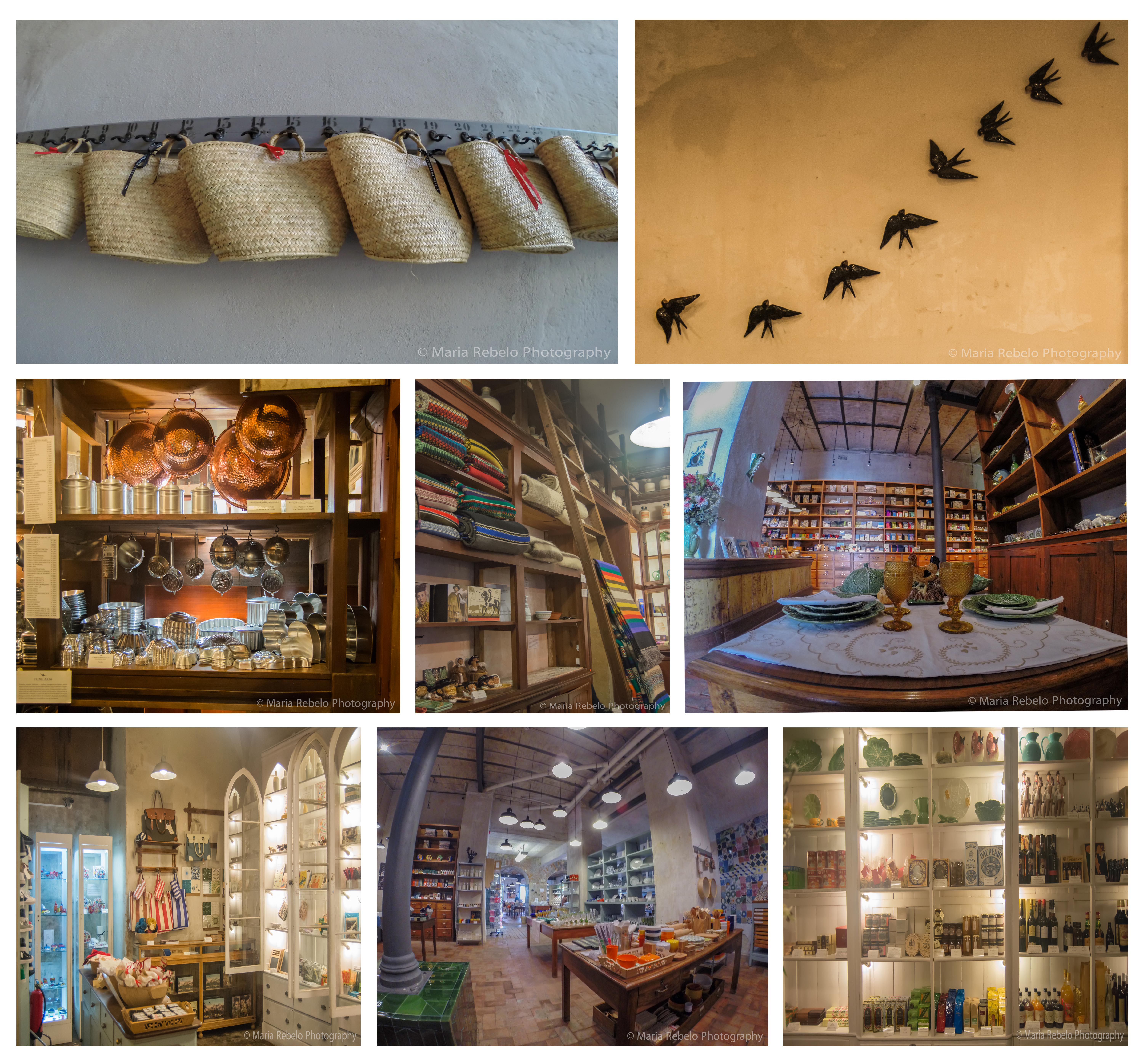
Physicists think that traveling to the past is impossible, but Catarina Portas, a Portuguese entrepreneur, proved them wrong. Through painstaking work, she brought back to life many Portuguese products and brands that had disappeared: beautiful baskets, blankets, ceramics, glassware, pottery, toys, and much more. In her wonderful stores we can be archeologists without dealing with dust and visit the past without giving up our smartphone.

Catarina Porta’s stores are called A Vida Portuguesa (the Portuguese life). There are two in Lisbon, one in Chiado (Rua Anchieta, 11, tel.  213-465-073) and the other in Intendente (Largo do Intendente Pina Manique, 23, tel.  211-974-512). There is also one store in Oporto (Rua Galeria de Paris, 20, tel. 222-0220105). Click here for A Vida Portuguesa’s web site. 

Bottled Summer

QuintaMontedOiro

Tasca do Joel, a great restaurant in Peniche, teamed up with a wonderful wine estate, Quinta do Monte d’Oiro, to make wine that celebrates the joys of the Portuguese Summer. They called it “surf wine” and the label reads:

“To those who didn’t go out last night and those who didn’t sleep, to the tourists and the locals, to the crazy ones who plunge ahead and the ones who hesitate, to the ones who like the right and the others who prefer the left, to lovers of the beach break or the reef break, to those who came out of the barrel wave and those who tasted sand, to all of these, and to the surf in Peniche we make a toast!”

We don’t know what magic went into the production of these wines. But it is impossible to drink them without longing to spend the summer in Portugal!

Click here for the Tasca do Joel web site and here for the Quinta de Monte d’Oiro web site.

The best “pastel de nata” in Lisbon?

DCIM100GOPRO

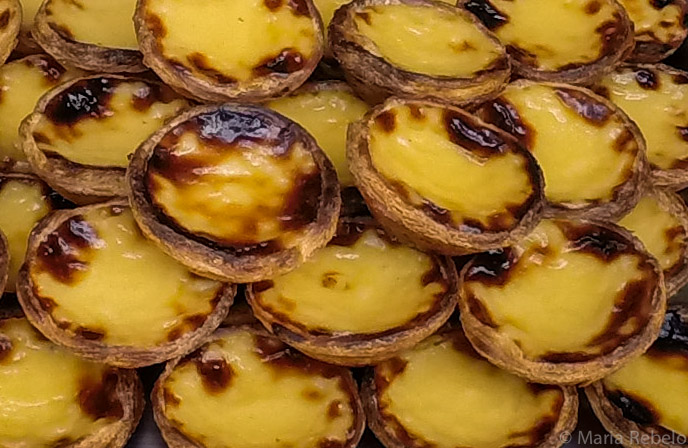
Pastelaria Aloma, a pastry store in the Campo d’Ourique neighborhood, became famous after winning the competition for the best “pastel de nata” in Lisbon in 2012 and 2013. With so many pastry stores and coffee shops vying for this honor, it is a remarkable achievement.

We set out to investigate, on behalf of our readers, whether Aloma’s pastries are indeed a cut above the rest. Our first two visits were in the afternoon and, by the time we arrived, they had run out of pastries! Why don’t they make more? Were they told by a business guru to use scarcity as a marketing tool?

Our third visit was in the morning. We were so eager to try these little pastries that we ate the first pastel very quickly. By the time we noticed the taste, all that was left was a happy hint of lemony sweetness.

We asked for a second specimen. This time we used a scientific approach, taking small bytes and writing detailed notes. Yes, the dough has the perfect crustiness, flakiness, and flavor. Yes, the sweetness of the filling is perfectly balanced by the taste of lemon and the sprinkle of cinnamon.

It was only when we ordered a third pastel that we realized that these pastries have a major flaw: it is hard to stop eating them!

Pastelaria Aloma is located on Rua Francisco Metrass, 67, Lisbon, tel. 21-396-3797.

A magical hotel

DCIM100GOPRO

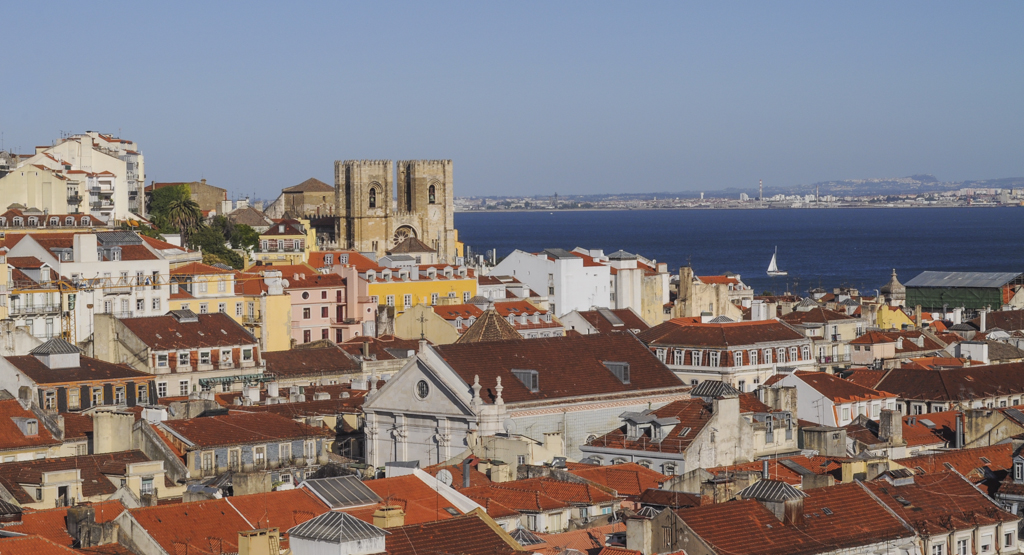
The new Memmo Alfama hotel in Lisbon is like Ali Baba’s cave. It is located off the beaten path, on a secluded alley in the ancient Alfama neighborhood. And from the simple exterior, it is impossible to guess what’s inside.

When the doors open, you find an elegant space, decorated with great attention to detail. But the real surprise is the spacious terrace with an astonishing view of Lisbon. The Tagus river, the pantheon, the roofs of Alfama, all these treasures are there for the taking.

Memmo Alfama is a magical hotel that will welcome you, even if you forget to say “open sesame.”

Memmo Alfama is at Travessa das Merceeiras, 27, Lisbon, tel 210 495 660, email alfama@memmohotels.com. Click here for the hotel’s web site.

What is Fado?

Lisboa_890Guitarra PortuguesaFado is a mystery, said the great singer Amália Rodrigues. This musical style emerged in Lisbon’s old neighborhoods in the 19th century. Its unique character comes from the Portuguese guitar, a twelve-string instrument with a haunting, melancholic sound. No one knows who invented it.

Female singers dress in black, as if they are in mourning. When their voices soar, they express ancient sorrows that don’t fit in the 12-tone scale of western music. So, they reach for the microtones of old Arab prayers. How do they remember these sounds?

Fado is Amália Rodrigues, a singer who could express the inexpressible. When she died, in the last year of the 20th century, fado seemed to die with her. But singers like Carminho and Mariza picked up where Amalia left of, singing with voices that have one thousand trills. Where did they learn them?

You can hear Amalia Rodrigues here. Click here and here for Carminho’s and Mariza’s web sites.