The best view in Lisbon

Lisboa_505F

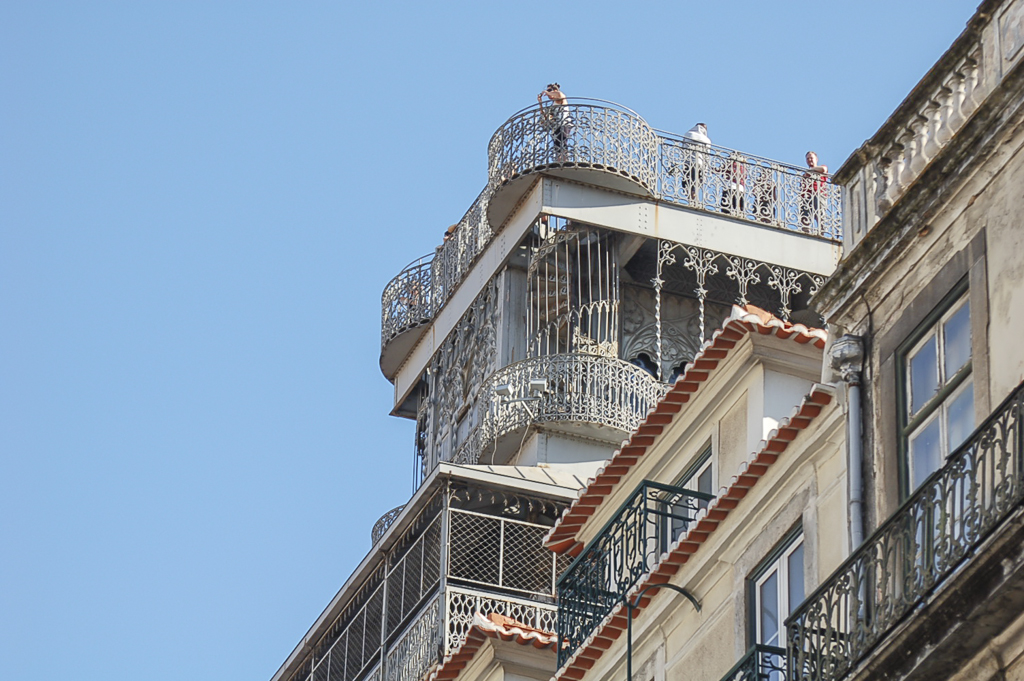
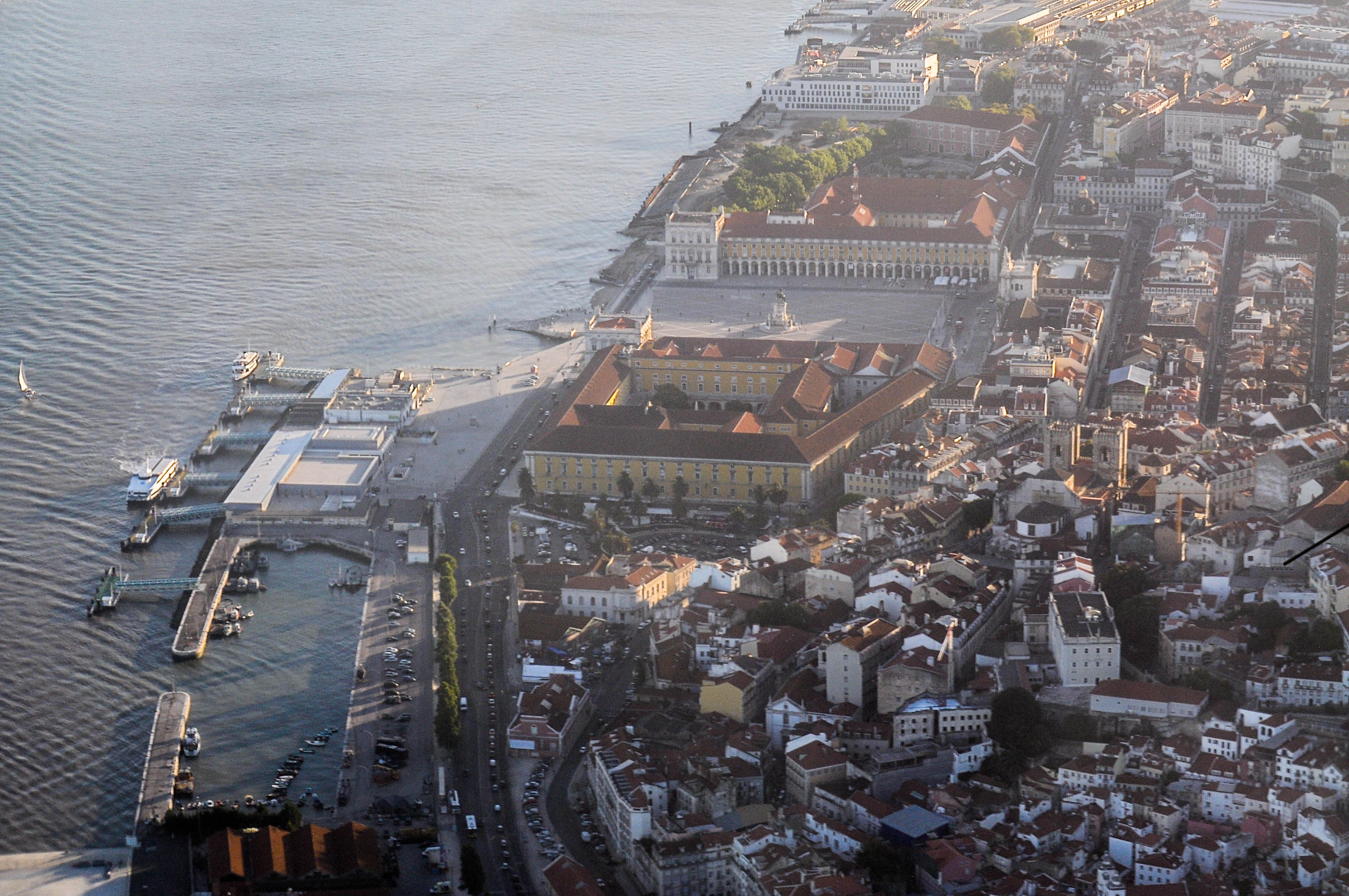
The Portuguese call locations with great views “miradoiros,” which means golden sights. Lisbon is blessed with many miradoiros, but none is as exciting as the top of the Santa Justa elevator. The elevator was built in the beginning of the 20th century by Raoul Mesnier du Ponsard, a Portuguese engineer of French origin. It is the kind of futuristic building that belongs in a Jules Vernes novel.

We remember entering the elevator for the first time and imagining the view during the slow ascent. When we reached the top, we realized how limited our imagination had been. We saw Lisbon in all its glory: the Tagus river, St. Jorge’s castle, Rossio, Terreiro do Paço. It was simply unforgettable!

Sweet indecisions

Every time we enter a Portuguese café, we have to decide between a large and a small “pastel de nata.” It’s not an easy choice.

Large pasteis have more filling than crust, so they leave a pronounced sweet lemony aftertaste. Eating them requires our full attention. Where do we start? Where should we place our next bite? How should we hold the pastry so we lose none of its precious filling? These pressing issues empty our mind of its usual chatter and we feel the inner peace of a yoga master.

Small pasteis de nata are crunchier. And you can do magic with them. Hold one in your hand and, when no one is looking, pop it into your mouth. Now you see it, now you don’t; all that’s left is an irrepressible smile.

So, what’s the right choice? Magic or inner peace? A crunchy bite or a lemony aftertaste? More research is required before we can render a final verdict.

An ancient esplanade

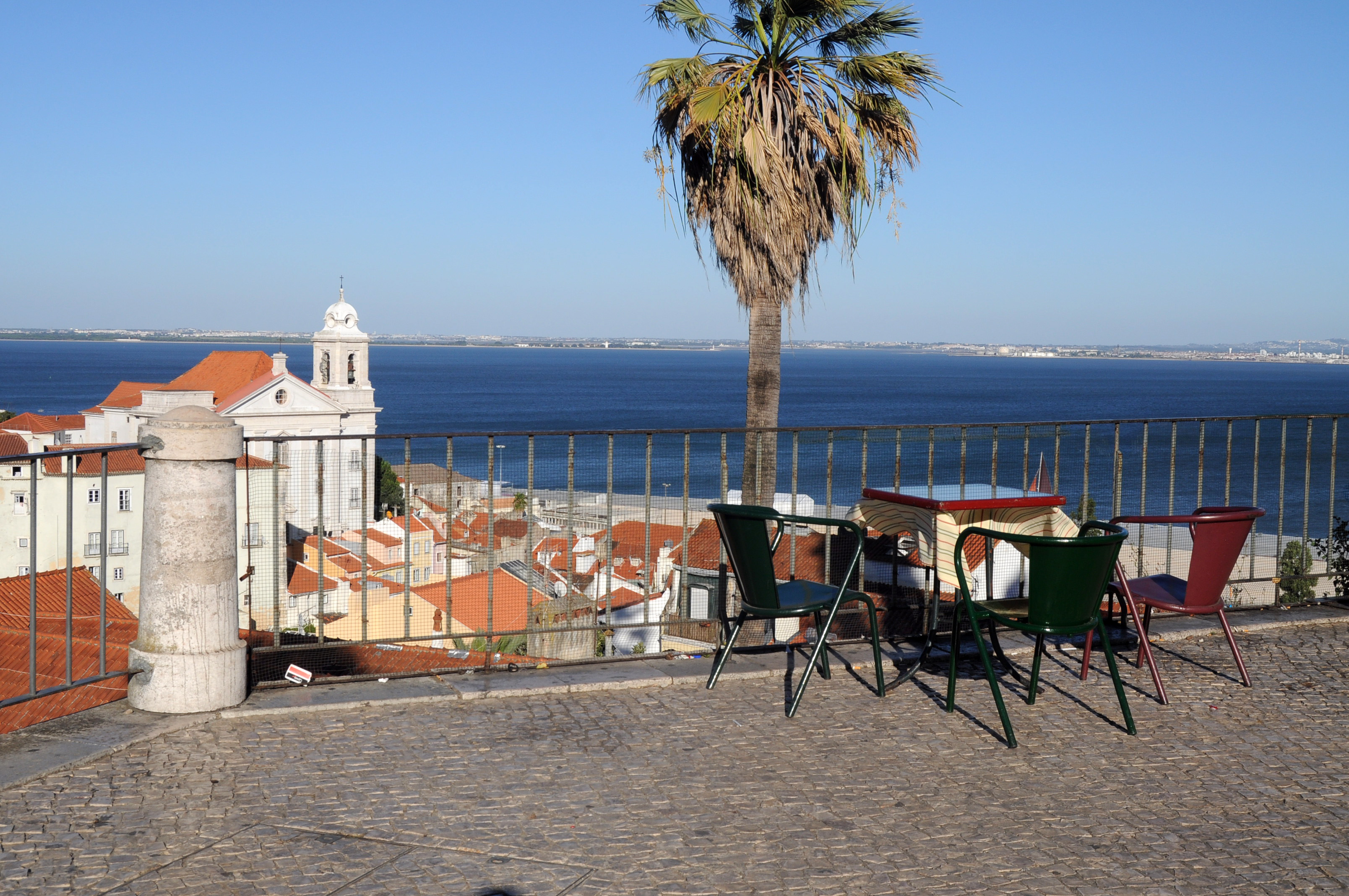
Being a tourist in Alfama, the neighborhood of St. Jorge’s castle in Lisbon, can be exhausting. After a few hours of walking up and down the narrow streets, we deserve to stop for a refreshment. There’s no better place to enjoy a cold, draft beer than the esplanade at Cerca Moura. That’s the name of the defensive wall first built by the Visigoths and then rebuilt by the Moors. Here you have the same same view of the river Tagus that was once enjoyed by Romans, Moors, Suevi, and Visigoths. But, unlike them, you don’t have to be on the lookout for hoards of invaders.

Cerca Moura, Largo das Portas do Sol 4, Lisbon, tel. 21-887-4859.

The poet’s choice

Camões

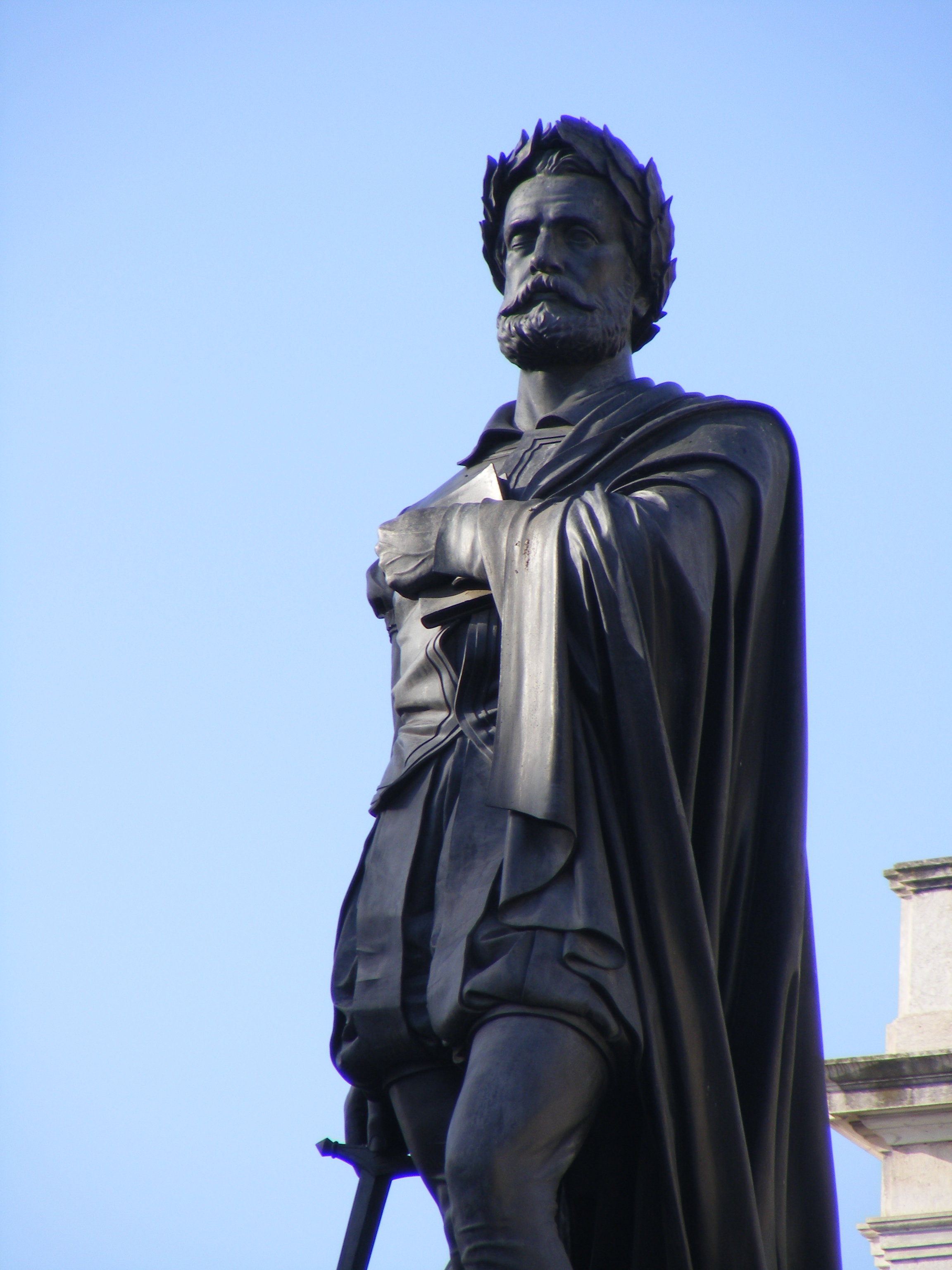
Artists often quip that they have to die before they can make a living. The great 16th century poet Luis de Camões died poor. Here’s how the influential Encyclopedia of Diderot & d’Alembert, published in Paris in 1765, describes his life:

“The famous Camões has done eternal honor to his homeland with his epic poem the Lusíadas. His life and misfortune are well known. Born in Lisbon in 1524 or thereabouts, he took up arms and lost an eye in combat against the Moors. He traveled to the Indies in 1553, offended the Viceroy, and was exiled. He left Goa and took refuge in a deserted corner of the world on the Chinese border. It was there that he composed his poem; the subject is the discovery of a new land of which he himself had been a witness. […]

It is said that he nearly lost this fruit of his genius while traveling to Macau. His ship went down during the crossing, but Camões, imitating Caesar, had the presence of mind to preserve his manuscript by holding it in one hand above the water while he swam with the other. Upon return to Lisbon in 1569, he spent ten unhappy years and finished his life in a hospital in 1579. Such was the fate of the Portuguese Virgil.”

Camões knew from classical Greek literature that there are two choices: to live an ordinary life and be forgotten, or struggle for greatness and have a chance of immortality. The mythical Achilles sacrificed his life at Troy, but his fame lives forever.

Camões gave his life to the Portuguese language. Every year, on June 10, we celebrate his immortality.

DOC & DOP

DOP

The rustic food of Portugal is made of elemental aromas and deeply satisfying flavors. It is a cuisine of humble people; fishermen, shepherds, and farmers, who liked food that nourishes the body. In contrast, the French culinary tradition pioneered by Marie-Antoine Carême is all refinement and beauty. It is a cuisine of kings and queens who loved to feast their eyes as much as feed their belly.

Rui Paula, a Portuguese chef, spent two decades marrying these two traditions. At DOP, his restaurant in Oporto, he serves country food cooked with palatial elegance. DOC, his restaurant in Amarante, offers a similar menu. Here, the dining experience is heightened by the serene beauty of the location, on the margins of the Douro river.

If you’re traveling in the north of Portugal, don’t miss the opportunity to try these restaurants. They’ll satisfy your body and soul.

Click here for Rui Paula’s website. DOP is located at Palácio das Artes, Largo de S. Domingos, 18, Porto, tel. 22 20 14 313, email dop@ruipaula.com. DOC is located at Estrada Nacional 222, Folgosa, Armamar, tel. 254 858 123, email doc@ruipaula.com.

Cork secrets

You can’t judge a book by its cover, but you can rate a wine by its cork. Low-quality wines use plastic corks or other cork substitutes that do not allow the wine to breathe. The next step up in the quality ladder are wines that use stoppers made of agglomerate cork. Better wines have solid corks, and the very best wines have beautiful waxed corks with the winery’s name carefully imprinted.  So, when a wine critic is not available, use the cork as your guide!

Driving in Portugal

Lisboa_206-EditF
Lisbon in the rear view mirror, Maria Rebelo, digital print file, 2012.

Portugal has one of the world’s best highway systems, so it is easy to drive around the country’s 36,000 square miles. But driving in the two largest cities, Lisbon and Oporto, is a different story.

Lisbon has wide avenues, built after the 1755 earthquake, as well as many new tunnels and overpasses. But, whenever the Lisbon soccer teams lose, drivers are irritated and drive in aggressive, erratic ways. Since the Oporto soccer team wins most of the championships, it’s a bad idea to drive in Lisbon. It is much better to use public transportation, the subway, buses, trams, and taxis.

In Oporto, drivers enjoy the serenity afforded by their soccer victories. But the medieval streets in the center of Oporto were designed for vehicles with only one horse power. Driving a car requires constant care and attention. Here too, the subway, trams, buses and taxis will take you reliably everywhere.

There’s another reason why city driving is a bad idea. Every moment focused on traffic lights and road lanes, can be better spent contemplating the aristocratic beauty of Lisbon and Oporto.

Waiting in Cascais

Cascais_75F

Some visitors like to stay in Lisbon to have the excitement of the capital city on their doorstep. Others prefer the seclusion of Sintra with its romantic palaces and lush vegetation.

If you’re visiting the Lisbon region, there is a third option: you can stay in Cascais, a picturesque beach resort, 30 km north of the capital. From Cascais you can take the train to Lisbon, following a scenic route along the Tagus river. You can also rent a car and visit Sintra, Colares, and Cabo da Roca.

The great writer Samuel Beckett vacationed in Cascais in the late 1960s and early 1970s. Beckett stayed at the Cidadela de Cascais, an old fort converted into a hotel favored by Portuguese writers. This hotel has recently been beautifully renovated to add modern comforts to its historical location and expansive ocean views.

Once Beckett got to Cidadela, he simply stayed there, enjoying the moments when the sea paints the sky with white mist. It’s not surprising that the author of a play about waiting in vain knew to stay still when beauty arrives.

The Cidadela de Cascais is located on Avenida Dom Carlos I, Cascais, tel. 214814300. This hotel is part of a network of historical hotels called Pousadas. Click here for our post on the Pousadas and here for the Pousadas web site.

Why the British don’t eat salted cod

CodfishCarpaccioF

Some British guidebooks tell their readers that eating salted cod is a strange Portuguese custom that they should avoid. There’s an historical reason for this point of view.  When Henry V married Catherine de Valois in 1420, England was in the midst of the One Hundred Years’ War. Perhaps for this reason, the royal couple had a frugal wedding feast. The 600 guests ate boiled salted cod served on slices of stale bread. The meal was so bad that the British have avoided salted cod ever since.

Portuguese restaurants offer many codfish preparations. If you’re a salted cod neophyte, we suggest that you start with something simple: codfish carpaccio. The codfish is sliced razor thin and combined with an infusion of garlic and olive oil.

You can taste a great version of this preparation at Mãe d’Água, a wonderful restaurant in Bombarral near Lisbon. Imagine how different British cuisine would be if Mãe d’Água had catered Henry V’s wedding.

Mãe d’Água is in Sobral do Parelhão, Bombarral, Rua 13 de Maio 26, 2540-467 Carvalhal, tel.262 605 408, email geral@restaurantemaedagua.com. Click here for their website and here for our post on the restaurant.

The cure for the vacation blues

PerdiçãodeMaria

Much of a vacation’s pleasure comes from anticipation. The joy of saying: my holiday in Portugal starts next week! The vacation begins and you relax, enjoying the food and scenery. Then, someone up there presses the remote control and puts time on fast forward. Soon, you’re counting how many days are left, feeling the vacation blues.

Luckily, a cure for this malaise is right at hand: simply go shopping for some great souvenirs! No, we’re not talking about useless knick knacks. Buy items you can wear, like the T-shirts produced by the brand Perdição de Maria (Maria’s perdition). They feature local motifs: sardines, lamp posts, trams, Portuguese guitars, etc. You can’t buy these clothes anywhere else, they’re a piece of vacation you can take home. Because every time you wear them they’ll remind you of the fun you had in Portugal.

You can buy Perdição de Maria’s clothes in many stores in Lisbon. One convenient shop is Portfolio at the airport.