Tea and scones at the Vicentinas

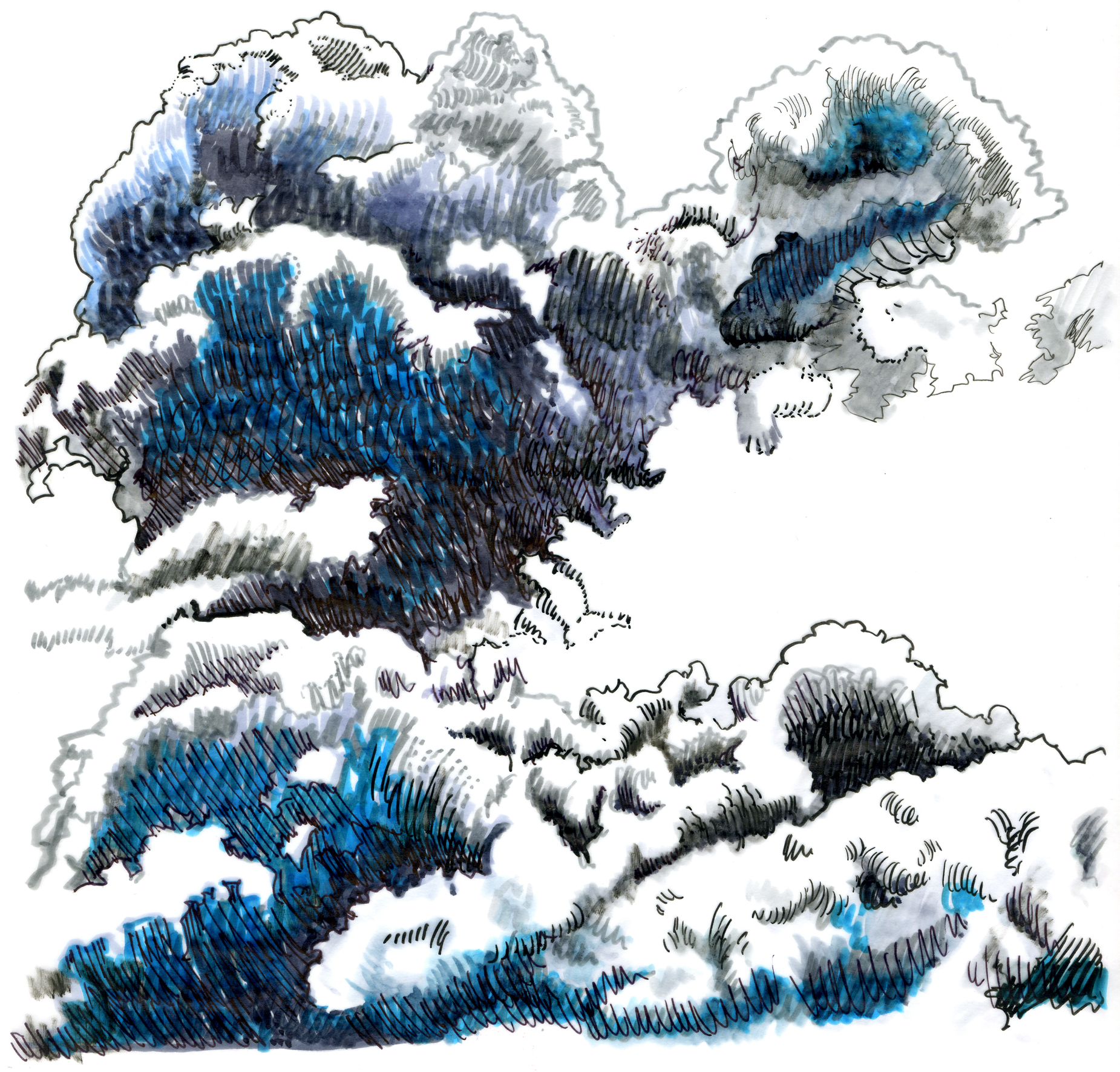
Nuvens, Rui Barreiros Duarte, ink on paper, 2011.

Clouds also deserve a break and, on their day off, they occasionally travel to Lisbon. Mostly, it’s the cirrus and stratus, the pretty, socialite clouds that come looking for a good time. But, sometimes, they let the nimbus clouds tag along and then it rains.

These rainy days are a blessing to the ancient trees scattered throughout the city, fruits of the seeds that Portuguese sailors brought from all over the world. For the tourist, a rainy day is an opportunity to try some of the best tea and scones in Lisbon. These have been served for more than 30 years at the Vicentinas, a tea shop in Rua de São Bento. The proceeds go to charity, which makes these wonderful scones taste even better.

As Vicentinas, Rua de São Bento, 700
, Lisboa

, Tel: 213 887040.

A Winter day in Portugal

If you were here today, you could spend the morning on the beach, collecting shells, wondering why no one told the sun that it’s not Summer. You could have a simple lunch of roasted chicken with piri-piri sauce, visit a romantic palace, and sit on a cliff, watching the sun bathe in the ocean. You could dine on grilled fish, drink a great local wine, and go out into the warm night to gaze at the stars. And, when the day is done, you would know the meaning of the word felicidade.

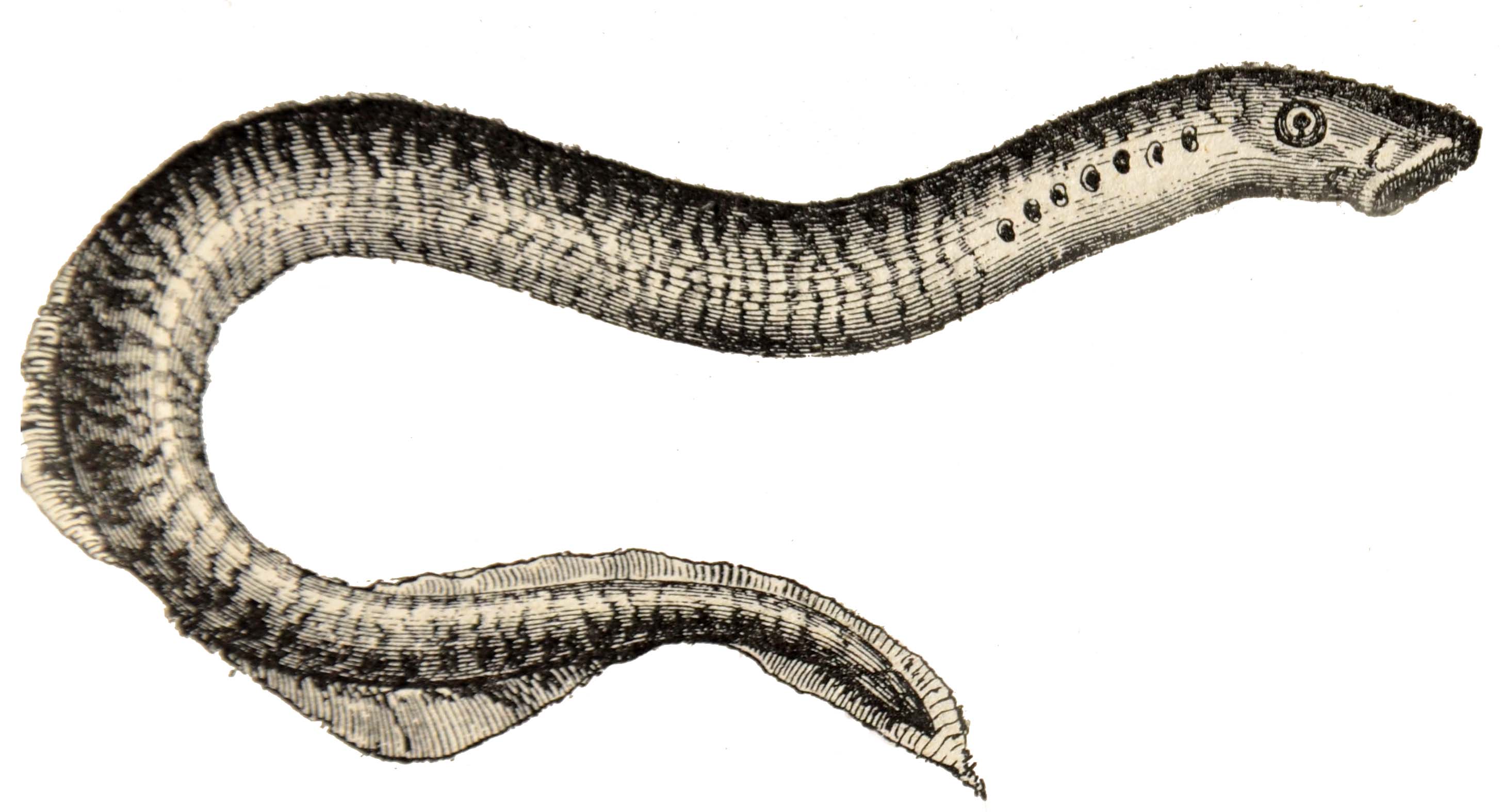
Lamprey is in season!

Lampreia (lamprey) is a very strange fish that, somehow, gained favor with emperors and kings. The Romans included it in banquets prepared for Julius Caesar. The oldest known Portuguese cookbook, a 16th century collection of recipes attributed to Infanta D. Maria, has a single fish recipe that describes how to prepare and cook lamprey.

You don’t have to conquer Gaul or marry royalty to eat lamprey. Many Portuguese restaurants offer this delicacy between January and April. It is usually served stewed, accompanied with rice. You find excellent lamprey at Solar dos Presuntos, a traditional Lisbon restaurant where you can dine like a king.

Restaurante Solar dos Presuntos, Rua das Portas de Stº Antão, 150, Lisbon. Tel. 21 342 42 53, GPS coordinates: 38º43’07″N and 9º08’51″O. Click here for their website. 

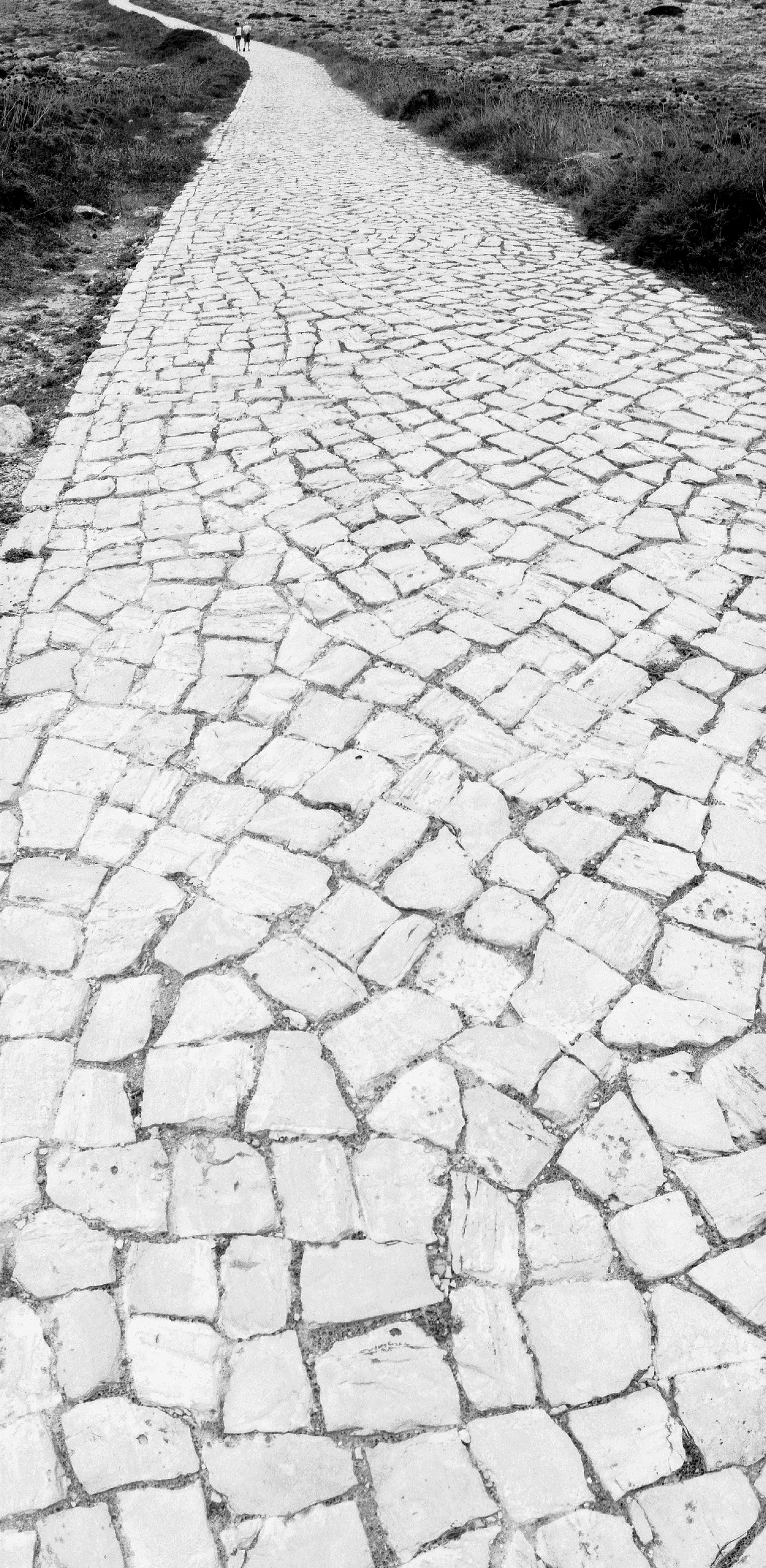
Portuguese cobblestones

Calçada Portuguesa (Portuguese cobblestone) is a mosaic pavement built with cubes made of limestone and basalt.  Each stone is carefully cut and laid by hand by a master “calceteiro.” It takes months, sometimes years to build these majestic pavements. So, if you visit Portugal, by all means, look up to see the cerulean blue sky, the castles on hilltops, the seagulls gliding on the wind. But do not miss the beauty beneath your feet.

Beneath your feet, Maria Rebelo, gelatin silver print, 2003.

Luís Pato


According to an old saying, you need three men to drink a bottle of Bairrada wine, one to do the drinking, and the other two to help him stand up.

Bairrada wines do not actually have a high alcoholic content. But they do have a strong taste imparted by a local varietal, the baga. There was a time when Bairada producers started replacing the baga with French varietals to appeal to the international wine market.

This trend would probably have continued if it weren’t for Luís Pato. This maverick wine maker was determined to make exceptional baga wines. Success was not easy. He had to defy tradition and find new methods to produce and age his wines. But his results are magnificent. Which is why star chefs, like the brilliant Jean-Georges Vongerichten, include Pato’s wines on their wine lists.

You need three people to drink a bottle of Luís Pato: a couple to enjoy the wine with their meal and a chef to cook a meal as great as the wine.

Nullum est sine nomine saxum

That’s what the Roman poet Marcus Lucanus wrote about Troy. It means “no stone is without a name.”

Portugal has beautiful scenery, wonderful food, perfect weather. But what makes this country truly unique is its history. Africans, Celts, Jews, Moors, Phoenicians, Romans, Suevi, Visigoths, they all shared this corner of the world. They all left their marks on the Portuguese landscape. Monuments to their triumphs, ruins from their defeats are everywhere. No stone is without a name.

Coimbra

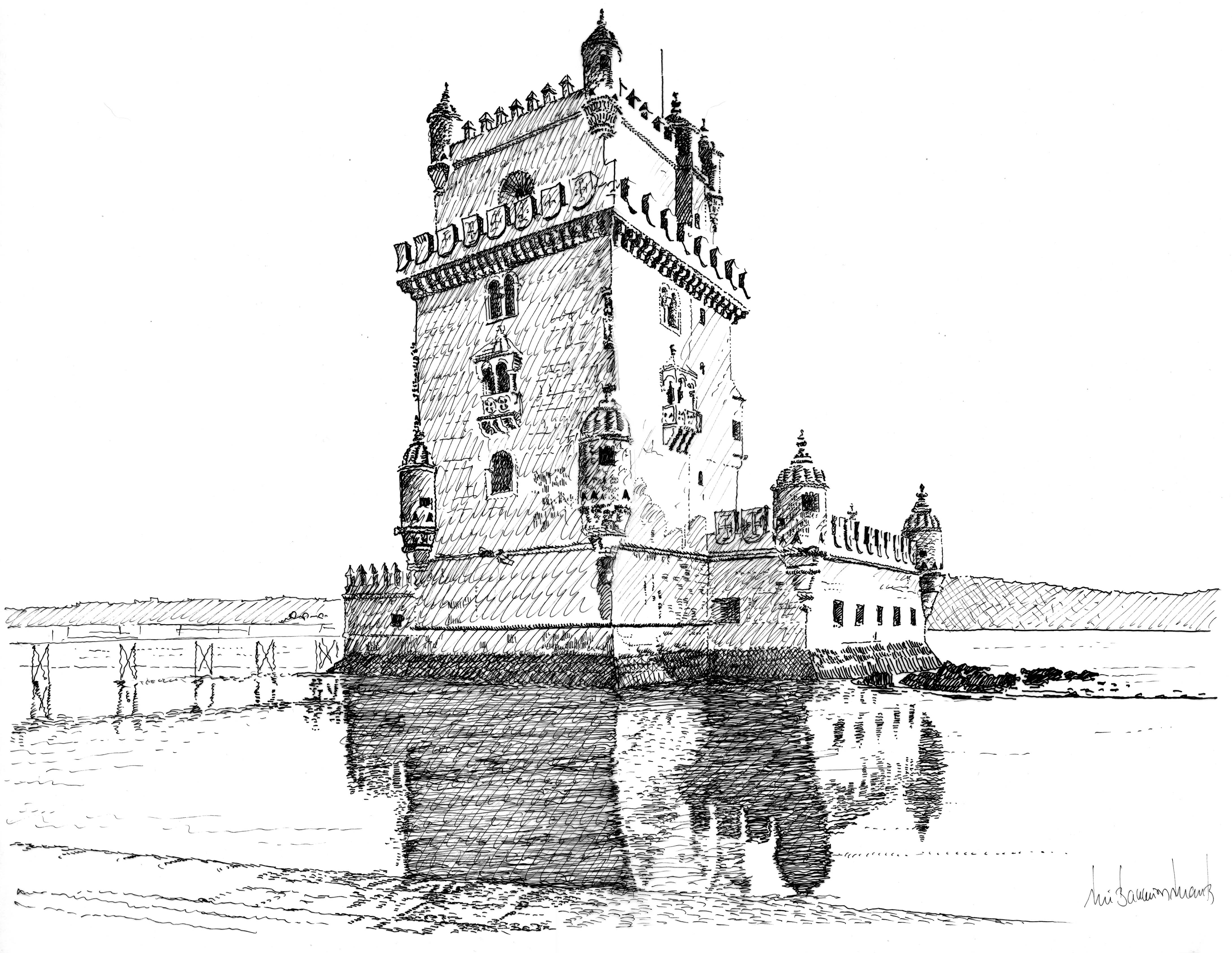
Coimbra, Rui Barreiros Duarte, ink on paper, 2011.

Coimbra is famous for its university, one of the oldest in the world. It is a beautiful city that seduces its visitors slowly, with its winding streets, ancient buildings, and academic traditions. According to an old folk song “Coimbra is most alluring when you try to say goodbye.” Hans Christian Andersen, the author of “The Little Mermaid” and other popular fairytales, visited Coimbra in 1866 and fell under its spell. Here’s what he wrote:

“We drove along the Mondego river whose broad bed displayed more dry sand than running water. Yet, what freshness and forest charm all around! The city rose as the loveliest flower in the whole bouquet. Coimbra rests upon the mountain side, one street higher than another. The streets are narrow, crooked, and rise continually. Shops and bookstores are here in abundance.

From the cloister of Santa Cruz the streets ascend towards the university, an extensive building that occupies the highest site in the city. Up there, through the dilapidated walls of the fortress, one enters the botanical garden, which is rich in rare flowers and trees.

I met some students all in their medieval garb: one went by himself, reading; three others passed in lively conversation with the guitar strung over the shoulder; their wild pranks in these surroundings put me in a cheerful mood; it was as if I lived back in an earlier century.”

Sea mornings

Many visitors arrive in Portugal with their body clocks disoriented by jet lag. They lie awake in the early hours of the morning, stranded between dream and reality.

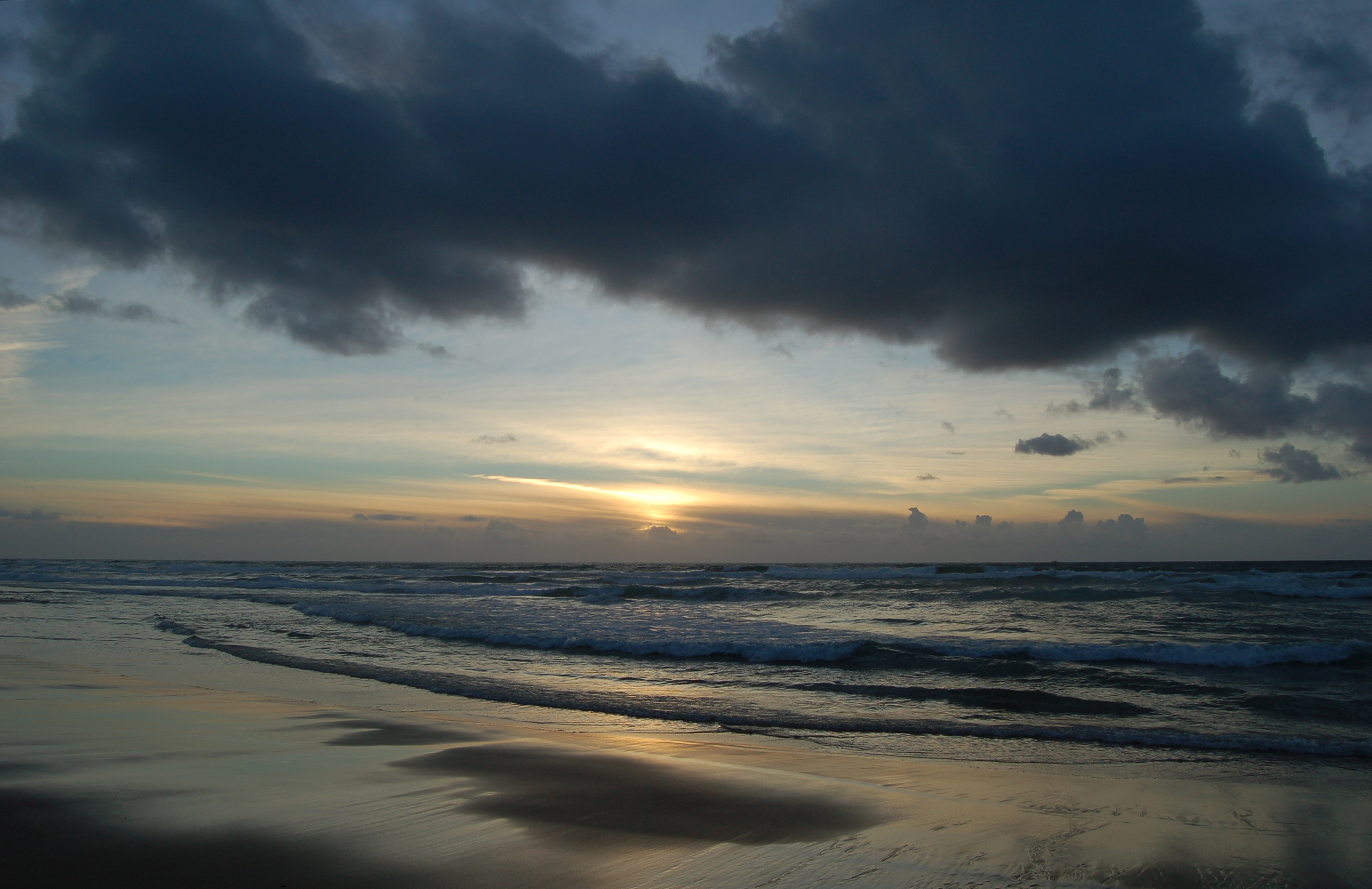
If you’re close to the ocean, this is your chance. Go to the beach and walk on the immaculate sand. Watch the sea put aside its black nightgown and try on different shades of blue. These simple moments can be extraordinary. Here’s how the writer Raul Brandão describes them in his 1923 book, The Fishermen:

“There are mornings when the dust of the sea mixes with the blue dust of the sky. A fresh, moist breeze, vibrant and salty comes from afar, from the deep, from an endless groundswell that makes us feel that life has no limits.”

The world’s best chocolate cake

Who created the world’s best chocolate cake?  Gaston Lenôtre? Pierre Hermé? Jacques Torres? Guess again. The cake is made with French chocolate, but the chef’s name is Portuguese: Carlos Braz Lopes.

His cake has three chocolate meringue disks layered with chocolate mousse and topped with a chocolate ganache. He started selling it in a tiny store in an obscure corner of Lisbon’s Campo d’Ourique neighborhood. But the cake is so good that word of mouth attracted chocolate lovers from all over the world.

The French gourmet Brillat-Savarin wrote that discovering a new recipe brings more happiness than discovering a new star. There is no better way to savor the truth in this aphorism than to taste a slice of Carlos Braz Lopes’ wondrous cake.

O Melhor Bolo de Chocolate do Mundo by Carlos Braz Lopes, Rua Coelho da Rocha 99, Campo de Ourique, Lisboa, tel. 21 396 53 72, email: geral@omelhorbolodechocolatedomundobycbl.com. 

Cataplana

A cataplana is a copper pan made of two clam shells that can be sealed with a clamp. The origins of this cooking contraption are lost in time. In the early 20th century Portuguese hunters carried cataplanas loaded with onions and tomatoes, so they could cook game on a wood fire. Later, in the 1960s, the cataplana became a popular way to cook fish and shellfish in the Algarve. Since then, it has become a hallmark of Portuguese cooking.

There is something magical about the moment when the waiter brings a cataplana to the table. And it is not hard to imagine that, as he opens the pan, he murmurs the same secret incantation used in the banquets of the Arabian Nights to make the meal unforgettable.

You can buy a cataplana at Loja Pollux Hotelaria, Rua da Madalena, 263, Lisboa, tel. 218-811-291, email: hotelaria@pollux.pt or at A Vida Portuguesa, Rua Anchieta 11 in Chiado, Lisboa, tel. 213 465 073.