Barca Velha

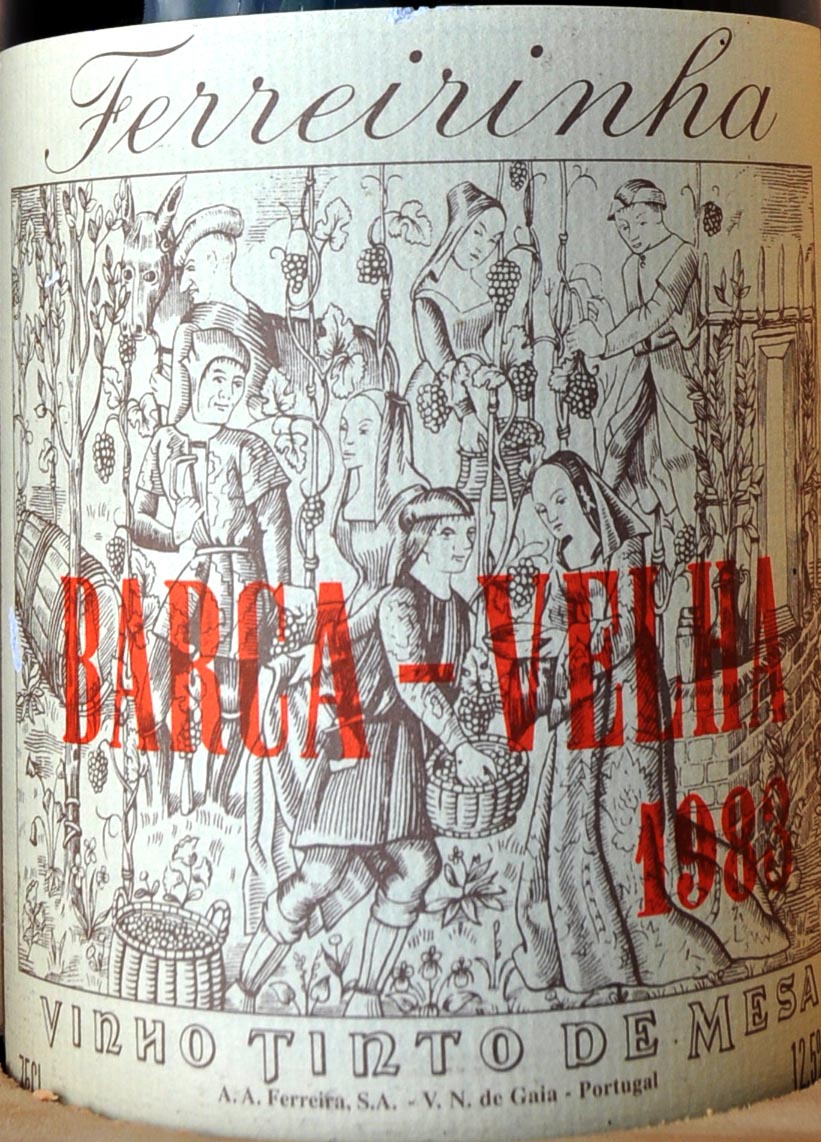
Barca Velha is a mythical wine, the first Portuguese table wine to acquire an international reputation. Fernando Nicolau de Almeida, Casa Ferreirinha’s enologist, adapted the techniques used to produce vintage ports to make superlative table wine. After years of experimentation, he produced the first Barca Velha in 1952 with grapes from a vineyard planted by Dona Antónia Ferreira.

Since then, Barca Velha has been produced only 12 times, when the sun and the clouds joined forces to create exceptional grapes.

How did Nicolau de Almeida decide whether a vintage merited the Barca Velha name?  He relied on his wife. He took an unlabeled bottle home to share with her at dinner. If they finished the bottle by the end of the meal, the vintage was a Barca Velha.

Two Port wine stories

The first story is about the death of Dona Antónia Ferreira’s grandfather. He had a chance encounter with Napoleon’s troops and, eager to show off, addressed the soldiers in impeccable French. The soldiers assumed that he was a deserter from the French army and shot him.

The second story is about Admiral Horatio Nelson. Nelson drank port while he devised his strategy for the battle of Trafalgar. According to legend, he dipped his finger in port wine to draw a map of the fleet positions he later used.

Some might infer from these stories that in times of danger it is a good idea to drink port and a bad idea to speak French. But the lessons from history are always subjective.

Ferreirinha

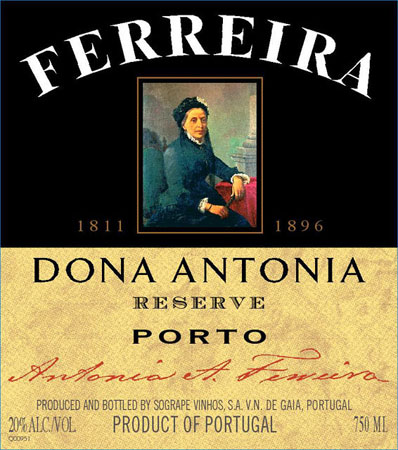
Dona Antónia Ferreira lived in turbulent times. She was born in 1811, the year in which Napoleon’s troops finally retreated from Portugal. When she inherited her grandfather’s wine business, another enemy came: the phylloxera epidemic.

Dona Antónia hired thousands of workers to graft her vines into the roots of American vines resistant to the pest. And it worked!

She went on to produce great port wines, plant new vineyards, and make a fortune. She used some of her wealth to endow schools and hospitals, earning the nickname Ferreirinha (little Ferreira) for her generosity.

In 1987, her descendants sold her company to Sogrape, another wine maker. But the brand Casa Ferreirinha endures as a symbol of quality. So, if you see a Ferreirinha bottle in your wine shop, take it home. And make a toast to Dona Antónia who believed that one can plant the seeds of prosperity during hard times.

António Tá Certo

It is always pleasant to have lunch at a beach side restaurant, with sea and sky as backdrop and the sound of waves as soundtrack. And, when you find a restaurant like António Tá Certo that serves freshly caught fish, just off the boat, the experience can be idyllic.

Tá Certo is located on the beach of Vale do Garrão, close to Faro in the Algarve. It offers an impressive assortment of robalos (sea bass), douradas (sea bream), garoupas (grouper), and pargos (red snapper). If you ask the staff why their fish tastes so great, they smile and answer: our fish slept in the sea.

There is only one problem with enjoying these simple moments on the seashore: you might never want to leave.

Praia do Garrão Nascente, Vale do Lobo. 8135, Almancil, tel. (289) 396-456. GPS: N’ 37.03815 / W’ 8.04699.

Timeless tiles

Portugal has produced tiles (“azulejos”) since the 15th century. This production reached its golden age in the 18th century, when beautiful tiles were used to decorate grand palaces and elegant manor houses.

Wouldn’t it be great if you could travel back in time and order tiles from an 18th century master craftsman? Well, you can. Bicesse, a tile factory near Lisbon, makes tiles of pure clay, painted and glazed by hand, just like in the 18th century.

These tiles have the exquisite color nuances of a Rothko painting and the irregular reflections of an ancient mirror. Like fingerprints, no two tiles are exactly alike. Each is a unique work of art.

Cerâmica de Bicesse, Rua da Chapaneira, 81, Bicesse 2645-325 Alcabideche (Cascais), Tel. 214 690 528, email geral@ceramicabicesse.com, click here for website.

Poetic clams

Marcel Proust immortalized the madeleine in literature, yet the French never renamed the delicate cake in his honor. There are no “prousteleines” or madeleines à la Proust. By contrast, one of Portugal’s most iconic dishes bears the name of a minor 19th-century poet and noted gourmet: clams à Bulhão Pato.

The preparation is simple. Heat olive oil with garlic in a pot that can hold all the clams in a single layer, add the clams, and once they open, finish with a generous handful of chopped coriander and a squeeze of fresh lemon juice.

The dish celebrates the flavor of Portuguese clams—use anything less, and the result will fall short. Order clams à Bulhão Pato at a seaside restaurant, and you’ll understand why they are culinary poetry.

LXfactory

In his story “The Library of Babel,” Jorge Luis Borges describes a library with an infinite number of books. Each book consists of pages with random combinations of characters, spaces, and punctuation. Most books are gibberish. But the library also contains all books that have been written and will be written. The problem is finding the meaningful books amongst all the nonsense.

The story’s protagonist would probably love the bookstore “Ler Devagar” (slow reading). This bookstore is part of the LXfactory, a Lisbon arts center housed in a 19th century textile factory. At the LXfactory you can listen to live music, see the work of contemporary artists, and eat in the restaurant located in the old factory canteen. You’ll have time for all these activities because “Ler Devagar” has a book selection that is both good and finite.

Lxfactory, Rua Rodrigues de Faria, 103, Lisboa, tel. 21 314 33 99, email lxfactory@mainside.pt, click here for website.

Wine varietals


Do any of these names ring a bell?  Touriga nacional, trincadeira, baga, tinta roriz, tinta miúda, ramisco, bastardo? What about alvarinho, arinto, esgana cão, Fernão Pires, sercial? They are all grape varietals unique to Portugal (the first is a list of red grapes and the second a list of white grapes). A few French commodity grapes, such as cabernet sauvignon and chardonnay, currently dominate the international wine market. Portugal has a treasure trove of native grape varietals, developed over centuries of wine production. These varietals have unique flavors and aromas that are waiting to be discovered. So, if you are tired of the same old wines from the same old French grapes, try the wines of Portugal’s growing number of top producers.

Rip Curl in Peniche

Peniche, a sleepy fishing village, used to be an island. But the waves worked tirelessly, carrying mountains of sand to connect Peniche to land. The sand banks they built created beaches that are perfect for surfing: Supertubos, Molho Leste, and Baleal.

Every October, the waves enjoy the fruits of their labor, watching the best surfers in the world compete at the Peniche Rip Curl Pro event. You don’t have to cart any sand to be part of this grand surf celebration. All you have to do is drive to Supertubos on the third week of October.

Traveling in Portugal

It is great fun to read John Murray’s “Handbook for Travellers in Portugal,” published in London in 1864.  He warns that, to explore far-distant valleys, hills, and mountains, the tourist in Portugal “must be prepared for poor accommodation, poor food, and great fatigue.” But, at the same time, “to one who is in pursuit of scenery, more especially to the artist, no other country in Europe can possess such attractions and such freshness of unexplored beauty.”

So much has changed in the last 150 years! You can now travel throughout Portugal in great comfort, eating delicious food, and staying in elegant hotels, pousadas and bed and breakfasts. But, what remains unchanged, is the freshness of the country’s beauty. Take a look!