Dining at Ceia with Alex Atala

Dining at Ceia is always a singular experience, but even more so when shared with the legendary Brazilian chef Alex Atala, seated humbly among the guests as if he were a mere mortal.

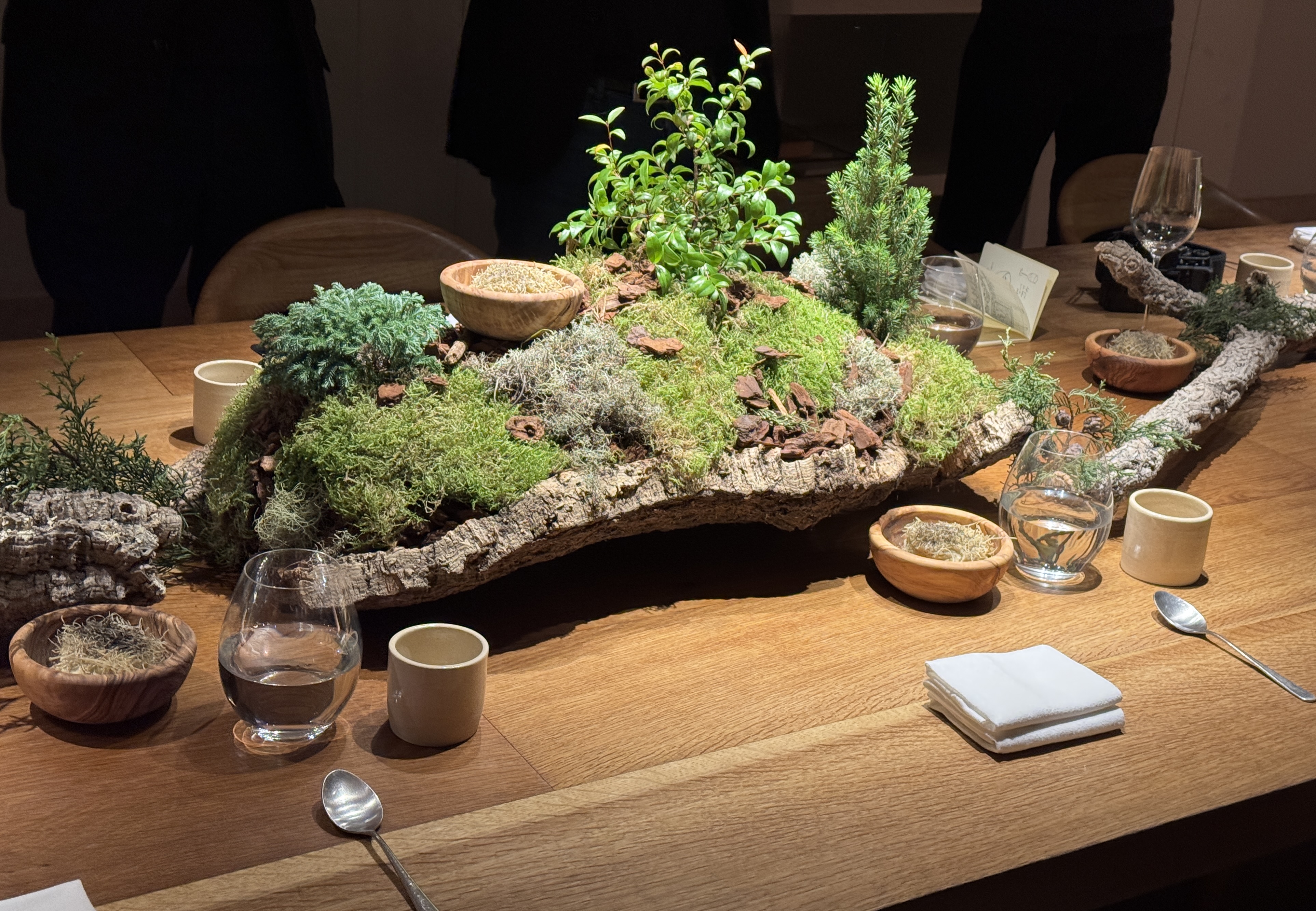
Lisbon’s most elegant table was adorned with the bark of a cork tree, harvested on the thirtieth anniversary of its growth. Draped in moss, mushrooms, and delicate flowers, it set the stage for a menu designed by chef Renato Bonfim and inspired by Hieronymus Bosch’s Garden of Earthly Delights.

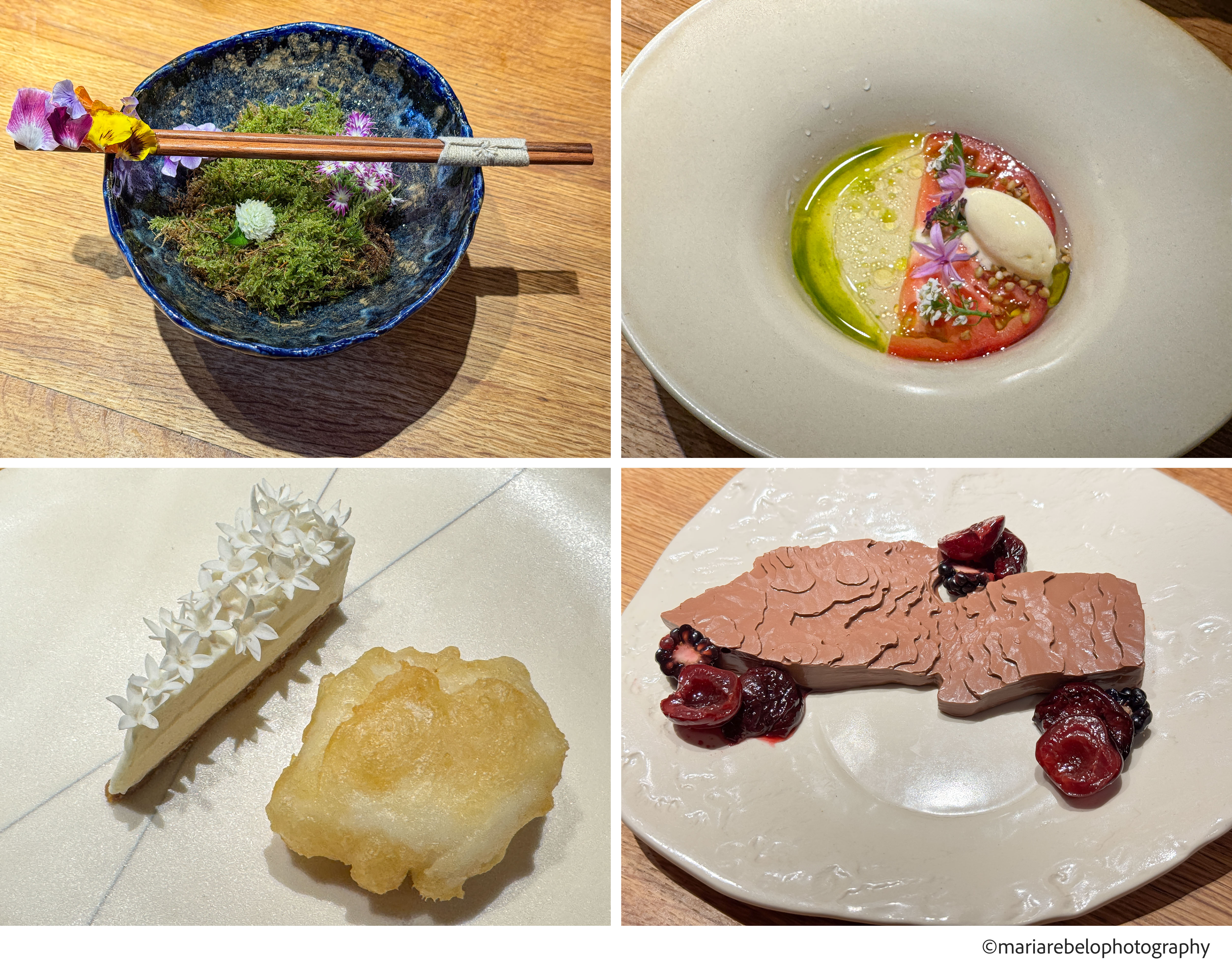
The meal began with a whisper—an ethereal broth of ginger and algae, offering no hint of the wonders to come. A bowl soon appeared, strewn with moss and topped with chopsticks decorated with flowers. Nestled beneath the blossoms was a sublime tartare of carabineiros, the crimson prawns of the Algarve. “I was trained as a Bocusian,” Atala said, referring to Paul Bocuse, the patriarch of nouvelle cuisine. “I expect the food to be on the plate, but here, the food is beyond the plate.” A joyful Blanc de Noirs from Bairrada, fittingly named Dinamite, kept us good company.

Then came Water: a delicious composition of tomato, coriander oil, and a sorbet of toasted bread and garlic. Kristin Liebold, the gracious maître d’, poured glasses of Tepache she had crafted herself—a lightly fermented pineapple elixir that brightened the palate.

Another delight soon followed: slices of savory garlic cheesecake, adorned with white blossoms, served with perfectly fried hake from the Azores. The fish was prepared in a traditional style:  marinated in milk, lemon, salt, and pepper, then delicately fried in tempura batter. 

Atala reflected on how his time in Italy had taught him the importance of simplicity and repetition in dishes like fried fish. “Every Sunday, the mother cooks for the family,” he said, “but when the nonna (grandmother) prepares the same dish, it becomes a feast. The ingredients don’t change—but the nonna brings a deeper understanding, born of repetition and a lifetime of attention to detail.”

An exquisite wine, whimsically called Viagem ao Princípio do Mundo (journey to the beginning of the world), filled our glasses. It is made with Alvarinho grapes grown in Melgaço and aged in sherry casks.

We were then invited into the garden, where, under flickering candlelight, oysters from Setúbal arrived dressed in spinach and algae, gently cooked in a Bulhão Pato style. Atala spoke about the importance of authenticity and of how this dish marries local ingredients and time-honored techniques with a sense of modernity.

Back in the dining room, the next course arrived: cordyceps mushrooms cleverly disguised as pasta. They were glazed in aged balsamic and served with a warm, buttery brioche, the perfect partner to their umami taste. A luminous white wine from António Madeira in the Dão lent the moment a festive air.

The final savory dish was a richly flavored wild boar terrine, served with oven-cooked rice and bread made from roasted quiabos (okra).

Dessert began with a leche de tigre jelly, adorned with nasturtiums and elderflower. Then came a mousse sculpted in the shape of Silent Living’s Herdade no Tempo, the estate that supplied much of the pristine produce featured throughout the meal. The mousse was encircled by an orchestra of cherries: fresh, roasted, and infused with lemon. 

A 2000 vintage Port crowned an unforgettable meal that Renato Bonfim and his youthful brigade cooked for Alex Atala, a philosopher-chef who sees food in its fullness: as ingredient and craft, as joy and communion.

Ceia is located at Campo de Santa Clara, 128. Lisbon. Click here for the restaurant’s website.
Canalha

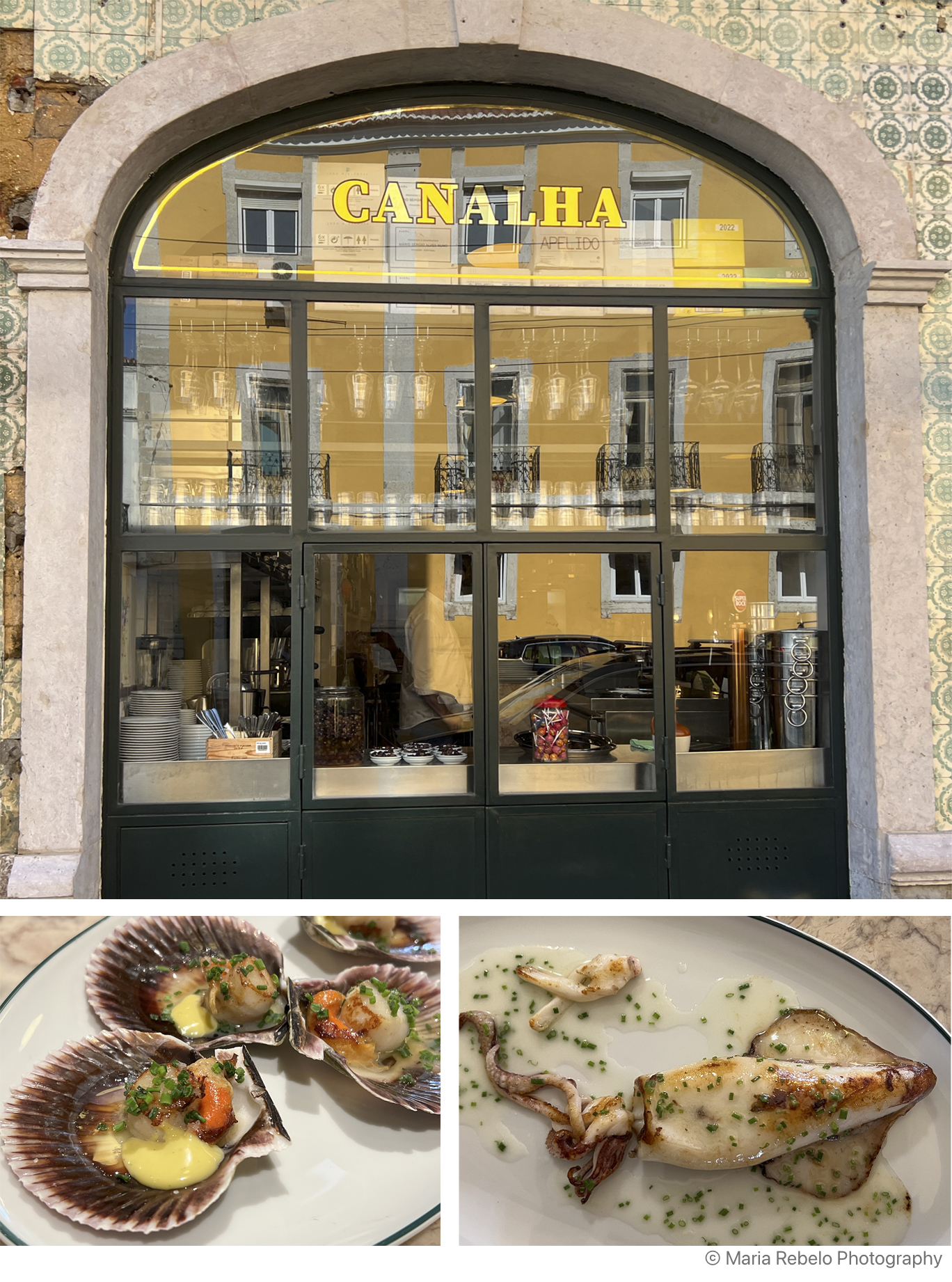
One of Lisbon’s most coveted new restaurants bears a mischievous name: Canalha—the Portuguese word for “scoundrel.” Behind this playful moniker stands one of Portugal’s most acclaimed chefs, João Rodrigues. After earning accolades in haute cuisine, João chose a different path: to open a neighborhood restaurant grounded in the rich culinary traditions of Portugal. The result is a place that is unpretentious and quietly exceptional. Each day features a new “prato do dia”—a beautifully prepared dish offered at a modest price. But for those inclined to indulge, the menu also offers exuberant pleasures: opulent seafood, exceptional cuts of meat, superb artisanal charcuterie, and exquisite wines.

The décor reflects the restaurant’s philosophy of understated elegance. Tabletops are crafted from lioz, the rose-toned limestone that graces Lisbon’s historic buildings. The floors are paved with traditional black-and-white mosaic. Ceiling fans stir the air with their wooden blades, creating a gentle breeze.

Our meal began with crusty bread and pungent olive oil, followed by pastéis de massa tenra—golden, crisp savory pastries filled with seasoned meat and served with a bold sriracha mayonnaise. Then came zamburinhas, small scallops bursting with briny sweetness, and an exquisitely tender squid, lightly charred to smoky perfection. The final dish—grilled octopus with sweet potatoes—was a flawless composition of textures and flavors.

Canalha is not a stage for culinary theatrics. There are no illusions, no deconstructed dishes; there is no drama on the plate. This is cooking rooted in reverence for the land, the seasons, and the ingredients. After stepping away from haute cuisine, João journeyed across Portugal in search of forgotten recipes, unique flavors, and small producers who work with passion and dedication. Their names are celebrated on the menu. One dish is dedicated to our friend Raul Reis, who grows the finest potatoes in Portugal.

João is soft-spoken but intense. At Canalha, he channels this intensity to produce something rare: food steeped in the flavors and traditions of Portugal, cooked with skill, honesty, and soul.

Canalha is located at Rua da Junqueira 207, in Lisboa, tel. 962 152 742. Click here for their website. Reservations are a must.

Chef Marlene Vieira is a star

Since the dawn of civilization, Babylonians, Egyptians, and Greeks have studied the skies to chart the stars. But these luminous bodies shined whether or not they were included in celestial atlases.

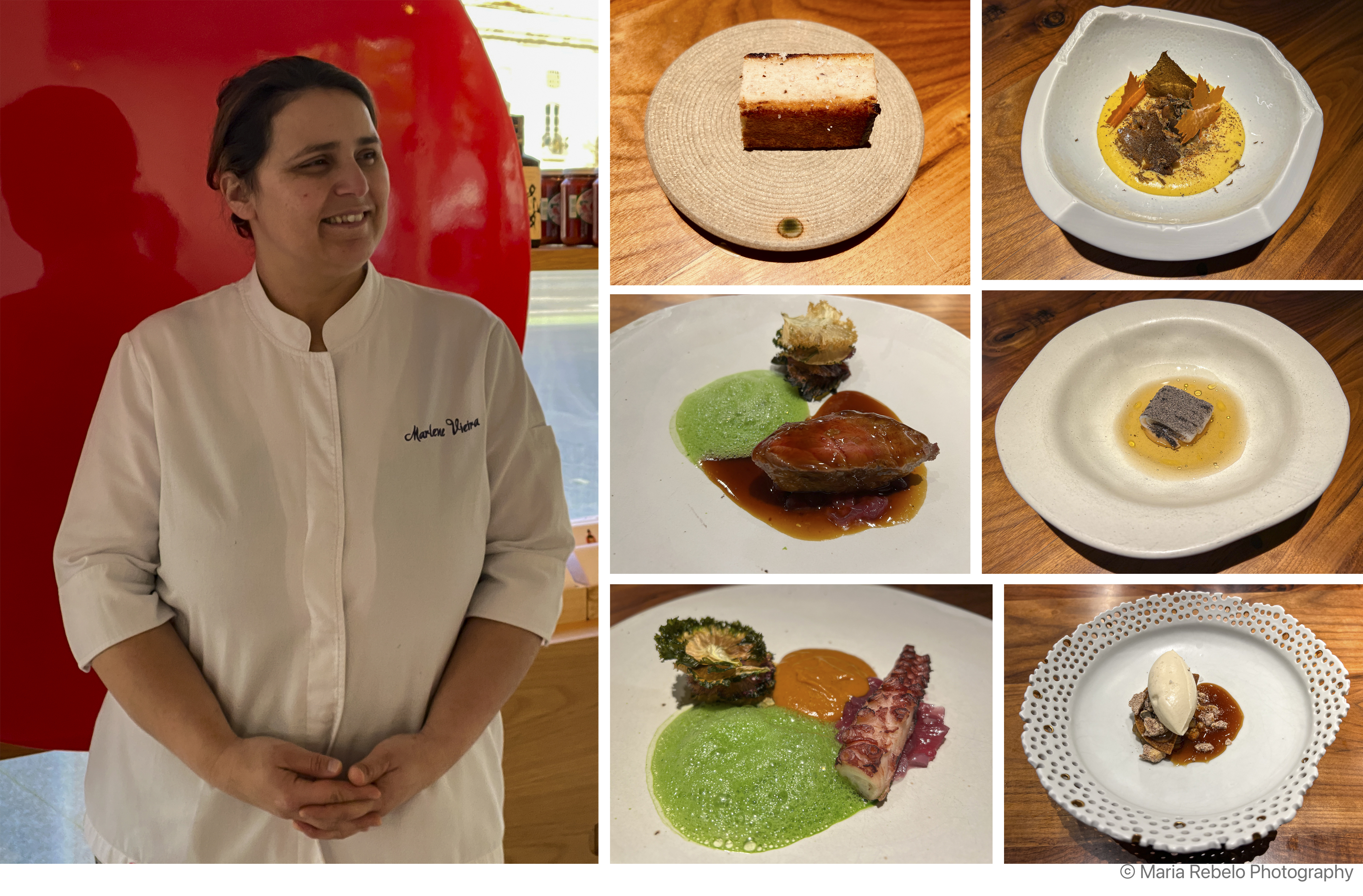
Last Tuesday, Marlene received a Michelin star—a richly deserved honor that celebrates her extraordinary talent and dedication. But long before this important accolade, her light had already illuminated the world of gastronomy. What fuels her radiance is the belief that cooking is an act of love. Each time we dine at her Zun Zum restaurant, we feel not just deeply satisfied but cared for.

Now, at the restaurant that bears her name, Marlene is elevating Portuguese cuisine to new heights. The space exudes serenity, with the kitchen at its heart—an altar where ingredients are transformed into a transcendent gastronomical experience. The menu evolves constantly, and once a recipe leaves, it does not return, making each meal a singular experience.

Guiding this culinary journey alongside Marlene is Chef Mário Cruz. He searches land and sea for exquisite treasures—sea urchins, Algarve red shrimp, wild mushrooms, cuttlefish, mullet, octopus, and partridge. 

The food is visually stunning, but, more importantly, it is delicious and it has soul. The irresistible cornbread, kneaded from white corn, wheat, and rye, follows Marlene’s grandmother’s recipe. The Azorean bluefin tuna, cured as if it were prosciutto, accompanied by gazpacho served in a bowl lined with sumac, transported us to the Algarve, to a sunlit table by the sea.

The partridge is cooked according to a famous recipe. During the Napoleonic invasions, General Junot’s troops looted the library of the Alcântara Monastery. Among the stolen manuscripts was a recipe for partridge stuffed with foie gras and truffles. Junot sent it to his wife, who introduced it to France as “Partridge, Alcântara style.” The renowned chef Auguste Escoffier declared it one of the finest spoils of the Napoleonic wars. Marlene’s reimagined version of this historic dish is so extraordinary that it might provoke another French invasion.

Marlene Vieira is a star–not because she has been recognized among the constellations of fine dining, but because she has always shined.  If you find yourself in Lisbon, take the time to sit at her table to savor the brilliance of her cuisine.

Marlene is located at Av. Infante D. Henrique, Doca do Jardim do Tabaco, Lisboa, tel. 351 912 626 761, email marlene@marlene.pt.

Ceia’s new menu

As John Coltrane’s career evolved, his music underwent a profound transformation. He began as a virtuoso, dazzling audiences with his fluency and flair. But then, he transcended virtuosity, creating music that other players could not imagine because it came from a deeper source of inspiration.

The evolution of Ceia parallels this creative arch. From its inception, this restaurant, nestled within Lisbon’s most elegant hotel, offered unforgettable culinary experiences. But its current menu, orchestrated by a team led by chef Renato Bonfim, transcends technical skill to offer food that is new and exciting.

Titled Change, the menu is a series of culinary moments inspired by our planet and the way we interact with it. Most produce comes from Herdade no Tempo an estate in Alentejo that follows regenerative agriculture practices. Ceia transforms these products into elegies of cooking and celebrations of flavor. 

We generally like to describe the tastes, aromas, and sensations that the food evokes, but Ceia’s menu is so unique that revealing too much would detract from its magic. What we can tell you is that the names of the menu entries could be titles of Coltrane tunes: Ocean, Carbon, Air, You Look but Don’t Sea, Solo. 

The service at Ceia, as seamless as always, keeps the guests in a state of enchantment. Francisco Guilerme curates a pairing of rare wines that elevate every dish and Kristin Liebold offers an exquisite selection of non-alcoholic drinks.

Ceia is creating new culinary melodies from a deeper source of inspiration to feed our hunger and nourish our souls. 

Ceia is located at Campo de Santa Clara, 128. Lisbon. Click here for the restaurant’s website.
Enchantment at Ceia

Standing in the shadow of Lisbon’s old pantheon, we knock on an inconspicuous door that opens into a courtyard erected in 1728. On our right is the entrance to one of Lisbon’s most hallowed dining rooms: a restaurant called Ceia. Those who’ve been here before experienced much more than superb food, exquisite wines, and courteous service. We had an enchanted evening.  

João Rodrigues, Ceia’s owner, is an alchemist who knows how to transform a meal that nourishes the body into a celebration that nurtures the soul. He gathered a star team, headed by chef Diogo Caetano and sous-chef Tiago Silva, and trusted them with precious ingredients: pristine organic produce freshly picked at Herdade do Tempo in Alentejo.

Ivo Custódio, the sommelier, greets us with an old acquaintance: a white wine made by Luís Mota Capitão, the iconoclast winemaker of Herdade do Cebolal. We enjoy the wine and the conversation with the other guests. Then, Ivo invites us into the dining room. We gather around a long wooden table to hear him explain that the meal is a journey through Portugal’s culinary and enological landscapes.

The voyage starts at the bottom of the ocean with tuna tartare on crunchy seaweed crackers, seaweed sponge cake, and gooseneck barnacles. An Atlantis rosé made with Negra Mole on the Madeira Island enhances the sea flavors.

We rise to the ocean’s surface with the taste of briny oysters paired with tart apples from Alcobaça and seaweed ice cream. The oysters come with a magnificent 2014 white wine from Colares, a small region near the sea where the vines, planted in the sand, survived the phylloxera scourge that decimated Europe in the 19th century. Made by Chitas (the nickname of an old producer called Paulo da Silva) it is a complex wine that fascinates and delights.

We arrive at the beach with a delicately cooked turbot seasoned with smoky olive oil powder and served in a Bulhão Pato sauce. It is so delicious we barely resist the urge to ask for seconds. 

But we find new joys in the lowlands where a sourdough bread fermented for three days and a cornbread baked with dried fruits await us. They come with Amor é Cego, a piquant oil made from Galega olives. There are also plates of luscious butter from Pico, an island in the Azores archipelago.

Ivo serves an elegant 2012 red from Quinta de Lemos in the Dão region. It is made with Jaen–a grape varietal brought to Portugal by pilgrims who traveled to Santiago de Compostela. Like the wine, the conversation flows freely around the table.

In the plains, there is rabbit served with an ice cream made from escabeche, a traditional sauce prepared with vinegar and olive oil. Kompassus, a sparkling wine made from Baga, a red grape from Bairrada, refreshes our palate. 

We climb up the mountain with a roasted purple cabbage dressed with a pennyroyal and champagne sauce. It comes with Sousão, a vibrant red wine from Vale da Raposa in the Douro valley. 

At the top of the mountain, we taste pigeon and potatoes from Trás-os-Montes served with a fermented garlic sauce. There’s also a mystery box with a delightful croquette and a scrumptious Philo-dough cup filled with sorrel leaves. 

Ivo serves a celebratory Breijinho da Costa, a fortified wine made in Setúbal with purple muscatel grapes. The meal ends with sweet fireworks: a noisette pave, petals of roasted peach, thyme ice cream, and lemon curd. And there are mignardises: a traditional Abade de Prisco pudding, coconut biscuits, cinnamon and strawberry truffles.  

Everybody lingers around the table feeling a sense of camaraderie. Then, we say our thanks and goodbyes and walk into the warm night in a state of enchantment. 

Ceia is located at Campo de Santa Clara, 128. Lisbon. Click here for the restaurant’s website.