To find the finest place for lunch in Lisbon, you must head toward the majestic Pantheon, a baroque limestone masterpiece that took three centuries to build. The adjacent plaza, Campo de Santa Clara, overlooks the “sea of straw,’’ the stretch of the Tagus River that reflects the golden sunlight, resembling a field of wheat.
A short walk leads you to number 128, where the understated entrance of the elegant Santa Clara 1728 hotel awaits. From Tuesdays to Saturdays, the hotel’s dining room, home to the renowned Ceia restaurant, transforms into a lunch haven called Solo.
The meal begins with the comforting aroma of warm, house-made sourdough bread served with creamy butter. It continues with a starter and main course paired with a glass of wine and ends with dessert. The menu is updated every two to three weeks to reflect what is seasonal.
The starters are a testament to culinary finesse, featuring options like delicate Hamachi kissed with ponzu and coriander, requeijão–a soft cheese from the Estrela mountain–adorned with grapes and a touch of balsamic vinegar, or duck escabeche infused with the sweetness of ripe tomatoes.
The main courses are equally enticing, including choices like tender roast beef accompanied by grilled lettuce hearts and anchovy vinaigrette, creamy orzo with pumpkin, spinach, and truffles, or line-caught fish paired with pumpkin, hazelnut, and a rich bouillabaisse.
For the sweet ending, will you choose the tropical freshness of Azorean pineapple with yuzu syrup and finger lime? Or the indulgent richness of chocolate ganache with seasonal fruits?
Sharing the experience with a friend doubles the delight. The chef can split two menus, letting you savor two different starters, main courses, and desserts.
Solo’s exceptional cuisine is rooted in its “soil to table” philosophy. Most ingredients are sourced from Herdade no Tempo, a farm in Alentejo that uses regenerative and holistic practices to nurture the soil and support biodiversity. Chef Renato Bonfim and his team transform these pristine ingredients into dishes that celebrate the gifts of nature and the joy of cooking.
From the artful presentation to the gracious service and intimate ambiance, every detail at Solo turns lunch into an experience that lingers in our memory long after the last bite.
Solo is located at Campo de Santa Clara, 128. Lisbon. Click here for the restaurant’s website.
A woman named after a flower crafts enchanting wines on a farm called Serenada, which her family has owned for over three centuries. It sounds like a fairy tale, but the wines are as real as the spell they cast.
As a young girl, Jacinta Sobral had no idea she was destined to become a winemaker. In 1961, one year after getting married, her father, António Sobral, planted a vineyard at Serenada with twelve grape varietals. He crafted his wines with little more than his hands, heart, and the wisdom gained through experience. The vineyard thrived, and in 1970, he decided to plant more vines.
As for Jacinta, she wandered down a different path. She studied the secrets of chemistry and became a microbiologist. But in 2004, as António’s health began to fade, he expressed a desire to teach Jacinta to make white wine. “Anyone can make red wine, but white wine—that is art,” he said. António showed Jacinta the delicate process of decanting free-run juice while preserving the fine lees, which enhance the wine’s texture and complexity.
When António passed away in 2006, he left various properties to his other children but bequeathed Serenada to Jacinta. She felt like a spell had been cast, binding her to the vines. Determined to honor her father, she enrolled in a Master’s program in Agricultural Engineering. There, she found that her background in microbiology was like a magic key, unlocking the mysteries of winemaking. She immersed herself in enology textbooks and crisscrossed Europe to learn from other producers.
Serenada is rich in geological diversity. There are schist soils near the ancient Grândola mountain, veins of manganese and iron, and fields of clay and sand. These nutrient-poor soils stress the grapevines, prompting them to grow deeper roots in search of water and minerals. The cooling Atlantic breeze slows grape ripening, fostering complex flavors while preserving acidity. The result is wines that are fresh, balanced, and vibrant.
Unburdened by convention and free to follow her imagination, Jacinta began exploring different vinification and aging techniques, from fermenting the must in Roman clay amphoras to aging bottles in a cave once mined for pyrite, the mineral known as fool’s gold.
The most remarkable discovery came in 2017 when Jacinta submerged wine bottles 15 meters deep into the ocean. There, the bottles slept in silence, rocked by the waves and shielded from the sun’s light. Eight months later, when Jacinta tasted the wine, she was astonished. These ocean-aged wines were unlike any she had experienced—smooth, ethereal, as if blessed by the ocean’s spirit.
Serenada has a handful of rooms where you can stay, each offering a peaceful retreat surrounded by pines and oak trees. Guests can enjoy scenic walking and cycling trails, delicious meals, picnics, and wine tastings. It’s the perfect place to savor Jacinta’s mesmerizing wines that capture the essence of land and sea.
Serenada is located near Grândola in Alentejo. Click here for their website.
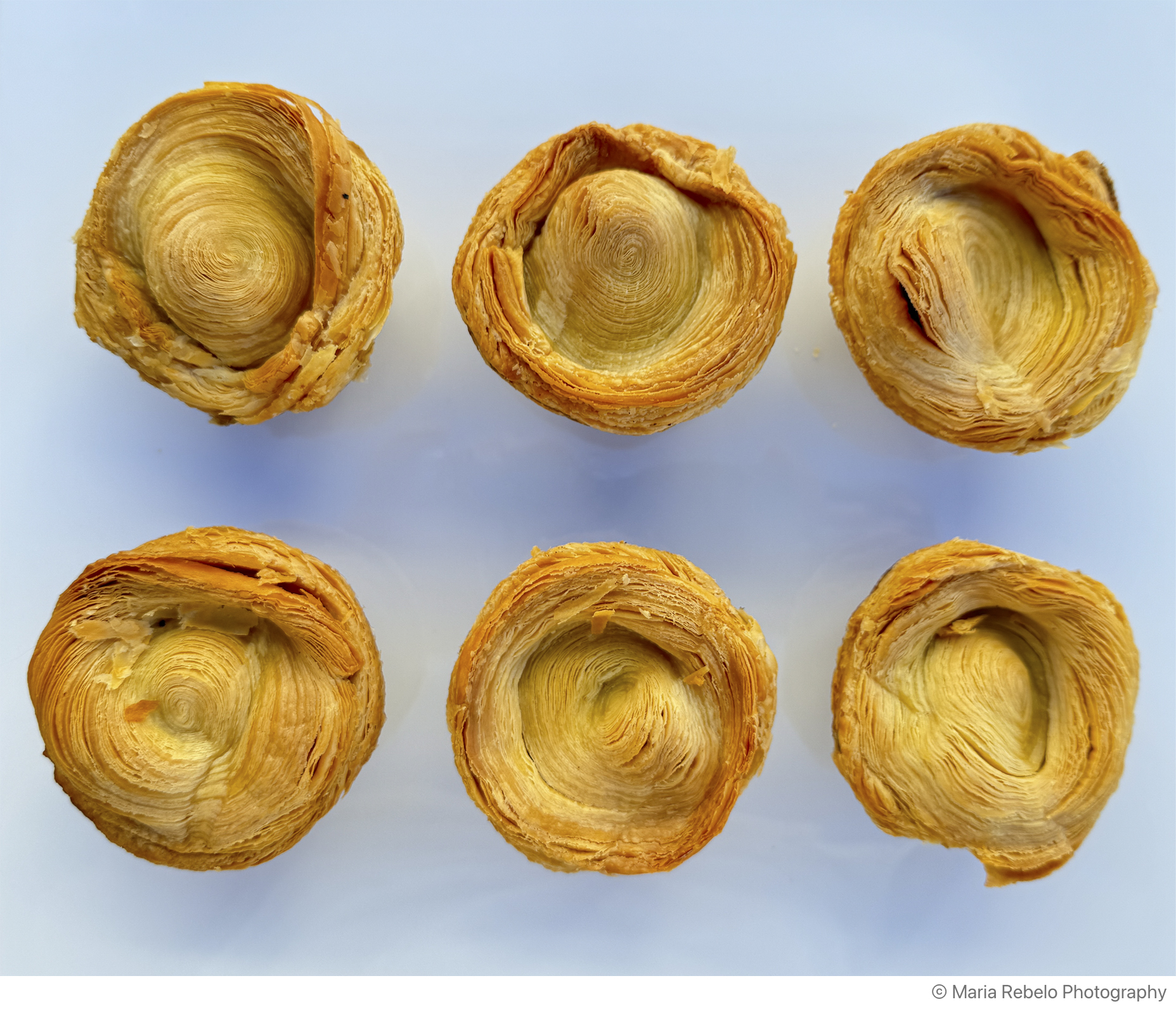
Covilhetes are small meat pies cherished in Vila Real, a town near the Douro Valley. Their origins date back over two centuries when they were sold at religious fairs. By the mid-19th century, covilhetes had become a staple in restaurant and café menus, often served with oven-baked rice. Their popularity has endured ever since.
In 2015, a guild was established to safeguard the authenticity and quality of covilhetes. The unique taste of these pies reflects the premium ingredients used, such as fine flour, Maronesa veal (from a breed native to the Marão mountains), and local sausages.
Though recipes for covilhetes exist, mastering the art of crafting their delicate, flaky pastry and intricate oval crust resembling planetary orbits is challenging. Fortunately, pastry shops in Vila Real’s historic district, such as Pastelaria Gomes, Casa Lapão, and Loja do Covilhete, produce daily batches of these heavenly pies, fresh from the oven, ready to delight our palates.
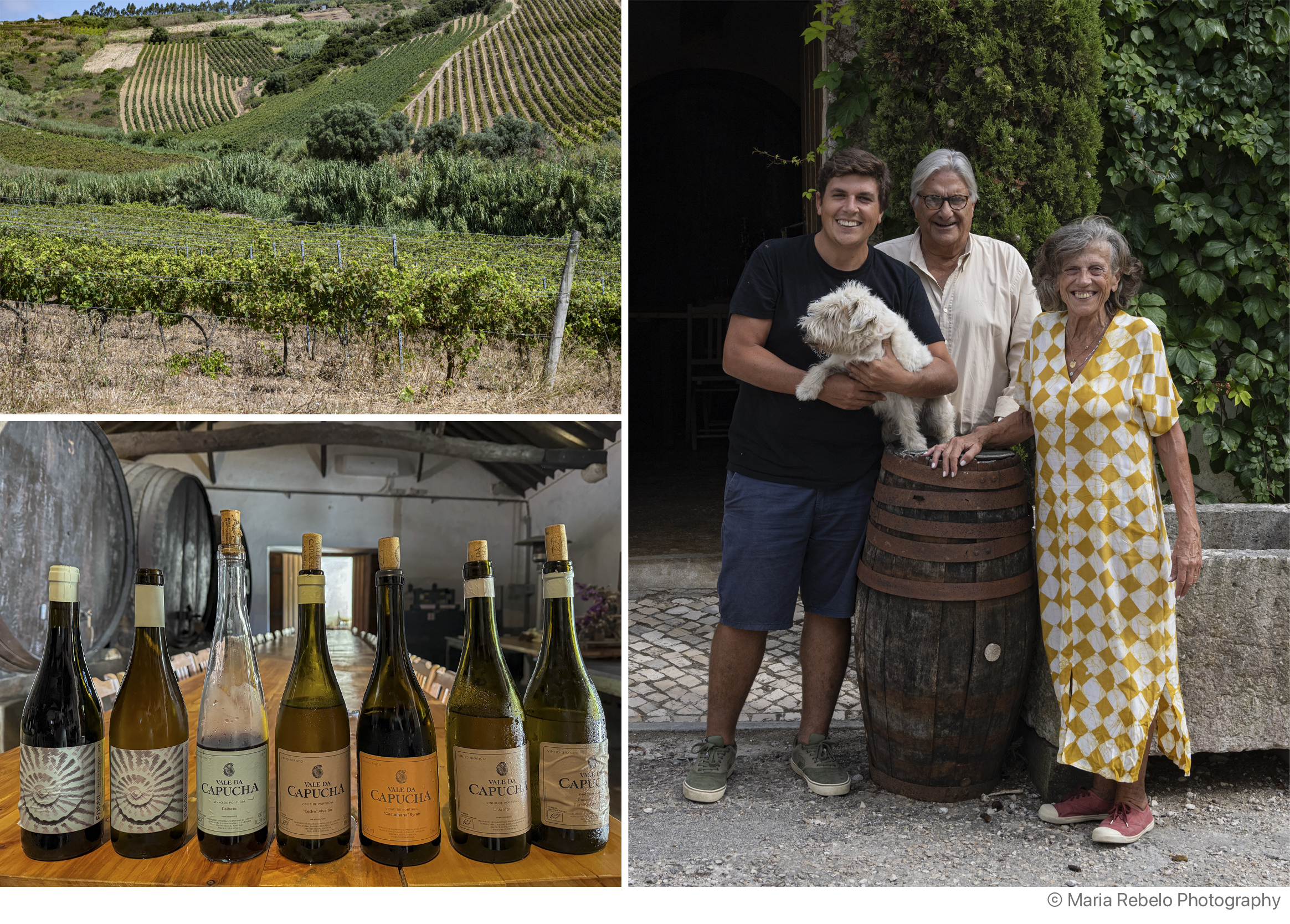
As we arrived at Vale da Capucha, a wine estate in Torres Vedras near Lisbon, a small, cute dog ran up to greet us. “His name is Arinto,” Manuel Marques said as he walked towards us, “all of our dogs are named after grape varieties.”
For the Marques family, producing great wine was never a choice–it was their destiny. Manuel’s great-grandfather was a winemaker, and his grandfather acquired Vale da Capucha to expand the family’s wine production. The estate was famous because it belonged to António Batalha Reis, the first director of the Torres Vedras School of Viticulture. This school taught local farmers how to graft vines onto American rootstock, protecting them from phylloxera, the disease that devastated European vineyards in the late 19th century.
Manuel’s grandfather raised his family on this farm. When he passed away, Teresa, Manuel’s mother, inherited the house and some of the land. She and Afonso, her husband, had busy lives in Lisbon, so they were unsure what to do with the property. But in 2005, the couple came for a weekend and fell in love with country life. They never returned to Lisbon, embracing their new chapter in rural Portugal.
Pedro, Manuel’s brother, had studied enology and saw immense potential in the farm’s terroir for producing high-quality white wines with significant aging potential. The estate’s proximity to the ocean fosters a cool climate, which preserves the acidity in the grapes. At the same time, the limestone-rich soil, packed with 400-million-year-old fossils, lends minerality and complexity to the wines. Manuel joined the venture as the commercial director, and a new era for Vale da Capucha began.
In 2006, the family replanted the vineyards with carefully selected white grape varieties: Fernão Pires, widely grown in the Lisbon region, and Arinto from nearby Bucelas. They also introduced Antão Vaz from Alentejo, as well as Gouveio and Viosinho from the Douro Valley. At Vale da Capucha, these grape varieties developed a distinctive profile, gaining salinity and freshness.
The family made their first wine in 2009 and released it in 2011. Another significant milestone came in 2012, when they embraced biological agriculture to fully express the land’s natural character. Today, Vale da Capucha produces around 60,000 bottles annually. They rely exclusively on wild yeast for fermentation, handpick all their grapes, and practice minimal enological intervention, allowing the wine to reveal the essence of the terroir and tell the story of each vintage.
As we walked through the farm, we saw many animals. The farm raises Alcobaça-spotted pigs, turkeys, and Bresse chickens—Paul Bocuse’s favorite breed–to supply the kitchen with wonderful organic meats.
Manuel invited us to the wine cellar to taste some wines surrounded by old barrels that testify to the estate’s rich history. We started with a 2018 blend of Arinto and Fernão Pires, which impressed us with its stunning color, freshness, and vibrant character. Then, we sampled the 2019 Arinto made from a blend of three different parcels. It has elegant citrus notes, intense minerality, and salinity. These are wines that will age gracefully, becoming more complex and refined with time.
Next, we tasted an interesting Alvarão, a playful twist on Alvarinho, a grape from the Vinho Verde region. A 2019 Fossil “palhete” followed. This wine, made with 80 percent white grapes (Arinto) and 20 percent red grapes (mostly Castelão), is what people used to drink in this region one century ago. Despite its red hue, the wine drank like a white, bursting with freshness. To finish, we sampled a 2014 Syrah—light, earthy, and with only 13 degrees of alcohol–a singular expression of this variety.
The influence of the Atlantic Ocean, with its waves crashing just eight kilometers from the vineyards, gives these wines a distinct character. No wonder they captured the attention of sommeliers and wine enthusiasts searching for something exceptional.
Lunch with Manuel, Afonso, and Teresa in the dining room of the manor house was a gastronomic feast. We were treated to delicious vegetables served with local cheese and country bread, followed by a magnificent roasted lamb and rice made from the animal’s giblets. The 2019 Arinto was the perfect lunch companion, its bright acidity enhancing the flavors of the food.
It was an unforgettable visit to Vale da Capucha, a place where winemaking traditions, organic farming, and a refined understanding of winemaking come together to produce outstanding wines.
Once a month, Vale da Capucha hosts a lunch featuring cozido, a traditional Portuguese stew, paired with their wines. It’s a word-of-mouth event eagerly awaited by those in the know. Occasionally, they announce it on their Instagram page. If you see the posting, don’t miss the opportunity to meet this remarkable family and taste wines that are bringing international acclaim to the Torres Vedras region.
When we asked our son, a chef by trade, what he wanted for his birthday, he answered without hesitation: lunch at Mercearia Gadanha in Estremoz. And so, on the day when we celebrated the arrival of the treasured gift that is our son, we got on the road to Estremoz.
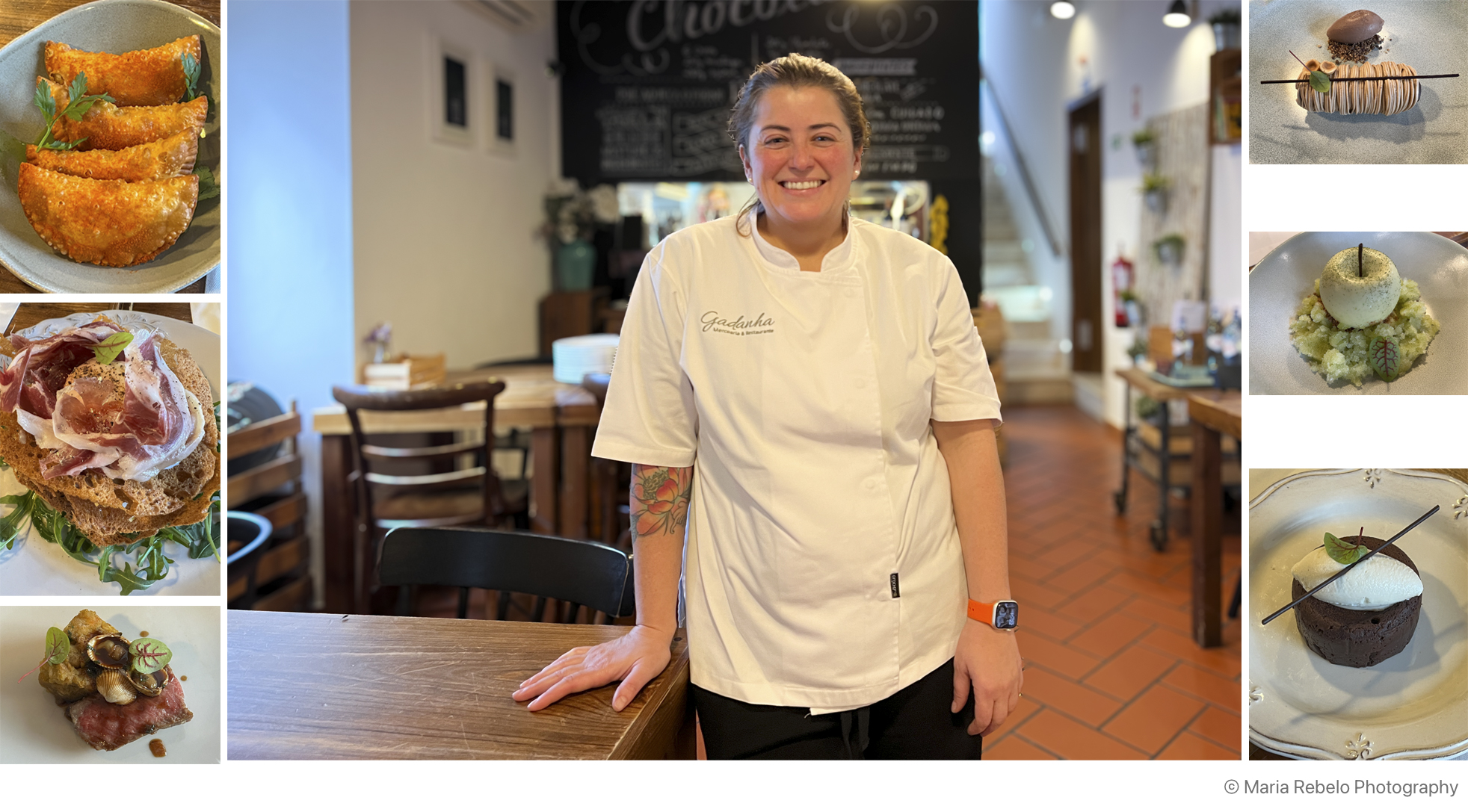
Chef Michelle Marques welcomed us into her restaurant with her radiant smile. She filled our glasses with Mainova, a white wine made with a harmonious trinity of Portuguese varietals (Arinto, Antão Vaz, and Verdelho). It has a wonderful acidity and a citrus aroma that kept us great company through the meal.
Our lunch began with Gadanha’s classic lamb croquettes served with garlic confit mayonnaise. Each bite reminded us why this dish had long been a favorite.
Next came the quail, stewed to perfection and served with a rich demi-glace, an intense apple sauce, and some of the most flavorful potato chips we’ve ever had—thin, crispy, and seasoned with just a whisper of oregano.
Then came wild mushrooms with a soft-cooked egg, and a crumble of alheira sausage, each mouthful an explosion of umami.
The next course was a set of stunning cação pastries. Never was this fish so prized in Alentejo so wonderfully cooked. The pastry was crunchy, allowing the delicate flavors of the fish to shine.
Another favorite followed: the exquisite codfish mille-feuille, a combination of crispy Alentejo toasts, chickpea foam, codfish confit, and black-pork prosciutto. This dish alone is worth the journey to Gadanha.
The next course, black pork and cockles (berbigão) is a delicious reimagination of a traditional Alentejo recipe: pork and clams. The savory part of the meal ended with duck rice brimming with flavor.
We indulged in three desserts: a reconstructed apple with pennyroyal (poejo) and sheep milk ice cream, a medley of chocolate and hazelnut textures, and a chocolate and coffee delight with vanilla ice cream.
Michelle was born in Brazil, but she has lived in Portugal for so long that she lost her Brazilian accent. In its place she gained a culinary voice so original that it is worth traveling the distance to celebrate life’s best moments at her restaurant.
Gadanha is located at Largo Dragões de Olivença, 84 A in Estremoz, tel. 268 333 262. Click here for their website.
There’s something about dining on the beach that makes the food taste even better. Perhaps it’s the salty breeze that stirs the appetite or the beauty of the ocean that awakens the senses.
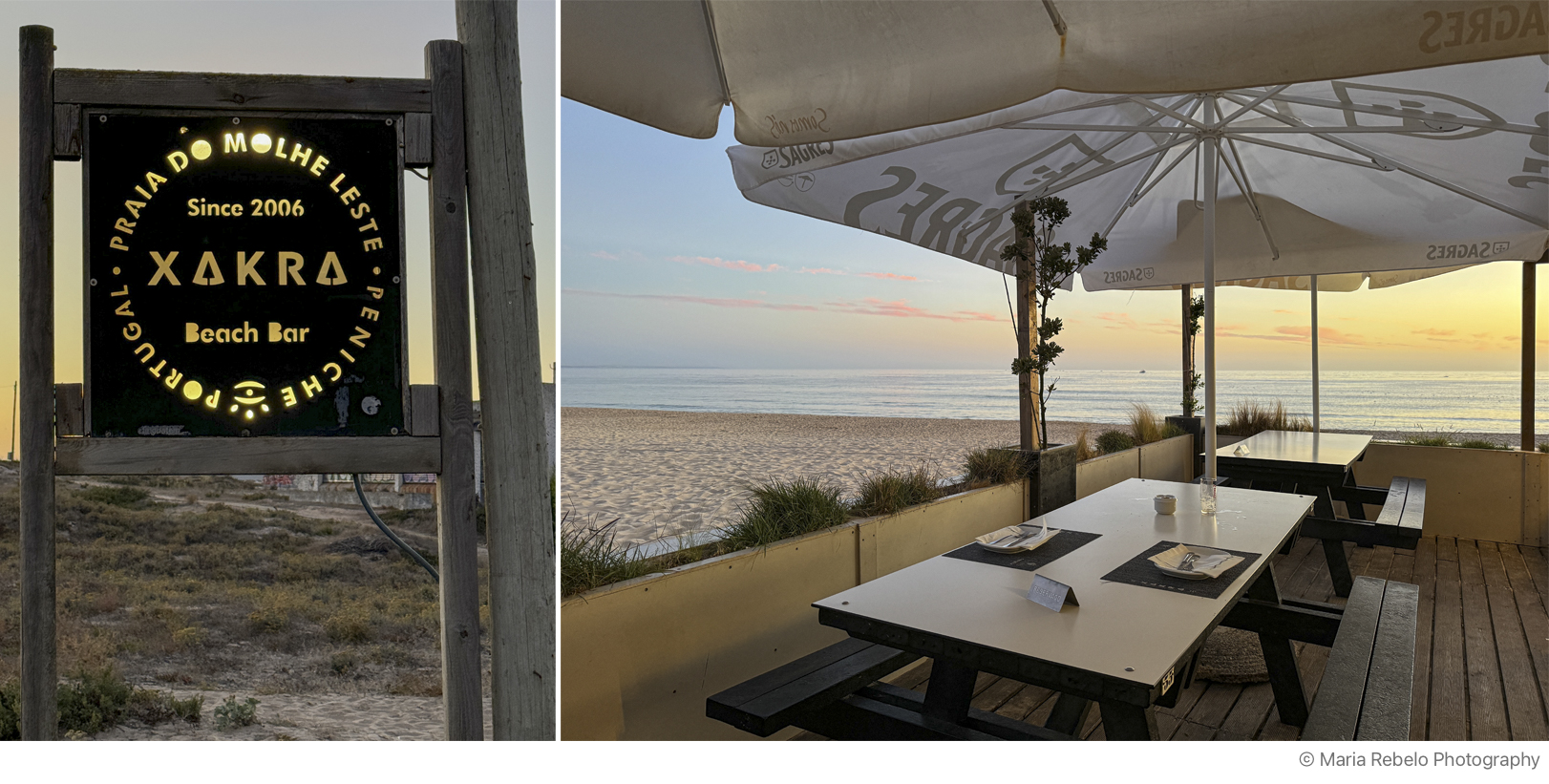
It used to be easy to find simple beachside restaurants that served freshly caught fish. But, as the price of wild fish went up, these places have become increasingly rare. That is why we were so delighted when some friends took us to Xakra at Molhe Leste, a beach in Peniche favored by surfers because of the consistency of its waves.
Xakra’s decor is plain, but the view is luxurious. We ordered two starters, a soup, and a main course. The first starter was berbigão, a flavorful cockle prepared with olive oil, coriander and garlic. The second was a wonderful skate salad simply dressed with olive oil, vinegar, and onion.
The fish soup had delicately cooked fillets immersed in a creamy vegetable broth. The vegetables of the land harmonize surprisingly well with the fruits of the sea.
Finally, the pièce de résistance was freshly caught turbot perfectly grilled and served with small potatoes, cabbage, and a sprinkle of cornbread crumbs.
Xakra has been delighting guests since 2006. We’re sorry it took so long to discover it, but now we know!
Xakra is situated at Praia do Molho Leste in Peniche. For reservations, please call 965 172 166.
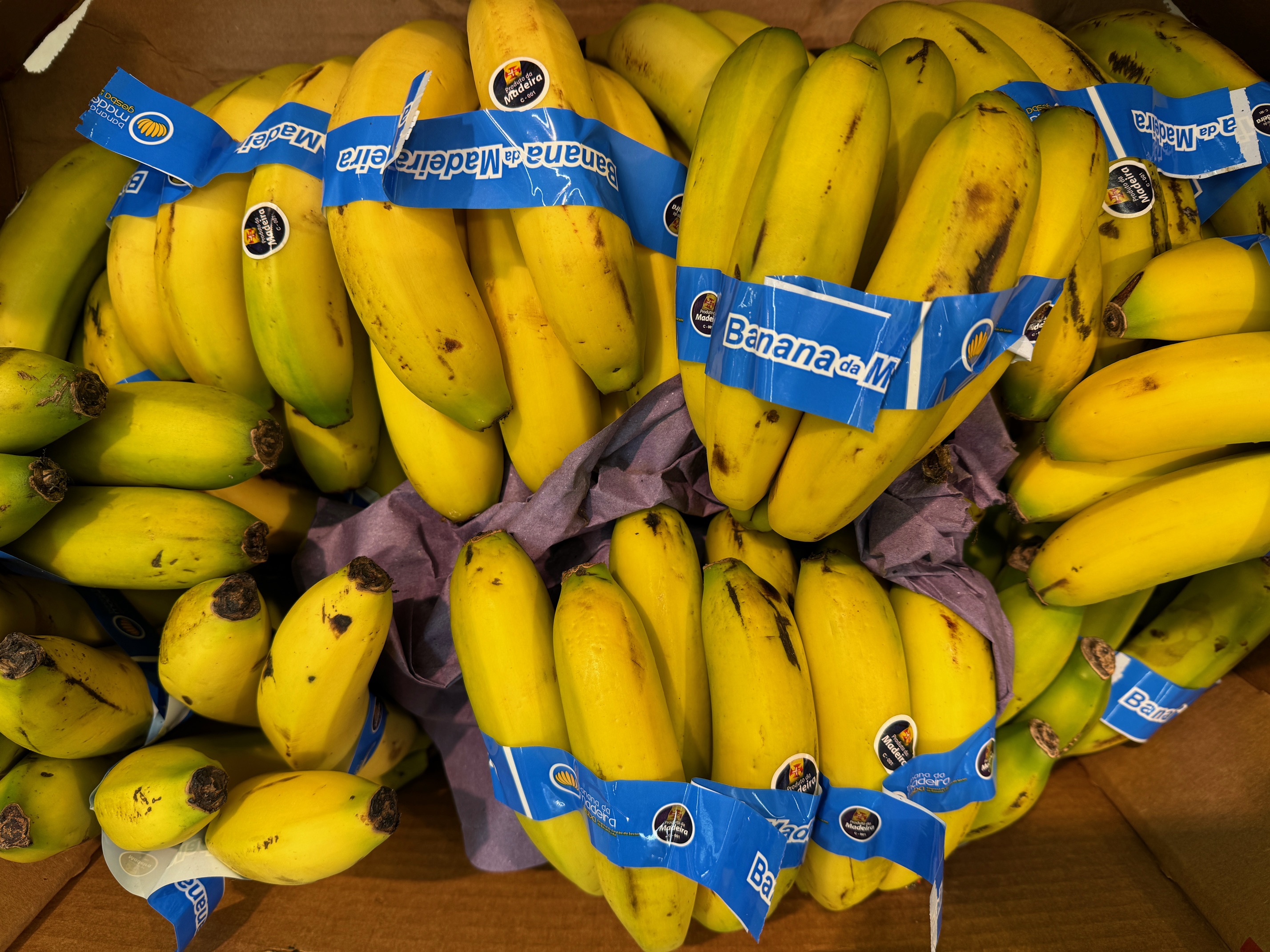
One of the simple pleasures of life in Portugal is savoring the delicious bananas produced on Madeira Island. Portuguese sailors brought bananas from West Africa in the 15th century. By 1552, according to British traveler Thomas Nichols, they were already being cultivated in Madeira. The island’s subtropical climate, characterized by mild temperatures and high humidity, provides perfect conditions for growing bananas.
Madeira farmers produce bananas on a limited scale and harvest them by hand. Smaller than the common Cavendish variety, they are sweeter and more flavorful, with a delightful lemony taste and a creamy texture. Try them, and you will see!
The tomato is a South American fruit that traveled to Europe on sailboats in the 16th century and, over time, conquered the cuisines of the Old World. Like travelers who adapt to foreign lands, tomatoes developed distinct characteristics in different regions. In the Douro Valley, the warm days, cool nights, well-drained soils, and abundant micronutrients produce tomatoes with exceptional flavor, texture, and succulence.
Every year, on the third Friday of August, the Douro Valley comes alive with a festival dedicated to the heirloom tomato. Winemakers submit tomatoes grown in their vegetable gardens to this friendly competition, an opportunity to enjoy some light-hearted fun before the serious work of the harvest begins. Renowned chefs like Miguel Castro e Silva prepare the food and vintners pour their wines, creating a festive atmosphere.
The tomatoes are served at peak ripeness, blessed with a pinch of Castro Marim sea salt, and anointed with sacred olive oils from the Douro Valley. A panel of judges, composed of chefs and food experts, conducts a rigorous blind tasting to elect the finest tomatoes.
This year, a small producer, Casa da Quinta dos Ferreiros took first place. Wine & Soul, acclaimed for their iconic Pintas and Guru wines, received second place. Third place was awarded to the Mateus Palace.
The festival is open to the public. If you dream of mingling with famous chefs and winemakers at a picturesque Douro Valley estate, mark your calendar for the third Friday of August. You can email greengrape@greengrape.pt to join the mailing list. One word of advice: once you receive your invitation in late July, answer immediately—the event sells out in less than an hour!
Porto’s Ribeira district is always bustling with tourists snapping selfies and street performers vying for attention. Yet amid this lively chaos, there is a haven: a restaurant called Casario. This cozy space, with its terrace overlooking the river, is a collaboration between Granvinhos, the port wine company behind Quinta de Ventozelo, and two virtuoso chefs: Miguel Castro e Silva and José Guedes.
We strolled to Casario under ultramarine blue skies. The dining room, bathed in a warm glow, offered a welcoming ambiance. As soon as we settled at our table, the waiter presented a basket of enticing dark wheat bread. It was accompanied by velvety butter from the Azores and Ventozelo’s piquant olive oil. A refreshing rosé from Ventozelo filled our glasses, setting a playful mood for the meal.
Like Beethoven’s Ninth Symphony, dinner began with unforgettable notes: smoked eel seasoned with mustard and honey, served atop flatbread with a vinaigrette-dressed lettuce, and fried salted skate paired with pickled fennel and a celery and hazelnut purée.
This impressive start was followed by a harmonious sequence of courses. First came a moist and flavorful robalo, cooked at low temperature and served with a surprising yet felicitous combination of yellow peppers, turnip, and bok choy. Next was a whimsical shrimp and squid lollipop and chickpeas with two mushroom varieties: nutty boletos and earthy trompetas. The meal continued with a squid stuffed with spinach and sausage, bursting with flavor. Then came a briny turbot, paired beautifully with asparagus and a cockle called berbigão.
Dinner concluded on a sweet note with cinnamon ice cream, crème brûlée, and toasted pine nuts. A glass of 1994 Dalva port served as the perfect coda to this delicious meal.
It takes a lifetime to master the art of preparing a symphonic culinary experience like this one. Bravo, Miguel and José!
Casario is located at Praça da Ribeira, Viela do Buraco, 19, Porto, tel. 227-662-270. Click here for their website.
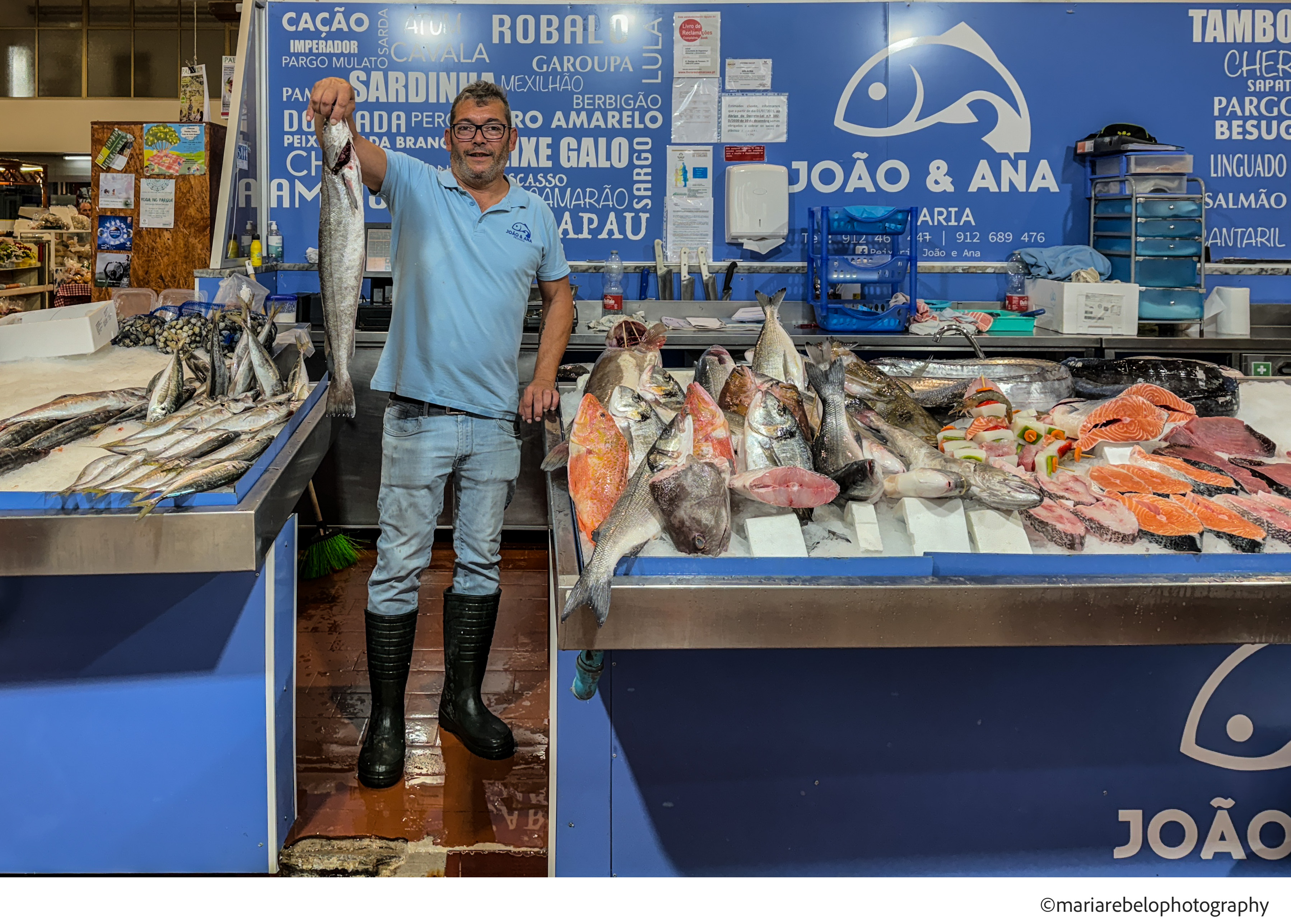
João Branco owns a fish stall in the Lourinhã market where he sells the freshest fish and finest seafood. He knows a lot about the fruits of the sea because his family has been in the fish business for nearly a century–both his mother and grandmother were fishmongers.
João shared a story about a couple who had friends coming over for a “caldeirada,” a traditional fish stew, but had never prepared it before and found the task daunting. João reassured them, saying, “No worries. Bring me a large pot, and I’ll prepare everything. All you need to do is put it on the stove until it’s cooked.” The next day, the customers called to tell João that their guests thought it was the best caldeirada they’d ever had. Whenever their friends return for the famous caldeirada, João prepares the pot, ensuring success every time. João generously shared his recipe with us so you, too, can impress your friends.
João Branco’s Fisherman Stew
João only uses fish without scales because finding scales in the stew can detract from the culinary experience. He also advises against using sardines because their strong taste can overpower the other fish. João does not use laurel because it can also overshadow the delicate flavors of the fish.
He arranges the vegetable layers at the bottom of the pot and places the fish on top. This technique allows the fish to cook in steam, ensuring it is ready at the same time.
Ingredients:
Olive oil (100 ml)
2 sliced onions
4 minced garlic cloves
One sliced red pepper
One sliced green pepper
2 ripe sliced tomatoes
500 grams of sliced potatoes
A teaspoon of smoked paprika
Cayenne pepper
White wine (100 ml)
Beer (100 ml)
Parsley
Coriander
Salt
Navalheiras (small crabs, cut in half, optional)
Shrimp (optional)
Squid or cuttlefish (optional)
One kilogram of assorted fish including tamboril (monkfish), safio (conger eel), raia (skate), and cação (dogfish).
Instructions:
Choose a pot large enough to accommodate two or three layers of potatoes and the fish.
Wash all the ingredients.
Cover the bottom of the pot with olive oil.
Add a layer of sliced onions, garlic, tomatoes, and red and green peppers.
Add a layer of sliced potatoes.
Repeat the layers of onions, garlic, peppers, tomatoes, and potatoes.
Place the fish on top of these layers, ensuring it cooks in the steam from the layers below.
Drizzle the white wine and beer on top of everything.
Season with salt, smoked paprika, and cayenne pepper.
Optionally, you can add navalheiras (small crabs) cut in half for extra flavor. You can also add some sliced cuttlefish or squid and top the fish with shrimp. The shrimp cooks faster than the fish. Once it is cooked, remove the shrimp, peel it, and serve it with the stew.
Cover the pot and cook over medium heat. You don’t need to add any water because the vegetables naturally release plenty of it.
Season with parsley and coriander before serving.
If preparing this delicious stew feels like too much work, bring a large pot to the Lourinhã market and ask João if he’ll prepare it for you.