Finding happiness in Sintra

Market products

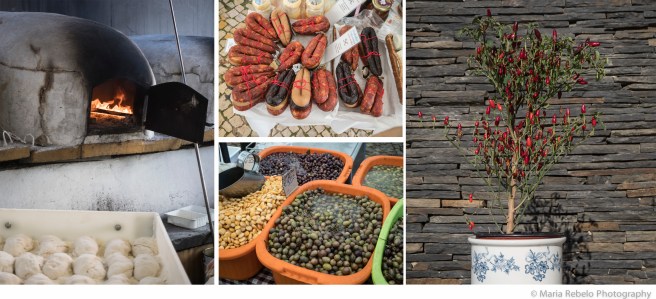
There’s a farmer’s market in São Pedro de Sintra since the 12th century. Nowadays it runs every second and fourth Sundays of each month. It is a great place to buy local fruits and vegetables, artisanal sausages, olives and cheese. Wood-fired ovens bake chouriço bread, filing the air with appetizing aromas.

We saw a farmer selling a small capsicum frutescens tree loaded with little red peppers.  Five centuries ago, Portuguese navigators brought this plant from South America to Africa, where the Bantu people called its fiery pepper “piri piri.” From Africa, the Portuguese took the plant to India where it changed the course of Indian cuisine.

How could we resist bringing home this symbol of the first age of globalization? “Trim the tree in March and you’ll have piri piri peppers between August to January,” advised the genial farmer. We got into the car feeling ecstatic at this unexpected find. Who knew that happiness is a piri piri tree?

The São Pedro market is located on Largo D. Fernando II, São Pedro de Sintra.
Making Alenquer a food destination

Casta 85.jpg

In the 19th century, Alenquer was one of Portugal’s premier wine regions. Its fortunes waned for much of the 20th century. But the tide turned and Alenquer rightly regained its status as a prized wine destination. A young chef called João Simões wants to help Alenquer become a food destination as well.

João apprenticed at the Ritz and worked in many posh hotels and restaurants. Three years ago, he decided to return to his roots to recover and renew the culinary traditions of the region where he was born. He uses local products like quails and Rocha pears and works with farmers on projects like producing goat cheese in the Montejunto mountain. His restaurant is called Casta 85. Casta means varietal, a reference to the region’s wine tradition. The number 85 refers to the chef’s birth year.

The dining room is decorated with furniture procured in the chef’s village. It is a pleasant space that overlooks the Alenquer river. This tributary of the Tagus flows proudly through town, reveling from the praise it received in Luis Vaz de Camões’ epic poem, the Lusíadas.

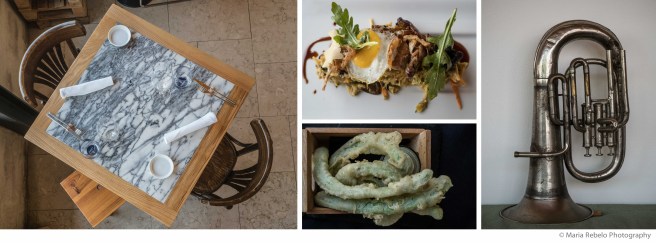
Casta 85’s service is relaxed and attentive. Ana Santana, our genial server, met the chef when they both played in a brass band. The chef’s old instrument is now part of the decoration and some of the band’s brashness inspires the intense, harmonious food.

We tried appetizing alheira croquettes with apple sauce and crisp green bean tempura with garlic mayonnaise. Next, came a delicious quail Brás style served with a quail egg, fried onion and cassava chips. Our meal ended with a luscious duck leg served over a risotto of mushrooms and asparagus.

We returned from Alenquer through a scenic road that took us though countless vineyards. We can’t wait to go back to visit the wine quintas and have another great lunch at Casta 85!

Casta 85 is located at Largo do Espírito Santo, 31 in Alenquer, tel. 915 761 911.

Extraordinary food in Estremoz

Composit Gadanha Mercerearia.jpg

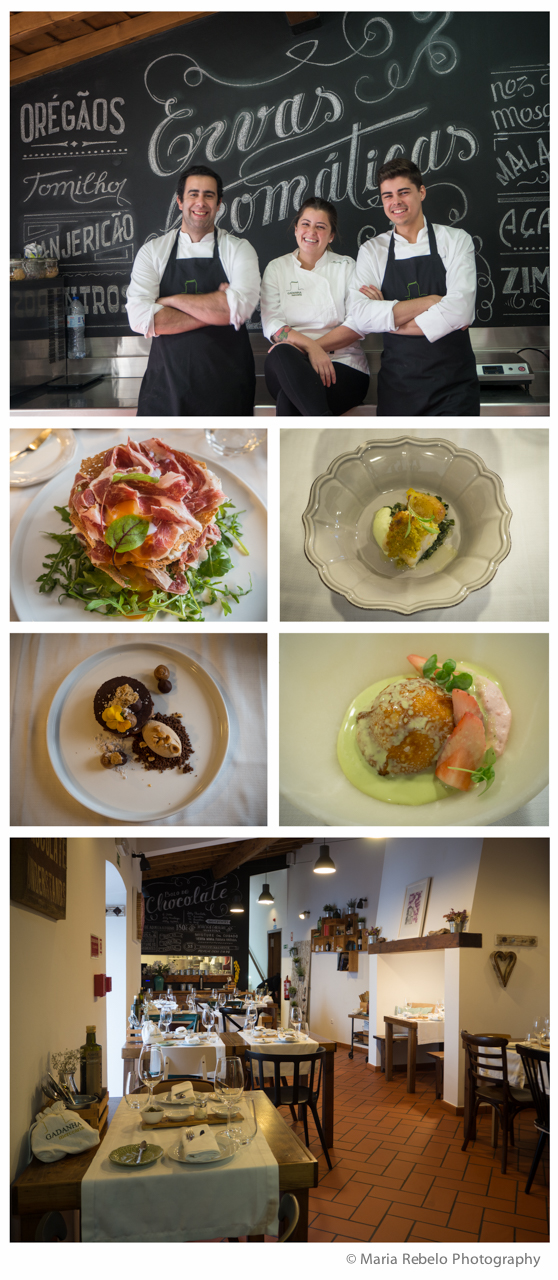
As soon as we entered, we felt that there was something special about Gadanha, a small restaurant in downtown Estremoz. The back wall is decorated with a chocolate cake recipe hand written by Michele Marques, the Brazilian chef who runs the restaurant. The dining room is furnished with old chairs and tables that give the place a cozy feeling.

We asked our waitress whether it was possible to sample a few items from the menu. Our culinary feast began with a plate of goat cheese, pears, walnuts and honey, accompanied by a thyme ice cream. This ethereal combination of flavors from Greece made us feel like gods dining on Mount Olympus.

A plate of delicious lamb croquettes paired with a roasted garlic aioli brought us back to earth. They were followed by one of the restaurant’s signature dishes: an ingenious “mille feuilles” constructed with thin slices of Alentejo bread, codfish and black pork prosciutto. The flavors of Alentejo shined on the next plate: a sausage called “farinheira” toped with fried quail eggs and accompanied by apple purée. The savory part of the meal ended with another signature dish: a delicious slow-cooked codfish topped with a crust made from cornbread, rosemary and thyme.

An extravagant combination of hazelnut and chocolate brought us to the realm of sweetness. It was followed by graceful “îles flottantes” covered with an orange crust, served with strawberries and a basil-infused crème anglaise.

We asked our waitress whether we could compliment the chef on our extraordinary meal. Michele came to our table with a radiant smile. We asked her an indiscreet question: “How does a Brazilian chef open a restaurant in the middle of Alentejo? “I fell in love with someone from Alentejo,” she told us. “That love waned but I liked Alentejo so much that I stayed.” We asked Michele where she gets her inspiration. “I did not grow up with the traditional recipes of Alentejo, I have a different culinary background.” she answered. “But I am inspired by the amazing products that the region has to offer.”

Michele introduced us to her business partner, Mário Vieira, her close collaborators, sous chef Alberto Muralha and pastry chef Gonçalo Carvalho, and all the dining room staff. “The restaurant is a team effort,” she stressed. “We’re all essential to the quality of the food and service. I have to pick the right people to make sure that everything we do, we do with love.“

It is clear that someday soon stars will shine on this restaurant in Alentejo. But we don’t need official accolades to know that Gadanha serves extraordinary food prepared with love.

Gadanha is located at Largo Dragões de Olivença, 84 A in Estremoz, tel. 268 333 262. Click here for their website.


Eating with the best people in Vila Real

OLYMPUS DIGITAL CAMERA

“I’m sorry, but we cannot accommodate you. We won’t have a free table any time soon,” said Eleutério Lameirão in a serious tone that agrees with his solemn name. His small restaurant, located in a residential area of Vila Real, was full of regular customers.

Before we left, we took a glance at the menu and found a quote by Julia Child: “People who love to eat are always the best people.” Inspired by this quote, we decided to wait. Eleutério gave us a puzzled look, but fifteen minutes later he had a table for us.

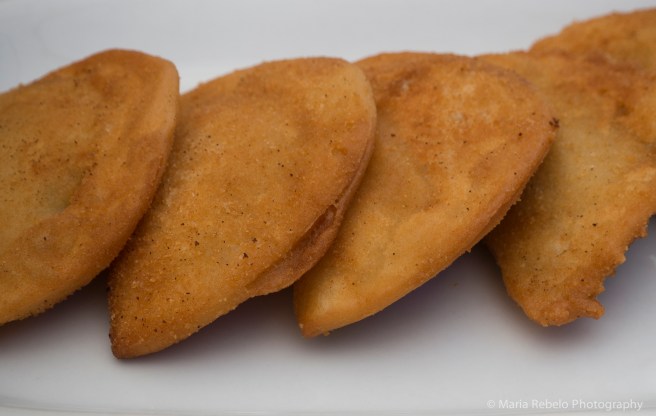
We ordered rissois, fried breaded dough shaped like a half moon with a shrimp or meat filling. Eleutério brought them to the table and waited around to see our reaction. They were crispy on the outside and full of flavor on the inside.  When we said “wow, these are amazing!” Eleutétio abandoned his shy demeanor and smiled, pleased by our reaction. He went back into the kitchen and brought us a plate of codfish cakes. These were also extraordinary: light, airy and slightly crunchy, a four-part harmony of cod, parsley, egg, and potato.

Finally, we had small sardines called “petingas,” incredibly fresh, fried and seasoned to perfection. They came with an hearty bean rice that melted in the mouth and blended with the salty sardines.

The restaurant was still very busy but Eleutério came to chat with us. He told us that the menu is always small, three or four items made with the best fresh ingredients and modestly priced. The recipes have been refined over many years and require great attention to detail. “It is hard work because there’s no room for distractions. Everything has to be right, the timing, the temperature, the seasoning. But it is worth it because when everything is right the taste is amazing,” he said. If you ever have the privilege of eating at O Lameirão, we think you’ll agree.

The restaurant O Lameirão is located on Rua da Cruz, Vila Real, tel. 259 346 881.

Eels from Murtosa

OLYMPUS DIGITAL CAMERA

When we were young, every September our family ate fried eels that came from Murtosa, a small town in the estuary of the Vouga river. The eels were marinated in “escabeche,” a sauce made with olive oil, white wine, onions, paprika, laurel, and vinegar.  These ingredients were combined according to ancient rules of alchemy so that when the eels, the sauce and boiled potatoes were placed on the plate, they transformed into culinary gold.

Eels are mysterious creatures. They spend their early years in fresh river waters. After reaching maturity, they swim to the middle of the Atlantic ocean to lay their eggs in the Sargasso Sea. The baby eels swim back in search of fresh river water and the cycle of life restarts.

How do the infant eels know where to go? And why do the best tasting eels end up in Murtosa? These are inscrutable mysteries.

Before refrigeration was available, the Murtosa eels were a local delicacy. The fisherman ate them fried or in a “caldeirada” that combines the fish with potatoes, tomato, onion, garlic, olive oil, lard, herbs, and spices.

In the first half of the 20th century, some local cooks started marinating fried eels in escabeche sauce. First they packed them in wooden barrels and later in tin cans. These marinated eels gained great fame and popularity in the center of Portugal.

Over time, eels became scarce, the number of fisherman declined, canning factories closed, and it became hard to find marinated eels. So imagine our surprise when, strolling in downtown Lisbon, we found a store called 1942 that specializes in marinated eels from Murtosa! The cans come from a factory that has been processing eels since 1942.

We took this precious find home and opened the can slowly, preparing to be disappointed. But, when we placed the eels, the sauce and boiled potatoes on a plate, the old magic flavors came to life and we felt young again.

The 1942 store  is located on the corner of Rua da Conceição and Rua da Prata in Lisbon (tel. 21-599-9890).

Ambrosia from Azores

OLYMPUS DIGITAL CAMERA

The ancient gods of Greece and Rome satiated their hunger with ambrosia, a food with exuberant colors, an elegant aroma and a taste that has the perfect combination of sweetness and acidity.

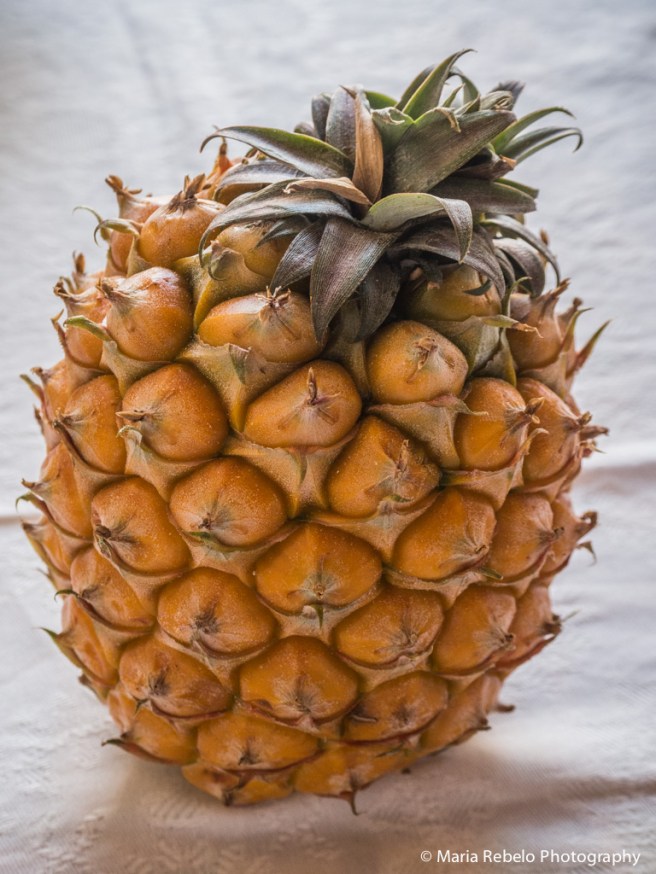
No one knows what this divine food looks like except the people from the island of São Miguel in Azores.  It is an open secret that ambrosia grows in the island in the form of a small pineapple.

While other places produce ordinary pineapples meant for human consumption, São Miguel produces extraordinary pineapples meant for the gods.

If you visit the island, don’t miss the chance to try this transcendent food. Just make sure the gods are not looking.


A tavern called Wednesday

Quarta-Feira rest composite

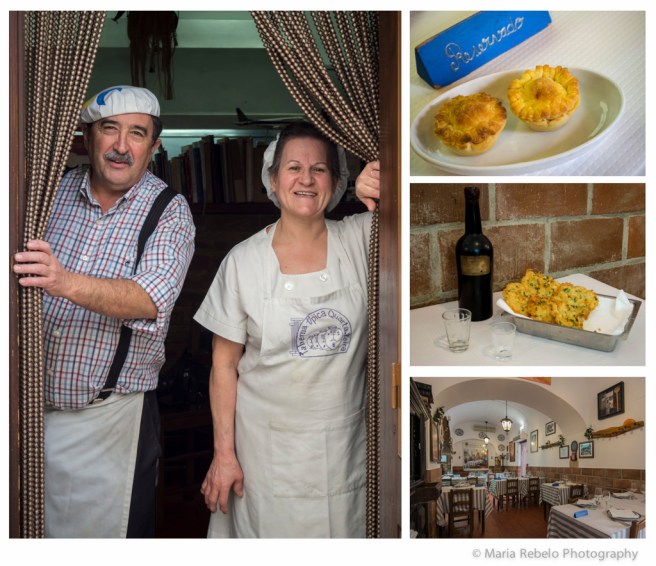
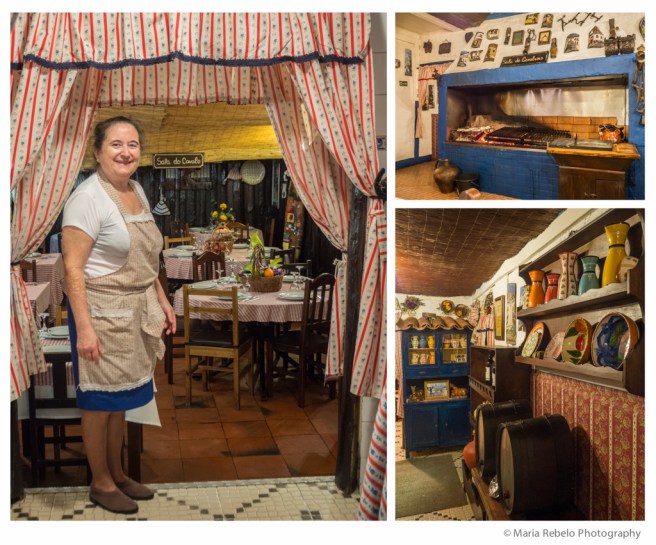
André Freire, the manager of the beautiful Évora pousada, urged us to try a tavern called Quarta Feira (the Portuguese word for Wednesday). “It’s a special place,” André said with a smile. “There’s no menu; you have to trust Zé Dias, the owner, and go with the flow.”

As soon as we entered the restaurant, we became friends with Zé Dias. He moved to Évora from a village in Beira Alta called Quarta Feira, the name he used for the restaurant. Dias worked as a typographer until he opened this tavern 25 years ago with Luisa Batista, a great local cook.

Dias’ enthusiasm for food, wine and life in Alentejo is infectious. Everything he serves comes from people he knows well, from the producers of cheese and sausages to the maker of the clay pots that are integral to Luisa Batista’s cooking. When we asked Dias how he managed to convince Paulo Laureano, a renowned Portuguese enologist, to make the house wine for Quarta Feira, Dias replied “Of course he said yes; we’ve been friends for a long time.”

Our dinner started with slices of local sausages and prosciutto made with black pork from Alentejo. Then a warm sheep cheese seasoned with oreganos arrived, busting with flavor. Next, we had some wonderful mushrooms cooked in mushroom water, seasoned with olive oil, garlic and coriander. “The secret is all in the timing,” Dias tells us and we believe him because at this point we believe everything he says.

The meal’s main event was the house specialty: black iberian pork shoulder marinated in wine cooked slowly in a clay pot. It was so delicious that our taste buds scintillated with delight. The dessert was composed of dried figs, walnuts, cooked quince, and samplings of two conventual desserts.

The meal ended with a glass of licoroso from Herdade do Mouchão. This sweet wine with notes of fruits and spices was a perfectly simple ending to a simply perfect meal.

Zé Dias is a philosopher king who disguises as a tavern owner so that he can share with his guests the joy of living in Alentejo.

Taberna Típica Quarta Feira is on Rua do Inverno 18, Évora, tel. 266 707 530.

The apple of paradise

OLYMPUS DIGITAL CAMERA

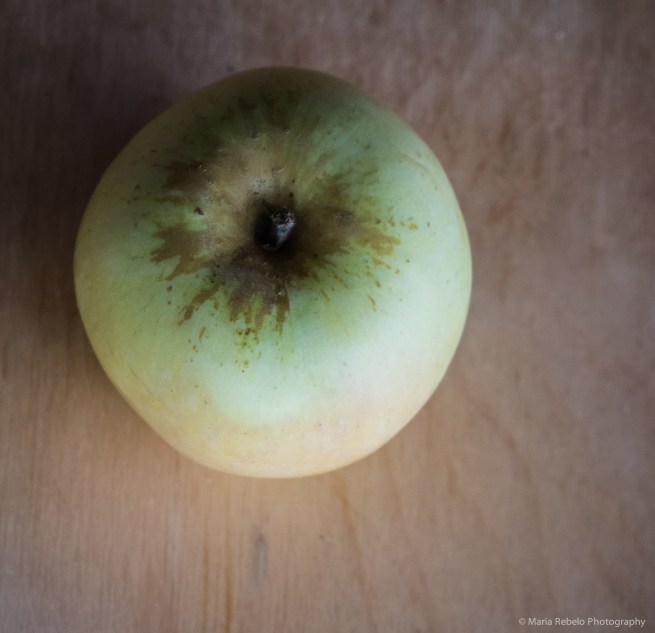
The best apple we’ve ever tried is a Portuguese variety called Bravo de Esmolfe. It was discovered two centuries ago in a small Beira-Alta village called Esmolfe.

You can find prettier apples, but don’t be fooled by the unassuming look of Bravo de Esmolfe. Its taste is a revelation, the perfect combination of sweetness and tartness. And its inside is so full of antioxidants that it makes us feel immortal.

Biting into a Bravo de Esmolfe helps us understand Adam’s temptation and makes us wonder whether the village of Esmolfe was once the Garden of Eden.

If you visit Portugal in Fall or Winter, don’t miss the chance to try Bravo de Esmolfe, an apple that belongs in paradise.

The glorious food of a rural past

Composit - solar dos amigosWhen you dine at Solar dos Amigos, you take a trip back to a time when people grew their own food, so cooking was informed by a deep knowledge of ingredients.
We realized that our meal was going to be extraordinary when Luisa Nunes, the restaurant owner, brought a small plate of pataniscas (fried codfish) that were wonderfully light and full of flavor. We liked them so much that we tried two other codfish preparations. The first was Tiborna, roasted codfish combined with potatoes, olive oil, and garlic. It is a traditional recipe, but this version shined because of the pristine ingredients and immaculate execution. The second was codfish campino style, a delicious, airy combination with cabbage and white beans baked inside a country bread.

Our first meat dish, fried lamb chops, reminded us of how extraordinary the taste of lamb can be. The grand finale was Cascos à Ribatejo—veal grilled in the huge fireplace of the main dining room. The veal was succulent, tender, and deeply satisfying.

Throughout the meal, different types of bread and vegetable sides were brought to our table: an unforgettable warm corn bread (broa) seasoned with garlic and olive oil, a hearty bean rice, and much more. The food was blissfuly married with the house wine, a bold red produced by Luisa’s octogenarian father.

Luisa is a master of the art of hospitality. Even though the restaurant has four spacious dining rooms, she seems to be everywhere, chatting with regulars, welcoming new clients, making sure the food and service are perfect. Luisa loves the restaurant so much that she never vacations and feels bored on Wednesdays, the day Solar dos Amigos closes. It is her passion that makes dining at Solar dos Amigos such an exceptional experience.

The greatest food in Portugal was not inspired by the kitchens of palaces and noble houses. It comes from a rural tradition that is perfectly reflected in the food of Solar dos Amigos.

Solar dos Amigos is located on a small village called Guisado, 100 km north of Lisbon. The restaurant’s address is Rua Principal, 49, Guisado, Caldas da Rainha. Even though the restaurant is large, it is a good idea to make reservations. Their telephone number is 262-877-135. Click here for their website.


Chocolate tastes new again

OLYMPUS DIGITAL CAMERA

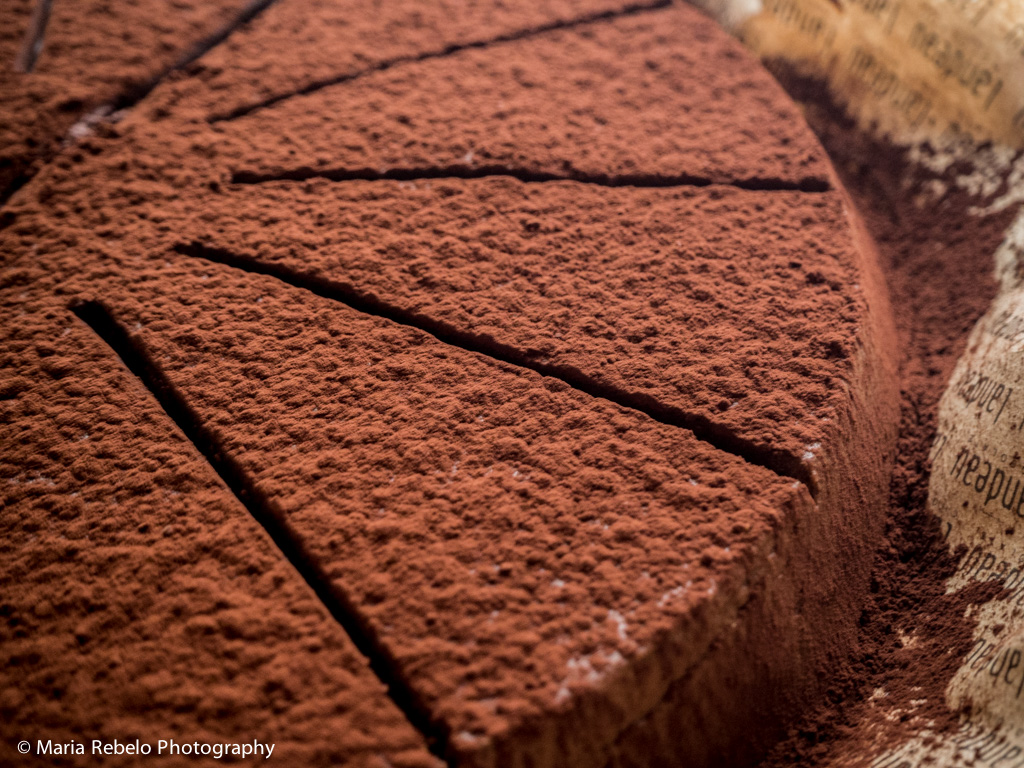
Isabel Landeau is a designer who, as a hobby, baked chocolate cakes to share with her friends. She loved so much the oohs and aahs that her cakes inspired, that she became obsessed with perfecting her recipe. For nine months, she experimented with different chocolates and cocoas. The result is a master piece, a cake that is deliciously light but layered with exquisite chocolate flavors.

When Landeau opened a store to share her creation with the world, she was surprised at the praise lavished by the international press (the New York Times called her cake “devilishly good”). Her store has become an obligatory place of pilgrimage for chocolate lovers.

Landeau makes chocolate taste as exciting as when it was brought to Europe in the 16th century, as exotic as when Aztecs used it in religious cerimonies. Try a slice of Landeau cake and you’ll see.

Landeau is located on Rua das Flores, N. 70, 911-810-801. Click here for their website.