Eels from Murtosa

OLYMPUS DIGITAL CAMERA

When we were young, every September our family ate fried eels that came from Murtosa, a small town in the estuary of the Vouga river. The eels were marinated in “escabeche,” a sauce made with olive oil, white wine, onions, paprika, laurel, and vinegar.  These ingredients were combined according to ancient rules of alchemy so that when the eels, the sauce and boiled potatoes were placed on the plate, they transformed into culinary gold.

Eels are mysterious creatures. They spend their early years in fresh river waters. After reaching maturity, they swim to the middle of the Atlantic ocean to lay their eggs in the Sargasso Sea. The baby eels swim back in search of fresh river water and the cycle of life restarts.

How do the infant eels know where to go? And why do the best tasting eels end up in Murtosa? These are inscrutable mysteries.

Before refrigeration was available, the Murtosa eels were a local delicacy. The fisherman ate them fried or in a “caldeirada” that combines the fish with potatoes, tomato, onion, garlic, olive oil, lard, herbs, and spices.

In the first half of the 20th century, some local cooks started marinating fried eels in escabeche sauce. First they packed them in wooden barrels and later in tin cans. These marinated eels gained great fame and popularity in the center of Portugal.

Over time, eels became scarce, the number of fisherman declined, canning factories closed, and it became hard to find marinated eels. So imagine our surprise when, strolling in downtown Lisbon, we found a store called 1942 that specializes in marinated eels from Murtosa! The cans come from a factory that has been processing eels since 1942.

We took this precious find home and opened the can slowly, preparing to be disappointed. But, when we placed the eels, the sauce and boiled potatoes on a plate, the old magic flavors came to life and we felt young again.

The 1942 store  is located on the corner of Rua da Conceição and Rua da Prata in Lisbon (tel. 21-599-9890).
Ambrosia from Azores

OLYMPUS DIGITAL CAMERA

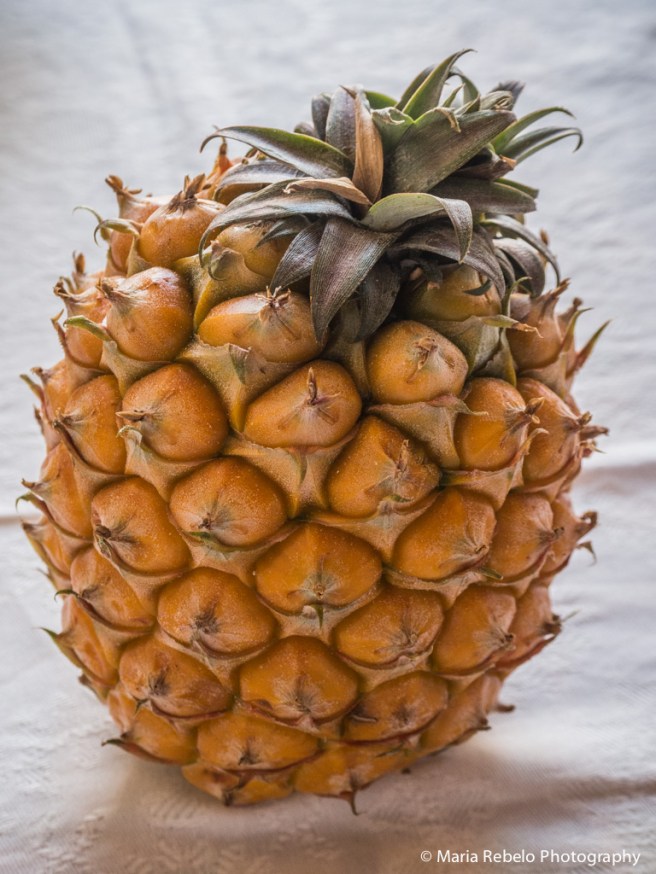
The ancient gods of Greece and Rome satiated their hunger with ambrosia, a food with exuberant colors, an elegant aroma and a taste that has the perfect combination of sweetness and acidity.

No one knows what this divine food looks like except the people from the island of São Miguel in Azores.  It is an open secret that ambrosia grows in the island in the form of a small pineapple.

While other places produce ordinary pineapples meant for human consumption, São Miguel produces extraordinary pineapples meant for the gods.

If you visit the island, don’t miss the chance to try this transcendent food. Just make sure the gods are not looking.


A tavern called Wednesday

Quarta-Feira rest composite

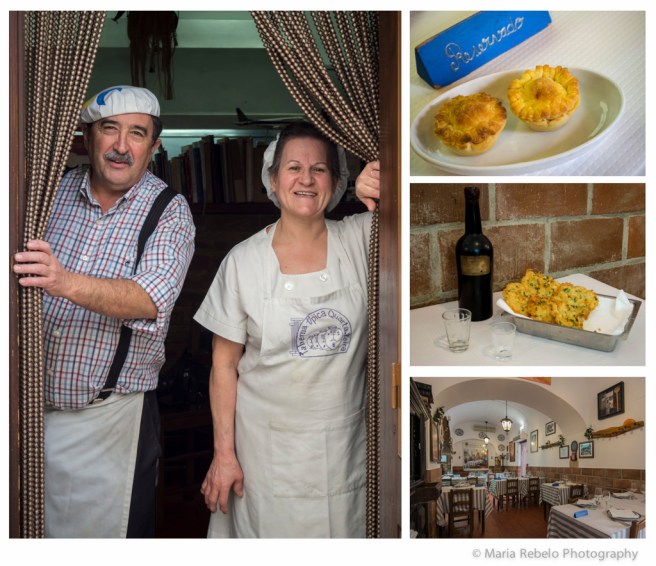
André Freire, the manager of the beautiful Évora pousada, urged us to try a tavern called Quarta Feira (the Portuguese word for Wednesday). “It’s a special place,” André said with a smile. “There’s no menu; you have to trust Zé Dias, the owner, and go with the flow.”

As soon as we entered the restaurant, we became friends with Zé Dias. He moved to Évora from a village in Beira Alta called Quarta Feira, the name he used for the restaurant. Dias worked as a typographer until he opened this tavern 25 years ago with Luisa Batista, a great local cook.

Dias’ enthusiasm for food, wine and life in Alentejo is infectious. Everything he serves comes from people he knows well, from the producers of cheese and sausages to the maker of the clay pots that are integral to Luisa Batista’s cooking. When we asked Dias how he managed to convince Paulo Laureano, a renowned Portuguese enologist, to make the house wine for Quarta Feira, Dias replied “Of course he said yes; we’ve been friends for a long time.”

Our dinner started with slices of local sausages and prosciutto made with black pork from Alentejo. Then a warm sheep cheese seasoned with oreganos arrived, busting with flavor. Next, we had some wonderful mushrooms cooked in mushroom water, seasoned with olive oil, garlic and coriander. “The secret is all in the timing,” Dias tells us and we believe him because at this point we believe everything he says.

The meal’s main event was the house specialty: black iberian pork shoulder marinated in wine cooked slowly in a clay pot. It was so delicious that our taste buds scintillated with delight. The dessert was composed of dried figs, walnuts, cooked quince, and samplings of two conventual desserts.

The meal ended with a glass of licoroso from Herdade do Mouchão. This sweet wine with notes of fruits and spices was a perfectly simple ending to a simply perfect meal.

Zé Dias is a philosopher king who disguises as a tavern owner so that he can share with his guests the joy of living in Alentejo.

Taberna Típica Quarta Feira is on Rua do Inverno 18, Évora, tel. 266 707 530.

The apple of paradise

OLYMPUS DIGITAL CAMERA

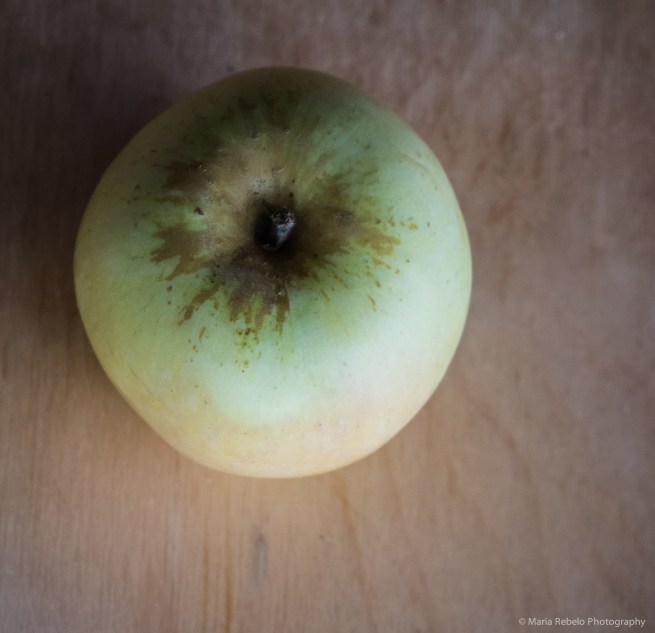
The best apple we’ve ever tried is a Portuguese variety called Bravo de Esmolfe. It was discovered two centuries ago in a small Beira-Alta village called Esmolfe.

You can find prettier apples, but don’t be fooled by the unassuming look of Bravo de Esmolfe. Its taste is a revelation, the perfect combination of sweetness and tartness. And its inside is so full of antioxidants that it makes us feel immortal.

Biting into a Bravo de Esmolfe helps us understand Adam’s temptation and makes us wonder whether the village of Esmolfe was once the Garden of Eden.

If you visit Portugal in Fall or Winter, don’t miss the chance to try Bravo de Esmolfe, an apple that belongs in paradise.

The glorious food of a rural past

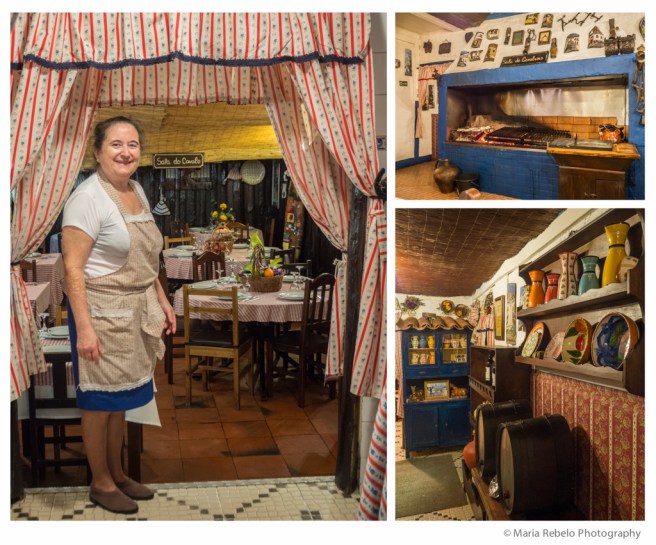
Composit - solar dos amigosWhen you dine at Solar dos Amigos, you take a trip back to a time when people grew their own food, so cooking was informed by a deep knowledge of ingredients.
We realized that our meal was going to be extraordinary when Luisa Nunes, the restaurant owner, brought a small plate of pataniscas (fried codfish) that were wonderfully light and full of flavor. We liked them so much that we tried two other codfish preparations. The first was Tiborna, roasted codfish combined with potatoes, olive oil, and garlic. It is a traditional recipe, but this version shined because of the pristine ingredients and immaculate execution. The second was codfish campino style, a delicious, airy combination with cabbage and white beans baked inside a country bread.

Our first meat dish, fried lamb chops, reminded us of how extraordinary the taste of lamb can be. The grand finale was Cascos à Ribatejo—veal grilled in the huge fireplace of the main dining room. The veal was succulent, tender, and deeply satisfying.

Throughout the meal, different types of bread and vegetable sides were brought to our table: an unforgettable warm corn bread (broa) seasoned with garlic and olive oil, a hearty bean rice, and much more. The food was blissfuly married with the house wine, a bold red produced by Luisa’s octogenarian father.

Luisa is a master of the art of hospitality. Even though the restaurant has four spacious dining rooms, she seems to be everywhere, chatting with regulars, welcoming new clients, making sure the food and service are perfect. Luisa loves the restaurant so much that she never vacations and feels bored on Wednesdays, the day Solar dos Amigos closes. It is her passion that makes dining at Solar dos Amigos such an exceptional experience.

The greatest food in Portugal was not inspired by the kitchens of palaces and noble houses. It comes from a rural tradition that is perfectly reflected in the food of Solar dos Amigos.

Solar dos Amigos is located on a small village called Guisado, 100 km north of Lisbon. The restaurant’s address is Rua Principal, 49, Guisado, Caldas da Rainha. Even though the restaurant is large, it is a good idea to make reservations. Their telephone number is 262-877-135. Click here for their website.


Chocolate tastes new again

OLYMPUS DIGITAL CAMERA

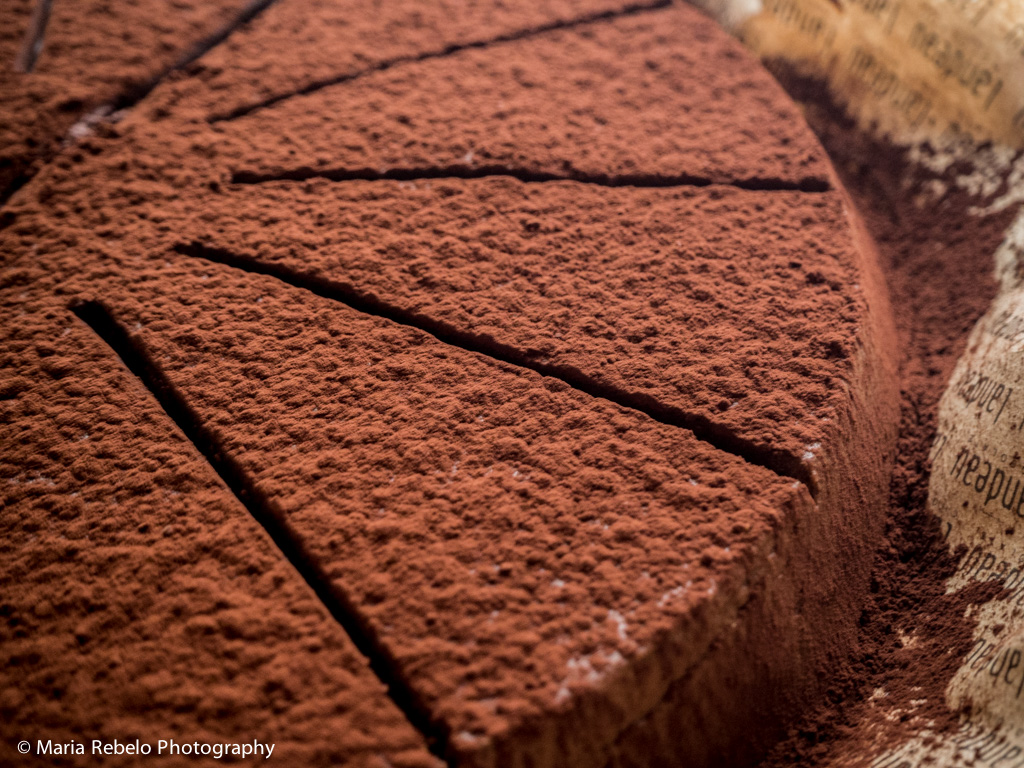
Isabel Landeau is a designer who, as a hobby, baked chocolate cakes to share with her friends. She loved so much the oohs and aahs that her cakes inspired, that she became obsessed with perfecting her recipe. For nine months, she experimented with different chocolates and cocoas. The result is a master piece, a cake that is deliciously light but layered with exquisite chocolate flavors.

When Landeau opened a store to share her creation with the world, she was surprised at the praise lavished by the international press (the New York Times called her cake “devilishly good”). Her store has become an obligatory place of pilgrimage for chocolate lovers.

Landeau makes chocolate taste as exciting as when it was brought to Europe in the 16th century, as exotic as when Aztecs used it in religious cerimonies. Try a slice of Landeau cake and you’ll see.

Landeau is located on Rua das Flores, N. 70, 911-810-801. Click here for their website.

Codfish poetry

Pastéis de BacalhauJune 10 is a holiday dedicated to the great 15th century poet Luis de Camões, whose epic poem Lusíadas helped forge the identity of Portugal as a nation.

One of Portugal’s most revered contemporary writers, António Lobo Antunes, said that “To know how to make codfish cakes is as important as to have read the Lusíadas.”

Lobo Antunes meant his words as a compliment to the genius of Camões. Try codfish cakes accompanied with tomato rice and a great glass of red wine and you’ll see that they are pure poetry!

Tasting Portuguese cheese

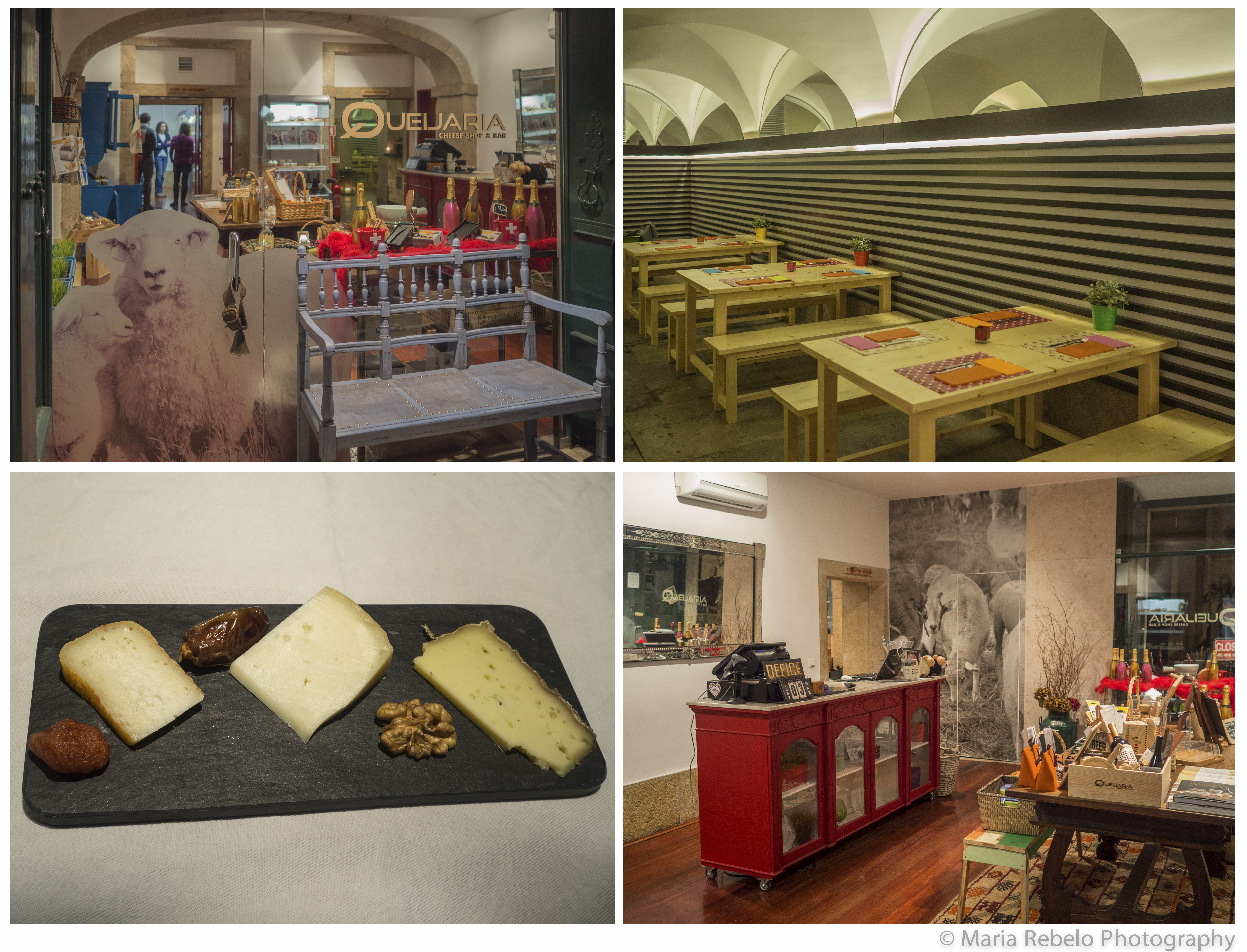
Queijaria Composit- ©mariarebelophotography.comPresident Charles de Gaulle asked how could people expect him to run a country with 246 kinds of cheese. Judged by this metric, Portugal is easier to govern than France. We have fewer cheese varieties. But there are still many regions, types of milk, producers, and styles.

Many interesting Portuguese cheeses are hard to find. They are made in small quantities by artisanal producers and sold in local markets. Queijaria, a new store in Lisbon, makes it easy to sample these local specialties.

The store is run by people who are passionate about cheese and wine, so they are uniquely qualified to serve as your guide. They prepare a degustacion of different cheeses, perfectly sequenced and paired with great wines. In one sitting, your palate can travel from North to South, to the island of Azores and back to continental Portugal. It’s a gastronomical journey you will not forget!

Queijaria is in the Principe Real neighborhood at Rua do Monte Olivete, 40, tel. 21 346 0474. Click here for their web site.

A meal with friends

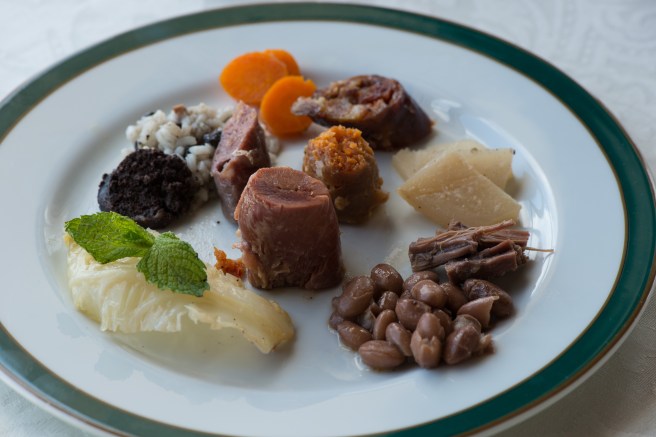
CL Logo In France they call it “pot au feu, “ in Italy “bollito misto,” in Spain “cocido Madrileño.” In Portugal we call it “cozido.” The concept is the same, but the taste differs remarkably from region to region. Cuts of meats that require long periods of cooking are combined with sausages, potatoes, chickpeas, cabbages, and other vegetables. There are no gimmicks, no complex sauce reductions, no overpowering spices, only great ingredients.

In the island of Azores, they prepare the cozido by burying the pot in volcanic soil, where it cooks slowly in geothermal heat. There are no volcanos in continental Portugal, so we have to use regular stoves to do the cooking.

One of the best cozidos is served every Sunday by Companhia das Lezírias, near Vila Franca de Xira, 50 Kms from Lisbon. It is a posh cozido made with wild game that imparts a unique taste to the preparation.

Trying this delicacy requires planing, since it is indispensable to make reservations  in advance. Call the Companhia das Lezírias to book a table for a group of friends and, when the time comes, you’ll enjoy a very satisfying meal in the company of very happy friends. CL cozido

Click here for the website of the restaurant and here for directions. You can make reservations by calling 263 654 985 or emailing rest.coudelaria@clix.pt. 

Farmers markets

D. Natividade

We love going to farmers markets. We always imagine we are in a museum and study the whimsical shapes of the vegetables, the exuberant colors of the fruit, and the amazing aromas.

Most of these fruits and vegetables cannot withstand long distance travel or extended stays in supermarket shelves. But what they lack in endurance they more than make up in taste and smell.

We enjoy talking to the fruits and vegetable vendors. They always have interesting insights about their produce as well as about life. So, if you see a sign saying “Mercado,” follow it. You’ll find food for your body and wisdom for your soul.

The photo shows three generations of wonderful fruits and vegetable vendors: Dona Natividade, her daughter in law and her granddaughter.