Where great views and delicious food go together

EPUR

It is often said that restaurants with good views serve lousy food. This aphorism doesn’t apply to EPUR, chef Vincent Farges’ new restaurant in Lisbon. Its windows offer beautiful views of the Tagus river and the rooftops of downtown Lisbon. But, once the food arrives, it is hard to choose between looking out the window and admiring the elegance of the sustenance on our plate. When we taste the food, our brain’s ability to process pleasurable sensations has to stretch even further.

Served on graceful white plates, the food looks ready for a Vogue photoshoot. Its beauty is not superficial, it stems from the quality of the ingredients and the meticulous preparations.

We tried a flavorful rabbit rillette with foie gras, seasoned with pear vinegar, a delicate avocado mousse topped with crispy Galician cabbage, the type of cabbage used to make caldo verde. Our lunch ended with a sumptuous soup starring a trio of marvelous fish: manta ray, sea bass, and monkfish.

It is hard to think of a better place to meet Lisbon for a lunch date than at Vincent Farge’s EPUR.

EPUR is located at Largo da Academia Nacional de Belas Artes 14, Lisboa, tel. 21 346 0519.


The wonders of Maçussa

Composite Maçussa

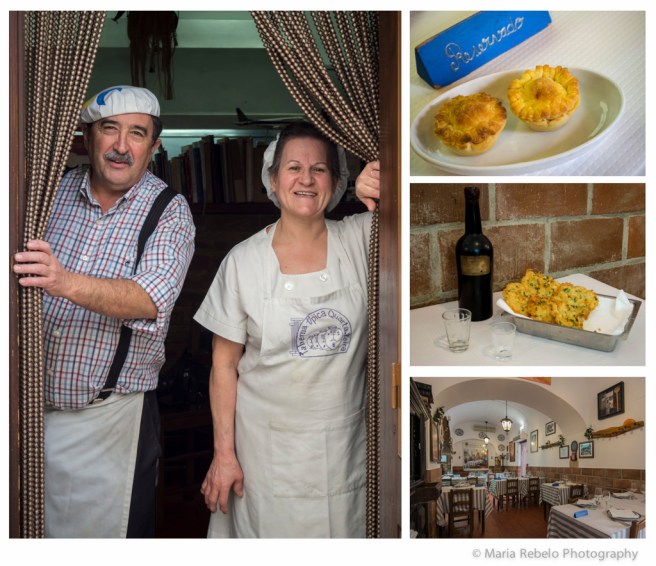
Francisco Magalhães, one of our favorite chefs, recommended the lunches that Adolfo Henriques prepares in Maçussa, a small town lost in the middle of Ribatejo. We called Adolfo to see if he could accommodate us and we were told to come the following Saturday at 1:30 pm to Rua do Moinho, number three.

We arrived late because we got lost. Maçussa is ignored by most GPS maps, so we had to resort to the ancient art of asking for directions. We parked underneath an oak tree and walked to a small green door marked with the number there. Inside, next to an old grandfather’s clock, there was a table set with plates of mouthwatering artisanal chèvre, camembert, and prosciutto.

Adolfo came to greet us. He looks like Ernest Hemmingway and speaks in short, crisp sentences much like the characters in Hemmingway’s novels. We asked many questions and this flood of curiosity made him clearly uneasy. “My usual conversation pals are two mules. They’re the only ones who truly understand me,” he tells us.

A server arrives with glasses of orange wine, made by leaving the juice of white grapes in contact with the skins. It has a wonderful acidity and evanescent aromas of fruit, herbs and flowers. “This type of wine was common in the old days when there were 226 wineries in Maçussa,” says Adolfo.

He brings us a basket with two types of bread. “I make this bread with yeast inherited from my grandfather. We kept it alive all these years. One of our breads is made with barbela wheat, an ancient gluten-free variety that is almost extinct. I started with a small bag of seeds. It took years to produce enough wheat to bake bread,” he explains.

Next, Adolfo offers us a tray of “gaspiada,” yellow pieces of baked polenta soaked in fragrant olive oil. He makes cornbread in a clay bowl that is more than a century old, a wedding present received by his grandmother. Some dough leftovers stay attached to the recipient. He mixes them with olive oil, bakes them, and serves them in cabbage leaves. “The elders say it is a recipe left by the French troops who trampled on Ribatejo during the peninsular wars.” says Adolfo.

A server keeps bringing more delights: mushrooms stuffed with goat cheese, an amazing blood sausage, a plate of flavorful smoked codfish liver. We use up all the synonyms for delicious in our vocabulary.  Adolfo rewards these accolades by offering us slices of a small aged cheese. “I don’t understand magic, but sometimes it happens,” he tells us. The cheese thrills all the senses in our palates. “A few years ago a French food journalist and a cheese producer came to visit. I offered them a cheese similar to this one. They refused to believe that it was not French. I had to show them my artisanal workshop to convince them that the cheese was made in Maçussa.”

Adolfo went to Lisbon to study sociology but interrupted his studies because he was drafted. When his army stint finished, he decided to return to his father’s farm. But his father didn’t want him back. “You are from the first generation that can leave and find a better life. There’s nothing for you here. Go back to your studies.” Adolfo stayed. He attended a workshop about making goat cheese with two biologists who had apprenticed in France. Then, he bought some goats and started making chèvre and camembert. “I’ve been surrounded by goats ever since,” he says, smiling.

We sat at the table for lunch. The meal started with sumptuous pied de mouton mushrooms served with scrambled farm eggs and arugula. “I have a friend who has devoted his life to studying mushrooms. He has identified and analyzed 140 varieties. For many years, he lived in a tent because he could not afford a house. I started buying mushrooms from him several years ago.”

Next, Adolfo brings roasted baby goat with mushrooms, new potatoes and onions. We ask him what is the secret to the delectable flavors on our plates. He shrugs his shoulders in silence and we realize that we asked him to explain the unexplainable. Adolfo feels bad about letting the question hang in the air, so he offers a partial answer: “the meat is seasoned with white wine, thyme, marjoram, and wild cumin.”

Dessert is a luscious chocolate cake, “the best in Ribatejo,” says Adolfo, mocking the self-proclaimed world’s best chocolate cake.  There are also amazing coscorões, paper-thin slivers of fried orange-flavored dough that are crunchy and sweet. The grandfather’s clock strikes six; we apologize for staying so long. “You’re not the first,” Adolfo replies. “A couple of years ago, a group of international chefs came to spend two hours and stayed for two days. I had to find places for them to sleep.”

We bought bread and cheese and drove back home, regretting all the years we spent without knowing about the wonders produced by Adolfo Henriques in Maçussa. But now we know. And so do you.

Adolfo Henriques’ company, Granja dos Moinhos, is located on Rua do Moinhos 3, Maçussa, Azambuja, tel 919 474 476, email granjadosmoinhos@sapo.pt. 


Repentina

repentina Composit

Several people recommended that we try Repentina, a humble tasca in Poiares famous for its baby goat roasted in a wood-fired oven. Its name is a twist on the word “repente” which means in a flash. We first visited the restaurant last year. When the waiter brought the menu, we said we didn’t need it, we wanted to try their famous roasted goat. Incredulous, the waiter explained that “If you want to eat baby goat, you have to call us a day ahead and reserve the order. We only roast enough meat for the people who reserved it.” Well, no wonder the locals like say that nothing is easy in the Douro valley. Disappointed, we ordered a large beef cutlet that arrived perfectly grilled accompanied by salad and a delicious tomato rice.

This year, we made sure to call ahead to secure our roasted goat servings. We were told that the best time to show up is at 1:00 pm, just as the roast comes out of the wood ovens.

We arrived at the appointed hour and sat in the dining room overlooking the Douro valley. The air was filled with enticing aromas that heralded the arrival of the roast to the table. The taste is indeed exceptional, which explains why this place in the middle of nowhere attracts so many customers.

The restaurant is run by the Cunha family. Fernando who is 82, still operates the ovens. His wife Soledade runs the kitchen together with her daughter Ana Paula. Their son Fernando junior runs the restaurant.

I asked Fernando Cunha what is the alchemy that produces such satisfying flavors. He told us that “You have to get the best ingredients, the goats have to be small and tender, the wood for the fire has to produce the right temperature, the seasoning has to be harmonious and fresh. All the details are important. Our name may be Repentina but we do not cook in a flash. We do everything slowly so we get it right.”

Eating well for less in Portugal

OLYMPUS DIGITAL CAMERA

We get asked so often about the dos and don’ts of eating in Portuguese restaurants that we decided to compile a few tips. Here they are.

When you seat at a table, the waiter brings a basket of bread, butter and olives. These items are called the “couvert.” Simple couverts usually cost a couple of euros. Some restaurants bring more elaborate (and more expensive) couverts,  including items such as cheese, prosciutto, and codfish cakes. If you try one of these items, you’ll often pay for the whole couvert. You can always send the couvert back if you don’t want to pay for it.

The markup on wine in Portuguese restaurants is generally lower than in the U.S. or France. So, it is often affordable to choose a great wine to complement the meal. If you describe the style of wine you enjoy, the waiters can generally make good suggestions. House wines are typically inexpensive, ranging from drinkable to surprisingly good. You can ask to sample the house wine before ordering it.

It is a great idea to share main courses. Portions in traditional restaurants are generally large. Some restaurants prepare half portions, but even these halfs can be sizable. We prefer a multicolored meal to a single monochromatic dish, so we often choose a few main courses to share and ask the waiter to bring them out sequentially. It makes for a much more interesting meal.

Portuguese restaurants don’t serve tap water, only bottled spring water. The good news is that spring-water quality is high and prices are low. You can choose room temperature or cold but ice cubes are not normally used with water.

Fish is served on the bone with the head included. If the fish is large, you might be able to ask the waiter to fillet it for you. If you don’t see the price of a fish dish on the menu, it means that the fish is sold by weight. You can choose a fish that suits your preferences and ask the waiter to weigh it so you know its cost before ordering it.

The Portuguese use different forks and knifes for fish and meat. It is an elegant custom and fish does taste better when eaten with the proper utensils.

If you’re a strict vegetarian, always ask whether the food was prepared with meat products. Vegetable soups are seldom good vegetarian choices because they are often made with chicken stock, sausage or lard. The best bets are salads and vegetable sides.

Espresso is good and cheap. The Portuguese are addicted to high-quality espresso, so  restaurants with lousy coffee are ostracized.

Restaurant waiters earn a fixed salary, so Portuguese leave very modest tips: two or three euros for a normal meal, five euros for exceptional service or for a meal in a fancy restaurant.

If you don’t know what to choose, it is a good idea to ask waiters for advice. If you ask for  the best dishes on the menu, you’re likely to hear that everything on the menu is good. A better way to gather information is to ask what are the waiter’s favorite dishes or which menu offerings are most popular.

That’s it, just bring an appetite, the willingness to try something new, and a great time is guaranteed for all.
Two recipes from Ílhavo

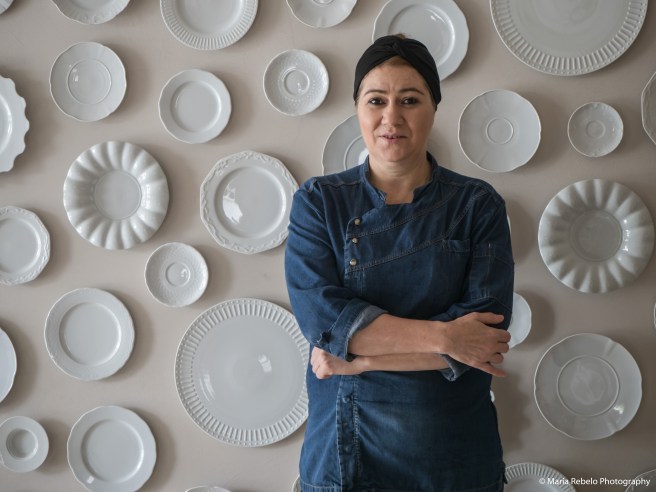
16 - Chefe Cristina Almeida - @mariarebelophotography.com

The Montebelo Vista Alegre hotel in Ílhavo is a hidden travel-destination gem in the center of Portugal. The hotel has a stunning location on the marshes where river and sea water meet.

The building complex incorporates the elegant manor house of José Pinto Bastos, the entrepreneur who two centuries ago pioneered the production of porcelain in Portugal. You can visit an interesting museum that traces the evolution of Vista Alegre from a risky experiment to a renowned porcelain brand. It is also wonderful to visit the porcelain factory, the place where earth and fire combine to serve the imagination of designers and sculptors.

One of the pleasures of a stay at the Vista Alegre hotel are the appetizing meals served in the restaurant headed by chef Cristina Almeida. For the last three decades, Cristina has been creating and refining recipes based on Portugal’s culinary tradition. Since she opened the hotel’s restaurant in 2016, Cristina has had the luxury of serving her food in the elegant dinnerware produced by Vista Alegre.

Two of our favorite dishes at the Vista Alegre restaurant are lamb rice with mushrooms and chestnuts and velvety codfish. We enjoyed these culinary treasures so much that we dared to ask Cristina whether she would share the recipe with our readers. She graciously agreed, so here they are.

Lamb rice with mushrooms and chestnuts

Ingredients for four people

  1. 600 grams of baby lamb
  2. 400 grams of rice (Cristina uses the Carolino variety produced in Portugal)
  3. 1 garlic clove
  4. 250 grams of onions
  5. 100 grams of chestnuts
  6. 100 grams of mushrooms
  7. 0.2 liters of white wine
  8. 0.1 liters of red wine
  9. 0.1 liters of olive oil
  10. Seasonings: thyme, bay leaf, piri-piri, and salt

Cut the lamb into small pieces. Marinate it with garlic, bay leaf, the two wines, thyme and salt. Dice the onion and fry it in olive oil. Add the lamb and fry with the onion. Add the chestnuts, mushrooms, and let the mixture cook a bit more. Add enough water to cook the rice and make plenty of sauce. Wait until the mixture boils and add the rice. As soon as the rice is cooked, serve immediately.

Velvety codfish

Ingredients for five people

  1. 200 grams of codfish without bones
  2. 0ne leek
  3. 1 garlic clove
  4. 150 grams of onion
  5. 1 kg. of potatoes
  6. 0.15 liters of olive oil
  7. Seasonings: parsley and coriander.
  8. Garnish: roasted peppers

Cut the codfish in cubes. Place the codfish, leek, onion, potatoes, parsley, and coriander in a pot. Cover the ingredients with water and let them boil until cooked. In a frying pan, fry the garlic with 1/3 of the olive oil. Add to the boiling mixture. Put the mixture in a blender and blend until smooth. Serve garnished with roasted peppers.

Click here for the website of the Montebelo Vista Alegre hotel. 


Eating pork and clams in Alcácer do Sal

OLYMPUS DIGITAL CAMERA

The staff of the pousadas, a network of historical hotels with fabulous locations, has always great restaurant tips, so when they recommended Porto Santana in Alcácer do Sal, we called to make reservations.

The restaurant remounts to the days when people traveled by horse to Alcácer and crossed the Sado river through a small wooden bridge to work in the fields. They left their horses by the restaurant building and came in for a bite before work. Later, the place became a tavern where people enjoyed a glass of wine. Later still, it became a “tasca,” a humble eatery that catered to local residents. The restaurant was purchased more than a decade ago by Dália Soromenho, a chef who learned from her mother the traditional recipes of Alentejo. She modernized the old place but preserved key elements of its past like the stone floor and the straw-padded roof.

Our waiter took us to a cozy table by the fireplace. The other tables were occupied by locals, most of whom seemed to be involved in agriculture. They were giving thanks for the rain that was blessing the fields and talked with excitement about their wines and their crops.

Our meal started with a soup made with clams, spinach and rice. The flavors blended perfectly and the rice grains were firm, so there was no starch from the rice clouding the flavorful broth. The meal continued with fried fillets of “peixe galo” accompanied by an “açorda” made with fish eggs. The fish was delicious, but it had a hard time competing with the magnificent açorda, the best we ever had. It was a culinary masterpiece made with fish broth, fish eggs, bread, olive oil, and garlic. Finally, we tried black pork “secretos” salted and grilled to perfection.

We told our waiter how much we liked our meal. “But you didn’t try our pork and clams Alentejo style, they are really outstanding.” he said in a tone that made us feel like we had gone to Rome and not seen the pope.

We repented and returned the next day to Porto Santana for lunch. We were received by Dália Soromenho who recommended we also try her tomato soup as a prelude to the pork and clams.

The meal started with a couvert composed of bread, olives, a delicious carrot salad seasoned with minced garlic and coriander, and fried sardines in an “escabeche” sauce made from olive oil, bay leaves and vinegar. The tomato soup was great, the acidity of the tomato contrasting with the creamy poached eggs. The pork and clams were indeed spectacular. They have everything that is lacking in ordinary preparations: the pork was succulent, the clams were not overcooked, and the fried potatoes were crisp and delicious. The dessert was a combination of eggs yolks and the famous pine nuts from Alcácer.

Dália sat at our table and asked us what we thought about the meal. We told her that it is people like her that make Portugal a place full of culinary treasures waiting to be discovered.

Porto Santana is located at Senhora Santana, Alcacer do Sal, tel. 969 020 740.

Finding happiness in Sintra

Market products

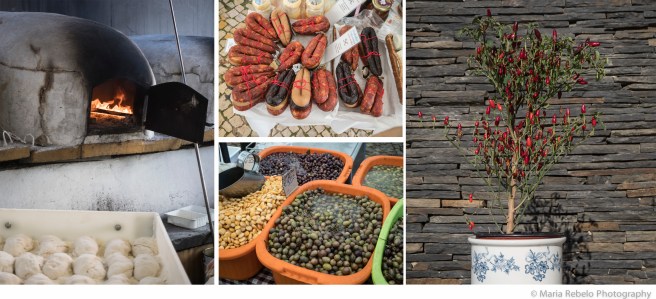
There’s a farmer’s market in São Pedro de Sintra since the 12th century. Nowadays it runs every second and fourth Sundays of each month. It is a great place to buy local fruits and vegetables, artisanal sausages, olives and cheese. Wood-fired ovens bake chouriço bread, filing the air with appetizing aromas.

We saw a farmer selling a small capsicum frutescens tree loaded with little red peppers.  Five centuries ago, Portuguese navigators brought this plant from South America to Africa, where the Bantu people called its fiery pepper “piri piri.” From Africa, the Portuguese took the plant to India where it changed the course of Indian cuisine.

How could we resist bringing home this symbol of the first age of globalization? “Trim the tree in March and you’ll have piri piri peppers between August to January,” advised the genial farmer. We got into the car feeling ecstatic at this unexpected find. Who knew that happiness is a piri piri tree?

The São Pedro market is located on Largo D. Fernando II, São Pedro de Sintra.

Making Alenquer a food destination

Casta 85.jpg

In the 19th century, Alenquer was one of Portugal’s premier wine regions. Its fortunes waned for much of the 20th century. But the tide turned and Alenquer rightly regained its status as a prized wine destination. A young chef called João Simões wants to help Alenquer become a food destination as well.

João apprenticed at the Ritz and worked in many posh hotels and restaurants. Three years ago, he decided to return to his roots to recover and renew the culinary traditions of the region where he was born. He uses local products like quails and Rocha pears and works with farmers on projects like producing goat cheese in the Montejunto mountain. His restaurant is called Casta 85. Casta means varietal, a reference to the region’s wine tradition. The number 85 refers to the chef’s birth year.

The dining room is decorated with furniture procured in the chef’s village. It is a pleasant space that overlooks the Alenquer river. This tributary of the Tagus flows proudly through town, reveling from the praise it received in Luis Vaz de Camões’ epic poem, the Lusíadas.

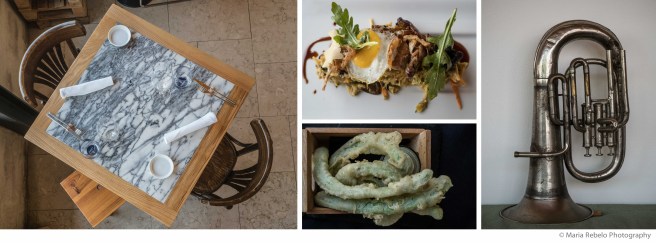
Casta 85’s service is relaxed and attentive. Ana Santana, our genial server, met the chef when they both played in a brass band. The chef’s old instrument is now part of the decoration and some of the band’s brashness inspires the intense, harmonious food.

We tried appetizing alheira croquettes with apple sauce and crisp green bean tempura with garlic mayonnaise. Next, came a delicious quail Brás style served with a quail egg, fried onion and cassava chips. Our meal ended with a luscious duck leg served over a risotto of mushrooms and asparagus.

We returned from Alenquer through a scenic road that took us though countless vineyards. We can’t wait to go back to visit the wine quintas and have another great lunch at Casta 85!

Casta 85 is located at Largo do Espírito Santo, 31 in Alenquer, tel. 915 761 911.

Extraordinary food in Estremoz

Composit Gadanha Mercerearia.jpg

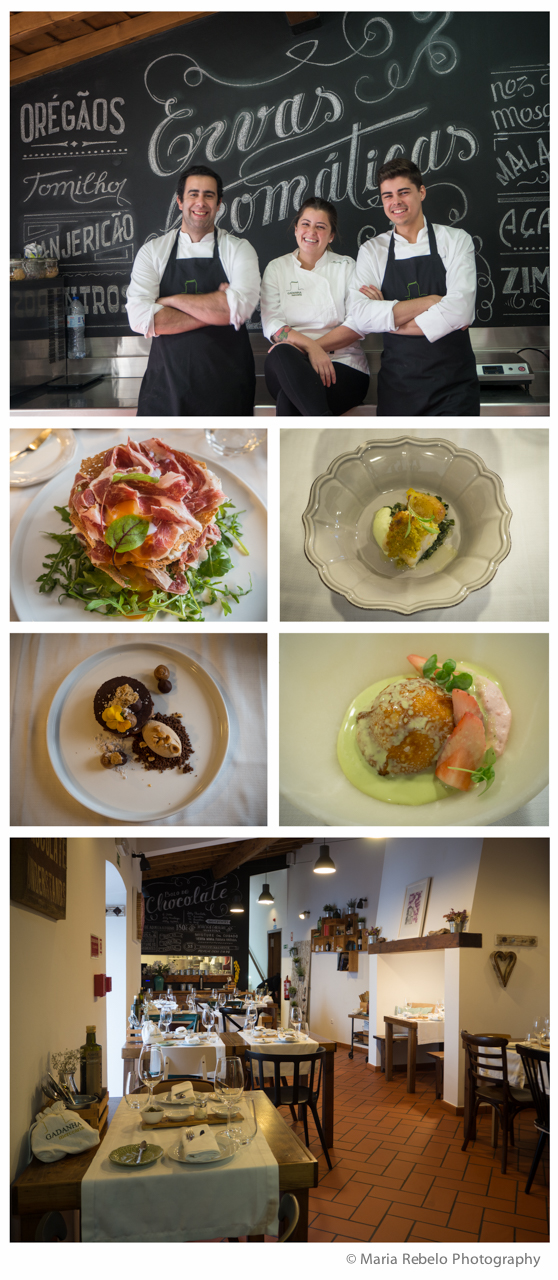
As soon as we entered, we felt that there was something special about Gadanha, a small restaurant in downtown Estremoz. The back wall is decorated with a chocolate cake recipe hand written by Michele Marques, the Brazilian chef who runs the restaurant. The dining room is furnished with old chairs and tables that give the place a cozy feeling.

We asked our waitress whether it was possible to sample a few items from the menu. Our culinary feast began with a plate of goat cheese, pears, walnuts and honey, accompanied by a thyme ice cream. This ethereal combination of flavors from Greece made us feel like gods dining on Mount Olympus.

A plate of delicious lamb croquettes paired with a roasted garlic aioli brought us back to earth. They were followed by one of the restaurant’s signature dishes: an ingenious “mille feuilles” constructed with thin slices of Alentejo bread, codfish and black pork prosciutto. The flavors of Alentejo shined on the next plate: a sausage called “farinheira” toped with fried quail eggs and accompanied by apple purée. The savory part of the meal ended with another signature dish: a delicious slow-cooked codfish topped with a crust made from cornbread, rosemary and thyme.

An extravagant combination of hazelnut and chocolate brought us to the realm of sweetness. It was followed by graceful “îles flottantes” covered with an orange crust, served with strawberries and a basil-infused crème anglaise.

We asked our waitress whether we could compliment the chef on our extraordinary meal. Michele came to our table with a radiant smile. We asked her an indiscreet question: “How does a Brazilian chef open a restaurant in the middle of Alentejo? “I fell in love with someone from Alentejo,” she told us. “That love waned but I liked Alentejo so much that I stayed.” We asked Michele where she gets her inspiration. “I did not grow up with the traditional recipes of Alentejo, I have a different culinary background.” she answered. “But I am inspired by the amazing products that the region has to offer.”

Michele introduced us to her business partner, Mário Vieira, her close collaborators, sous chef Alberto Muralha and pastry chef Gonçalo Carvalho, and all the dining room staff. “The restaurant is a team effort,” she stressed. “We’re all essential to the quality of the food and service. I have to pick the right people to make sure that everything we do, we do with love.“

It is clear that someday soon stars will shine on this restaurant in Alentejo. But we don’t need official accolades to know that Gadanha serves extraordinary food prepared with love.

Gadanha is located at Largo Dragões de Olivença, 84 A in Estremoz, tel. 268 333 262. Click here for their website.


Eating with the best people in Vila Real

OLYMPUS DIGITAL CAMERA

“I’m sorry, but we cannot accommodate you. We won’t have a free table any time soon,” said Eleutério Lameirão in a serious tone that agrees with his solemn name. His small restaurant, located in a residential area of Vila Real, was full of regular customers.

Before we left, we took a glance at the menu and found a quote by Julia Child: “People who love to eat are always the best people.” Inspired by this quote, we decided to wait. Eleutério gave us a puzzled look, but fifteen minutes later he had a table for us.

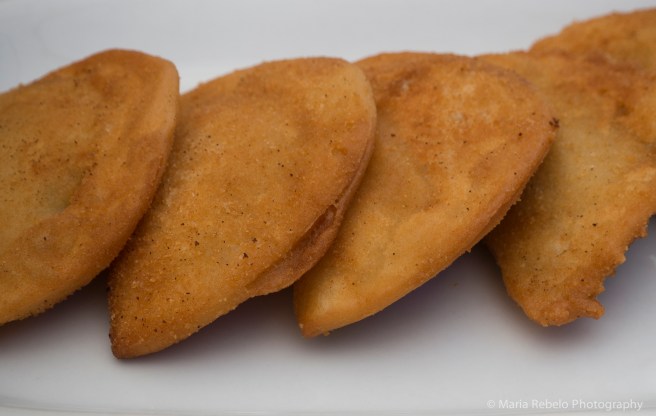
We ordered rissois, fried breaded dough shaped like a half moon with a shrimp or meat filling. Eleutério brought them to the table and waited around to see our reaction. They were crispy on the outside and full of flavor on the inside.  When we said “wow, these are amazing!” Eleutétio abandoned his shy demeanor and smiled, pleased by our reaction. He went back into the kitchen and brought us a plate of codfish cakes. These were also extraordinary: light, airy and slightly crunchy, a four-part harmony of cod, parsley, egg, and potato.

Finally, we had small sardines called “petingas,” incredibly fresh, fried and seasoned to perfection. They came with an hearty bean rice that melted in the mouth and blended with the salty sardines.

The restaurant was still very busy but Eleutério came to chat with us. He told us that the menu is always small, three or four items made with the best fresh ingredients and modestly priced. The recipes have been refined over many years and require great attention to detail. “It is hard work because there’s no room for distractions. Everything has to be right, the timing, the temperature, the seasoning. But it is worth it because when everything is right the taste is amazing,” he said. If you ever have the privilege of eating at O Lameirão, we think you’ll agree.

The restaurant O Lameirão is located on Rua da Cruz, Vila Real, tel. 259 346 881.