Almost three decades ago, a friend took us to a new restaurant called Nobre in the Ajuda neighborhood. The name, which means noble, came from the surname of the chef, Justa Nobre. We recall with fondness the meals we enjoyed there. After a successful run, Nobre closed so that the chef could pursue other projects,
Last week, the same friend invited us for lunch. We were delighted to discover that we were going to a new restaurant that marks Justa Nobre’s return to Ajuda. It is called “À Justa,” an expression based on the chef’s first name that means “just right.”
The menu offers a cuisine without foreign accents that has the satisfying taste of authenticity. The recipes are grounded in the cooking of Justa’s grandmothers. But they are not a copy of the past. They reflect years of refinements shaped by the personality and creativity of this self-taught chef.
The restaurant was full. The Portuguese like to flirt with contemporary food trends but they always come back to their one true love, which is the traditional cooking of Portugal.
We had a great meal that included bright green fava beans, chickpeas with codfish, codfish “pataniscas,” and fried cuttlefish. These delights were preceded by a classic of Justa Nobre’s repertoire: the spider crab soup. Its aristocratic taste makes all other seafood soups in Lisbon look common by comparison.
Many chefs keep their secrets, but Justa generously shared some of her recipes in a book titled Passion for Cooking. We translate her recipe for spider crab soup below. But you must try the original at À Justa where they make it just right.
Justa Nobre’s spider crab soup
Ingredients: 2 large spider crabs weighing about 1 kg. each, 3 liters of water, 3 tablespoons of sea salt, 150 grams of margarine, a large onion, 2 cloves of garlic, a parsley bunch, a sliced fennel head, 4 tablespoons of tomato paste, half liter of cream, 0.1 liter of dry white port, one teaspoon of powdered ginger, one teaspoon of saffron, 2 tablespoons of potato starch.
Preparation: Boil the crabs in the salted water for 8 minutes. Remove them, let then cool off and extract all the meat. Return the shells to the pan. Add some shrimp shells and let them boil for 10 minutes. In a large pot, melt the margarine and add the sliced onion, fennel and garlic. Let these ingredients cook briefly and then add the white port, the cream, the tomato paste, the spices, and two liters of the crab broth. Mix the potato starch with some cold water and add it to the soup. Check the seasoning and strain the soup. Add the crab meat and serve the soup it in the shell of the spider crab.
À Justa is located at Calçada Ajuda 107, in Lisbon. The restaurant seats only 36 people, so reservations are a must. Call 21 363 0993 or email reservas@ajusta.pt. Click here for Justa Nobre’s web site.



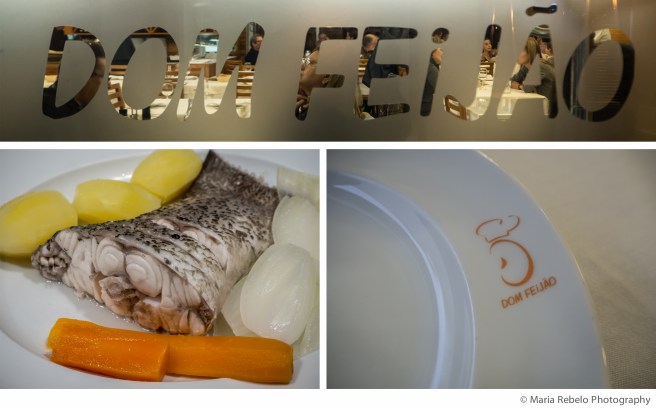
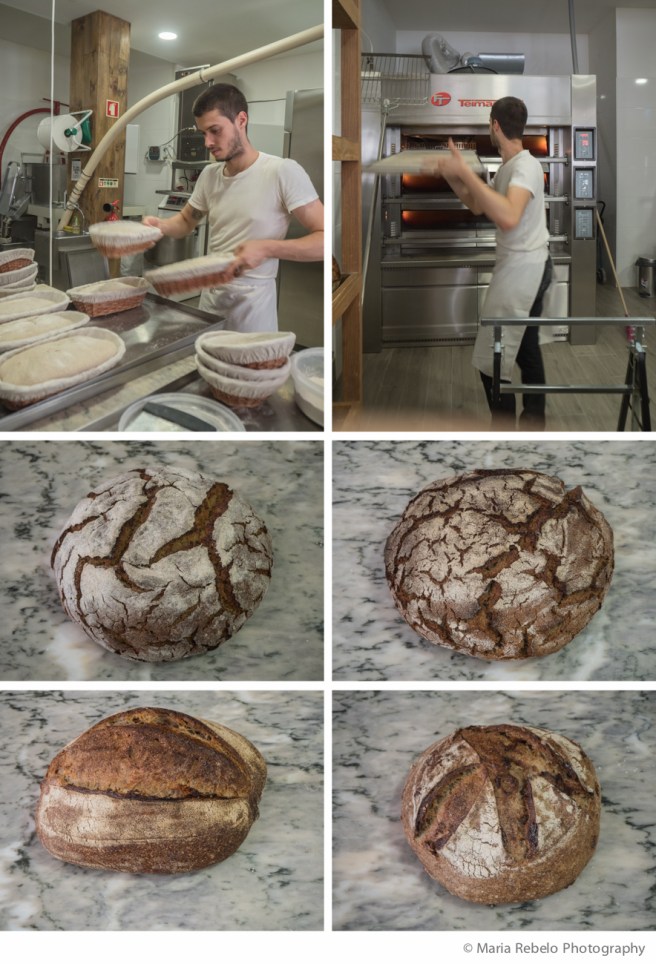 Diogo Amorim was working as a chef at the famous Fat Duck when Heston Blumenthal, the restaurant’s head chef, decided to improve the bread they serve. Diogo liked the project so much that he decided to return to Portugal to research Portuguese bread. He traveled from north to south in search of old grains that have low yields and no gluten but are rich in flavor and nutrients. He studied how old windmills used to process these grains to make superior flours.