The Art of Savoring Port Wine

António Magalhães closed his lecture on the Douro’s grape varieties with a provocative question: “But who can hope to understand so many grapes without tasting Port?”

Port wine is the ultimate expression of the vineyards of the Douro Valley. As scholar Alfredo Guerra Tenreiro famously observed, “There is a uniqueness in the Douro climate that one can recognize and feel in the uniqueness of Port wine.” 

Here are António’s recommendations for enjoying Port wine at its best.

Five Golden Rules

1) Choose the proper glass
A classic white wine glass made of thin glass is ideal for Port. It lifts the aromas, focuses the flavors, and makes every sip a celebration.

2) Serve Port properly chilled
The ideal serving temperatures for each style of Port are:
• White Ports: 6–10 °C (43–50 °F)
• Tawnies: 10–12 °C (50–54 °F)
• Rubies: 12–16 °C (54–61 °F)

Once opened, White Ports and Tawnies should be stored in the refrigerator door. Ruby Ports, especially Vintage Ports, are best enjoyed soon after the cork is pulled. 

The British have a tradition of passing the Vintage Port bottle or decanter from right to left, keeping it in motion. If someone forgets, the other guests often ask, “Do you know the Bishop of Norwich?”—a nod to Henry Bathurst, the early-19th-century bishop known for dozing off at dinner and neglecting to pass the Port.

3) Keep a 20-Year-Old Tawny in the refrigerator
Tawnies are crafted from wines of various harvests, aged patiently in oak casks until the perfect moment for blending and bottling. A 20-year-old Tawny brings together wines with a weighted average age of twenty years, creating an alchemy of time and winemaking artistry. António’s longtime favorite is the magnificent Taylor’s 20-Year-Old Tawny Port.

4) Always decant Vintage and Crusted Ports
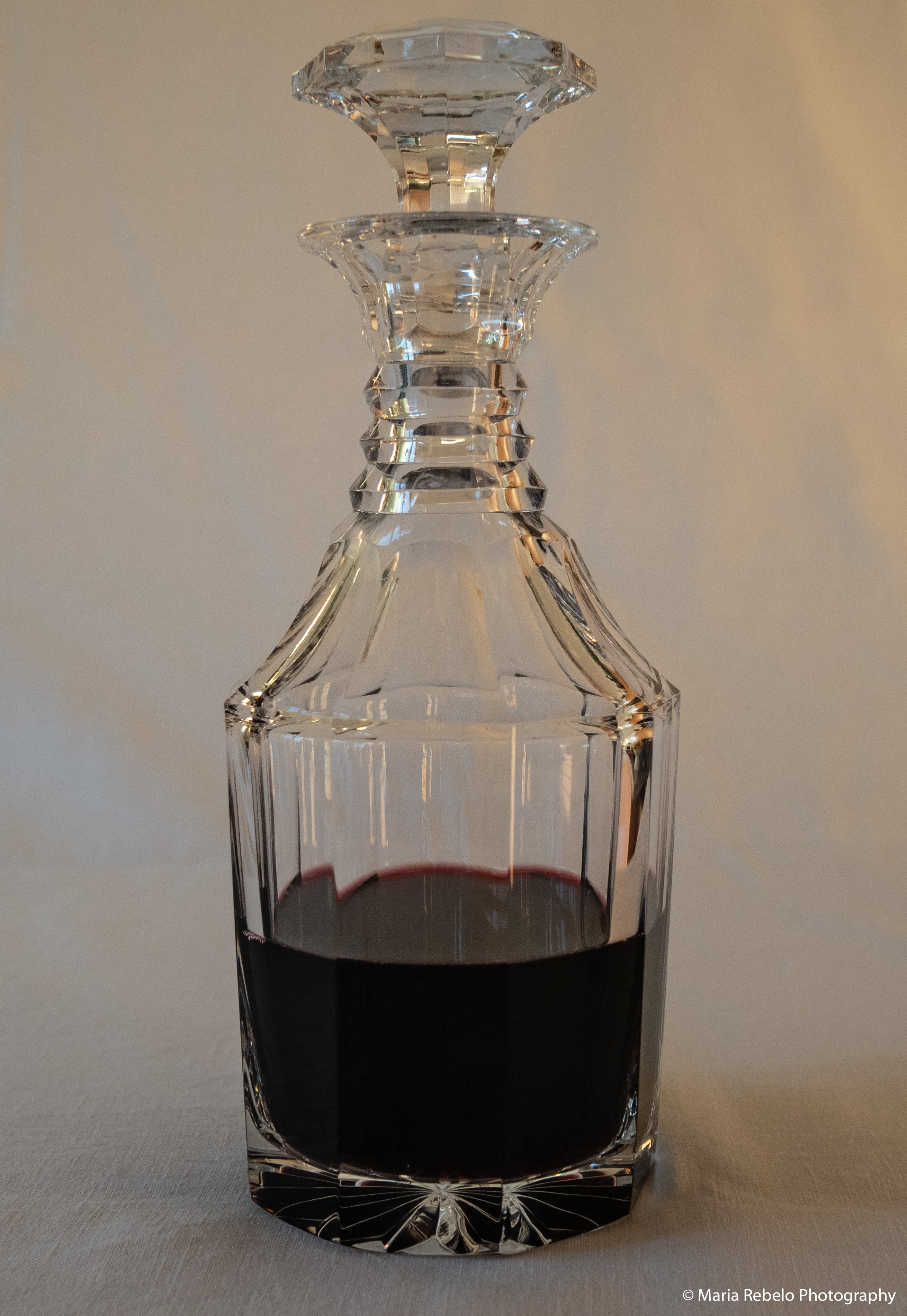
Vintage Ports are bottled without filtration, which allows them to continue evolving in the bottle. Over time, sediment naturally accumulates. Decanting separates the clear wine from this sediment—harmless, yet coarse and unwelcome in the glass. It also allows the wine to breathe, letting oxygen gently soften its structure and release its full array of aromas.

When Port was shipped in barrels, British merchants crafted Crusted Ports by blending more than one Vintage, aging the wines in large wooden vats, and bottling them unfiltered for cellaring. After Portugal banned bulk exports of Vintage Port in 1974 (extended to all Ports in 1997), this style became rare. Today, only a few houses, like Fonseca, continue the tradition. Like Vintage Ports, Crusted Ports develop a natural “crust” as they mature and should always be decanted before serving.

5) Port is to be shared
Port invites conversation and brings out sincerity. Violette Toussaint, the unforgettable protagonist of Valérie Perrin’s Fresh Water for Flowers, put it best: “My port wine has the same effect on everyone. It acts like a truth serum.”

How to Decant a Vintage or Crusted Port at Home

The day before serving, select the bottle you wish to open and stand it upright so the sediment can settle at the bottom. Leave it somewhere convenient—on a sideboard or on the kitchen counter.

Use a suitable corkscrew; a two-pronged cork puller is ideal for opening older bottles, whose corks are often fragile. Once opened, pour the wine slowly into a decanter or glass jug. 

Strain the wine through a small flannel filter to ensure perfect clarity. Take a moment to taste the wine and enjoy that first impression.

Rinse the bottle and let it drain completely. Return the decanted wine to the original bottle. Keep the bottle in a cool place and check the temperature before bringing it to the table. If needed, a brief rest, fifteen minutes or so, in the refrigerator door will bring it to the ideal 16–18 ºC, with the higher end recommended for older Ports.

Magical Pairings

White Port

White Port is typically enjoyed as an aperitif and is made in a range of styles, from extra-dry to sweet. Even the sweeter versions remain balanced and never feel cloying on the palate.

There are two production approaches: oxidative and non-oxidative. In the non-oxidative style, winemakers shield the wine from oxygen to preserve its vibrancy. These Ports are bright and citrusy, ideal for the popular Port Tonic cocktail.

In contrast, the oxidative school relies on controlled exposure to air. Depending on the winemaker’s approach, this exposure may begin during fermentation and continue throughout aging in wooden vessels ranging from small casks to larger vats such as toneis and balseiros. Over time, this gentle oxidation deepens the wine’s character, imparting a golden hue and nuanced layers of nuts, caramel, butterscotch, and dried fruits.

António favors the oxidative style. His preferred White Ports, both made from blends that include Malvasia Fina, are the Fonseca Guimaraes Siroco—crisp and extra-dry—and the Ramos Pinto Finest White Reserve, which offers a discreet, delicate sweetness.

White Port pairs beautifully with toasted almonds, especially those from the Douro Superior, and with codfish cakes. It also harmonizes with soft-ripened cheeses, lending a bright acidity that lifts their richness.

Tawny Port

Tawnies pair blissfully with sweet desserts. In the Douro Valley, they are often served with crème brûlée—torched before serving—or almond tart.  Egg pudding and Tawny Port are made for each other; tradition even calls for two glasses of Port instead of one: the first to honor the pudding, and the second to toast the cook who prepared it. 

Another indulgence that pairs perfectly with Tawny Port is Toucinho do Céu (bacon from heaven), a convent sweet made with almonds, egg yolks, sugar, and a touch of lard that lends a soft, velvety texture. Murça, near Vila Real, is renowned for the version created at the Santa Maria Monastery and now made by Casa das Queijadas e Toucinho do Céu. The town is also celebrated for the vineyards that surround it, which produce some of the Douro’s finest white grapes—coveted by both Port and DOC Douro winemakers.

Tawnies also shine alongside nuts, dried fruit, or simply on their own, paired only with the quiet luxury of time and good conversation. 

Ruby Port

Ruby Ports are excellent companions for cured cheeses. Portugal offers a rich array of these cheeses from regions such as the Estrela Mountain near Seia, Serpa in Alentejo, Azeitão near Lisbon, and São Jorge in the Azores.

English Port merchants traditionally pair Ruby Ports, particularly Vintage Ports, with Stilton cheese. Vintage Port is made only in exceptional years, aged in wood for one or two winters, and then bottled to mature slowly and majestically.

For an unforgettable experience, seek out the Vintage Vargellas Vinhas Velhas 2004, crafted in a superb year from a field blend of vines planted soon after phylloxera. António believes old vineyards like the one that produces this wine hold the key to understanding the future of viticulture in the Douro Valley.

Late Bottled Vintage (LBV)

António enjoys pairing LBVs (rubies aged four to six years in oak and then bottled), with chocolate mousse. His favorite mousse replaces butter with extra-virgin olive oil from the Douro Valley. He generously shares his recipe below.

Mousse de Perdição (Sinful Chocolate Mousse)

Ingredients
• 150 g dark chocolate (70% cocoa)
• 100 ml extra-virgin olive oil (preferably from the olive groves that frame Douro vineyards)
• 5 tablespoons sugar
• 4 eggs, with yolks and whites separated

Instructions

1. Melt the chocolate
Break the chocolate into small pieces and melt gently in a bain-marie or in short microwave intervals. Allow it to cool slightly.

2. Add the olive oil
Whisk in the olive oil until the mixture is smooth and glossy.

3. Prepare the yolks
Beat the egg yolks with the sugar until pale and creamy. Fold into the chocolate mixture.

4. Whip the egg whites
Beat the whites until firm peaks form, then gently fold them into the chocolate base, preserving as much lightness as possible.

5. Chill
Spoon into serving cups or a single bowl. Refrigerate for at least 3 hours, ideally overnight.

Enjoy with a perfectly chilled glass of LBV Port.

António Magalhães, keeper of Douro secrets

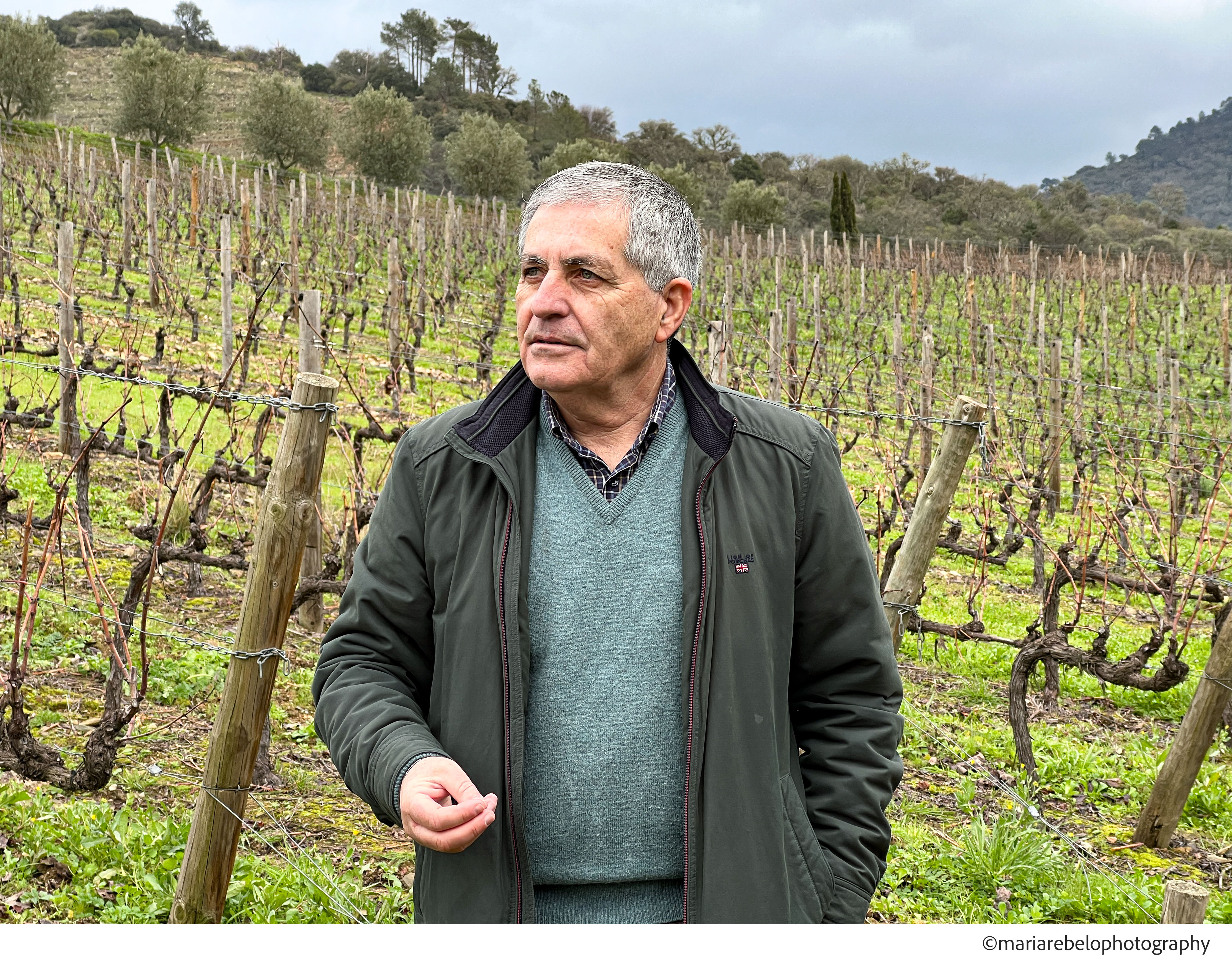
You might not be familiar with António Magalhães, the chief viticulturist of the famed Taylor-Fladgate port house, but if you enjoy exceptional port wines, you’ve likely experienced the fruits of his labor. António has worked for more than three decades in the rolling terraces of the Douro Valley. Throughout this time, nature has gradually revealed to him some of its winemaking secrets. Patience has been essential in this apprenticeship. It can take many years to grasp the impact of viticulture choices on wine production.

António is known for his thoughtful character and gentle disposition. But beneath this demeanor lies a powerful intellect–he has the rigor of a scientist, the curiosity of a historian, and the eloquence of a poet. He believes in combining scientific methods with traditional wisdom and has a deep reverence for the mysteries of winemaking. 

In collaboration with a statistician, António sought to unravel some of these mysteries, analyzing climate data since 1941 to identify weather patterns associated with vintage years, the finest for port wine production. They discovered that these years share three characteristics. First, the average temperature in July is less than 24.5 degrees Celsius. Second, two-thirds of the rain falls during the dormancy period (from November to February) and one-third during the growth period (from March to June). Third, there is less than 20 millimeters of rain in September. A small amount of rain at harvest time helps refine the grapes, says António, but too much rain in September fills the grapes with water and promotes fungal diseases. To António’s delight, they found that exceptional vintage years often deviate from the norm in unique ways, a testament to the magic of port wine.

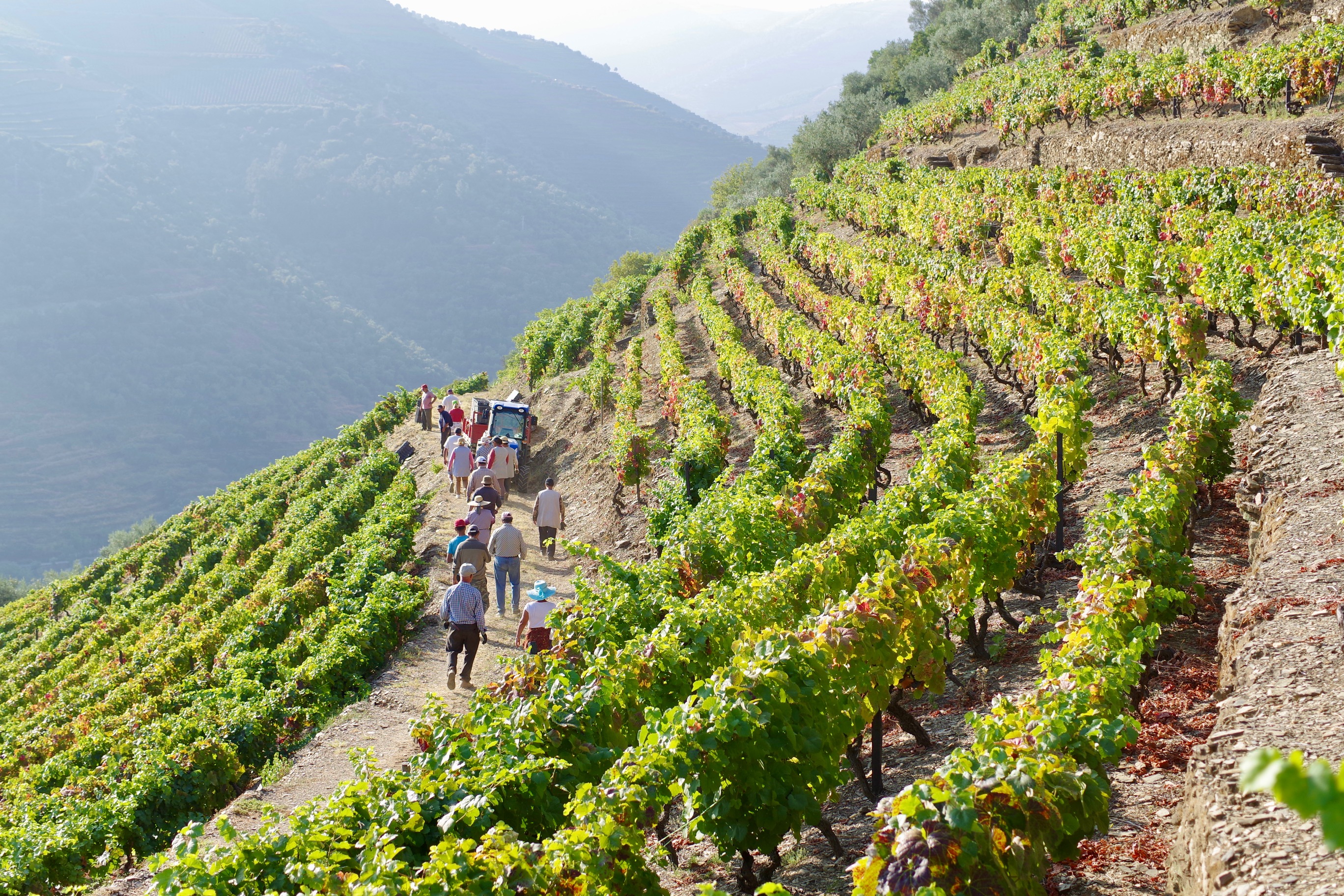
Another facet of this magic is the art of blending. The Douro’s diverse microclimates provide winemakers with a rich palette to adapt to the annual variations in weather. They skillfully blend diverse varietals from vineyards with different locations, altitudes, and sun exposure. António has a profound understanding of the art of blending grounded on his comprehensive knowledge of the Douro subregions—the rain-soaked Baixo Corgo, the moderately wet Cima Corgo, and the arid Douro Superior. 

He has studied how grape varietals were adapted to counter the crisis created by phylloxera, an American insect that decimated European vines in the second half of the 19th century. The blight reached the Douro region in 1862-63 and became a severe problem in 1872. Farmers noticed that Mourisco, a varietal with lackluster enological properties, was the most resistant to phylloxera. For this reason, Mourisco was crossed with Touriga Nacional, considered the finest pre-phylloxera varietal, to create Touriga Francesa. The name, which means French Touriga, was likely chosen to honor the French school of viticulture and its contribution to creating phylloxera-resistant varietals. 

António also analyzed the various types of American vine roots brought from places like Texas to the Douro Valley to graft European vines and increase their resilience to phylloxera.

Since 1992, António has worked closely with David Guimaraens, the chief enologist at Taylor-Fladgate. Every year, António and David write several letters to the farmers who produce grapes for Taylor-Fladgate, offering insights into the vines’ current conditions and the most effective viticulture practices to respond to them. This educational effort is vital to the quality of the Taylor-Fladgate ports.

Concerned with the impact of heavy rainfall on soil erosion, António and David developed a new model for the terraces where the vines are planted. They had an epiphany while visiting the Benziger family, a biodynamic wine producer in California. It started to rain torrentially, and as they ran for shelter, they noticed that the rain was running with them. They realized that this kind of drainage, created by a three percent gradient, is what the Douro Valley needs.

António and David asked earthmoving companies to find a bulldozer narrow enough to fit in the terraces and capable of creating a three percent inclination. One of the companies found a second-hand machine used in rice plantations in the south of Portugal. The company’s manager called to say that the machine had an unusual device. “Bring it along,” said António. It turned out that the device was a laser that greatly simplified the task of creating a three percent slope. They later learned that the Benziger farmland had been graded by Chinese workers, who were likely to be familiar with the three percent inclination used in rice cultivation.

The Taylor-Fladgate farms stand out for their beauty because António is a sculptor of landscapes. He knows that cultivating a vineyard, planting a tree, or building a stone wall alters the scenery, and like an artist, he selects colors that harmonize, proportions that feel human, rhythms that please the eye.

António is passionate about researching the history of the Douro region. He often visits Torre do Tombo, a vast national archive with documents spanning nine centuries of Portuguese history. The writings of Álvaro Moreira da Fonseca (the creator of the vine quality scoring system still in use), the Baron of Fladgate, John Croft, José Costa Lima, A. Guerra Tenreiro, and many other Douro luminaries are his constant companions.

His extensive knowledge of history gives him a unique appreciation for the sacrifices made by generations of workers who have toiled in the Douro region. This understanding is evident in how António interacts with the people he manages. His sincere appreciation for their efforts earns him the loyalty and trust of his collaborators.

Today, António Magalhães retires as Taylor-Fladgate’s chief viticulturist. This milestone marks the beginning of a new chapter. We hope that António can now find the time to write a treatise on viticulture so that, as the climate continues to change, his erudition can illuminate the future of the Douro Valley.

A precious white port

Time is a great equalizer of port wines. Tawnies are red ports aged for many years in large barrels made from oak and chestnut wood. These wines mellow with age, trading the red colors and brash tannins of their youth for discreet amber hues and complex flavors. 

White ports can be frivolous when young. But, as they age, they gain depth and character. After about three decades, whites and reds retain different flavors and aromas but they agree to wear the same colors.

Old tawnies are rare pleasures. But old white ports, like the magnificent 1963 Dalva, are rarer still. This wine has everything a great red tawny offers: harmony, complexity, and depth. But it has a lightness that is magical. 

There are very few bottles left of 1963 Dalva white port. If you manage to find one, do not save it for a special occasion. Create instead a special occasion to enjoy it!

The yellow house farm

Quinta da casa Amarela

We called Laura Regueiro, the owner of Quinta da Casa Amarela (the yellow house farm), to apologize for being a little late. It is easy to misjudge travel times in the Douro valley. Distances are short but the narrow, winding roads make us slow down and admire the landscape. “You don’t need to rush,” Laura said gracefully, “take your time to enjoy the beautiful drive.”

As soon as we arrived, she came to greet us with her husband, Gil. They taught history in Oporto for almost three decades. Every Saturday, they packed their bags and their children, Gil junior and Sónia, to drive to Quinta da Casa Amarela for the weekend. In 1979, the couple moved to the Douro valley to focus on producing wine.

The quinta, located in Vale de Cambres, belongs to the Regueiro family since 1875. It was from Vale the Cambres that the first Douro wines were exported to England in the 16th century. Initially, the wine was called “vinho de embarque” (shipping wine), later it was renamed port wine.

“Port is the supreme expression of the Douro valley,” Laura explains. “My grandfather used to say that port wine is so perfect that we should kneel before drinking it to show our reverence.”

“In 2000, our son convinced us to produce table wines; or “tranquil wines” as the Douro people sometimes call them,” said Laura. We tried a wonderful rosé with impeccable acidity and a sublime reserve white with tropical fruit aromas, great freshness and persistence in the palate. The wine labels are decorated with ladybugs. Laura loves these colorful insects because they help control the pests that plague the vineyards. This control is particularly important because some of the vines are about 80-years old. They produce extraordinary grapes that lend complexity and character to the wines.

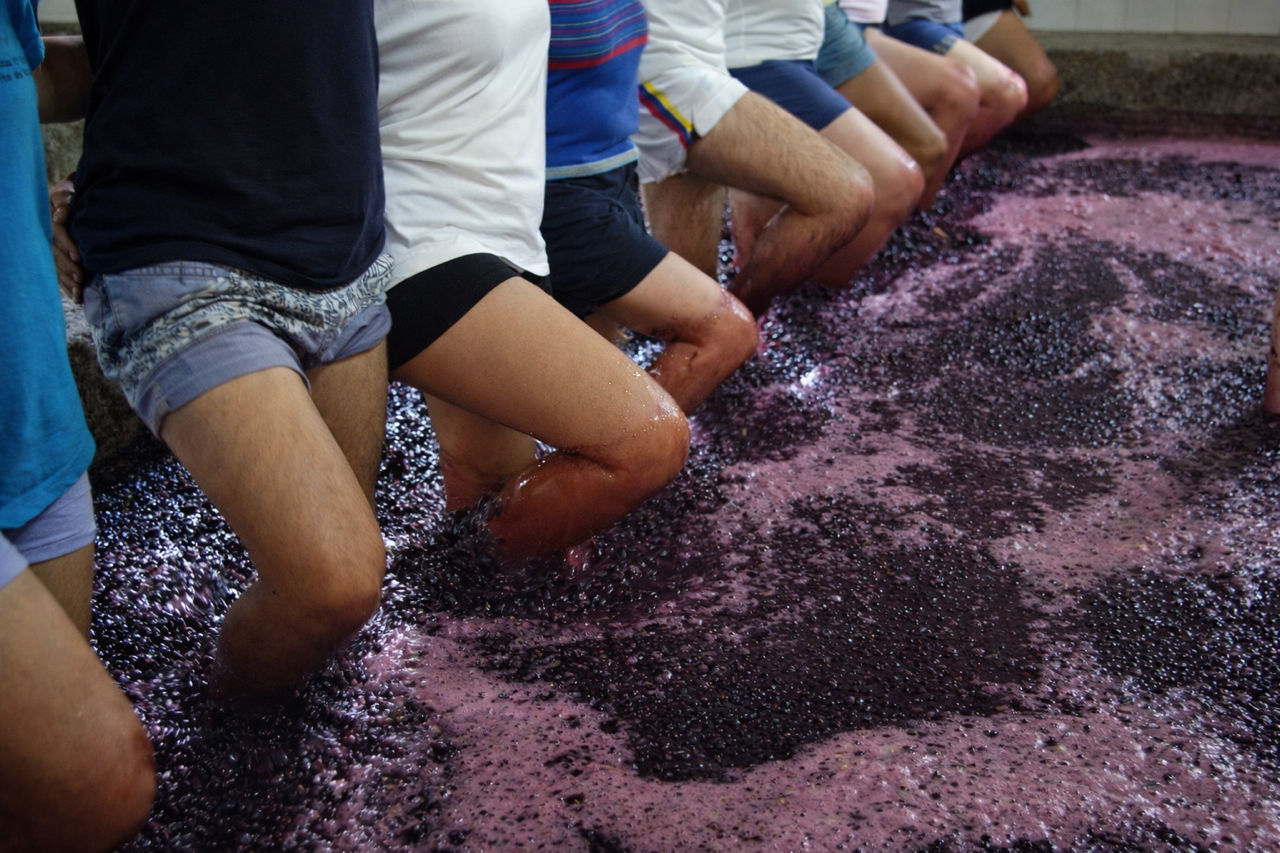
The production process, managed by Jean-Hugues Gros, a French enologist who moved to the Douro valley, relies on traditional methods. The grapes are still treaded by foot to the sound of an accordion, just like in the old days. But the wines are modern, interesting and elegant. The reserve red wine is a great examplar of the quinta’s style.

Laura loves gathering friends around the dinner table. Her duck rice is legendary. “Food and wine stimulate great conversations,” she says. When Paulo Rodrigues from Quinta do Regueiro came for lunch, he brought some bottles of his green wine made with Alvarinho grapes. During lunch, Laura mixed the Alvarinho with her white wine. The results were so interesting that they created a wine called II Terroir that combines grapes from their two quintas. Laura is also collaborating with a maverick wine maker from Alentejo called Paulo Laureano. Their PL/LR wine marries grapes from the plains of Alentejo and the Douro mountains.

We stayed until late talking to Laura and Gil as if we had known them forever. Happily married for 50 years, they are preparing the 6th generation to continue the work that began in 1875: to turn some of the best grapes in the Douro valley into wines that are perfect to gather friends around the dinner table.

Quinta da Casa Amarela is located at Riobom in Lamego, tel. 254-666-200, email quinta@quinta-casa-amarela.com. Click here for their website.


A great beginning

Chip Dry Port

Beginnings are hard. We don’t know how to pen the first sentences of a novel, compose the introduction of a sonata, or craft the opening scene of a play. But we do know an elegant way to start a dinner party. Get a bottle of Taylor Chip Dry port and chill it in the fridge. When the guests arrive, pour everyone a glass of this marvelous white port. Then,  toast to a great beginning.

100 years of great ports

C0mposite Poças Wines

Making great port requires exceptional grapes and a deep knowledge of the production process. But most of all, it requires time, lots of time. Time for the nectars to lose the brashness of youth and mellow with age. That is why we cannot produce port wine by ourselves. We need our children and grandchildren to help. And if our great grandchildren can also lend a hand, even better.

The British port-wine families guarantee their longevity by leaving the business to a single son or daughter and compensating their siblings with cash. In contrast, Portuguese families generally sell their estates to divide the proceeds among the heirs. There is why there are almost no major Portuguese port houses left. The one remarkable exception is Poças, a company that celebrated 100 years in August 2018.

In 1918, Manoel Poças Júnior started buying brandy to supply port-wine producers. He was at times paid with barrels of port, so gradually he also became a port-wine merchant. In 1932, one of Manoel’s brandy clients paid a large debt with a wine estate called Quinta das Quartas. Manuel loved the estate which has granite tanks dating back to 1873.  Every week, he made the arduous trip from Oporto to Quinta das Quartas to visit the vineyards.

This passion is shared by his great granddaughter, Maria Manuela Maia, the viticulturist in charge of Quinta das Quartas and of the other two estates acquired by the family, Quinta de Santa Bárbara and Quinta de Vale de Cavalos. Even though today it is much easier to drive from Oporto to the Douro, Maria moved to the Douro valley to be closer to the vineyards.

We met with Maria in Vila Nova de Gaia, at the cellars where barrels full of precious nectars produced by past generations are stored. She shared with us some superb ports: a Vintage from 1997, a Reserva from 2014, and a Vale dos Cavalos from 2015. Our tasting ended with fireworks provided by a remarkable 1967 Tawny, full of freshness and acidity. We filled our glasses with this liquid treasure and made two toasts: to Manoel Poças for the successes of the past and to Maria for the successes of the future.

Click here for the Poças web site. To visit the Poças cellars email visitors@pocas.pt or call 223 203 257.


Do you know the Bishop of Norwich?

OLYMPUS DIGITAL CAMERA

According to an old British tradition, vintage port wine is served in a decanter passed at the end of the meal from right to left. When someone forgets to pass the decanter, instead of saying. “Would you mind passing the port,” the British like to ask: “do you know the Bishop of Norwich?”  They will then explain that the bishop was a very nice fellow except for his annoying proclivity to forget to pass the port decanter. Henry Bathurst, the Bishop of Norwich from 1805 to 1837, often fell asleep at the table, interrupting the flow of port that fueled the conversation.

The British port-wine merchants and producers gather every Wednesday for lunch at the Feitoria Inglesa, an elegant 18th century building in Oporto. It is a place where the slightest hesitation about passing the port results in a lecture about the Bishop of Norwich.

One day, two members of the Feitoria Inglesa conspired to invite the current bishop of Norwich to lunch. The bishop arrived incognito. One of the conspirators failed to pass the port and was promptly asked by his neighbor, “do you know the Bishop of Norwich?” He responded “I do, in fact I can introduce you to him because he is sitting at the table!” The bishop rose and told the guests that he was indeed the Bishop of Norwich and that he always passed the port.

Three lessons at Quinta de Vargellas

Quinta de Vagellas

It is easy to arrive at Quinta de Vargellas because this heavenly wine estate in the Douro valley has its own train station. The old carriages stop there with a screech, huffing exhausted from racing with the river waters. It is then up to the guests to walk up the granite steps that lead to the manor house.

We sat in the porch, mesmerized by the schist terraces built by generations of workers to create the perfect environment for the exuberant vines. It was here that we learned our first lesson: that the greatest beauty is created by humans in harmony with nature.

Our second lesson, was about the importance of generosity. David Guimaraens, the head winemaker of Taylor’s Fladgate, Fonseca and Croft has an hectic schedule. But he takes time to share the magic of Vargellas with his guests. He explained to us the uniqueness of the terroir and described the vines as if they were his children. We drank his words and saw the brilliance of the vineyards through his eyes, green like the Douro river.

The grapes from the quinta are used to make the famed Quinta de Vargellas Vintage and form the base of the great Taylor Vintage Ports. We walked down to the cellar to sample the port made in 2018, which is still full of vigor but promises to age gracefully.

David discussed some of the intricacies of port-wine making and told us about the new vines he is planting so that his children can continue to produce great ports.  It takes 10 years for new vines to produce usable grapes. Between ages 10 and 20, the vines are adolescents, they have some good years but are moody and inconsistent. From ages 20 to 40, they mature and acquire consistency. From ages 40 to 60, the yields are low but the quality is great. Beyond 60 years, production dwindles but the few grapes that grow are drenched with wisdom.

A lifetime is too short to plant the vines and gather the knowledge required to produce great port. And so, we learned our third lesson: life is a relay race. We have to learn  from our ancestors and add to that learning to sow the seeds of the future.

It was hard to leave Quinta de Vargellas. But the memories of our visit stay with us. And from now on, every sip of the quinta’s holly wines will take us back to this paradise in the Douro valley.

Click here to see the Quinta de Vargellas web page.

Celebrating the passage of time at Ramos Pinto

Composit Ramos Pinto

Port wine used to be sold in austere black bottles with somber labels. Adriano Ramos Pinto, a maverick entrepreneur who entered the port wine trade in 1880, changed all that. He wrapped port wine with sensuous images, elegant packaging, and clever marketing.

One of Ramos Pinto’s publicity coups took place in 1922. Two pilots, Gago Coutinho and Sacadura Cabral, planned to make the first aerial crossing of the South Atlantic, flying from Lisbon to Rio de Janeiro. Ramos Pinto convinced them to take a bottle of his port wine on board to celebrate their landing in Rio de Janeiro. On the first two attempts, the airplane sunk near the coast of Brazil. But both the pilots and the bottle were saved. The third attempt was successful and the bottle was finally opened to great acclaim. This and other exploits made Adriano Ramos Pinto so famous in Brazil that a glass of port was often called an Adriano.

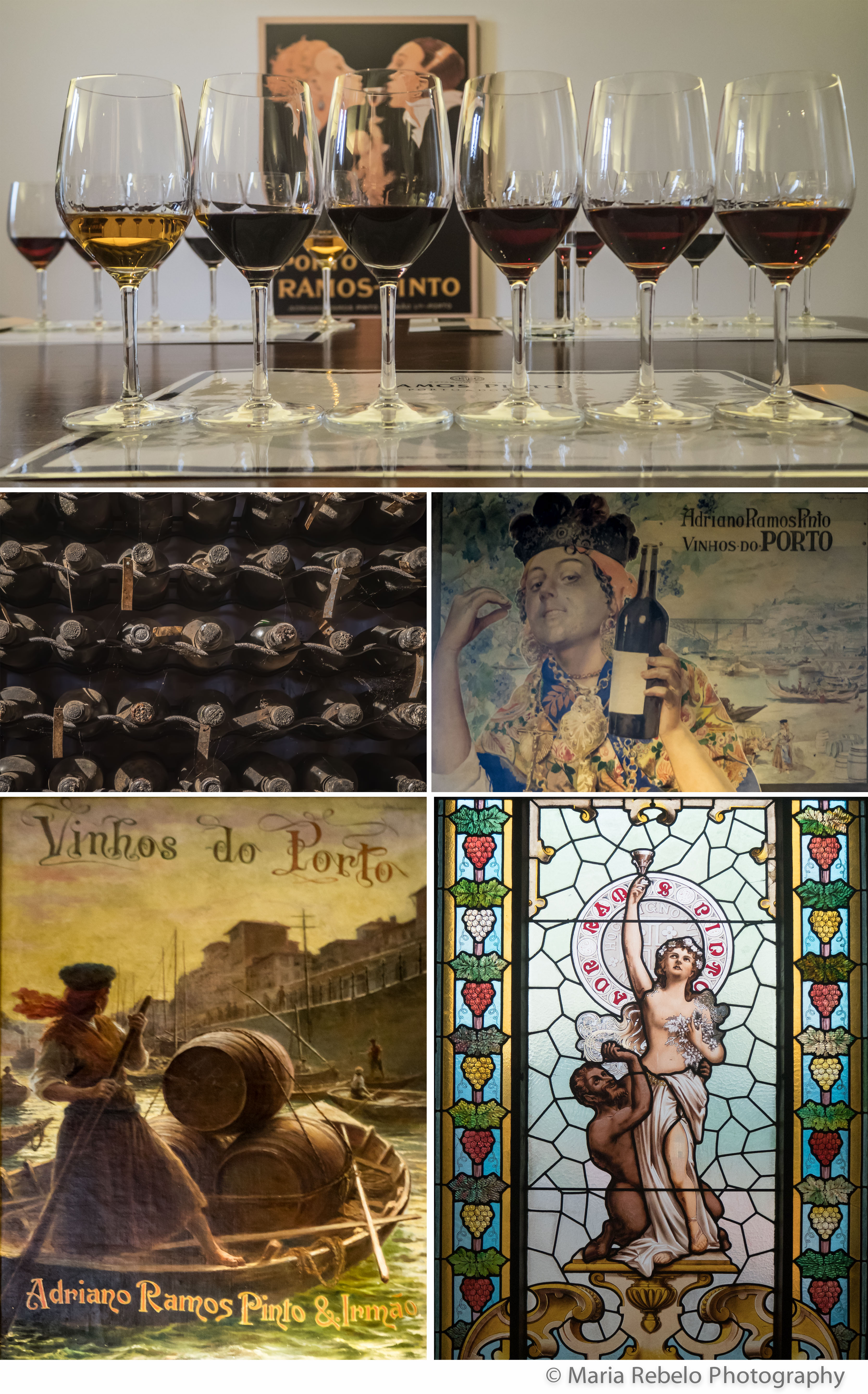
Tasting port wines at the cellars of Ramos Pinto in Vila Nova de Gaia is a sumptuous experience. You can try splendid tawnies, made by man with the help of God, and divine vintages, made by God with the help of man.

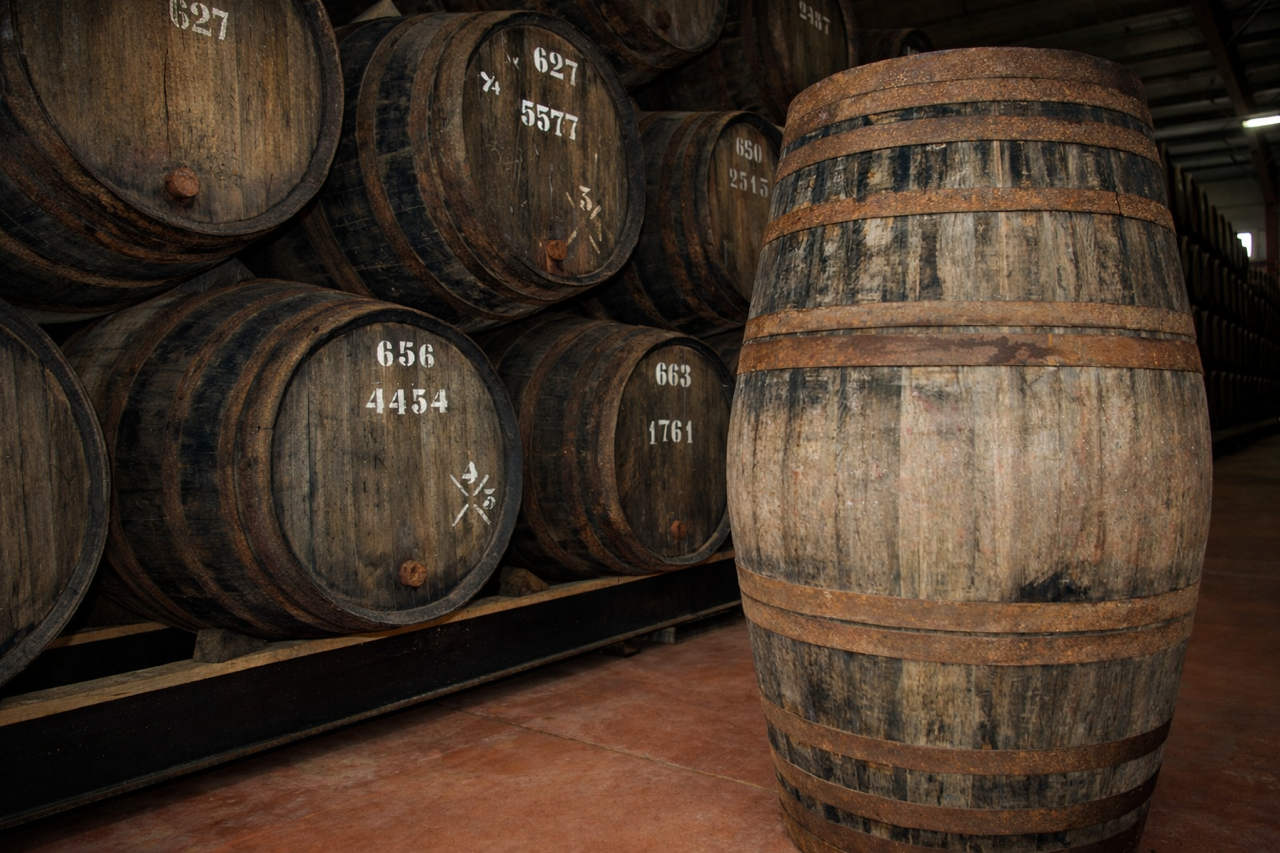
Tawnies are aged in 600-liter wood barrels where they acquire a golden color and the taste of dry fruits, almonds and nuts. As time goes by, some of the wine evaporates and the barrels have to be topped off. This evaporation has a whimsical name: the “angel’s share.”

A bottle of tawny is a blend of wine from different harvests. A 30-year-old tawny is made with wines that average 30 years of age, so it often contains wine that is 60, 70, even 100 years old. The passage of time is a key factor in the production of great ports. There are 4 million liters of port stored in Ramos Pinto’s cellars.  Master blenders use these nectars produced by older generations and save some barrels from the current harvests to be blended by future generations.

Vintage ports are produced from a single harvest in exceptional years. They stage for only two years in wood barrels called balseiros. These barrels are very old and very large, holding 60,000 liters of wine. They are used to smooth the tannins without imparting the taste of wood to the wine. Vintage port is bottled and stored in the dark to preserve its rich red color and the taste of fresh fruit.

Ramos Pinto also produces alluring white ports. We tried a 7-year white blend that has enticing notes of honey and citrus. There are also wonderful late bottled vintage (LVB) ports. Produced more often than the rare vintages, LVBs are aged in balseiros for 4 years and then bottled without being filtered, so they can continue to improve in the bottle.

In 1990, Ramos Pinto was acquired by Roederer, the producer of the famed Cristal champagne. But the company is managed by a Portuguese enologist, João Nicolau de Almeida, son of the legendary Fernando Nicolau de Almeida, creator of the iconic Barca Velha. In addition to wonderful ports, João Nicolau d’Almeida makes two impressive table wines: Duas Quintas and Bons Ares.

It is traditional to buy a bottle of port from the year in which one’s child is born for them to make a toast when they come of age. Buying this birthday bottle for your children is a great excuse to visit the Ramos Pinto cellars and a beautiful way to celebrate the passage of time.

Click here for the Ramos Pinto web site. The cellars are located at Av. Ramos Pinto 400, Vila Nova de Gaia near Oporto.

Quinta do Vallado

Quinta do Valado Composit

We wonder whether god created the Douro as a test. It gave the region poor soils and a mountainous terrain, scorching Summers and freezing Winters. But if humans persevered and made a living in this land, they would be rewarded with magnificent wines.

The soil, composed of schist and granite, forces the vines to struggle and produce small grapes that are full of flavor. No one believed more in these grapes than Dona Antónia Ferreira. She made a fortune producing port wine in the beginning of the 18th century and reinvested it all in the Douro, owning at one point 37 vineyards.

This Summer we had the privilege of visiting one of these vineyards, the Quinta do Vallado,  which dates back to 1716. We toured the cellars and tasted some of the quinta’s great table wines.

At the end of our visit, we drank some wonderful old tawny port. With our glasses full of this golden nectar, we toasted the people of the Douro and their magnificent wines.

Quinta do Vallado is located in Vilarinho dos Freires, Peso da Régua, tel. 254 323 147. Click here for their web site.