Pearly plates from Estremoz

Ela Pedra

During a delightful lunch at Gadanha in Estremoz, we praised the marble serving pieces used at the restaurant. Chef Michele Marques offered to introduce us to Filipa André, the person who makes them.

Filipa owns a gallery in Largo Dom Dinis, right by the royal palace of Estremoz. She told us how in school she longed to get into the marble sculpting classes that were open only to boys. Many years later, Filipa fulfilled her dream of learning how to work with the pearly marble of Estremoz.

Her pieces have an understated elegance that makes the food served on them shine. Every time her plates and bowls grace our dinner table people ask us: where did you get them? Now you know.

Filipa André’s gallery, Elapedra is located at Largo D. Dinis n. 13 in Estremoz, email elapedra.etz@gmail.com, tel.963273440.

Culinary bliss at Essencial

Restaurant Essencial_

If the cobblestones of Bairro Alto were not so slippery, we would tell you to run to Essencial, a new restaurant in Bairro Alto. Walk instead as fast as you can because this dinning room that seats only 25 guest will soon be impossible to get into.

The restaurant is headed by André Cordeiro, a chef with impeccable knowledge of French technique. He studied for five years with Alain Ducasse in Paris and then worked with three chefs who earned the coveted title of Meilleurs Ouvriers de France (best craftsmen in France). André came back to Lisbon to combine fine-dining ingredients such as truffles and foie gras with the amazing fresh produce available in Portugal. The results are stunning–elegant food that is a joyful symphony of tastes, textures and aromas.

While we were chatting with chef André, a plate of bread arrived. It came with a blend of butter from Pico in Azores, lard and rosemary. It was the one of several unexpected  combinations that delighted our palates throughout the meal.

The first appetizer was a crowd pleaser: delicate slices of marinated salmon with radishes, crème fraiche and tarragon oil, served with the luscious crêpes vonnassiennes made famous by chef George Blanc. The second appetizer was a sea urchin shell filled with beef tartare, sea urchin and nori seaweed. These dissonant ingredients created a pleasing harmony that made our taste buds sing.

It is customary to serve the fish entrée before the meat but here the latter came first. It was a paté en croute made with duck, pork and foie gras served with smoked carrot purée and beets. How could the fish compete with these gratifying earthy flavors? The answer came in the form of a plate of sole. The freshness of the fish was a canvas that made the truffle stuffing and the Champagne sauce stand out.

The last entrée was a lush journey to the flavors of the woods: hare with foie gras, trumpet mushrooms and Jerusalem artichokes in a reduction of red wine, port wine and chocolate.

A vanilla mille feuilles with salted caramel produced a happy ending to a blissful meal. But our culinary experience was not over. There were still fireworks provided by a buttery French toast with vanilla mouse and a rich choux with praline.

Essencial’s minimalist space, impeccable service and interesting French and Portuguese boutique wines perfectly complement the food. We do not need the Michelin guide to tell us that the culinary stars shine brightly on Essencial’s dinner table.

Essencial is located at Rua da Rosa, 176, tel. 211573713, email info@essencialrestaurant.pt. Click here for the restaurants website. 

The wines of Wine & Soul

Quinta da Manoella

We spent a bright Winter morning with Jorge Serôdio Borges in Vale de Mendiz. He met us at Wine & Soul, the winery where, together with his wife Sandra Tavares da Silva, he is making some of the Douro’s most iconic wines. Jorge showed us the granite tanks where the hand-picked grapes are treaded by foot, just like in the old days. Then he asked with boyish excitement “Would you like to see the vines?” Of course we did.

He drove us through the winding road that leads to the old vineyard that produces the grapes for the famous Pintas. The vines are planted on a steep incline. We wondered why these grapes are so special–is it the constant vertigo sensation they probably feel? Jorge explained that the high altitude and the cool nights help balance the intense sun exposure to produce grapes that are consistently great. Before we left, he showed us how the ground between the vines is planted with cloves that help retain the nitrogen in the soil.

Next, we went to Quinta da Manoella. Jorge seems to know every tree and every creek. He talked about the numerous fruit trees they planted, the mushrooms that grow in the forest, and the olive groves that make tangy olive oil. In his view, biodiversity is key for the sustainability of the region and the quality of the wines. Finally, he showed us the cellars which are full of old oak barrels beautifully restored, ready to receive precious vintage ports.

Visiting the two Wine & Soul estates gave us a new appreciation for the wines they produce. It is amazing how much knowledge, work and passion it takes to produce great wine.

Click here for information about how to visit Wine & Soul.

Breakfast at Six Senses in the Douro valley

Sixsenses Breackfast

Breakfasts come in many different forms. Some are quick, others leisurely. Some are frugal, others abundant. But most are quickly forgotten. A breakfast at Six Senses in the Douro valley is different because it lingers in our memory as a moment of relaxation and gastronomic pleasure.

The breakfast is served in an expansive room with a granite floor. In the back, a rectangular window frames the views of the Douro valley. There’s a large wooden table set with all sorts of culinary delights, from fruits, seeds and nuts, to milks, yogurts, juices, kombuchas, kefirs, jams, and compotes. Behind it, another table offers a dazzling array of breads and pastries. In the back, there’s an open kitchen where chefs prepare made-to-order dishes, from omelets to waffles. Many herbs, fruits and vegetables come from the hotel’s garden to the table. This freshness is integral to the quality of the food that is served.

Next to the dining room, there’s a place with cheeses and charcuteries. You can travel from the north to the south of Portugal through the taste of these products.

The meal is orchestrated with great care, from the seamless service to the skill with which the ingredients are curated and prepared. The result is an unforgettable breakfast.

Six Senses Douro Valley is located at Quinta de Vale de Abraão, Samodães, Lamego, tel. 254-660-600. Click here for the hotel’s website. 

The Joy of Codfish on Christmas Eve

Bacalhau 2019

The Vikings used to dry codfish to take on their sea voyages. The Basques improved upon this practice by salting the fish before drying it. But it was the Portuguese who recognized codfish’s culinary potential. Auguste Escoffier, the chef who helped codify French cuisine in the beginning of the 20th century, wrote that “We must recognize that the Portuguese were the first to introduce in our eating habits, this precious fish, universally known and appreciated.”

Today, on Christmas Eve, codfish is enjoyed all over Portugal. It is usually simply prepared. After being soaked for two or three days to remove most of the salt, the fish is boiled. It is accompanied by Portuguese cabbage and potatoes that are also boiled. Everything is generously dressed with olive oil and garlic that transform this simple meal into culinary joy.

Prado: the prairie in Lisbon

Prado Composit

Never underestimate the power of the light of Lisbon. Chef António Galapito was happily working at Nuno Mendes’ Taberna do Mercado in London when he was offered the opportunity to open a restaurant in Lisbon. Galapito said he was not interested. But he agreed to see the space.

It is a place full of memories, from Roman ruins to old fish-canning equipment from a factory that once operated there. The ceilings are high, making room for generous windows that invite the light in. It was impossible for Galapito to say no. He called the restaurant Prado, the Portuguese word for prairie, to signal his intention of bringing the best products from the fields of Portugal to his table.

The light became the inspiration for the menu. The food is simple, fresh, organic and seasonal. The wines are natural and biodynamic. The vibe is relaxed and the decoration minimalist.

We sat at a beautiful common table made from old pine wood. Our dinner started with a refreshing strawberry kombucha. Then, a plate of bread and goat cheese arrived at the table. The bread, fermented for 28 hours at Gleba, fused with the flavorful goat cheese and melted in our mouth.

The menu has many small plates that are perfect for sharing. We sampled several of these delights:  mussels, leeks, parsley and fried bread, cabbage cooked with sour milk and sunflower seeds, pleurotus mushrooms, with pimentão (a traditional pepper-based paste) and crunchy sarraceno wheat, green asparagus, requeijão and azedas, mackerel, mizuna, lettuce and tangerine, and finally, squid from Azores cooked in a pork broth.

Dinning at Prado is a wonderful opportunity to taste pristine produce harmoniously combined to create satisfaction and joy.

Prado is located at Travessa das Pedras Negras, 2, tel. 210 534 649, email info@pradorestaurante.com. Click here for the restaurant’s website. 

The abbot’s pudding

Pudim Abade de Priscos-3

One of the most original Portuguese recipes is a pudding created in the 19th century by the priest of Priscos, a small parish near Braga. He was called Manuel Rebelo but became known as the Abade de Priscos (Prisco’s abbot). His fame as a cook and gourmet earned him the invitation to prepare banquets for the royal family and the title of Honorary Chaplain of the Royal House.

The pudding combines egg yolks, sugar, cinnamon, lemon, port wine, and fresh bacon (yes, bacon!). The abbot liked to say that the pudding is easy to make but hard to make perfectly and that when well prepared, it has a unique taste. Paired with a glass of port wine, a slice of this pudding is a culinary delight.

Born in 1834, the abbot lived almost 100 years, dying in 1930. Could the abbot’s pudding be the secret of his longevity? We order it every time we see it on the menu to try to find out!

The scrumptious Pudim Abade de Priscos in the photograph was prepared at the restaurant of the majestic Pousada of Viana do Castelo.

The generosity of cork oaks

Cork Trees Ravasqueira

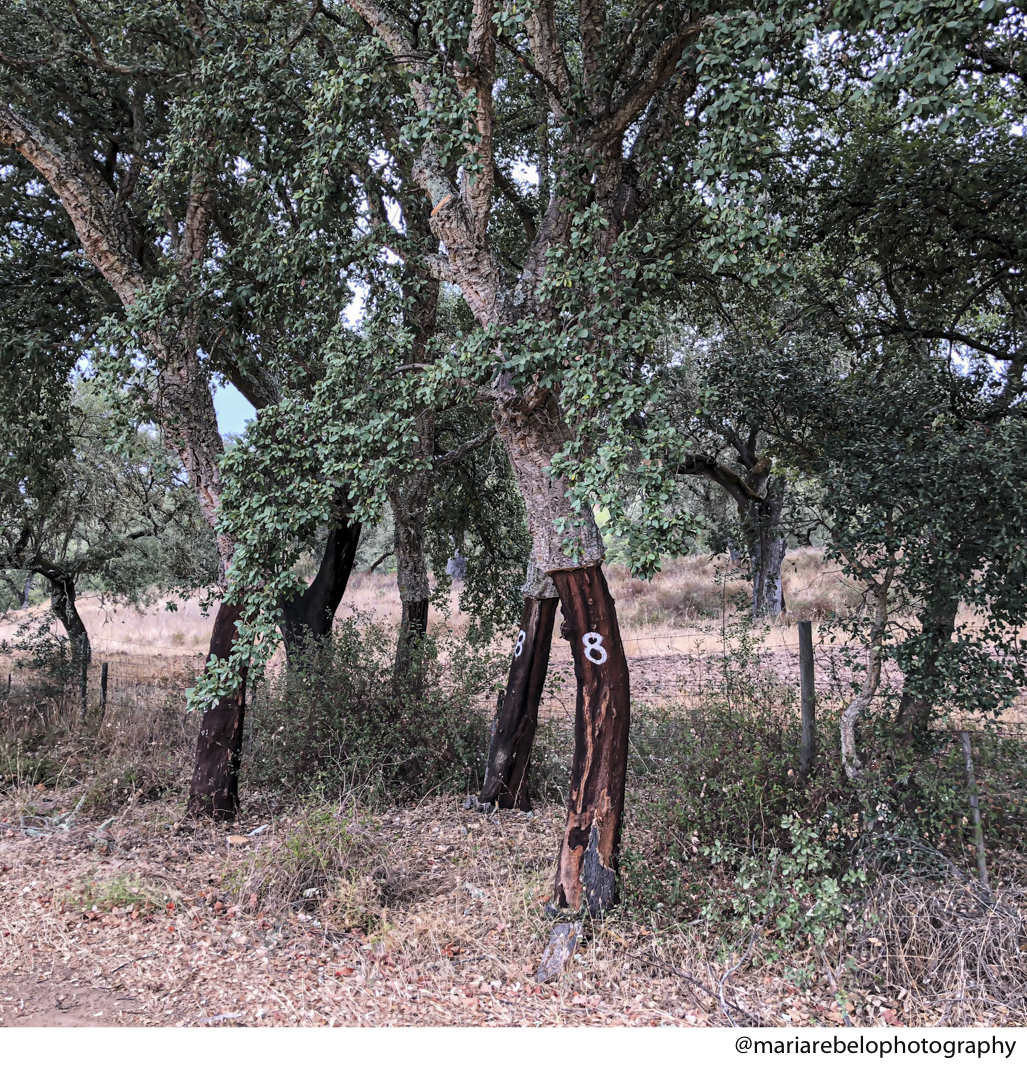
Cork oaks are generous trees. They provide homes to the birds that nest on their branches and nourishment to the black pigs that feed on their acorns. The bark of the oak tree is manually stripped to produce cork, a natural material known since ancient times for its versatility. Pliny the Elder writes in his Natural History that the bark can be used to make anchors, drag-ropes, and shoe soles. The bows and keels of the ships used by Portuguese navigators were made of cork.

After each stripping, the oak bark grows back. The first stripping generally occurs when the tree is 25-year old. Subsequent strippings follow a nine-year cycle. Trees are marked with a number that indicates the time of the last stripping. It takes 43 years for the bark to be thick enough to produce wine corks. So, most wine corks come from oaks that are much older than the wine they protect.

Cork oaks live for roughly two centuries. Their roots make them resilient to winds and droughts so they can grace the landscape of Portugal with their generosity and beauty.

L’and vineyards

L'and Vyneards

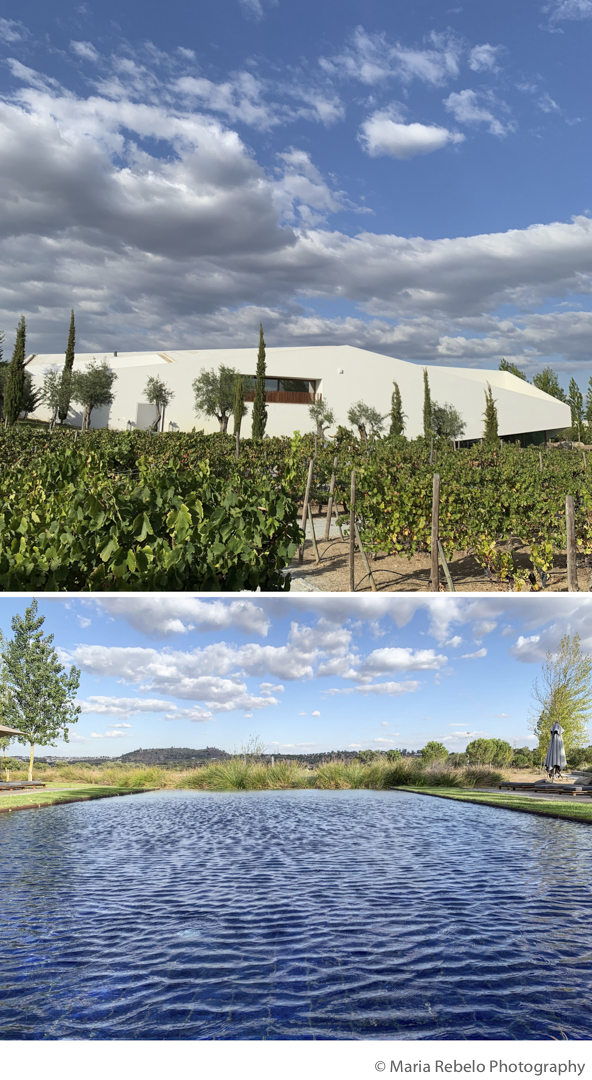
We arrived at L’and Vineyards blinded by the midday Alentejo sun. It was soothing to step into the cool shade offered by this elegant hotel surrounded by vineyards.

There are no normal hotel rooms at L’and. Each guest stays in a expansive suite that has an outdoor tub and fireplace. The ceiling on top of the bed opens at the touch of a button to reveal the star-studded Alentejo sky.

Early in the morning, we saw the first sun rays arriving at the vineyards. We then took a swim in the resplendent pool.

The service is seamless, the food delicious. We felt completely at home in this spacious, gracious hotel in the heart of wine country.

L’and vineyards is located in Montemor-o-Novo in Alentejo, tel. 266-242-400. Click here for their website.


Ilda Vinagre shares a recipe

Ilda Vinagre

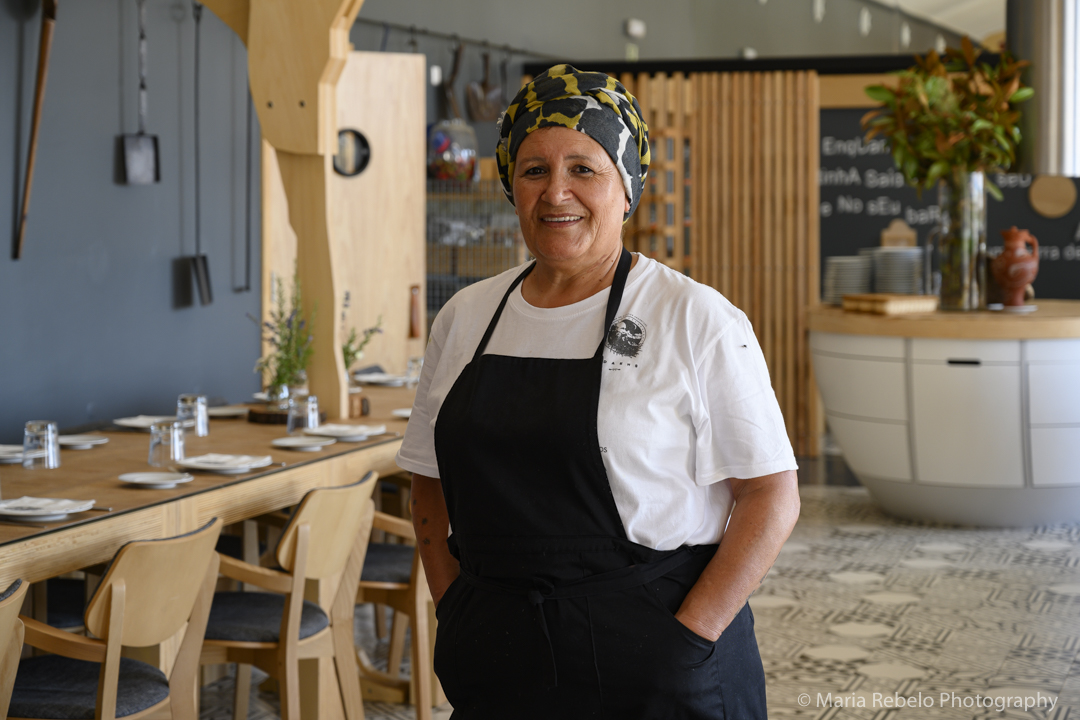
Ilda Vinagre is a legendary chef. In the 1980s, she opened a restaurant called Bolota (acorn) in Terrugem, a small town in Alentejo. The restaurant earned her two Michelin stars, attracting gourmets from Portugal and beyond. After this feat, she traveled the world cooking, heading restaurants in the United States and Brazil, and preparing banquets that showcased the cuisine of Alentejo in lands as far away as China.

The good news is that Ilda is back in Alentejo. We met with her at the restaurant of Herdade dos Adeans where she oversees the kitchen. Ilda told us about her life and her love of cooking. That these days she enjoys decorating her plates with edible flowers. And that there are four herbs no Alentejo chef can do without: mint, coriander, oregano and “poejo” (pennyroyal). In the end of our conversation, she generously gave us one of her favorite octopus recipes so we could share it with our readers. Here it is!

Country-style Octopus

Cook “al dente” the octopus in water with salt, onion, coriander, pepper and oregano. Cut it in pieces and grill the pieces in a hot griddle with bacon and a little olive oil. Dress with lemon juice, lemon rind and oregano. Accompany with a sweet potato puree. To make the puree, roast the sweet potato with the peel on. Take the peel, mash the pulp and mix it with butter.