Do you know the Bishop of Norwich?

OLYMPUS DIGITAL CAMERA

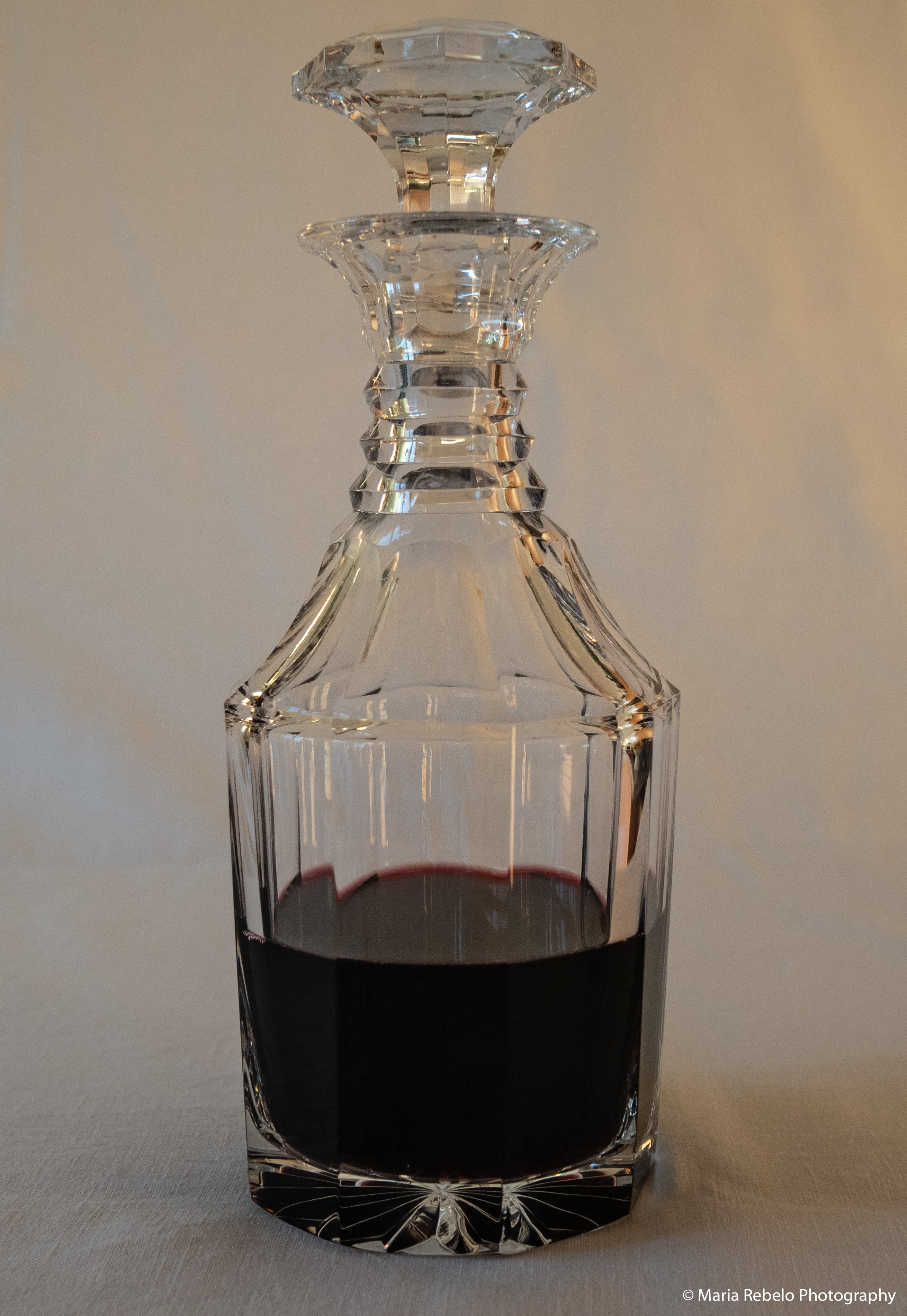
According to an old British tradition, Vintage Port is served in a decanter, passed from right to left at the end of the meal. When someone forgets to pass the decanter, instead of saying. “Would you mind passing the Port?” the British like to ask: “Do you know the Bishop of Norwich?”  They will then explain that the bishop was a very nice fellow except for his annoying proclivity to forget to pass the Port decanter. Henry Bathurst, the Bishop of Norwich from 1805 to 1837, often fell asleep at the table, interrupting the flow of Port that fueled the conversation.

The British Port-wine merchants and producers gather every Wednesday for lunch at the Feitoria Inglesa, an elegant 18th-century building in Porto. It is a place where the slightest hesitation about passing the port results in a lecture about the Bishop of Norwich.

One day, two members of the Feitoria Inglesa conspired to invite the current bishop of Norwich to lunch. The bishop arrived incognito. One of the conspirators failed to pass the Port and was promptly asked by his neighbor, “Do you know the Bishop of Norwich?” He responded, “I do, in fact, I can introduce you to him because he is sitting at the table!” The bishop rose and told the guests that he was indeed the Bishop of Norwich and that he always passed the Port.

Inspired beer at Musa

musa

Nuno Melo and Bruno Carrilho enjoyed so much the craft beers they tried in their travels abroad that they started gathering information about the art and science of beer production. Beer is made with only four ingredientes. You can buy the first three–yeast, malts and hops–all over the world. But the fourth ingredient—high-quality water–has to be locally available. When Nuno and Bruno discovered that Lisbon’s water is perfect for beer making, they bought a warehouse in an industrial suburb called Marvila and set to work.

They hired an accomplished British engineer to design and set up their factory and located suppliers of premium yeast, malts and hops. Then, they persuaded a talented American artisanal beer maker to create some unique beer recipes. Finally, they hired a dedicated crew willing to share the toil and joy of making great beer.

Nuno and Bruno called their project Musa, the Portuguese word for muse, to acknowledge the flashes of inspiration that kept the spirit of fun and irreverence alive.  This spirit is reflected in the rock-tinted names of their brews: Red Zeppelin, Mick Lager, Twist and Stout, Saison O’Connor, Born in the IPA, and Frank Apa.

The back of the Musa warehouse houses the factory. The front is a bar with beer on tap that provides immediate customer feedback about the new beers that are launched. Some of these new beers result from collaborations with restaurants, artists and gourmet-food producers like chocolate mavens Bettina and Niccolo Corallo.

Musa uses the bar to organize Sunday lunches prepared by well-known chefs and to throw awesome parties featuring singers, bands and DJs. One of the year’s biggest events, Ouro, Incenso e Birra (Gold, Incense and Byrrh), jointly organized with fellow craft-beer makers Dois Corvos and Lince, is coming up on January 12. If you’re in Lisbon this Saturday, it will be hard to find a better party!

Musa is located at Rua do Açúcar 83, in Lisbon. Click here for their website.

Caldo verde

Caldo Verde

Caldo verde (green broth) is the most Portuguese of soups. It comes in different versions but Maria de Lurdes Modesto, the doyenne of traditional Portuguese cooking, recommends a simple preparation used in the village of Marco de Canaveses.  Here’s the recipe.

Gently boil 500 grams of potatoes, 3 garlic cloves, one sliced chouriço (meat sausage) and some olive oil.  Crush the potatoes with a masher. Add the shredded Galician cabbage for just a couple of minutes (avoid overcooking the cabbage). Dress the soup with olive oil. Serve, preferably in a clay bowl, and accompany with broa, a Portuguese corn bread.

The soup has the colors of the Portuguese flag: green from the cabbage, red from the sausage, and yellow from the olive oil. You find caldo verde everywhere: in homes and restaurants, in places where fado singers gather, and in festivals and fairs. The soup is so popular that vendors in farmers’ markets have a special shredder to make the distinctive strips of Galician cabbage that are the hallmark of caldo verde.

As with many traditional recipes, the origin of this soup is lost in time. There’s no recipe for caldo verde in the cookbooks written by Domingos Rodrigues in 1680 or by Lucas Rigaud in 1780. But these chefs worked for the royal family, so they probably shunned peasant cooking. The soup is mentioned in several 19th century literary works and it is the first recipe in Culinária, an influential cookbook published in 1928 by António Maria de Oliveira Bello.

Caldo verde is often served at midnight on New Year’s eve. Its comforting taste helps everyone feel warm and optimistic about the New Year!


The art of growing old

OLYMPUS DIGITAL CAMERA

A friend brought a precious gift to a recent dinner party:  a bottle of Madeira from 1853! The wine was produced at a time when the future of Madeira looked bleak. Robert White and James Johnson in the 2nd edition of their book “Madeira its Climate and Scenery,” published in 1856, offered the following prognosis:

“The wine of Madeira, which has acquired worldwide celebrity, will soon be no more than a thing of history. In the Spring of 1852, a disease suddenly showed itself which, in process of time, destroyed the grape and ruined the prospects of the hardly-tasked cultivators. […] it is calculated that in two or at most three tears not a pipe of wine will be left in the island.”

The disease was caused by a fungus called oidium tuckeri. According to White and Johnson, production dwindled from roughly 8,000 pipes in 1851 to roughly 2,000 pipes in 1854. Luckily, the discovery that oidium could be controlled by dusting the vines with sulphur saved Madeira’s vineyards from oblivion.

It was with great expectation that we broke the 165-year-old crimson seal to persuade the steadfast cork to retire from the job of guarding the priceless nectar. The wine left the bottle full of vigor, with a crystalline amber color and an enchanting aroma. No wonder Madeira was once used as a perfume in the court of Russia!

Less sweet than more recent vintages, the taste has an elegant “vinagrinho,” the name for the volatile acidity produced by the passage of time. It is a wine that has much to teach us about the art of growing old.

Stone soup at Quinta do Arneiro

Quinta do Arneiro Composit (cropped)

Once upon a time, there was a poor friar was too shy to ask for food. Famished, he knocked on the door of a farm house and solicited a pot and some water to cook a stone soup. The farmer and his wife were intrigued by this request. The friar took a stone from his bag, placed it in the pot and put the pot on the fireplace.

“How is the soup?” the farmer asked. “Delicious,” answered the friar “and when you put some lard, it tastes even better.” The farmer gave the friar a piece of lard. The friar tasted the boiling broth and said “this stone makes an excellent soup, especially when it is seasoned with a little salt.” The farmer’s wife promptly offered the friar some salt. The farmer commented that it was starting to smell good. “If I added some leftover beans, cabbage, and potatoes, the aroma would be divine.” Curious, the farmer gave the friar the vegetables he mentioned. “Is it ready?” the farmer ’s wife asked. “Almost done, if we added some slices of sausage, even the angels would eat it.” The farmer’s wife gave the friar a sausage. He sliced it into the broth and a few minutes later declared the soup ready. He shared it with his hosts who agreed that the stone had produced a remarkable  soup.

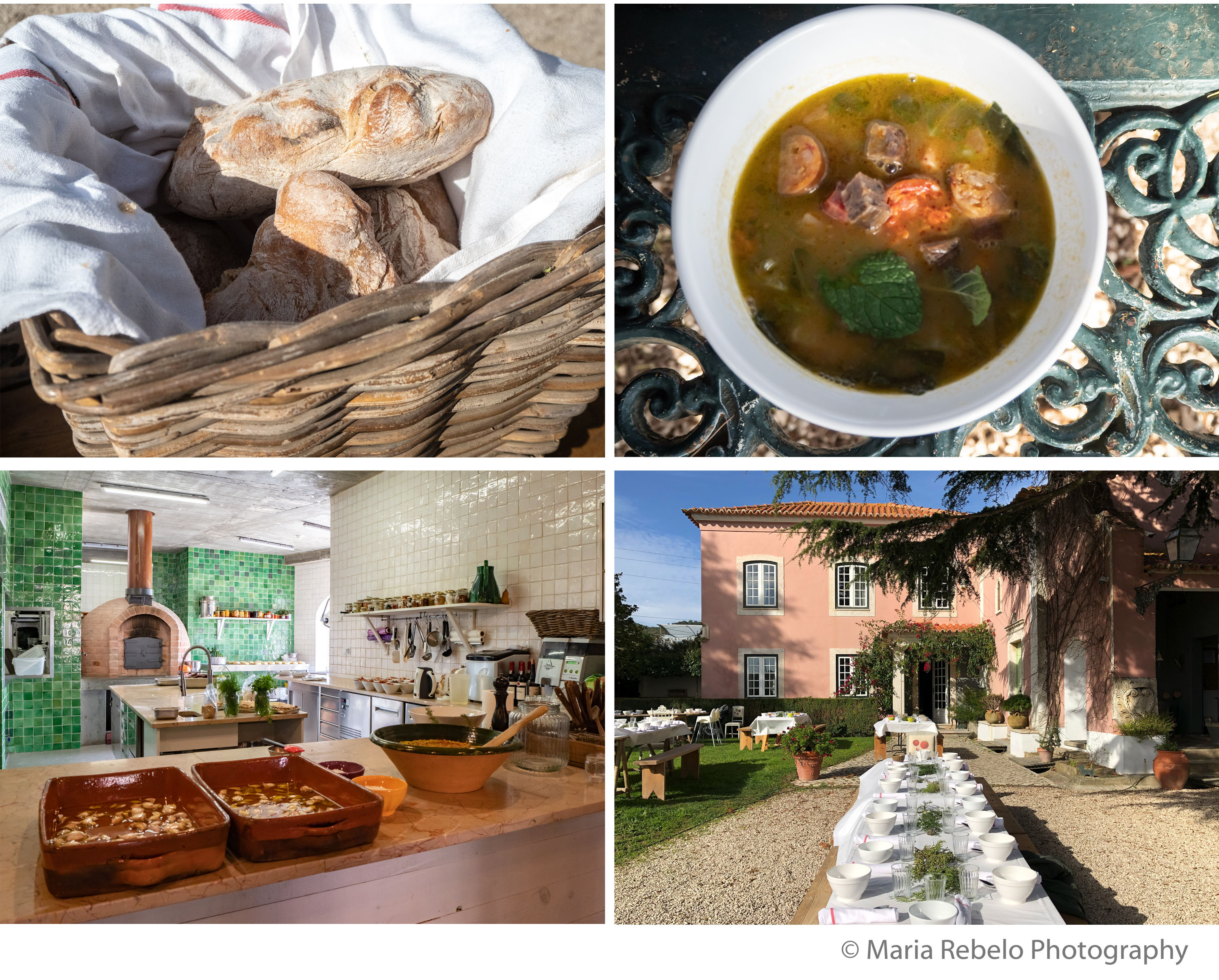
Every year on December 8, Quinta do Arneiro, a biological farm near Lisbon, uses its pristine vegetables and sausages to cook a monumental stone soup. The meal starts with hot country bread baked in a wood-fired oven accompanied by plates of freshly made hummus, olive oil and garlic. Then, the hearty soup is served with mulled wine. A delicious dessert composed of oranges, pomegranate, pumpkin jam, and roasted sweet potatoes brings the meal to a satisfying end.

Luisa Almeida, the owner of Quinta do Arneiro inherited the farm from her father. When Luisa was a teenager, she wanted nothing to do with agriculture, But, Luisa went to live on the farm after she married and it was there that her children were born and raised. In 2007, worried about the detrimental health effects of the chemicals used in conventional agriculture, Luisa ventured into organic farming. “It is arduous work but every day we treat nature with the respect it deserves,” she says proudly. The quinta delivers regular baskets of organic produce to lucky subscribers and opens its restaurant  for lunch from Wednesday to Sunday. A meal at the restaurant is a unique opportunity to eat nutritious, delicious seasonal products, freshly picked and cooked with love.

We greatly enjoyed our meal outdoors warmed by the bright sun that joined the feast. And the soup?  Even the angels would eat it!

Quinta do Arneiro is located in Azueira, Mafra. Click here for the farm’s website. To have lunch at the restaurant, email restaurantedaquinta@quintadoarneiro.com  or call 918740906 for reservations.

Three lessons at Quinta de Vargellas

Quinta de Vagellas

It is easy to arrive at Quinta de Vargellas because this heavenly wine estate in the Douro valley has its own train station. The old carriages stop there with a screech, huffing exhausted from racing with the river waters. It is then up to the guests to walk up the granite steps that lead to the manor house.

We sat in the porch, mesmerized by the schist terraces built by generations of workers to create the perfect environment for the exuberant vines. It was here that we learned our first lesson: that the greatest beauty is created by humans in harmony with nature.

Our second lesson, was about the importance of generosity. David Guimaraens, the head winemaker of Taylor’s Fladgate, Fonseca and Croft has an hectic schedule. But he takes time to share the magic of Vargellas with his guests. He explained to us the uniqueness of the terroir and described the vines as if they were his children. We drank his words and saw the brilliance of the vineyards through his eyes, green like the Douro river.

The grapes from the quinta are used to make the famed Quinta de Vargellas Vintage and form the base of the great Taylor Vintage Ports. We walked down to the cellar to sample the port made in 2018, which is still full of vigor but promises to age gracefully.

David discussed some of the intricacies of port-wine making and told us about the new vines he is planting so that his children can continue to produce great ports.  It takes 10 years for new vines to produce usable grapes. Between ages 10 and 20, the vines are adolescents, they have some good years but are moody and inconsistent. From ages 20 to 40, they mature and acquire consistency. From ages 40 to 60, the yields are low but the quality is great. Beyond 60 years, production dwindles but the few grapes that grow are drenched with wisdom.

A lifetime is too short to plant the vines and gather the knowledge required to produce great port. And so, we learned our third lesson: life is a relay race. We have to learn  from our ancestors and add to that learning to sow the seeds of the future.

It was hard to leave Quinta de Vargellas. But the memories of our visit stay with us. And from now on, every sip of the quinta’s holly wines will take us back to this paradise in the Douro valley.

Click here to see the Quinta de Vargellas web page.

Repentina

repentina Composit

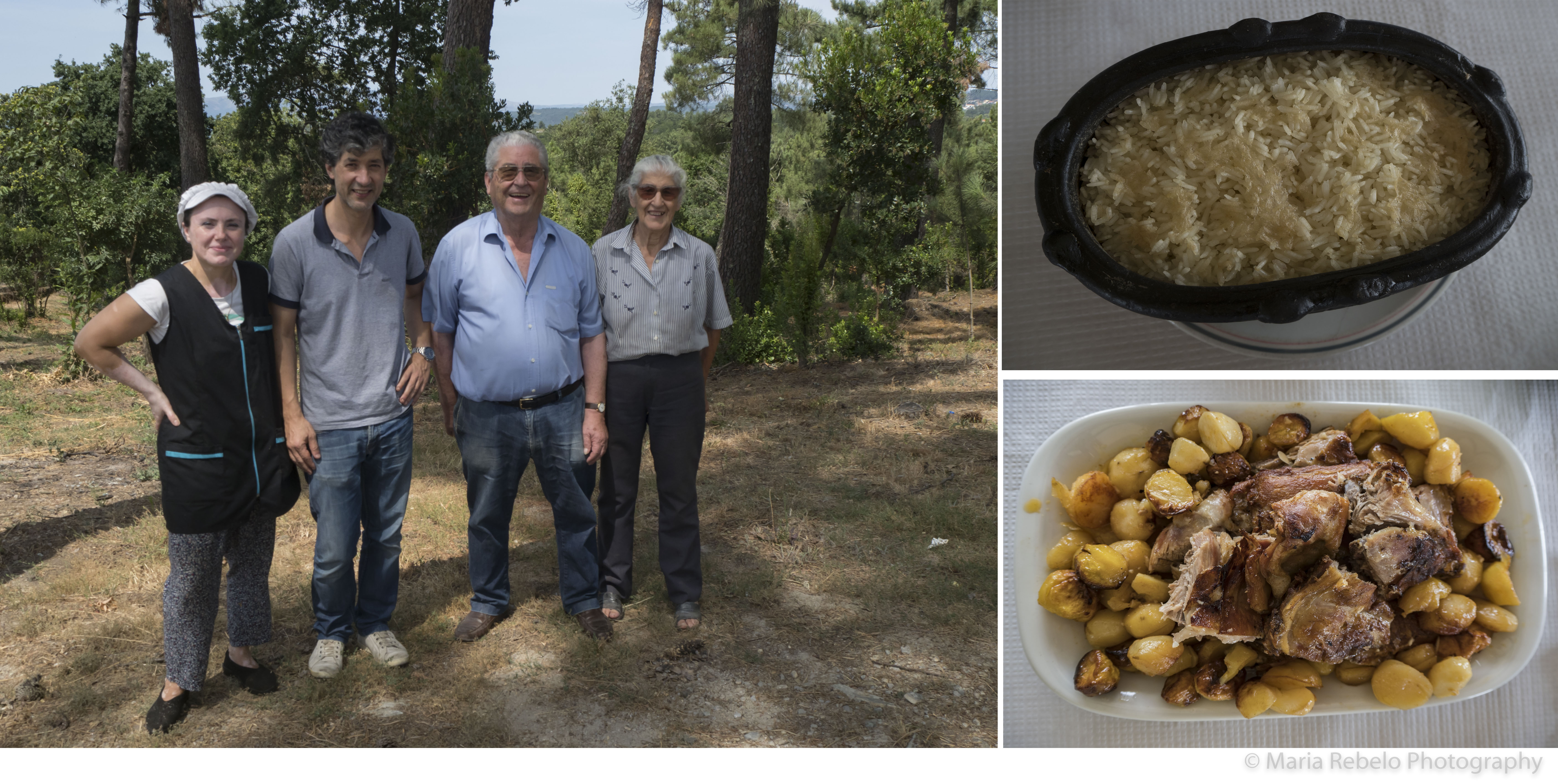
Several people recommended that we try Repentina, a humble tasca in Poiares famous for its baby goat roasted in a wood-fired oven. Its name is a twist on the word “repente” which means in a flash. We first visited the restaurant last year. When the waiter brought the menu, we said we didn’t need it, we wanted to try their famous roasted goat. Incredulous, the waiter explained that “If you want to eat baby goat, you have to call us a day ahead and reserve the order. We only roast enough meat for the people who reserved it.” Well, no wonder the locals like say that nothing is easy in the Douro valley. Disappointed, we ordered a large beef cutlet that arrived perfectly grilled accompanied by salad and a delicious tomato rice.

This year, we made sure to call ahead to secure our roasted goat servings. We were told that the best time to show up is at 1:00 pm, just as the roast comes out of the wood ovens.

We arrived at the appointed hour and sat in the dining room overlooking the Douro valley. The air was filled with enticing aromas that heralded the arrival of the roast to the table. The taste is indeed exceptional, which explains why this place in the middle of nowhere attracts so many customers.

The restaurant is run by the Cunha family. Fernando who is 82, still operates the ovens. His wife Soledade runs the kitchen together with her daughter Ana Paula. Their son Fernando junior runs the restaurant.

I asked Fernando Cunha what is the alchemy that produces such satisfying flavors. He told us that “You have to get the best ingredients, the goats have to be small and tender, the wood for the fire has to produce the right temperature, the seasoning has to be harmonious and fresh. All the details are important. Our name may be Repentina but we do not cook in a flash. We do everything slowly so we get it right.”

Mercearia Prado

Prado (loja) Composit

António Galapito, the chef of Prado, a new restaurant in Lisbon, had a problem. Despite his large ensemble of proficient waiters, service was at times slow. The reason was that customers asked many questions about the provenance of the ingredients used in the restaurant.

Galapito took an unusual step to solve this problem: he opened Mercearia Prado, a grocery store that stocks the products he cooks with. So now his waiters can say: you find our ingredients in the grocery store around the corner.

Mercearia Prado is the perfect place to enjoy a light lunch or to shop for a gourmet picnic. Its shelfs are brimming with wines, cheese, prosciutto, canned fish, bread, vegetables, gourmet sandwiches, jams, and desserts. The products are so carefully curated that you can shop blindfolded and be certain that everything you choose tastes great!

Mercearia Prado is located at Rua das Pedras Negras, 37, Lisbon, tel. 960 280 492. 

A glass of Jampal wine?

OLYMPUS DIGITAL CAMERA

André Manz, a Brazilian soccer player turned entrepreneur, was searching for a place to build offices on the outskirts of Lisbon. He liked a small village near Mafra called Cheleiros. There, he bought the Orchard of the Holy Spirit (Pomar do Espírito Santo), named for its proximity to the Holy Spirit chapel. His wife Margarida fell in love with the orchard and convinced André to use it to build their home and locate the offices elsewhere.

When they moved to Cheleiros, an elderly lady called Dona Celeste told André that in the old days everybody in the village made their own wine. There were 43 wine presses in a village with only 800 people. André said that it would be cool to produce wine and Dona Celeste seized the opportunity to sell him her abandoned vineyard.

When enologists came to study the old vines, they concluded that the red grapes were “castelão” but they couldn’t identify the white grapes. André told Dona Celeste about their difficulties and she replied “Young people don’t know anything! Those grapes are jampal.” This is a grape varietal that was considered extinct. It produces small grapes so, in years gone by when quantity trumped quality, farmers replaced it with higher-yielding varietals. The wine institute sent technicians to certify that the grapes are indeed jampal and André became the world’s sole producer of jampal wine.

In the first few years, André bottled the wine in plain bottles. He gave a few to his friends and consumed the rest in his household. On the occasion of an important lunch, André decided to put some labels on the wine. He called it Dona Fátima, the name of his mother in law. When the bottles arrived at the table, Dona Fátima was delighted. “Why did you name the wine after me?” she asked André with curiosity. “Because of its acidity,” quipped André.

When Julia Harding and Jancis Robinson were working on their book, The World of Grapes, they contacted André to see if they could get a bottle of jampal wine. They liked it so much that they included it in their selection of the 50 best Portuguese wines.

Since then, it has become very hard to buy one of the 6,000 bottles of Dona Fátima produced every year.  If you see one in a wine store make sure you get it. If not, drive to the village of Cheleiros, to try one of the world’s most unique wines.

Click here for Manzwine’s web site.


Eating well for less in Portugal

OLYMPUS DIGITAL CAMERA

We get asked so often about the dos and don’ts of eating in Portuguese restaurants that we decided to compile a few tips. Here they are.

When you seat at a table, the waiter brings a basket of bread, butter and olives. These items are called the “couvert.” Simple couverts usually cost a couple of euros. Some restaurants bring more elaborate (and more expensive) couverts,  including items such as cheese, prosciutto, and codfish cakes. If you try one of these items, you’ll often pay for the whole couvert. You can always send the couvert back if you don’t want to pay for it.

The markup on wine in Portuguese restaurants is generally lower than in the U.S. or France. So, it is often affordable to choose a great wine to complement the meal. If you describe the style of wine you enjoy, the waiters can generally make good suggestions. House wines are typically inexpensive, ranging from drinkable to surprisingly good. You can ask to sample the house wine before ordering it.

It is a great idea to share main courses. Portions in traditional restaurants are generally large. Some restaurants prepare half portions, but even these halfs can be sizable. We prefer a multicolored meal to a single monochromatic dish, so we often choose a few main courses to share and ask the waiter to bring them out sequentially. It makes for a much more interesting meal.

Portuguese restaurants don’t serve tap water, only bottled spring water. The good news is that spring-water quality is high and prices are low. You can choose room temperature or cold but ice cubes are not normally used with water.

Fish is served on the bone with the head included. If the fish is large, you might be able to ask the waiter to fillet it for you. If you don’t see the price of a fish dish on the menu, it means that the fish is sold by weight. You can choose a fish that suits your preferences and ask the waiter to weigh it so you know its cost before ordering it.

The Portuguese use different forks and knifes for fish and meat. It is an elegant custom and fish does taste better when eaten with the proper utensils.

If you’re a strict vegetarian, always ask whether the food was prepared with meat products. Vegetable soups are seldom good vegetarian choices because they are often made with chicken stock, sausage or lard. The best bets are salads and vegetable sides.

Espresso is good and cheap. The Portuguese are addicted to high-quality espresso, so  restaurants with lousy coffee are ostracized.

Restaurant waiters earn a fixed salary, so Portuguese leave very modest tips: two or three euros for a normal meal, five euros for exceptional service or for a meal in a fancy restaurant.

If you don’t know what to choose, it is a good idea to ask waiters for advice. If you ask for  the best dishes on the menu, you’re likely to hear that everything on the menu is good. A better way to gather information is to ask what are the waiter’s favorite dishes or which menu offerings are most popular.

That’s it, just bring an appetite, the willingness to try something new, and a great time is guaranteed for all.