A rooftop restaurant in Lisbon

As soon as we exited the elevator, on the 5th floor of Hotel Bairro Alto, we walked to the terrace, attracted by the generous view of the Tagus river. Our waiter suggested that we stay outside and enjoy a few appetizers before going into the living room. And so we sat down and watched the Lisbon skies change into their evening colors. 

The restaurant, called BAHR, offers a menu designed by Nuno Mendes, a Portuguese chef who has earned many accolades in London. It is hard to choose–everything sounds great–so it took us some time to place our order.

After a few minutes wait, a savory aroma heralded the arrival of a plate with rissois de berbigão, fried turnovers with a cockle filling and a hint of curry. We noticed that they were breaded with Japanese panko instead of with traditional bread crumbs. But we were still surprised by the first bite. It was perfect: the crispness of the exterior contrasted with the moist flavorful interior creating an harmonious combination of texture, taste and temperature. 

A plate of percebes (goose barnacles) served on toast arrived next. The percebes looked normal but their smokey taste accentuated by a buttery sauce was exceptional. They were followed by roasted carrots dressed with a mouthwatering citrus sauce.

The temperature was dropping, so we retired to the living room. Our plates were served with a vegetarian version of a Lisbon classic: codfish Brás style. The codfish was replaced by a roasted cauliflower accompanied by a sauce made from broccoli cooked in a salt mass, spinach and parsley. Seldom has a cauliflower shined so brightly. On the table, there were sides of potato chips cut razor thin with a Japanese mandoline.

Next, we tried codfish confit with açorda (a bread-based preparation) from Alentejo. The codfish was superb. When we asked what made it so special sous-chef Nuno Dinis came to the table to explain that we were enjoying skrei, a codfish from Norway that is only available between January and April. It arrives fresh at the restaurant where it is cured with sugar and salt to accentuate the taste of the sea. The codfish was dressed with a savory yellow sauce made with a fricassé of sames (the stomach of the codfish) and a broth made from bones and gelatin.

The meat entrée was black pork with two sauces, one made from clams the other from spinach, parsley and coriander. It is a happy marriage of the flavors of two Portuguese classics: clams Bulhão pato and pork with clams.

The meal ended with queijadas that tasted of lemon and salt. We can’t wait to return to BAHR to enjoy this food that so perfectly combines simplicity, tradition, and refinement.

BAHR is at Hotel Bairro Alto, Praça Luís de Camões nº 2, in Lisbon. Click here for the restaurant’s website.

We hope it rains in August

OLYMPUS DIGITAL CAMERA

When friends who visit Portugal tell us they tasted some amazing mushrooms, we always worry they are mistaken. During hard times, Portuguese cooks found ways to make tasty dishes out of many animal parts to make sure nothing went to waste. So those delicious “mushrooms” were probably pig ears in coriander sauce or sautéed veal kidneys.

But Portugal does have amazing wild mushrooms. They’re called “míscaros” (pronounced “meescaros”) and grow in the pine forests of the Beira region.  You can stew them, cook them with meat, or combine them with rice. Míscaros are one of the crown jewels of Portuguese cuisine.

One of our grandfathers loved eating míscaros. He was always happy when it rained in August because that meant that míscaros would be abundant in the Fall. We remember him very fondly for many things, big and small. And we always like it when it rains in August.

You can often find míscaros in the Fall at Salsa & Coentros, one of our favorite restaurants in Lisbon. Click here for more information about the restaurant.

Heaven in Lisbon

DCIM101GOPRO


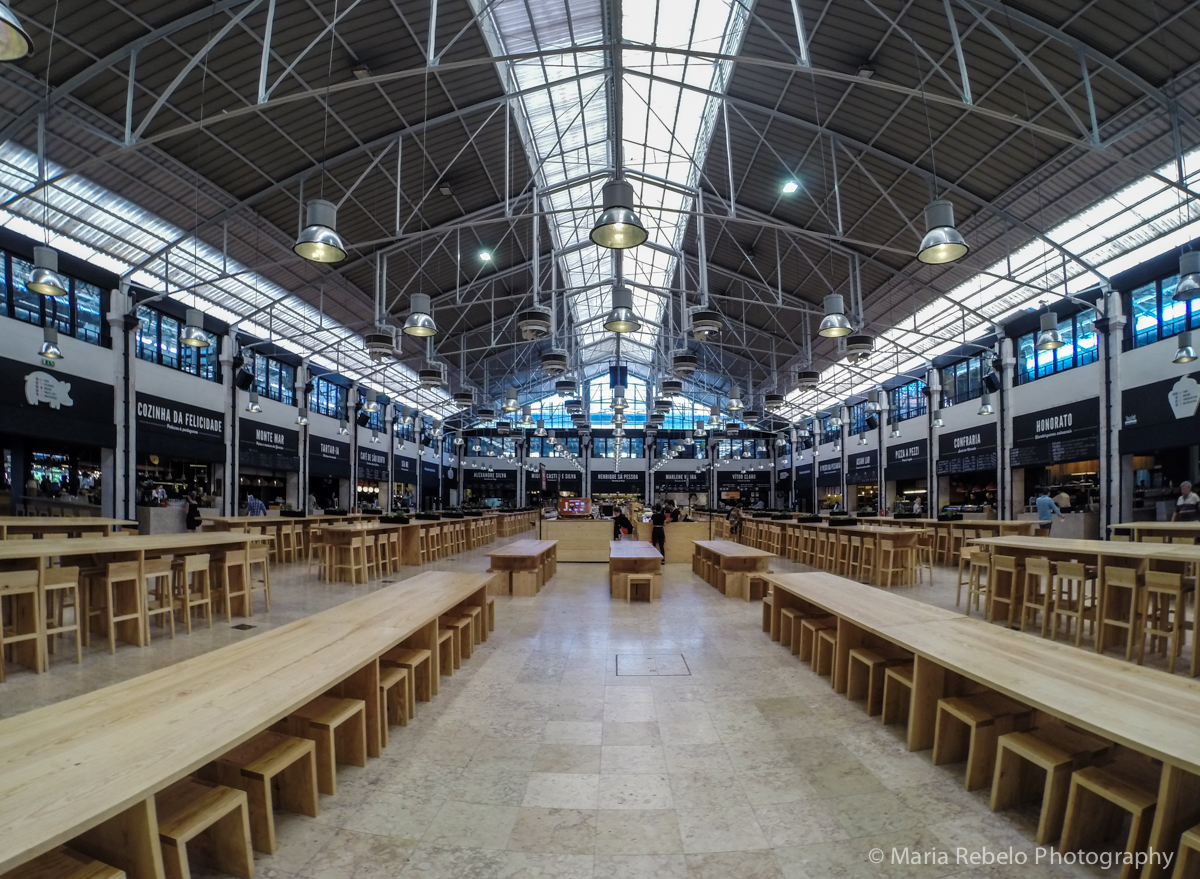
We dreamed we had died and gone to heaven. Paradise, it seemed, was a vast pavilion, sparsely furnished with long communal tables and bathed in a soft white light. To our astonishment, the air was perfumed not with incense but with the unmistakable aromas of Portuguese cooking: parsley and coriander, warm olive oil and garlic, salt cod, and cinnamon. All around us, great chefs beckoned, urging us to taste their creations. We sampled a delicate pastel de massa tenra by Miguel Castro e Silva, slow-roasted pork by Henrique Sá Pessoa, Marlene Vieira’s squid “pirolitos,” and a deeply comforting tomato soup by Alexandre Silva. Each dish felt like a small revelation.

When we woke up, we realized we had been dreaming about a real place. The magazine Time Out Lisbon transformed part of Mercado da Ribeira, one of the city’s historic food markets, into a hall where many of Lisbon’s finest restaurants maintain small outposts. For a modest sum, you can assemble a feast of your choosing, pair it with an excellent Portuguese wine, and dine at one of the long shared tables. It is, in its own unpretentious way, a little taste of heaven.

Portuguese fast food

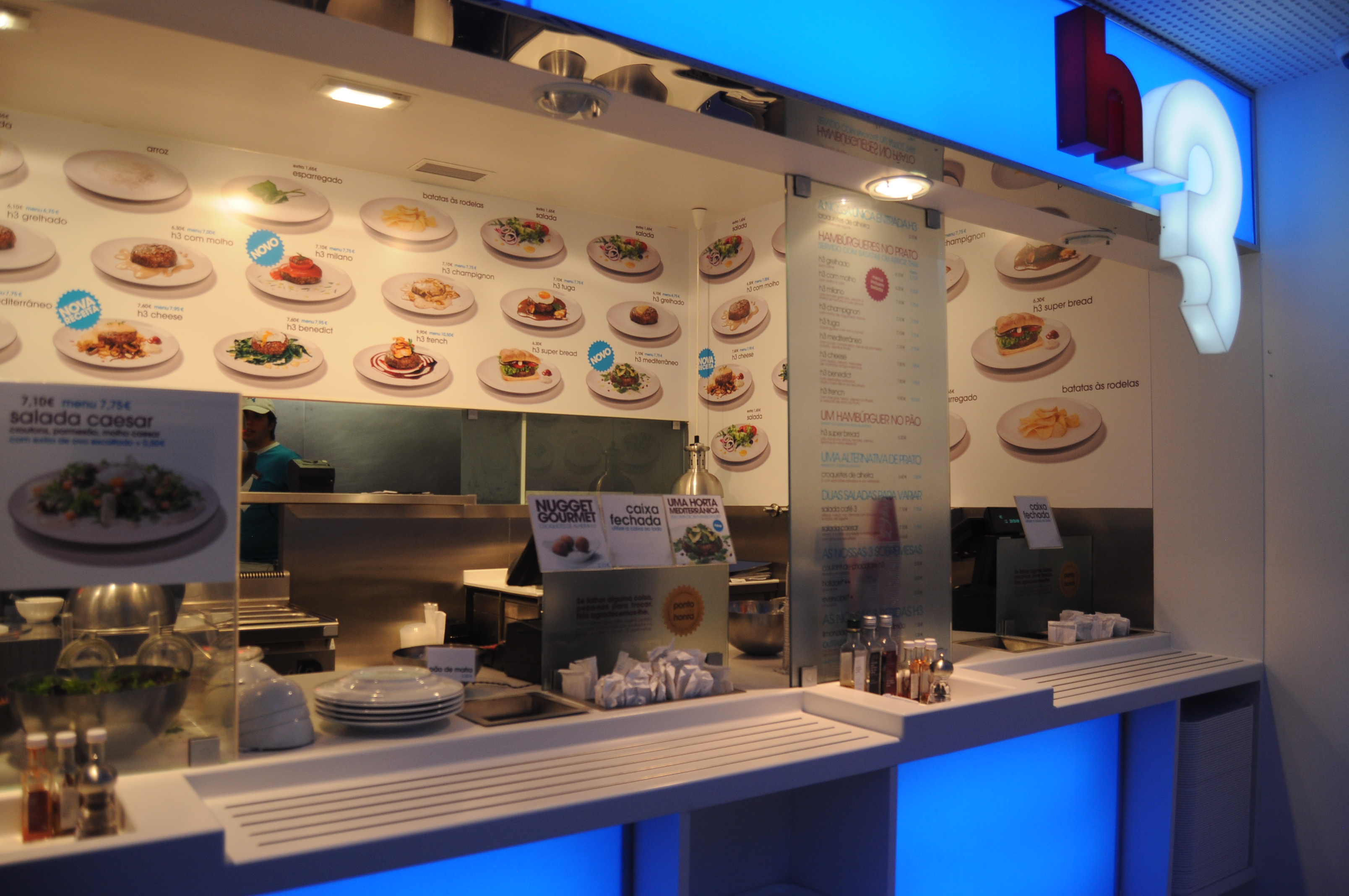
H3

Portuguese cuisine is definitely slow food. You have to wait for the fish to grill, the clams to open, the meat to roast, or the shrimp to cook. If you’re in a hurry, Portuguese cafés offer a wide array of finger foods to eat on the go: tasty codfish cakes (bolos de bacalhau), delicious small pies (empadas), crunchy paninis (tostas mistas), and much more.

But, if you’re in need of something quick and more substantial, try a Portuguese hamburger chain called H3. They cook to order delicious hamburgers made with great ingredients. Start with the wonderful “croquetes de alheira” as a appetizer. Then, choose one of the many burger configurations, with toppings ranging from mushrooms to foie gras. You’ll see why this fast-food chain is growing so fast.

Click here for the H3 website (choose “onde” to see a list of locations).