Dining at Ceia with Alex Atala

Dining at Ceia is always a singular experience, but even more so when shared with the legendary Brazilian chef Alex Atala, seated humbly among the guests as if he were a mere mortal.

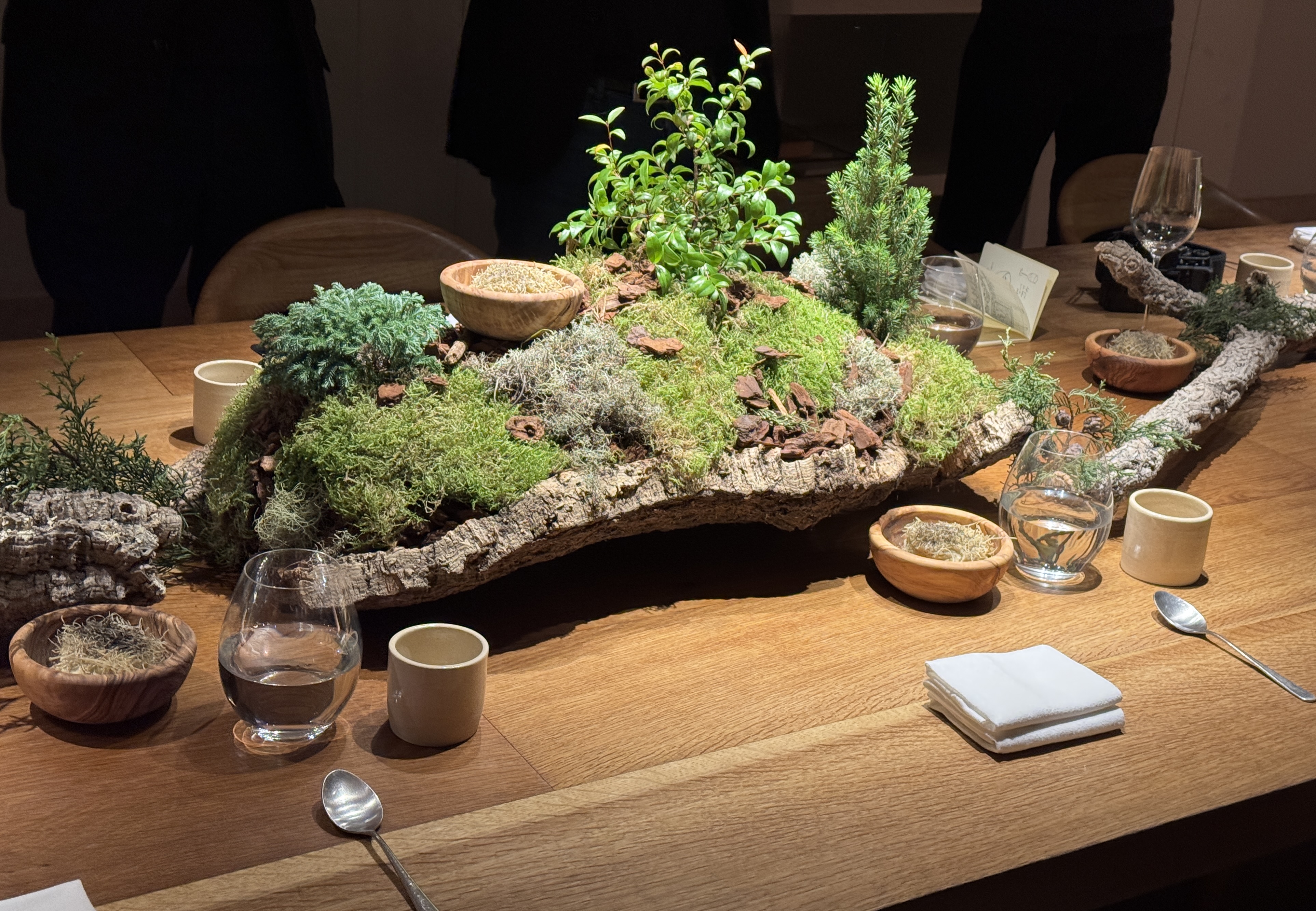
Lisbon’s most elegant table was adorned with the bark of a cork tree, harvested on the thirtieth anniversary of its growth. Draped in moss, mushrooms, and delicate flowers, it set the stage for a menu designed by chef Renato Bonfim and inspired by Hieronymus Bosch’s Garden of Earthly Delights.

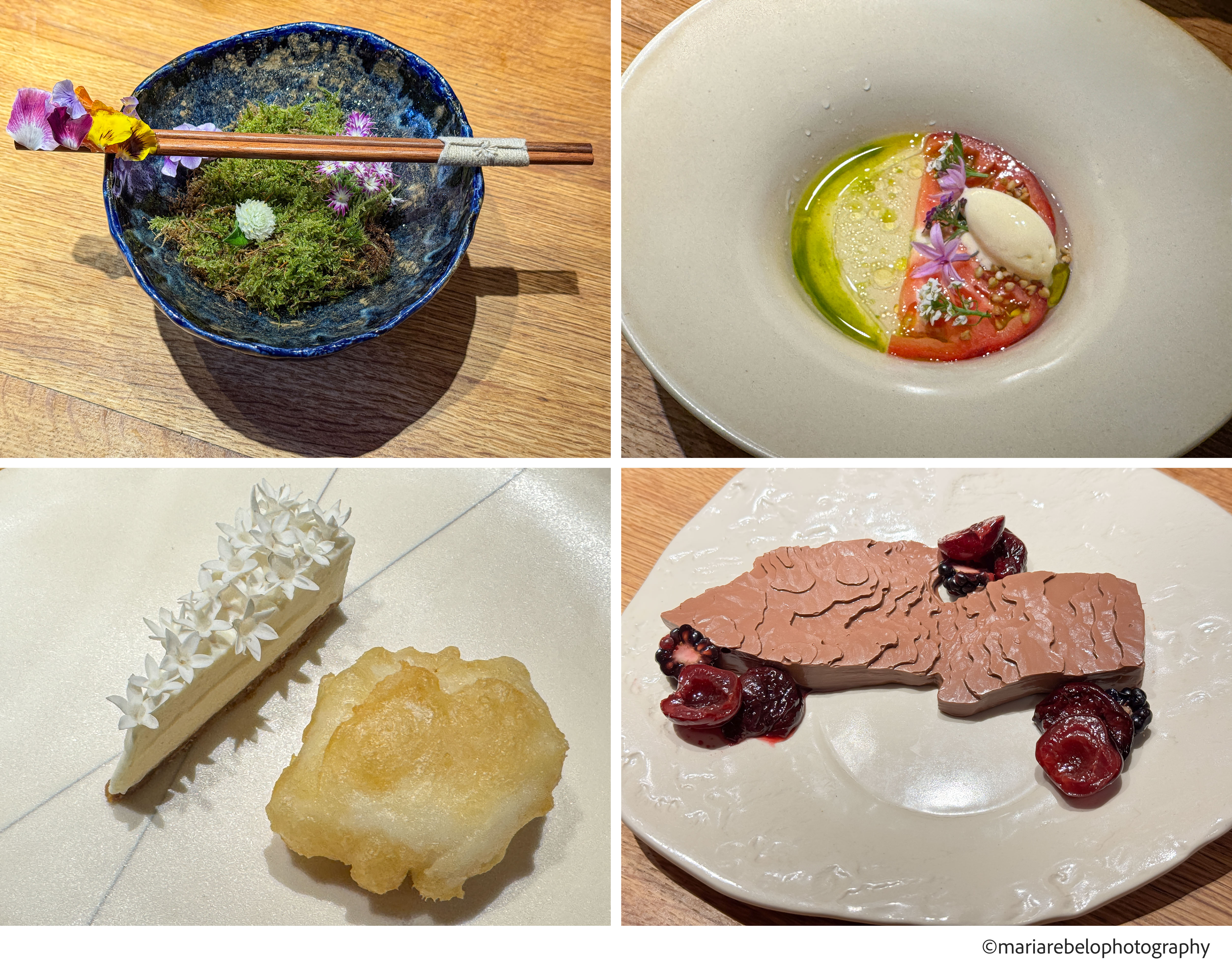
The meal began with a whisper—an ethereal broth of ginger and algae, offering no hint of the wonders to come. A bowl soon appeared, strewn with moss and topped with chopsticks decorated with flowers. Nestled beneath the blossoms was a sublime tartare of carabineiros, the crimson prawns of the Algarve. “I was trained as a Bocusian,” Atala said, referring to Paul Bocuse, the patriarch of nouvelle cuisine. “I expect the food to be on the plate, but here, the food is beyond the plate.” A joyful Blanc de Noirs from Bairrada, fittingly named Dinamite, kept us good company.

Then came Water: a delicious composition of tomato, coriander oil, and a sorbet of toasted bread and garlic. Kristin Liebold, the gracious maître d’, poured glasses of Tepache she had crafted herself—a lightly fermented pineapple elixir that brightened the palate.

Another delight soon followed: slices of savory garlic cheesecake, adorned with white blossoms, served with perfectly fried hake from the Azores. The fish was prepared in a traditional style:  marinated in milk, lemon, salt, and pepper, then delicately fried in tempura batter. 

Atala reflected on how his time in Italy had taught him the importance of simplicity and repetition in dishes like fried fish. “Every Sunday, the mother cooks for the family,” he said, “but when the nonna (grandmother) prepares the same dish, it becomes a feast. The ingredients don’t change—but the nonna brings a deeper understanding, born of repetition and a lifetime of attention to detail.”

An exquisite wine, whimsically called Viagem ao Princípio do Mundo (journey to the beginning of the world), filled our glasses. It is made with Alvarinho grapes grown in Melgaço and aged in sherry casks.

We were then invited into the garden, where, under flickering candlelight, oysters from Setúbal arrived dressed in spinach and algae, gently cooked in a Bulhão Pato style. Atala spoke about the importance of authenticity and of how this dish marries local ingredients and time-honored techniques with a sense of modernity.

Back in the dining room, the next course arrived: cordyceps mushrooms cleverly disguised as pasta. They were glazed in aged balsamic and served with a warm, buttery brioche, the perfect partner to their umami taste. A luminous white wine from António Madeira in the Dão lent the moment a festive air.

The final savory dish was a richly flavored wild boar terrine, served with oven-cooked rice and bread made from roasted quiabos (okra).

Dessert began with a leche de tigre jelly, adorned with nasturtiums and elderflower. Then came a mousse sculpted in the shape of Silent Living’s Herdade no Tempo, the estate that supplied much of the pristine produce featured throughout the meal. The mousse was encircled by an orchestra of cherries: fresh, roasted, and infused with lemon. 

A 2000 vintage Port crowned an unforgettable meal that Renato Bonfim and his youthful brigade cooked for Alex Atala, a philosopher-chef who sees food in its fullness: as ingredient and craft, as joy and communion.

Ceia is located at Campo de Santa Clara, 128. Lisbon. Click here for the restaurant’s website.
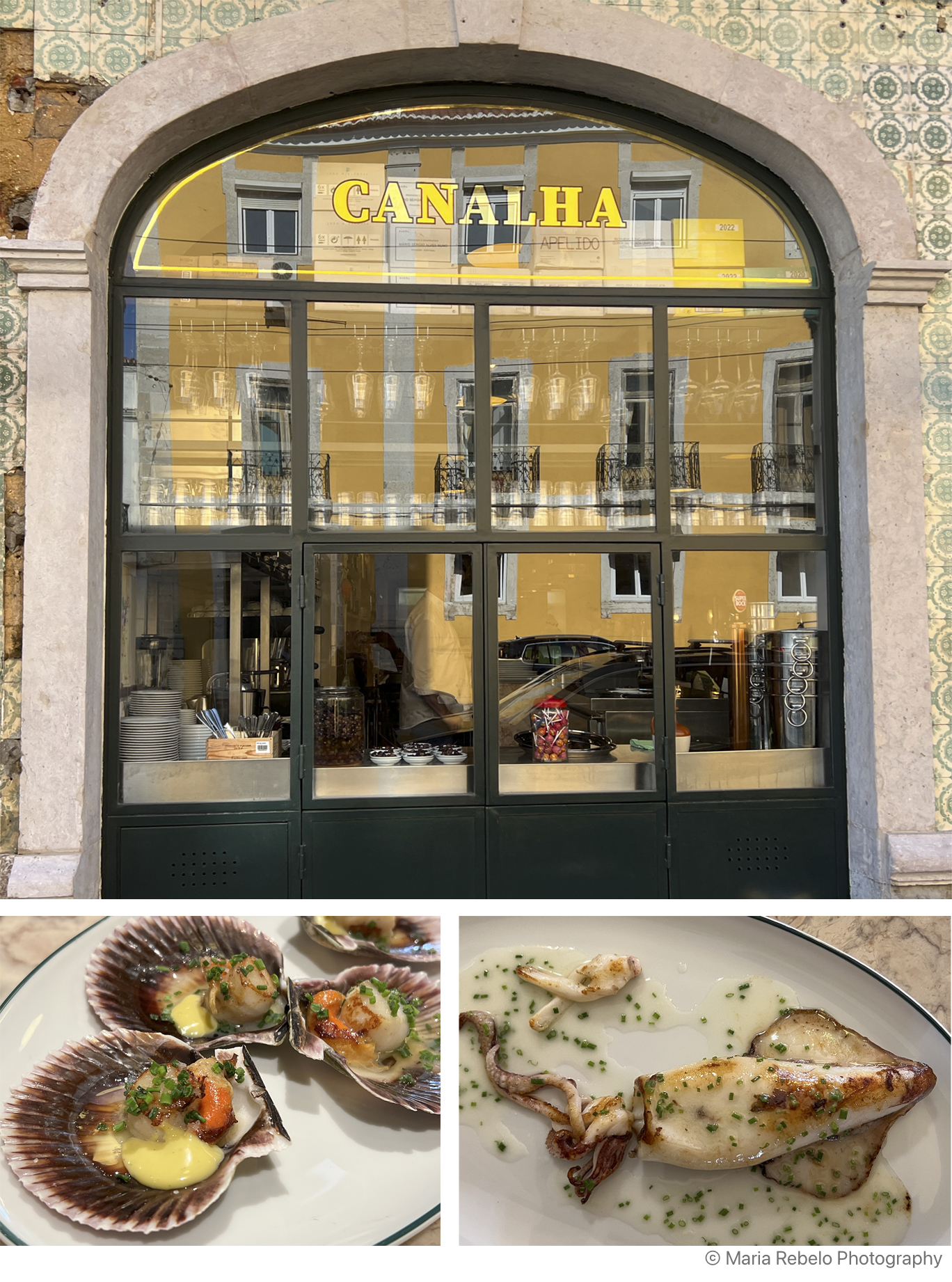
Canalha

One of Lisbon’s most coveted new restaurants bears a mischievous name: Canalha—the Portuguese word for “scoundrel.” Behind this playful moniker stands one of Portugal’s most acclaimed chefs, João Rodrigues. After earning accolades in haute cuisine, João chose a different path: to open a neighborhood restaurant grounded in the rich culinary traditions of Portugal. The result is a place that is unpretentious and quietly exceptional. Each day features a new “prato do dia”—a beautifully prepared dish offered at a modest price. But for those inclined to indulge, the menu also offers exuberant pleasures: opulent seafood, exceptional cuts of meat, superb artisanal charcuterie, and exquisite wines.

The décor reflects the restaurant’s philosophy of understated elegance. Tabletops are crafted from lioz, the rose-toned limestone that graces Lisbon’s historic buildings. The floors are paved with traditional black-and-white mosaic. Ceiling fans stir the air with their wooden blades, creating a gentle breeze.

Our meal began with crusty bread and pungent olive oil, followed by pastéis de massa tenra—golden, crisp savory pastries filled with seasoned meat and served with a bold sriracha mayonnaise. Then came zamburinhas, small scallops bursting with briny sweetness, and an exquisitely tender squid, lightly charred to smoky perfection. The final dish—grilled octopus with sweet potatoes—was a flawless composition of textures and flavors.

Canalha is not a stage for culinary theatrics. There are no illusions, no deconstructed dishes; there is no drama on the plate. This is cooking rooted in reverence for the land, the seasons, and the ingredients. After stepping away from haute cuisine, João journeyed across Portugal in search of forgotten recipes, unique flavors, and small producers who work with passion and dedication. Their names are celebrated on the menu. One dish is dedicated to our friend Raul Reis, who grows the finest potatoes in Portugal.

João is soft-spoken but intense. At Canalha, he channels this intensity to produce something rare: food steeped in the flavors and traditions of Portugal, cooked with skill, honesty, and soul.

Canalha is located at Rua da Junqueira 207, in Lisboa, tel. 962 152 742. Click here for their website. Reservations are a must.

Chef Marlene Vieira is a star

Since the dawn of civilization, Babylonians, Egyptians, and Greeks have studied the skies to chart the stars. But these luminous bodies shined whether or not they were included in celestial atlases.

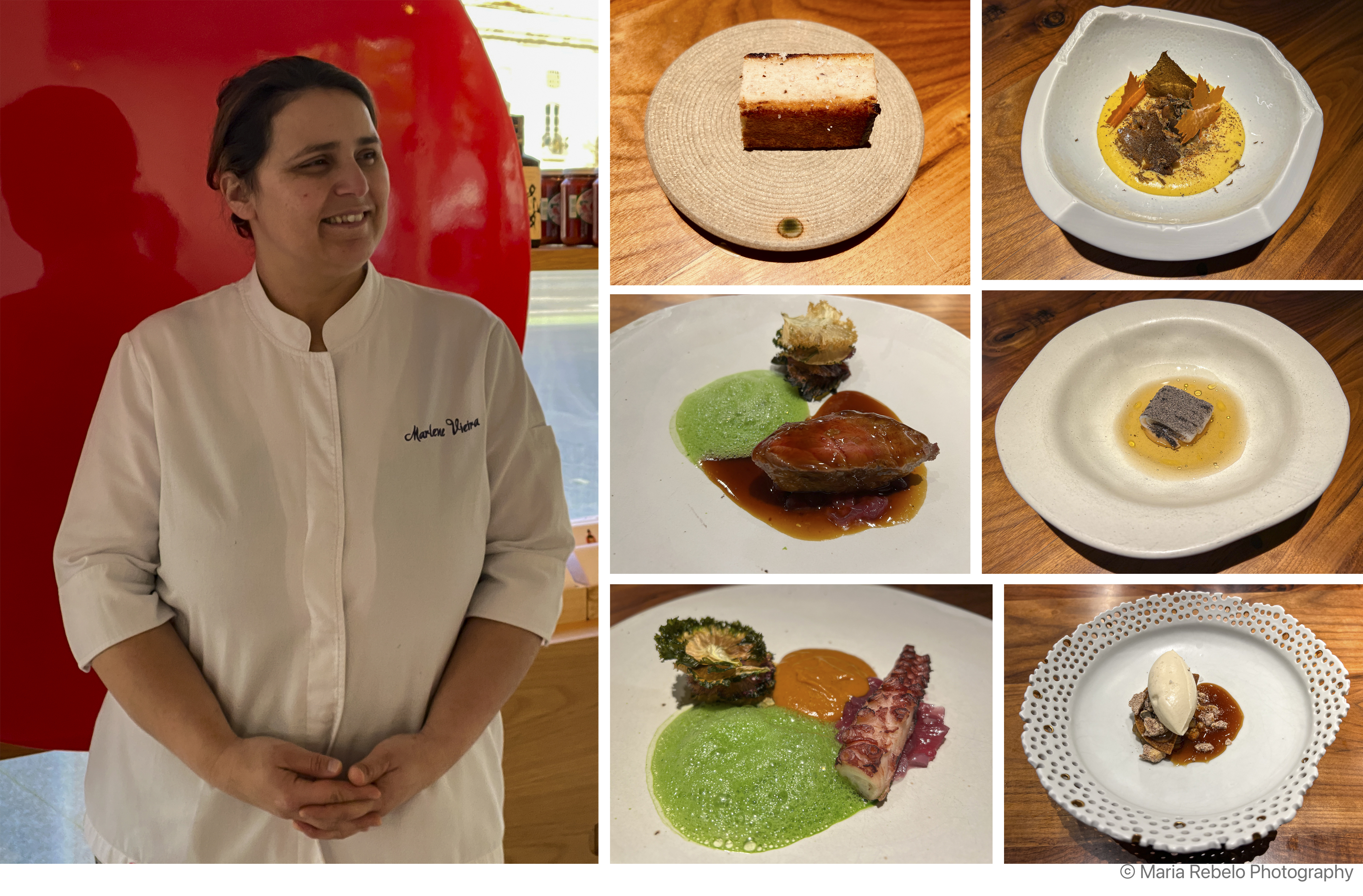
Last Tuesday, Marlene received a Michelin star—a richly deserved honor that celebrates her extraordinary talent and dedication. But long before this important accolade, her light had already illuminated the world of gastronomy. What fuels her radiance is the belief that cooking is an act of love. Each time we dine at her Zun Zum restaurant, we feel not just deeply satisfied but cared for.

Now, at the restaurant that bears her name, Marlene is elevating Portuguese cuisine to new heights. The space exudes serenity, with the kitchen at its heart—an altar where ingredients are transformed into a transcendent gastronomical experience. The menu evolves constantly, and once a recipe leaves, it does not return, making each meal a singular experience.

Guiding this culinary journey alongside Marlene is Chef Mário Cruz. He searches land and sea for exquisite treasures—sea urchins, Algarve red shrimp, wild mushrooms, cuttlefish, mullet, octopus, and partridge. 

The food is visually stunning, but, more importantly, it is delicious and it has soul. The irresistible cornbread, kneaded from white corn, wheat, and rye, follows Marlene’s grandmother’s recipe. The Azorean bluefin tuna, cured as if it were prosciutto, accompanied by gazpacho served in a bowl lined with sumac, transported us to the Algarve, to a sunlit table by the sea.

The partridge is cooked according to a famous recipe. During the Napoleonic invasions, General Junot’s troops looted the library of the Alcântara Monastery. Among the stolen manuscripts was a recipe for partridge stuffed with foie gras and truffles. Junot sent it to his wife, who introduced it to France as “Partridge, Alcântara style.” The renowned chef Auguste Escoffier declared it one of the finest spoils of the Napoleonic wars. Marlene’s reimagined version of this historic dish is so extraordinary that it might provoke another French invasion.

Marlene Vieira is a star–not because she has been recognized among the constellations of fine dining, but because she has always shined.  If you find yourself in Lisbon, take the time to sit at her table to savor the brilliance of her cuisine.

Marlene is located at Av. Infante D. Henrique, Doca do Jardim do Tabaco, Lisboa, tel. 351 912 626 761, email marlene@marlene.pt.

Fuso, a landmark restaurant

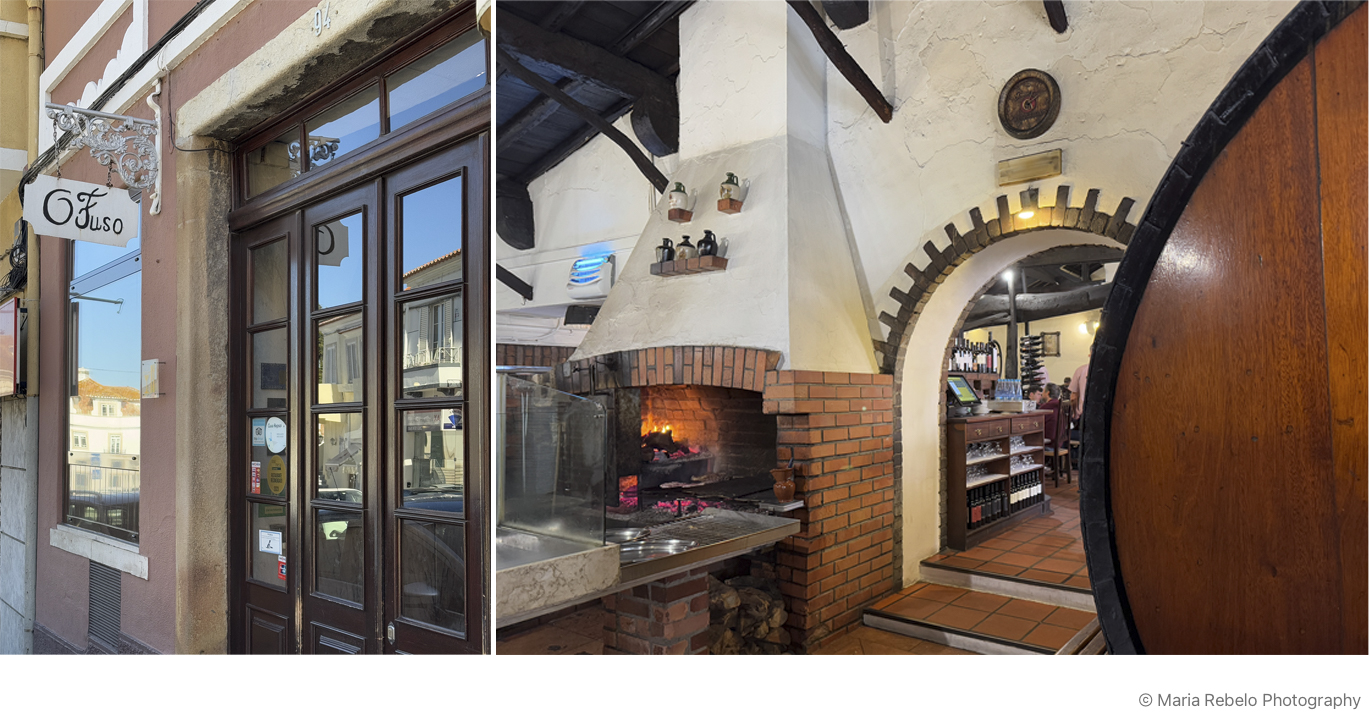
Located in Arruda dos Vinhos, 20 miles north of Lisbon, Fuso is a restaurant from another era. It opened its doors, in the space once used as a winery and a tavern, on March 9, 1973.

The concept for the restaurant was created by Fernando Guerra Cardoso, a successful car salesman who enjoyed socializing over food. He persuaded his friend, Armindo Mera Dominguez, to open a restaurant serving oversized portions that encouraged people to bring their friends. Today, the restaurant is run by the great-grandchildren of both founders.

Diogo Coucello, Fernando’s great-grandson, leads a team of 30 waiters and kitchen staff, ensuring seamless service for up to 300 guests. Reservations are essential—Fuso is always full. 

Since 1973, the menu has remained unchanged, focusing on two signature dishes: charcoal-grilled codfish and bone-in rib steak. Your meal can begin with delectable appetizers such as prosciutto, savory sausages, or grilled shrimp and end with various desserts, ranging from roasted apples to egg puddings and chocolate cake. But the main attractions are grilled codfish and steak.

You can find these dishes in many other restaurants, but Fuso’s renditions are exceptional. The codfish, imported from Norway, is meticulously selected for its succulence and rich flavor. The rib steak, consistently tender and tasty, has been sourced from the same butcher since the restaurant’s inception.

Fuso’s rustic décor has remained untouched since its opening. The restaurant’s name refers to the fuso, or spindle—a large wooden screw—attached to the wine press that still occupies the center of the dining room. The entrance is dominated by towering wine barrels made from exotic wood and a grand charcoal grill glowing with embers.

In a world where everything feels fleeting, it’s a privilege to eat at a restaurant that has been a gathering place for friends who love food for over half a century.

Fuso is located at Rua Cândido dos Reis, 94, Arruda dos Vinhos, tel. 263 975 121, 263 978 547.

Ceia’s new menu

As John Coltrane’s career evolved, his music underwent a profound transformation. He began as a virtuoso, dazzling audiences with his fluency and flair. But then, he transcended virtuosity, creating music that other players could not imagine because it came from a deeper source of inspiration.

The evolution of Ceia parallels this creative arch. From its inception, this restaurant, nestled within Lisbon’s most elegant hotel, offered unforgettable culinary experiences. But its current menu, orchestrated by a team led by chef Renato Bonfim, transcends technical skill to offer food that is new and exciting.

Titled Change, the menu is a series of culinary moments inspired by our planet and the way we interact with it. Most produce comes from Herdade no Tempo an estate in Alentejo that follows regenerative agriculture practices. Ceia transforms these products into elegies of cooking and celebrations of flavor. 

We generally like to describe the tastes, aromas, and sensations that the food evokes, but Ceia’s menu is so unique that revealing too much would detract from its magic. What we can tell you is that the names of the menu entries could be titles of Coltrane tunes: Ocean, Carbon, Air, You Look but Don’t Sea, Solo. 

The service at Ceia, as seamless as always, keeps the guests in a state of enchantment. Francisco Guilerme curates a pairing of rare wines that elevate every dish and Kristin Liebold offers an exquisite selection of non-alcoholic drinks.

Ceia is creating new culinary melodies from a deeper source of inspiration to feed our hunger and nourish our souls. 

Ceia is located at Campo de Santa Clara, 128. Lisbon. Click here for the restaurant’s website.
Destination restaurants in Portugal 

In 1926, the Michelin Guide began classifying restaurants into “vau l’etape” (worth stopping), “vaut le detour” (worth going out of your way for), and “vaut le voyage” (destination restaurants).

We are often asked which are the destination restaurants outside of Lisbon and Porto. Here are our very own recommendations listed in alphabetical order.

Alta

Chef Julie Marteleira and her sister Jennie left successful careers in Toronto to open a restaurant near the Portuguese village where their parents married. Alta, at Praia da Areia Branca, offers the freshest ingredients, exceptional preparation, and stunning ocean views.

Botequim da Mouraria

Located in Évora, a beautiful Roman town, this restaurant seats only eight people and takes no reservations. It is worthwhile to arrive early to feast on the traditional food from Alentejo prepared by Florbela Canelas and served by her husband Domingos.

Bussaco Palace 

A royal retreat built by King Charles I and converted into a luxury hotel in the early 20th century. This place has everything: a majestic setting, iconic wines exclusive to the hotel, and delicious food prepared by Nelson Marques, a talented young chef.

Gadanha Mercearia 

Brazilian chef Michele Marques has lived in Portugal for so long that she almost lost her Brazilian accent. But her approach to cooking food in Alentejo remains unique—a magical combination of authenticity and creativity that always produces memorable meals. 

Lamelas 

This restaurant is in Porto Covo, a seaside village so beautiful that it inspired an eponymous song by singer Rui Veloso. Chef Ana Moura offers a cuisine that is elegant, creative, and full of  flavor, making every meal feel like a summer vacation.

Mugasa 

Chef Ricardo Nogueira is renowned throughout Portugal for his delicious roasted suckling pig. His restaurant is a gathering place for great Bairrada winemakers like Mário Sérgio, Filipa, and Luis Pato. The restaurant offers their wonderful wines at modest prices.

Noélia 

The culinary queen of the kingdom of Algarve did not inherit the throne. She conquered it by cooking the pristine seafood of the Algarve with such reverence and care that every meal is like a prayer. 

Páteo Real

In the shade of the castle at Alter do Chão Filipe Ramalho, serves a delicious evolution of traditional Alentejo cooking. Do not miss his classic tart, cooked with farinheira sausage made with chestnut flour, topped with pears cooked in wine, quince marmalade, and chard. 

Toca da Raposa 

Located in Ervedosa do Douro, surrounded by some of the best vineyards in the Douro Valley, Dona Graça and her daughter Rosário use almost forgotten recipes to make food that satisfies the soul.

Eating well for less in Portugal

OLYMPUS DIGITAL CAMERA

We get asked so often about the dos and don’ts of eating in Portuguese restaurants that we decided to compile a few tips. Here they are.

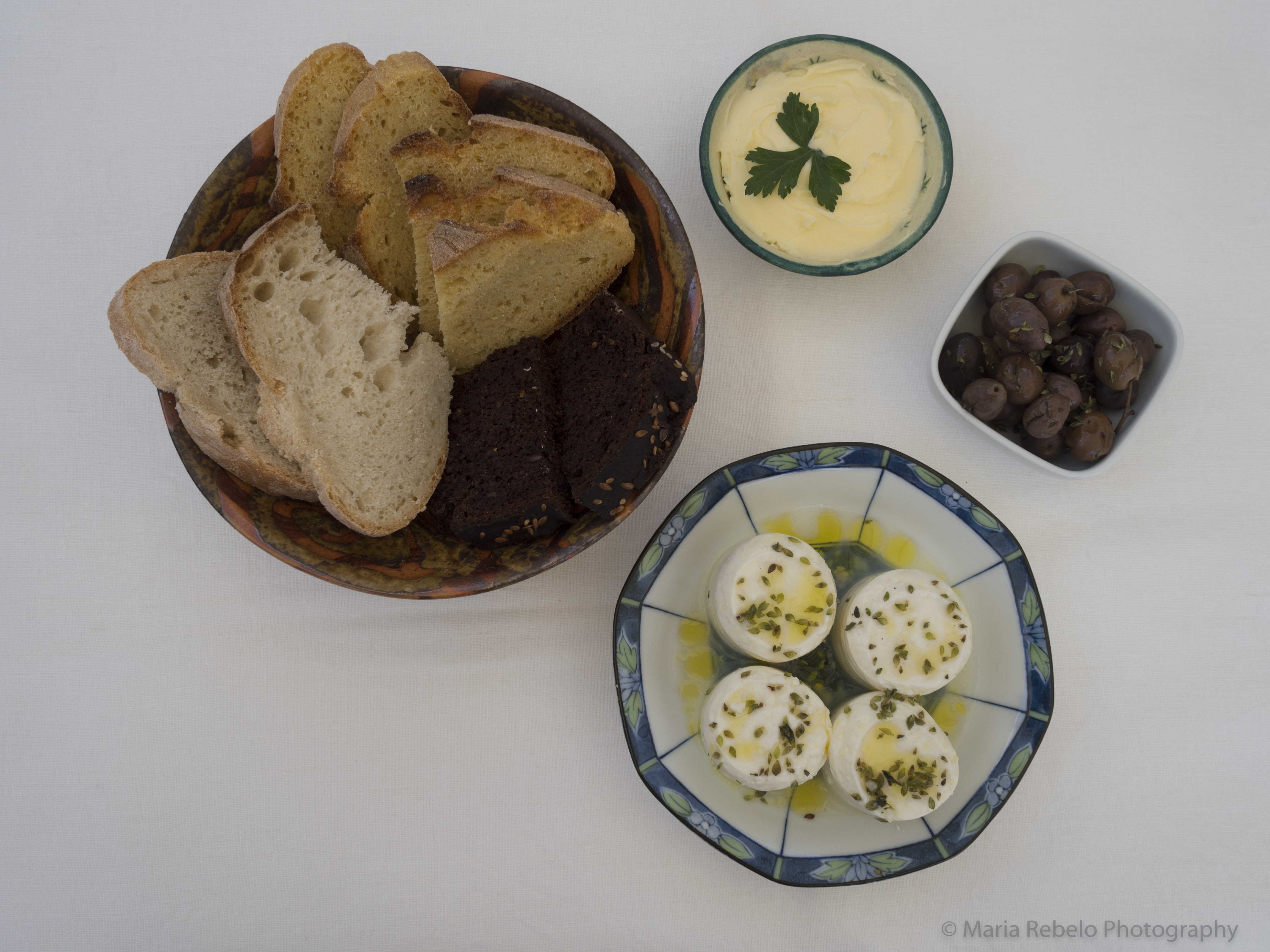
When you seat at a table, the waiter brings a basket of bread, butter and olives. These items are called the “couvert.” Simple couverts usually cost a couple of euros. Some restaurants bring more elaborate (and more expensive) couverts,  including items such as cheese, prosciutto, and codfish cakes. If you try one of these items, you’ll often pay for the whole couvert. You can always send the couvert back if you don’t want to pay for it.

The markup on wine in Portuguese restaurants is generally lower than in the U.S. or France. So, it is often affordable to choose a great wine to complement the meal. If you describe the style of wine you enjoy, the waiters can generally make good suggestions. House wines are typically inexpensive, ranging from drinkable to surprisingly good. You can ask to sample the house wine before ordering it.

It is a great idea to share main courses. Portions in traditional restaurants are generally large. Some restaurants prepare half portions, but even these halfs can be sizable. We prefer a multicolored meal to a single monochromatic dish, so we often choose a few main courses to share and ask the waiter to bring them out sequentially. It makes for a much more interesting meal.

Portuguese restaurants don’t serve tap water, only bottled spring water. The good news is that spring-water quality is high and prices are low. You can choose room temperature or cold but ice cubes are not normally used with water.

Fish is served on the bone with the head included. If the fish is large, you might be able to ask the waiter to fillet it for you. If you don’t see the price of a fish dish on the menu, it means that the fish is sold by weight. You can choose a fish that suits your preferences and ask the waiter to weigh it so you know its cost before ordering it.

The Portuguese use different forks and knifes for fish and meat. It is an elegant custom and fish does taste better when eaten with the proper utensils.

If you’re a strict vegetarian, always ask whether the food was prepared with meat products. Vegetable soups are seldom good vegetarian choices because they are often made with chicken stock, sausage or lard. The best bets are salads and vegetable sides.

Espresso is good and cheap. The Portuguese are addicted to high-quality espresso, so  restaurants with lousy coffee are ostracized.

Restaurant waiters earn a fixed salary, so Portuguese leave very modest tips: two or three euros for a normal meal, five euros for exceptional service or for a meal in a fancy restaurant.

If you don’t know what to choose, it is a good idea to ask waiters for advice. If you ask for  the best dishes on the menu, you’re likely to hear that everything on the menu is good. A better way to gather information is to ask what are the waiter’s favorite dishes or which menu offerings are most popular.

That’s it, just bring an appetite, the willingness to try something new, and a great time is guaranteed for all.

A noble crab soup

IMG_1905 2

Almost three decades ago, a friend took us to a new restaurant called Nobre in the Ajuda neighborhood. The name, which means noble, came from the surname of the chef, Justa Nobre. We recall with fondness the meals we enjoyed there. After a successful run, Nobre closed so that the chef could pursue other projects,

Last week, the same friend invited us for lunch. We were delighted to discover that we were going to a new restaurant that marks Justa Nobre’s return to Ajuda. It is called “À Justa,” an expression based on the chef’s first name that means “just right.”

The menu offers a cuisine without foreign accents that has the satisfying taste of authenticity. The recipes are grounded in the cooking of Justa’s grandmothers. But they are not a copy of the past. They reflect years of refinements shaped by the personality and creativity of this self-taught chef.

The restaurant was full. The Portuguese like to flirt with contemporary food trends but they always come back to their one true love, which is the traditional cooking of Portugal.

We had a great meal that included bright green fava beans, chickpeas with codfish, codfish “pataniscas,” and fried cuttlefish. These delights were preceded by a classic of Justa Nobre’s repertoire: the spider crab soup. Its aristocratic taste makes all other seafood soups in Lisbon look common by comparison.

Many chefs keep their secrets, but Justa generously shared some of her recipes in a book titled Passion for Cooking. We translate her recipe for spider crab soup below. But you must try the original at À Justa where they make it just right.


Justa Nobre’s spider crab soup

Ingredients: 2 large spider crabs weighing about 1 kg. each, 3 liters of water, 3 tablespoons of sea salt, 150 grams of margarine, a large onion, 2 cloves of garlic, a parsley bunch, a sliced fennel head, 4 tablespoons of tomato paste, half liter of cream, 0.1 liter of dry white port, one teaspoon of powdered ginger, one teaspoon of saffron, 2 tablespoons of potato starch.

Preparation: Boil the crabs in the salted water for 8 minutes. Remove them, let then cool off and extract all the meat. Return the shells to the pan. Add some shrimp shells and let them boil for 10 minutes. In a large pot, melt the margarine and add the sliced onion, fennel and garlic. Let these ingredients cook briefly and then add the white port, the cream, the tomato paste, the spices, and two liters of the crab broth. Mix the potato starch with some cold water and add it to the soup. Check the seasoning and strain the soup. Add the crab meat and serve the soup it in the shell of the spider crab.

À Justa is located at Calçada Ajuda 107, in Lisbon. The restaurant seats only 36 people, so reservations are a must. Call 21 363 0993 or email reservas@ajusta.pt. Click here for Justa Nobre’s web site.


A restaurant called Romando

Rest. Romando

Call us old fashioned, but we don’t like to outsource our choice of restaurants to trip advisor. So, we contacted a friend who’s a bon vivant to ask whether he could recommend a good place for lunch near Vila do Conde. “Make reservations at Romando,” he said without hesitating. “It’s been around forever, serving great traditional food.” We duly called the restaurant and drove to the address they gave us. We arrived at a brand-new building decorated with modern furniture. Could this be the right place?

As soon as the first course arrived–robalo (sea bass) with shrimp rice–we knew that we were indeed at the right place. The fish had been filleted and cooked in the oven seasoned only with salt and olive oil. It is a simple preparation, but the timing has to be precise in order for the freshness of the fish to sing. And sing it did, joined by a choir of shrimps wrapped in sea aromas and rice grains dressed in tomato robes.

Next, our waiter brought us codfish cooked with red pepper, onion, and diced prosciutto. It was deeply satisfying with all the great ingredients pulling together to make the overall taste much more than the sum of the individual flavors. Finally, we tried some tender, succulent grilled meats accompanied by crispy French fries and flavorful beans.

As far as dessert is concerned, it suffices to say that Romando’s puddings, tarts and cakes tempt the most virtuous souls to indulge in gluttony.

Rosa and Armando Pena opened the restaurant soon after they got married, more than a quarter of century ago. Rosa was in charge of the kitchen and Armando managed the dining room. They combined their names and called the place Romando.

The restaurant quickly gathered fame. But the secret of their success is that they never rested on their laurels. They kept evolving, searching for better ingredients, upgrading the quality of the service and, more recently, renovating the restaurant premises. At the same time, the cooking stayed grounded in the techniques of Portuguese cuisine and in the love and commitment that inspired Rosa and Armando to combine their names.

Romando is located at Rua da Fonte, nº221 in Árvore near Vila do Conde, tel. 252 641 075. Click here for the restaurant’s web site.

Mugasa

OLYMPUS DIGITAL CAMERA

Bairrada is a region in the center of Portugal known for its refreshing sparkling wine and its “leitão” (roasted suckling pig). The best leitão in Bairrada comes from a restaurant called Mugasa located in the middle of nowhere in a small village called Fogueira.

The restaurant’s owner, Álvaro Nogueira, retired from a desk job and opened a small café in 1981. He wanted to learn the art of roasting piglets to turn his café into a restaurant. But the learning curve was steep until one of his cousins, a master roaster, offered to teach him.

After this jump start, Álvaro kept perfecting his art. In 1991, he entered a competition organized by a gastronomic society and won first prize.

“Why is roasting so difficult?” we asked Álvaro. ” Every pig is different, with a different size and fat content. We use six wood-fired ovens and every oven is different. We have to make constant adjustments to guarantee perfection. That is why we only roast four piglets per oven, to have time to make all the necessary adjustments.”

“In the first 20 minutes, the oven has to be very hot, between 280 and 300 degree Celsius to make the outside crunchy. Then we cover the wood with ashes to bring down the temperature. There are many details so we have to pay close attention. The traditional seasoning made with garlic, lard, white pepper, and salt is important but you cannot use it to cover up mistakes.”

We sat at the table to try Mugasa’s leitão. It is indeed remarkable, crunchy on the outside, succulent on the inside, with just enough seasoning to accentuate the taste of the meat.

Álvaro is very proud of the celebrities that drive to Fogueira just to eat at his restaurant. But he is even more proud of his son Ricardo. “My son is the best master roaster in Portugal,” Álvaro said smiling. “He learned my secrets and discovered new ones.”

Many Bairrada wine makers eat regularly at Mugasa, so you often overhear discussions about weather conditions and grape maturation. The restaurant offers some of the best wines from these producers at very attractive prices.

The formula for Mugasa’s success is easy to write down but hard to replicate: amazing leitão plus great Bairrada wine = unforgettable meals.

Mugasa is located at Largo da Feira, Fogueira, Aveiro, tel. 234 741 061