Belcanto

Composit Bel Canto

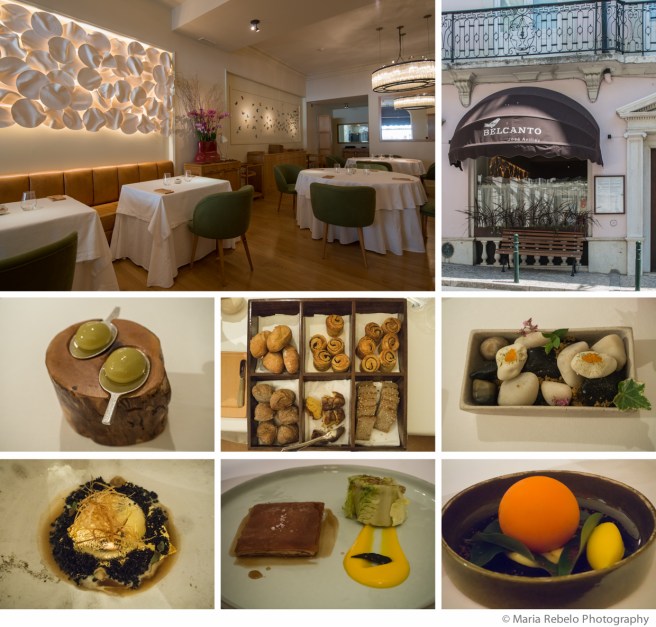
Perhaps it’s not a coincidence that Belcanto, the most celebrated restaurant in Lisbon, is close to the São Carlos opera house. Decorated with whimsical porcelain plates, the restaurant looks like a stage and its meals are as thrilling as a great opera performance.

Our lunch’s overture was composed of small bites often included in the couvert of traditional restaurants:  tremoços (lupini beans), olives, and a carrot and garlic salad. The presentation was unusual–they were served on top of Portuguese cobblestones. But the real surprise was that they all turned liquid once we bit into them, filling our mouth with explosions of flavor. This culinary prelude was accompanied by Vicentino, a wine from Zambujeira do Mar that left our paletes refreshed with hints of green pepper.

There were more surprises. First, a fake edible stone covered with salmon caviar. Then, crispy chicken skin with corn coriander and liver, a combination that tastes like roasted chicken. Next, a delicious algae cornet filled with tuna served inside a flower pot.

A genial waiter introduced a chorus of breads made from corn, buckwheat, quinoa, and puff pastry. Next came a duet for clams and “lingueirão” (razor clams) accompanied by a 1979 Porta dos Cavaleiros, a velvety red wine from the Dão region produced in the birth year of chef Avillez.

Then the arias started. The first was a Golden Egg–an egg cooked at a low temperature, covered with gold leaf and adorned with threads of fried leek. It arrived with a lively Arinto white wine made by António Maçanita in Pico, a volcanic island in the Azores archipelago.

The second aria was called Ocean Dive: a pristine sea bass (robalo) cooked in sea water with seaweed, “salicórnia” (samphire), razor clams, and mussels. We were still savoring the final chords of this crowd pleaser when a new theme was introduced: a flavorful remake of the bucolic “cozido” that the chef’s grandmother used to prepare with boiled meats and cabbage. It came with a vigorous 2012 Bruto from the Douro region.

The performance reached its climax with another traditional recipe reinvented: the roasted piglet from Bairrada. We don’t know what culinary sorcery was used to produce this perfect combination of crispy skin and juicy roasted meat. All we can tell you is that the result is magical.

A new theme was introduced by a duo of pre-desserts: a raspberry sorbet and an “abade de priscos” pudding. They were followed by a tangerine dream made from frozen juice and filed with tangerine sorbet. Vila Oeira, a rare dessert wine from Carcavelos harmonized with these sweet delights. Coffee and mignardises brought our meal to a blissful finale.

You have to be patient to dine at Belcanto. The restaurant is booked for weeks in advance. But it’s worth the wait to experience such an unforgettable culinary performance.

Belcanto is located at Largo do São Carlos in Lisbon, tel. 21-342-0607.


Serra d’Ossa

Composit Serra D'Ossa.JPG

It was an act of bravery. We drove up the serpentine road to Serra d’Ossa to dine at a restaurant we couldn’t find on trip advisor!  But a trusted local source told us that this was the place to go if we wanted to taste the rustic food of Alentejo. And so we went.

We were welcomed by Paula Patinho who owns the restaurant with her husband Francisco. Her mother cooks and her father makes the house wine. We were surprised by the menu prices: they were half of what we would have paid in Évora or Estremoz.

Francisco suggested that we start with “sopa de cação” (dogfish soup), continued with a tomato and fried meat soup, and ended with “lagartos,” thin strips of black pork grilled to perfection. The flavors are bold but harmonious perhaps because all the ingredients were local, cultivated in the same lands by the same people.

The house wine is staged in stainless steel. It tastes pure and smooth and pairs perfectly with the food.

We asked Francisco what makes the food taste so great. “There is a deceiving complexity to the cuisine of Alentejo,” he explained. “The preparations look simple but pushing the flavors to a higher level takes time and requires many ingredients.”

Our audacity was greatly rewarded. We discovered an inexpensive restaurant that does justice to the rich culinary tradition of Alentejo.

Serra d’Ossa is located on Rua Principal, 77, Aldeia da Serra D’Ossa, Redondo, tel. 266-909-037.

Eating with the best people in Vila Real

OLYMPUS DIGITAL CAMERA

“I’m sorry, but we cannot accommodate you. We won’t have a free table any time soon,” said Eleutério Lameirão in a serious tone that agrees with his solemn name. His small restaurant, located in a residential area of Vila Real, was full of regular customers.

Before we left, we took a glance at the menu and found a quote by Julia Child: “People who love to eat are always the best people.” Inspired by this quote, we decided to wait. Eleutério gave us a puzzled look, but fifteen minutes later he had a table for us.

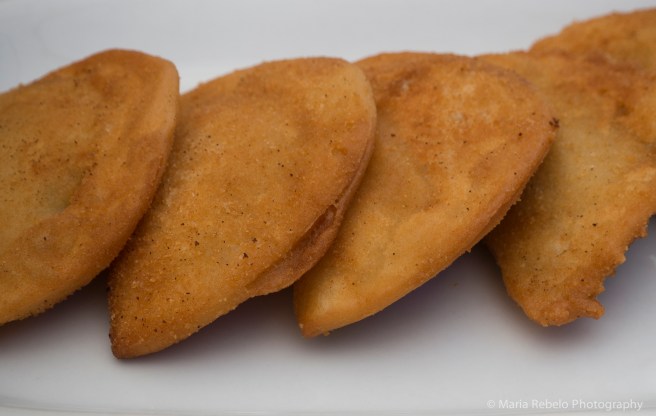
We ordered rissois, fried breaded dough shaped like a half moon with a shrimp or meat filling. Eleutério brought them to the table and waited around to see our reaction. They were crispy on the outside and full of flavor on the inside.  When we said “wow, these are amazing!” Eleutétio abandoned his shy demeanor and smiled, pleased by our reaction. He went back into the kitchen and brought us a plate of codfish cakes. These were also extraordinary: light, airy and slightly crunchy, a four-part harmony of cod, parsley, egg, and potato.

Finally, we had small sardines called “petingas,” incredibly fresh, fried and seasoned to perfection. They came with an hearty bean rice that melted in the mouth and blended with the salty sardines.

The restaurant was still very busy but Eleutério came to chat with us. He told us that the menu is always small, three or four items made with the best fresh ingredients and modestly priced. The recipes have been refined over many years and require great attention to detail. “It is hard work because there’s no room for distractions. Everything has to be right, the timing, the temperature, the seasoning. But it is worth it because when everything is right the taste is amazing,” he said. If you ever have the privilege of eating at O Lameirão, we think you’ll agree.

The restaurant O Lameirão is located on Rua da Cruz, Vila Real, tel. 259 346 881.

Avillez’s neighborhood

Bairro do Avillez

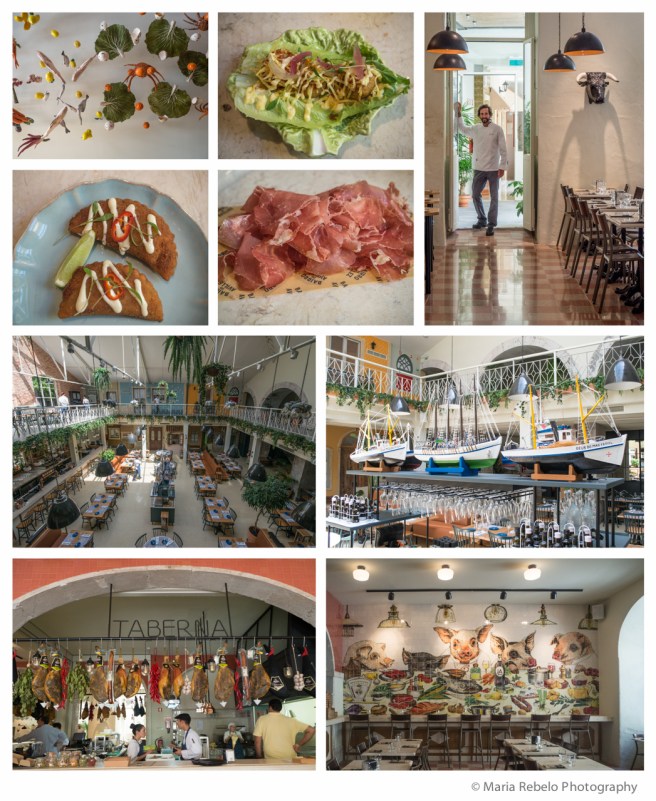
It is common for writers to imagine new worlds and share them with us. But it is uncommon for chefs to pursue this creative strategy. José Avillez, the Michelin-starred chef of Belcanto, dreamed of an old Lisbon neighborhood where friends gathered to share great food. He imagined timeworn buildings guarded by carved wooden doors with windows adorned by crocheted curtains.

When the space once occupied by the 13th-century Convent of Trindade became available, Avillez seized the opportunity to make his dreams come true. He invited architect Joana Astolfi to design an installation inspired by old building facades, artist Cátia Pessoa to create ceramic sculptures representing fish and vegetables, and painter Henriette Arcelin to produce a large tile panel at the famous Viúva Lamego factory.

The result is a fun atmosphere perfect to enjoy the classics of Portuguese cuisine, refined and, in some cases, reinvented. Bairro do Avillez (Avillez’s neighborhood) has a grocery store (Mercearia) with some of the chef’s favorite products, a tapas bar (Taberna), and a restaurant (Páteo).

In the Taberna, you can eat a wide variety of “petiscos” (the Portuguese word for tapas), from Portuguese prosciutto and sausages, to codfish with cornbread, and roasted piglet.

The Páteo offers pristine fish from the Portuguese coast, grilled, cooked with rice, or combined with bread, olive oil and garlic in a fragrant “açorda.” The menu also includes great seafood (lobster, shrimp, clams, crab, and razor clams), delicious steaks, and grilled black pork from Alentejo.

There’s a wonderful house wine made in collaboration with Quinta do Monte d’Oiro. And there is also a great new line of artisanal beers called Selection 1927.

We told José Avillez that we were impressed to see him take time to welcome the people who walked in to see the new space. He told us that these gestures are important to him: “What makes Portugal unique is the combination of great ingredients and a rich culinary tradition with our warm hospitality.”

Chef José Avillez is a dreamer who makes Lisbon more fun with his gracious demeanor and delicious food. It is a privilege to be in his neighborhood.

Bairro do Avillez is located at Rua Nova da Trindade, 18, Lisbon, tel. 215 830 290.

A comet called Noélia

Noélia composit

“One good thing about Winter is that it is easier to dine at Noélia” our Algarve friends told us. “In the Summer it is impossible to get in.” Curious, we made reservations a week in advance.

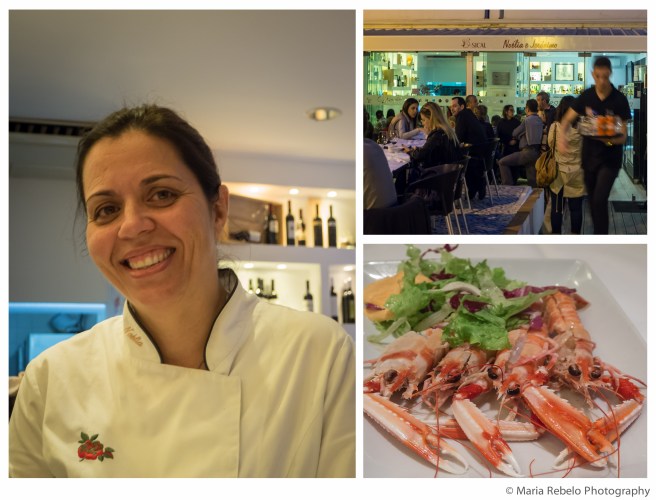
As soon as we sat down in this seaside restaurant in the village of Cabanas, we knew we were in for something special. There was a festive atmosphere and the aromas of the sea filled the air.

The restaurant is noisy but our waiter was a mind reader who guessed what we wanted without the need for much verbal communication. And so a perfectly chilled bottle of sparkling wine arrived, followed by a plate of steamed langoustines. “They were caught this morning” the waiter told us. “I know you’ll like them.” We were so impressed by the crustaceans’ exquisite taste that we vowed never to eat frozen seafood again.

Our main dish was rice with lemon, corvina, and conquilhas, small cockles that only exist in the Algarve. We appreciated in silence the sublime combination of flavors. A Dom Rodrigo, a sweet combination of fios de ovos (egg threads) and almonds, rounded the meal.

Noélia, the chef, seemed to be everywhere: cooking, talking to regulars, giving instructions to the staff, making final adjustments to the plates before they were brought out. She is a culinary comet that brightens everything she touches.

Suddenly, she arrived at our table and asked: “did you like the food?” “We loved it,” we replied. “But we’re sorry we’re too full to try other dishes.” “Next time order oyster risotto and favas with cuttle fish,” she said. “I get up at 6:00 am to make sure I buy the best oysters in Algarve.” And she was gone as quickly as she had arrived.

Outside, the moon was painting the sea with its silver light. But no one in the restaurant paid any attention. The moon cannot compete with a comet called Noélia.

The Restaurante Noélia & Jerónimo is located in the village of Cabanas near Tavira, Algarve at Rua da Fortaleza, Edifício Cabanas-Mar, Loja 6, tel, 281370649. Reservations are a must.


A roadside restaurant

Composit Pombal

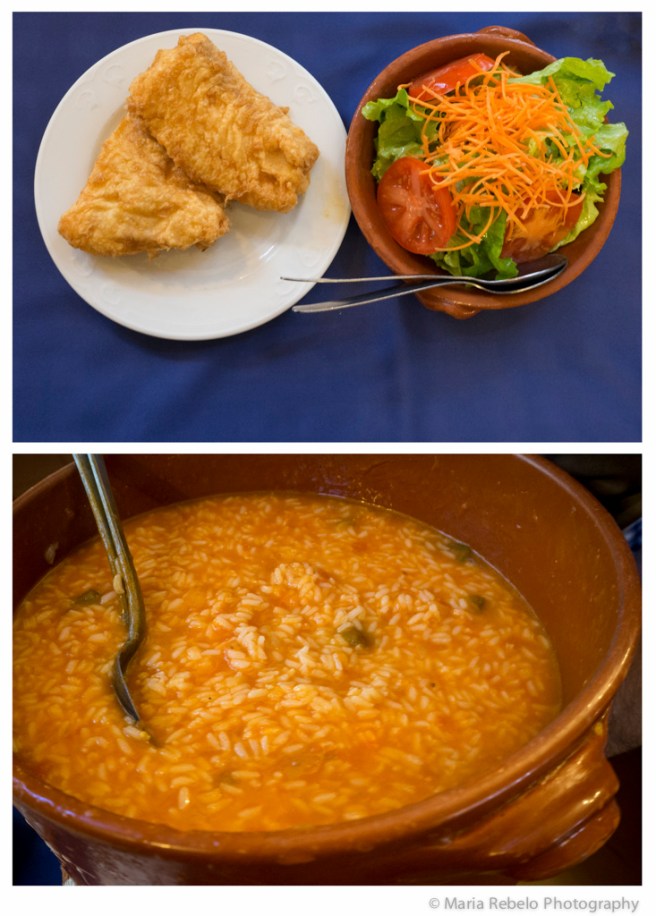
Before highway A1 was built, it took a long time to drive from the north of Portugal to Lisbon. To make the trip easier to endure, our parents liked to stop at a small roadside restaurant in Pombal called Manjar do Marquês. As soon as we sat down, we were served a delicious tomato rice with a choice of accompaniments, such as codfish cakes, veal milanese, or fried hake.

After a long hiatus, we recently returned to Manjar do Marquês. We entered the restaurant’s new premises just off highway A1 with some trepidation. What if the food is not as wonderful as we remember it? Would we destroy our childhood memories? Luckily, some things never change: the tomato rice is as appetizing as ever.

We asked the owner, Maria Graça, what makes her rice taste so good. She smiled and answered: “My husband really wanted to have a restaurant. I worked for the phone company and had no cooking experience. But I was very much in love with him, so I quit my job to become a cook. My food was different because everything I did, I did with love. And that continues to be true.”

Today Maria Graça is 84 years old and still works 10 hours a day at the restaurant. Could her hearty tomato rice be the key to longevity?  It’s worth stopping by Manjar do Marquês to find out.

Manjar do Marquês is located on Estada Nacional 1 (IC2), Pombal, 170 km north of Lisbon, tel. 236-218-818. Click here for the restaurant’s website.

A tavern called Wednesday

Quarta-Feira rest composite

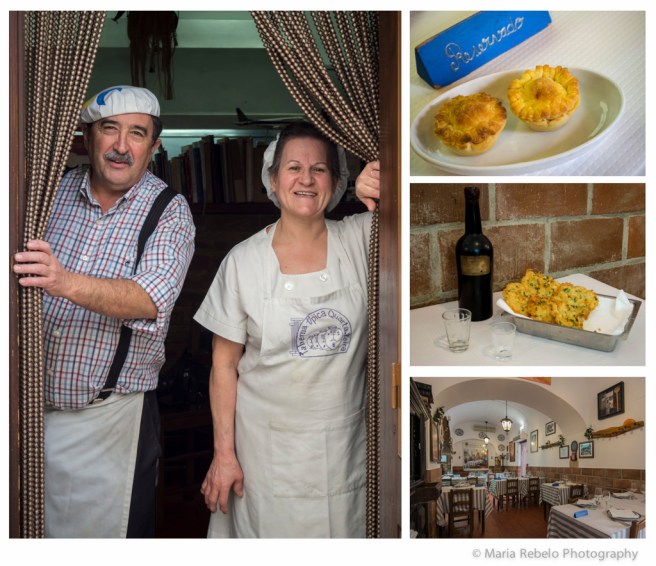
André Freire, the manager of the beautiful Évora pousada, urged us to try a tavern called Quarta Feira (the Portuguese word for Wednesday). “It’s a special place,” André said with a smile. “There’s no menu; you have to trust Zé Dias, the owner, and go with the flow.”

As soon as we entered the restaurant, we became friends with Zé Dias. He moved to Évora from a village in Beira Alta called Quarta Feira, the name he used for the restaurant. Dias worked as a typographer until he opened this tavern 25 years ago with Luisa Batista, a great local cook.

Dias’ enthusiasm for food, wine and life in Alentejo is infectious. Everything he serves comes from people he knows well, from the producers of cheese and sausages to the maker of the clay pots that are integral to Luisa Batista’s cooking. When we asked Dias how he managed to convince Paulo Laureano, a renowned Portuguese enologist, to make the house wine for Quarta Feira, Dias replied “Of course he said yes; we’ve been friends for a long time.”

Our dinner started with slices of local sausages and prosciutto made with black pork from Alentejo. Then a warm sheep cheese seasoned with oreganos arrived, busting with flavor. Next, we had some wonderful mushrooms cooked in mushroom water, seasoned with olive oil, garlic and coriander. “The secret is all in the timing,” Dias tells us and we believe him because at this point we believe everything he says.

The meal’s main event was the house specialty: black iberian pork shoulder marinated in wine cooked slowly in a clay pot. It was so delicious that our taste buds scintillated with delight. The dessert was composed of dried figs, walnuts, cooked quince, and samplings of two conventual desserts.

The meal ended with a glass of licoroso from Herdade do Mouchão. This sweet wine with notes of fruits and spices was a perfectly simple ending to a simply perfect meal.

Zé Dias is a philosopher king who disguises as a tavern owner so that he can share with his guests the joy of living in Alentejo.

Taberna Típica Quarta Feira is on Rua do Inverno 18, Évora, tel. 266 707 530.

Memorable fish

Os Arcos Composit- ©mariarebelophotography.com

The Portuguese like to eat their fish by the sea. Since Lisbon is located on the Tagus river, its residents have to drive to a nearby beach whenever they want to enjoy a serious fish meal. The Bugio lighthouse conveniently marks the place where the Tagus meets the sea. It is not a coincidence that Paço d’Arcos, the beach town that overlooks the Bugio, has several fish restaurants.

Os Arcos (which means “the arches”) serves some of the best fish we have ever had. The restaurant occupies an ancient building constructed shortly after the 1755 earthquake. The dining room features old wood beams and the brick and mortar arches that inspired the restaurant’s name.

The  specialty of Os Arcos is “robalo no capote” (fish baked in bread). The fish is covered with a thin layer of bread and baked in the oven for about 30 minutes. That is just the right amount of time to enjoy some clams from Algarve and shrimp from Cascais.

When the fish-shaped bread arrives at the table, the experienced waiter gives the guests a couple of minutes to say their oohs and ahs. He then divides the fish, removing all the bones. Everybody eats in silence, for there are no words to describe the taste of the succulent robalo and the delicious bread that envelops it.

Any serious fish lover who visits Lisbon should drive, hike, bike, swim or run to Paço d’Arcos because eating “robalo” baked in bread at Os Arcos is simply unforgettable.

Os Arcos is located on Rua Costa Pinto, 47 in Paço de Arcos, tel. 214-433-374. Click here for their website.

Becoming famous

OLYMPUS DIGITAL CAMERA

The Portuguese love codfish so much that the easiest way to become famous in Portugal is to create a popular codfish recipe.  Writers might see their books go out of print, painters might see their works gather dust. But no one forgets Brás, Zé do Pipo, and Gomes de Sá because their recipes are part of our daily life.

In a recent visit to Tasca da Esquina, chef Victor Sobral prepared us a surprise menu. One of the items was a very refined version of codfish Brás style, the best we have ever tried. Imagine how Brás would feel, seeing his century-old recipe come alive in the hands of a great contemporary chef!

We wish we could write a longer post but we have to go, we bought some codfish to try a few ideas.

The octopus capital

St. Luzia (Polvo) Composit

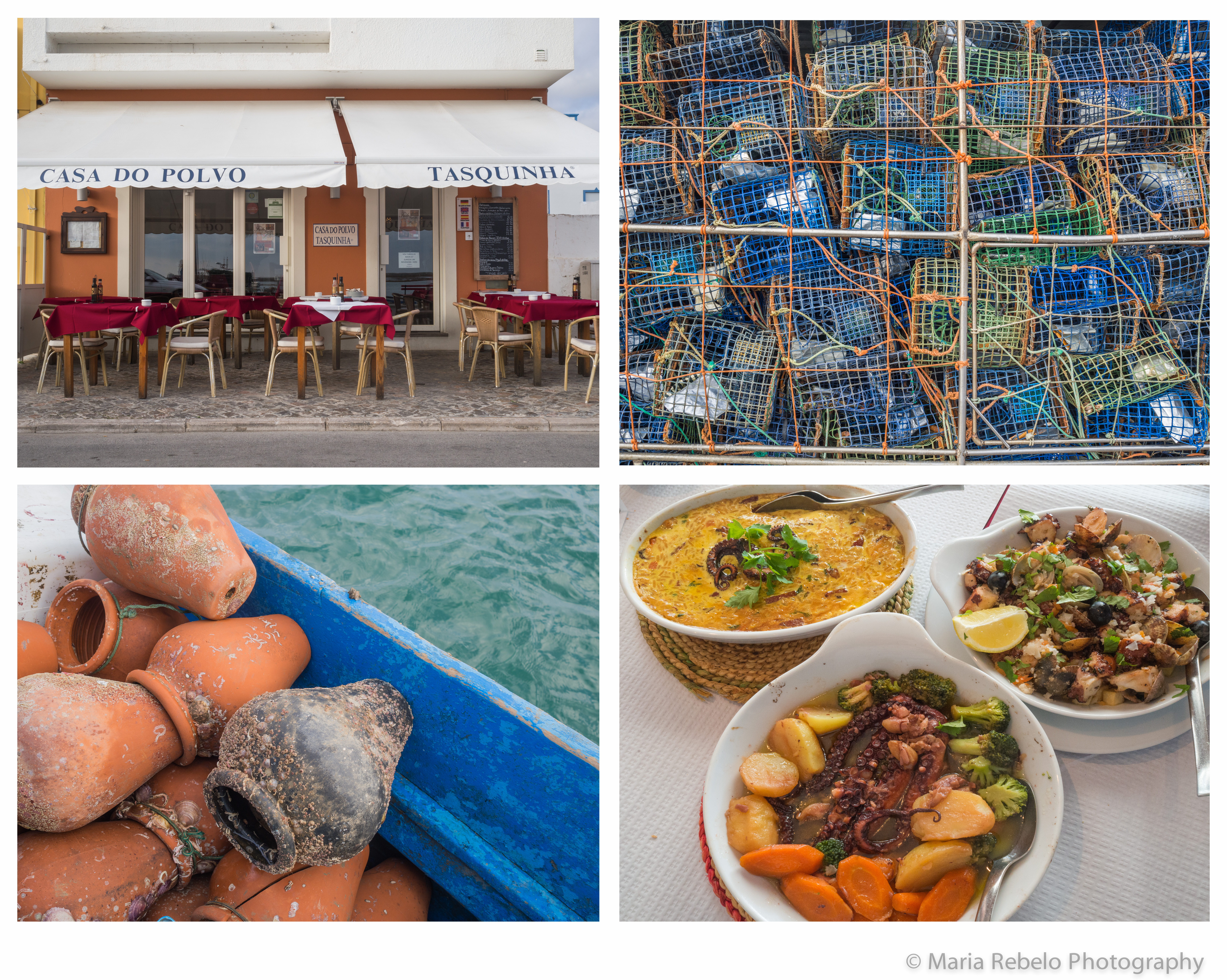
The best octopus in Portugal comes from Santa Luzia, a small village near Tavira in the Algarve. The locals proudly call it octopus capital.

The shores of Santa Luzia are full of small shrimp that attract the octopi. Old-time fishermen lay clay pots called “alcatruz” in the water. The octopi cuddle in these pots to sleep and get caught when the pots are removed from the water.

Younger fishermen don’t like to wait for the mollusks to fall asleep, so they prefer to use a “covo,” a plastic trap with a sardine inside.

Old timers swear that the octopus caught with the alcatruz tastes much better than the one caught with the covo. But young and old agree that Casa do Polvo is a great place to eat octopus. There are many preparations to choose from, including carpaccio, stewed, fried, and roasted. Our favorite is “polvo panado,” octopus combined with egg and bread crumbs and then fried. No matter which preparation you choose, the octopus is tender and delicious.

If you’re traveling in the Algarve, it is a great idea to include Santa Luzia on your itinerary. You’ll have the opportunity to enjoy a wonderful meal and earn the right to brag that you’ve visited the octopus capital.

Casa do Polvo is on Avenida Eng. Duarte Pacheco, N. 8, Santa Luzia, Tavira. Tel. 281-328-527. In the Summer reservations are a must.