The elegant intensity of Dona Matilde’s wines

Quinta D. Matilde Composit

It was an unexpected honor–to spend a lazy afternoon with Manuel Ângelo Barros, an icon of the Douro valley. We met in the terrace of his home, sheltered from the hot sun, cooled by a timid breeze. Below, the waters of the Douro river tried to stand still so they could eavesdrop on our conversation.

The landscape reminded us that producing Douro wines is an extraordinary feat. Generations of men and women toiled in freezing Winters and scorching Summers to build the terraces that support the vines and prevent the soil from washing into the river.

Manuel’s family owned two legendary port-wine houses: Barros, the family brand, and Kopke, the oldest port-wine house, established in 1638. They also owned a portfolio of vineyards amassed over the last century. The third Barros generation decided to sell the brands and the vineyards. But once the sale closed, Manuel missed the magic of having land that turns water into wine. He managed to buy back one of the Barros properties in 2006, Quinta Dona Matilde, famous for its high-quality grapes, produced in schist soils near the river. Originally purchased by his grandfather in 1927 and named after his grandmother, the quinta is a place where Manuel spent much of his youth.

The table was set with “bola de carne,” a traditional meat pie, because Dona Matilde produces gastronomic wines that are best enjoyed with some food. Most wine makers like to explain the enological properties that make their wines distinct. Instead, Manuel filled our glasses in silence, letting the wines speak for themselves. Whenever we asked a question, he paused to reflect. Then he answered in a gracious, literary Portuguese, choosing his words with the same care he devotes to making wine.

Manuel is proud of the team he assembled at Dona Matilde. His younger son, Filipe Barros, plays a key role as marketing director. The viticulturist José Carlos Oliveira takes care of the quinta’s 28 hectares, which include 60-year-old vines that produce wines with great complexity and character. Enologist João Pissara strives to use production methods that highlight the outstanding qualities of the Dona Matilda grapes. To make the reserve red wine, he favors the traditional method of treading the grapes by foot in the quinta’s old granite tanks.

We tried two whites and two reds. Even though the estate has low altitude and a sunny exposure, the wines are balanced with great freshness and acidity. Harvesting the grapes early is key to producing these wonderful results.

Each Dona Matilda wine has a distinct voice. But they all have the same quiet intensity and aristocratic elegance that make Manuel such a pleasure to be with.

Click here for Dona Matilda’s web site.
 

Where great views and delicious food go together

EPUR

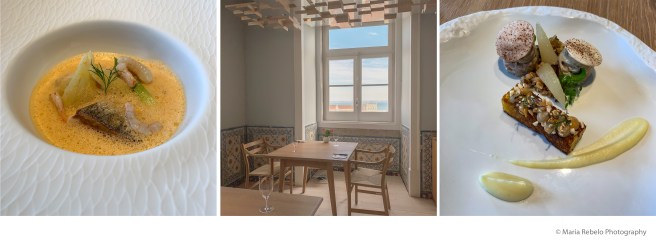
It is often said that restaurants with good views serve lousy food. This aphorism doesn’t apply to EPUR, chef Vincent Farges’ new restaurant in Lisbon. Its windows offer beautiful views of the Tagus river and the rooftops of downtown Lisbon. But, once the food arrives, it is hard to choose between looking out the window and admiring the elegance of the sustenance on our plate. When we taste the food, our brain’s ability to process pleasurable sensations has to stretch even further.

Served on graceful white plates, the food looks ready for a Vogue photoshoot. Its beauty is not superficial, it stems from the quality of the ingredients and the meticulous preparations.

We tried a flavorful rabbit rillette with foie gras, seasoned with pear vinegar, a delicate avocado mousse topped with crispy Galician cabbage, the type of cabbage used to make caldo verde. Our lunch ended with a sumptuous soup starring a trio of marvelous fish: manta ray, sea bass, and monkfish.

It is hard to think of a better place to meet Lisbon for a lunch date than at Vincent Farge’s EPUR.

EPUR is located at Largo da Academia Nacional de Belas Artes 14, Lisboa, tel. 21 346 0519.


Vinum acer from Bairrada

OLYMPUS DIGITAL CAMERA

Most vinegar consumed around the world is made through industrial processes that work fast but generally produce insipid results. Luckily, there is an increasing number of producers making delicious artisanal vinegars.

“It is easy to make fine vinegar, all you need is good wine and patience,” says Mário Sérgio, the winemaker of Quinta das Bageiras in Bairrada. “Fill about two-thirds of an oak barrel with good-quality wine and forget about it for 10 years. Sure enough, the wine will turn into vinegar.” The Romans seem to have followed a similar recipe–the Latin word for vinegar, vinum acer, means sour wine.

We took a bottle of Mário Sérgio’s artisanal vinegar home and were amazed at the difference it made. Its tangy taste transforms salads from good to great. Cooking with this vinegar enhances the food we prepare in ways that are subtle but profound.


Tasquinha da Linda in Viana do Castelo

Tasquinha da Linda

Tasquinha is a word used to refer to small, modest eating places. It is not an apt description of Tasquinha da Linda, an elegant restaurant located in a converted fish warehouse on the bank of the river Lima in Viana do Castelo. The restaurant is run by Deolinda Ferreira, known to everybody as Linda, a word that means beautiful. She was born near the restaurant into a family of fishermen. Her father told her that she was too pretty to sell fish but she ignored his advice and built a successful fish-export business.

When Linda decided to open a restaurant, she followed a recipe that is easy to conceive but hard to imitate: serve the freshest fish and seafood using simple preparations that showcase the quality of the ingredients.

Tasquinha da Linda has a special ambience. The waiters greet customers as friends and there’s a festive atmosphere created by the constant flow of trays heaped with steamed seafood, grilled fish, saucy rices and cataplanas. The wine list offers great choices at modest prices. It all adds up to a beautiful dining experience.

Tasquinha da Linda is located at Doca das Mares A-10, Viana do Castelo, tel. 258 847 900. Click here for the restaurant’s web site.


A great beginning

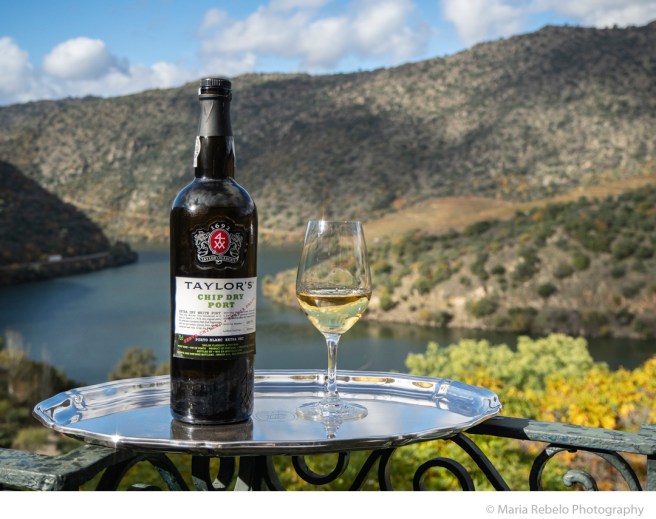
Chip Dry Port

Beginnings are hard. We don’t know how to pen the first sentences of a novel, compose the introduction of a sonata, or craft the opening scene of a play. But we do know an elegant way to start a dinner party. Get a bottle of Taylor Chip Dry port and chill it in the fridge. When the guests arrive, pour everyone a glass of this marvelous white port. Then,  toast to a great beginning.

Three foods to try in Terceira, Azores

Açores

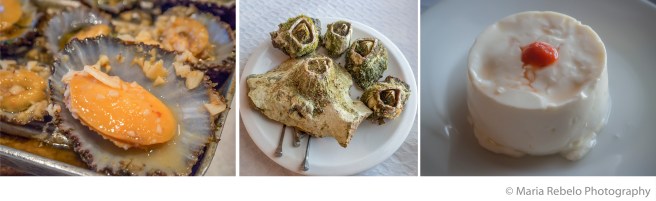
In Terceira, an island in the Azores archipelago, we can’t resist climbing every hill and descending to every valley to admire the unspoiled beauty of the landscape from different perspectives. When meal times comes, we’re always ravenous. Luckily, Terceira offers plenty of fresh fish to satiate our apetite. It also has three unique specialty foods that are a must try.

The first is fresh cheese topped with a pepper sauce called “pimentinha” (little pepper). The silky texture of the cheese combines with the salty, hot sauce to get the meal off to a great start.

The second is called “cracas” (barnacles). It is a local crustacean that lives inside rocks shaped like small volcanos. Charles Darwin, who visited Azores in 1836, studies it in his book Living Cirripedia. But “cracas” are much more than a scientific curiosity. They are delicious seafood. Their meat has a delicate, sweet taste that combines perfectly with the briny liquor inside the shell.

The third is “lapas” (limpets), a type of seafood abundant in the coast of Portugal. But while in continental Portugal “lapas” tend to be small and chewy, in Azores they are large, tender and delicious.

These are only three of the many reasons to visit the Terceira island, an enchanting place that is the perfect vacation destination.

The train to Pinhão

Trains Composit

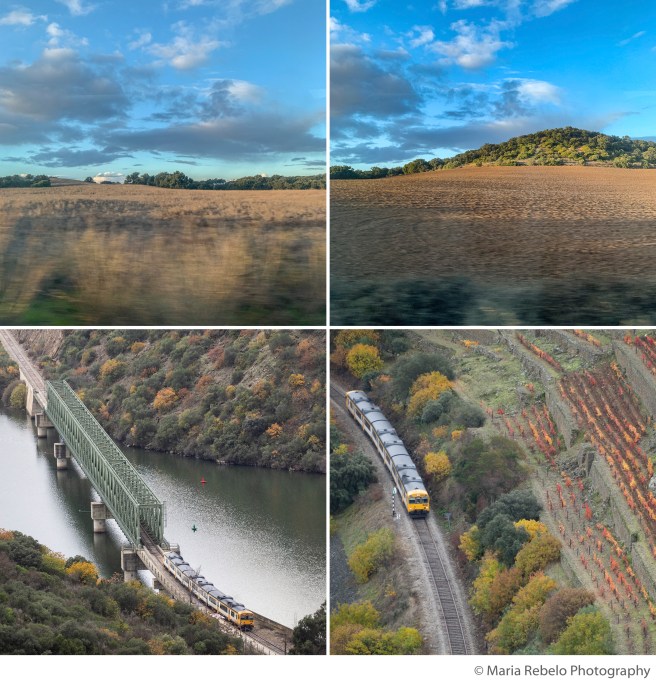
There’s a splendid train that travels from Oporto to Pinhão. Its creaky carriages are quite modest but they have windows that offer sumptuous views of the Douro valley.

The train leaves the station at a lazy pace but then it speeds up, hoping to impress the Douro river with the power of its engines. The river ignores these antics and continues to flow with confidence and poise.

At times, it looks like the train is going to dive into the river, such is the seductive power of the blue-green waters. At other times, the train tries to keep its distance, only to fall again under the spell of the Douro and travel back to its margins. It is as witnesses of the courtship between the steel train and the molten river that we arrive at Pinhão in the heart of the Douro valley.


The magic of a dinner at the Yeatman

Yeatman restaurant

At the end of our dinner at the Yeatman last November, chef Ricardo Costa gave us an envelope sealed with wax stamped with the hotel’s Y symbol. We brought the envelope home where it’s been sitting on our desk. A couple of days ago, we woke up to the sight of grey skies and the sound of howling winds. We reached for the envelope and broke the seal, hoping to summon some of the magic of our Fall evening at the Yeatman. Inside, we found the dinner’s menu.

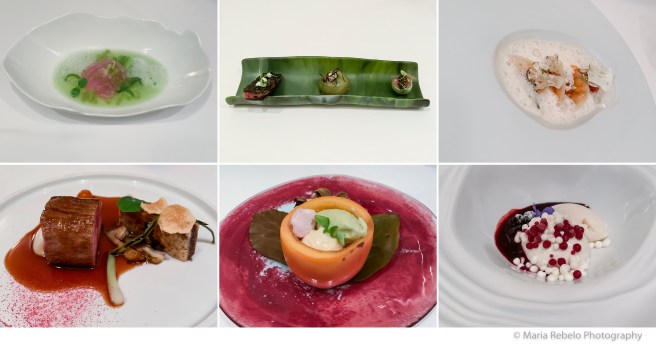
We recalled that our meal started softly, with a cup of tea made from kombu, an Asian algae. Then, there were oysters with foie gras and an apple gel that accentuated their  briny taste. They harmonized with a glass of bright, sparking wine from Murganheira. The meal continued merrily with a miniature piece, three inventive combinations of algae and tuna.

This preamble was followed by a chicken oyster–a small oval cut with intense flavor. It was delightfully roasted, seasoned with dehydrated chili pepper, served with a mushroom broth and topped with a cheese sauce.

Beautiful slices of lírio, a fish from the Azores, arrived on top of a cylinder bathing is sea foam and decorated with pearls.  The pearls, cylinder and foam were all made of cucumber. The delicate flavors paired perfectly with a glass of Quinta de Baixo Vinhas Velhas, a great white wine made by Dirk Niepoort from old vines in Bairrada.

The white wine refreshed our palate so that we could fully appreciate the next course: a succulent lobster with cauliflower puré and a whimsical bloody Mary made from lobster jus. Then, more of our favorite flavors gathered on the plate: xarem, a polenta-like preparation popular in Algarve, topped with a corn cream, a cockle called berbigão, black-pork prosciutto, egg, and a coriander broth.

A refined bouillabaisse arrived at the table, meticulously prepared with imperador fish accompanied by small, flavorful shrimps from the Portuguese coast and dehydrated algae. What would Marcel Pagnol think if he saw Marseille’s rustic bouillabaisse  prepared with the artistry of a Cartier jeweler?

A glass of a great red from the Dão region produced by Quinta do Perdigão heralded the arrival of the luxurious meat dishes. First, succulent veal with spring onions, Jerusalem artichokes. Then, crispy roasted piglet with spices and tropical fruits.

The meal ended with a delightful persimmon filled with pistachio sorbet topped with a cream of vanilla and saffron. But this was a deceptive ending  because soon another pleasing dessert arrived: blueberries with mascarpone ice-cream and kafir limes. And just when we thought it was time to leave, our waiter arrived with a serving cart full of irresistible chocolates, caramels and nuts. It was an epic dinner!

We finished reading the menu and looked up. The wind had waned and the sky was blue.

The Yeatman is located at Rua do Choupelo, (Santa Marinha), in Vila Nova de Gaia. Click here for the hotel’s website. 


The resplendent tranquility of the Mafra library

OLYMPUS DIGITAL CAMERA

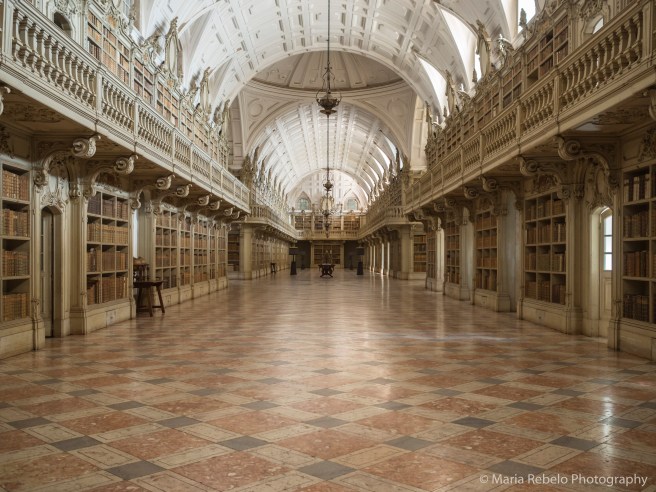
Standing at the entrance of the library of the Mafra palace, it is easy to believe that the world is orderly. In the pristine silence of this space designed by architect Manuel Caetano de Sousa, we have everything we need to understand the world of the 18th century. There are science and mathematics books in the shelves near the entrance, so we can learn the laws of the physical world. Further ahead, there are bookshelves with travel diaries that tell us about lands near and far. Dictionaries and grammars teach us the rhythms and intonations of foreign languages. If we use them to master Greek and Latin, we can enjoy the classics of antiquity, tales of love and war, stories about gods and humans. Walking the 88 meters of marble floors that take us to the end of the library, we reach the shelfs devoted to the mysteries of the soul.

The palace of Mafra and its library were built with the riches from Brazil. But the money ran out and the gold decorations that had been planned for the library were never executed. It is just as well, because the white Nordic-pine shelves give this library an elegant simplicity that looks modern.

It was here that José Saramago, a Nobel laureate, found inspiration for his famous novel about the construction of the Mafra Palace as seen through the eyes of two young lovers, Baltasar and Blimunda.

If you’re traveling in Portugal, don’t miss the chance to experience the resplendent tranquility of the Mafra library. And don’t forget to take a notebook, in case the muses that inspired Saramago whisper in your ear.

Santa Clara 1728

Silent Living Composite - 2

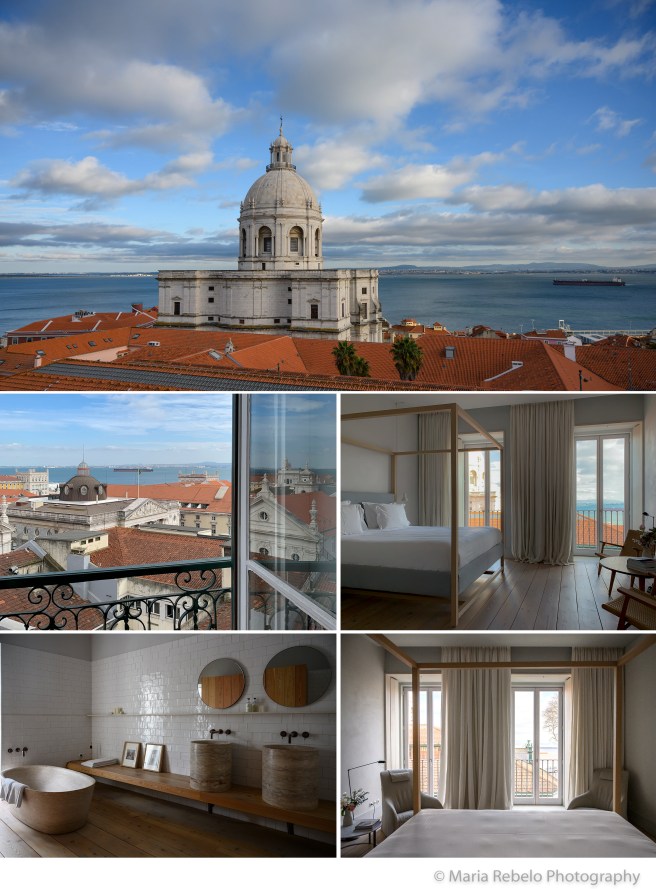
When João Rodrigues opened the doors of Santa Clara to greet us, the sun rushed in, eager to revisit this 1728 building that laid in ruins until two years ago.

João lives a double life. He manages Silent Living, an expanding group of exquisite hotels, while flying around the world as an airline pilot. We expected a short conversation, but instead we spent a leisurely afternoon getting to know him and his project.

This act of making time for his guests tells you why João’s hotels are so unique. “When people stay with us, we receive them as friends. If I could afford it, I wouldn’t charge for the rooms,” João explains in his soft voice. “We ask guests to pay in advance, so we do not have to collect money during their stay. That is also why everything is included, our breakfast, the drinks in the mini bar, all the amenities. Prices are constant throughout the year because our goal is not to generate high returns but to find a sustainable way of offering an extraordinary experience.” João pauses and then he reveals that “We like to surprise guests by picking them up from the airport in a vintage Rolls Royce. It is a gesture that sets the tone for their stay at Santa Clara, a way to tell them they will be cared for.”

We ask João how he finds time to do everything, renovate an historical building, create a team to run the hotel and operate Ceia, a high-end restaurant. He shrugs his shoulders and smiles with the equanimity of someone who often sees the world from above the clouds.

The hotel was designed by architect Aires Mateus, who is João’s habitual collaborator. The interiors are decorated with wood and stone, the same materials used to erect the nearby Pantheon. The colors used in the rooms seem to come from old black and white photographs. These monochromatic hues provide the ideal framing for the glorious views—the contrast of the blue river with the orange roofs punctuated by the white marble of the Pantheon.

A stay at Santa Clara offers the rarest of gifts: ease, simplicity and serenity. It took someone who constantly travels to create a place that is so hard to leave.

Santa Clara 1728 is located at Campo de Santa Clara, 128 in Lisbon, tel. 964 362 816, email booking@silentliving.pt. Click here for the hotel website.