A restaurant called Romando

Rest. Romando

Call us old fashioned, but we don’t like to outsource our choice of restaurants to trip advisor. So, we contacted a friend who’s a bon vivant to ask whether he could recommend a good place for lunch near Vila do Conde. “Make reservations at Romando,” he said without hesitating. “It’s been around forever, serving great traditional food.” We duly called the restaurant and drove to the address they gave us. We arrived at a brand-new building decorated with modern furniture. Could this be the right place?

As soon as the first course arrived–robalo (sea bass) with shrimp rice–we knew that we were indeed at the right place. The fish had been filleted and cooked in the oven seasoned only with salt and olive oil. It is a simple preparation, but the timing has to be precise in order for the freshness of the fish to sing. And sing it did, joined by a choir of shrimps wrapped in sea aromas and rice grains dressed in tomato robes.

Next, our waiter brought us codfish cooked with red pepper, onion, and diced prosciutto. It was deeply satisfying with all the great ingredients pulling together to make the overall taste much more than the sum of the individual flavors. Finally, we tried some tender, succulent grilled meats accompanied by crispy French fries and flavorful beans.

As far as dessert is concerned, it suffices to say that Romando’s puddings, tarts and cakes tempt the most virtuous souls to indulge in gluttony.

Rosa and Armando Pena opened the restaurant soon after they got married, more than a quarter of century ago. Rosa was in charge of the kitchen and Armando managed the dining room. They combined their names and called the place Romando.

The restaurant quickly gathered fame. But the secret of their success is that they never rested on their laurels. They kept evolving, searching for better ingredients, upgrading the quality of the service and, more recently, renovating the restaurant premises. At the same time, the cooking stayed grounded in the techniques of Portuguese cuisine and in the love and commitment that inspired Rosa and Armando to combine their names.

Romando is located at Rua da Fonte, nº221 in Árvore near Vila do Conde, tel. 252 641 075. Click here for the restaurant’s web site.

An 18th century oasis

Casa de Sezim composit

Where can we start to tell you what a privilege it is to stay at Casa de Sezim in Guimarães? This manor house is the perfect place to experience the glamour of aristocratic life.

The house is built around a tower that remounts to 1376. The magnificent salons and the expansive veranda were added in the 18th century. It was at this time the famous hand-crafted wall papers were ordered from Zuber in France.

These papers fill the walls with the adventures of Dom Quixote and glimpses of faraway lands: India and the United States. Zuber made two editions of the papers with American landscapes, one for Casa de Sezim and the other for the White House in Washington D.C.

We arrived with a long list of places to visit in the vicinity. But we fell under the spell of Casa de Sezim and decided to relax and spend some time in this 18th century oasis. Why go far in search of beauty when you have it near?

Casa de Sezim is located in Guimarães at Rua de Sezim. Click here for their web site.


Covela’s prima donna grapes

Composit Quinta da Covela

In his novel “A Cidade e as Serras” (The city and the mountains) the great 19th-century writer Eça de Queiroz describes the life of Jacinto, a wealthy Portuguese who enjoys a glamorous life in Paris. Jacinto frequents the theater and the opera, attends scientific and artistic gatherings, reads the newest books and dresses according to the latest fashion. After an earthquake damages his ancestral mansion in the Douro valley, he decides to go home to oversee its reconstruction.  Jacinto falls in love with the simple pleasures of life in the Douro and lives there happily ever after.

Sometimes life imitates art. Tony Smith was a successful journalist who lived a glamorous life in Rio de Janeiro and New York. He used to spend vacations in the Algarve where he liked to drink a wine called Covela. By happenstance, Tony learned that the estate that produces Covela was up for sale. On a whim, he made a purchase offer. Month of negotiations ensued. After he thought all was lost, he managed to buy the property together with his business partner, Marcelo Lima. Tony imagined that producing wine would be a part time occupation. But just like Jacinto, he fell in love with the Douro valley and never left.

We sat at a stone table in the end of a brilliant afternoon admiring the granite terraces where the vines are planted. The quinta, which remounts to the 16th century, has ideal conditions to produce a young white wine known as “vinho verde” (green wine). It is primarily planted with Avesso, a prized local white varietal that has the temperament of a prima donna. Too much heat or too much rain make the grapes unhappy.

Covela produces some of the happiest Avesso in the world. Its remarkable acidity and minerality make every glass of wine an aria of aromas and flavors.

Our palates were still savoring the fantastic white wine made at Covela solely with Avesso when Tony brought out an enticing rosé produced with Touriga Nacional. The grape juice was left in contact with the red skins for a short period of time, just enough to produce a gorgeous rose color. It is a perfect Summer wine, full of joy and freshness.

Finally, Tony brought us two blends of the excitable Avesso with the even-tempered Chardonnay, the “Escolha” and the “Reserva.” The Escolha has everything: an alluring perfume, a perfect body, an irresistible elegance. The Reserva is full of confidence and aristocratic charm. It is the ideal wine to enjoy in the Winter by the fireplace with a slice of cheese from Serra da Estrela.

We thanked Tony for sharing his treasures with us. “You have to return next year,” he said. “Marcelo and I just bought Quinta da Boavista.” We were speechless. This is the legendary property that belonged to the Baron of Forester, author of the famous map of the Douro river published in 1848. “Come visit me at Boavista,” Tony said with a genial smile. We surely will!

Quinta de Covela is located at S. Tomé de Covela, Baião. Click here for the Covela website. 

The delights of Vale da Estrela

Composit Queijaria Vale da Serra

Our grandfather loved cheese from Serra da Estrela, the highest mountain in continental Portugal. He used to buy most of the cheese made by a small producer. Half of this cache he offered to friends. The other half was consumed in our house, either fresh or cured with olive oil and paprika. Every day of the year there was cheese on the table.

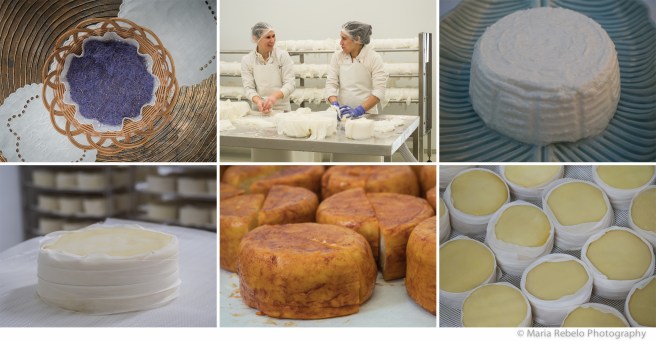
We were delighted when Maria João Coelho invited us to visit Queijaria Vale da Estrela, her father’s new artisanal cheese workshop in Mangualde near Viseu. The first thing we noticed when we entered the workshop were the wonderful cheese aromas, so familiar from our childhood.

Jorge Coelho, Maria João’s father, showed us around. He inherited his love for cheese from his grandfather Raul, an “affineur” who procured the best Estrela cheese to sell to gourmet stores in Lisbon.

Serra cheese is made with only three ingredients: sheep milk, thistle flower, and salt. Vale da Estrela only uses milk from Bordaleira ewes, which are indigenous to Serra da Estrela. The precious milk is collected at night and processed immediately to guarantee the best results.

All the cheese is made by hand with rhythmic gestures that transform humble ingredientes into something transcendent. The whey left over from the production process is heated to make “requeijão,” a soft, ricotta-style cheese.

“We make very good cheese but our requeijão is the best in the world,” said Jorge Coelho with pride. We first admired the cheese with its firm texture and delicate taste. Then, we tried the requeijão. As professional requeijão eaters we sampled many wonderful specimens over the years. But nothing as sublime as the requeijão from Vale da Estrela with its silky texture, depth of flavor, and exceptional freshness.

You can generally find the cheese and requeijão from Vale de Serra in supermarkets throughout the country. But when there’s a special occasion in heaven these products disappear from the shelfs because angels come in disguise to get them for the tables of paradise.

Queijaria Vale da Estrela is located in Mangualde on Estrada Nacional 16, n.º 43 São Cosmado. Click here for the queijaria’s website. 


A taste of Alcobaça in Lisbon

Alcoa

Alcoa, a pastry store in the historical town of Alcobaça, has been producing magical concoctions of flour, sugar and eggs since 1957. They use ancient recipes developed by monks of the order of Cister from two local monasteries, Alcobaça and Santa Maria do Coa.

Alcoa’s pastries have always been revered in the Alcobaça region. But outside the region, only a few knowledgeable gourmets made regular pilgrimages to taste Alcoa’s delights. That all changed when Alcoa started winning top prizes in the annual competition for the best “pastel de nata.” Suddenly, Alcobaça became a destination for dessert lovers.

Neophytes journeyed to Alcoa for the “pastel de nata” only to find a new world of delights with whimsical names and exotic shapes: cornucopias, Saint Peter’s secret, fradinho (little monk), eggs of paradise, and much more. The happiness of Lisbon residents plummeted with the knowledge that these heavenly sweets were 120 km away. Luckily, the owners of Alcoa felt pity for Lisbon’s dwellers and decided to bring their sweet alchemy to Chiado. And now, happiness has returned to the capital city.

The original Alcoa pastry store is on Praça 25 de Abril, 44 in Alcobaça, tel. 262 597 474. The new store in Lisbon is on Rua Garret, 37-39, Chiado, tel 21 1367183.

Sun and rain

OLYMPUS DIGITAL CAMERA

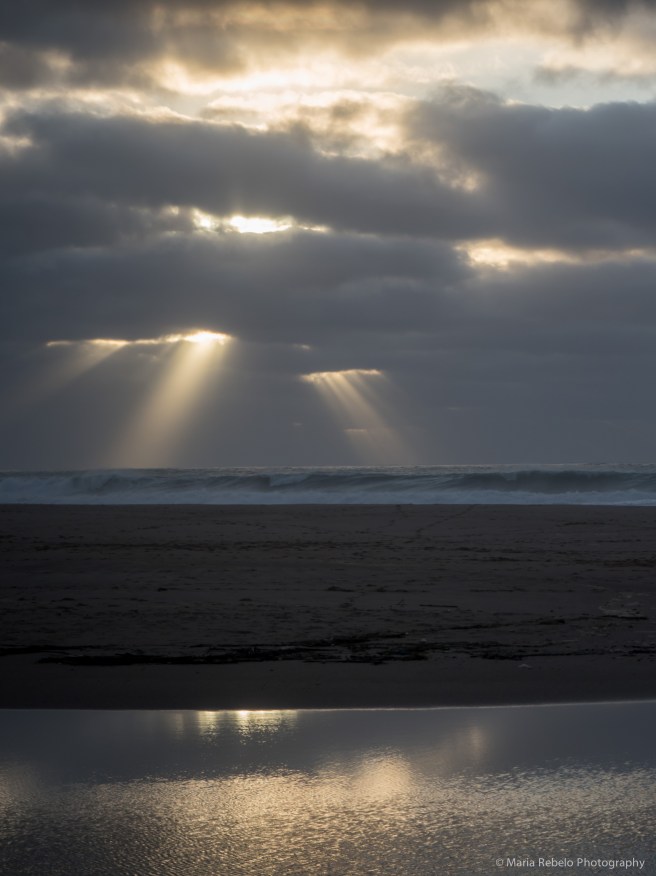
We can’t blame the moon for feeling unappreciated. Its life revolves around the earth and yet people prefer sunsets to moonrises. In the first day of the year, the full moon commanded the waves to bathe the beach sand and the clouds to sprinkle the earth with their blessed water.

The sun, feeling guilty about the droughts of the old year, let the moon have its way. But in the last few minutes of the day the star sent its rays to pierce the clouds and make everything shine.

We hope the New Year will have enough rain so you can come to Portugal to see lush green fields illuminated by brilliant sunshine.


A rhyming guide to Lisbon

RBD_Lisboa_Sé
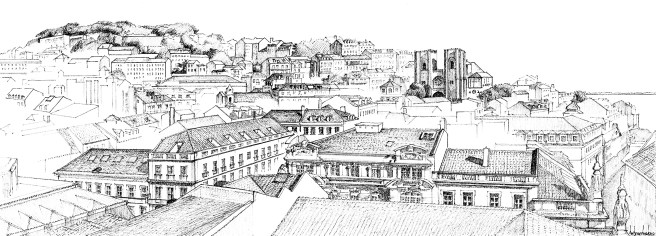
Lisbon, ink on paper, Rui Barreiros Duarte December 2017.

It you come to Lisbon by boat or by plane
As soon as you land, you must go to Belém
For there you can try sweet pastries so fine 
They serve them in heaven since 1837

There’s an old monastery, majestic and faery
And a tower that’s built with such precious marbles
Fish jump from the Tagus to see how it sparkles

If it is time for lunch
You do as you wish
But do not go home
Without trying codfish

Clams Bullhão Pato you also must try
It’s a dish so sublime
Foodies rave about it in prose and in rhyme

Which restaurant to choose?
If you really insist
We’ll tell you our favorites
Click here for a list

There are three main plazas that are worthy to see
Terreiro do Paço where the king used to live
Rossio that’s spacious and pretty like few
And then there’s Chiado with shops old and new

You must go to Alfama
The sole place to survive
The Lisbon earthquake of 1755

Then you can relax in an old coffee shop
And pencil a poem about love or loss
If you need inspiration, we know where to go
For a glass of “ginginha” that’ll make your words flow.

You can shop for a gift
For whomever you pick
Here’s a list of suggestions
Diverse and unique

If you’d like to hear fado, stop by Sr. Vinho
To see singers in black make their voices go far
Embraced by the sound of an ancient guitar

Lisbon forgives if you leave for a day
To see Sintra‘s palaces
Cascais and its bay

But you must come back soon
For the city has charms that it only reveals
To those who spend time in its seven hills

Mesa de Lemos

Composit Quinta de Lemos

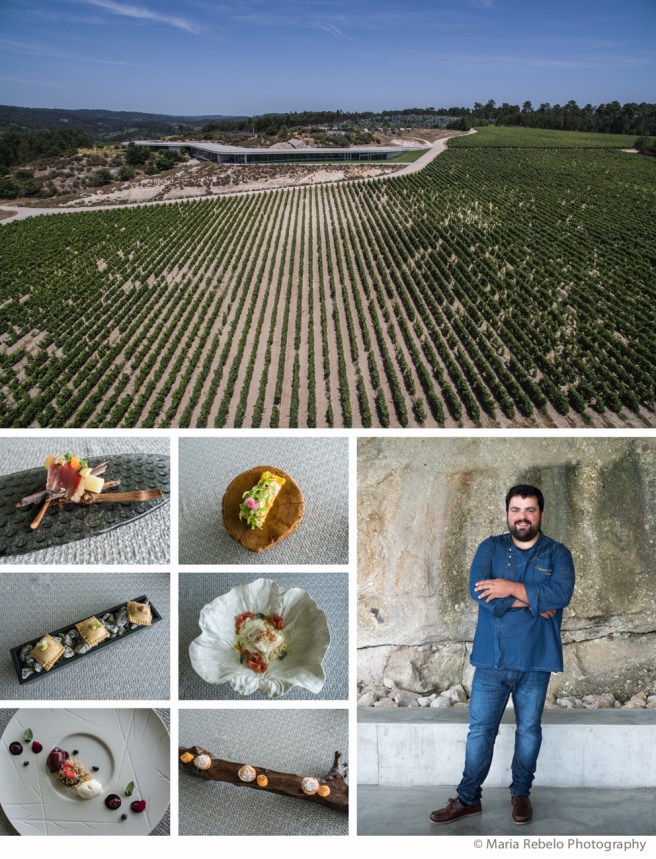
The most elegant place to dine in the Beira region is called Mesa de Lemos. Located near the village of Canas de Senhorim, the building is ensconced in the ancient granite boulders and looks like an integral part of the landscape. It was built three years ago by Celso de Lemos to showcase the wonderful wines he produces in the winery that also bears his name.

The restaurant tables overlook the surrounding vineyards, making us feel as if we are dining in the middle of the vines. There’s a fixed menu with optional, but indispensable, wine pairings. The delicious food is created by chef Diogo Rocha who was born in Canas de Senhorim. He draws inspirations from local traditional recipes to produce food that is elegant and satisfying.

Our meal started with a joyous sparkling wine called Geraldine in honor of Celso’s daughter. It has very fine bubbles and an elegant brioche aroma that combines perfectly with Diogo Rocha’s appetizers, a set of preparations reminiscent of a picnic in the countryside.

Next came Dona Santana, a complex red made from the four emblematic varietals cultivated in the Dão region: Touriga Nacional, Tinta Roriz, Jaen, and Afrocheiro. It paired perfectly with the braised bízaro pork. The last entrée was codfish adorned with an ethereal parsley foam and paired with an elegant red wine made from a single varietal, Afrocheiro.

The dessert feast started with an interesting experimental fortified wine produced by the quinta. It continued with a cherry pudding and a salty ice cream made from requeijão, a pastry filled with a sweet bean paste and a chestnut-shaped concoction made from egg yolks.

The wines of Quinta de Lemos are diamonds that sparkle anywhere. But at Mesa de Lemos they have their perfect setting.

Click here for the Mesa de Lemos web site. The restaurant is located at Quinta de Lemos, Passos de Silgueiros, near Viseu, tel 961 158 503.

The governor’s palace

Palácio do Governador

Just when we think that Lisbon told us all her secrets, the city finds new ways to surprise and delight us. This time we discovered a new hotel called Palácio do Governador (the governor’s palace).  Located near the Tagus river, it occupies a 16th century manor house that once belonged to the governor of the Belém neighborhood.

The governor’s room overlooks the Tower of Belém which used to be connected to the house through an underground passage. Near this passage, you can find the ruins of a Roman factory that produced garum, a fish sauce used in Roman cuisine.

We had a wonderful stay. The hotel integrates old and new with ease, offering  comfortable rooms and elegant public spaces. The service is attentive and the location is perfect.

Our only source of anxiety was the temptation to forego breakfast at the hotel and walk over to the Confeitaria dos Pasteis de Bélem to start the day with a heavenly pastel de Belém.


Palácio do Governador is located on Rua Bartolomeu Dias 117, in Lisboa, tel. 212 467 800. Click here for the hotel’s website.

Worshiping the sun in Belém

MAAT Composit

If you’re visiting Lisbon, we recommend spending an afternoon in the Belém neighborhood. We like to start by sitting at one of the tables of the old Confeitaria de Belém to enjoy an espresso with a warm pastel de Belém. We eat the pastry slowly, taking small bites while the aroma of cinnamon and vanilla surround us and the taste of cream, eggs and sugar melts in our mouth.

We are then ready to stroll by the river to the Belém tower. Before the 1755 earthquake, the tower was close to the middle of the river. It was equipped with cannons meant to protect the city from pirates. But instead of scaring marauders, the beautiful tower made Lisbon more alluring and desirable.

Our next stop is the Monument to the Discoveries. It marks the point of departure of the caravels that sailed into the unknown seas to discover new lands.  From there, we cross the garden surrounded by olive trees to visit the Jerónimos Monastery. It is a majestic monument that celebrates the age of discovery in a gothic style that makes exuberant use of maritime motifs.

After spending much of the afternoon visiting the past, it’s time to look at the future. We like to arrive 45 minutes before sunset to the next destination: the new Museum of Art, Architecture and Technology, known as MAAT. Designed by British architect Amanda Levet, the sensuous building looks like a ship that could sail into space. Its roof has become a favorite destination for sun worshipers. Standing there, we see the Tagus river change into orange vests to praise the star that divides night and day while the white museum glows in the golden light. Five centuries after the construction of the Belém tower the MAAT makes Lisbon feel young and desirable again.

The MAAT is located at Av. Brasília, Central Tejo in Belém, Lisbon. Click here for the MAAT’s website.