In France they call it “pot au feu, “ in Italy “bollito misto,” in Spain “cocido Madrileño.” In Portugal we call it “cozido.” The concept is the same, but the taste differs remarkably from region to region. Cuts of meats that require long periods of cooking are combined with sausages, potatoes, chickpeas, cabbages, and other vegetables. There are no gimmicks, no complex sauce reductions, no overpowering spices, only great ingredients.
In the island of Azores, they prepare the cozido by burying the pot in volcanic soil, where it cooks slowly in geothermal heat. There are no volcanos in continental Portugal, so we have to use regular stoves to do the cooking.
One of the best cozidos is served every Sunday by Companhia das Lezírias, near Vila Franca de Xira, 50 Kms from Lisbon. It is a posh cozido made with wild game that imparts a unique taste to the preparation.
Trying this delicacy requires planing, since it is indispensable to make reservations in advance. Call the Companhia das Lezírias to book a table for a group of friends and, when the time comes, you’ll enjoy a very satisfying meal in the company of very happy friends. 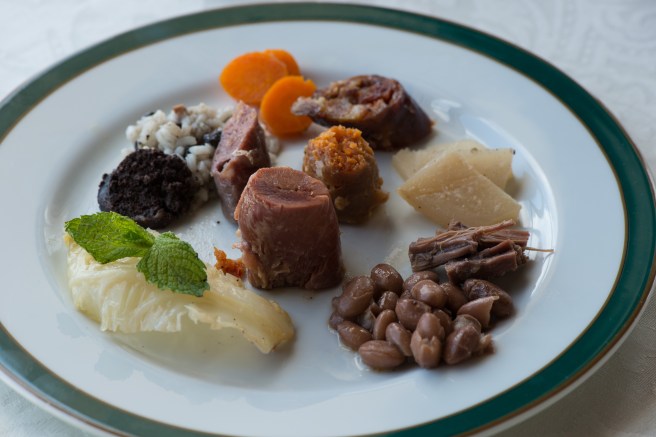
Click here for the website of the restaurant and here for directions. You can make reservations by calling 263 654 985 or emailing rest.coudelaria@clix.pt.