
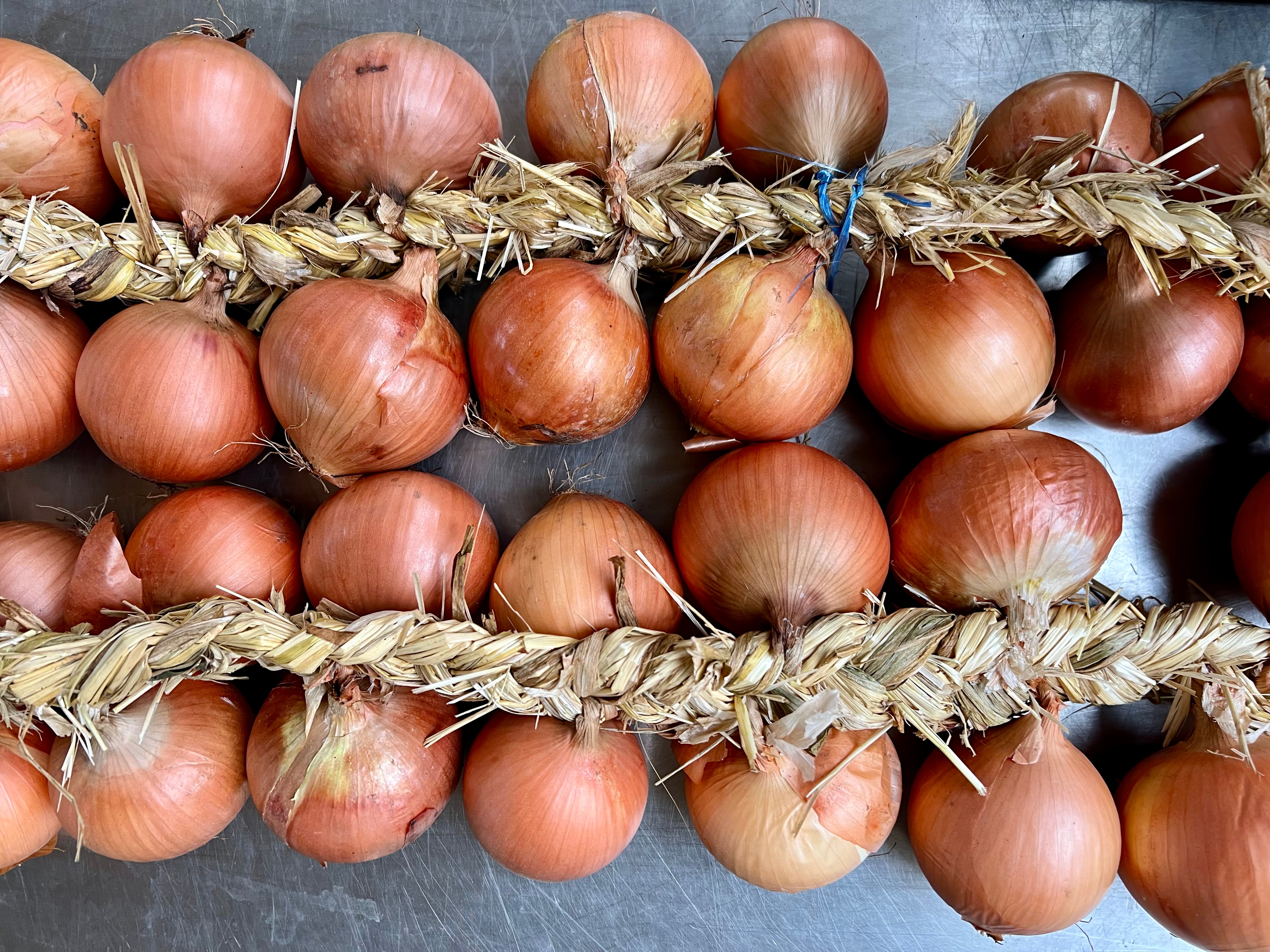
If you’re a foodie, few pleasures in Portugal rival a visit to a farmers’ market. On the Saturday before Christmas, we stopped by the market in Régua, and it was a delight.
The town’s full name is Peso da Régua. Peso, meaning “weight,” likely refers to the role the town assumed after the Marquis of Pombal demarcated the Douro region in 1756: a logistical hub where wine and other goods were weighed before beginning their journey downriver. Régua, meaning “ruler,” describes the way the town stretches along the banks of the Douro, long and narrow, following the river’s course.
Régua welcomes visitors through an elegant iron bridge, inaugurated in 1872, but much of the surrounding architecture fails to do justice to the valley’s natural beauty. Still, there is an undeniable authenticity to the place and to its people.
We went to the Régua market in search of a local delicacy called falachas, a sweet biscuit made from chestnut flour. We were told, regretfully, that these small culinary miracles appear at the market only on Wednesdays. But there were other blessings. Stalls overflowed with apples—including the celebrated Bravo de Esmolfe and a lesser-known variety called Porta da Loja. There were cabbages of many shapes and forms, piles of chestnuts, dried figs, and walnuts. At the center of the market, a large stall tempted passersby with sausages and cured hams (presuntos). Near the entrance, a baker displayed baskets filled to the brim with bread: loaves made from white or yellow corn, golden olive-oil breads, and bola de carne, bread generously stuffed with meat or sausage.
What makes the market special, though, are the vendors themselves, warm, genuine, and quietly persuasive. “Try our delicious figs,” says one. “We dust them lightly with white flour so they stay soft and don’t stick together.” “Taste these walnuts,” urges another vendor. “They’re from a nearby farm. A woman’s been looking after the trees her whole life. She only gets about six hundred kilos, but they’re really great. We’re lucky to have them.”
In this holiday season, it is a rare gift to taste the fruits produced by people who devote their lives to caring for the land. We are fortunate to have them!
 Salt of Portugal