Working in the Douro vineyards

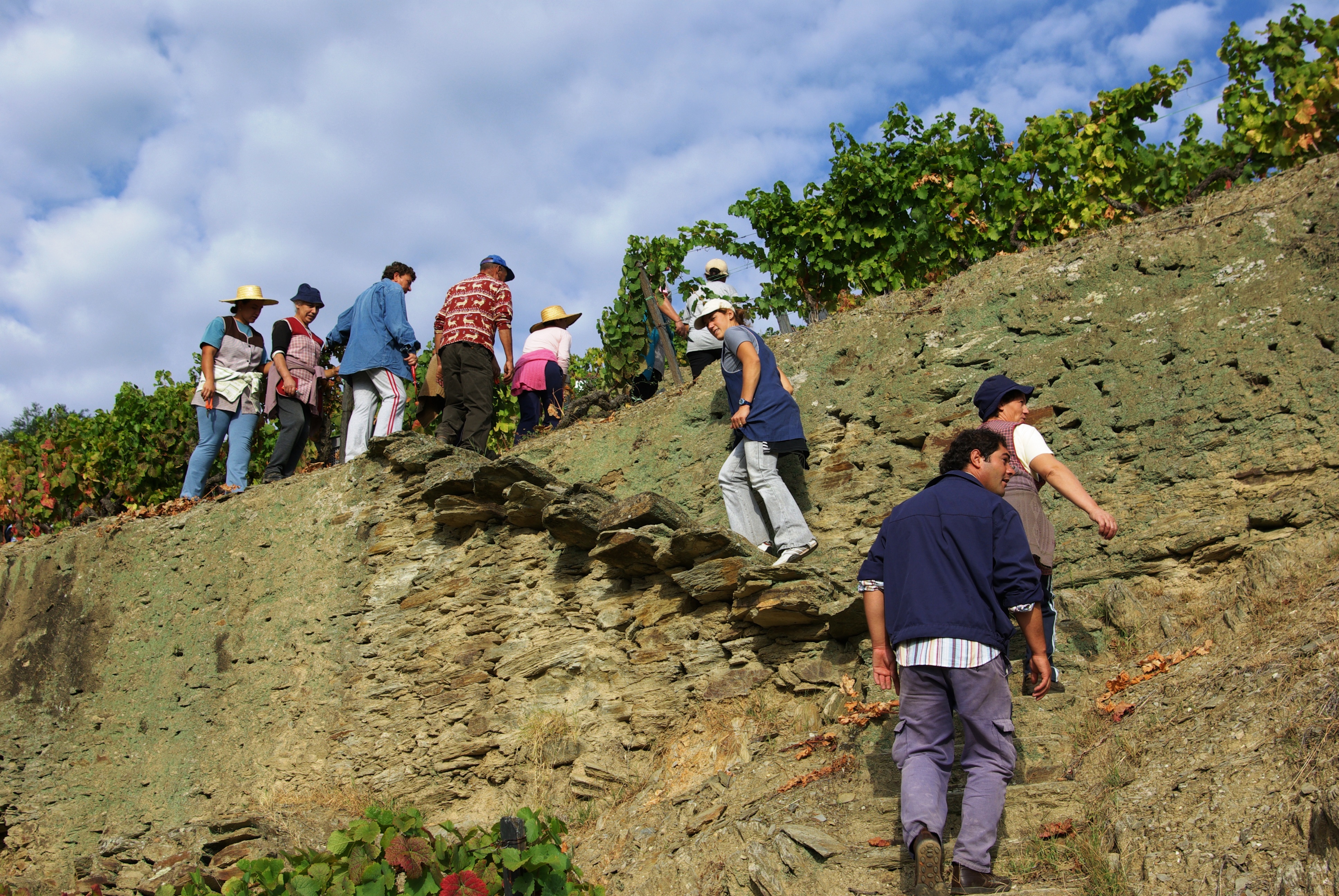
Workers climbing a escada salta cão (dog jumper ladder).

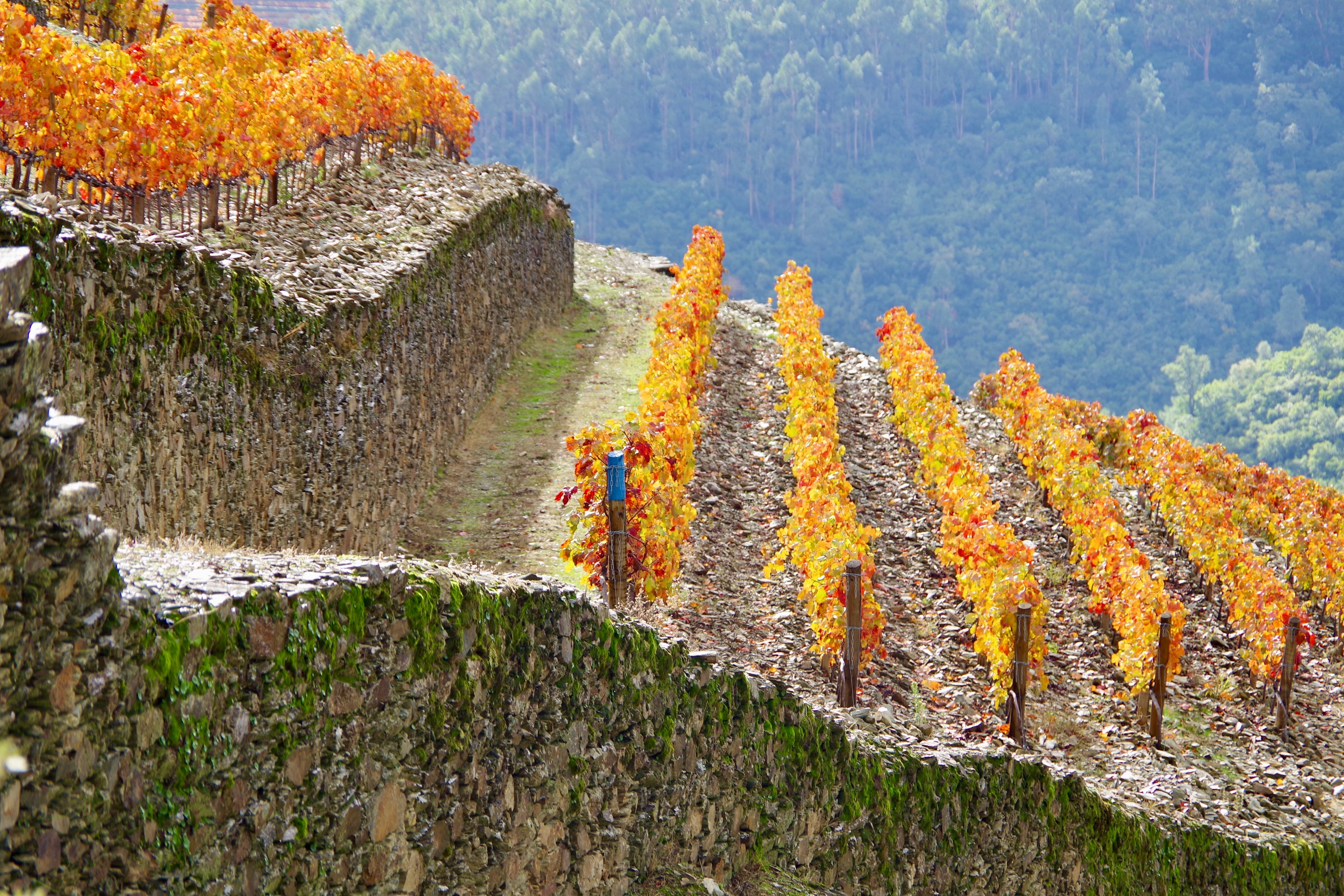
In this seventh lecture with viticulturist António Magalhães, we explore the hard work behind every bottle of Douro wine. The region’s steep, mountainous slopes make mechanization difficult, so much of the labor is still done by hand. Yet it is precisely this human touch that produces great wines: knowing how to prune and tend each vine, which grapes to harvest, and which to leave behind.

When António was a boy, he loved to play with the children of the agricultural workers and was often invited to share their simple meals. Because their homes had no electricity, supper was served late in the afternoon to take advantage of the last light of day.

The food was cooked in earthenware and cast-iron pots over the same hearth that warmed the house during the cold Douro winters. The walls were stained with soot from countless fires. At the table, the adults spoke freely in front of António, assuming that, as a child, he would not understand their conversations. But he listened intently.

He heard how hard their lives were. He heard their worries: how to stretch meager wages, how the women, already burdened with cooking, cleaning, and feeding the animals, took poorly paid part-time jobs to earn a little extra money. He heard their modest dreams: that all their children would finish primary school, that the most gifted might apprentice as carpenters, plumbers, or cabinetmakers, and escape the harsh life of the vineyards.

At the end of supper, António returned to his family home, the smell of smoke clinging to his clothes. He liked it, but his parents made him bathe and then sit down to a second dinner in the dining room, lit by the luxurious glow of incandescent bulbs. Here again, he listened to the conversations of the grown-ups. These reflected fewer worries and higher aspirations: the children were expected to attend university and pursue prestigious careers, becoming lawyers, doctors, or engineers.
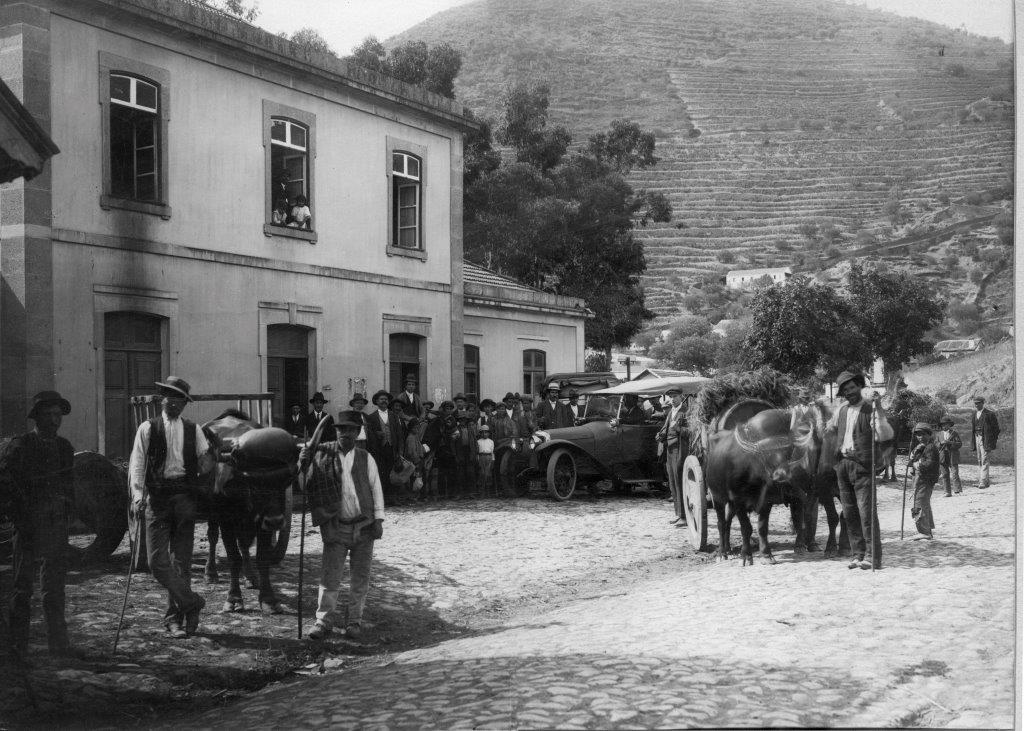
Workers gathered at the Pinhão train station, early 20th century.

The parents of António’s childhood friends worked year-round on the large Douro estates. It was mostly at harvest time that the farms hired temporary workers, called rogas. They were gathered by a rogador and brought to Régua or Pinhão by train or bus. From there, they walked the long, narrow roads that led to the farms.

Most came from the high plateaus of Trás-os-Montes, where corn had been grown since the sixteenth century. For extra sustenance, they carried cornbread, along with a knife to cut it and a fork for their meals. At night, they slept in buildings called cardanhos, which were divided in half by a wooden wall. The men slept on one side and the women on the other. There was a large common blanket for each group.

The rogas worked twelve hours a day for two weeks to earn some extra money that would last them the rest of the year and perhaps allow them to buy a small plot of land. Those who could carried the heavy baskets of grapes, for this work paid three times as much as harvesting. All this toil is memorably described in Miguel Torga’s 1945 novel Grape Harvest.

Over the years, António came to understand the rhythm of vineyard life. Work starts at sunrise. In winter, it begins at first light to make the most of the day. In summer, the sun rises much earlier, and work also begins earlier, to escape the afternoon heat.

Vineyard labor is physically demanding. Workers leave for the fields fasting and pause around 9 a.m. for a light snack, usually a sandwich, to avoid feeling lightheaded. Lunch is the first hot meal of the day, often a vegetable broth eaten from a bowl: first, the vegetables are eaten with a fork, then the broth is drunk. In summer, there is no afternoon work, and heavy midday meals are avoided because of the heat.

The Douro was a poor region, so the food was simple and nothing was wasted. Rye and corn bread were always present, but wheat bread was rare. Pasta, potatoes, and beans were staples.

During the week, people relied on sausages such as chouriço and alheira, and on two essential fish: cod, prepared in countless ways, and sardines, eaten fresh or preserved in salt, a tradition that has largely vanished. Vegetables were seasonal: cabbages in winter, plump Douro tomatoes in summer, cut in half and seasoned with salt and raw onion. Workers helped themselves to the fruit of the trees, discarding the seeds at random and inadvertently planting new trees in the most unexpected places.

As a small bonus, the workers received either a light, low-alcohol wine or água-pé, the latter made by adding water to the pressed grape pomace and letting it ferment again. Some was drunk at lunch, and it usually accompanied dinner.

Sunday was a day of rest. The man shaved, a small indulgence at a time when blades were expensive. Lunch included meat (often tripe, chicken, or mutton) and their best wine, for there was no farm work in the afternoon.

Every family aspired to raise a pig for the annual slaughter, to make sausages and salted meats that could be consumed throughout the year. Those without the means or a pigsty raised one jointly with the estate owners they worked for, trading labor for shelter and the purchase of the animal. One advantage of the pig was that it did not compete with humans for food: it lived on fallen fruit and broth made from kitchen scraps, wilted vegetables.

This way of life began to unravel in the 1990s, as workers aged and their children turned away from agriculture. Large farms began to rely year-round mostly on contractors who supply temporary labor. These workers, however, have neither the experience nor the commitment of the full-time hands.

António stresses the importance of the people who work year-round on the farms of the Douro Valley. Working other people’s land is exhausting and offers little recognition. At the same time, many workers own a small vineyard. Tending that land is a source of pride and quiet joy. It is the same work, but it carries a different meaning.

These vineyards have a human scale, with one, or at most two hectares that can be cared for by a farmer and their family. These small farms, ubiquitous throughout the valley, are key to preserving and improving the spectacular landscape, maintaining the fruit trees planted among the vines and the olive trees that surround them. The farmers who tend these vines are also guardians of a precious genetic legacy, preserving the different grape varieties that evolved through careful human selection over the years.

The way these vineyards are cared for reveals a profound respect for nature and the social fabric of the Douro. There is a transmission of skills from generation to generation, enriched by the wisdom and experience accumulated over time. This inheritance is valuable not just to them but also for the work they do on the large farms.

António thinks that the Douro needs to create conditions so that a new generation can choose to work in agriculture, supplying skilled labor to the large farms and tending their own human-scale vineyards. That means using technology to make the work easier: drones can be used to treat vines, and new machines can be designed and adapted to the Douro’s vineyards, as they have been in Champagne and the Mosel.

The recognition of the olive oil produced by the olival de bordadura, the trees surrounding the vines, as a product with protected designation of origin is another way to increase the income and status of Douro growers. The success of enotourism is an essential pillar of the region’s future.
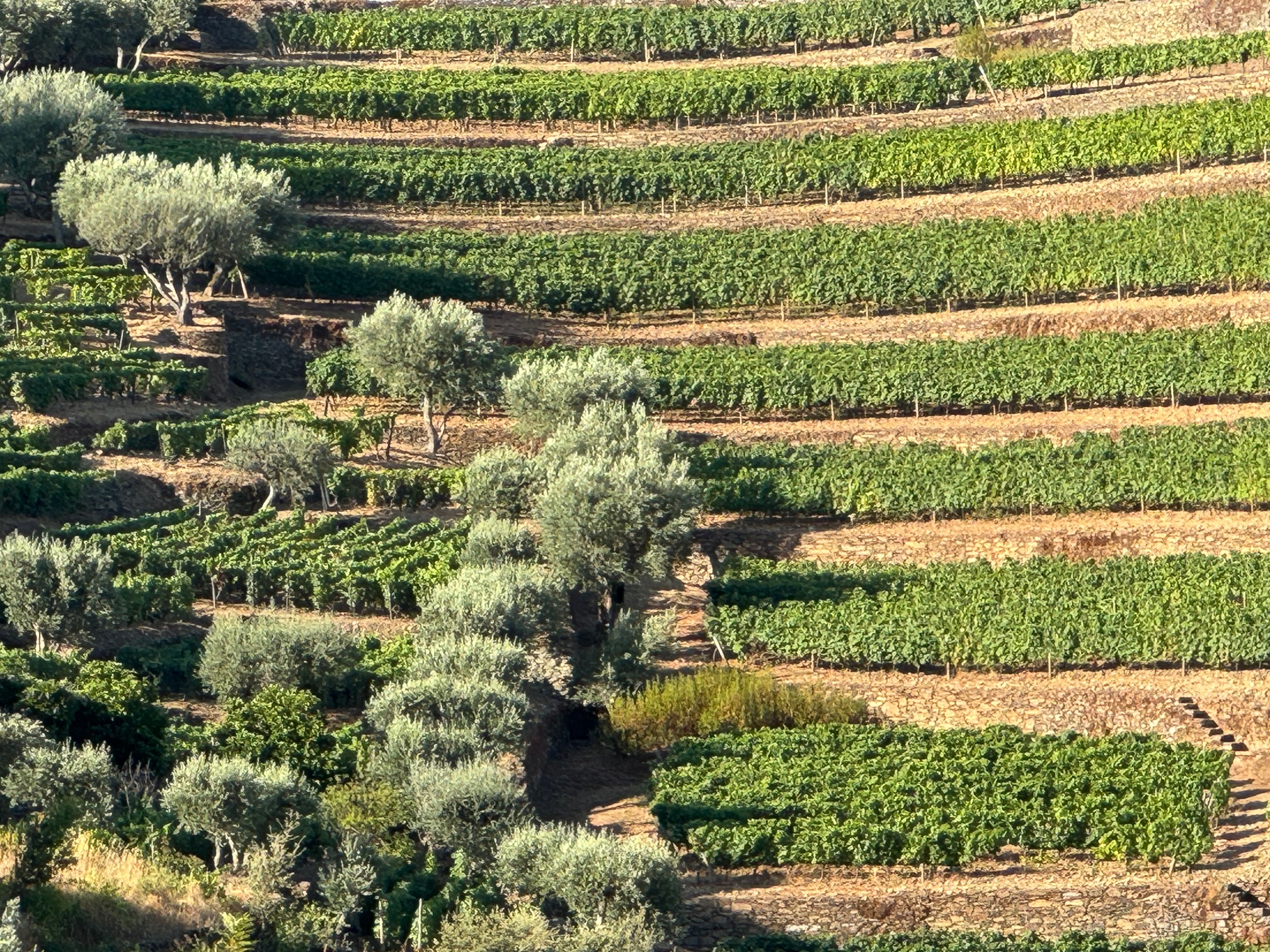
Olival de Bordadura, olive trees bordering the vines.

But, above all, it is key to increase the value of the grapes. The region was designed to produce its prized wine, Port. Later came another fortified wine, the Moscatel de Favaios, and, in recent decades, the DOC Douro table wines. António supports the creation of another category, the analogue of vin de pays in France: a simple wine for local consumption. He proposes calling it Vinho de Ramo, an old name for tavern wine, after the branch (ramo) once placed by the door to signal that wine was for sale.
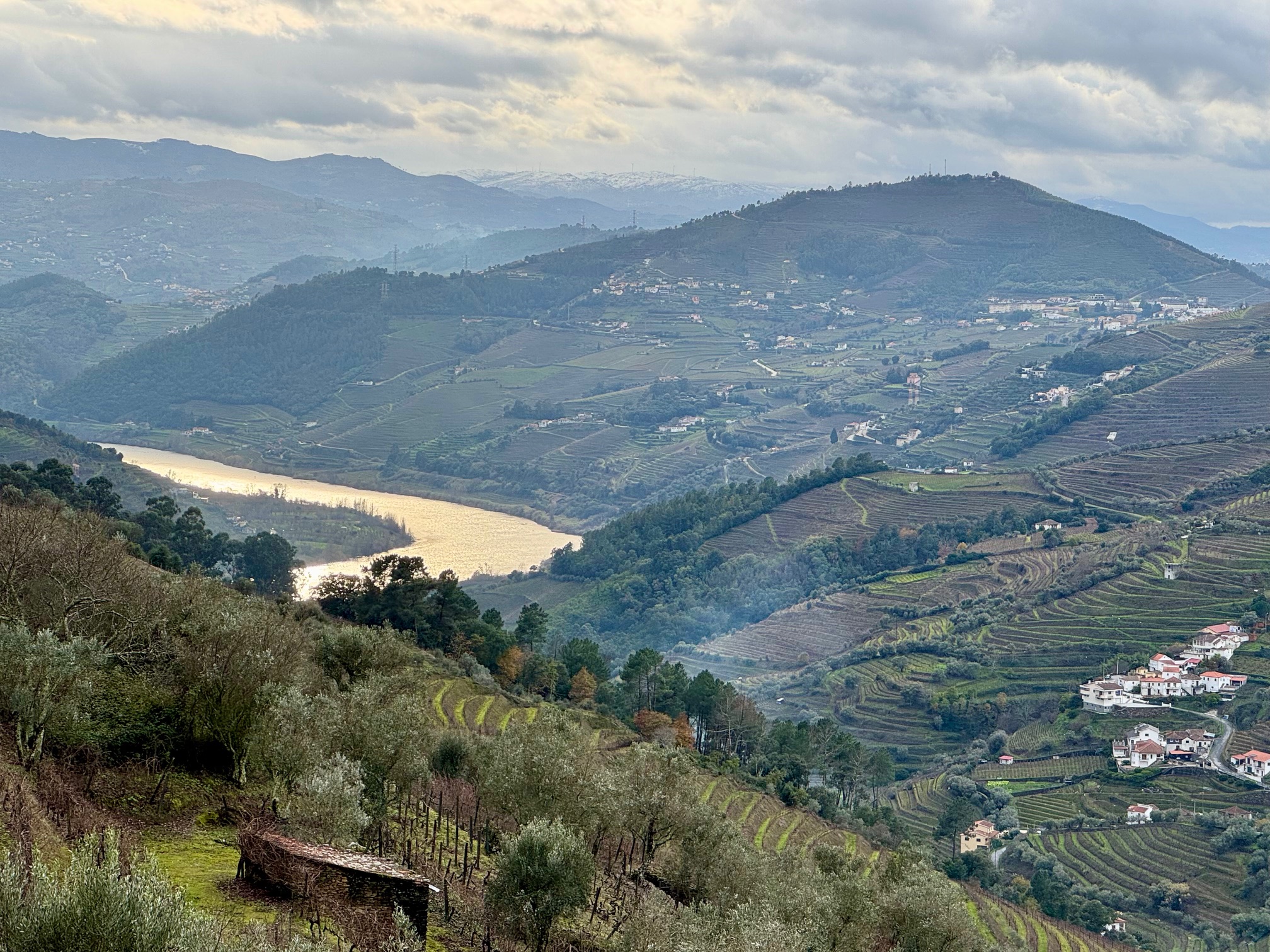
The view from António’s Vinha da Porta in Cidadelhe.


At the end of last year, António, who comes from a family of vineyard owners but inherited no land, bought Vinha da Porta, a human-scale vineyard in the small village of Cidadelhe, near Régua, in Baixo Corgo with sweeping views of the Marão mountains. He now rises with the sun to work in his vineyard. Will he produce Port wine, DOC Douro, or a simple Vinho de Ramo? Whatever it is, we cannot wait to taste it.
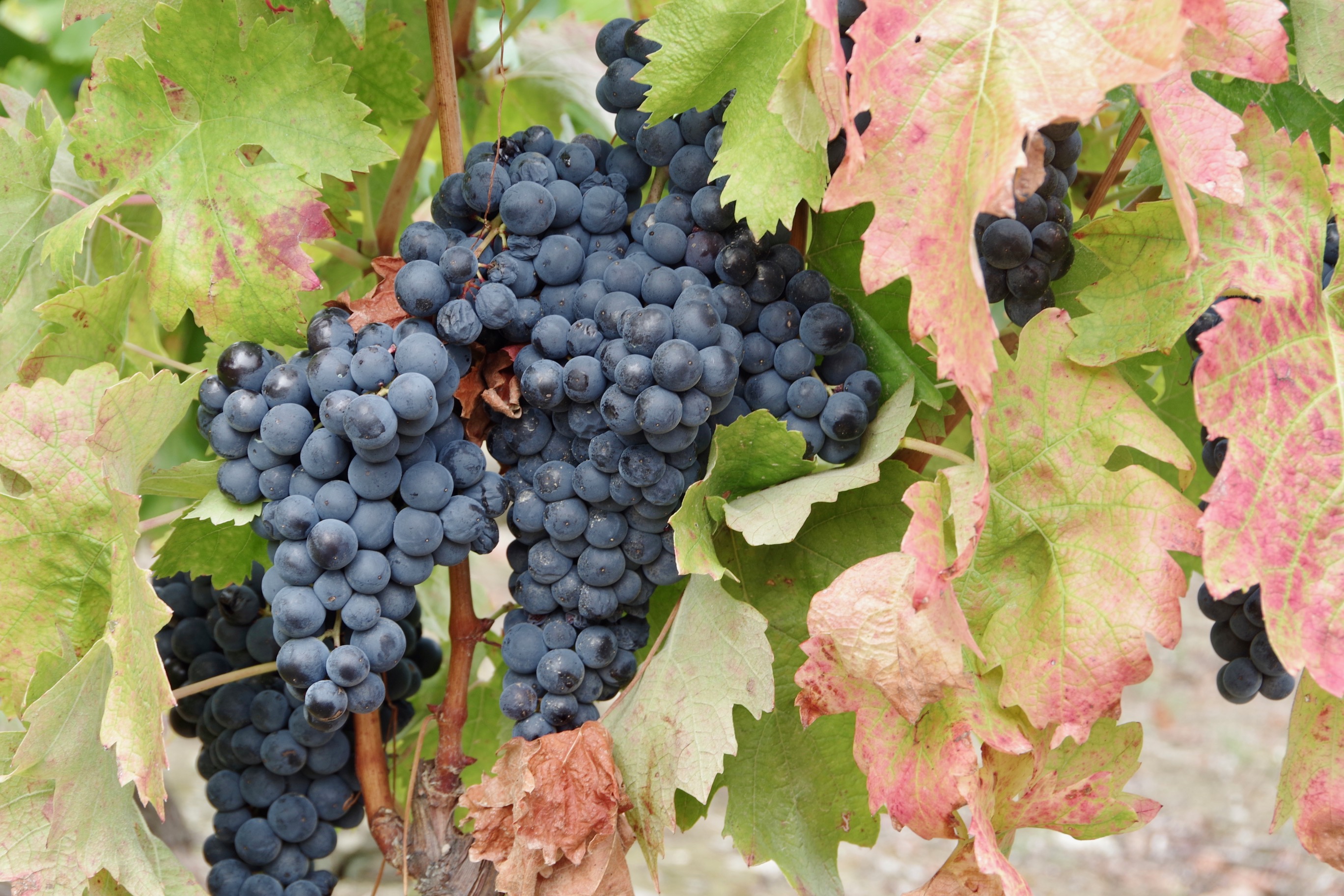
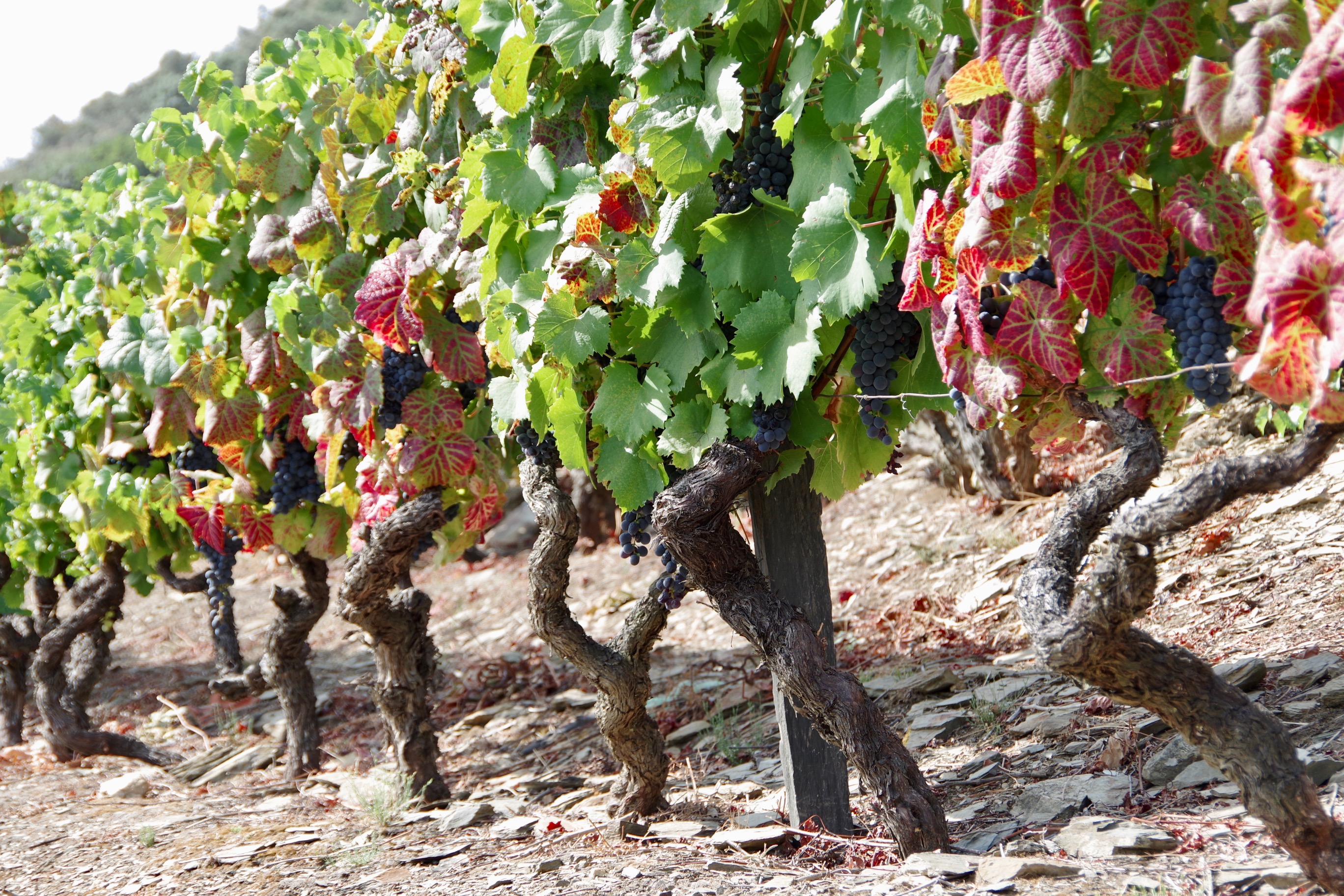
Each grape in its place

In our sixth lecture with viticulturist António Magalhães, we turn to a group of unloved grape varieties that are often dismissed, yet fully capable of producing great wines when planted and farmed wisely 

Tinta Roriz

For over thirty years, António met each August with David Guimaraens, head winemaker at Taylor Fladgate. Together, they assessed the evolution of the two grapes most critical to the Vintage Ports of Fonseca Guimarens: Touriga Francesa and Tinta Roriz. António grew to admire Tinta Roriz’s distinctive qualities and came to reject its poor reputation. Tinta Roriz may well be the Douro’s most misunderstood grape.

Tempranillo arrived in the Douro from Spain and was initially called Aragonez, the name it still bears in other Portuguese regions. By the late nineteenth century, it became known as Tinta Roriz, reflecting the distinct identity it had acquired in the Douro.

Tinta Roriz

It plays a crucial agronomic role: its disease sensitivity makes it a sentinel vine, offering early warning of downy and powdery mildew, the green leafhopper, and maromba (a boron deficiency common in the Douro).

Tinta Roriz is one of the grapes farmers call paga dívidas (“debt payer”) because it can produce large, heavy bunches, particularly in years of abundant rain. Many enologists, however, associate the grape with large, watery berries that yield thin, forgettable wines. And yet Tinta Roriz plays a starring role in some of the Douro’s greatest wines. Why? There are three reasons.

First, lineage. The finest examples of Tinta Roriz come from old vines, whose cuttings far outperform modern clones.

Second, site. Tinta Roriz must be planted in poor soils and in sites with good sun exposure and sufficient airflow to protect it against mildew and oidium. 

Third, rootstock choice. The adoption of highly productive rootstocks, like the 99 Richter, rather than those better suited to the Douro terroir, notably the Rupestris du Lot, boosted yields at the expense of quality.

So why has Tinta Roriz so often disappointed? Many of today’s vineyards date from the late 1980s and early 1990s, when mechanization reshaped the Douro. Wide terraces were carved into the hillsides, and vines were planted at low density to accommodate tractors. To offset that lower density, growers favored productive varieties like Tinta Roriz. They chose high-yielding clones, fertile soils, and vigorous rootstocks. In some cases, they also replaced dry farming with irrigation, sacrificing deep root systems and the hydric stress that concentrates flavor. It is hardly surprising that the grape’s reputation suffered.

And yet, in the right hands, Tinta Roriz shines. The iconic Pintas, produced by Sandra Tavares da Silva and Jorge Serôdio Borges and made from more than forty grape varieties, contains 10–15 percent Tinta Roriz.

Tinta Barroca

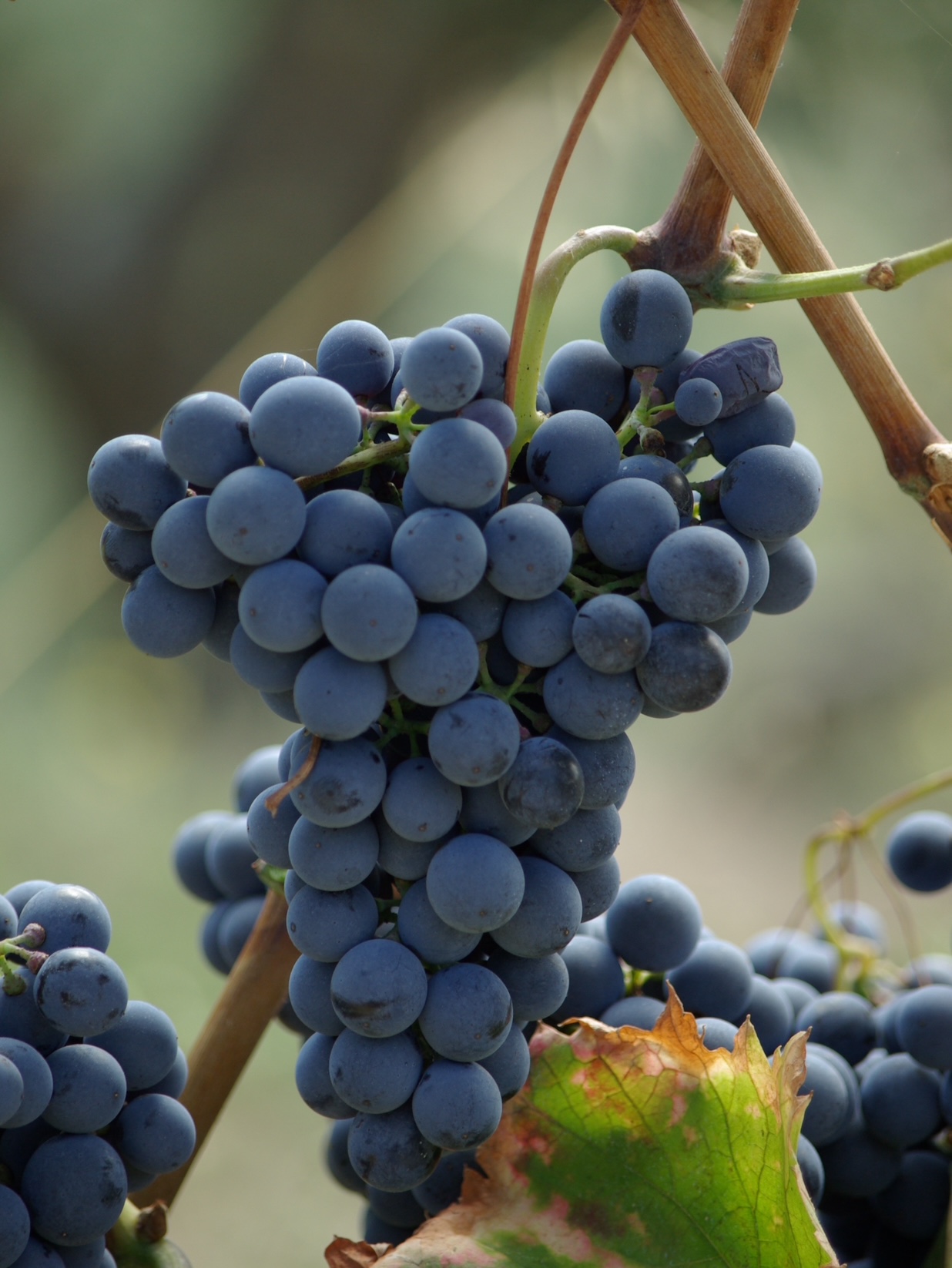
This grape plays a secondary but essential role in Port blends. It is present in virtually all vineyards planted before the mid-1980s. Later plantings, no longer based on traditional field blends, sometimes exclude it—to their loss. 

Because it is usually part of a blend, Tinta Barroca dwells in relative obscurity. Yet it has always had its champions. José António Rosas, the renowned winemaker of Ramos Pinto, was a great admirer.

Tinta Barroca between two vines of Touriga Francesa

Bruce Guimaraens, the larger-than-life British winemaker of Fonseca Guimaraens, also held it in special esteem. Struggling with the two Rs, he called it “Baroca.” His son David shares his father’s appreciation for the grape but pronounces “Barroca” like a proper Portuguese.

It is an early-ripening variety, and the first impression when tasting the berries is its candy-like sweetness. Like Malvasia Fina, the berries are particularly delicious when they are about to turn into raisins. At that moment, they reach the upper limit of ripeness acceptable for Port.

Like Touriga Francesa, Tinta Barroca is an offspring of Mourisco Tinto and Touriga Nacional. António suspects that it may be the modern name for the pre-phylloxera variety Boca de Mina (“mouth of the mine”), a name that hints at its need for freshness. The Baron of Forrester considered Boca de Mina “the most delicious,” and João Cunha Seixas, a prominent viticulturist,  praised it in his “Guide for the Douro Farmer,” published in 1895. 

Tinta Barroca is highly sensitive to heat. This attribute was largely forgotten in the vineyards planted in the late 1980s and 1990s, when it was often placed in sites with excessive sun exposure. As a result, the rachis cooks and the berries shrivel and mummify. You can almost hear the vines pleading, “Take me out of here.”

Tinta Barroca in the Fall

Barroca is often accused of being ill-suited to a warmer climate. Yet in the right site, the vine can thrive and produce beautiful wines. One striking example is at Quinta do Cruzeiro in Vale de Mendiz, where Tinta Barroca dominates a vineyard called Patamares do Norte (northern terraces), a name that signals the vineyard’s favorable north-facing exposure, which suits the grape so well.

Tinta Barroca and Tinto Cão are complementary varieties. Every year, António and David Guimaraens faced the difficult yet enticing challenge of finding their ideal proportions for Port.

Tinto Cão

Tinto Cão is often dismissed for lacking deep color, opulence, and high alcohol. Yet there is a long tradition of appreciation for this variety. In his Agricultural Memoirs of 1790, Francisco Rebello da Fonseca praised it, noting that “amadura bem, não seca nem apodrece”—it ripens well, without shriveling or rotting. He also mentions wine made from Tinto Cão by Manuel Vaz de Carvalho that was “considered superior to all his others and to those of the surrounding area.” 

This grape has long been a quiet ally in difficult years. For António and David Guimaraens, Tinto Cão is a joker in the deck, saving great Ports in dry vintages such as 2009, 2011, and 2017. 

Tinto Cão

It produces small berries with thick skins, yielding wines with natural acidity, elegant tannins, and remarkable aging potential. It may disappoint in cool years, but it shines in warm ones. 

Tinto Cão thrives in vines with a south-westerly exposure, at altitudes below 300-350 metres.  Above all, it demands deep soils to allow the grapes to ripen under a scorching sun.

If Francisco Rebello da Fonseca were alive today, he would relish seeing Tinto Cão escape the confines of Port wine. An increasing number of Douro estates, including La Rosa and Noval, are making delightful table wines exclusively from Tinto Cão. Luisa Borges, the winemaker and owner of the Vieira de Sousa estate, is especially fond of wines made from this variety.

In Vintage Ports from Taylor Fladgate and Fonseca Guimaraens, Tinto Cão remains a secondary but essential variety. 

António keeps a mental list of grapes best equipped to help the Douro thrive in a warmer climate. At the top of that list is Tinto Cão.

Tinta Amarela

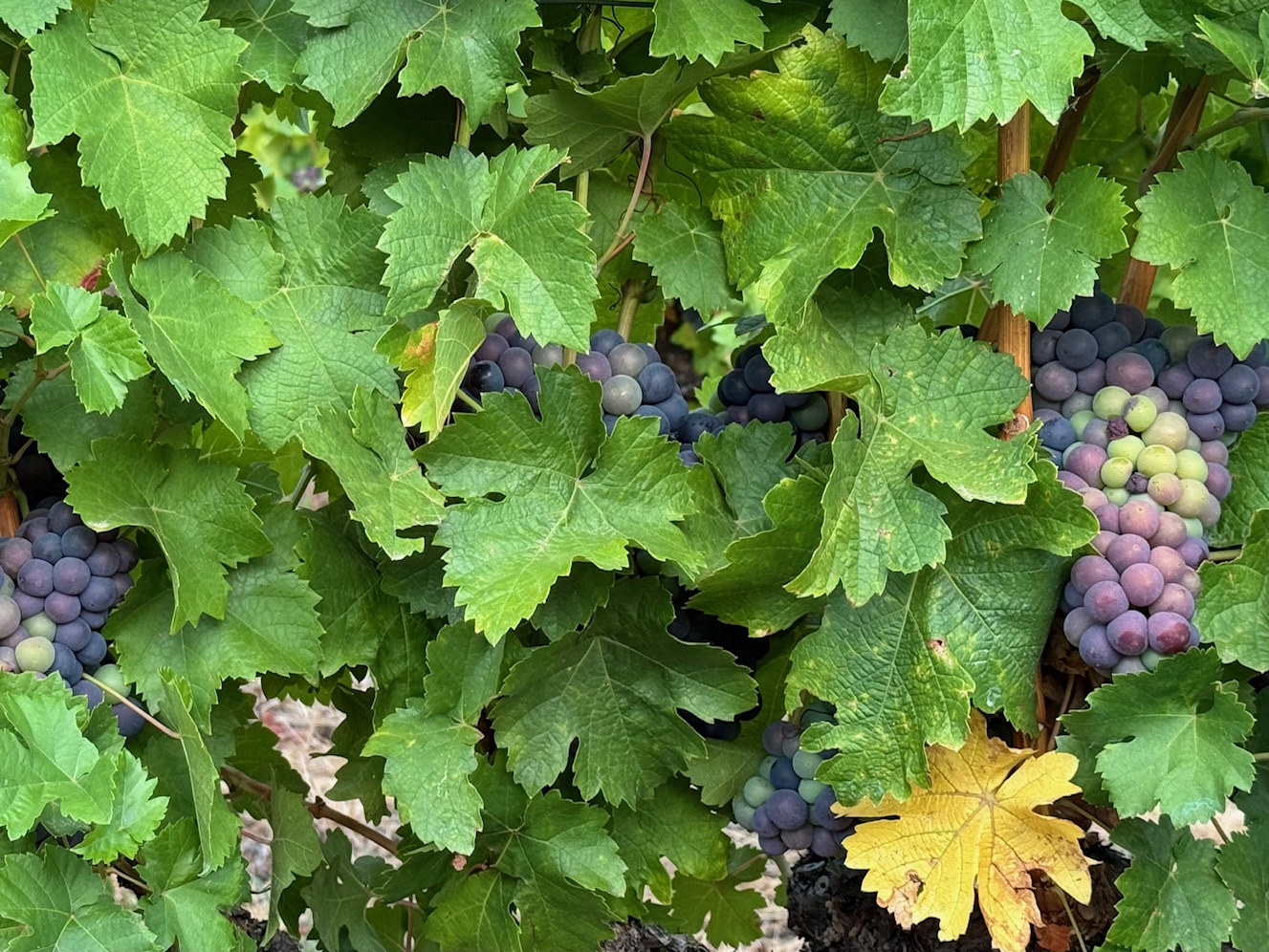
Tinta Amarela is a striking vine year-round and among the last to shed its leaves in autumn. Yet it is finicky: its dense bunches are vulnerable to heat and rain, which can trigger sour rot, as damaged berries are colonized by yeasts and acetic bacteria, leading to vinegar-like spoilage.

Site selection is everything. An east-facing exposure is generally ideal. Below the mid-slope line, row orientation becomes decisive, as it governs how much sun the clusters receive: rows facing east protect grapes from harsh heat, while those facing west leave them overexposed.

Tinta Amarela during véraison

The vine can survive hot summers in the arid Douro Superior, but the grapes vanish. Farmers say, “the vines drank the grapes.”

Tinta Amarela appears in modest quantities in many old vineyards, particularly in Baixo Corgo, and is therefore most often found in blends. Single-varietal wines are rare.

It plays a major role in Quinta do Crasto’s celebrated Maria Teresa. Drawn from a field blend of centenarian vines planted around 1906 on low-altitude, east-facing terraces along the Douro River, the wine owes its distinctive character to afternoon shade that tempers the heat.

Tinta da Barca

Tinta da Barca is, like Touriga Francesa, a cross between Mourisco Tinto and Touriga Nacional. Yet while Touriga Francesa is widely planted and well known, Tinta da Barca remains largely obscure.

David Guimaraens is a devoted advocate of the grape, which plays a quiet but crucial role in the great Vintage Ports of Quinta de Vargellas. The fruit comes from the Pulverinho vineyard, planted in 1927 with both Touriga Francesa and Tinta da Barca.

António believes the best introduction to Tinta da Barca is a wonderful monovarietal table wine made by Ramos Pinto in 2016, a challenging year marked by heat and an unusual outbreak of downy mildew, which nonetheless yielded both classic Vintage Ports and outstanding table wines. It has been one of his favorites ever since.

Malvasia Fina

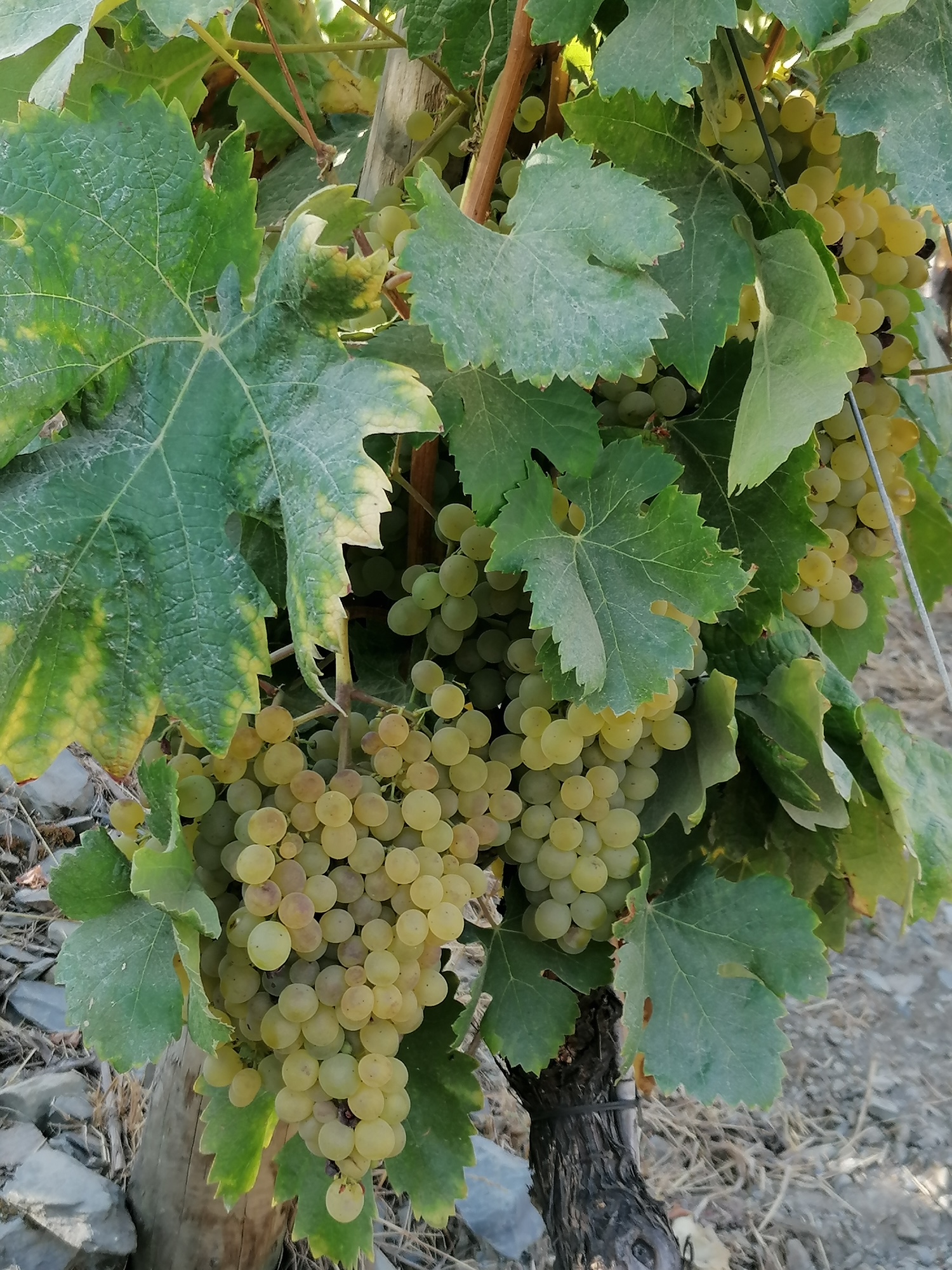
António knows, like the palm of his hand, remarkable Malvasia Fina vineyards across all three Douro subregions: Baixo Corgo, Cima Corgo, and Douro Superior. When planting this grape, one factor matters above all others: altitude. For Port wines, the ideal locations lie above 350–400 meters; for table wines, between 500 and 600 meters.

Malvasia Fina plays an indispensable role in several outstanding white Ports, including Fonseca Guimaraens’ Siroco and Taylor Fladgate’s Chip Dry, as well as in Adriano Ramos Pinto Finest White Reserve, a delightful sweet white Port.

In terms of table wines, António likes the white Reserva from Quinta do Cume in Provesende—a wonderful blend led by Malvasia Fina, with Rabigato, Viosinho, and Gouveio in supporting roles.

For those eager to discover how expressive the grape can be, António recommends tasting the Quinta do Bucheiro Malvasia Fina Reserva made by Dias Teixeira, an octogenarian and former enologist at Borges Port Wine, who knows Malvasia Fina’s secrets and charms.

Malvasia Fina

After our lecture, António had lunch at a seafood restaurant and let the sommelier select the wine. The choice was excellent: a Viosinho from D. Graça. When António asked which Malvasia Fina wines the sommelier would recommend, the reply was blunt: “I don’t like that grape variety.” Malvasia remains, clearly, misunderstood.

Each grape in its place

António teaches a lesson that should not be forgotten: grape varieties cannot simply be uprooted from one place and expected to thrive elsewhere. Each has a place where it speaks clearly. Many of the Douro’s unloved grapes were simply misplaced. Put them back where they belong, farm them with respect, and they repay the favor with wines of character, balance, and beauty.

On the way to Viseu

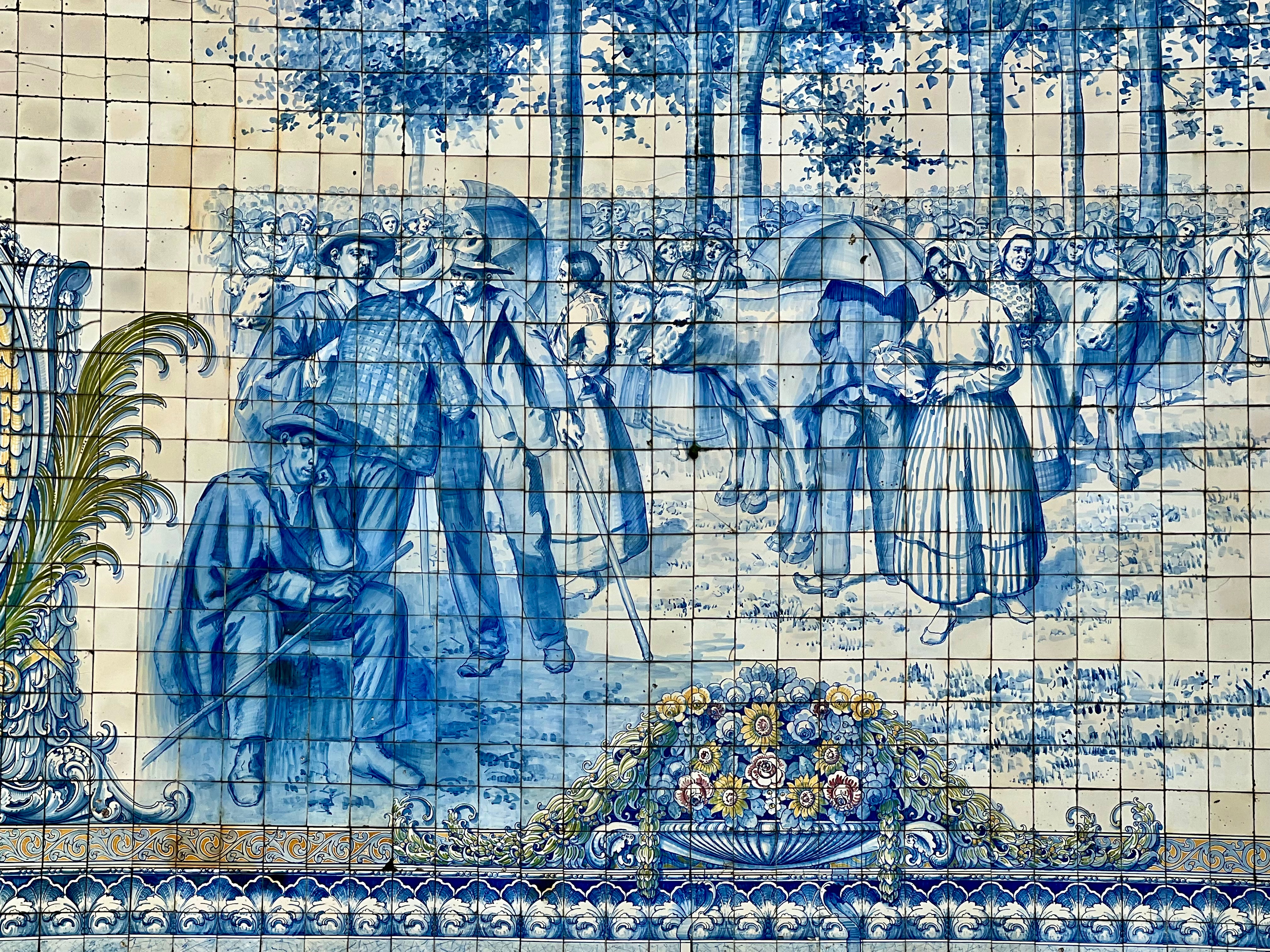
Tile panel, Rossio, 1931

Many of those who visit Portugal gravitate toward places that increasingly offer an international experience, lightly seasoned with local color. The surest way to gain a deeper sense of the country is to spend time in the small towns and villages outside the main tourist centers.

One such place is Viseu, our birthplace.

Granite quarried nearby paves its streets and lines its façades, giving the city a quiet, understated presence, echoed in the character of its residents.

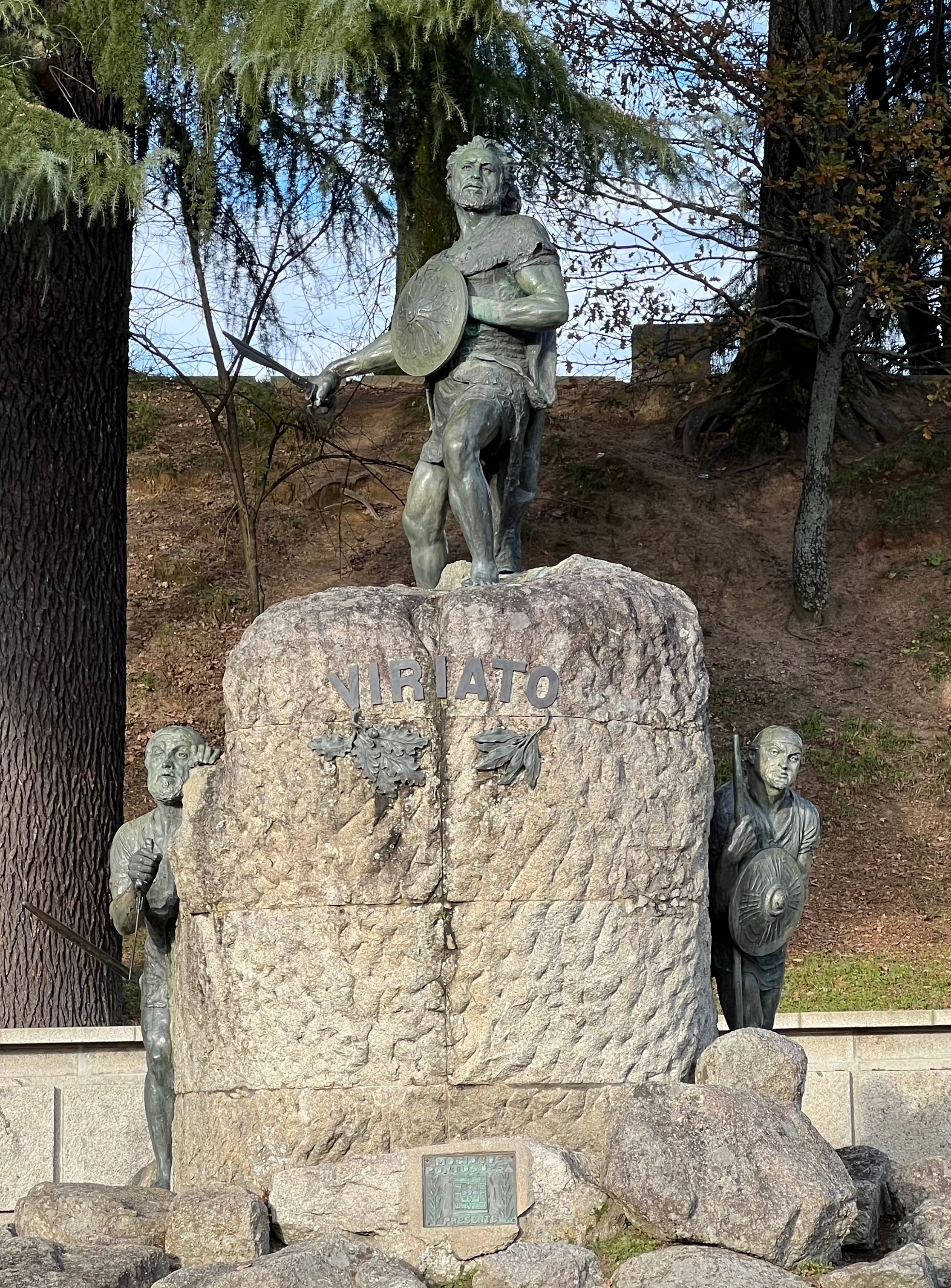
Viriato’s statue

Viseu first gained renown in the 2nd century BCE as a stronghold of resistance to Roman expansion. Viriato, leader of a loose network of tribes known as the Lusitanos, waged a remarkably effective guerrilla war against Rome. The Romans prevailed only after bribing three of his companions to assassinate him in his sleep in 139 BCE. When the murderers claimed their reward, they were dismissed with the words: Roma traditoribus non praemiat (Rome does not reward traitors). 

The Lusitanos were defeated, yet Portugal later adopted them as symbolic ancestors, and Lusitano became a synonym for Portuguese. In that sense, Viriato won the war.

It is therefore fitting to begin a visit at the Cava do Viriato, where a statue of the warrior stands atop a rock, surrounded by his fierce companions. From here, you can take a stroll on a boardwalk that offers sweeping views of the city.

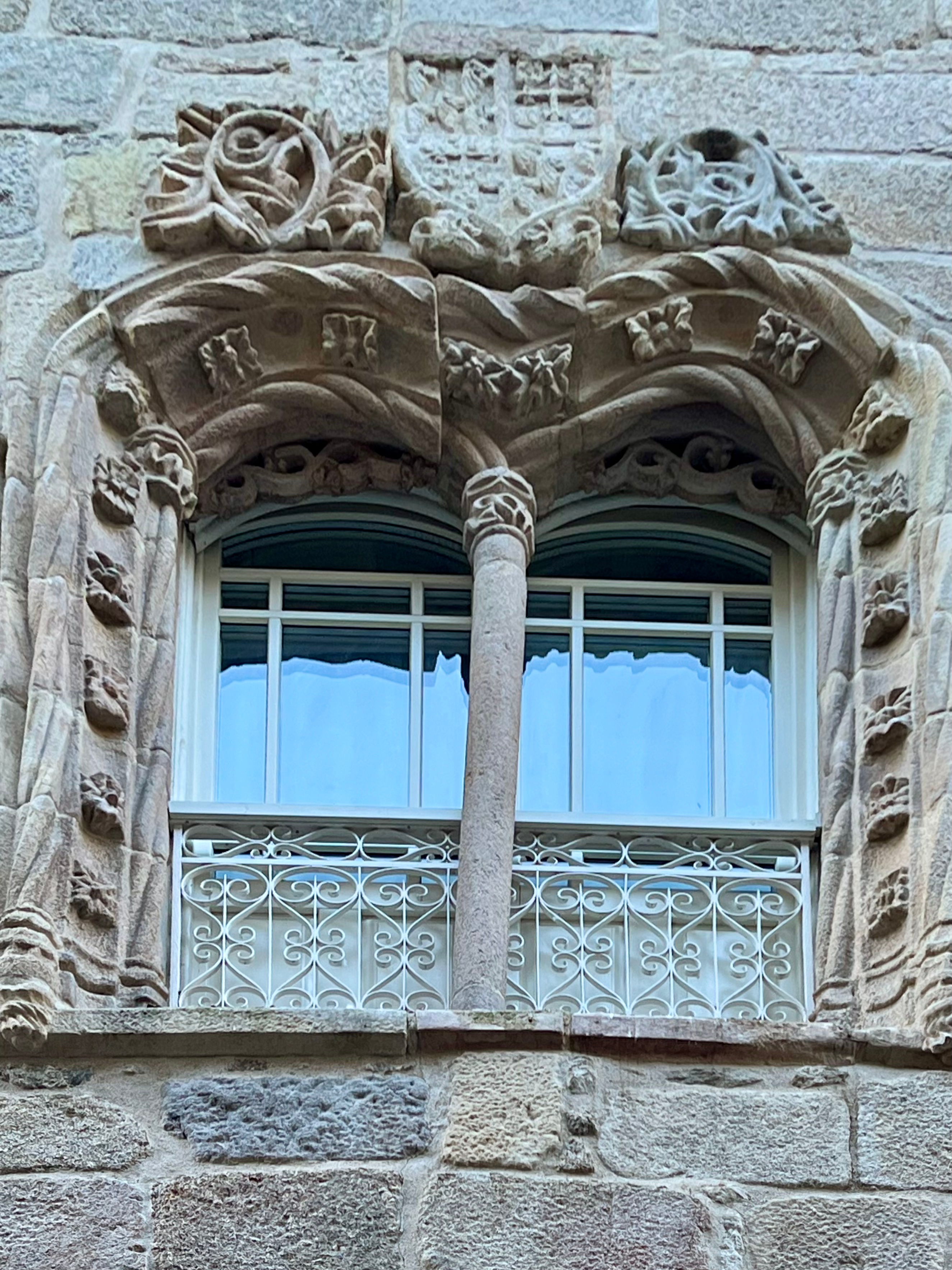
Dom Duarte’s window

Next, walk uphill to Rua Direita, a narrow street built in Roman times, now lined with small, traditional shops. Turn onto Rua Dom Duarte, where you’ll see a building with a window adorned with ropes and armillary spheres. Legend has it that King Dom Duarte, who ruled Portugal from 1433 to 1438, was born there. Continue up the street, and you’ll find his statue. 

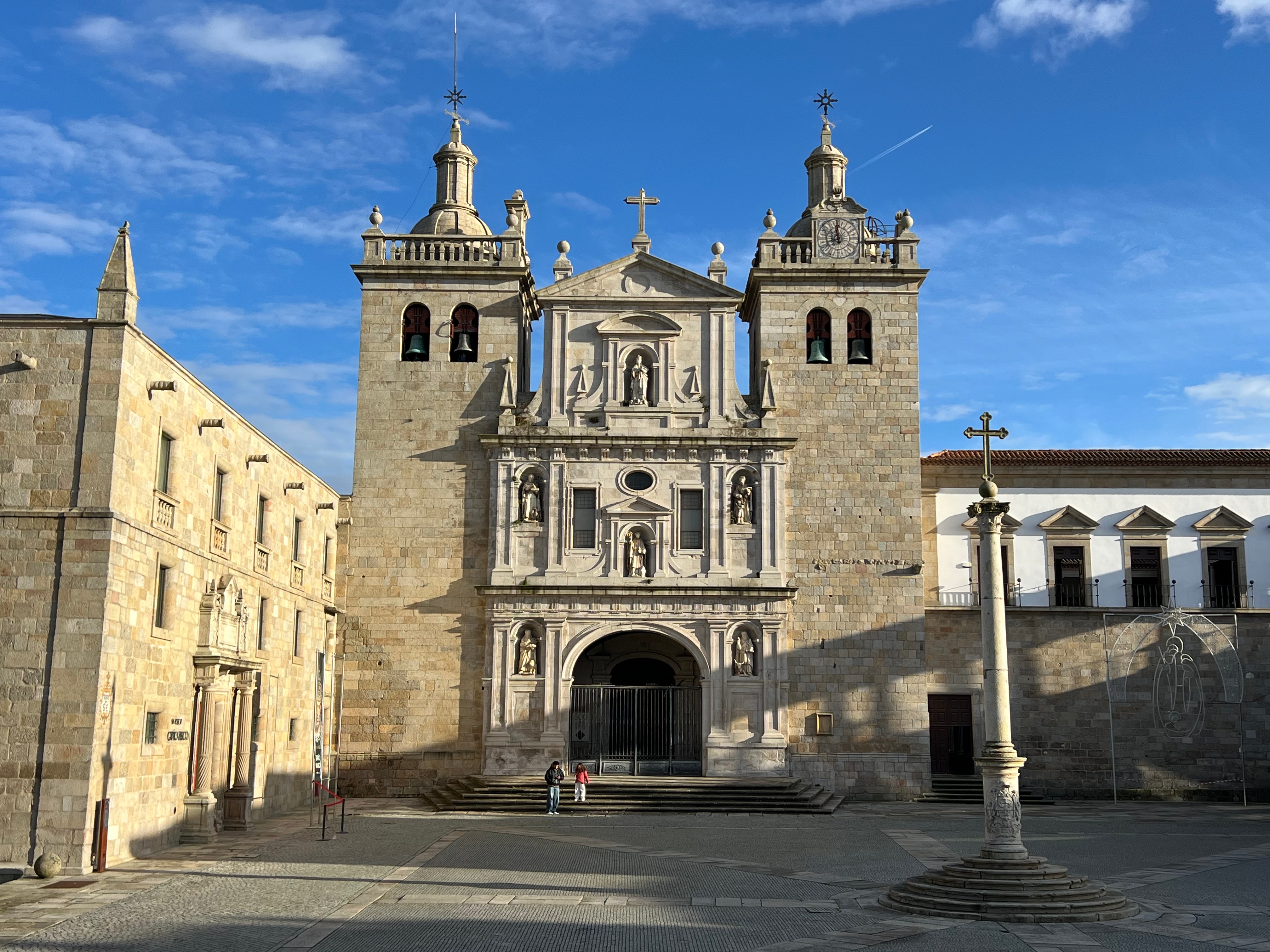
Just around the corner stands the 12th-century cathedral, built in the Romanesque style and later enriched with Gothic, Manueline, Renaissance, and Mannerist elements.

Viseu Catedral

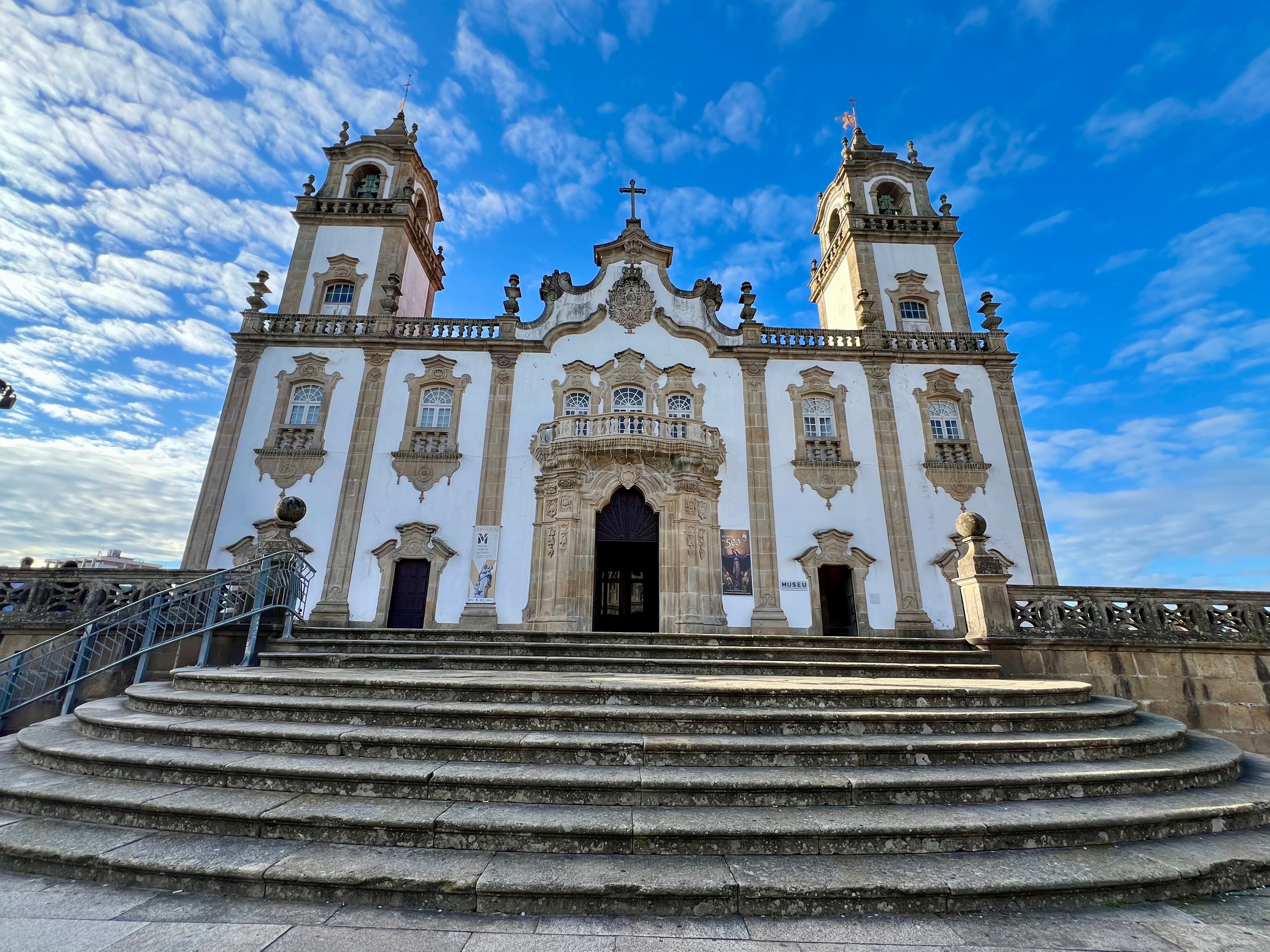
On the same square rise the Baroque Igreja da Misericórdia and the Grão Vasco Museum, home to the finest works of Portugal’s greatest Renaissance painter.

Misericórdia church

From Rua do Adro, continue to Largo Pintor Gata and head south along Rua Nunes de Carvalho until you reach Rossio, the city’s central plaza. Shaded by old linden trees, it is surrounded by tile panels depicting rural life: shepherds from the nearby Estrela Mountain and farmers arriving in Viseu to sell their goods. 

Foremost among those products is wine. Viseu lies at the heart of the Dão, one of Portugal’s most important wine regions. While most Dão wines are blends, two grapes stand out: the red Touriga Nacional and the white EncruzadoTouriga Nacional is emblematic of the Douro Valley, but its name likely comes from Tourigo, a village near Viseu. In the Dão’s granite soils, the grape produces elegant, floral wines. Encruzado is prized for its combination of texture, depth, and restraint. You can enjoy a tasting of Dão wines at Solar do Vinho do Dão, a 12th-century episcopal palace located in Fontelo, a park with ancient trees that is home to a flock of peacocks.

Another emblematic product is queijo da serra, made from sheep’s milk in the nearby Estrela Mountains. Our favorite cheese shop is Celeiro dos Sonhos, on Avenida Capitão Silva Pereira. Their selection ranges from soft, spoonable cheeses to cured versions finished with olive oil and paprika, as well as requeijão. All are worth trying.

When it comes to restaurants, we always return to two longtime favorites. O Cortiço, on a narrow street named after the 19th-century fado singer Augusto Hilário, is famed for its arroz de carqueja (wild broom rice). This dish is so intriguing that Maria de Lurdes Modesto, the chef who codified Portuguese cuisine, came here repeatedly to perfect her own version. On the outskirts of town, Quinta da Magarenha serves local classics such as rojões (pan-fried marinated pork) and veal slowly cooked in a clay pot.

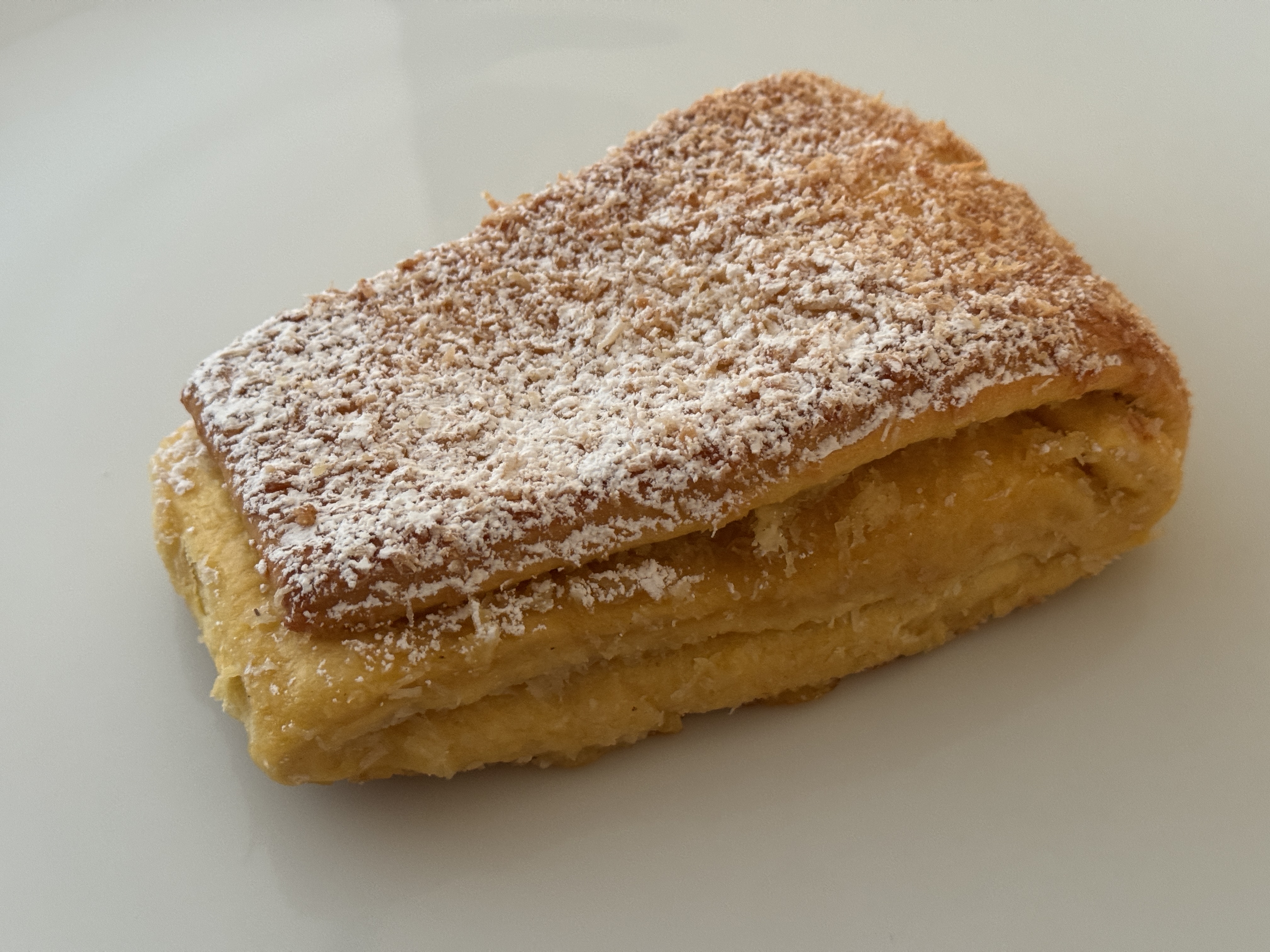
For coffee and pastries, our current favorite is Lobo, on Rua Alexandre Lobo. It was recently taken over by the Oliveira family, long known for their farturas (sweet strips of fried dough) sold at fairs across Portugal. Don’t miss the Viriato, a V-shaped pastry created in homage to the legendary figure, made from baker’s dough, topped with grated coconut, and generously filled with silky pastry cream.

For a stay, the Pousada de Viseu, housed in a building dating back to 1793, offers great comfort and beautiful views over the city.

There is an old song titled “Indo eu, indo eu, a caminho de Viseu,” about going to Viseu and finding love along the way. Its lyrics read:

“As I walk, as I walk, on the way to Viseu,

I met my one true love—oh my Lord, here I go.”

We leave you with an instrumental version of the tune, with apologies to Michel Giacometti and Fernando Lopes-Graça, whose work preserved Portugal’s traditional melodies, for taking a few liberties along the way.

With this song, we wish you a blissful New Year—one that, we hope, leads you to Viseu.