Time is a great equalizer of port wines. Tawnies are red ports aged for many years in large barrels made from oak and chestnut wood. These wines mellow with age, trading the red colors and brash tannins of their youth for discreet amber hues and complex flavors.
White ports can be frivolous when young. But, as they age, they gain depth and character. After about three decades, whites and reds retain different flavors and aromas but they agree to wear the same colors.
Old tawnies are rare pleasures. But old white ports, like the magnificent 1963 Dalva, are rarer still. This wine has everything a great red tawny offers: harmony, complexity, and depth. But it has a lightness that is magical.
There are very few bottles left of 1963 Dalva white port. If you manage to find one, do not save it for a special occasion. Create instead a special occasion to enjoy it!
Time flies by when we’re having fun. It’s hard to believe that we started Salt of Portugal one decade ago!
It’s been a pleasure to travel from north to south in search of all that is glorious about Portugal. Thank you dear readers for sharing this journey with us. We hope your travels will bring you soon to this corner of the world. A place of castles and palaces, of mountains and valleys, of sand and sea. All bathed in warm light, all cooled by the breeze that carries the ocean’s salt, the salt of Portugal.
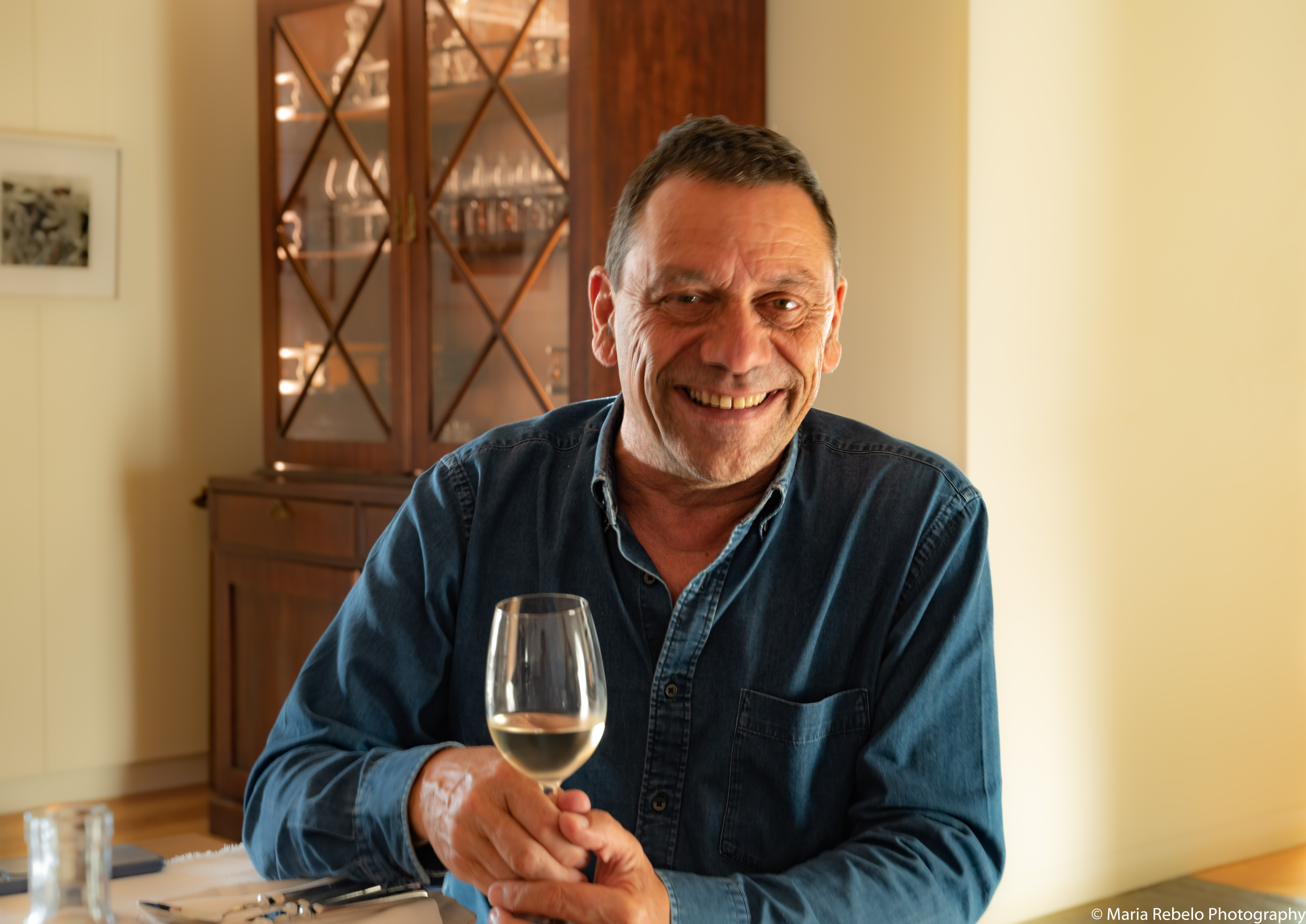
We have for years admired chef Miguel Castro e Silva from the distance. We dined at his restaurants, read his cookbooks, tried his recipes (his marinated sardine preparation is a staple at our table). So it was a great privilege to have dinner with him at Quinta de Ventozelo.
We met at Cantina, the restaurant that occupies the place where the old farm canteen used to be. Miguel arrived with a bottle of wine. “Do you want to try the wines I make at Ventozelo?” he asked as a way of introduction. Soon our glasses were filled with a white Viosinho from 2017 that is fresh and vibrant. It went perfectly with our first course, river fish “escabeche.”
We told Miguel how much we had enjoyed the food we had for lunch in the picturesque esplanade of Cantina: wild boar covilhetes (a version of the small pies popular in nearby Vila Real), a warm soup made with beets and apple, grilled octopus, and a peach tart that celebrated the natural sweetness of the peaches. We asked how does he manage to achieve such high standards in all his restaurants. Miguel told us that he inherited both his organization skills and creativity from his German mother. He writes meticulous recipes and coaches his cooks in their preparation until they meet his exacting standards.
Miguel started cooking professionally only at age 31. Born into a family of doctors in Porto, he was expected to study medicine. He studied biology in Germany but lost interest and became a musician. To earn a bit of money on the side, he started cooking. When he returned to Portugal, his friend Dirk Niepoort asked him to prepare food for his wine tastings. Dirk would describe the wines he planned to serve and Miguel had to come up with food that paired well with the wines. It was an experience that allowed him to perfect his cooking skills and learn a lot about wine.
This enological knowledge is evident in the next wine we tried, a remarkable white that combines Viosinho with a blend of red varietals. It was a perfect complement to our second starter: a sausage called “alheira” topped with a fried quail egg.
Miguel tells us that he is reviving and refining the cooking traditions of the Douro valley. Every Sunday, the cooks at Cantina prepare a roast in an oven fired with vine wood. The soup is made in old iron-cast pots on a large outdoor fire. All the ingredients come from the farm. The animals are naturally raised and everything from nose to tail is used in the kitchen.
Our main course, a suculent stewed rooster, was a perfect example of the refined, satisfying rustic food that Miguel is devising. It combined well with a delicate red wine aged in oak barrels previously used to make white wines.
Several fruit-based desserts arrived. Once again, we admired the sparse use of sugar that gives the fruits their chance to shine. As the dinner came to an end, we made a few toasts with some old Dalva tawnies.
But there was one more thing. Miguel ordered a pot of tea. Ventozelo produces a wonderful gin with the aromatics that grow on the farm. Miguel had the idea of making an herbal tea with the same aromatics: lavender, lemon thyme, Portuguese thyme, and globe amaranth. It makes a fragrant infusion that was the perfect ending to a perfect meal. Thanks to chef Miguel Castro e Silva the food at Cantina is as spectacular as the view.
Click here for the web site of Cantina, the restaurant at Quinta de Ventozelo and here for Miguel Castro e Silva’s website.
The heart of Viseu, our home town, is the “four corners,” the intersection of Rua Direita (straight street) and Rua Formosa (pretty street). One of these corners was once occupied by Pastelaria Santos, a legendary pastry store. Its service was impeccable. Attentive waiters dispensed a wide variety of pastries and beverages in plates and cups made from porcelain. Coffee and tea pots, forks, spoons and knives were all made of silver.
The pastries were culinary gold. The queen of the savories was a chicken “empada,” a small pie shaped like a crown with a crisp dough and a luscious filling. The king of the sweets was the “pastel de feijão,” a traditional convent confection made with light puff pastry filled with a delicate mixture of white beans, eggs and sugar.
Santos’ pastry chef was called Adelino. He selected the best ingredients and was meticulous about their preparation. When Adelino became too old for the kitchen grind, he taught a young chef called António all his secrets. When times were busy, an industrious 16-year-old waiter called João volunteered in the kitchen. He had an eye for detail and, little by little, he too learned the secrets of chef Adelino.
In 1985, Pastelaria Santos was replaced by a lottery store and the city lost a culinary fortune. Luckily, António and João were hired by a new coffee shop. It offered quicker service and less variety, but the famous chicken pies and bean pastries continued to delight the city’s gourmands. After a few years, the coffee shop was sold. The new owner demanded faster production methods and cheaper ingredients. António and João tried to adapt but, eventually, they left, disenchanted. Other pastry stores offered chicken pies and bean pastries. But these were mere imitations. The culinary treasures of Pastelaria Santos seemed forever lost.
We recently heard that a small shop called Flor da Ponte was selling pastries made according to the original Santos recipes. The store is owned by João Mendes Marques, the waiter who started working at Pastelaria Santos when he was 16. We talked to him on the phone and he invited us to his kitchen. His directions resembled the instructions of a treasure map. “Find a house that looks like a castle and then take a narrow road that seems to lead nowhere. You’ll find me at the end of the road.”
He was indeed there waiting for us with two trays of chicken pies ready to be baked. João covered the pies with a generous egg wash and tucked them in the oven. He then returned to the granite table in the middle of the kitchen to show us how to make the crown. While his fingers worked the dough, he told us about the many details that contribute to the final product, from the quality and composition of the flour to the time it takes for the dough to rest. Even the chicken filling requires an elaborate process that involves an ice bath to cool the meat right after it is cooked.
Next, João showed us how he makes the bean pastries. The puff pastry is made by hand. The sugar point needs to be exact, the consistency of the eggs and beans mixture needs to be perfect. We tried some freshly-made pastries. They are heavenly; light and full of flavor.
João peaked into the oven and announced that the chicken pies were ready. He took the trays out and let them cool a bit. As soon as we tried them, their extraordinary taste took us back to our childhood.
We thanked João for preserving these wonderful recipes. He tells us he is planning for the future. His two sons work with him and they will carry on once he retires.
And this is how, in the last few days of spring, at the end of a road that seemed to lead nowhere, we found a culinary treasure.
Flor da Ponte is located at Travessa do Forno 13, 3510-799 Viseu, tel. 964 186 043.
We first met Pedro Pena Bastos as the chef at Herdade do Esporão when he was only 25 years old. Sitting at a table overlooking the vineyards of this iconic Alentejo estate, we were taken on an unforgettable culinary journey.
We met Pedro again at Ceia, the elegant restaurant in João Rodrigues’ Santa Clara 1728 hotel. We remember sommelier Mário Marques welcoming us in the courtyard outside the restaurant with glasses of natural sparkling wine from Quinta da Serradinha. Sitting at a long wooden table with a small group of fellow culinary travelers, we experienced once again the wonders of Pedro’s cooking.
As soon as we landed in Lisbon, we made reservations for Pedro’s new restaurant, Cura, at the Four Seasons Ritz hotel. We arrived a few minutes early and knocked on the imposing glass and metal door that separates the restaurant from the hotel. The genial Mário Marques came to greet us and showed us around.
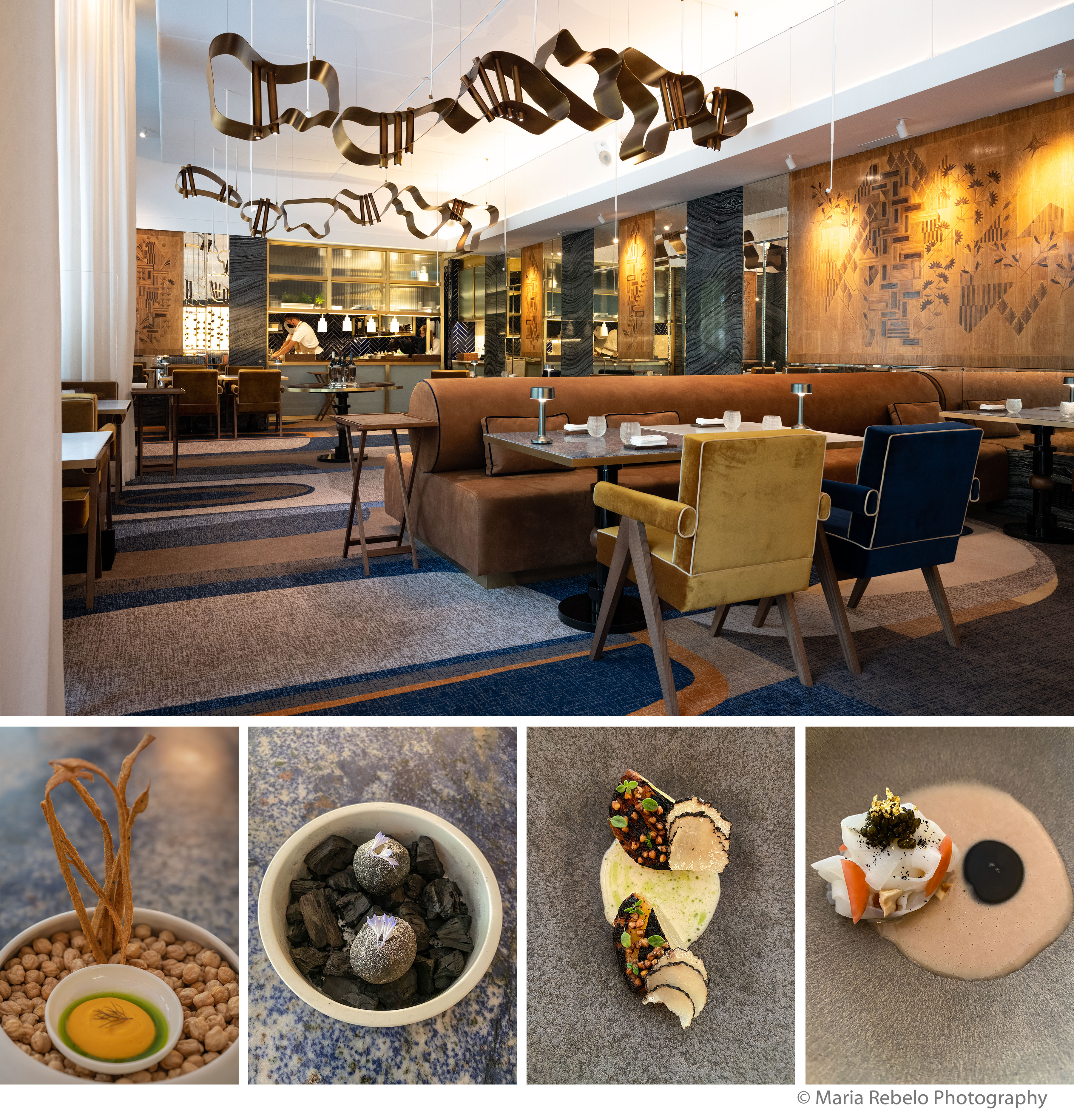
It is difficult to create a new space in the Four Seasons Ritz. Inaugurated in 1959, the building’s modernist geometry serves as the canvas for a stunning art collection that includes works by the great painter Almada Negreiros and many of his contemporaries. Cura’s dining room, decorated by architect Miguel Câncio Martins, integrates well the old and the new. A large metal sculpture hanging from the ceiling harmonizes with the wood panels designed by Fred Kradolfer, a brilliant Swiss graphic design artist who lived in Lisbon. The colorful chairs reference the playful use of color popular in the 1950s.
While we were chatting with Mário about wine, a plate arrived with long strips made from chickpeas and pumpkin sauce seasoned with marjoram oil. This simple start bears the hallmark of Pedro’s cooking: the constant search for new harmonies and textures that enchant the palate.
After much pondering, Mário opened a bottle of white Tourónio from Quinta de Tourais in the Douro valley. It is a bright white wine that kept pace with the festival of culinary sensations that followed.
Black pastries filed with veal from the Minho region made a striking appearance on our stone table top. They were pitch black on the outside and succulent on the inside.
A translucent tagliatelle dressed with a hazelnuts and bergamot sauce came topped with a dollop of caviar. We recognized this classic trompe l’oeil preparation from Pedro’s repertoire– the “tagliatelle” is made from thin strips of fresh squid.
Slices of breads made from ancient grains were served with butter from the Azores’ Flores island and the magnificent spicy olive oil produced by Pedro’s family. There was also a delicious brioche and some breadsticks made with cheese from the Azores.
Then, a fillet of red snapper came floating on a sauce made from the liver of the fish and perfumed with parsley and saffron. Next, a succulent piece of black pork from Alentejo was accompanied with a beet purée, orange, and foie gras. The dessert featured an original, delightful combination of Jerusalem artichokes, cocoa and arabica coffee.
We were enjoying one more glass of wine when three little “mignardises” arrived. Mário recommended that we try them in the order, from left to right. The first was made from Belgium biscuit, artichoke and black garlic. The second, made with egg and honey, was an homage to the recipes that came from Portuguese convents. The third, a sphere made from raspberry and lavender, was crispy on the outside and liquid on the inside. It was a final sleight of hand in a dinner full of culinary magic.
Cura is located at Rua Rodrigo da Fonseca 88 in Lisboa. Click here for the restaurant’s website.
As soon as we exited the elevator, on the 5th floor of Hotel Bairro Alto, we walked to the terrace, attracted by the generous view of the Tagus river. Our waiter suggested that we stay outside and enjoy a few appetizers before going into the living room. And so we sat down and watched the Lisbon skies change into their evening colors.
The restaurant, called BAHR, offers a menu designed by Nuno Mendes, a Portuguese chef who has earned many accolades in London. It is hard to choose–everything sounds great–so it took us some time to place our order.
After a few minutes wait, a savory aroma heralded the arrival of a plate with rissois de berbigão, fried turnovers with a cockle filling and a hint of curry. We noticed that they were breaded with Japanese panko instead of with traditional bread crumbs. But we were still surprised by the first bite. It was perfect: the crispness of the exterior contrasted with the moist flavorful interior creating an harmonious combination of texture, taste and temperature.
A plate of percebes (goose barnacles) served on toast arrived next. The percebes looked normal but their smokey taste accentuated by a buttery sauce was exceptional. They were followed by roasted carrots dressed with a mouthwatering citrus sauce.
The temperature was dropping, so we retired to the living room. Our plates were served with a vegetarian version of a Lisbon classic: codfish Brás style. The codfish was replaced by a roasted cauliflower accompanied by a sauce made from broccoli cooked in a salt mass, spinach and parsley. Seldom has a cauliflower shined so brightly. On the table, there were sides of potato chips cut razor thin with a Japanese mandoline.
Next, we tried codfish confit with açorda (a bread-based preparation) from Alentejo. The codfish was superb. When we asked what made it so special sous-chef Nuno Dinis came to the table to explain that we were enjoying skrei, a codfish from Norway that is only available between January and April. It arrives fresh at the restaurant where it is cured with sugar and salt to accentuate the taste of the sea. The codfish was dressed with a savory yellow sauce made with a fricassé of sames (the stomach of the codfish) and a broth made from bones and gelatin.
The meat entrée was black pork with two sauces, one made from clams the other from spinach, parsley and coriander. It is a happy marriage of the flavors of two Portuguese classics: clams Bulhão pato and pork with clams.
The meal ended with queijadas that tasted of lemon and salt. We can’t wait to return to BAHR to enjoy this food that so perfectly combines simplicity, tradition, and refinement.
BAHR is at Hotel Bairro Alto, Praça Luís de Camões nº 2, in Lisbon. Click here for the restaurant’s website.
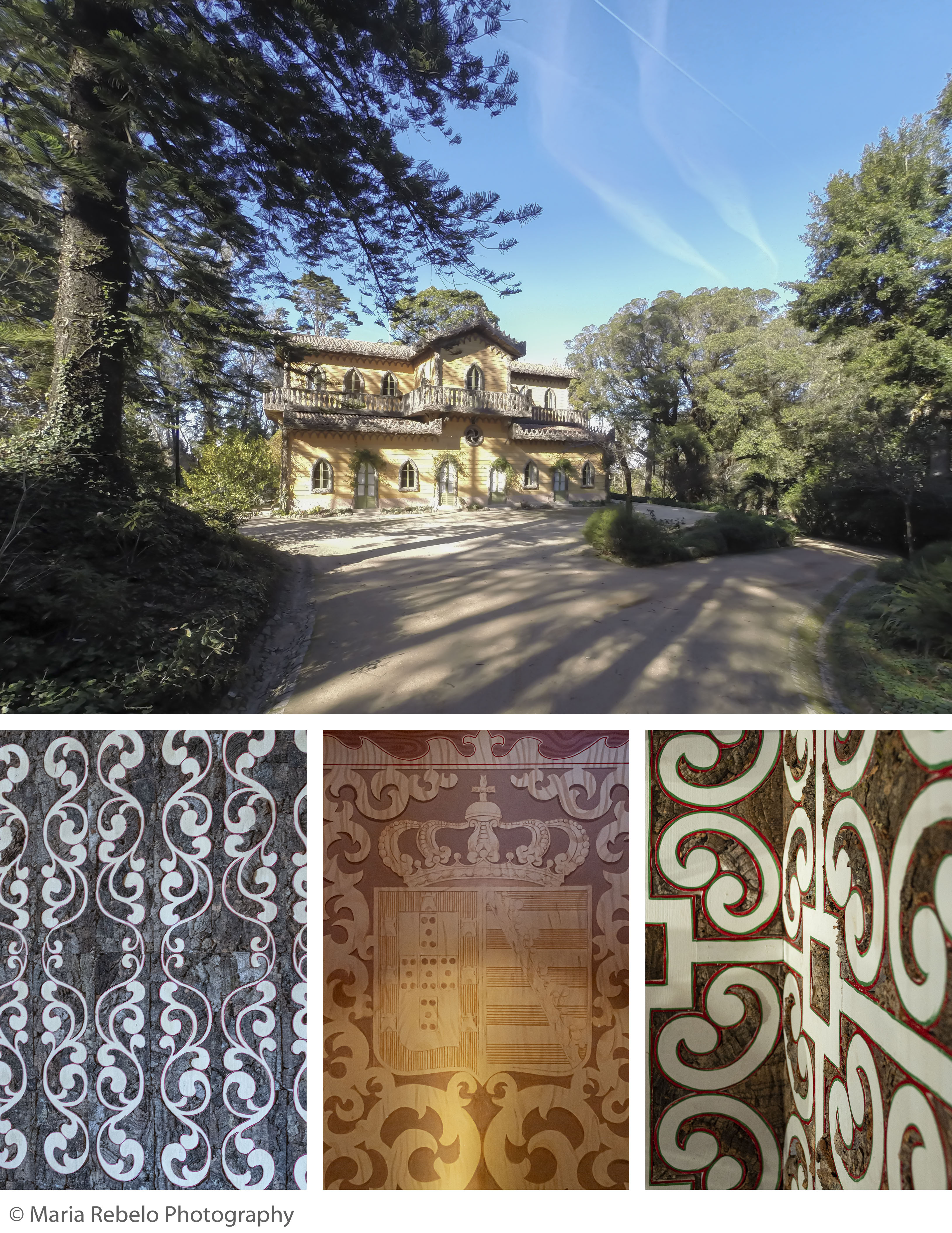
We stood outside the charming house hesitating. Should we go in? What gives us the right to see this royal love nest? But it was a cold, windy morning. With this feeble excuse, we stepped inside the cozy chalet where king Ferdinand II lived with his second wife, the opera singer Elise Hensler.
The king’s first wife was queen Dona Maria II. When they married, he was a dashing young man with an impressive mustache and a regal name: prince Ferdinand Georg August of Saxe-Coburg and Gotha. The couple enjoyed a blissful marriage. Together, they had 11 children.
Ferdinand avoided interfering in state affairs, devoting his time to various artistic interests. His most important project was planning and building the fairy-tale Pena Palace and turning the barren surroundings into the lush landscape we enjoy today. When the queen died of childbirth in 1853, Ferdinand was devastated. He was offered the throne of Spain but preferred to stay in Portugal, living in peace in his beloved Pena Palace.
A night out at the opera in 1860 changed his life. The king saw Elise Hensler on stage at the São Carlos Opera in Lisbon and fell in love. They started a passionate love affair that culminated with their marriage in 1869. Elise received the title of the Countess of Edla.
The prince and the countess built this lovely chalet on the grounds of the Pena palace. Inspired by alpine architecture, it is meticulously decorated with references to nature. Cork is used as both insulation and decoration. The exterior walls are painted to simulate wood.
The Pena and National Sintra palaces project power and wealth. At the chalet everything is intimate and private, the power of the state surrendered to the power of love.
Click here to book a visit to the chalet of the Countess of Edla.
One of our favorite destinations in the Douro valley is a charming village called Ervedosa do Douro. Its main attraction is Toca da Raposa, a restaurant that prepares the traditional food served in local aristocratic homes.
The ingredients are immaculate and the cooking is sublime. The preparations look deceptively simple, but they require knowledge of all the small details that make the difference between good and exceptional.
Dona Graça, a cook who worked for Douro families before opening Toca da Raposa with her children, has a large repertoire of recipes from the time when food was prepared in wood-fired ovens and cast-iron pans. We’ve been trying to convince her to collect these recipes in a cookbook. But codifying all her experience is a huge task and she has no time–the restaurant is always full.
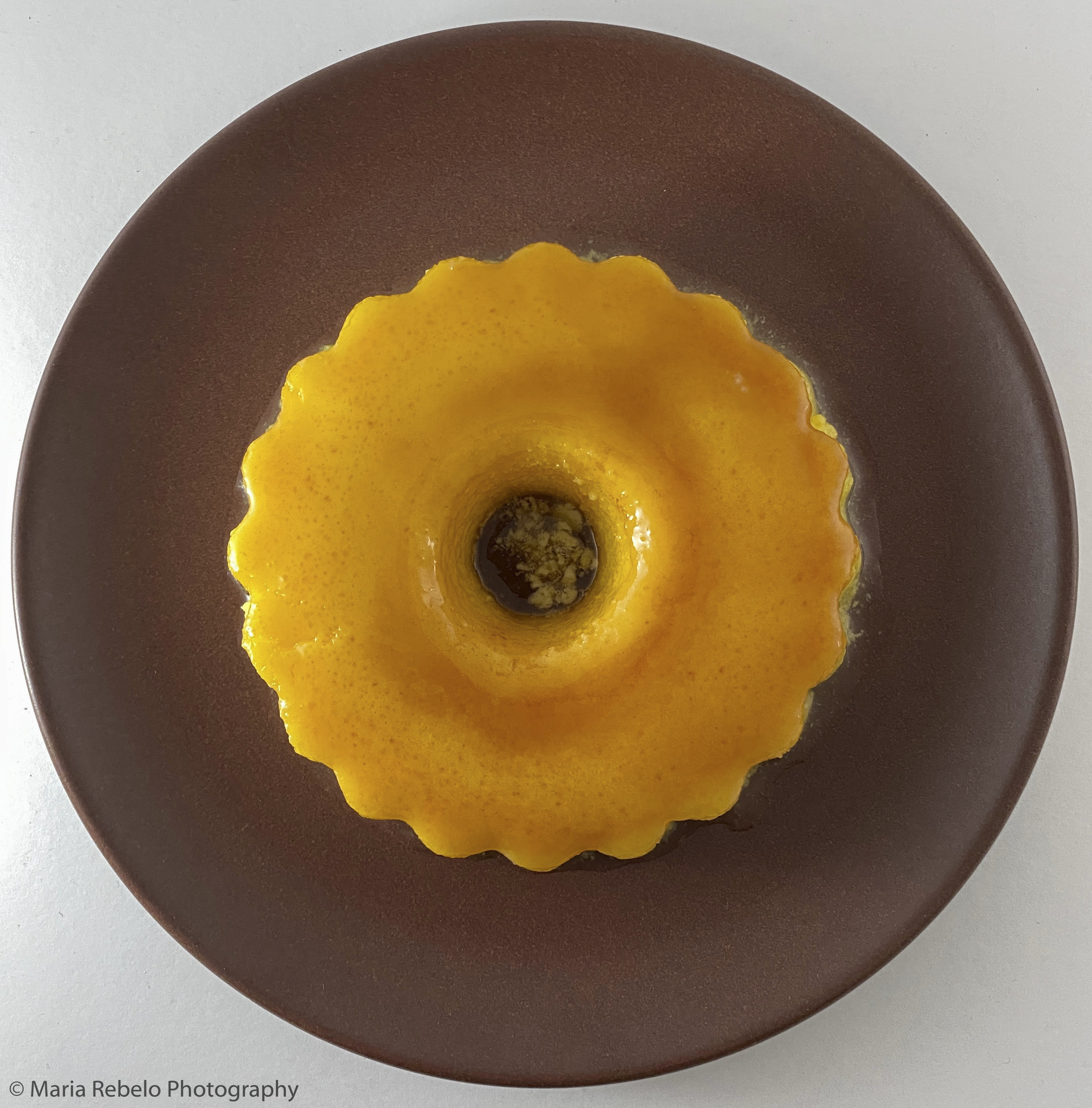
Recently, Dona Graça started writing down some recipes. She shared one of these recipes with us. It is called Pudim de Laranja Descansado (rested orange pudding) because it takes time to prepare. You should try it only when you’re not in a hurry. We hope this recipe is the first of many pages that preserve Dona Graças’s culinary artistry.
Rested Orange Pudding
Pudding ingredients
7 eggs
300 grams of sugar
250 ml of freshly squeezed orange juice
Port-wine caramel
150 grams of sugar
50 ml of port wine
Mix the pudding ingredients at night and let the mixture rest. Cook the pudding in the morning.
To prepare the mixture, combine the eggs and sugar in a mixer. Three seconds after you start the mixer at medium speed, slowly pour the orange juice into the mixture. Once all the juice has been added, keep the mixer on for an extra 30 seconds or so, until you see foam made from small bubbles. Stop the mixer and use a wooden spoon to the pudding ingredients with a movement from top to bottom until you no longer feel any sugar at the bottom of the bowl.
Once the mixture has rested, make the port-wine caramel and use it to coat the pudding mold. Pour the mixture into the mold and place the mold inside a pan filled with two fingers of water surrounding the pan. Cook on the stove on a small burner at medium heat for 40 minutes. Take it out of the mold and let it cool. Enjoy!
Toca da Raposa is located at Rua da Praça in Ervedosa do Douro, tel. 254 423 466.
We can take the winding road that leads to the elegant bridge designed by Gustav Eiffel. Or ride the old train that stops at the local station, decorated with bright blue tiles. Our preference is to arrive by boat, carried gently by the river. But no matter how we get to Pinhão, a quaint town at the center of the Douro valley, we always feel like staying.
The perfect place to stay is a sprawling yellow edifice on the bank of the river. It was once a warehouse that stored the precious brandies used to produce port wine. In 1997, the building was converted into the Vintage House hotel.
What makes the Vintage House unique are the generous views of the Douro. We can wake up, open the window and sense the mood of the river. Everyday is different. Sometimes, the Douro dresses in festive blues and greens. Other times, it chooses yellows and browns, to give the small tributary that named the town (the Pinhão river) a chance to shine.
The roads of the Douro valley are narrow, forcing us to drive slowly and admire the glorious landscape. There is so much to see that we crisscross the valley many times. At the end of the day, we are always tired. And we love falling asleep in the Vintage House, knowing that in the morning the river will be there to greet the start of another memorable day in the Douro valley.
The Vintage house is located at Rua António Manuel Saraiva, 5085-034, Pinhão, Douro, Portugal. Click here for the hotel’s website.
Oh, how wonderful it is to spend a lazy Saturday in Lisbon! We started late, when the sun was already shinning with conviction, and drove to Vicentinas, an old tea shop in Rua de São Bento. A gentle push on the rickety door and we were greeted by a sweet aroma that invited us to enter.
We sat at a table, enjoying a cup of strong Earl Grey tea, while waiting with undisguised impatience for our scones to arrive. The minutes passed by slowly, but the wait was well worth it. The freshly baked scones were perfect; crispy on the outside and buttery inside.
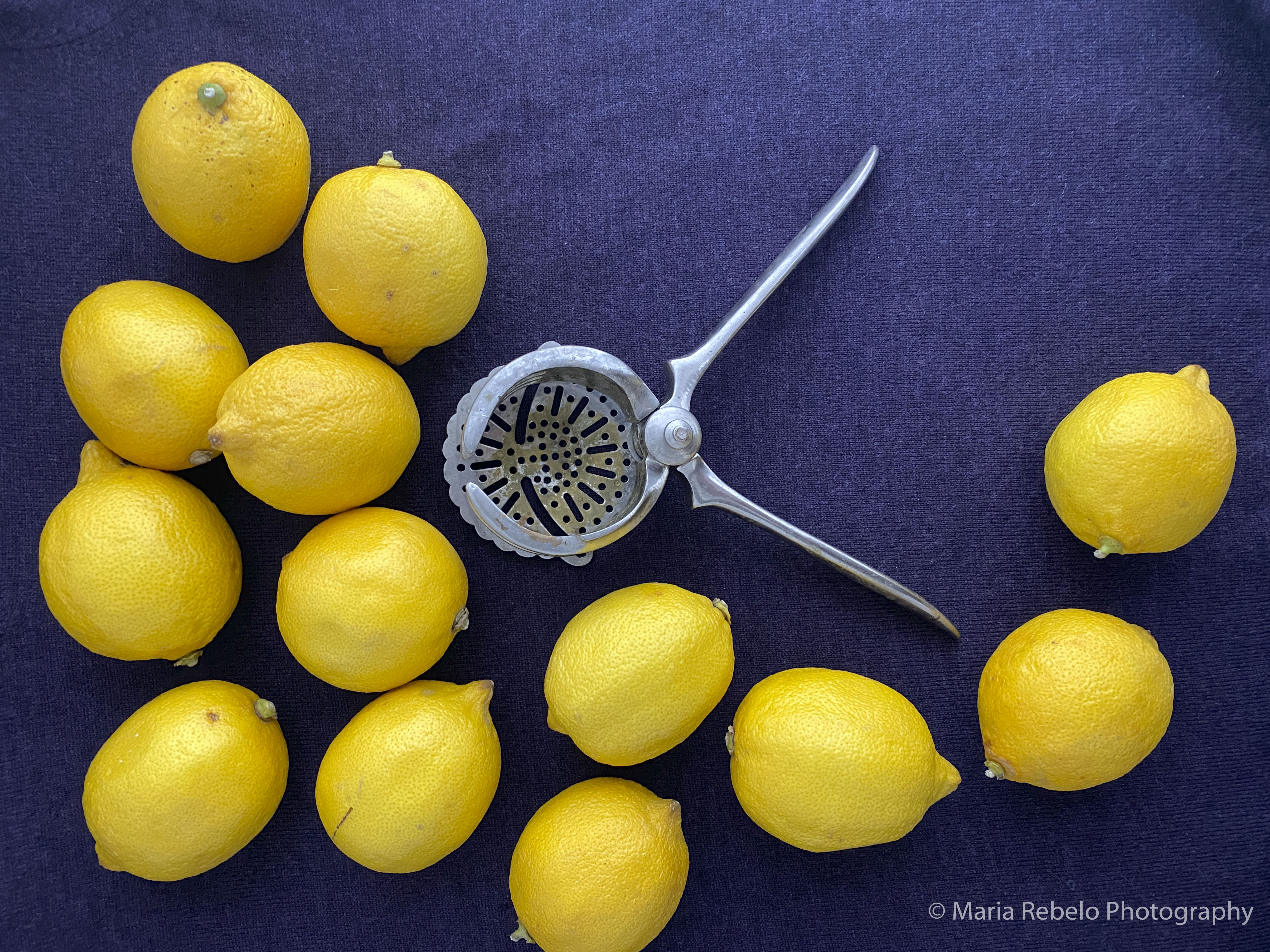
It took all our willpower to resist ordering more scones. Feeling virtuous, we walked down Rua de São Bento to visit the numerous antique stores located in this neighborhood. The store owners are always there, eager to show their collections of objects from times gone by. There is always something interesting. And occasionally there is something exquisite, like a pair of elegant lemon squeezers.
In the old days, luxury restaurants in Lisbon, like Tavares and Aviz, had a small tray of lemon squeezers prepared with fresh lemon halves wrapped in cheese cloth tied with a yellow bow. The waiters used them to season dishes by table side, turning the simple act of squeezing a lemon into a magical moment.
We walked home with this precious gift from the past, content with another lazy Saturday spent in Lisbon.





 Salt of Portugal