Monsaraz, ink on paper, Rui Barreiros Duarte, 2014.
Monsaraz is a medieval village perched on a hill in Alentejo. Squint at the landscape and you see an abstract painting of white and pink shapes. Open your eyes and you see a world of peace and tranquility. Faint are the echoes of the battle in which Geraldo Sem Pavor (Gerald the fearless) first conquered the town from the moors in the 12th century. Gone are the busy years, early in the 14th century, when king D. Dinis built a castle to ensure that this strategic hill would forever remain Portuguese. The soldiers who kept watch from the castle towers were replaced by photographers who shoot with their cameras the majestic view.
Vinicius de Moraes, the Brazilian poet who wrote the lyrics of Girl from Ipanema, recorded his feelings about this Alentejo village: “Thank you, Monsaraz, but I do not want to see you ever again because, if I do, I will stay forever inside your white walls amidst your men and women with eyes full of honesty.”
We were invited to meet two artists in a studio on the outskirts of Lisbon. We drove through the city until we turned onto a gravel road surrounded by lush vegetation. An old gate with an inscription that read Quinta de Mil Fontes (Thousand fountains farmstead) opened and we saw an ancient house designed in a mixture of styles, like an architectural compendium built out of stone.
Fountains and brooks whispered all around us as we walked to the art studio adjacent to the house. It is spacious, filled with light, decorated with a large Indian doorway and exotic furniture; the kind of place where Matisse would probably have felt at home.
The two artists were there to greet us. Graça Pereira Coutinho speaks with a contagious enthusiasm. Beatriz Horta Correia has a quiet intensity. They told us that in 2010 the S. Bernardo ceramics factory in Alcobaça was about to close. The owner, Manuel da Bernarda, decided to let artists use the factory while it was still open. So Beatriz, Graça, and four other artists began to spend their weekends at the factory. They would work late into the night, mesmerized by the power of clay, water and fire. Drawing on the knowledge of Manuel da Bernarda, they began to do highly experimental work, pushing the limits of the ceramics technology. They mixed porcelain paste with paper, cloth, and other materials. They cooked the pieces at temperatures so high they almost melted.
The results are poetic, ethereal works with edges so thin, so full of light they do not seem to belong in this world. These pieces found success and acclaim in the world market. As a result, the factory remains open, producing ceramic art instead of tableware.
Graça and Beatriz accomplish a remarkable feat with their ceramic work: they meld the heaviness of matter with the lightness of spirit.
Click here to see Graça Pereira Coutinho’s web site and here to see Beatriz Horta Correia’s website.
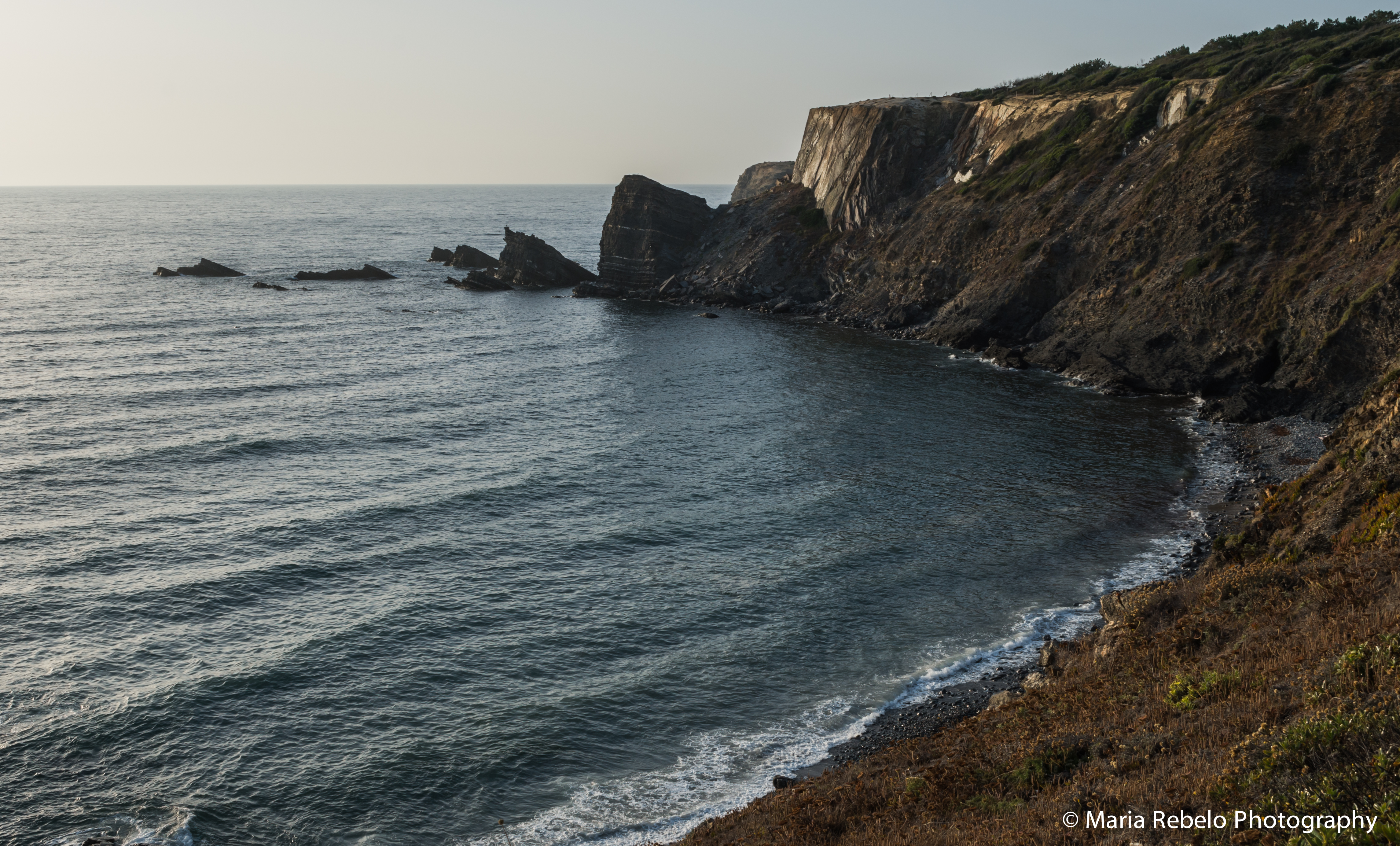
The great fado singer Amalia Rodrigues built a beautiful house on a cliff with an expansive view of the ocean. The adjacent beach is called Amalia in her honor.
To visit this magical place, you need to drive to Brejão, a village on the southern tip of the Alentejo coast. Stop in one of the coffee shops and ask for directions to the beach (you have to follow a hidden path alongside a small brook).
This secluded beach is a perfect setting for declarations of love. The spirit of the place will inspire you. But if words fail you, you can always say: this beach was named after Amalia, a singer who sang about the joy of love and the pain of loss. I brought you here because I love you and I never want to lose you.
Few people know that you can rent Amalia’s house by emailing the Foundation Amalia Rodrigues (secretariado@amaliarodrigues.pt). But now you do!
The dining room was full but Claudia Santiago, the chef at Flor da Rosa, kept her cool. She runs the kitchen like an orchestra conductor, making sure that the rhythm is just right and that all the subtleties of the cuisine of Alentejo are reflected on the plate.
After the lunch service, we told Claudia how much we liked her cooking and asked whether she had any culinary secrets. She confessed that: “we have an amazing ingredient which are the sausages made from Alentejo black pork; everything they touch turns to culinary gold.”
We asked Claudia whether she would share a recipe with our readers. She described several classic desserts but they were all too complex. So, we opted for the marinated rabbit recipe which is simple but delicious. Here it is.
Claudia Santiago’s marinated rabbit (“coelho de escabeche”)
Cook the rabbit in a rich bouillon made with parsley, mint, cloves, and carrots. Then, grill it over charcoal for a few minutes to intensify the flavor of the meat. Shred the meat. To make the marinade, fry minced onion and garlic with a bay leaf in olive oil. Add vinegar. Combine with the rabbit and let it marinade over night. Decorate with peppers and carrots and serve.
Enjoying this dish accompanied by Alentejo wine in the elegant dining room of Flor de Rosa, made us feel like lords of the manor.
Click here for the Pousadas’ website and here for more photos of Flor da Rosa.
On the way to Flor da Rosa, a medieval castle converted into an historical hotel, we traveled through small villages lost in time and fields of cork and olive trees. Nothing prepared us for the sight of the castle standing proudly on the Alentejo plain.
The hotel has 24 rooms with beautiful views of the countryside and a swimming pool that overlooks the castle. The space is designed to offer guests great privacy. And the staff is so attentive that they made us feel like royalty.
The next morning, we woke up in luxurious silence, far from the cacophony of modern life. We relaxed by the pool until it was time for lunch. We then headed to the restaurant where we tried some wonderful renditions of the local gastronomy: purslane soup, fish in coriander sauce, and marinated rabbit. These courses were followed by cheese from Nisa and Serpa. Our taste buds were celebrating these amazing gifts from the shepherds of Alentejo when a sampling of desserts arrived. They had uncommon names like “sericaia” and “encharcada,” and rightly so for everyday words cannot begin to describe these sweet creations.
We had a great time sightseeing around Crato, the village where the hotel is located. In the late afternoon, the church bell reminded us that the sun would soon retire and that it was time to return to the castle. As we crossed the vaulted arches, we heard birds singing. These are the same sounds that were heard in the castle during the middle ages. Flor da Rosa is a precious time capsule that preserves the beauty of an age gone by.
Click here for the Pousadas’ website and here for more photos of Flor da Rosa.
Alcobaça, ink on paper, Rui Barreiros Duarte, 2014.
To understand Portugal, you have to visit Alcobaça. It was here that the first king of Portugal, Dom Afonso Henriques, founded a monastery in thanksgiving for his conquests. He laid the first stone in 1148 on a beautiful valley irrigated by two rivers, Alcoa and Baça.
Alcobaça became a center of agricultural research with a vast library that included volumes printed by Gutenberg. The monastery served as a luxury hotel for the royal family and their guests, but it also baked bread to feed the poor. The kitchen of the monastery was famous throughout the kingdom. Water from the river Alcoa runs through the kitchen, providing water for cleaning and cooking.
Built in an early gothic style, the monastery was expanded and renovated throughout the centuries. King Dom Pedro erected sumptuous tombs to celebrate his eternal love for Inês de Castro. Henry the Navigator, who was the abbot of Alcobaça, built a palace inside the abbey. Every stone of the Alcobaça monastery is a page of the history of Portugal.
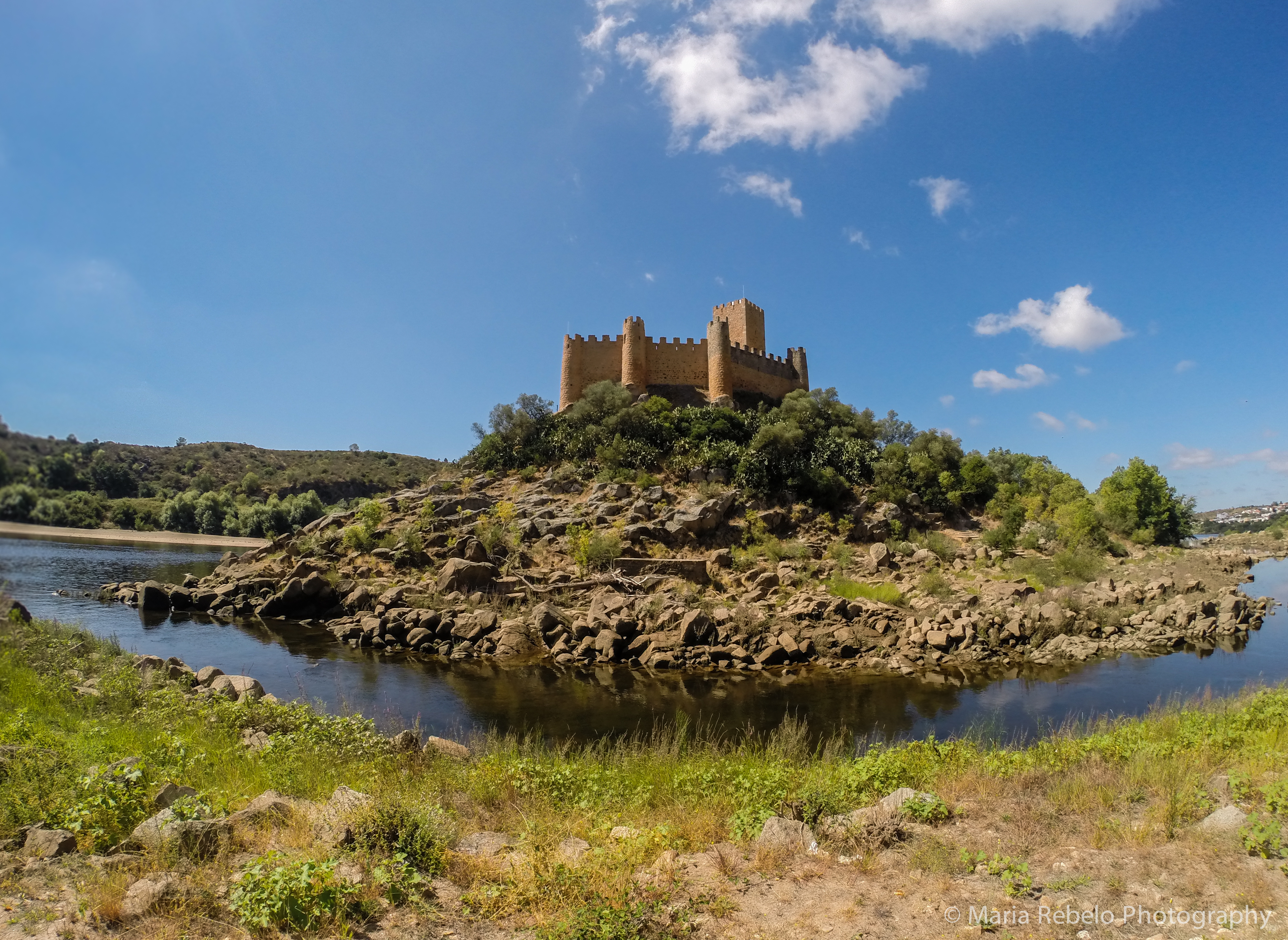
The castle of Almourol was built by the Romans and rebuilt in the 12 century by the Knights Templars. Situated on a small island in the middle of the Tagus river, it was part of the defensive structure set up by Dom Afonso Henriques, the first king of Portugal. The castle quickly lost its strategic importance but retained its romantic appeal. At Almourol time stands still so we can get a glimpse of the Middle Ages.
It is tempting to sit on the river bank, enjoying the view of the castle, dreaming about chivalry and courtly love. But don’t miss the chance to cross the river by boat to visit the castle. You might arrive in time to free a beautiful princess or slay a nefarious dragon.
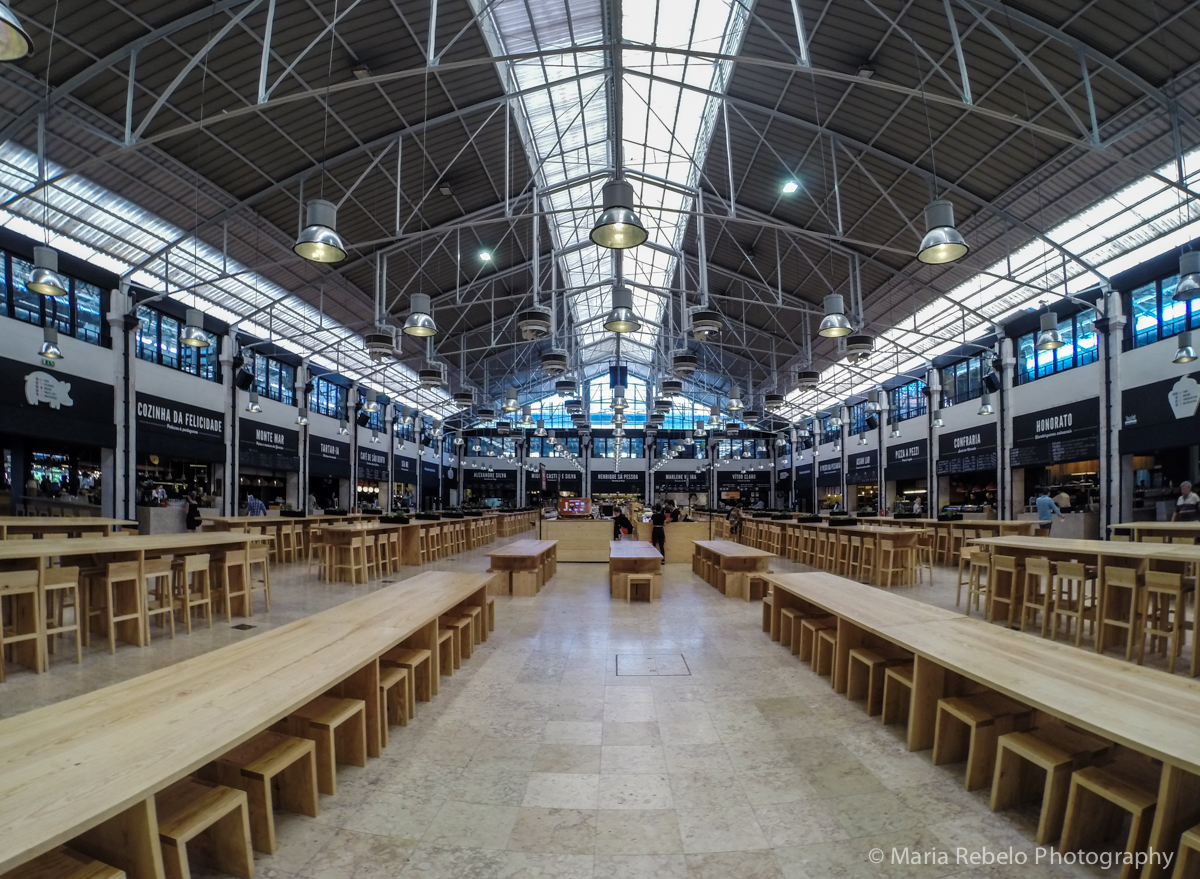
We dreamed we had died and gone to heaven. Paradise, it seemed, was a vast pavilion, sparsely furnished with long communal tables and bathed in a soft white light. To our astonishment, the air was perfumed not with incense but with the unmistakable aromas of Portuguese cooking: parsley and coriander, warm olive oil and garlic, salt cod, and cinnamon. All around us, great chefs beckoned, urging us to taste their creations. We sampled a delicate pastel de massa tenra by Miguel Castro e Silva, slow-roasted pork by Henrique Sá Pessoa, Marlene Vieira’s squid “pirolitos,” and a deeply comforting tomato soup by Alexandre Silva. Each dish felt like a small revelation.
When we woke up, we realized we had been dreaming about a real place. The magazine Time Out Lisbon transformed part of Mercado da Ribeira, one of the city’s historic food markets, into a hall where many of Lisbon’s finest restaurants maintain small outposts. For a modest sum, you can assemble a feast of your choosing, pair it with an excellent Portuguese wine, and dine at one of the long shared tables. It is, in its own unpretentious way, a little taste of heaven.
First-time visitors to Lisbon are often surprised by its beauty. But, when you live in the capital city, you begin to take this beauty for granted and look around for something new. You don’t have to look far. Drive a few miles down the coast and you’ll find secluded beaches that will tempt your heart.
One of these beaches is Praia do Abano, on the coast of Cascais. Its cliff top offers breathtaking views of the Sintra mountain and the endless sea. Sheltered from the wind, Abano is the perfect place to enjoy a day in the sun.
There is a rustic restaurant on top of the cliff that you won’t find in tourist guides. It serves simple, wonderful food, such as amazing clams with irresistible country bread, delicious rabbit cooked in wine, and flavorful shrimp “açorda.” It is an unforgettable experience to dine there while the sun melts and the moon comes out to gild the sea with silver light.
An afternoon at Abano feels like a vacation. You return to Lisbon relaxed and content and, when you arrive at the capital, you are surprised by its beauty all over again.
The Abano beach is 21 miles from Lisbon. The telephone number of Restaurant Abano is 214870342.
When we sat down for dinner in the beautiful esplanade of the Arraiolos Pousada, we expected good food and attentive service. We got much more than that. We were served a series of delicious dishes that harmonized perfectly with Alentejo wine and made us feel we were at the right place, at the right time.
The dinner started with two soups, a Summer cucumber soup, followed by a tomato soup with quail egg. We then had “migas” (an Alentejo specialty made with bread) with wild asparagus and lamb grilled with rosemary. The grand finale was a sampling of traditional convent desserts updated with great refinement.
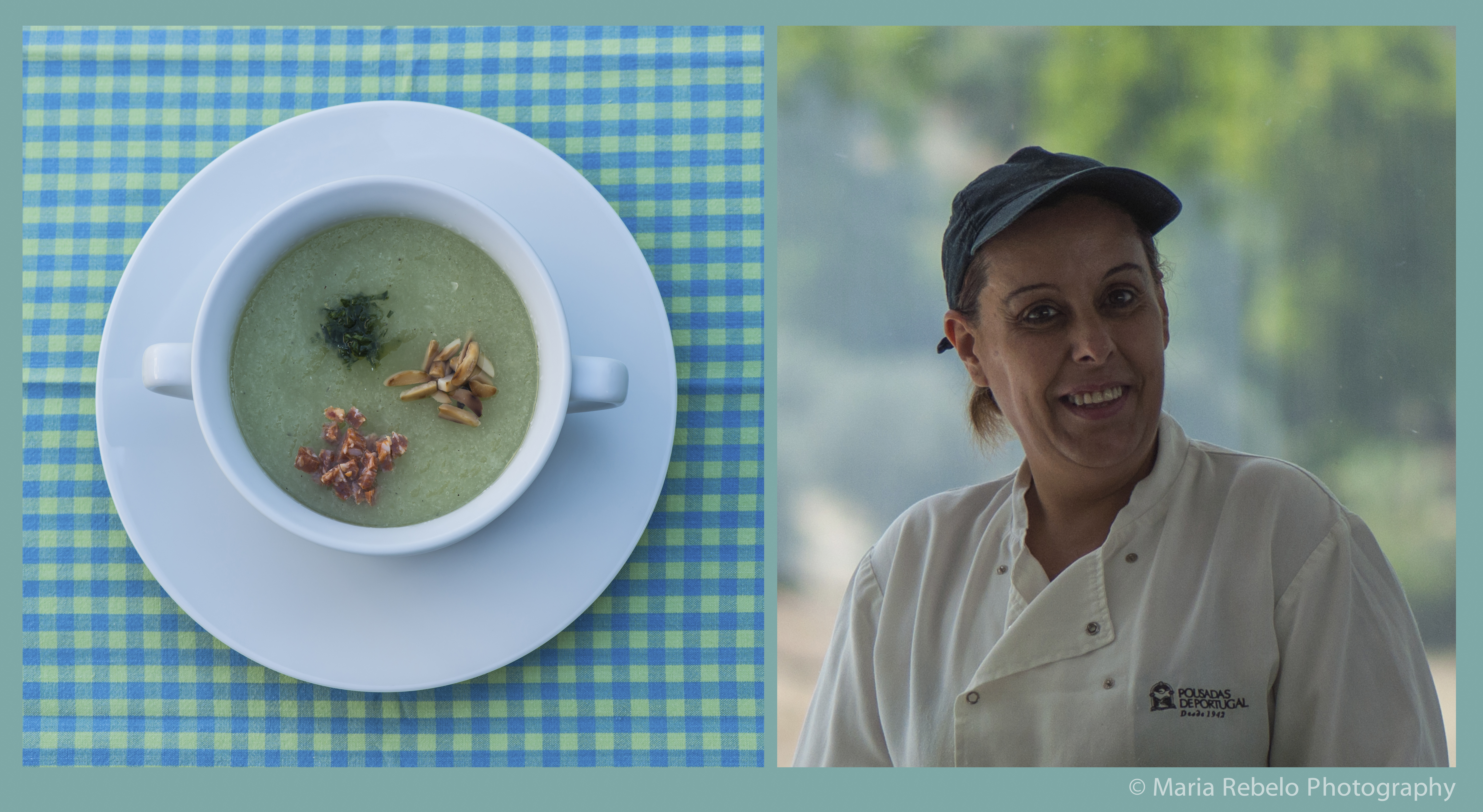
We congratulated the chef, Elizabete Velez, who told us that she learned to cook with her mother and grandmother in a small village in Alentejo. She offered to give us the recipe for her delicious Summer cucumber soup because it is very easy to make. Here it is.
Elizabete Velez’s Summer cucumber soup
Get the very best cucumbers you can find. Peel them (this step is key because the peel is very bitter) and remove their seeds. Dice the cucumbers, season them carefully with salt, pepper, and great olive oil. Puree the mixture in a blender. Pour into small bowls, placing one or two ice cubes in each bowl. Garnish with toasted slivered almonds, small strips of cucumber peel, and Portuguese sausage (preferably from Alentejo!).
Imagine eating this soup in a warm Summer evening, as the sun sets over a grove of olive trees and the stars wait their turn to shine on the Arraiolos castle. It’s magical!
Click here for the Pousadas’ website and here for more photos of the Arraiolos Pousada.





 Salt of Portugal