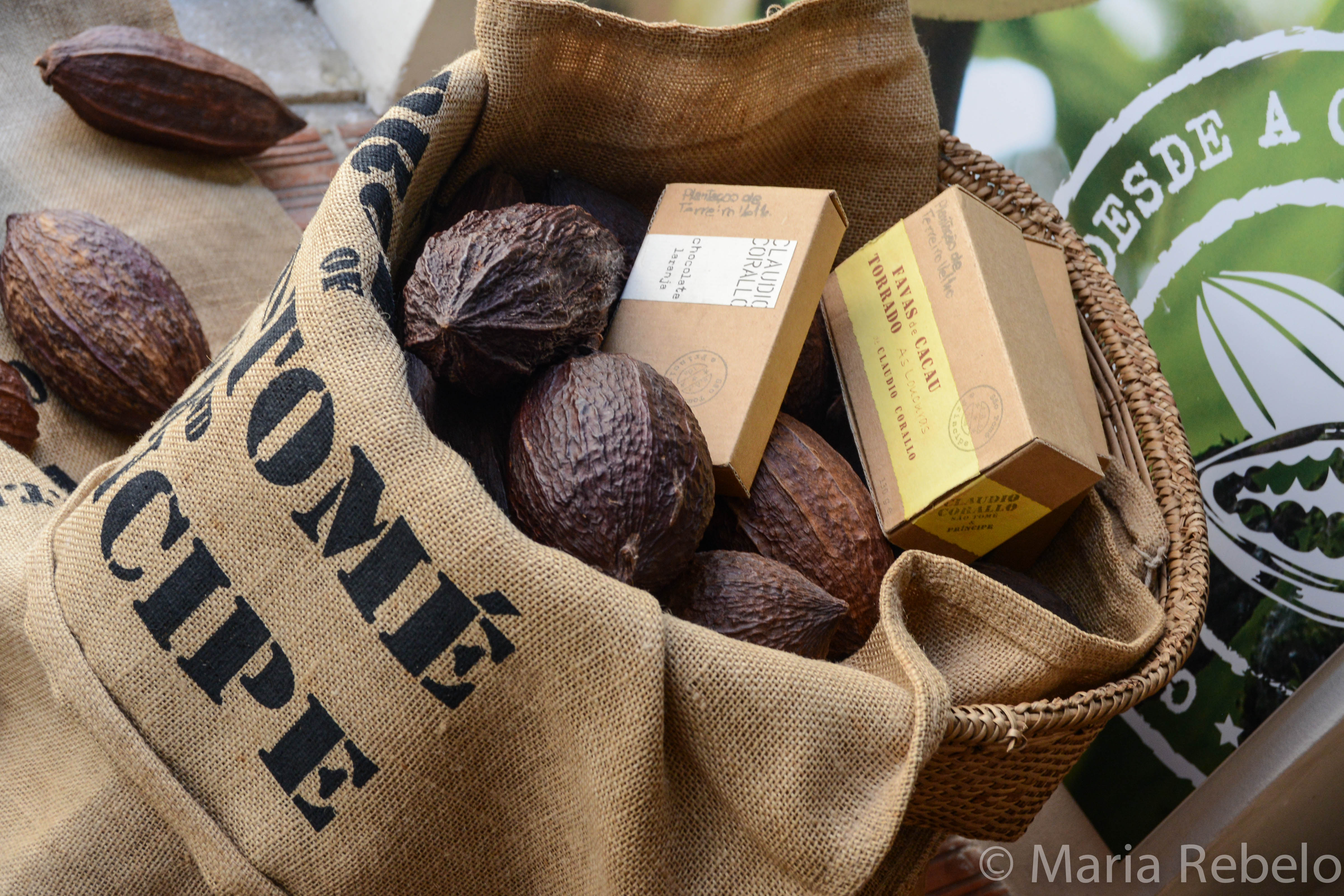
Pure chocolate

ClaudioCoralo

Claudio Corallo is an Italian who, in the 1970s, moved to the former Portuguese islands of São Tomé and Principe to make chocolate. He uses the original cocoa plants brought from South America which have low yields but produce perfect beans. Corallo roasts these beans with great care, so they never burn. He then breaks them by hand to remove the germ that makes other chocolates taste bitter. The result is pure chocolate that tastes delicious without the addition of milk or vanilla.

We are lucky that Claudio married Bettina, a Portuguese because their sons came back to Lisbon. They opened a coffee and chocolate shop that serves as the unofficial meeting point for all the gourmets in the city.

The bonbons are amazing, the tablets unforgettable, the sorbet indescribable. They make us realize that all the other chocolates were youthful indiscretions, passing flings. Corallo is the one.

Corallo’s store is in the Principe Real neighborhood, on Rua Escola Politécnica, 4, tel. 21 386 2158.

Madeira wine

MadeiraMadeira is a fortified wine produced in the island of Madeira. Brandy is added during fermentation to kill the yeast and prevent it from converting all the sugar into alcohol. The result is a sweet wine that can endure the changes in temperature that used to occur during shipping.

George Washington and Thomas Jefferson kept their cellars well stocked with Madeira. So did John Adams, who said that a few glasses of Madeira made anyone feel capable of being president. Perhaps for this reason, both the signing of the American Constitution and the Declaration of Independence were celebrated with Madeira.

There are several different types of Madeira, depending on the varietals used in their production. The most popular varietal, Malvasia or Malmsey, produces a sweet, smooth wine. Sercial makes an excellent dry aperitif. Verdelho makes an elegant semi-dry wine. Bual produces a dark amber semi-sweet wine.

They’re all irresistible, which is why, in Shakespeare’s play Henry VI, Falstaff is accused of selling his soul to the devil for a glass of Madeira.

Cherries are in season!

DSC_9106FFarmer markets are bursting with cherries! They all taste great, but the very best cherries in Portugal come from Fundão, near the Estrela mountain. This region has unique conditions that produce exceptional cherries: granitic soils that are sheltered from the winds and cold days followed by temperate Springs.

Fundão cherries are everywhere in Lisbon; in the menus of the best restaurants and in vans stationed throughout the city. Don’t miss this chance to try Fundão’s red gold!

The most beautiful esplanade in Lisbon

DSC_9092F

Ribeira das Naus is the place where the caravels were once built and repaired. These ships sailed as far as Goa and Cochim in search of cinnamon and other spices. Lisbon has recently transformed the Ribeira das Naus site into a wonderful promenade that extends from Terreiro do Paço to Cais do Sodré.

The part of the promenade close to Terreiro do Paço, has a beautiful esplanade. Here, you can drink a cup of coffee and eat a “pastel de nata” while enjoying the wonderful river view. Don’t forget to ask for a sprinkle of cinnamon on your pastel, for old time sake.

Summer feasts

CavalhadasIn the 17th century, the Viseu region depended on the waters of the Pavia river to irrigate the farmland and power the watermills. In 1652, after a terrible drought, farmers built dykes that reduced the river flow to a trickle. As a result, the watermills in the village of Vildemoinhos stopped working. The millers clashed with the farmers over water rights until, in 1653, the royal court resolved the case with a verdict favorable to the millers.

To show their appreciation for this life-saving decision, the millers organized a cavalcade called Cavalhada through the city of Viseu. The Cavalhada was so successful that it became an annual event. It is held on June 24 (St. John’s day). Farmers sell pots of wild basil and children feast on Viriatos, a local sweet. There are marching bands, traditional dancing troupes, groups of drummers, and giant paper-machê dolls.

This Cavalhada is one of the many Summer feasts organized everywhere across the country. If you see a sign for Festa Popular (popular feast), be sure to stop by. They’re always fun events. And they celebrate the ancient traditions that make Portugal more than just a pretty landscape.

The best view in Lisbon

Lisboa_505F

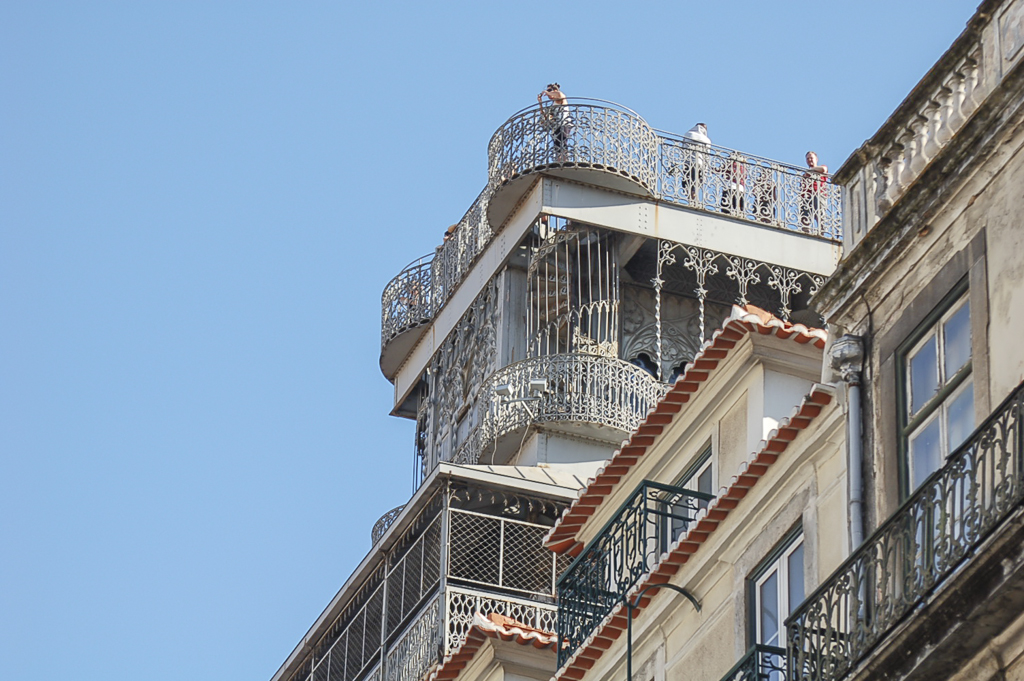
The Portuguese call locations with great views “miradoiros,” which means golden sights. Lisbon is blessed with many miradoiros, but none is as exciting as the top of the Santa Justa elevator. The elevator was built in the beginning of the 20th century by Raoul Mesnier du Ponsard, a Portuguese engineer of French origin. It is the kind of futuristic building that belongs in a Jules Vernes novel.

We remember entering the elevator for the first time and imagining the view during the slow ascent. When we reached the top, we realized how limited our imagination had been. We saw Lisbon in all its glory: the Tagus river, St. Jorge’s castle, Rossio, Terreiro do Paço. It was simply unforgettable!

Sweet indecisions

Every time we enter a Portuguese café, we have to decide between a large and a small “pastel de nata.” It’s not an easy choice.

Large pasteis have more filling than crust, so they leave a pronounced sweet lemony aftertaste. Eating them requires our full attention. Where do we start? Where should we place our next bite? How should we hold the pastry so we lose none of its precious filling? These pressing issues empty our mind of its usual chatter and we feel the inner peace of a yoga master.

Small pasteis de nata are crunchier. And you can do magic with them. Hold one in your hand and, when no one is looking, pop it into your mouth. Now you see it, now you don’t; all that’s left is an irrepressible smile.

So, what’s the right choice? Magic or inner peace? A crunchy bite or a lemony aftertaste? More research is required before we can render a final verdict.

An ancient esplanade

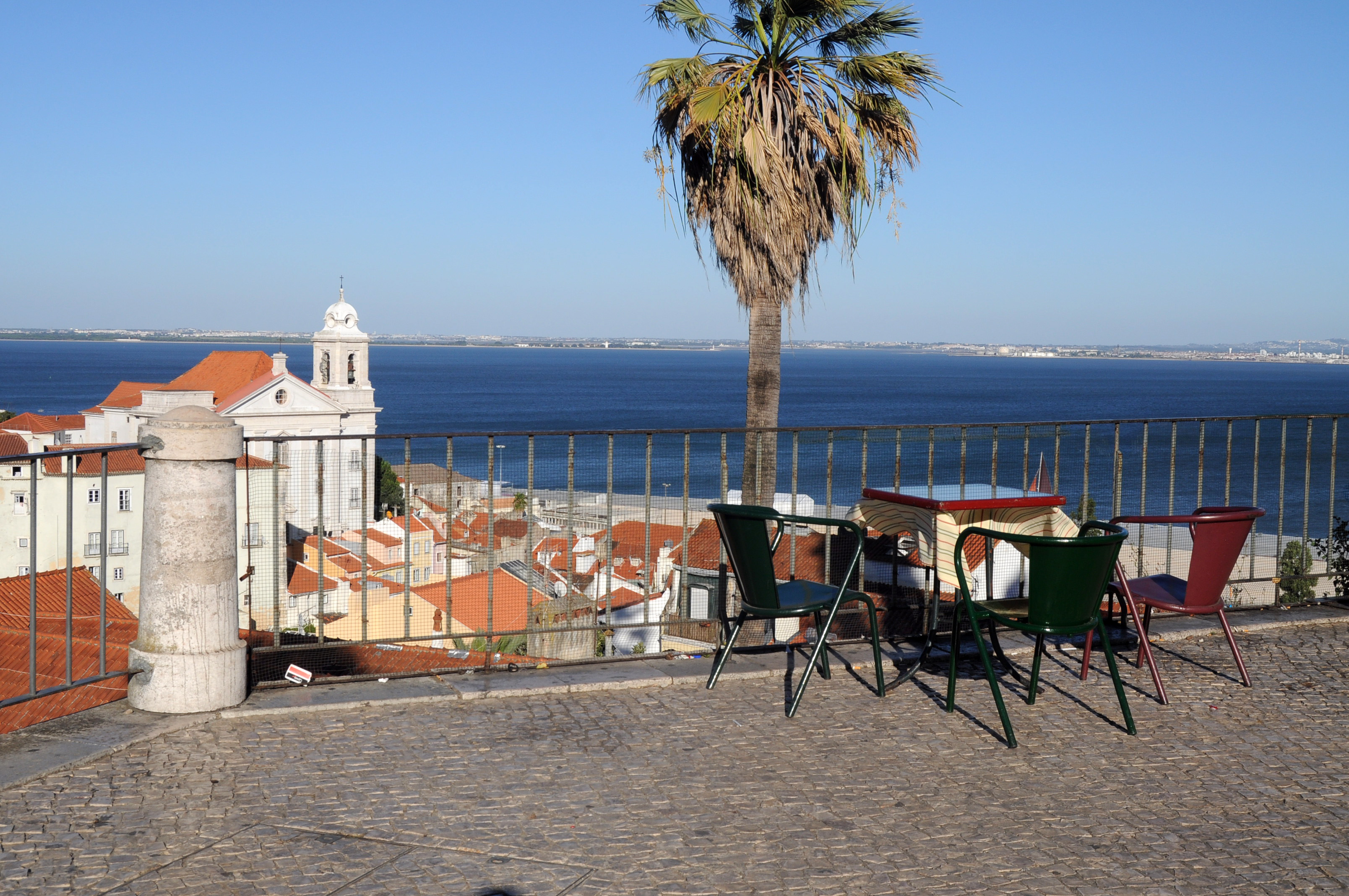
Being a tourist in Alfama, the neighborhood of St. Jorge’s castle in Lisbon, can be exhausting. After a few hours of walking up and down the narrow streets, we deserve to stop for a refreshment. There’s no better place to enjoy a cold, draft beer than the esplanade at Cerca Moura. That’s the name of the defensive wall first built by the Visigoths and then rebuilt by the Moors. Here you have the same same view of the river Tagus that was once enjoyed by Romans, Moors, Suevi, and Visigoths. But, unlike them, you don’t have to be on the lookout for hoards of invaders.

Cerca Moura, Largo das Portas do Sol 4, Lisbon, tel. 21-887-4859.

The poet’s choice

Camões

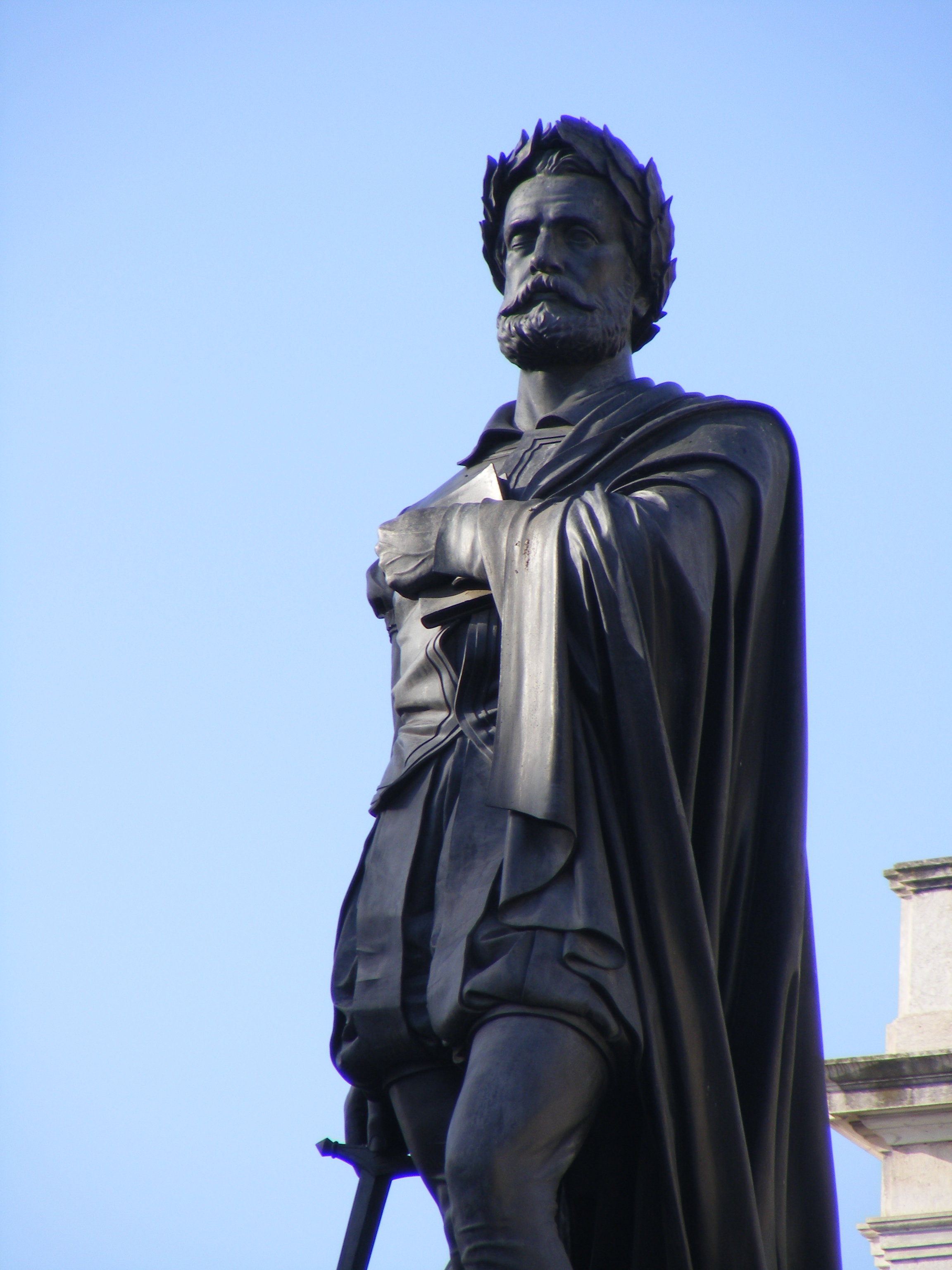
Artists often quip that they have to die before they can make a living. The great 16th century poet Luis de Camões died poor. Here’s how the influential Encyclopedia of Diderot & d’Alembert, published in Paris in 1765, describes his life:

“The famous Camões has done eternal honor to his homeland with his epic poem the Lusíadas. His life and misfortune are well known. Born in Lisbon in 1524 or thereabouts, he took up arms and lost an eye in combat against the Moors. He traveled to the Indies in 1553, offended the Viceroy, and was exiled. He left Goa and took refuge in a deserted corner of the world on the Chinese border. It was there that he composed his poem; the subject is the discovery of a new land of which he himself had been a witness. […]

It is said that he nearly lost this fruit of his genius while traveling to Macau. His ship went down during the crossing, but Camões, imitating Caesar, had the presence of mind to preserve his manuscript by holding it in one hand above the water while he swam with the other. Upon return to Lisbon in 1569, he spent ten unhappy years and finished his life in a hospital in 1579. Such was the fate of the Portuguese Virgil.”

Camões knew from classical Greek literature that there are two choices: to live an ordinary life and be forgotten, or struggle for greatness and have a chance of immortality. The mythical Achilles sacrificed his life at Troy, but his fame lives forever.

Camões gave his life to the Portuguese language. Every year, on June 10, we celebrate his immortality.

DOC & DOP

DOP

The rustic food of Portugal is made of elemental aromas and deeply satisfying flavors. It is a cuisine of humble people; fishermen, shepherds, and farmers, who liked food that nourishes the body. In contrast, the French culinary tradition pioneered by Marie-Antoine Carême is all refinement and beauty. It is a cuisine of kings and queens who loved to feast their eyes as much as feed their belly.

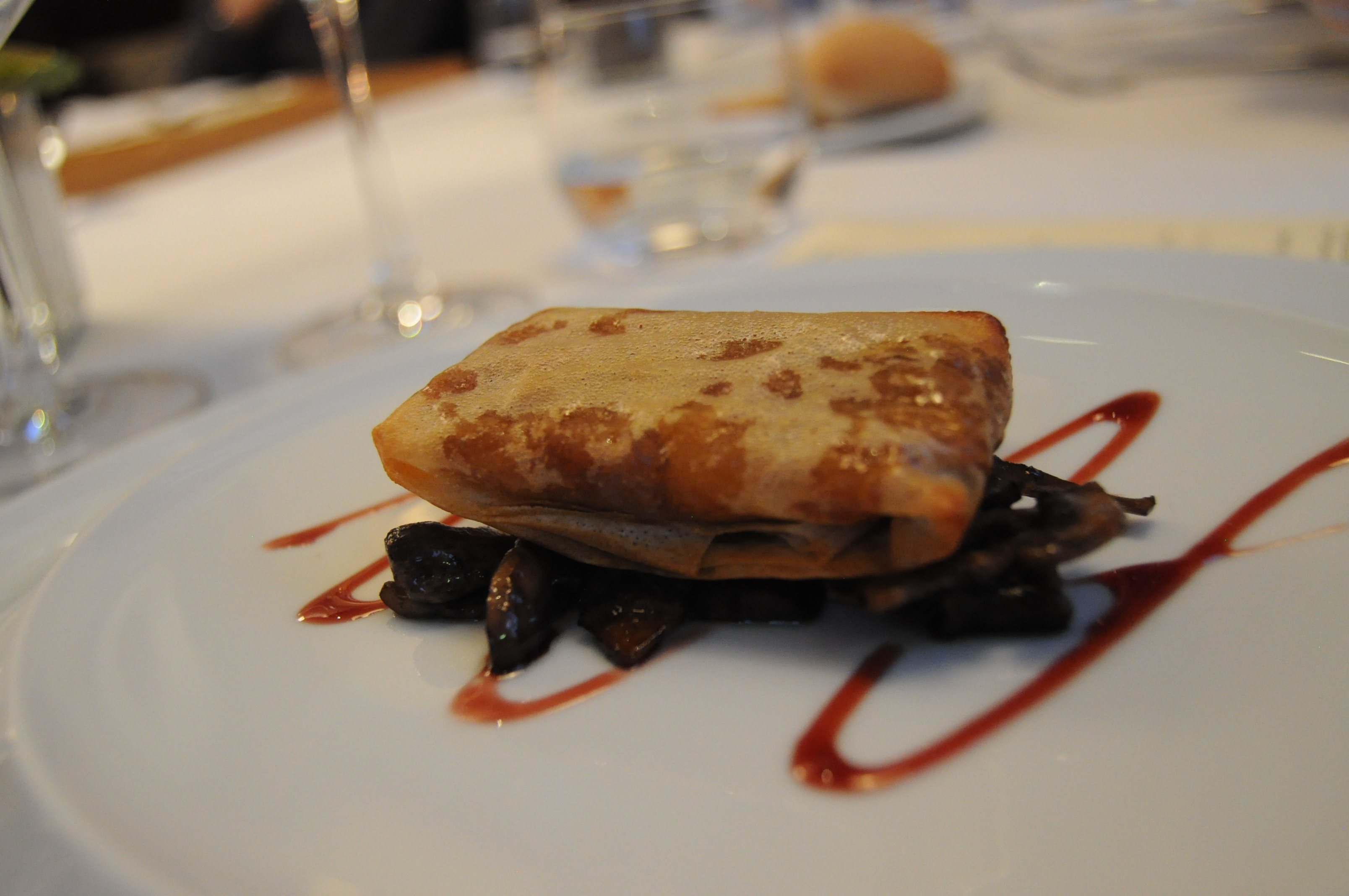
Rui Paula, a Portuguese chef, spent two decades marrying these two traditions. At DOP, his restaurant in Oporto, he serves country food cooked with palatial elegance. DOC, his restaurant in Amarante, offers a similar menu. Here, the dining experience is heightened by the serene beauty of the location, on the margins of the Douro river.

If you’re traveling in the north of Portugal, don’t miss the opportunity to try these restaurants. They’ll satisfy your body and soul.

Click here for Rui Paula’s website. DOP is located at Palácio das Artes, Largo de S. Domingos, 18, Porto, tel. 22 20 14 313, email dop@ruipaula.com. DOC is located at Estrada Nacional 222, Folgosa, Armamar, tel. 254 858 123, email doc@ruipaula.com.